
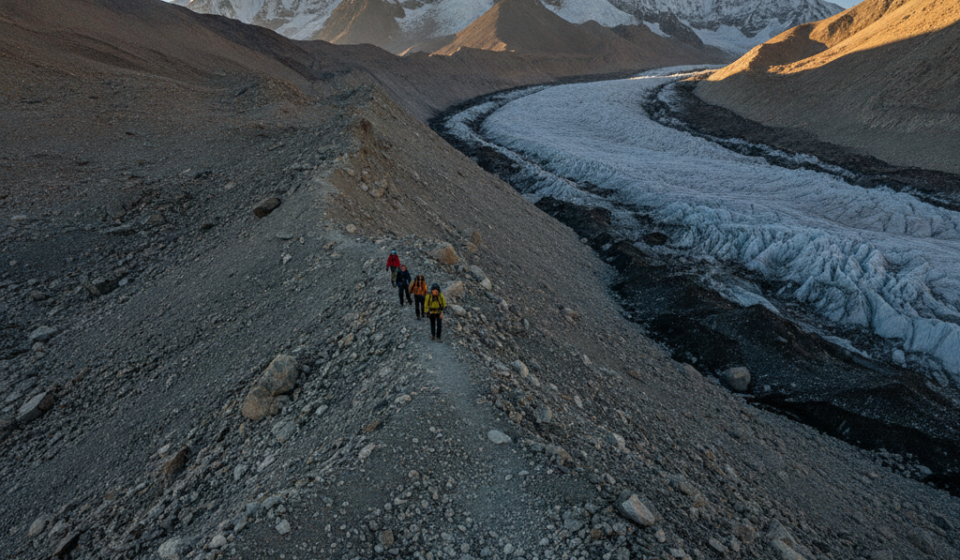
The Ultimate Guide to Paleo-Glaciology Trekking Tours in India: Exploring Ancient Climate History in the Himalayas

Himalayan ice fields hold more than just frozen water. They preserve a detailed record of planetary climate cycles stretching back millions of years. As international interest shifts toward experiential and educational travel, a highly specialized niche has emerged for those seeking deeper scientific context from their high-altitude journeys. This guide explores the structure, destinations, and scientific value of paleo-glaciology trekking tours in india, providing a comprehensive framework for travelers who wish to read the geological history written in the terrain.
For decades, high-altitude tourism in the Indian Himalayas revolved around classic mountaineering and leisure trekking. But still, the modern explorer demands a more rigorous engagement with the environment. Engaging with these ancient glacial environments offers an unparalleled window into the Pleistocene epoch (where glacial advances and retreats shaped the valleys we see today). By participating in specialized expeditions, science enthusiasts and dedicated hikers can observe paleoclimate markers firsthand while supporting vital conservation narratives.
Key Takeaways
- Scientific Immersion: Paleo-glaciology trekking tours in India blend high-altitude physical challenges with hands-on geological and paleoclimatological education.
- Prime Himalayan Archives: The Indian Himalayas (such as Ladakh, Kashmir, and Uttarakhand) act as a natural laboratory preserving thousands of years of Earth’s climate cycles.
- Geomorphic Clues: Participants learn to identify ancient climate indicators like moraines, glacial striations, erratic boulders, and U-shaped valleys.
- Climate Change Awareness: Observing rapid contemporary glacial retreat alongside ancient footprints turns trekkers into informed advocates for global environmental preservation.
Understanding Paleo-Glaciology in the Indian Himalayas
Paleo-glaciology is the study of ancient glaciers and their historical behavior over geological time scales. To understand how the Earth’s climate has fluctuated, researchers examine landforms left behind by retreated ice sheets. In the Indian subcontinent, the Himalayas act as a massive natural laboratory. This rugged terrain preserves evidence of past ice ages, allowing scientists to reconstruct historic temperature and precipitation patterns. For those booking paleo-glaciology trekking tours in india, this journey is not merely a physical challenge. It is an active immersion into the field of paleoclimatology.
The study of these ancient systems requires an understanding of geomorphology. It is basically the science of how landforms are created and modified. Glaciers are incredibly powerful agents of erosion and deposition. When they advance, they carve massive U-shaped valleys and push piles of rock and sediment ahead of them. When they retreat due to warming cycles, they leave these sediments behind as permanent structural signatures. Analyzing these deposits helps researchers map the extent of historical glaciations, providing critical clues about our climate future. Selecting high-quality paleo-glaciology trekking tours in india allows non-specialists to participate in this fascinating scientific detective work.
The Science of Ancient Ice and Climate Records
The core of paleo-glaciology lies in deciphering the physical and chemical archives locked within ancient ice and glacial deposits. Glacial ice acts as a chronological vault, trapping atmospheric gases, dust particles, and isotopic signatures from thousands of years ago. Although deep ice cores are typically retrieved by professional scientific teams, hikers on paleo-glaciology trekking tours in india can observe surface-level records of these processes. These records are visible in the exposed stratigraphic layers of ancient moraines and valley walls.
To interpret these records, researchers look at the ratio of oxygen isotopes (specifically oxygen-18 and oxygen-16) preserved in ice and sediment layers. These ratios fluctuate depending on the global temperature at the time of deposition. Warmer periods allow heavier isotopes to migrate further toward the poles and high elevations, leaving a distinct marker. On a standard mountain trek, these microscopic details remain invisible. However, on curated paleo-glaciology trekking tours in india, expert guides interpret these geological nuances, transforming an ordinary hike into a deep academic study. This approach allows travelers to appreciate the immense scale of geological time, realizing that the ice they stand upon represents a fragile link to the prehistoric past.
Why the Himalayas Serve as a Unique Paleoclimate Archive
The Himalayan mountain range is often referred to as the Third Pole. It contains the largest concentration of freshwater ice outside the polar regions (a staggering volume that feeds several of Asia’s major river systems). This geographical positioning makes the range exceptionally sensitive to global climate shifts. Because of its massive elevation span, the region preserves climate archives across various microclimatic zones, from the humid eastern ranges to the ultra-arid western deserts. This diversity is a major reason why paleo-glaciology trekking tours in india have gained such immense popularity among academic travelers and citizen scientists.
Furthermore, the unique monsoon-influenced climate of the Indian subcontinent creates a complex glacio-chemical record. Unlike polar glaciers, which are nourished by steady, year-round snowfall, Himalayan glaciers are highly dependent on the Indian Summer Monsoon. This seasonal variation leaves distinct seasonal layers in the accumulation zones. By studying the historical limits of these glaciers, scientists can reconstruct monsoon intensity over several millennia. Participants on paleo-glaciology trekking tours in india gain a first-hand view of these sensitive boundary zones, where even a slight change in average global temperatures can alter the hydrology of an entire subcontinent. It is a stark reminder of the delicate balance that sustains hundreds of millions of people downstream.
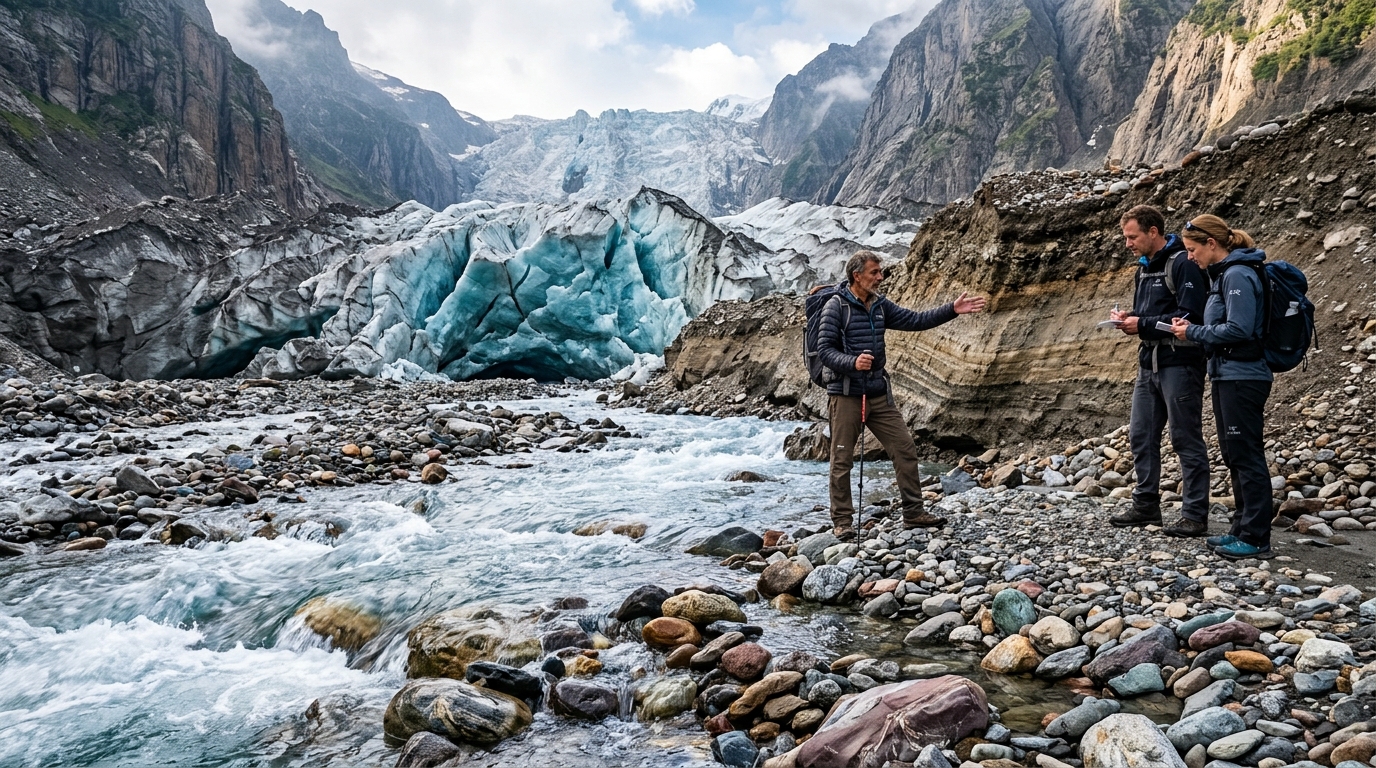
Top Destinations for Paleo-Glaciology Trekking Tours in India
The vast geographical spread of the Indian Himalayas offers diverse regions for studying paleoclimate history. Each valley possesses its own distinct glacial history, shaped by local tectonics and climatic influences. Selecting the right region for paleo-glaciology trekking tours in india depends largely on your scientific interests and physical conditioning. Some regions showcase arid, high-altitude cold deserts, while others offer lush, deep valleys carved by ancient massive ice flows.
| Region | Primary Glacio-Chemical Record | Key Geomorphic Features | Best Study Season |
|---|---|---|---|
| Ladakh | Arid-zone dry deposition, dust accumulation | Arid moraines, ancient lake sediments | May to October |
| Kashmir | Alpine glacial advance/retreat cycles | U-shaped glacial troughs, Karewas fossil beds | June to September |
| Uttarakhand | Monsoonal precipitation runoff records | Active calving snouts, extensive trim lines | May-June & Sept-Oct |
| Sikkim | High-humidity, heavy precipitation ice dynamics | Vegetated terminal moraines, dendroclimatology lines | October to November |
Ladakh: The Cold Desert Records of the Indus Valley
Ladakh is perhaps the most compelling destination for observing arid-zone glacial geomorphology. Situated in the rain shadow of the Great Himalayan Range, this high-altitude desert receives very little annual precipitation. Yet, it features extensive evidence of past glaciations that were far more expansive than those seen today. For individuals interested in arid paleoclimate systems, choosing paleo-glaciology trekking tours in india based in Ladakh offers an unmatched educational experience. The arid climate here has preserved ancient landforms with incredible clarity, as there is minimal vegetative cover or water erosion to degrade them.
One of the key areas of interest in this region is the Stok range. The valleys surrounding Stok Kangri showcase massive lateral moraines that stand hundreds of meters above the current valley floors, indicating the immense thickness of prehistoric ice. Additionally, the proglacial lakes of Ladakh offer sediment cores that have been instrumental in reconstructing the late Quaternary climate. As reported by the Wadia Institute of Himalayan Geology in 2023, scientific analysis indicates that certain glaciers in the Ladakh region have retreated by roughly 15% over the past three decades. Observing these retreating margins alongside ancient moraines provides hikers on paleo-glaciology trekking tours in india with a clear visual timeline of climate evolution. Travelers can easily combine these educational expeditions with curated Leh Ladakh tour packages to experience both the cultural and geological wonders of the region.
Kashmir: The Ancient Glacial Valleys of Sonamarg and Kolahoi
The valley of Kashmir offers a dramatic contrast to the arid environment of Ladakh. Characterized by lush meadows, dense pine forests, and dramatic peaks, Kashmir is home to some of the most accessible glacial systems in India. The Kolahoi Glacier, often referred to as the goddess of light, is a primary focal point for glaciological research in the western Himalayas. For those planning paleo-glaciology trekking tours in india, the trek to Kolahoi provides an exceptional opportunity to study a rapidly changing alpine glacier.
The trail leading to the glacier follows the Lidder Valley, which itself is a classic example of a glacial trough. Along the route, hikers can observe ancient lake deposits (locally known as Karewas) that date back to the Pleistocene epoch. These deposits contain rich fossil records, including ancient plant pollen and mammalian remains, which provide invaluable clues about past warm intervals. According to data recorded by the Geological Survey of India in 2021, the Kolahoi glacier has lost approximately 18% of its total volume since the late 20th century. This alarming statistic underscores the urgency of studying these systems. Participating in paleo-glaciology trekking tours in india through the scenic trails of Kashmir allows travelers to witness these changes firsthand. To plan a seamless journey, adventurers often explore dedicated Kashmir travel packages that blend geological exploration with legendary Kashmiri hospitality.
Uttarakhand: Exploring the Alaknanda and Bhagirathi Glacial Geomorphology
Uttarakhand is home to the Gangotri Glacier, one of the largest freshwater sources in the Himalayas and a primary source of the Ganges River. The entire Alaknanda and Bhagirathi river basins are of immense interest to geomorphologists. The valley walls are heavily scarred by past glacial movements, showcasing multiple tiers of lateral moraines that mark different stages of glacial retreat since the Last Glacial Maximum (LGM). For trek enthusiasts, embarking on paleo-glaciology trekking tours in india within Uttarakhand provides a rigorous look at high-energy glacial environments.
The trek from Gangotri to Gaumukh is a legendary route. The debris-covered snout at Gaumukh constantly calves ice into the Bhagirathi River. Along the valley, researchers have mapped historical trim lines (the marks showing past glacier heights). A study released in 2022 by the National Institute of Hydrology indicated that sediment-load analysis in Uttarakhand glacial basins could pinpoint climate shifts dating back over 12,000 years. Observing these dynamics on paleo-glaciology trekking tours in india helps travelers appreciate the critical role of these glaciers.
Sikkim: High-Altitude Paleoclimate Markers in the Eastern Himalayas
Sikkim represents the eastern extreme of Indian glaciology, where the climate is dominated by the intense moisture of the Bay of Bengal monsoon. The glaciers here, such as the Zemu Glacier beneath the mighty Kanchenjunga, behave very differently from their western counterparts. They are characterized by extremely high precipitation rates and rapid dynamic responses to temperature changes. For those looking to compare different climatic regimes, choosing paleo-glaciology trekking tours in india that venture into Sikkim is highly recommended.
The eastern Himalayas feature unique landforms, including complex terminal moraines that are heavily vegetated. Scientists use dendroclimatology (the study of tree rings) to cross-reference glacial retreat dates with regional climate records. On paleo-glaciology trekking tours in india in Sikkim, trekkers observe how plant colonization on stabilized moraines serves as a natural clock.
Geomorphological Features to Observe on a Glaciology Trek
For the untrained eye, a mountain valley is simply a beautiful arrangement of rocks. However, for those on paleo-glaciology trekking tours in india, the mountains become an open book written in geological shorthand. Understanding basic geomorphological features of glacial environments allows you to identify past ice movements. Here are the primary features you should look out for during your expedition.
Moraines and Glacial Till Depositions
Moraines are prominent signatures of past glacial activity. They are essentially massive piles of unsorted debris deposited by a glacier. During your paleo-glaciology trekking tours in india, you will encounter lateral moraines running parallel to the valley walls, and terminal moraines marking the ice’s furthest advance. Identifying these features on paleo-glaciology trekking tours in india allows you to map out the historical boundaries of ancient ice fields.
Striations and Polished Bedrock Surfaces
When glaciers move down a valley, they act like giant sheets of sandpaper. Rocks frozen into the ice grind against the bedrock, leaving behind glacial striations (long, parallel scratches). Finding these markings on paleo-glaciology trekking tours in india is a thrilling experience, indicating the direct path of historical ice. Additionally, this grinding action can produce smooth, polished bedrock surfaces on valley walls high above the modern trail.
Erratic Boulders and U-Shaped Valleys
Erratic boulders are massive, isolated rocks transported by ancient glaciers over dozens of kilometers and left behind as the ice melted. On paleo-glaciology trekking tours in india, you will frequently see these giant rocks resting on ridges. Equally impressive are the U-shaped valleys carved by glaciers, which stand out sharply against the narrow V-shaped canyons carved by younger mountain rivers.
Preparing for Paleo-Glaciology Trekking Tours in India
An expedition focused on scientific observation requires thorough preparation. Because these routes lead to remote, high-altitude glacial zones, addressing these preparation steps early will set you up for a safe and educational experience.
Physical Fitness and High-Altitude Acclimatization
To safely prepare for high-altitude scientific trekking, ensure you address the following physical preparation pillars:
- Cardiovascular Endurance: Build strong stamina as most paleo-glaciology trekking tours in india operate between 3,500 and 5,000 meters above sea level.
- Strength Training: Focus on core and leg strength to navigate unstable, rocky glacial moraines.
- Acclimatization Protocol: Choose reliable itineraries with built-in rest days to help your body adapt to lower oxygen levels and prevent altitude sickness.
Essential Gear and Equipment for Glacial Terrain
Trekking near glaciers requires durable gear. Moraines are notoriously unstable, consisting of loose scree and shifting boulders. Having the right gear on paleo-glaciology trekking tours in india can mean the difference between a comfortable journey and a hazardous ordeal.
| Gear Category | Standard Trekking Gear | Glaciology Trekking Gear |
|---|---|---|
| Footwear | Standard hiking boots | Stiff-soled mountaineering boots |
| Navigation | Basic trail map | Handheld GPS and topo maps |
| Hardware | Not required | Microspikes or crampons |
Investing in correct equipment is essential on paleo-glaciology trekking tours in india.
Best Seasons for Scientific Trekking in the Himalayas
For those scheduling paleo-glaciology trekking tours in india, understanding regional weather patterns is crucial. The pre-monsoon window (May to June) offers melting snow that exposes underlying moraines. However, the post-monsoon period (September to October) is considered the prime window for paleo-glaciology trekking tours in india, providing crystal-clear skies and fully exposed glacial structures.
Comparative Overview of Key Paleoclimate Trekking Routes
When booking paleo-glaciology trekking tours in india, reviewing these parameters will help you match a route to your specific goals.
| Route Name | Region | Difficulty | Duration | Key Paleoclimate Focus |
|---|---|---|---|---|
| Stok Valley Explorer | Ladakh | Challenging | 8-10 Days | Arid-zone lateral moraines & proglacial lakes |
| Kolahoi Glacier Trek | Kashmir | Moderate | 6-7 Days | Alpine glacier retreat & Pleistocene Karewa deposits |
| Gaumukh-Tapovan | Uttarakhand | Challenging | 7-8 Days | Debris-covered snouts, active calving, & historical trim lines |
Selecting from these diverse paleo-glaciology trekking tours in india allows you to tailor your holiday to your exact preferences.
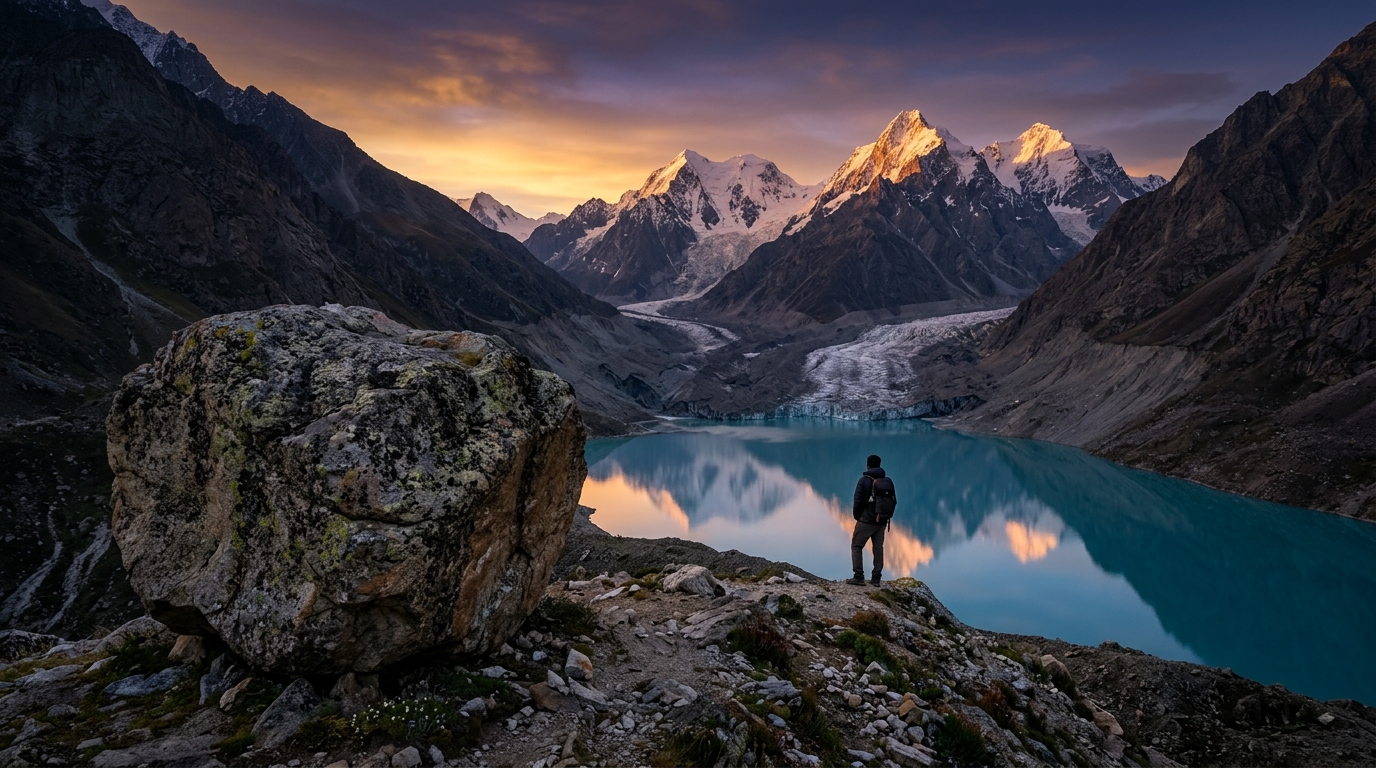
Environmental Preservation and Ethical Trekking Practices
Accessing these fragile environments requires a deep commitment to environmental preservation. Adopting ethical trekking practices ensures that your presence does not accelerate the degradation of these vital ecosystems.
The Impact of Climate Change on Himalayan Glaciers
Himalayan glaciers are currently experiencing unprecedented rates of mass loss. By participating in paleo-glaciology trekking tours in india, trekkers gain a firsthand understanding of these complex dynamics, transforming tourists into vocal advocates for climate action.
Leave No Trace Principles for Scientific Trekkers
To minimize your impact on these sensitive environments, adhering to these essential Leave No Trace practices is non-negotiable:
- Stay on Designated Paths: Off-trail hiking on delicate alpine tundra can destroy fragile plant life that takes decades to recover.
- Manage Waste Responsibly: Pack out all trash, including biodegradable waste, which decomposes incredibly slowly in cold climates.
- Do Not Disturb Geological Samples: Leave rocks, fossils, and ancient sediment layers intact for ongoing scientific study.
FAQs
What is the difference between standard trekking and paleo-glaciology trekking?
Standard treks focus on scenery, while paleo-glaciology trekking tours in india prioritize scientific observation. Led by geologists, these tours focus on identifying ancient glacial landforms.
Do I need a scientific background to join these tours?
No, a formal scientific background is not required for paleo-glaciology trekking tours in india. The expert guides translate complex geological concepts into highly accessible explanations.
What is the average duration of paleo-glaciology trekking tours in india?
The average duration of paleo-glaciology trekking tours in india ranges from 6 to 10 days, allowing ample time for high-altitude acclimatization.
Are there permit requirements for high-altitude glacial research zones?
Yes, many high-altitude zones require permits. When booking paleo-glaciology trekking tours in india, reliable operators handle these clearances on your behalf.
Conclusion
Embarking on paleo-glaciology trekking tours in india is a profound journey through deep time. By exploring the rugged valleys of Ladakh and Kashmir, travelers gain invaluable insights into the natural forces that have shaped our planet over millennia.