

Why is a Passport Required for International Travel? A Comprehensive Guide for Indian Citizens

International transit remains governed by strict treaties that dictate how individuals cross sovereign borders. A foundational question that arises when planning a trip abroad is why passport is required for crossing these jurisdictions. Sovereign nations retain the right to control their borders, verify identity, and manage security. A passport serves as the globally standardized document that facilitates this process. For citizens of India, obtaining this document is the crucial first step before booking flights or applying for entry permits. Understanding the reasons why passport is required can prevent severe travel disruptions and ensure a smooth entry into foreign territories. This comprehensive guide examines the underlying legal, historical, and geopolitical reasons for this document, alongside its practical application for Indian passport holders.
Key Takeaways
- Sovereign Identity: A passport is the only globally standardized document certifying your identity and nationality internationally.
- ICAO Guidelines: Strict international guidelines (ICAO Document 9303) ensure Indian passports are readable by foreign border systems instantly.
- Six-Month Buffer: Most nations enforce a six-month passport validity rule to prevent overstays during emergencies.
- Visa Dependency: A visa is dependent on a valid passport; without one, you cannot obtain a foreign entry endorsement.
- Labor Protection: Systems like ECR and ECNR protect Indian workers from exploitation in foreign job markets.
Understanding the Concept: What is a Passport?
To dissect why passport is required, we must examine its legal definition and international standing. A passport is an official travel document issued by a government to its citizens, certifying identity and nationality. Historically, the modern passport system emerged after the First World War under the League of Nations to regulate global migration and secure national borders. It acts as an official request from the issuing nation to foreign governments to allow the bearer safe passage.
Many travelers confuse passports with domestic identity cards such as Aadhaar or voter identification cards in India. While domestic cards verify identity within national borders, they lack the cryptographic standards and international verification protocols required for cross-border transit. Here are the primary reasons why passport is required globally, as foreign immigration systems cannot access domestic databases:
- Technological Compatibility: It acts as a document bridging the technological gap, providing foreign border officers with a trusted, tamper-resistant document.
- Sovereign Return Guarantee: It certifies citizenship, confirming the bearer’s legal right to return to their home country, which is a crucial factor for foreign governments assessing entry permissions.
- Global Database Alignment: Standardized features allow security agencies worldwide to sync traveler profiles with global security databases.
Furthermore, passports contain biometric and demographic data. Modern e-passports embed a secure microprocessor chip containing biometric templates. This advanced integration ensures the document cannot be forged, clarifying why passport is required for sovereign validation during border checks.
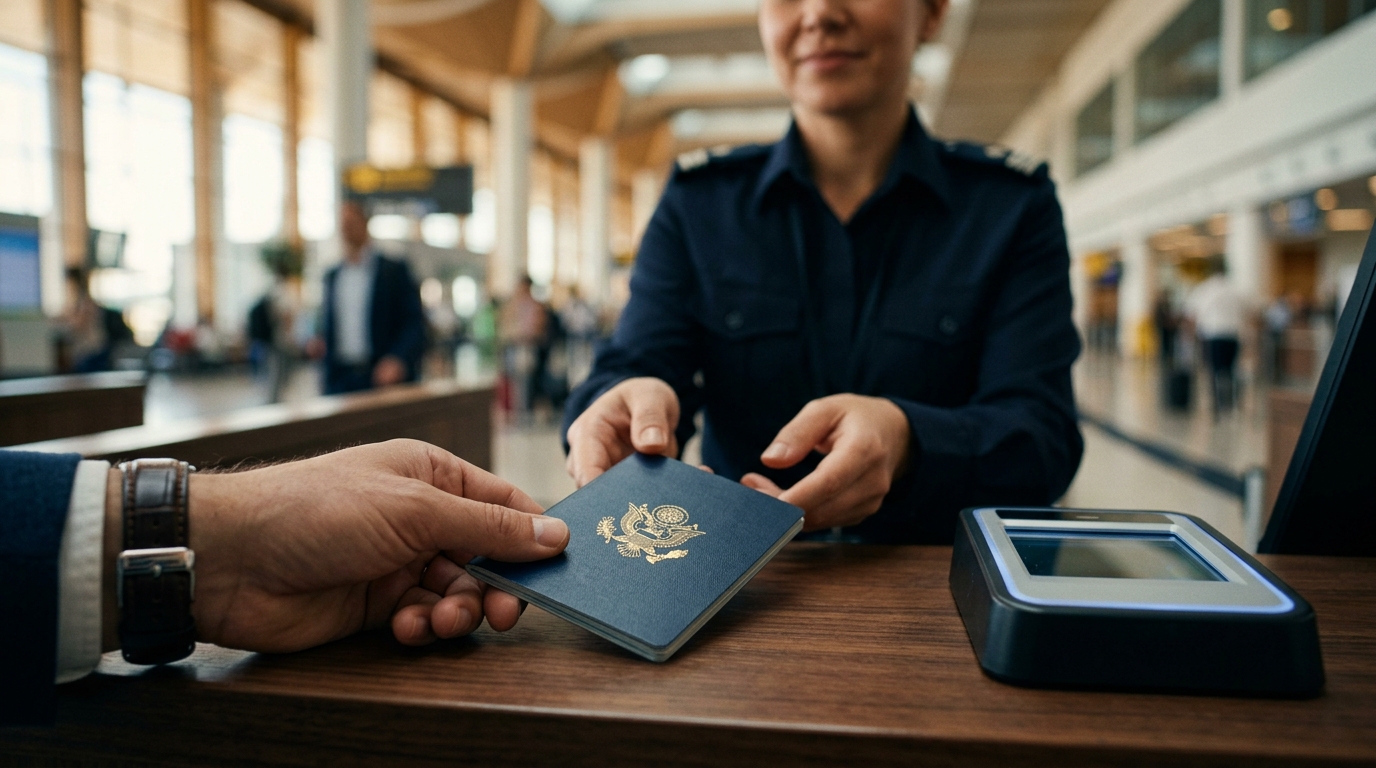
Why Passport is Required for International Travel
There are multiple legal and security reasons why passport is required for international travel. Governments utilize these booklets to maintain national security, monitor the flow of international visitors, and ensure compliance with international regulations. The global community has built a highly coordinated framework to manage mobility, and the passport sits at the center of this network.
Legal Proof of Identity and Citizenship
When entering a foreign territory, an individual is subject to local laws, but their status as a foreign national remains protected by international law. A domestic driver’s license cannot establish nationality on a global scale. This explains why passport is required as an indisputable verification tool. The government of India issues the passport to certify that the bearer is a citizen. This certification guarantees that the home nation will accept the traveler back if they return. Without this sovereign guarantee, foreign nations would be hesitant to grant entry, fearing the risk of stateless individuals residing indefinitely within their borders.
Sovereignty and Border Control of Nations
Sovereignty dictates that every nation-state has absolute authority over its defined territory. A key manifestation of this authority is the power to determine who is allowed to enter and remain. From a geopolitical perspective, why passport is required boils down to bilateral trust and reciprocal control. When a traveler presents their passport, they present a formal petition to enter a sovereign space. Border authorities scrutinize the document to ensure that the traveler poses no threat to public safety or national security. It is a formal process where the passport acts as the primary tool to exercise this sovereign right.
International Compliance Under ICAO Standards
The standardized nature of modern passports is not accidental. The International Civil Aviation Organization (ICAO) sets global standards for travel documents. According to the guidelines in ICAO Document 9303, passports must follow strict specifications regarding dimensions, layout, and data structures. This compliance is a major factor mandating why passport is required to match international standards. The machine-readable zone (MRZ) on the data page contains coded text that allows scanners to verify security features within seconds. This standardized format ensures a passport issued in India can be read instantly by border control in any of the 193 ICAO member states.
Tracking Cross-Border Movement and Security
Maintaining national security requires a systematic method for tracking individuals entering and leaving a country. Passports contain pages for entry and exit stamps, which serve as a physical log of a traveler’s journey. Increasingly, these physical stamps are linked to electronic databases. This is why passport is required to counter transnational crime, human trafficking, and international flight from justice. By linking passport numbers to global databases operated by Interpol, border authorities can flag stolen travel documents or verify identities in real-time. This security apparatus ensures that legitimate travelers are distinguished from security risks, preserving global travel safety.
The Role of a Passport vs. a Visa
Understanding why passport is required also means comparing it to a visa, as travelers frequently conflate these documents. While both are necessary for international transit, they serve different legal purposes and are issued by different sovereign authorities.
A passport is a proof of identity and citizenship issued by the traveler’s home country. In contrast, a visa is an endorsement granted by the destination country, allowing entry for a specific period and purpose. For example, an Indian citizen visiting France must obtain an Indian passport first, and then apply for a Schengen visa. A visa application depends entirely on why passport is required first; without a valid passport, a foreign government cannot issue a visa, as they have no physical document upon which to affix the visa sticker.
To clarify these differences, the following table summarizes the distinct characteristics of each document:
| Feature | Passport | Visa |
|---|---|---|
| Issuing Authority | Home country government (e.g., Ministry of External Affairs, India) | Destination country government (via embassy, consulate, or portal) |
| Primary Purpose | Certifies identity and citizenship for international travel | Grants permission to enter and stay for a specific duration |
| Global Requirement | Mandatory for all international travel regardless of destination | Conditional (depends on bilateral agreements and visa-exemptions) |
| Physical Format | A secure, bound paper booklet containing biometric data | A physical sticker, ink stamp, or electronic record (e-Visa) |
| Validity Period | Long-term (typically 5 to 10 years for adults) | Short-term to medium-term (ranges from a few days to years) |
This distinction demonstrates that while a passport proves identity, a visa defines entry permissions. Both elements must work in tandem to facilitate international passage. To understand the specific entry rules for your destination, you may review our comprehensive visa services.
Passport Requirements for Indian Citizens Traveling Globally
For Indian citizens, international travel is experiencing significant growth, with millions of passport holders exploring destinations worldwide. According to the Ministry of External Affairs, the government of India processed over 11.5 million passport applications in a single year, highlighting the massive scale of domestic demand. This is why passport is required to be in a specific category based on the traveler’s legal status and travel purpose.
Types of Indian Passports
The Republic of India issues three primary categories of passports, each designated by a distinct color to denote the status of the traveler:
- Ordinary Passport (Navy Blue – Type P): Issued to general citizens for leisure, business, or educational travel. This is the most common reason why passport is required to have distinct color codings, allowing border officials to quickly categorize the traveler’s diplomatic status.
- Official Passport (White – Type S): Issued to government officials representing India on state business. It grants administrative advantages but does not carry full diplomatic immunity.
- Diplomatic Passport (Maroon – Type D): Issued to Indian diplomats, members of parliament, and high-ranking government officials traveling on official diplomatic missions, granting complete diplomatic immunity under international conventions.
| Passport Type | Booklet Color | Target Audience | Standard Validity |
|---|---|---|---|
| Ordinary (Type P) | Navy Blue | General citizens for tourism, business, and education | 10 Years (5 Years for minors) |
| Official (Type S) | White | Government officials traveling on state business | Depends on official posting/deputation |
| Diplomatic (Type D) | Maroon | Diplomats, high-ranking officials, and MPs | Varies based on diplomatic assignment |
Passport Validity and the Six-Month Rule
One of the most critical aspects of international travel is the passport validity requirement. Many countries strictly enforce what is known as the “six-month validity rule.” Understanding why passport is required to have six months of remaining validity before entry is vital for any outbound traveler (a rule enforced with zero flexibility by border authorities).
Sovereign nations implement this rule to prevent foreigners from overstaying their visas or finding themselves stranded with an expired passport. If an Indian citizen enters a foreign country with a passport that expires in one month, any unexpected travel delay, medical emergency, or administrative issue could result in them residing in that country without a valid identity document. Therefore, most countries require that the passport remains valid for at least 180 days beyond the planned date of departure, reinforcing why passport is required to be maintained in pristine condition.
ECR vs. ECNR Passports
Indian passports are further classified based on emigration check requirements, designed to protect vulnerable workers from exploitation abroad.
- Emigration Check Required (ECR): This status is assigned to applicants who have not cleared their matriculation (Grade 10) examinations. It is a protective measure enforced when traveling to specific countries for employment.
- Emigration Check Not Required (ECNR): This status is granted to individuals who have cleared their matriculation or hold higher degrees. This distinction explains why passport is required to undergo emigration clearance under certain labor migration frameworks, ensuring that Indian workers are protected by local labor bilateral agreements.
Essential Steps to Apply for an Indian Passport
Acquiring this vital document requires completing a structured administrative workflow managed by the Consular, Passport, and Visa Division of the Ministry of External Affairs. This is why passport is required to go through police verification, ensuring that the background of every citizen traveling abroad is verified for national security purposes.
But still, many first-time applicants find the documentation process daunting. Below is the primary document checklist needed for a fresh Indian passport application:
| Document Category | Accepted Proofs (Examples) | Purpose |
|---|---|---|
| Address Proof | Aadhaar Card, Water/Electricity Bill, Rent Agreement, Bank Passbook | To verify current residential status |
| Date of Birth Proof | Birth Certificate, Matriculation Certificate, PAN Card | To verify exact date of birth |
| Non-ECR Category Proof | Matriculation (10th) Certificate, Higher Education Degree | To qualify for ECNR status |
The application process involves several distinct phases:
- Online Registration: Applicants register on the official Passport Seva Portal and complete the application form online.
- Fee Payment and Scheduling: The applicant pays the processing fee online and schedules an appointment at a convenient Passport Seva Kendra (PSK).
- In-Person Verification: The applicant visits the PSK with original documents for biometric capture and document verification.
- Police Verification: Local police officers verify the applicant’s address and clean criminal record.
- Printing and Dispatch: Once cleared, the passport is printed and dispatched via Speed Post.
This structured methodology is essential, demonstrating why passport is required to be applied for in advance, as the average processing time can range from two weeks to over a month depending on the verification process.
What Happens If You Travel Without a Valid Passport?
Attempting to cross international borders without a valid passport results in severe legal and logistical consequences. Under international laws, airlines bear the legal responsibility of verifying that passenger documents are valid before boarding. If an airline allows a passenger to board without a valid passport, they face substantial financial penalties. This commercial risk clarifies why passport is required prior to boarding any international flight.
Furthermore, traveling without a valid booklet leads to major risks at foreign destinations:
- Immediate Detention: If an individual manages to reach a foreign port of entry without a valid passport, they will be immediately detained by local border authorities.
- Deportation: Such individuals are denied entry and subjected to immediate deportation back to their point of origin at their own expense.
- Legal Record: Getting deported or detained can lead to permanent blacklisting or difficulty obtaining future visas.
It is also highly recommended to secure travel insurance to protect against unforeseen disruptions resulting from document issues, though insurance does not cover negligence regarding expired passports.

Conclusion
International travel offers unparalleled opportunities for personal and professional growth, but it remains structurally dependent on strict legal compliance. A passport is not merely an administrative requirement; it is a vital safeguard that establishes identity, guarantees citizenship, and ensures the safety of individuals in foreign jurisdictions. Throughout this guide, the geopolitical and legal reasons highlighting why passport is required as the foundational key to global exploration have been examined in detail.
For Indian citizens, maintaining a valid passport is the most crucial element of travel readiness. Ensuring that the document has at least six months of validity prevents unnecessary stress and legal complications at foreign borders. Ultimately, knowing why passport is required ensures a smooth transition across borders. When planning your next venture, exploring curated international holiday packages can simplify your planning process, ensuring all logistical requirements are met efficiently.
FAQs
To clarify why passport is required for Indian citizens, several common questions are answered below.
Can I travel to any country without a passport as an Indian citizen?
Yes, Indian citizens can travel to Nepal and Bhutan without a passport, as alternative identity cards like a Voter ID are accepted under bilateral treaties. This exception shows why passport is required for most other destinations, though carrying a passport is still recommended to facilitate emergency consular services.
Why do some countries require six months of passport validity?
Foreign governments require a six-month buffer to ensure that your passport remains valid for the entire duration of your stay, even in the event of unexpected travel delays. This rule protects host nations from dealing with undocumented foreigners, explaining why passport is required to have a buffer period.
Is a passport required for children and infants?
Yes, under current international civil aviation regulations, every individual traveler, including infants and children, must possess an individual passport. Foreign countries no longer allow children to be endorsed on their parents’ passports. This is why passport is required even for newborn babies traveling internationally.
What is the difference between a passport book and a passport card?
A passport book is a globally accepted booklet used for all international air, land, and sea travel. A passport card is a wallet-sized document used by some countries for limited land and sea crossings. India currently only issues passport books, showing why passport is required in booklet form for Indian citizens.