

Planning a journey across the southern peninsula of India requires shifting away from the conventional golden triangle itineraries of the north. The southern states offer a completely different tempo, characterized by ancient Dravidian architecture, dense tropical highlands, and historic coastal networks. Because of this vast geographic and cultural diversity, creating a seamless south india travel plan requires balancing distinct geographic zones rather than trying to cover everything in a single whistle-stop tour. A successful journey relies on understanding regional transitions, seasonal monsoons, and the logistical realities of moving between historic towns. This guide provides a structured framework for planning a highly efficient, culturally rich route.
Key Takeaways for Your South India Travel Plan
- Prioritize Regions: Avoid travel fatigue by focusing on one or two states (such as Kerala and Tamil Nadu) instead of rushing across the entire peninsula.
- Timing is Everything: Plan your journey around seasonal monsoons, with October to March offering the most comfortable weather.
- Mix Up Experiences: Balance ancient temple tours in Tamil Nadu with scenic wildlife safaris in Karnataka and relaxing backwater cruises in Kerala.
- Optimize Transport: Use private drivers for hilly, regional transit, and domestic flights or trains to bridge large city-to-city distances.
- Respect Local Customs: Pack modest clothing and slip-on footwear to seamlessly navigate sacred temples and local homes.
Choosing the Right Destinations for Your South India Itinerary
Designing a comprehensive journey begins with selecting the appropriate regional focus. Attempting to see Kerala, Tamil Nadu, Karnataka, and Andhra Pradesh in a short vacation often results in travel fatigue. Therefore, when finalizing a south india travel plan, travelers must decide between the deep cultural immersion of heritage towns and the relaxed pace of coastal highlands. Each state offers a distinct personality:
- Tamil Nadu: Renowned for its monumental granite temples, vibrant classical arts, and deeply rooted Dravidian traditions.
- Karnataka: Offers a diverse blend of royal history, high-tech modern hubs, dense national parks, and mist-covered coffee estates.
- Kerala: Famous for its peaceful palm-fringed backwaters, soothing Ayurvedic retreats, and coastal spice ports.
- Andhra Pradesh: Home to expansive archaeological forts, dynamic urban centers, and famous hilltop pilgrimage sites.
For a FIT (Fully Independent Traveler – a term representing those who prefer self-designed itineraries), prioritizing regional highlights is much more rewarding than checking off every landmark.
The Coastal Serenity of Kerala
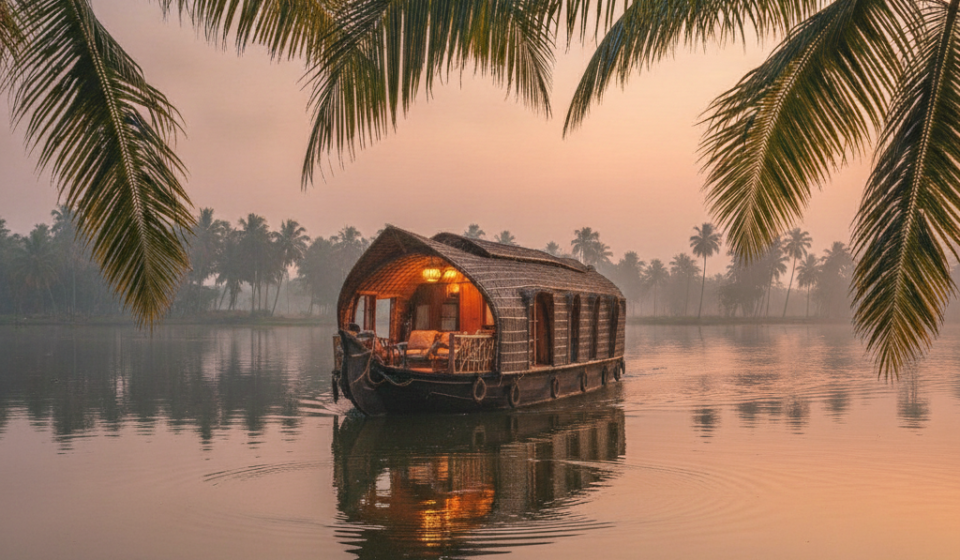
The southwestern coast of India is defined by a unique geography of interconnected canals, brackish lakes, and the Arabian Sea. Because of these geographic features, Kerala often serves as the cornerstone of a balanced south india travel plan, providing a calm counterpoint to the busy cities of the neighboring states. The backwaters of Alappuzha and Kumarakom are best experienced via traditional kettuvallams. These are wooden houseboats stitched together with coir knots, offering a slow journey through coconut groves and rural villages.
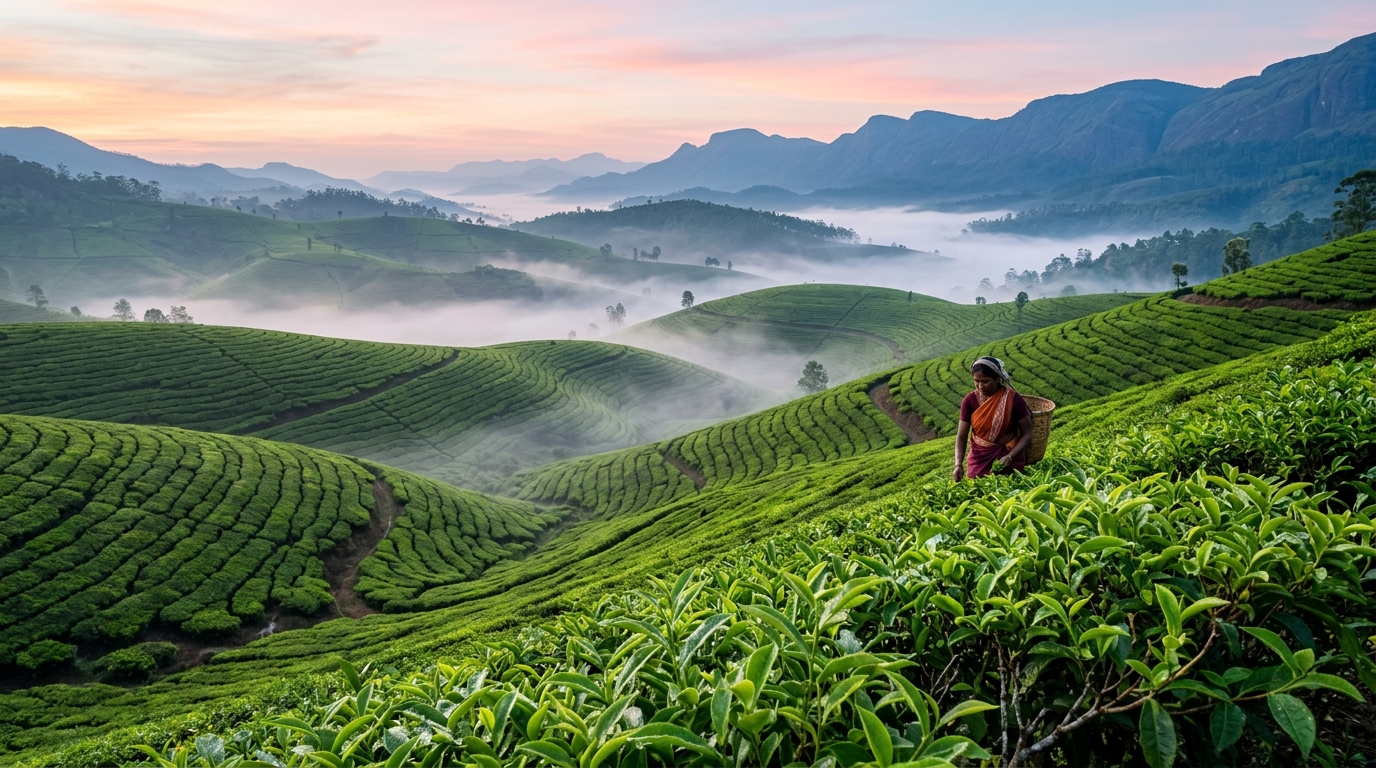
Beyond the lowlands, the Western Ghats rise to form the tea-growing hills of Munnar and Wayanad. This altitudinal shift offers cool temperatures and diverse ecosystems, making it a top recommendation for any custom south india travel plan. The coastal town of Kochi provides an intriguing historical layer, showing Portuguese, Dutch, and British colonial influences alongside the iconic Chinese fishing nets. According to the Kerala Department of Tourism, Ayurvedic wellness bookings spike by roughly 40% during the monsoon months due to the traditional belief that the body is highly receptive to treatments. For those seeking structured journeys, reviewing specialized Kerala tour packages can simplify planning by combining houseboat stays with highland excursions.
The Majestic Heritage of Tamil Nadu
On the eastern side of the Western Ghats lies Tamil Nadu, a region where ancient Dravidian culture remains vibrant and uninterrupted by external forces. Integrating Tamil Nadu into the south india travel plan ensures an immersion into monumental temple architecture that dates back over a thousand years. The cities of Madurai, Thanjavur, and Tiruchirappalli form the core of this temple trail.
In Madurai, the Meenakshi Amman Temple serves as a massive spiritual and social hub, defined by its twelve towering gopurams covered in thousands of colorful stone figures. Thanjavur houses the Brihadeeswarar Temple, a Chola masterpiece constructed entirely of granite. Data from the Ministry of Tourism shows Tamil Nadu frequently exceeds 300 million domestic visits annually, indicating its immense architectural draw (depending on how visitor registrations are calculated in major temples). This scale contrasts with the quiet colonial avenues of Puducherry, a nearby union territory that retains its French architectural heritage and slow coastal charm. A well-conceived south india travel plan must allocate sufficient days for both the grand granite temples and these relaxed coastal towns. For a smooth journey down the east coast, exploring Tamil Nadu tour packages helps manage the logistics of long-distance heritage transit.
The Royal Grandeur of Karnataka
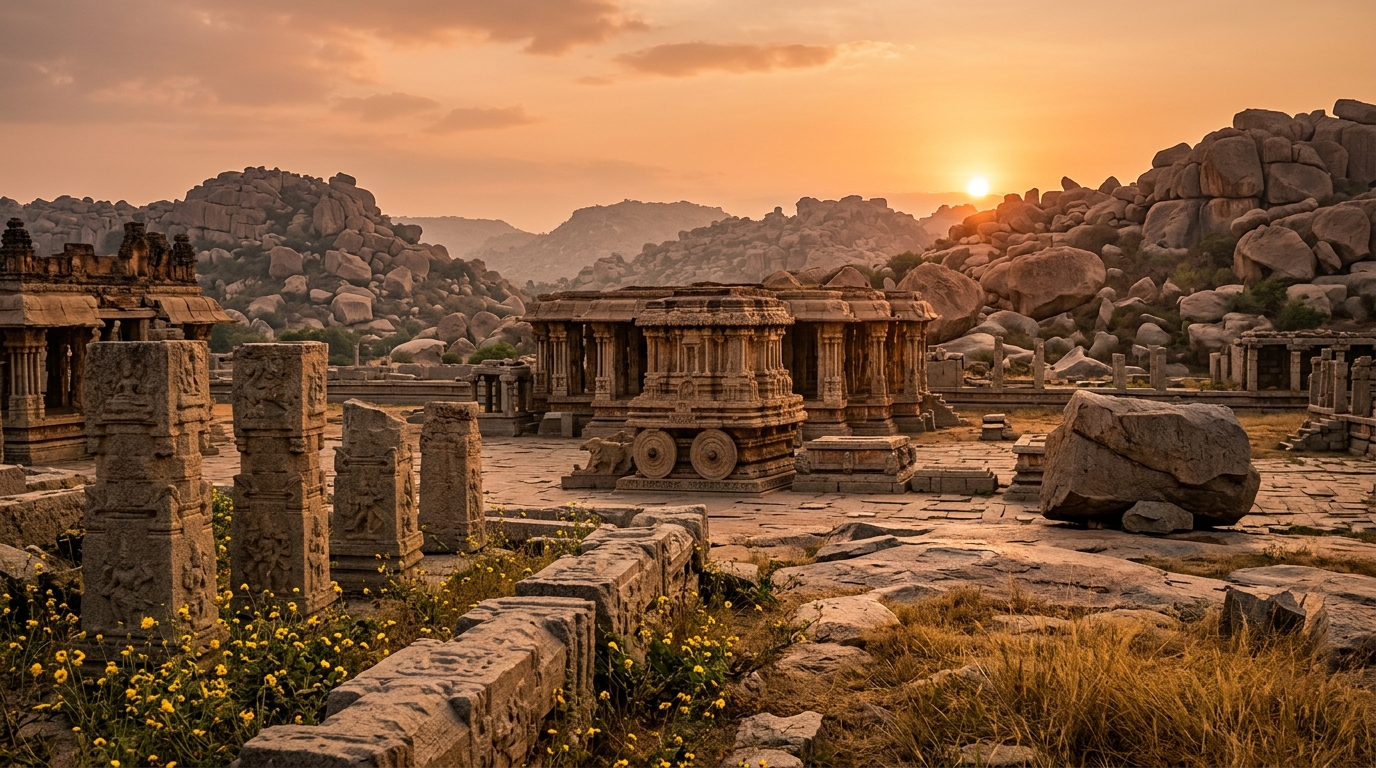
Karnataka offers an exceptionally diverse palette for travelers, ranging from the high-tech streets of Bengaluru to the ruins of ancient empires. Karnataka remains an indispensable element of any modern south india travel plan, particularly for those fascinated by history and wildlife. The central attraction for heritage lovers is Hampi, the former capital of the Vijayanagara Empire. The ruins of temples and royal pavilions spread over 4,100 hectares, requiring two full days of exploration.
Further south, Mysuru offers a distinct experience of royal elegance. The Amba Vilas Palace, known for its Indo-Saracenic architecture, is a striking monument, especially when illuminated by thousands of lightbulbs on Sunday evenings. From Mysuru, the road ascends into the forested hills of Kodagu (popularly known as Coorg). This region is famous for its mist-laden coffee plantations, unique local cuisine, and rich wildlife sanctuaries like Nagarhole National Park. This makes Coorg a prime addition to any comprehensive south india travel plan, particularly during the post-monsoon months when the forests are lush and green.
Determining the Ideal Season and Duration
Climate is arguably the most critical variable when organizing a journey through the southern peninsula. Weather patterns dictate how a south india travel plan should be structured, as regional variations in monsoon cycles can heavily impact transport schedules and outdoor sightseeing. While the region is generally warm throughout the year, distinct seasonal shifts define the comfort levels of coastal areas, central plains, and highland stations.
Seasonal Weather Variations across Southern States
Southern India experiences two distinct monsoons: the Southwest monsoon from June to September, and the Northeast monsoon from October to November. This dual weather pattern means that adjusting the south india travel plan based on regional monsoons is essential for avoiding flooded coastal roads or closed national parks. For instance, while Kerala receives heavy rain during July and August, parts of Tamil Nadu remain relatively dry until late autumn.
But still, even during the peak of summer, the mist-clad hills of the Western Ghats offer an excellent escape. It is basically a matter of coordinating your elevation with the calendar. Traveling during the shoulder months of October and March can also yield excellent value, as hotel rates drop roughly 20% to 30% compared to the busy December-January window.
| Season | Months | Average Temperature | Ideal Regional Focus | Key Highlights |
|---|---|---|---|---|
| Winter (Peak Season) | December to February | 20°C – 30°C | All regions (Kerala backwaters, Tamil Nadu temples, Hampi) | Pleasant weather, cultural festivals, active wildlife viewing |
| Summer (Off-Peak) | March to May | 28°C – 40°C | Hill stations (Munnar, Coorg, Ooty, Kodaikanal) | Cool highland climates, lower hotel rates in lowland areas |
| Monsoon (Green Season) | June to November | 24°C – 32°C | Kerala (for Ayurveda), Western Ghats waterfalls | Lush green scenery, rejuvenated waterfalls, traditional spa therapies |
Establishing a Practical Travel Timeline
Establishing a timeline for a south india travel plan requires realistic pacing. The sheer size of the peninsula means that trying to travel from the western coast of Cochin to the eastern temples of Chennai in a single week is logistically difficult. A two-week south india travel plan represents the sweet spot for first-time visitors, permitting a balanced look at both Kerala and Tamil Nadu.
Earlier, we noted that Tamil Nadu attracts over 300 million domestic visits annually. That number matters because it highlights why temple towns can get crowded. Allocating sufficient buffer days in your itinerary ensures you can experience these monuments during quieter early morning hours without rushing your schedule.
- The Highlights Route (7 to 10 Days): Focuses strictly on a single state or a compact cross-border route, such as Kochi-Munnar-Alleppey-Kochi.
- The Comprehensive Southern Trail (14 to 18 Days): Permits a relaxed, multi-state journey. This typically covers Cochin, the Munnar highlands, Madurai, Thanjavur, Pondicherry, and Chennai.
- The Grand Peninsula Explorer (21+ Days): A slow-paced journey incorporating northern Karnataka (Hampi, Badami), Mysore, Coorg, the Kerala backwaters, and Tamil Nadu.
Crafting Your Route: Popular Tour Circuits
Geographical pathways in the south naturally align with specific cultural and ecological themes. These structured circuits help streamline the south india travel plan, ensuring that transit hours are minimized while thematic continuity is maintained. Travelers should select a circuit that aligns with their personal interests, whether they lean toward architectural history or natural exploration.
| Circuit Name | Ideal Duration | Key Destinations Covered | Best Travel Vibe |
|---|---|---|---|
| Heritage & Temple Circuit | 10 – 14 Days | Chennai, Mamallapuram, Pondicherry, Thanjavur, Madurai | History, architecture, spiritual exploration |
| Nature & Wildlife Trail | 8 – 12 Days | Kochi, Munnar, Periyar, Coorg, Wayanad | Lush landscapes, tea gardens, wildlife tracking |
| The Coastal & Backwater Escape | 7 – 10 Days | Kochi, Alappuzha, Kumarakom, Varkala, Kovalam | Relaxation, slow travel, wellness & Ayurveda |
| The Grand Deccan Odyssey | 18 – 21+ Days | Bengaluru, Mysore, Hampi, Badami, Goa border | Deep cultural dive, royal ruins, colonial history |
The Heritage and Temple Circuit
For those focused on history, art, and classical architecture, the Heritage and Temple Circuit is the premier choice. Choosing this route for the south india travel plan guarantees deep exposure to the monumental achievements of the Chola, Pallava, and Pandya dynasties. This journey usually starts in Chennai, the gateway to the south, before moving down the coast.
Let us examine the traditional progression of this route. The journey usually proceeds south to Mamallapuram. This coastal town, classified as a UNESCO World Heritage Site in 1984, illustrates the sophisticated Pallava stone-carving traditions. Moving further south, the route leads to Pondicherry, a charming stopover to enjoy French-colonial architecture and quiet seaside promenades. From Pondicherry, travelers head inland to Thanjavur, home to the Great Living Chola Temples, which showcase majestic stone towers and ancient fresco paintings. The circuit culminates in Madurai, the ultimate spiritual destination, dominated by the active worship and lively bazaars surrounding the Meenakshi Temple.
This classic route offers a deep dive into ancient classical traditions. But still, the long drives between temple towns can feel repetitive. It is helpful to break the journey with a stay in the Chettinad region, famous for its massive 19th-century merchant mansions and distinct, highly spiced cuisine.
The Nature and Wildlife Trail
For travelers who prefer green canopies and active wildlife viewing, the Western Ghats offer an incredible ecological network. This trail adds a refreshing dimension to the south india travel plan, passing through high-altitude tea plantations, spice gardens, and dense national parks that shelter elephants, tigers, and endemic bird species.
The trail typically commences in Kochi, ascending quickly into the hills of Munnar, where tea estates carpet the undulating hills. From Munnar, the route winds southward to Thekkady, the gateway to Periyar National Park. Here, travelers can observe wild elephants along the shores of Periyar Lake via boat safaris. Continuing northwards or westwards, the journey can incorporate the serene hills of Coorg or the Wayanad forests. This provides a rich exposure to coffee culture and indigenous tribal heritage.
For those looking to combine wildlife spotting with premium relaxation, adding a beach stay at Kovalam or Varkala provides a perfect ending. This route balances active wilderness tracking with the soothing rhythm of coastal living.
Logistics, Transportation, and Accommodation Planning
Managing execution details transforms a theoretical south india travel plan into reality. The southern states possess some of the most reliable infrastructure in the country, but the sheer variety of terrain (from winding mountain roads to busy urban expressways) requires careful pre-trip coordination.
Managing Transit Options in South India
Selecting transit methods is key to keeping the south india travel plan on schedule. Travelers can choose between domestic flights, the extensive Indian Railways network, and private hired vehicles. Each option serves a specific purpose depending on the distance and terrain:
- Domestic Flights: Best for saving time when crossing major hubs (such as moving from Bengaluru to Kochi), reducing a twelve-hour train journey to a comfortable one-hour flight.
- Indian Railways Network: Highly recommended for a true local experience. Booking an air-conditioned sleeper class (such as 2AC or 3AC) offers a comfortable, highly social way to travel between major cultural hubs like Mysore and Chennai.
- Private Hired Cars: By far the most efficient option for regional sightseeing and managing mountainous regions like Munnar or Coorg. This provides flexibility for spontaneous stops at spice plantations or roadside tea stalls without local traffic stress.
Selecting Lodging and Heritage Stays
Accommodations shape the overnight rhythm of any south india travel plan. The hospitality sector here ranges from ultra-luxury private villas to budget-friendly homestays, with several unique regional options that are destinations in their own right.
Depending on the source of your booking, reserving these unique stays (especially the heritage mansions of Chettinad or premium houseboats in Kerala) at least three to four months in advance is highly recommended. These boutique properties have limited rooms, and they tend to fill quickly during the winter peak season.
| Accommodation Type | Key Features | Best Suited For | Recommended Locations |
|---|---|---|---|
| Kettuvallam (Houseboats) | Stitched wooden boats, traditional wooden cabins, fully catered meals | Slow-paced nature lovers, couples | Alappuzha, Kumarakom (Kerala) |
| Heritage Mansions | Teakwood pillars, Italian marble floors, local hand-painted tiles | History enthusiasts, design lovers | Chettinad (Tamil Nadu) |
| Plantation Bungalows | Colonial architecture, private estate tours, home-cooked regional meals | Families, peace-seekers | Coorg, Wayanad, Munnar |
| Beach Resorts | Sea views, Ayurvedic wellness centers, beach access | Relaxation, wellness travelers | Kovalam, Varkala, Marari |
Essential Cultural Etiquette and Packing Tips
A successful south india travel plan accounts for local norms and climatic conditions, ensuring that visits to sacred spaces and rural communities remain respectful and comfortable. Southern India remains culturally conservative in many areas, particularly regarding religious sanctuaries.
When visiting active temples, visitors must adhere to strict dress codes. In many traditional temples in Tamil Nadu and Kerala, shoulders and knees must be fully covered. Some specific temples require men to wear a traditional dhoti and remain bare-chested, while women must wear sarees or traditional long skirts. Integrating these modest wear guidelines into the south india travel plan prevents awkward encounters or being turned away at temple gates.
Footwear must always be removed before entering any temple complex, home, or sometimes even small boutique shops. Most major temples have a secure shoe-keeping stall near the entrance for a nominal fee. Packing slip-on shoes or sandals makes this constant transition much easier. Additionally, carrying a pair of thick socks is a useful tip, as stone temple courtyards can become extremely hot under the afternoon sun.
Regarding packing, lightweight cotton clothing is the most practical choice for the humid lowlands and coastal areas. However, travelers should not forget to pack warm layers if their south india travel plan includes hill stations like Munnar, Ooty, or Coorg, where evening temperatures can drop significantly. A reusable water bottle, high-SPF sunscreen, and reliable insect repellent are also essential items to carry throughout the journey.
FAQs
This section answers common questions regarding logistics, dining, and temple norms across the southern states.
What is the minimum recommended duration for a South India tour?
For a meaningful experience that covers more than one region, the foundational duration for a comprehensive south india travel plan is ten to twelve days. This timeframe allows travelers to explore a classic circuit, such as combining the historic sights of Kochi, the tea plantations of Munnar, and the backwaters of Alleppey without feeling rushed. If the goal is to cross borders to experience the temples of Tamil Nadu as well, extending the plan to a full two weeks is highly recommended.
Is it easy to find vegetarian food across South India?
Yes, finding high-quality vegetarian food is exceptionally easy. In fact, vegetarian dining is deeply rooted in the local culture, with Tamil Nadu and Karnataka offering some of the most diverse vegetarian cuisines in the world. From the classic breakfast of idli, dosa, and vada served with coconut chutney to the elaborate lunch thalis, food selection remains a smooth aspect of the south india travel plan. Most restaurants clearly indicate their status as “Pure Veg” on their signage.
How should travelers prepare for temple dress codes?
Planning temple visits in your south india travel plan requires some preparation regarding your wardrobe. Both men and women should wear clothing that covers their shoulders and knees. Carrying a lightweight sarong or shawl in your daypack is a highly effective solution, allowing you to quickly drape it over your shoulders or waist before entering a sacred site. Additionally, remember to wear easily removable footwear, as shoes are strictly prohibited inside all temple premises.