


The evolution of international financial transactions has fundamentally altered how individuals manage expenditures abroad. Reliance on physical currency has transitioned to highly secure digital payment systems. Among these developments, the Visa Token Service stands out as a foundational technology designed to secure digital transactions against modern cyber threats. For global travelers, paying for lodging, transit, or dining in a foreign city requires speed and absolute security. This article examines how this technology works, its architectural framework, and the security advantages it offers to individuals conducting transactions across international borders. Replacing sensitive credentials with unique digital identifiers preserves financial integrity during every step of a journey.
Key Takeaways
- Enhanced Security: Visa Token Service replaces sensitive 16-digit card numbers with secure, device-specific tokens.
- Substantial Fraud Reduction: Replaces static data with dynamic cryptograms, lowering fraud rates by approximately 28%.
- Seamless Device Control: If a smartphone or smartwatch is lost, its unique token can be suspended instantly without canceling the physical credit card.
- Broad Global Integration: Operates transparently behind major digital wallets and trusted travel portals to minimize false declines abroad.
Understanding the Architecture of Modern Digital Payments
To understand the necessity of advanced security protocols, one must examine the path an international transaction takes. When a traveler presents a credit card to a foreign merchant, sensitive data travels across several key entities:
- Merchant Terminal: The physical card reader or online checkout system where the transaction is initiated.
- Acquiring Bank: The merchant’s financial institution that processes the payment request.
- Payment Network: The routing network (such as Visa) that facilitates communication between banks.
- Issuing Bank: The traveler’s bank that holds the funds and authorizes or declines the payment.
Historically, this transaction relied on the Primary Account Number (PAN), which is the sixteen-digit number printed on the physical card.
Exposing the raw PAN across multiple networks creates significant vulnerability. If a database suffers a breach, the PAN can be compromised for fraudulent use. This risk is high during travel with unfamiliar vendors. The ongoing need to secure these points led to integrating the Visa Token Service within merchant checkouts, removing vulnerable PAN data.
What Is Visa Token Service and How Does It Function?
At its core, the system acts as a secure digital vault managing the exchange of financial details. So, what is the Visa Token Service and how does it secure transactions? It is basically a specialized security system that replaces the traditional sixteen-digit card number with a secure digital identifier. This digital identifier, known as a token, acts as a surrogate value, processing payments without revealing actual bank details.
This system, known formally as the Visa Token Service, replaces sensitive account credentials with a custom digital token restricted to specific environments. A token might be restricted to a single smartphone or merchant. If intercepted, the data is entirely useless because it cannot be applied outside those parameters, keeping the actual account isolated.
The Core Mechanism of Tokenization
The tokenization process relies on three primary components working in tandem:
- Token Requestor: A mobile wallet provider, online merchant, or e-commerce platform authorized to initiate tokenization under EMVCo standards.
- Token Manager: The system (such as Visa Token Service) that validates the request and orchestrates token lifecycle events.
- Token Vault: The secure repository operated by the payment network where the relationship between the real card number and the token is stored.
When a traveler registers a card, the requestor initiates a request, which is sent to the Visa Token Service for validation. Once validated, a unique token is generated and mapped to the original card account. This mapping is securely stored in the token vault, operated by the payment network. During a transaction, the merchant receives only the token and a dynamic security code.
Token Provisioning and Lifecycle Management
The lifecycle of a digital token is highly dynamic, offering far greater control than physical cards. When utilizing the Visa Token Service, the issuing bank plays a pivotal role in authorizing the token creation. This provisioning process requires multi-factor authentication to ensure the legitimate cardholder is requesting the digital card.
Once provisioned, the token can be managed independently of the physical credit card. If a traveler misplaces a phone, the associated token can be suspended instantly through a mobile banking app. The physical card remains active, avoiding major travel disruptions.
Key Benefits of Visa Token Service for Global Travelers
For individuals managing international travel, securing digital financial assets is as critical as securing a physical passport (and often more stressful when lost) or obtaining an international visa. Relying on physical cash is increasingly impractical in a digital global economy. Incorporating this system into daily transactions makes the Visa Token Service a critical tool for international itineraries. This framework introduces three distinct security pillars:
- Dynamic Data Substitution: Critical account details are replaced with transient, non-sensitive tokens.
- Domain-Specific Restrictions: Each token is bound exclusively to designated merchants, devices, or transaction channels.
- Simplified Remote Restoration: Compromised devices can be managed or suspended without disabling the main credit line.
By addressing the primary vulnerabilities of traditional card payments, this technology allows travelers to conduct transactions with peace of mind. We will examine the specific areas where this security framework improves the global travel experience.
Enhanced Security Against Card-Present and Card-Not-Present Fraud
Fraud risks generally fall into two categories: physical card theft at terminals (card-present) and online data intercepts (card-not-present). The Visa Token Service provides superior defense in both scenarios. In a physical store, the contactless terminal communicates exclusively via tokenized data. Even if a bad actor installs a skimming device on the terminal, the captured token cannot be used to recreate the physical card.
For online bookings, such as reserving boutique hotels or purchasing train tickets abroad, tokenization prevents database scraping. Some security skeptics argue that digital payments introduce virtual vulnerabilities. They are not entirely wrong, but the dynamic cryptogram system provides far superior defense compared to static plastic. In data published by Visa, merchants using tokenized transactions experienced fraud reductions of approximately 28% (Visa, 2024). This statistically demonstrates the structural resilience of the Visa Token Service.
Simplified Payment Experiences Across Borders
One of the most persistent frustrations for international travelers is having a transaction declined by a domestic bank due to suspected fraud. These false declines often occur because the bank’s automated systems flag sudden foreign merchant activity as anomalous. Through the global reach of the Visa Token Service, travelers experience far fewer false declines because of the elevated trust level associated with tokenized devices.
Because the token is cryptographically bound to a device, the issuing bank has higher confidence that the actual cardholder is initiating the transaction. This device validation reduces the need for aggressive fraud blocks, though not entirely without exception. Additionally, because the payment standard is globally unified, a traveler can pay at a transit turnstile in London or a cafe in Tokyo without regional hardware compatibility issues.
Device-Specific Token Management and Recovery
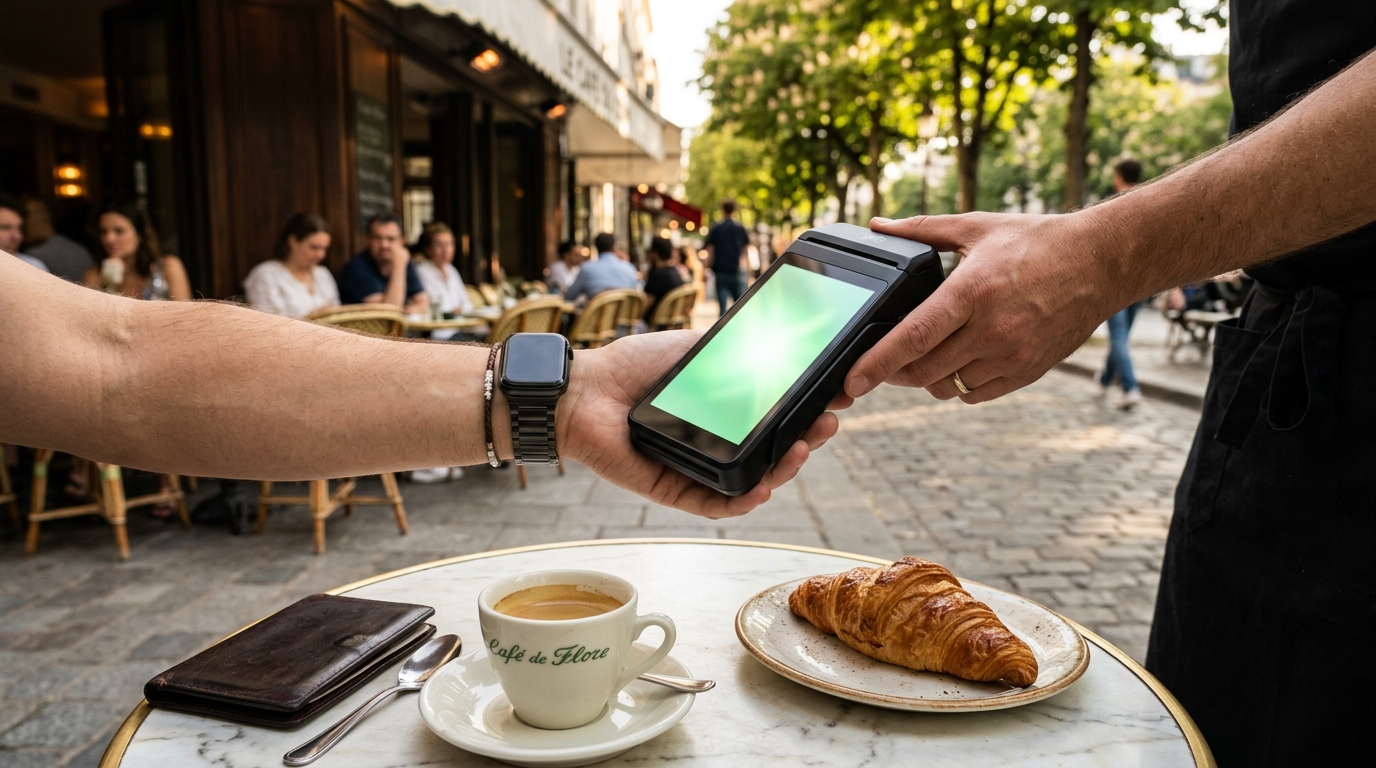
A unique aspect of the Visa Token Service is its ability to decouple a physical credit card from the individual devices that use it. A traveler can have their primary card linked to a smartphone, a smartwatch, and a tablet simultaneously. Each of these devices is assigned a completely different token.
This isolation ensures that if one device is compromised, the other tokens remain secure. For instance, if a smartwatch is lost during an excursion, only that specific token needs to be disabled. The smartphone token and the physical card continue to function perfectly. When an underlying physical card expires, the bank can update the secure token in the background, ensuring uninterrupted access to funds.
Comparing Traditional Card Payments and Tokenized Transactions
To illustrate the technical advantages of this payment architecture, it is helpful to contrast it with traditional card payment systems. The following table highlights key operational differences, demonstrating why the Visa Token Service is superior for travelers who prioritize financial safety while abroad.
| Operational Metric | Traditional Card Payments | Tokenized Transactions |
|---|---|---|
| Data Transmitted | Raw 16-Digit PAN and Expiration Date | Device-Specific Token and Cryptogram |
| Device Binding | None (Card details usable by anyone) | Strictly bound to verified hardware |
| Merchant Breach Risk | High (Leaked PAN allows fraudulent use) | Zero (Leaked token is useless elsewhere) |
| Card Expiration | Requires physical replacement card | Automatic background updates via vault |
This comparative analysis shows how traditional methods require the user to assume a high degree of risk. In contrast, tokenized transactions move the security burden away from merchant networks and onto the payment provider. By replacing static credentials with dynamic data, this framework removes the opportunity for criminals to intercept valuable financial assets.
How Travelers Setup and Use Visa Token Service
Activating this security feature does not require complex technical knowledge or specialized software. For most consumers, understanding how to activate the Visa Token Service is straightforward, as it is already integrated into modern financial platforms. The activation process occurs naturally during the setup of common digital wallets or when storing card information on trusted travel merchant websites.
Integrating with Mobile Wallets
The most common way travelers utilize tokenization is through mobile wallets such as Apple Pay, Google Pay, or Samsung Pay. To begin, a traveler opens the digital wallet on their mobile device and scans their physical Visa card, or inputs the details manually. The mobile wallet provider then transmits this information to the card-issuing bank.
The bank verifies the user’s identity through a security code sent via SMS or email. Upon successful validation, the bank automatically registers the card with the Visa Token Service. Within seconds, a unique token is downloaded and securely stored in the secure element of the device’s hardware chip, making it ready for contactless payments worldwide.
| Digital Wallet | Security Mechanism | Authentication Method | Offline Usability |
|---|---|---|---|
| Apple Pay | Device Account Number stored in Secure Element | Face ID, Touch ID, or Passcode | Yes (No active internet connection required) |
| Google Pay | Virtual Account Number via Host Card Emulation (HCE) | Fingerprint, Pattern, or PIN | Yes (Limited offline transactions allowed) |
| Samsung Pay | Tokenization combined with MST & NFC hardware | Iris Scan, Fingerprint, or PIN | Yes (No active internet connection required) |
Managing Tokenized Cards on Merchant Portals
Beyond mobile wallets, travelers can use tokenization when saving payment details on travel booking websites, ride-sharing apps, or airline portals. When merchants adopt the Visa Token Service, they secure their checkout process by requesting a merchant-specific token instead of storing actual credit card details.
When a traveler saves a card for future bookings, the merchant platform works with the payment network to generate a token specific to that business. If a passenger uses a ride-sharing app in South America, that app holds a token that is entirely useless to a hotel booking site in Europe. This isolated structure ensures that a localized merchant breach cannot escalate.
The Technology Under the Hood: EMVCo Standards and Security
The architecture supporting tokenization is built upon unified global industry specifications managed by EMVCo, the standards body owned by major card networks. Behind the interface of the Visa Token Service lies a complex system of cryptographic algorithms and secure data pipelines.
Every time a transaction is initiated, the system generates a dynamic cryptogram. This is a one-time-use security code that validates the token and proves that the transaction originated from a verified physical device. Even if a criminal intercepts the token and the cryptogram during transmission, they cannot use them to perform a second transaction, as the cryptogram expires immediately after authorization. This dynamic validation is what gives the Visa Token Service its exceptional security profile.
Frequently Asked Questions
Common queries regarding the Visa Token Service are addressed below to help travelers secure their financial assets while abroad.
Is Visa Token Service safe to use abroad?
Yes, it is highly secure for international transactions. The system replaces the traveler’s actual credit card details with a digital token, ensuring that local merchants and public Wi-Fi networks never see the real card number. If a merchant database is breached, the token cannot be used by unauthorized parties elsewhere. To protect other aspects of your trip, obtaining comprehensive travel insurance is also recommended.
Does tokenization affect my rewards or points?
No, utilizing this secure system has no impact on credit card rewards, cash-back programs, or airline miles. Because the Visa Token Service operates strictly behind the scenes, the issuing bank maps the transaction back to the original account automatically. Cardholders will receive all eligible points and consumer protection benefits exactly as if the physical card had been swiped.
What happens if I lose my phone with tokenized cards?
If a device linked to the Visa Token Service is lost, security remains intact. Since digital wallets require biometric authentication (such as fingerprint scanning or facial recognition) or a passcode to authorize payments, unauthorized individuals cannot use the device to execute transactions. Furthermore, cardholders can instantly suspend the specific device token through their bank’s website without needing to cancel the physical card.

Conclusion
Ultimately, the Visa Token Service provides the modern technical foundation that allows global travelers to make digital payments with confidence. As established by the Visa database metrics discussed earlier, substituting static payment data with dynamic credentials significantly reduces fraud risks associated with cross-border commerce. Whether tap-paying for a transit ticket in Europe or booking a flight on a mobile device, travelers can rest assured that their underlying financial details remain completely isolated from potential exploits. Ensuring that the Visa Token Service remains active behind every transaction provides a vital layer of modern security for any international itinerary.