


A realistic budget for tour packages india to europe ranges from ₹1,20,000 to ₹7,00,000+ per person on a twin-sharing basis, depending on whether you choose a budget group coach tour or a fully customized luxury itinerary. While headline rates on travel portals look tempting, the true out-of-pocket cost of a European holiday includes several expenses that cannot be prepaid in India: Schengen visa fees, mandatory health insurance, 2% Tax Collected at Source (TCS), local hotel tourist taxes, and driver tips. Planning a successful trip requires understanding these operational details before paying a deposit.
Comparing Tour Packages India to Europe: Cost Breakdown
European tour pricing depends heavily on hotel location, mode of intercity transport, dining arrangements, and group size. A 3-star suburban group tour operates differently from a centrally located 4-star customized itinerary. Here is what to expect across different package categories:
| Package Category | Typical Cost (Per Person) | Hotel Standard | Key Inclusions | Key Exclusions / Extra Costs |
|---|---|---|---|---|
| Budget Group Tour | ₹1,20,000 – ₹1,80,000 | 3-Star (Suburbs / Outskirts) | Standard coach transfers, continental breakfast, fixed group sightseeing | International flights (often extra), visa fees, city taxes, optional excursions |
| Mid-Range (Group/Custom) | ₹2,20,000 – ₹3,50,000 | 4-Star (Well-connected) | Return flights, visa assistance, daily Indian/continental meals, major entry tickets | Local city taxes, driver/guide tips, shopping, high-mountain excursions |
| Luxury / Tailor-Made | ₹4,00,000 – ₹7,00,000+ | 5-Star / City Centre | Private transfers, direct premium flights, high-speed rail, private guided tours | Personal shopping, specialized private experiences |
If you are evaluating international travel options beyond Western Europe, you can compare these expenses against our breakdown of world tour packages from India to calibrate your overall travel budget.
Taxes and Surcharges: TCS, LRS, and Mandatory Hotel Taxes
Understanding Indian tax regulations and European municipal levies will prevent unexpected expenses during your trip.
1. Tax Collected at Source (TCS) on Overseas Packages
Under Indian tax regulations, booking an overseas tour package through an Indian travel agency attracts a flat 2% TCS from the first rupee. This rule applies across all package values.
TCS is not a permanent fee or loss. It is an advance tax payment logged against your PAN card, visible in your Form 26AS and Annual Information Statement (AIS). You can claim 100% of this TCS amount as a tax credit or cash refund when filing your annual Income Tax Return (ITR).
2. Forex Card Loading under LRS
If you carry foreign currency or load a multi-currency Forex card directly through your bank under the Liberalised Remittance Scheme (LRS):
- 0% TCS applies on Forex card loading up to ₹10 lakh per financial year.
- 20% TCS applies to any cumulative remittance exceeding ₹10 lakh in a financial year.
- 0% TCS applies to standalone international flight tickets purchased directly through airline portals.
3. Overnight City / Tourist Taxes (Payable at Hotel Check-Out)
European municipal councils require overnight tourist taxes to be paid directly at hotel reception desks during check-in or check-out. Travel agencies in India cannot legally collect or prepay these taxes in advance.
- Paris, France: €5.20 per person/night (3-star hotel), €8.45 per person/night (4-star hotel), and €11.38 per person/night (5-star hotel).
- Rome, Florence & Venice, Italy: €1.00 to €10.00 per person/night depending on hotel star category.
- Amsterdam, Netherlands: 12.5% of the net daily room rate (the highest visitor tax rate in Europe).
- Switzerland: CHF 2.50 to CHF 7.00 per person/night depending on the canton and resort town.
- Greece (Athens & Islands): €2.00 (1 to 2-star) up to €15.00 per room/night (5-star) environmental climate levy.
Schengen Visa Guide for Indian Travellers
A short-stay Type-C Schengen visa permits travel across the 29 member states that comprise the Schengen Area (including Bulgaria and Romania, which are full members for land, air, and sea borders). Europe is also deploying the Entry/Exit System (EES), which records digital biometric data (fingerprints and facial scans) at EU external borders.
Schengen Visa Fee Structure
- Consular Visa Fee (EU Regulation): €90 (~₹8,100 to ₹9,800 depending on exchange rates) for adults (12+ years); €45 (~₹4,050 to ₹4,900) for children aged 6–11; Free (€0) for children under 6 years.
- VFS Global / BLS Service Fee: ₹1,900 to ₹3,111 per applicant, depending on the destination embassy.
- Mandatory Travel Insurance: Must provide a minimum emergency medical coverage of €30,000 valid across all 29 Schengen states. Premiums range from ₹800 to ₹2,500 per person.
- Total Out-of-Pocket Expense: Plan for ₹11,500 to ₹15,000 per adult applicant for processing, courier fees, and documentation. Visa fees are non-refundable in the event of rejection.
The Schengen Visa Cascade Regime for Indians
Indian passport holders with an established travel history benefit from the Schengen Cascade rules adopted by the European Commission:
- Applicants who have lawfully obtained and used two Schengen visas within the preceding three years are eligible for a 2-year multi-entry Schengen visa.
- Upon successfully completing a 2-year multi-entry visa, applicants can qualify for a 5-year multi-entry Schengen visa, provided their passport validity permits.
Critical Warning on Appointment Slots: VFS appointment slots in major Indian metro cities (Delhi, Mumbai, Bengaluru, Chennai, Kolkata) frequently sell out 60 to 90 days in advance during the summer peak (April–June). Secure your VFS appointment slot before booking non-refundable hotel reservations or internal transit tickets.
Four Tested Itinerary Blueprints for Tour Packages India to Europe
Itinerary 1: Classic Western Europe (10 to 12 Days)
Route: Paris (3N) → Brussels/Amsterdam (2N) → Black Forest/Lucerne (3N) → Zurich/Innsbruck (2N)
Target Audience: First-time families and group travellers looking for iconic landmarks.
- Day 1–3: Arrive in Paris. Visit the Eiffel Tower (2nd level or Summit access), take an evening Seine River cruise, and explore the Louvre Museum.
- Day 4–5: Travel by coach or high-speed rail to Brussels and Amsterdam. Enjoy a glass-topped canal cruise and visit Zaanse Schans windmill village.
- Day 6–8: Drive through Germany’s Black Forest to Switzerland. Base in Lucerne to board the Mt. Titlis Rotair revolving cable car and ride the ice flyer.
- Day 9–12: Excursion to Rhine Falls in Schaffhausen, transit via Liechtenstein to Innsbruck to view the Golden Roof, and fly home from Zurich or Munich.
Itinerary 2: Swiss & Paris Romance (7 to 8 Days)
Route: Paris (3N) → TGV Lyria Express → Interlaken/Lucerne (4N)
Target Audience: Honeymooners and couples seeking scenic landscapes and a comfortable pace.
- Day 1–3: Paris city tour, optional day trip to Disneyland Paris, evening river cruise, and café visits in Le Marais.
- Day 4: High-speed TGV train from Paris Gare de Lyon straight to Basel/Geneva and transfer to Interlaken.
- Day 5–8: Excursion to Jungfraujoch (Top of Europe at 3,454 metres), Lake Lucerne boat tour, and panoramic train journey on the GoldenPass line before departing Zurich.
Itinerary 3: Central & Eastern Europe Gems (8 to 10 Days)
Route: Vienna (3N) → Bratislava (Transit) → Budapest (3N) → Prague (3N)
Target Audience: Repeat visitors, culture enthusiasts, and budget-conscious travellers.
- Day 1–3: Imperial grandeur in Vienna. Visit Schönbrunn Palace, St. Stephen’s Cathedral, and enjoy traditional Viennese coffeehouses.
- Day 4–6: Short transit stop in Bratislava, Slovakia. Continue to Budapest for a Danube River dinner cruise, Buda Castle, and Széchenyi Thermal Baths.
- Day 7–10: Drive to Prague. Tour Prague Castle, walk across Charles Bridge, observe the Astronomical Clock in Old Town Square, and depart from Prague Airport.
Itinerary 4: Grand Mediterranean / Italy & Greece (10 to 12 Days)
Route: Rome (3N) → Florence/Pisa (2N) → Venice (2N) → Flight to Athens/Santorini (4N)
Target Audience: History lovers, couples, and photography enthusiasts.
- Day 1–3: Explore Rome’s Colosseum, Roman Forum, Trevi Fountain, and the Vatican Museums (Sistine Chapel).
- Day 4–5: Train to Florence, view Michelangelo’s David, take photos at the Leaning Tower of Pisa. If traveling with family, review our detailed guide for an Italy family tour package from India.
- Day 6–7: Gondola ride through Venice’s canals, St. Mark’s Square, and Doge’s Palace. Couples can explore specialized options in our Italy honeymoon package from India guide.
- Day 8–12: Direct flight to Greece. Explore the Acropolis in Athens, then fly to Santorini to view sunsets in Oia before departing Athens.

Field Realities for Indian Travellers: What Operators Rarely Mention
1. Meal Arrangements: Vegetarian & Jain Requirements
Food options vary significantly between fixed-group coach tours and customized travel:
- Escorted Group Tours: Major operators arrange dedicated “Caravan Kitchens” with Indian chefs or contract local Indian restaurants. Pure vegetarian and Jain meals (prepared without onion, garlic, or root vegetables) are guaranteed on designated “Veg Special” group departures.
- Customized / Independent Tours: Outside major capitals, pure vegetarian and Jain restaurants can be sparse.
- Practical Tip: Use European supermarket chains—Coop and Migros (Switzerland), Carrefour and Monoprix (France), or Rewe and Lidl (Germany). They offer fresh salads, vegetarian pasta dishes, fruit, cheese sandwiches, and ready-to-eat items. Carrying pre-packaged Indian meal pouches for long transit days is also helpful.
2. Suburban Hotels vs. City Centre Locations
Budget group packages control costs by booking 3-star and 4-star properties located in industrial zones or suburban districts 30 to 60 km outside core tourist areas (for example, staying near Marne-la-Vallée instead of central Paris, or near airport perimeters in Frankfurt and Zurich).
Suburban stays mean you cannot easily step out of your hotel at night to stroll through city centres unless you pay for taxi transfers. If central walking access matters to your travel party, confirm the exact hotel addresses on Google Maps before placing a deposit.
3. Daily Physical Pace and Walking Demands
European cities limit vehicular access in historical historic centres. Expect the following physical demands:
- Early Starts: Escorted group tours routinely enforce 6:00 AM wake-up calls and 7:00 AM departures.
- Long Transfers: Highway coach travel can average 4 to 8 hours per day between countries.
- High Step Counts: Expect to walk 8,000 to 15,000 steps daily over cobble streets, historic bridges, and station staircases. Comfortable walking shoes are essential.
4. Daily Coach Driver Tipping
European labour regulations mandate strict driving-hour limits (maximum 9 to 10 hours per day). Tipping coach drivers and tour managers is standard practice across European tourism. Budget for €2 to €5 per person per day in cash for driver and guide gratuities, which are typically collected by the tour manager during the trip.
Flight Routes and Airfare Benchmarks
Airfare represents approximately 30% to 40% of your total trip outlay from India.
Key Indian Departure Hubs & European Gateways
- Indian Hubs: New Delhi (DEL), Mumbai (BOM), Bengaluru (BLR).
- European Destinations: London Heathrow (LHR), Paris Charles de Gaulle (CDG), Frankfurt (FRA), Zurich (ZRH), Amsterdam Schiphol (AMS), Rome Fiumicino (FCO).
Average Return Economy Fare Expectations
- Shoulder Season (Feb–Apr, Sept–Nov): ₹45,000 to ₹65,000 per person.
- Peak Summer & Winter Holidays (May–July, Mid-Dec–Jan): ₹75,000 to ₹1,10,000 per person.
- Non-Stop Carriers: Air India, British Airways, Lufthansa, Air France, KLM, Swiss International Air Lines.
- One-Stop Connecting Carriers: Emirates, Etihad, Qatar Airways, Oman Air, Gulf Air (frequently 15% to 25% lower in price, with transfers via Middle Eastern hubs).
Frequently Asked Questions
How far in advance should I apply for a Schengen Visa from India?
Submit your application 2 to 3 months before your departure date. Under current EU rules, the earliest you can lodge a Schengen visa application is 6 months prior to your planned date of travel. Booking VFS appointments early helps avoid seasonal processing bottlenecks.
Can I enter multiple European countries with a single Schengen Visa?
Yes. A short-stay Type-C Schengen visa allows unrestricted travel across all 29 member states within its validity window. You must submit your application to the embassy or consulate of the country where you will stay for the highest number of nights. If night counts are equal across countries, apply to the embassy of your first point of entry.
Is loading a Forex card subject to TCS?
Under LRS regulations, loading foreign currency onto a Forex card is exempt from TCS up to ₹10 lakh per financial year per individual. Any amount remitted or loaded above ₹10 lakh attracts a 20% TCS rate, which can be claimed back during your annual Income Tax Return filing.
What is the luggage allowance on European internal trains and budget airlines?
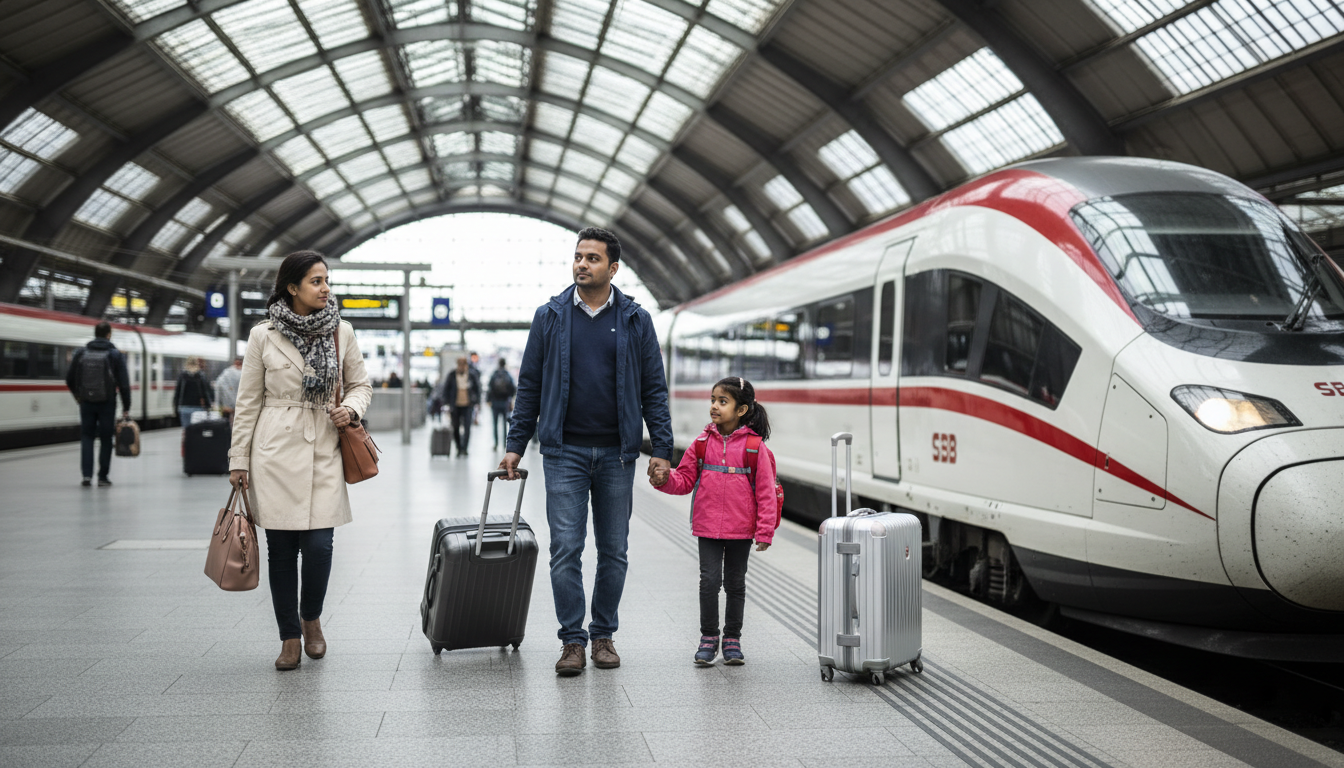
High-speed passenger trains (such as TGV, Eurostar, and ICE) allow up to 2 large suitcases per passenger free of charge, with no strict weight limits. However, European budget airlines (such as Ryanair and EasyJet) enforce strict carry-on policies. Base fares often include only a small personal item; standard 15 kg to 20 kg checked luggage fees must be paid separately during booking.
Are credit cards widely accepted in Europe, or do I need cash?
Visa and Mastercard multi-currency Forex cards are accepted for over 95% of transactions across Western and Central Europe. However, carry €150 to €200 per person in physical cash (small notes and coins) for public restroom access (€0.50 to €1.00 entrance fees), station lockers, small local vendors, and driver gratuities.