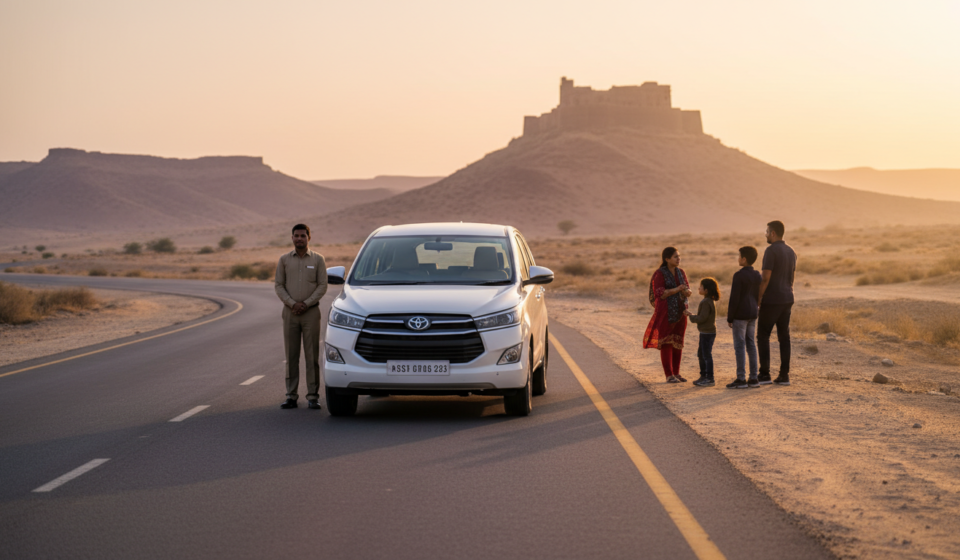

Booking private tour packages india with a dedicated car and driver is the most comfortable way for families, couples, and groups to explore the country. Unlike rigid bus tours or the stress of navigating Indian highways yourself, a chauffeur-driven trip offers door-to-door convenience and complete itinerary flexibility. However, understanding cab billing rules, driver allowances, state border taxes, and vehicle luggage constraints can be confusing. This guide breaks down exact 2026 costs in Indian Rupees (INR), vehicle options, hidden billing mechanics, and regional taxi union restrictions so you can plan your road trip with zero surprises.
Vehicle Options, Luggage Capacities, and Daily Tariffs (2026 Pricing)
When booking a private cab package, picking the right vehicle is not just about counting seats—it is about matching passenger count, luggage volume, and terrain. Outstation cabs in India operate on a daily rental rate or a per-kilometer tariff, subject to a minimum daily running limit.
Below is the verified market pricing for outstation tour packages starting from major hubs like Delhi, Jaipur, Chandigarh, Kochi, and Haridwar:
| Vehicle Class | Representative Models | Passenger Capacity | Luggage Capacity | Daily Rental Rate (INR) | Per-Km Rate (Outstation) | Best Suited For |
|---|---|---|---|---|---|---|
| Sedan | Swift Dzire, Toyota Etios, Honda Amaze | 1–3 Adults | 2 Medium Suitcases + 2 Cabin Bags (~380–500L) | ₹2,500 – ₹4,000 | ₹10 – ₹13 / km | Couples, solo travelers, small families on flat highways (Golden Triangle, Rajasthan). |
| Compact MPV / SUV | Maruti Ertiga, Kia Carens | 4–5 Adults | 2–3 Medium Suitcases (Boot limited with 3rd row up) | ₹3,500 – ₹4,800 | ₹14 – ₹17 / km | Families of 4–5 on budget-conscious multi-day road trips. |
| Premium SUV | Toyota Innova Crysta | 4–6 Adults | 3–4 Suitcases (6-seater) / Minimal (7-seater) | ₹5,000 – ₹7,500 | ₹18 – ₹22 / km | Families, elderly travelers, long mountain journeys (Himachal, Uttarakhand, South India). |
| Standard Tempo Traveller | Force Tempo Traveller (9/12/17 Seater) | 6–12 Adults | 6–10 Large Bags (Rear boot + roof rack) | ₹6,500 – ₹9,500 | ₹22 – ₹28 / km | Medium-to-large family groups, pilgrimage tours, friends’ road trips. |
| Luxury Group Van | Force Urbania (9/12/17 Seater) | 8–12 Adults | 8–12 Large Bags (Deep rear hold) | ₹8,500 – ₹12,500 | ₹32 – ₹42 / km | Premium family groups, corporate delegates, VIPs seeking captain seats and smooth ride. |
*Note: Daily rates cover fuel, driver allowance, basic vehicle maintenance, and standard 250 km/day running limits unless explicitly excluded in your vendor quote. Peak season dates (May–June summer breaks, Diwali, and New Year) may carry a 20% to 40% surcharge.
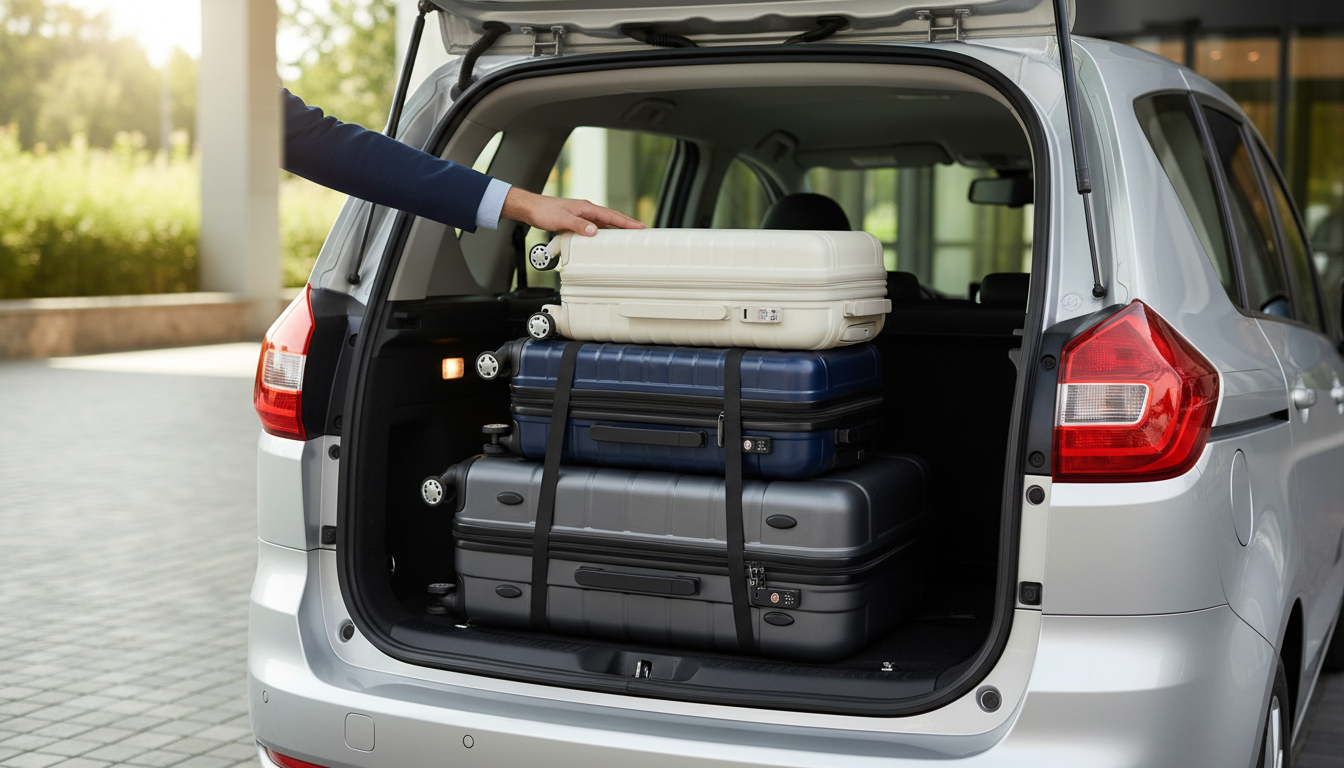
Critical Luggage Warning: A 7-seater Toyota Innova Crysta carrying 6 passengers has virtually zero boot space (~300L) when the third-row seats are upright. It will fit only 1 or 2 small soft bags. If you are 5 or 6 adults with full-sized suitcases, you must request a roof luggage carrier or upgrade to a 9-seater Tempo Traveller. Similarly, in a Maruti Ertiga carrying 5 adults, the third row must be folded flat to fit 3 suitcases, reducing real seating to 4 passengers.
How Private Cab Billing Works in India (Hidden Costs Demystified)
Understanding the structure of an outstation cab bill prevents unexpected costs at the end of your trip. Private tourist cabs do not operate like local city taxis. Here is how the charges are calculated:
1. Garage-to-Garage Kilometer Calculation
Billing starts when the vehicle leaves the operator’s home garage in the pickup city and ends when the vehicle returns to that same garage. If your hotel is located in Gurgaon or Noida and the cab vendor’s garage is in Central Delhi, an extra 30 to 50 km per day (or at the end of the trip) will be added to your billable distance.
2. Minimum Daily Running Limit (250 km Rule)
Multi-day outstation road trips carry a mandatory minimum charge of 250 km per day.
For example, if you hire an Innova Crysta at ₹20/km for a 5-day tour, your base bill covers up to 1,250 km (5 days × 250 km = ₹25,000). Even if your total trip covers only 850 km, you will still pay for 1,250 km. If you cover 1,400 km, the extra 150 km is billed at ₹20/km (an extra ₹3,000).
3. Driver Daily Allowance (Driver Bata / DA)
Driver Bata covers the driver’s daily meals and incidental expenses. Standard rates are ₹300 to ₹500 per day in Northern and Western India, and ₹500 to ₹800 per day in South India or steep mountain sectors. You are not required to book a hotel room for your driver. Professional tourist drivers sleep in the vehicle (which is equipped for overnight halts) or use budget rest facilities provided free of charge by hotels.
4. Night Charges
If the vehicle is driven during night hours—typically between 10:00 PM and 6:00 AM—an additional driver night charge of ₹300 to ₹500 per night applies. This encourages safe driving practices and compensates drivers for night shifts.
5. FASTag, Highway Tolls & Local Parking
- Highway Tolls: Recorded automatically via the vehicle’s FASTag sticker and billed at actual costs. Expect toll charges of ₹300 to ₹800 per day on major highways and expressways like the Yamuna Expressway or Delhi-Mumbai Expressway.
- Parking Fees: Paid by the traveler in cash directly at monuments, airports, railway stations, and hotel parking lots.
6. Interstate Entry Taxes vs. All India Tourist Permit (AITP)
Commercial yellow-plate vehicles operating under the All India Tourist Permit (AITP) 2023 Rules pay a consolidated central tax via the Parivahan portal. However, if your cab operator does not hold a national composite permit, you must pay state border entry taxes whenever crossing state lines (for example, driving from Delhi into Uttar Pradesh, Haryana into Rajasthan, or Tamil Nadu into Kerala):
- Sedans: ₹300 – ₹900 per state border entry.
- SUVs (Innova/Ertiga): ₹700 – ₹2,150 per state border entry.
- Tempo Travellers: ₹500 – ₹5,000 per state border entry (significantly higher in states like Himachal Pradesh and Goa).
Always verify whether your quoted package rate includes all border taxes and tolls, or if they will be billed separately at actuals.
Cost Breakdown for Popular Private Tour Packages in India
Here are typical vehicle costs across five popular travel circuits in India. These figures include vehicle rental, fuel, driver allowance, and estimated highway tolls for standard trip durations.
Circuit 1: Golden Triangle (Delhi – Agra – Jaipur – Delhi)
Duration: 4 Nights / 5 Days | Approx Distance: 1,000 km
- Sedan (Dzire/Etios): ₹12,000 – ₹16,000
- SUV (Innova Crysta): ₹18,000 – ₹25,000
- Tempo Traveller (12-Seater): ₹28,000 – ₹35,000
Planning Tip: Ensure your quote includes Yamuna Expressway toll fees and Rajasthan state entry permit charges. While train options like the Shatabdi Express are popular, private road packages remain the preferred choice for family travel along this circuit. If you want to compare rail itineraries, review our guide to IRCTC tour packages for details on tourist trains.
Circuit 2: Royal Rajasthan Heritage (Jaipur – Jodhpur – Udaipur – Jaisalmer)
Duration: 7 Nights / 8 Days to 9 Nights / 10 Days | Approx Distance: 2,000–2,500 km
- Sedan (Dzire/Etios): ₹25,000 – ₹35,000
- SUV (Innova Crysta): ₹42,000 – ₹65,000
- Tempo Traveller (12-Seater): ₹65,000 – ₹90,000
Planning Tip: Distances between desert cities are vast. Confirm if your driver’s allowance covers late-evening drops during dune safaris in Jaisalmer.
Circuit 3: Kerala “God’s Own Country” (Kochi – Munnar – Thekkady – Alleppey)
Duration: 5 Nights / 6 Days to 7 Nights / 8 Days | Approx Distance: 800–1,200 km
- Sedan (Dzire/Etios): ₹14,000 – ₹20,000
- SUV (Innova Crysta): ₹22,000 – ₹32,000
- Tempo Traveller (12-Seater): ₹35,000 – ₹48,000
Planning Tip: South Indian cab operators frequently list Driver Bata (₹500–₹700/day) as a separate line item. Always ask for an all-inclusive quote before booking.
Circuit 4: Himachal Hill Loop (Delhi / Chandigarh – Shimla – Manali – Delhi)
Duration: 6 Nights / 7 Days | Approx Distance: 1,400–1,600 km
- Sedan (Dzire/Etios): ₹20,000 – ₹25,000
- SUV (Innova Crysta): ₹32,000 – ₹40,000
- Tempo Traveller (12-Seater): ₹42,000 – ₹55,000
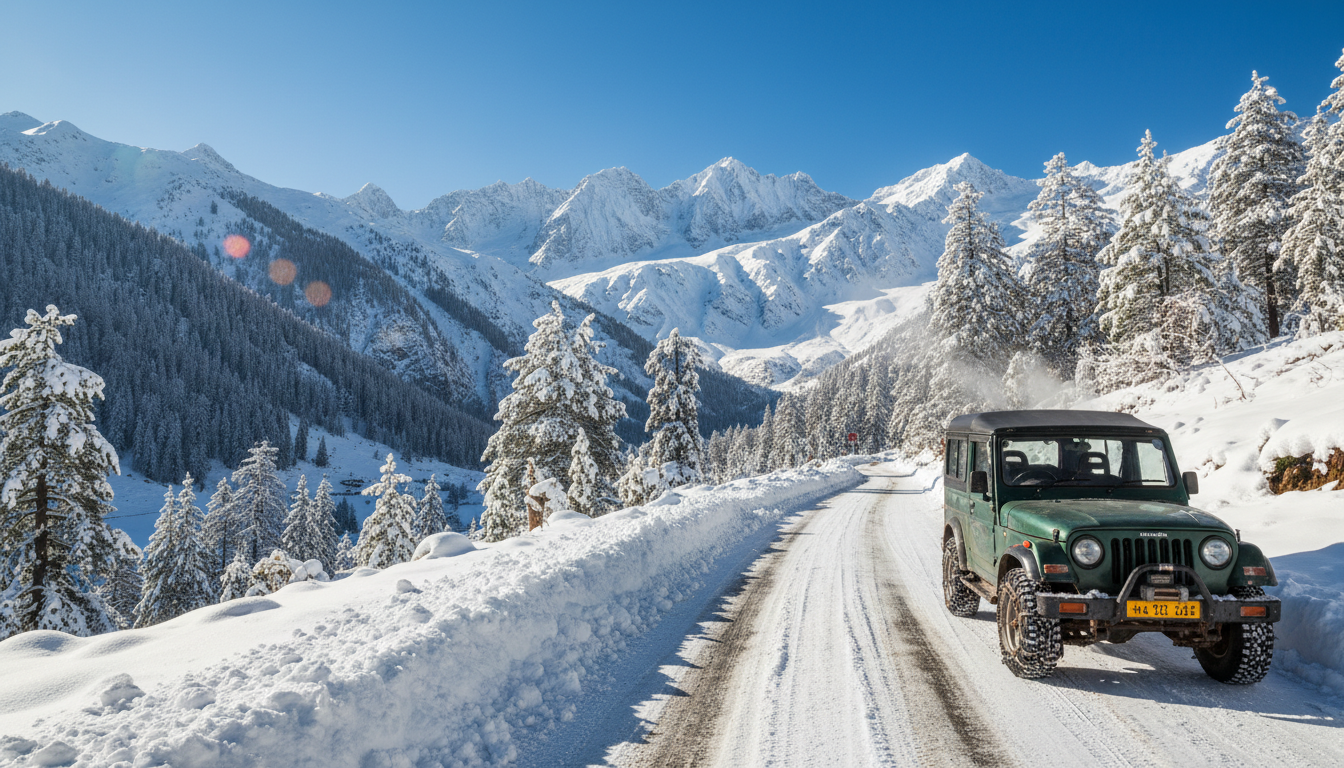
Planning Tip: High-altitude hill drives consume more fuel and place heavier demands on the vehicle. Ensure your cab holds a valid green tax receipt for entering Manali.
Circuit 5: Uttarakhand Chardham Yatra (Haridwar – Yamunotri – Gangotri – Kedarnath – Badrinath)
Duration: 9 Nights / 10 Days | Approx Distance: 1,500–1,800 km (mountain driving)
- Sedan (Dzire/Etios): ₹36,000 – ₹45,000 (Not recommended for more than 2 passengers due to steep climbs)
- SUV (Innova Crysta): ₹54,000 – ₹75,000
- Tempo Traveller (12/17-Seater): ₹75,000 – ₹1,05,000
Planning Tip: Mountain road trips require highly experienced hill drivers. Confirm that your driver has prior experience traversing steep Himalayan corridors.
How to Select Vehicle Types for Private Tour Packages in India: Group Travel Comparison
When traveling with a group of 6 to 12 people, choosing between a standard Force Tempo Traveller and the newer Force Urbania comes down to comfort preferences and budget considerations.
| Feature | Standard Force Tempo Traveller | Force Urbania (Luxury Van) |
|---|---|---|
| Seating Layout | 3+1 Bench / Standard Reclining Layout | 2+1 Reclining Luxury Captain Seats |
| Suspension & Ride | Rear Leaf Spring (Slightly bumpy on rough roads) | Independent Front Suspension (Smooth, car-like ride) |
| Cabin Comfort | Basic AC Vents, Higher Engine Noise | Silent Cabin, Individual Air Vents, USB Ports |
| Safety Features | Basic ABS | Dual Airbags, ABS, ESP, Hill-Hold Assist |
| Outstation Tariff | ₹22 – ₹28 / km | ₹32 – ₹42 / km (~35–40% premium) |
| Best Suited For | Budget group road trips, pilgrimages | Senior citizens, VIP corporate trips, luxury family tours |
For long hill journeys or trips with elderly travelers, the Force Urbania’s superior suspension and lower noise levels reduce road fatigue significantly, making the higher per-kilometer cost worthwhile.
Local Taxi Union Restrictions & Regional Pitfalls
One of the biggest traps for domestic travelers booking private tour packages india is assuming a cab hired in Delhi, Mumbai, or Srinagar can take them everywhere. In several major tourist regions, local taxi unions strictly enforce monopolies that restrict outside vehicles from local sightseeing points.
1. Ladakh (Leh, Nubra Valley, Pangong Tso, Hanle)
Outside commercial taxis (yellow-plate cabs from Delhi, Punjab, Manali, or Srinagar) and black-plate self-drive rentals are **strictly prohibited** from conducting local sightseeing inside Ladakh. Outside cabs can only drop you off at your Leh hotel. To visit Khardung La, Nubra Valley, Pangong Lake, and Hanle, you must hire a local vehicle registered with the Ladakh Cooperative Taxi Union at fixed union tariffs. Only private white-plate cars registered in your own name (or an immediate family member’s name) are exempt.
2. Kashmir Valley (Srinagar, Gulmarg, Pahalgam, Sonamarg)
A cab hired for a Kashmir honeymoon package or family trip can transport you between Srinagar, Gulmarg, and Pahalgam. However, local taxi unions in Gulmarg and Pahalgam often stop outside cabs from accessing specific interior sightseeing points:
- Gulmarg: Outside cabs are stopped at Tangmarg during snow conditions, requiring you to hire local 4×4 vehicles with snow chains.
- Pahalgam: Outside cabs are barred from driving to Aru Valley, Betaab Valley, and Chandanwari. You must hire a local Pahalgam union cab on the spot (costing an additional ₹2,000–₹3,500 per day).
3. Himachal Pradesh & Uttarakhand High-Altitude Routes
- Rohtang Pass (Manali): Vehicles entering the Rohtang Pass region require an NGT online permit. Outside state cabs often struggle to secure these limited daily permits, whereas local Manali operators hold streamlined access.
- AC Switch-Off in Hills: Drivers across Himachal, Uttarakhand, Sikkim, and Munnar routinely switch off the air conditioner while driving uphill. This is standard practice to prevent engine overheating and maintain vehicle power on steep inclines.
If you are planning a mountain itinerary further east, check out our dedicated guide for a Sikkim family tour package to learn about regional permit rules and vehicle selection for the Eastern Himalayas.
Private Cab Tour vs. Self-Drive vs. Group Bus Tour
Choosing the right mode of transport depends on how much control, comfort, and financial risk you want to manage during your vacation:
| Criteria | Private Car & Chauffeur | Self-Drive Car Rental | Group Bus Tour |
|---|---|---|---|
| Driver Fatigue | Zero (Handled by professional) | High (Stressful on highways/hills) | Zero |
| Schedule Flexibility | 100% Flexible | 100% Flexible | Rigid / Fixed Timings |
| Door-to-Door Service | Yes | Yes | No (Fixed pick/drop hubs) |
| Financial Risk | Low (Vehicle damage is operator’s risk) | High (Security deposits, damage liability) | Low |
| Cost Efficiency | High for 3+ travelers | Medium (Rental fee + security deposit + fuel) | High for solo travelers |
For family vacations, hiring a private car with a local driver eliminates the fatigue of driving long distances on unfamiliar roads, removes parking hassles at busy sightseeing spots, and allows you to make spontaneous stops along the way.
If you are also comparing domestic holiday budgets against trips abroad, review our price guide for international tour packages from India to see how domestic private road trips stack up against international getaways.
How to Book Your Private Cab Package Without Hidden Charges
Before making an advance payment to a travel agency or cab operator, confirm the following details in writing:
- Vehicle Model & Year: Specify the exact model class (e.g., “Toyota Innova Crysta 2022 or newer”) rather than a generic “SUV equivalent” clause to avoid older, poorly maintained vehicles.
- Inclusions List: Verify that the quoted tariff includes fuel, driver allowance (Bata), state border taxes, FASTag highway tolls, and night charges.
- Luggage Arrangements: If traveling with 5 or more passengers in an SUV, confirm whether a certified roof luggage carrier is installed.
- Daily Running Cap: Ensure your daily distance calculation aligns with your actual itinerary routes so you don’t exceed the minimum 250 km/day average.
- Union Sightseeing Exclusions: Ask your vendor to list any locations (such as Gulmarg snow points, Pahalgam valleys, or Nubra Valley) where local taxi union transfers are required, so you can budget for spot expenses.
Frequently Asked Questions
Are private cab tour packages safe for solo female travelers and families in India?
Yes, booking private tour packages through reputable, verified travel agencies or licensed transport vendors is safe. Professional tourist drivers undergo background checks and rely on repeat tourist business. For added peace of mind, request driver and vehicle registration details (including national permit papers) 24 hours before your journey begins.
Do I need to pay for my driver’s hotel room and meals during an outstation trip?
No, you do not need to provide a hotel room or pay for your driver’s food directly. The daily Driver Allowance (Bata) included in your quote covers their meals and incidental costs. Drivers sleep inside the vehicle or use driver rest facilities provided free of charge by most tourist hotels and resorts.
What happens if our total trip distance is less than the 250 km per day minimum limit?
Outstation cab rentals operate on a mandatory minimum running threshold of 250 km per day. Even if your vehicle covers only 120 km on a given day, you will be billed for the baseline 250 km. However, kilometer limits are cumulative over multi-day trips. On a 4-day tour, your total base allowance is 1,000 km (4 days × 250 km), meaning a shorter driving day can offset a longer one later in the trip.
Can an Innova Crysta comfortably carry 6 passengers with luggage?
A 7-seater Innova Crysta can seat 6 passengers, but with the third-row seats up, boot space drops to approximately 300 liters—enough for only 1 or 2 small cabin bags. For 6 adults carrying standard suitcases, you must request a roof luggage carrier or upgrade to a 9-seater Tempo Traveller.
Why do drivers turn off the air conditioner while driving in hill stations?
Drivers switch off the AC during steep mountain climbs to prevent the vehicle engine from overheating and to maintain sufficient climbing power. Once the vehicle reaches flatter mountain roads or top plateaus, the driver can safely turn the AC back on.