


If you are planning a trip from India to Tokyo, Kyoto, or Osaka, determining the minimum bank balance for japan tourist visa from india application is usually your most pressing concern. The Embassy of Japan in India does not publish an official, fixed figure like “₹2 Lakhs required.” Instead, Japanese consular officers evaluate your bank statement based on financial liquidity, transaction history over the past six months, income stability, and whether your balance comfortably covers your specific day-wise itinerary with a surplus remaining after you return.
Based on visa approval data for Indian passport holders, a solo traveler planning a standard 10-day trip to Japan should show a liquid bank balance between ₹2.5 Lakhs and ₹4.0 Lakhs. While smaller balances can work for shorter 5-day trips with pre-paid bookings, submitting a balance that barely covers your flight and hotel estimates is one of the quickest ways to trigger a visa refusal.
Official Policy vs. Practical Reality: How Japan Evaluates Financials
Neither the Embassy of Japan in New Delhi nor the Japanese Consulates in Mumbai, Kolkata, Chennai, or Bengaluru state a hard threshold for bank balances. VFS Global checklists simply request “bank statements for the last 6 months” along with Income Tax Returns (ITR-V).
When a Japanese consular officer opens your financial file, they look to establish two main facts:
- Financial Liquidity: You can pay for all international travel, local transport, accommodation, meals, sightseeing, and unexpected medical emergencies without needing to seek illegal work in Japan.
- Socio-Economic Ties to India: You have a steady, verifiable source of income (salary or business revenue) and financial savings in India that guarantee your prompt return.
Because living and travel expenses in Japan are significantly higher than in South-East Asian destinations like Thailand or Vietnam, consular officers evaluate your balance directly against the length and luxury level of your submitted itinerary.
Recommended Minimum Bank Balance for Japan Tourist Visa from India
To avoid scrutiny, your liquid bank balance should comfortably exceed your anticipated expenses. The table below outlines the practical benchmarks expected by consular processors based on trip duration and applicant profiles:
| Traveler Group | Trip Duration | Recommended Liquid Savings Balance | Ideal Annual Income (ITR) |
|---|---|---|---|
| Solo Traveler | Short (5–7 Days) | ₹1.5 Lakh – ₹2.5 Lakh | ₹4.5 Lakh+ p.a. |
| Solo Traveler | Standard (10–15 Days) | ₹2.5 Lakh – ₹4.0 Lakh | ₹6.0 Lakh+ p.a. |
| Couple (Joint or Individual) | Standard (7–10 Days) | ₹4.0 Lakh – ₹5.5 Lakh | ₹8.0 Lakh+ p.a. (Combined) |
| Family (2 Adults + 1 Child) | Standard (10 Days) | ₹5.5 Lakh – ₹7.5 Lakh+ | ₹12.0 Lakh+ p.a. (Combined) |
These figures apply to unencumbered, liquid funds sitting in an active savings or salary account. Having ₹1.5 Lakh in your account for a 14-day multi-city trip during peak Sakura (Cherry Blossom) season in April will likely lead to a visa rejection, whereas that same ₹1.5 Lakh is sufficient for a 5-day budget itinerary in November.
The Daily Expense Formula: Matching Balance to Itinerary
Visa officers do not look at your bank balance in isolation. They compare it against your submitted day-wise itinerary, accommodation bookings, and flight plan.
The Financial Calculation Formula
You can calculate your target bank balance using this formula:
Required Balance = (Unpaid Flight Costs + Accommodation Costs) + (Daily Ground Allowance × Number of Days) + Surplus Safety Cushion (20% to 30%)
Daily Ground Allowance Guidelines in Japan
Japanese consular evaluations generally assume a baseline daily spending requirement of USD $100 (~¥15,000 or ₹8,000–₹8,500) per person per day for ground expenses (food, local trains/Shinkansen, entrance fees, and shopping), assuming flights and hotels are already budgeted.
- Budget Travel Style: ¥8,000 – ¥10,000/day (~₹4,500 – ₹5,800/day) — capsule hotels, local meal sets (Teishoku), local subway passes.
- Mid-Range Travel Style: ¥12,000 – ¥18,000/day (~₹7,000 – ₹10,500/day) — 3-star business hotels, Shinkansen travel, casual dining.
- High-End / Peak Season: ¥25,000+/day (~₹14,500+/day) — 4-star/5-star luxury hotels, ryokan stays, fine dining.
Example Math for a 10-Day Solo Trip
- Return Flights (India to Tokyo/Osaka): ~₹55,000 (See our guide on securing a flight itinerary for visa application)
- Hotel Accommodations (10 nights @ ₹6,500/night): ~₹65,000
- Ground Expenses (10 days @ ¥12,000/day): ~₹70,000
- Total Estimated Trip Cost: ₹1,90,000
- Required Bank Balance to Show: Minimum ₹2.5 Lakhs to ₹3.0 Lakhs. This covers the ₹1.90L trip cost and leaves a healthy surplus of ₹60,000 to ₹1,10,000 in your account upon return.
Strict Bank Statement Formatting Rules
The Japanese Consulate maintains strict formatting standards for financial submissions. Submitting an improper bank statement format is a common reason for administrative delay or rejection, even if you have sufficient funds.
1. Six Months Statement History
While some single-entry checklists state that 3 months is acceptable, submitting a stamped 6-month bank statement is strongly recommended. This gives the visa officer a clear view of your financial stability and regular cash flow.
2. Physical Branch Stamp and Signature
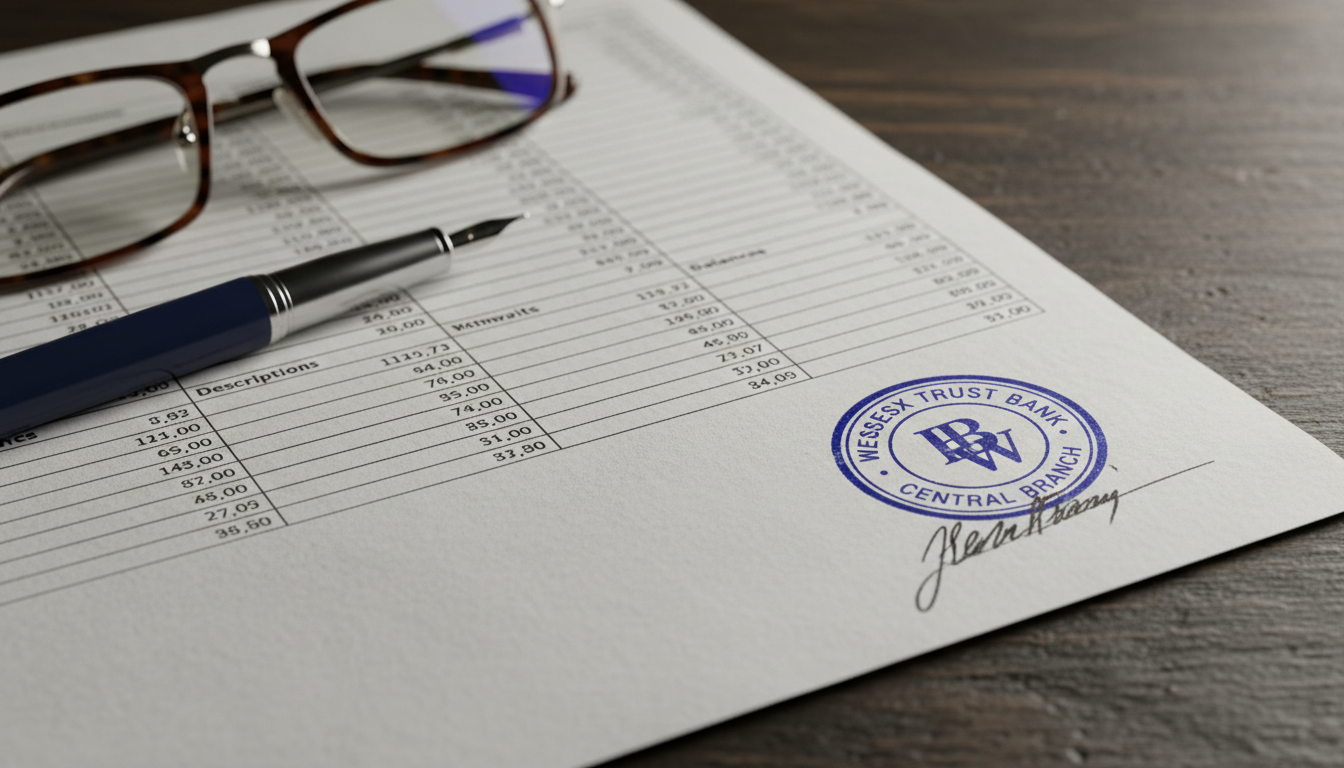
Internet banking PDF downloads or mobile app screenshots printed at home are generally rejected at the VFS counter. Your bank statement MUST be physically stamped and signed by a bank branch officer on every page or on the final summary page with an official seal.
If you use a passbook, provide a clear photocopy of the passbook updated to the current date, bearing the bank branch seal.
3. The 7-Day Recency Rule
The printing and stamping date of your bank statement must be within 7 days (ideally within 3 days) of your submission date at VFS Global. Statements printed 10 to 15 days before your appointment date are routinely turned away by VFS intake staff, requiring a trip back to the bank branch.
Avoid “Fund Parking” and Sudden Lump-Sum Rejections
One of the most common mistakes Indian applicants make is transferring a large amount of money into their account right before submitting their visa application. In consular terms, this is known as “Fund Parking.”
Warning: If an account shows an average monthly balance of ₹10,000 for five months and suddenly jumps to ₹3.0 Lakhs two weeks before the visa submission via a single lump-sum deposit, the application will face intense scrutiny and likely refusal. Consular officers view unexplained deposits as borrowed funds meant solely to trick immigration control.
How to Handle Legitimate Recent Lump-Sum Deposits
If your account balance increased recently due to a legitimate financial transaction, you must provide supporting documentation explaining the source of funds:
- Annual Corporate Bonus: Attach your official company bonus letter and matching pay slip.
- Fixed Deposit Maturity: Attach the FD closure advice note or bank advice slip.
- Property or Asset Sale: Attach the registered sale deed and tax deduction documents.
- Mutual Fund / Stock Redemption: Attach the official CAS statement showing the redemption credit.
Always detail these legitimate deposits clearly in your personal Cover Letter to the Embassy.
Fixed Deposits, Mutual Funds, and Assets: Primary vs. Secondary Proof
A frequent point of confusion among Indian travelers is assuming high asset net worth offsets a low savings balance. Many applicants ask: “Can I show a ₹5 Lakh Fixed Deposit instead of a bank statement?”
The answer is No.
- Primary Proof (Mandatory): Your active liquid Savings Account or Salary Account statement. Japanese travel requires accessible cash. An FD cannot pay for a daily train ticket or hotel bill in Tokyo on short notice without liquidation.
- Secondary Proof (Supplementary): Fixed Deposits (FDs), Mutual Funds, Demat holdings, Public Provident Fund (PPF) statements, and property deeds.
The correct strategy is to maintain a liquid balance of at least ₹2.0 Lakhs in your savings account and attach your FDs or Mutual Fund statements as additional proof of economic rootedness in India. FDs strengthen a strong application, but they cannot rescue an account with inadequate liquid balance.
Income Documentation Required by Applicant Profile
Bank statements must be backed by income verification. Requirements vary based on your primary source of earnings in India:
A. Salaried Employees
- Bank Statement: 6 months stamped personal bank statement displaying regular monthly salary credits.
- Payslips: Salary slips for the last 3 months.
- ITR-V: Income Tax Return Acknowledgement for the last 1 to 3 years (3 years strongly recommended).
- Employer Permission: An original letter on company letterhead approving your leave. Check our detailed guide on the employer NOC for visa applications for exact formats.
B. Self-Employed Individuals & Business Owners
- Personal & Business Bank Statements: 6 months stamped personal savings account statement AND 6 months company current account statement.
- Business Registration: GST Registration certificate, MSME/Udyam Registration, or Certificate of Incorporation.
- ITR-V: Personal and Company ITR-V forms for the last 3 financial years.
C. Students, Unemployed Applicants, and Dependents (Sponsorship Rules)
If you do not have an independent income (e.g., traveling as a student, homemaker, or elderly dependent parent), a immediate family member (spouse, parent, or child) can act as your financial sponsor.
The sponsor must provide:
- A signed Sponsorship Letter / Affidavit of Support explicitly stating they will cover all travel, living, and emergency expenses for the applicant.
- Proof of Relationship: Birth Certificate, Passport copy showing parents’ names, Marriage Certificate, or Aadhaar card.
- Sponsor’s Financials: The sponsor’s 6-month stamped bank statement showing sufficient funds to cover both themselves and the sponsored traveler (e.g., ₹5.0 Lakhs+ for a couple), along with 3 years of ITR-V.
Single vs Multiple Entry: Minimum Bank Balance for Japan Tourist Visa from India
Japan offers both single-entry and long-term multiple-entry visas to Indian passport holders. Financial requirements differ significantly between these categories:
| Parameter | Single-Entry Tourist Visa | Multiple-Entry Tourist Visa (3 or 5 Years) |
|---|---|---|
| Permitted Stay | 15 to 30 days per visit | Up to 90 days per visit |
| Visa Validity | 3 months from date of issue | 3 years or 5 years |
| Recommended Bank Balance | ₹1.5 Lakh – ₹3.0 Lakh | ₹5.0 Lakh – ₹10.0 Lakh+ (Liquid Savings) |
| ITR Expectations | 1 to 3 years ITR (Any taxable bracket) | 3 years mandatory ITR showing high taxable income (typically ₹10L+ p.a. for 3-yr; ₹20L+ p.a. for 5-yr) OR recent travel history to G7 countries/Japan. |
If you are applying for a multiple-entry visa, consular officers expect substantial liquid reserves to ensure you can travel repeatedly without financial strain.
eVisa Processing, VFS Verification, and the Critical Airport Internet Rule
While Japan has introduced an eVisa facility for Indian passport holders holding ordinary passports for short-term tourism, the process still flows through designated VFS Global submission frameworks depending on your jurisdiction.
You can read about the overall submission steps in our guide on how to book a VFS visa appointment in India.
The Critical 2026 Airport Operational Rule for Japan eVisas
If you receive an electronic visa for Japan, you will be issued a digital “Visa Issuance Notice.” Japanese Immigration enforces a strict operational rule that trips up many Indian travelers at departure airports:
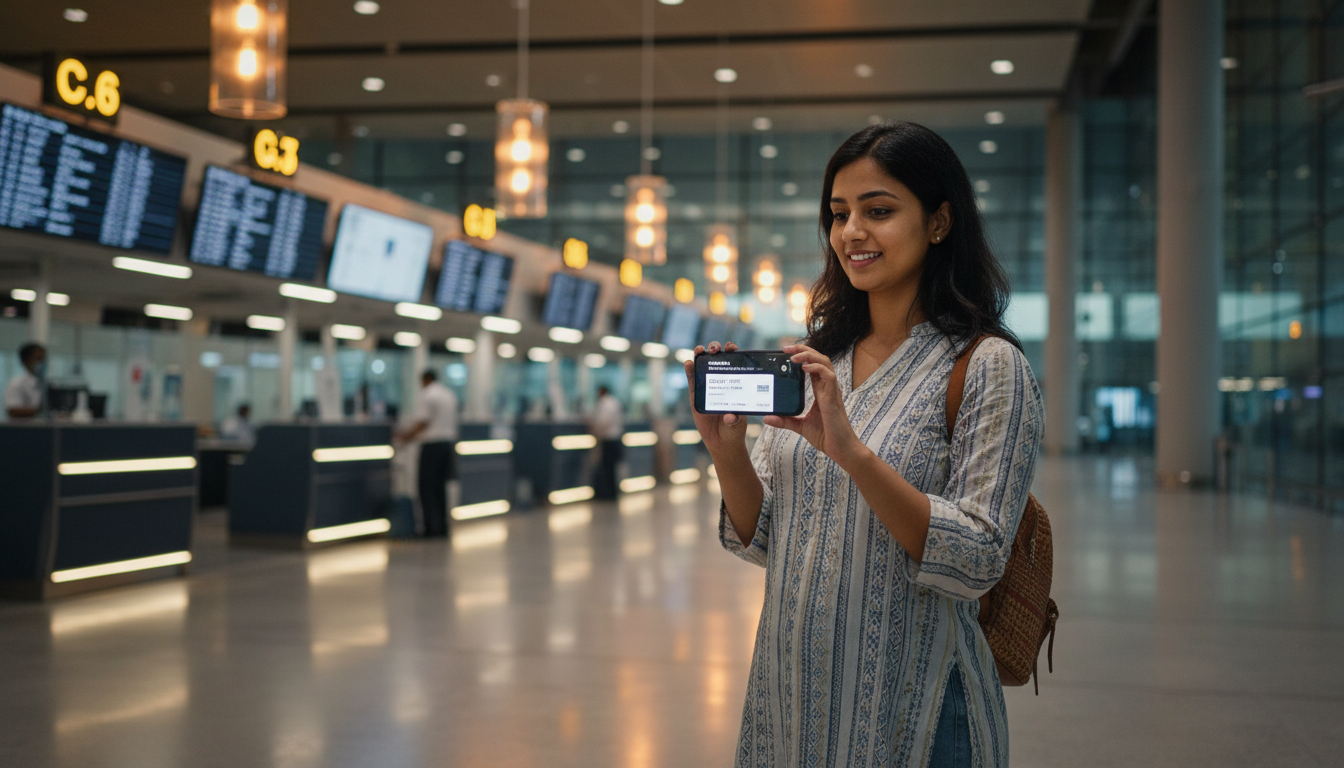
MANDATORY IMMIGRATION REQUIREMENT: You must display the LIVE “Visa Issuance Notice” on your smartphone screen via an active internet connection at airline check-in counters and Japanese border control.
PDF downloads, saved screenshots, or printed paper copies are explicitly REJECTED by airline systems and Japanese immigration officers. If you cannot display the live webpage, you will be denied boarding.
Ensure you have an active international roaming pack or functional airport Wi-Fi when checking in at Mumbai, Delhi, Bengaluru, or Chennai airports.
Japan Tourist Visa Fees and VFS Charges Breakdown (2026)
The cost of obtaining a Japan tourist visa from India remains reasonably priced compared to Western destinations. Understanding these mandatory administrative fees helps you budget accurately:
- Official Embassy Visa Fee: JPY 3,000 (~₹1,650) for both Single-Entry and Multiple-Entry tourist visas. (Certain single-entry sub-categories processed under specific agreements incur a reduced base fee of ~₹450–₹550).
- VFS Global Service Fee: Approx. ₹800 – ₹1,250 per application.
- Total Estimated Processing Cost: Approx. ₹1,750 – ₹2,900 per applicant (excluding optional courier, SMS alerts, or premium lounge add-ons).
For a complete comparative breakdown of administrative charges across different countries, refer to our analysis on visa and passport costs in India.
Common Financial Mistakes That Lead to Visa Rejections
To ensure a smooth approval process, avoid these frequent mistakes identified in rejected applications:
- Calculating Expenses to the Exact Rupee: If your estimated trip expenses are ₹1.8 Lakhs and your bank account balance is ₹1.85 Lakhs, your visa will likely be rejected. Officers want to see a post-trip surplus cushion remaining for your living expenses in India.
- Submitting Unstamped Online Bank Downloads: Digital statements generated from net-banking portals without physical branch stamps and signatures are a major cause of intake rejection at VFS windows.
- Bank Statements Older Than 7 Days: Printing your bank statement 10 to 15 days before your scheduled appointment violates the recency requirement.
- Mismatched Income and Account Activity: Declaring an annual income of ₹12 Lakhs on your cover letter while your bank statement shows zero salary credits and a stagnant ₹30,000 balance raises serious red flags.
- Luxury Itineraries on a Budget Balance: Submitting reservations for high-end hotels in Tokyo and luxury private transfers while showing only ₹1.2 Lakhs in liquid funds creates a clear financial mismatch.
Frequently Asked Questions
Can I apply for a Japan tourist visa if my bank balance is less than ₹1 Lakh?
Applying with a bank balance below ₹1 Lakh carries a high risk of rejection for a multi-day trip. However, if your trip is very short (3 to 4 days), your international flights and hotels are 100% pre-paid, and you provide strong 3-year ITRs demonstrating high annual income, approval is possible. Maintaining at least ₹1.5 Lakhs in liquid savings remains strongly advised.
Is a salary account statement better than a savings account statement?
The best statement is the one showing regular, verifiable monthly salary credits. If your main savings are held in a separate bank account from your salary account, submit statements for both accounts: the salary account to prove regular income flow, and the secondary savings account to demonstrate your total liquid balance.
Are credit card limits or credit statements accepted as proof of bank balance?
No. Credit card limits, credit card statements, or available credit lines are not accepted as primary proof of financial liquidity by the Embassy of Japan. You must show actual funds available in savings, current, or liquid accounts.
Does my spouse need a separate bank statement if we are traveling together?
If one spouse is funding the entire trip, the non-earning spouse does not need an independent bank statement. Instead, submit a signed Sponsorship Letter from the funding spouse, a copy of your Marriage Certificate, and the funding spouse’s bank statement showing a balance sufficient to cover both travelers (typically ₹4.0 Lakhs or more for a couple).
Can I submit Fixed Deposit receipts instead of a 6-month bank statement?
No. Fixed Deposit receipts serve as secondary supporting financial evidence only. They demonstrate long-term financial stability and ties to India, but they cannot replace the mandatory 6-month liquid savings or salary bank account statement required by the consulate.