
March is a transitional shoulder month in India where winter yields to spring and early summer heat. Preparing a packing list for india in march requires planning for distinct microclimates across the country. You might face an 8°C morning breeze on a wildlife safari in Jim Corbett, a hot 34°C afternoon in Jaipur, and high humidity along the coast of Goa all in the same week. Add the chaotic, color-drenched festival of Holi into your itinerary, and standard summer packing lists quickly fall short.
This guide breaks down regional weather patterns, safari outfit rules, temple dress codes, and gear for Holi so you stay comfortable and culturally respectful wherever you travel.
Regional Weather and Your Packing List for India in March
March atmospheric conditions diverge significantly depending on where you travel. While the Himalayan belt retains a winter chill, Central and South India heat up rapidly by afternoon.
| Region | Avg High (°C) | Avg Low (°C) | Atmospheric Conditions |
|---|---|---|---|
| North Plains (Delhi, Jaipur, Agra) | 28°C – 34°C | 14°C – 18°C | Crisp mornings, warm sunny afternoons |
| Himalayas (Shimla, Manali) | 14°C – 20°C | 4°C – 8°C | Cold mornings/nights, dry, crisp air |
| Western Coast (Goa, Mumbai) | 31°C – 34°C | 22°C – 24°C | Warm, moderate-to-high humidity |
| Central India (MP, Nagpur) | 34°C – 37°C | 18°C – 21°C | Dry heat, dusty, clear skies |
| South India (Kerala, Tamil Nadu) | 33°C – 36°C | 24°C – 26°C | Hot, humid, intense mid-day sun |
| Northeast (Assam, Meghalaya) | 22°C – 28°C | 12°C – 16°C | Mild, pleasant, light spring showers |
North Indian Plains & Golden Triangle
If you are exploring Delhi, Agra, Jaipur, Udaipur, or Varanasi, daytime temperatures peak around 33°C–34°C under direct sunlight, while early mornings remain cool at 14°C–16°C. Pack breathable cotton shirts and loose trousers for daytime sightseeing, but bring a light denim jacket, cardigan, or linen scarf for open-air evening dining and early morning walking tours. If you are building a full itinerary for this region, review our practical guide on how to plan a trip to North India.
Himalayan Foothills & High Altitude Regions
Spring thaw begins in March. Towns like Rishikesh experience comfortable conditions (25°C day / 12°C night), but higher altitude destinations like Shimla, Manali, Kashmir, and Ladakh remain cold. High passes still have lingering snow, and night temperatures regularly drop below 5°C. You will need thermal base layers, a fleece jacket, a windproof outer layer, and woollen socks.
Western Coast & Beaches
In Goa, Gokarna, and Mumbai, summer heat builds up through March. Expect daily highs near 34°C with moderate humidity and practically zero rainfall. Pack lightweight linen shirts, breathable dresses, swim attire, open sandals, and high-SPF sun protection.
Central India & Tiger Reserves
State parks in Madhya Pradesh, Rajasthan, and Maharashtra experience dry, warming weather. Foliage thins out during March, making it prime season for spotting tigers near remaining waterholes. Early morning drives in open gypsies feel cold (18°C), but afternoons climb past 35°C. Layering is essential.
South India Lowlands vs. Hill Stations
Lowland areas like Kochi, Chennai, and Madurai are hot and humid. However, hill retreats like Munnar, Ooty, and Coorg maintain a pleasant climate (22°C–25°C day / 13°C night). If your route spans both coasts and highlands, consult our guide on how to plan a trip to South India for route-specific insights.
Northeast India
Assam and Meghalaya offer mild spring weather, though Meghalaya can see occasional pre-monsoon showers. Kaziranga National Park is generally warm and dry during March safaris. Pack a compact waterproof shell alongside lightweight daytime clothing.
The Ultimate Holi Festival Packing List for India in March
Holi shifts dates based on the Hindu lunar calendar. Upcoming festival dates are:
- Holi 2025: March 14 (Holika Dahan March 13)
- Holi 2026: March 4 (Holika Dahan March 3)
- Holi 2027: March 22 (Holika Dahan March 21)
Playing Holi safely requires dedicated prep gear. Simply wearing “an old shirt” is not enough to protect your skin, hair, and electronic devices from wet pigments and crowds.
| Gear Category | Essential Packing Items & Actionable Strategy |
|---|---|
| Dedicated Holi Outfit |
|
| Pre-Holi Skin & Hair Barrier |
|
| Eye & Face Protection |
|
| Tech & Valuables Protection |
|
| Post-Holi Clean-Up Kit |
|
Safety Warning on Powder Selection: Always purchase organic or herbal gulal made from dried flower extracts (like marigold or beetroot). Avoid synthetic dyes. Industrial chemical powders contain harmful heavy metals like copper sulfate, lead oxide, or crushed glass, which cause skin rash and severe eye injury.
Spring Wildlife Safari Packing List for India in March
March is one of the best months for game drives in national parks such as Ranthambore, Jim Corbett, Bandhavgarh, Kanha, Pench, Tadoba, and Kaziranga. As the forest canopy drops leaves, visibility improves. However, open-top 4×4 gypsies kick up fine dust along dirt trails.
Safari Color Protocols
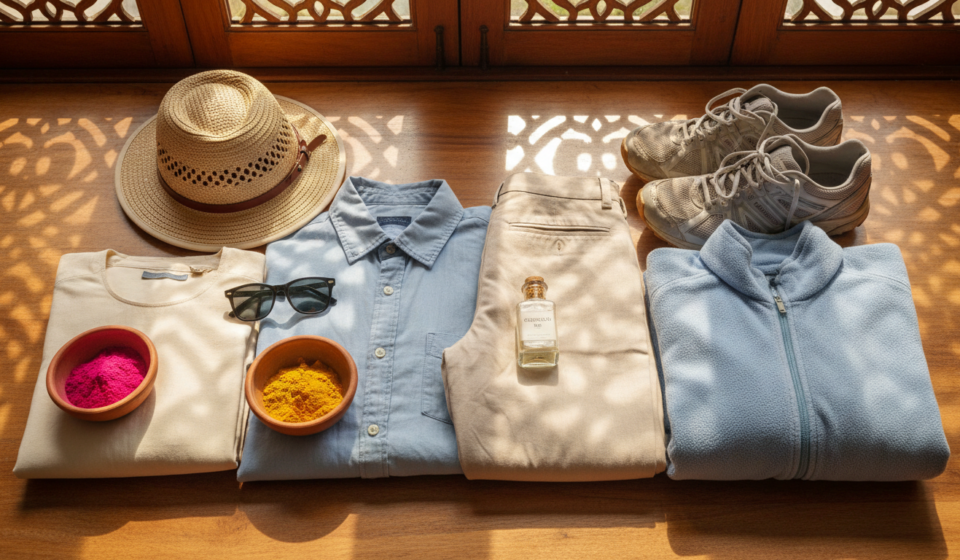
Wildlife viewings require strict adherence to natural colors. Wear neutral earth tones: olive green, khaki, tan, beige, brown, and muted grey. Avoid white (it startles animals), black (it absorbs solar heat and attracts flies), and bright neon shades (red, blue, or yellow).
Safari Gear Checklist
- Layered Tops: Early morning safaris start around 5:00 AM in cool air. Wear a light fleece jacket or windbreaker over a breathable, full-sleeve cotton shirt. By 10:00 AM, temperatures climb rapidly, allowing you to shed the outer layer.
- Dust Protection: Pack a seamless neck gaiter or buff. Dust kicked up by preceding safari vehicles gets thick on dry forest tracks.
- Head & Eye Protection: A wide-brimmed safari hat with a chin strap prevents the wind from blowing your hat off in an open vehicle. Polarized sunglasses protect your eyes from intense glare and airborne grit.
- Footwear: Closed-toe trail runners or sturdy walking shoes are mandatory. Leave open sandals and white sneakers at the lodge.
- Optics & Hardware: Pack 8×42 or 10×42 binoculars for bird and mammal spotting. Wrap camera lenses in a soft cotton dust cover or microfibre cloth when driving between sightings.
- Power Bank: Cold early morning temperatures deplete camera and smartphone battery levels faster than usual.
- Official Identification: Carry the exact physical photo ID (original Passport, Aadhaar, or Driving License) used during your safari permit reservation. Park rangers verify these at forestry check-posts.
Regional Outfit Matrix & Cultural Etiquette
Adapting your wardrobe to local customs prevents uncomfortable situations at religious monuments and rural cultural sites. For broader cultural recommendations beyond clothing, refer to our comprehensive India travel tips for first timers.
Temple & Sacred Site Dress Code
Religious sites across India require modest attire regardless of gender. Shoulders, upper arms, chest, and knees must stay covered.
- North & West India (Varanasi, Mathura, Vrindavan, Rajasthan): Women should wear salwar kameez with a dupatta, maxi dresses with covered shoulders, or cotton kurtas paired with loose trousers. Men should wear full-length trousers or cotton pyjamas paired with collared shirts or kurtas. Shorts and tank tops are not permitted inside temple complexes. When visiting Gurudwaras (Sikh temples), both men and women must cover their heads with a scarf or handkerchief.
- South India (Kerala, Tamil Nadu, Andhra Pradesh): Major pilgrimage sites enforce traditional dress codes. Temples such as Guruvayur in Kerala or Padmanabhaswamy in Thiruvananthapuram ban western jeans and short skirts entirely. Women are expected to wear sarees, half-sarees, or classic salwar kameez. Men must wear a traditional dhoti (veshti/mundu). At select Kerala and Tamil Nadu inner sanctums, men are required to remove their upper-body clothing entirely before entering.
- Hot Floor Practical Tip: Stone and marble temple courtyards absorb heat rapidly under the March sun. Leather shoes are banned inside temple premises, so keep a pair of thick cotton socks in your pocket. Wearing socks on hot stone floors prevents your feet from burning while complying with barefoot rules. Carry biodegradable wet wipes to clean your feet before putting your shoes back on.
Beach & Coastal Outfits
On the beaches and inside private resorts in Goa, Gokarna, and Kovalam, standard swimwear, bikinis, and board shorts are widely accepted. However, when walking away from the sand into local coastal villages, fish markets, or town streets, put on a shirt, sarong, or kaftan out of respect for local community norms.
Essential Tech, Medical & Personal Care Checklist
Electronics & Adapters
- Power Bank: Carry a 10,000–20,000 mAh portable charger for long day trips. If you fly domestically during your trip, review the official rules for carrying power banks in flight in India—they must stay in your cabin baggage and cannot be checked in.
- Plug Adapters: India uses Type D and Type M three-round-pin plugs operating at 230V and 50Hz.
- Multi-Port USB Wall Charger: Ideal for charging multiple devices overnight in older hotel rooms that offer limited wall outlets.
Travel Health & First Aid Kit
- Hydration Salts / ORS: Oral Rehydration Salts (ORS) packets like Electoral or Enervasal are vital for staying hydrated during warm March travel in South and Central India.
- Antihistamines: Cetirizine or Allegra helps manage dust allergies during open safaris or skin reactions from dry powders.
- Gastrointestinal Support: Antacids, Digene, and Imodium help manage digestion changes from rich festive foods and street snacks.
- Mosquito Repellent: Apply DEET-based spray or Odomos cream during dusk hours, especially around backwater regions and safari lodges.
Toiletries & Daily Care
- Sunscreen: Broad-spectrum SPF 50+ PA+++ formulation. Apply daily before long walking tours.
- Lip Balm: SPF-infused lip balm prevents chapping from dry spring winds and safari trail dust.
- Microfiber Towel: Lightweight, compact, and quick-drying—ideal for wiping off powder or drying off after coastal day trips.
Logistics, Costs, Timings & Common Packing Mistakes
Updated IRCTC Train Booking Window
Indian Railways officially reduced its Advance Reservation Period (ARP) from 120 days down to 60 days (excluding the date of journey). General quota train reservations open online at 8:00 AM IST precisely 60 days prior to departure. Train seats on routes connecting Delhi, Mathura, Varanasi, and Jaipur during Holi week book out completely within minutes of opening. Tatkal quota tickets open 1 day prior at 10:00 AM for AC classes and 11:00 AM for non-AC classes.
| Category | Estimated Average Cost (INR) | Planning & Booking Window |
|---|---|---|
| Hotel Rates (Holi Surge Cities) | 30% – 60% price increase during Holi week | Book 45–60 days in advance (Mathura, Vrindavan, Jaipur) |
| Organic Herbal Gulal | ₹150 – ₹350 per kg | Purchase from verified local sellers 1 week prior |
| IPX8 Waterproof Phone Case | ₹200 – ₹450 | Buy online prior to trip departure |
| Train Tickets (AC 2-Tier / 3-Tier) | ₹1,000 – ₹2,500 depending on distance | Book exactly at 8:00 AM IST, 60 days prior via IRCTC |
Top 5 Packing Mistakes to Avoid
- Packing Only Single-Layer Summer Outfits: Assuming all regions are hot in March leaves you cold during a 5:00 AM tiger safari or an evening in Shimla. Always build a layered wardrobe.
- Wearing Expensive Clothes to Holi: Avoid wearing high-end branded clothing to festival events. Stick to basic, low-cost white cotton outfits that can be thoroughly washed or discarded afterwards.
- Wearing Heavy Lace-Up Boots for Temple Visits: untying heavy footwear at temple gates wastes time. Wear easy slip-on shoes or comfortable walking sandals that slide on and off quickly.
- Wearing Bright or Neon Clothes on Safari: Bright colors startle wildlife and attract insects inside open gypsies. Stick strictly to olive, khaki, beige, and brown.
- Skipping Pre-Holi Hair and Skin Barriers: Participating in Holi without applying coconut oil or sunscreen allows dye pigments to stain your scalp and skin for weeks. Always oil up before heading out.
Frequently Asked Questions
Is March a good time to travel to India?
March is one of the best months to visit India. It offers pleasant spring weather with clear skies before the extreme summer heat arrives in April and May. It is also the festival month of Holi and peak tiger-sighting season in national parks across Central India.
What clothes should I wear to play Holi safely?
Wear a full-sleeved 100% white cotton kurta or t-shirt paired with loose cotton trousers. Full sleeves shield your skin from direct dye contact and sun exposure, while cotton stays cool when wet. Wear older, dark-colored undergarments underneath because wet white fabric becomes transparent.
How do I protect my phone and valuables during Holi?
Place your phone inside an IPX8-rated waterproof pouch fitted with a secure neck lanyard. Avoid taking DSLRs, smartwatches, or leather wallets into crowded public streets. Store a small amount of cash inside a double-sealed zip-lock bag instead.
What is the temple dress code in South India during March?
South Indian temples enforce modest dress codes. Women should wear sarees or classic salwar kameez with a dupatta; jeans and short skirts are strictly prohibited at sites like Guruvayur. Men must wear a traditional dhoti or veshti and may be asked to remove upper-body shirts before entering the inner sanctum.
What colors should I wear on a jungle safari in March?
Wear earthy, neutral shades such as khaki, olive green, beige, light brown, and grey. Avoid bright red, neon yellow, royal blue, white, or deep black, as these colors disrupt wildlife and attract unwanted insects.