
Preparing for a business trip to India demands a strategic approach, blending professional necessities with cultural awareness and climatic realities. Unlike a leisure trip, every item on your packing list for a business trip to India must serve a purpose, from ensuring you look the part in a boardroom to staying connected and comfortable across diverse Indian cities. This guide provides an executive-level breakdown, focusing on practicalities that often get overlooked.
Your Essential Packing List for a Business Trip to India (3–5 Days)
A well-curated packing list is your first step to a successful business trip. Here’s a detailed checklist, tailored for executives.
Professional Apparel & Wearables
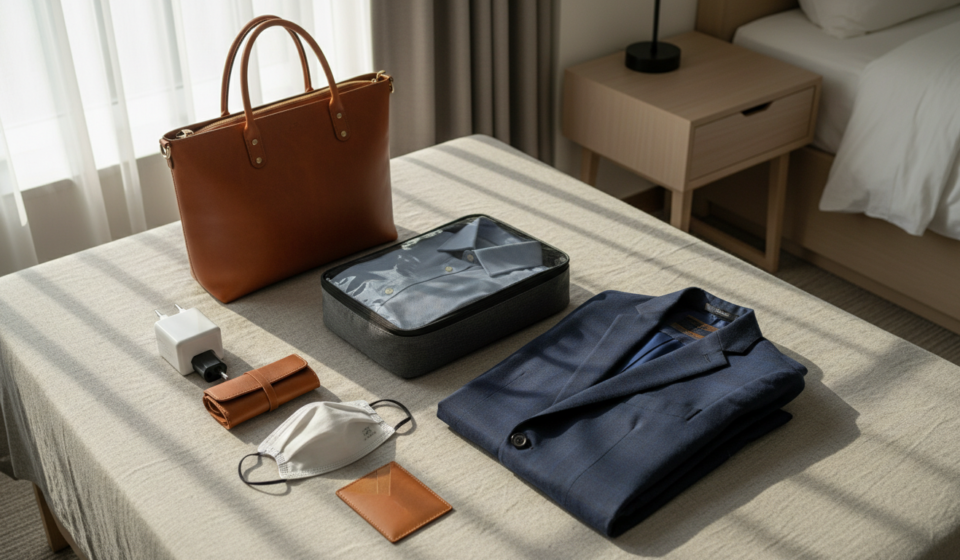
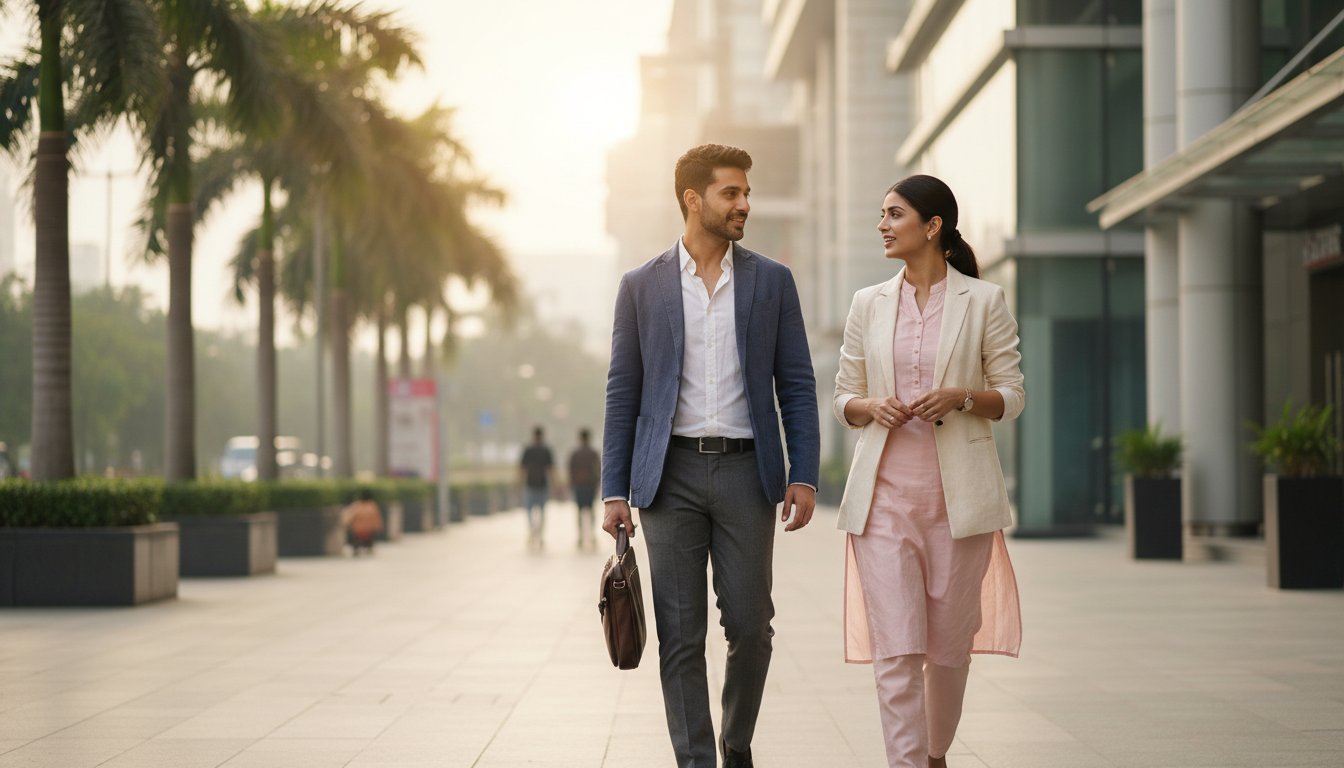
India’s corporate landscape is diverse, but professionalism is always key. Focus on lightweight, breathable fabrics that combat humidity while maintaining a sharp appearance. Remember the “Indoor AC vs. Outdoor Humidity Trap”: offices are often set to arctic temperatures (18°C), while outside can be 35°C+. Layering is critical.
| Item | Men’s Executive Spec | Women’s Executive Spec | Purpose / Context |
|---|---|---|---|
| Formal Suits / Blazers | 1 Lightweight Navy/Charcoal Blazer or Suit (Tropical wool or cotton blend) | 1 Tailored Trouser Suit or Structured Blazer | Essential for Tier 1 meetings (BFSI, Law, PSU/Govt). Avoid heavy wool. |
| Business Tops / Shirts | 4–5 Wrinkle-resistant pure cotton dress shirts (White, Light Blue, Micro-stripe) | 4–5 Crisp formal blouses, button-downs, or tailored straight kurtas | High-quality cotton absorbs sweat better than synthetic silk/polyester. |
| Trousers / Bottoms | 2–3 Tailored formal trousers or premium stretch chinos (Navy, Charcoal, Khaki) | 2–3 Tailored trousers, midi skirts, or ankle-length straight pants | Dark colors conceal urban dust and rain splashes. |
| Ethnic Integration (Optional) | Linen Kurta with Chukka boots / Loafers (Tier 2/3 casuals) | 1–2 Formal Silk/Cotton Kurta-Trouser sets or Formal Saree | Highly respected in corporate settings, celebrations, or PSU meetings. |
| AC Layering | 1 Unstructured Shacket or Light Cardigan | 1 Fine Pashmina/Scarf or Structured Cardigan | Critical: Offsets arctic office AC (18°C) vs outdoor heat (35°C+). |
| Footwear | 1 Pair Oxford/Derby leather shoes + 1 Pair Leather Loafers | 1 Pair Closed-toe formal heels/pumps + 1 Pair Cushioned formal flats | Slip-on loafers/flats allow easy shoe removal for traditional sites/offices. |
| Accessories | Leather Belt matching shoes, 1-2 Conservative Ties, Silk Pocket Square | Minimalist jewelry, professional handbag/tote fitting a 14” laptop | Polished finishes for high-stakes client meetings. |
To keep formal shirts wrinkle-free, use high-density packing cubes, roll shirts inside suit jackets, or leverage hotel pressing services. Most 4 and 5-star business hotels offer express laundry/pressing for corporate guests.
Tech & Power Ecosystem
Staying powered and connected is non-negotiable for business travel. India has specific rules for electronics, especially power banks, that you must adhere to.
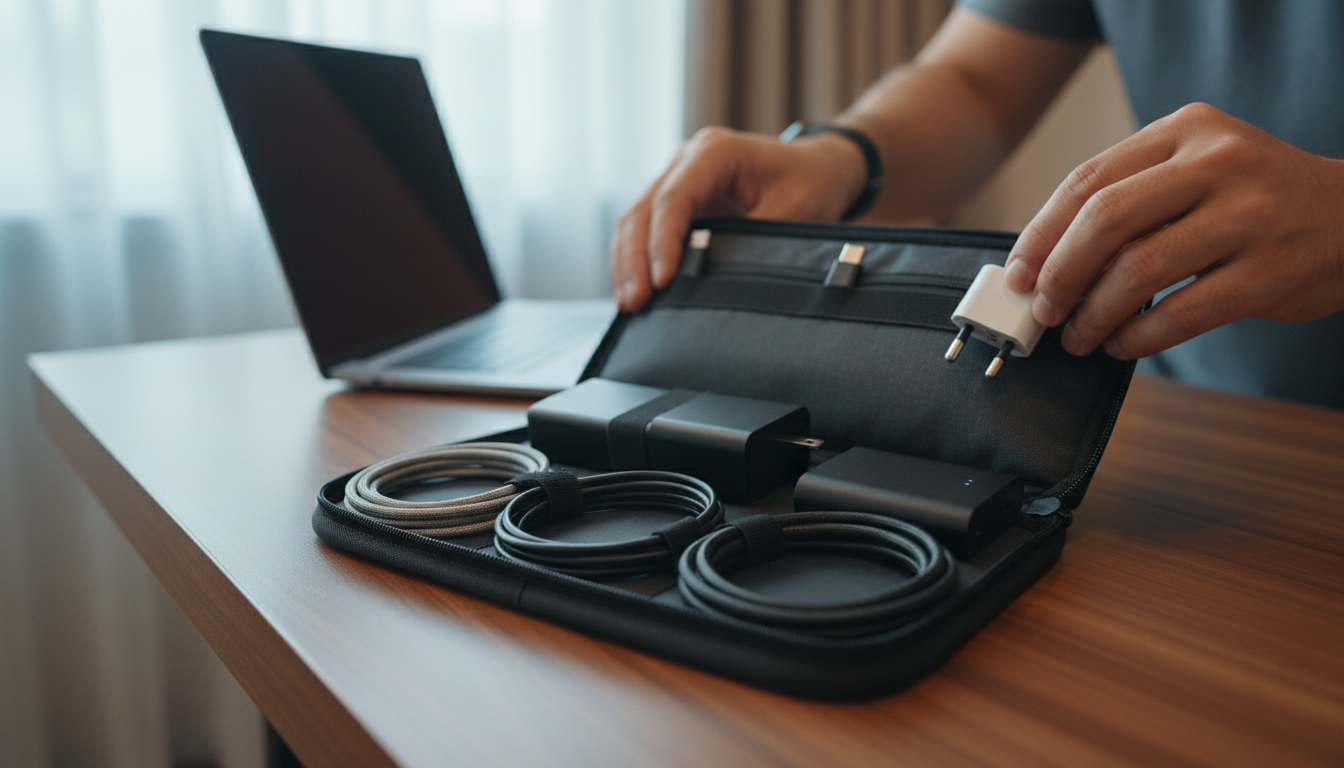
- Compact GaN Charger (65W–100W): A single, powerful GaN charger can simultaneously power your laptop, phone, and power bank from one wall outlet, reducing clutter and weight.
- Power Bank (10,000–20,000 mAh): This is crucial. Your power bank must be rated under 100 Wh to comply with Indian aviation laws. Remember, power banks and loose lithium-ion batteries are strictly prohibited in checked luggage. They must be in your cabin (hand) baggage. Moreover, you cannot use them to charge devices during flights; they must be kept switched off and in your personal reach (e.g., seat pocket), not in overhead bins. You can carry a maximum of 2 units per passenger. For more details, consult our guide on Rules for Carrying Power Bank in Flight in India.
- Plug Adapter: India primarily uses Type D (3 large round pins) and Type C (2 round pins). While most modern laptops and phone chargers are dual-voltage (100–240V), requiring only a plug adapter, single-voltage grooming appliances from countries like the US (120V) will require a heavy step-down transformer or risk damage.
- Noise-Canceling Headphones: Essential for noisy flights, bustling airports, open-plan workspaces, and traffic commutes.
- Connectivity & Presentation Gear: Consider a dual-SIM or eSIM setup (Jio or Airtel are popular), an HDMI to USB-C dongle/adapter, and a wireless presentation clicker/pointer for seamless meetings.
- Cable & Tech Organizer: Keeps all your power bricks, charging cords, and dongles neatly organized and easily accessible, especially at airport security.
Health, Hygiene & Climate Defense Kit
India’s climate and environment can be challenging. Be prepared for varying temperatures, humidity, and air quality.
- Air Pollution Gear (Delhi/NCR Nov–Feb): If traveling to Delhi or the National Capital Region during November to February, an N95 or N99 mask (CDSCO or NIOSH certified) is vital. Standard cloth or surgical masks are ineffective against the high PM2.5 particulate levels often seen during these months.
- Water & Digestive Safety: Carry activated charcoal tablets, ORS (Oral Rehydration Salts / Electral) sachets, Loperamide (Imodium) for immediate relief, antacids (Digene/Gelusil), and if prone to issues, doctor-prescribed antibiotics for severe traveler’s diarrhea. Stick to bottled water.
- Personal Grooming & Climate Care: High-quality anti-perspirant/deodorant, SPF 50+ broad-spectrum sunscreen, DEET or Odomos mosquito repellent (especially for evening outdoor engagements), and antibacterial wipes/hand sanitizer are indispensable.
Corporate Finance & Documentation Portfolio
Beyond personal items, your documentation and payment methods require careful planning to ensure smooth operations and proper expense reimbursement.
- Passport & Visa (International): Ensure your passport is valid for at least 6 months beyond your intended stay. For international executives, a printed copy of your Indian e-Business Visa is mandatory. Note that an e-Tourist Visa is illegal for business activities.
- Invitation & Company Credentials: Carry a physical copy of your Indian host company’s invitation letter and a stack of business cards (printed in English).
- GSTIN Details (Crucial for Expense Reimbursement): This is a critical point for any executive billing back to an Indian entity. Have a printed card or memo of your employer’s legal entity name and its 15-digit GSTIN. You must provide this at the time of flight/hotel booking or during hotel check-in to claim Input Tax Credit (ITC) on hotel and flight bills. Invoices issued under personal names cannot be converted to corporate tax credits after checkout.
- Payment Assets: Notify your bank about your international credit/debit cards for foreign travel. Carry ₹2,000–₹5,000 in physical cash (₹100/₹200 notes) for local transport (auto-rickshaws), small tips, and emergencies. Also, set up and activate a UPI app (GPay, PhonePe, Paytm) if you have an Indian bank account, as digital payments are widespread.
City-Specific Dress Codes & Corporate Tiers
India’s corporate culture is not monolithic. Dress codes vary significantly by industry, city, and even specific business districts. Understanding these nuances helps you pack appropriately and make the right impression.
+-----------------------------------------------------------------------------------+
|                            THE 3-TIER DRESS CODE SYSTEM                           |
+------------------------------------+----------------------------------------------+
| TIER 1: BUSINESS FORMAL            | Banking, Finance, Legal, PSU/Government,     |
| (Boardroom / Client-Facing)        | Executive Leadership, High-Stakes Consulting  |
+------------------------------------+----------------------------------------------+
| TIER 2: SMART CORPORATE            | Corporate IT, FMCG, Healthcare/Pharma,      |
| (Business Casual / Mid-Senior)     | Regional MNC Hubs, Hybrid Workplaces         |
+------------------------------------+----------------------------------------------+
| TIER 3: TECH & STARTUP CASUAL      | Big Tech, Fintech, Early/Growth Startups,    |
| (Put-Together Casual)              | Media, Creative & Design Agencies            |
+------------------------------------+----------------------------------------------+
City & Industry Microclimate Breakdown
- Mumbai (Financial Capital — BKC, Nariman Point, Lower Parel):
- Vibe: Fast-paced, Tier 1 Banking/Finance formal often mixed with Tier 2 media/corporate.
- Climate Challenge: High humidity year-round. Heavy wool suits are a recipe for heat exhaustion.
- Packing Strategy: Lightweight tropical wool-blend suits, 100% breathable cotton shirting, and leather loafers (practical during sudden monsoon showers).
- Delhi / NCR (Capital & Corporate Hub — Connaught Place, Cyber City Gurugram, Noida):
- Vibe: Hierarchical, status-conscious, power-dressing is common in government and MNC corporate headquarters.
- Climate Challenge: Extreme weather variations. April–June sees 40°C–45°C heat; November–January can drop to 4°C–10°C, often combined with hazardous air pollution (AQI 300–450+). Consider checking Packing List for India in October or Packing List for India in December for seasonal insights.
- Packing Strategy: Summer requires ultra-light cottons. Winter necessitates heavy blazers, woolen overcoats/trench coats, thermal base layers, and N95/N99 pollution masks.
- Bengaluru & Pune (Tech & Startup Hubs — Indiranagar, Whitefield, HSR Layout, Hinjewadi):
- Vibe: Relaxed “put-together casual.” Suits are rare outside formal client presentations.
- Climate Challenge: Pleasant weather year-round (18°C–30°C), but frequent light rain showers and notoriously cold office AC.
- Packing Strategy: Tailored chinos, solid polos, oxford button-downs, unstructured blazers/shackets, and clean, minimal leather sneakers.
- Chennai & Hyderabad (Tech, Industrial & Pharma Hubs — HITEC City, OMR):
- Vibe: Conservative, practical, Tier 2 corporate leaning towards breathable comfort.
- Climate Challenge: High heat and tropical humidity.
- Packing Strategy: Crisp cotton kurtas, lightweight formal trousers, and short-sleeved or rolled-sleeved formal shirts. Avoid thick, dark blazers outdoors.
Indian Aviation & Tech Gear Rules
Navigating Indian airports and ensuring your tech is compliant is vital for a stress-free journey.
Indian Airline Power Bank Mandates (IndiGo, Air India, Akasa)
- Checked Luggage Ban: Power banks and loose lithium-ion batteries are strictly prohibited in checked luggage. They must be placed in cabin (hand) baggage.
- In-Flight Usage Ban: Passengers cannot use power banks to charge devices during flights. Power banks must be kept switched off.
- Storage Location: Airline crews explicitly mandate keeping power banks in personal reach (e.g., under-seat personal bag or seatback pocket)—not in overhead bins—to quickly monitor thermal runaway risks.
- Watt-Hour Capacity Limit: A maximum of 100 Watt-Hours (Wh) (approximately 27,000 mAh at 3.7V) is permitted without prior airline approval. A maximum of 2 units per passenger is allowed.
- Cabin Baggage Size Restrictions (IndiGo): Be aware of strict enforcement of 55 x 35 x 25 cm dimension limits and a 7 kg weight limit for cabin luggage (+ 3 kg personal item under the seat). Exceeding dimensions by even 1 cm can trigger airport gate check-in fees (₹1,500–₹2,000).
Indian Electrical Outlet Standards
- Voltage & Frequency: 230 V, 50 Hz.
- Plug Types: Primarily Type D (standard 3 round pins in triangle configuration), Type C (2 round pins), and occasionally Type M (large 15A 3-pin for high-power appliances).
- Voltage Converter Warning: Standard US/North American electronic devices run on 120V. While most modern laptops and phone chargers are dual-voltage (100–240V) and only need a plug adapter, single-voltage grooming appliances (e.g., hairdryers, curling irons) will overheat or burn out without a heavy step-down transformer.
Expense Reimbursement & GST Tax Invoicing
For Indian domestic corporate travelers and international executives billing back to an Indian entity, proper tax documentation is crucial for saving 5% to 18% in corporate taxes through Input Tax Credit (ITC).
+------------------------------------------------------------------------------------+
|                         GST INPUT TAX CREDIT (ITC) BREAKDOWN                       |
+---------------------+-------------------+------------------------------------------+
| TRAVEL / STAY MODE  | GST RATE (2026)   | REIMBURSEMENT / ITC CONDITION            |
+---------------------+-------------------+------------------------------------------+
| Economy Airfare     | 5%                | Claimable with Company GSTIN on invoice  |
| Business Class Air  | 18%               | Claimable with Company GSTIN on invoice  |
| Hotel Room (<₹7,500)| 5%                | No ITC allowed under current rules       |
| Hotel Room (>₹7,500)| 18%               | Claimable if billed with Company GSTIN   |
| App Cabs (Uber/Ola) | 5%                | Generally restricted; requires B2B bill  |
+---------------------+-------------------+------------------------------------------+
Critical Executive Action: You must provide your company’s legal name and 15-digit GSTIN at the time of flight/hotel booking or during hotel check-in. Invoices issued under personal names cannot be converted to corporate tax credits after checkout.
Business Etiquette & Cultural Norms
Understanding and respecting local customs can significantly enhance your business interactions in India.
- Business Card Exchange: Always present and receive business cards using your RIGHT hand only, or both hands as a sign of respect. Avoid using your left hand, which is traditionally considered unclean. Take a moment to read the card before carefully placing it in an executive card holder; do not casually slide it into a rear pocket.
- Footwear Removal: Be prepared to remove your shoes frequently when entering private residences, corporate prayer rooms, some traditional office spaces, or during site visits. This is where slip-on loafers or flats prove invaluable, streamlining these transitions.
- Greeting & Hierarchy: When introduced to a group, always address the senior-most executive first. Use formal titles like “Mr.”, “Ms.”, or “Dr.”, or honorifics such as “Sir/Madam,” until explicitly invited to use first names. A polite handshake is standard, and a slight head nod accompanied by a “Namaste” is universally respected.
- “Thermal Defense”: As mentioned, Indian offices routinely maintain air conditioning at 18°C–20°C. Stepping from this into 35°C–40°C outdoor heat can cause rapid temperature shifts and thermal fatigue. Always carry a lightweight layering piece—a blazer, cardigan, or pashmina—to manage these transitions effectively.
Common Questions for Business Travelers to India
Can an international executive travel to India on an e-Tourist Visa for business meetings?
No. Conducting commercial activities, contract negotiations, or formal meetings on an e-Tourist visa is strictly illegal under Indian immigration regulations. This can lead to serious consequences, including border detention or deportation. Executives must apply for an e-Business Visa for any work-related travel.
Are power banks allowed in checked luggage on Indian domestic flights (e.g., IndiGo, Air India)?
No. Power banks are strictly prohibited in checked baggage across all Indian carriers due to fire safety regulations. They must be carried in your cabin baggage, rated under 100 Wh, and kept switched off and within your personal reach (e.g., seat pocket) during the flight.
What is the dress code for a woman executive attending meetings in Bengaluru vs. Mumbai?
In Mumbai’s financial sector (e.g., Bandra Kurla Complex), business formal attire is standard. This typically means a tailored trouser suit, a formal saree, or a structured blouse and pant set. In Bengaluru’s tech corridors, a more relaxed smart-casual approach is widely accepted, such as tailored trousers with a smart top, clean kurtas with straight pants, or a crisp cotton co-ord set.
Do I need physical Indian Rupee cash, or is digital payment (UPI/Card) enough?
While UPI and credit/debit cards are widely accepted in hotels, fine dining establishments, and corporate cabs, carrying ₹2,000–₹5,000 in small cash denominations (₹100, ₹200) is still essential. This cash is useful for local auto-rickshaws, small tips, street vendors, and emergency transit, especially in areas where digital payments might not be available or preferred.
How do I prevent formal shirts from wrinkling while flying between Indian cities?
To minimize wrinkles, use high-density packing cubes, carefully roll shirts inside a suit jacket, or fold them using the “KonMari” method. Upon arrival, most 4 and 5-star business hotels offer 24-hour express laundry and pressing services for corporate guests, which can quickly refresh your attire.