
The architectural heritage of the Indian subcontinent is defined by a profound transition from transient materials to enduring stone monuments. Rock-cut sanctuaries of western India represent the zenith of ancient engineering and artistic devotion. Nestled within the basalt cliffs of the Sahyadri Hills, a singular structure dominates the study of megalithic engineering. This is the Kailash Temple of Ellora. Widely acknowledged as the largest cave temple of india, this monolithic marvel defies conventional construction methodologies by having been carved entirely out of a single volcanic hill. Rather than assembling blocks of stone over decades, ancient craftspeople systematically chiseled away millions of cubic feet of solid basalt to reveal a fully formed temple complex. For modern architects, understanding the design of the largest cave temple of india provides a rare window into the sophisticated technological capabilities of eighth-century India. It stands as an absolute testament to human ingenuity and geological mastery.
Key Takeaways:
- Supreme Monolithic Feat: The Kailash Temple (Cave 16) at Ellora is globally recognized as the largest cave temple of india.
- Reverse Engineering: The monument was constructed from top to bottom, ensuring every pillar and chamber remained structurally anchored to the earth.
- Immense Scale: Over 200,000 tonnes of solid basalt were excavated without any modern machinery or scaffolding.
- Dynastic Legacy: Commissioned in the 8th century by King Krishna I of the Rashtrakuta dynasty as a monumental political and spiritual statement.
The Monolithic Majesty of Ellora
The volcanic rocks of the Deccan Plateau provided ancient builders with an ideal canvas for rock-cut architecture. Maharashtra houses thousands of rock-cut caves, yet the Ellora complex stands out as the ultimate achievement in this engineering style. Among the thirty-four major caves at the site, Cave 16 holds the undisputed title of the largest cave temple of india. The physical scale of this achievement is difficult to comprehend. Ancient masons did not build this structure by adding materials. They created it by subtraction. It is basically carved out of the living rock of the Charanandri Hills, ensuring that every pillar remained connected to the earth.
This approach to engineering meant that there was no margin for error. The construction process demanded meticulous precision because:
- A single mistake while carving a column could not be repaired by replacing the block.
- Masons had to dynamically modify the entire architectural design to accommodate any unexpected structural errors or geological flaws.
- This required immense, real-time coordination between master architects, stone cutters, and sculptors.
The result of this meticulous planning is the largest cave temple of india, a structure that elegantly combines architectural precision with artistic expression. Visitors from all over the world travel to Maharashtra to witness this structural feat, which remains unmatched in scale and complexity.
Defining the Monumental Scale of Cave 16
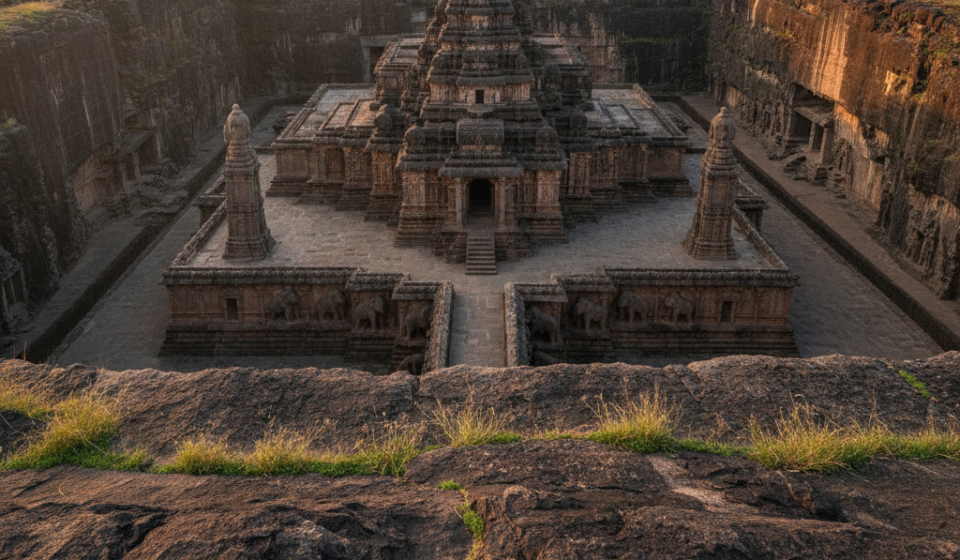
To appreciate the scale of Cave 16, one must look at the quantitative data. The excavation area measures roughly ninety-five meters in length, fifty-six meters in width, and over thirty meters in depth. These measurements make it the largest cave temple of india in terms of physical volume. The central courtyard contains an immense double-storeyed gateway, a monumental Nandi shrine, and a main temple sanctuary that rises to a height of nearly thirty-three meters.
This scale is even more impressive when considering that the entire complex is monolithic. The pillars, stairs, inner rooms, and external spires are all part of the same original rock mass. Scholars studying the largest cave temple of india have noted that the excavation required removing massive quantities of solid basalt, estimated to be around two hundred thousand tonnes (though some historical archives suggest a higher volume depending on the calculated density of the basalt). This colossal undertaking was achieved within a remarkably short period, showing the efficiency of ancient project management.
Historical Origins and the Rashtrakuta Legacy
The creation of the largest cave temple of india is closely linked to the rise of the Rashtrakuta dynasty (an ancient kingdom that ruled large parts of southern and central India between the sixth and tenth centuries). Most historical evidence points to King Krishna I as the primary patron of this project. Ruling from roughly 756 to 774 CE, Krishna I sought to establish a monument that would achieve several major objectives:
- Reflect the supreme divine authority of his earthly reign.
- Demonstrate his profound devotion to Lord Shiva.
- Establish regional superiority over neighboring kingdoms, highlighting his control over vast resources.
The construction of the largest cave temple of india was not merely a spiritual endeavor, but also a major political statement. By carving a massive mountain of stone, the Rashtrakutas demonstrated their control over vast resources. This monument served as a permanent symbol of the dynasty’s power, visible to travelers and rivals traversing the ancient trade routes. Though Krishna I initiated the project, the scale of the largest cave temple of india suggests that construction continued under subsequent rulers.
Architectural Splendour of the Kailash Temple
The architecture of the largest cave temple of india is a complex combination of multiple regional styles. While located in western India, the design is heavily influenced by the Dravidian style of southern India. This architectural fusion suggests that the Rashtrakuta rulers imported master craftsmen from regions like Pattadakal and Kanchipuram. The resulting combination is a structure that is both grand in scale and exceptionally detailed in execution.
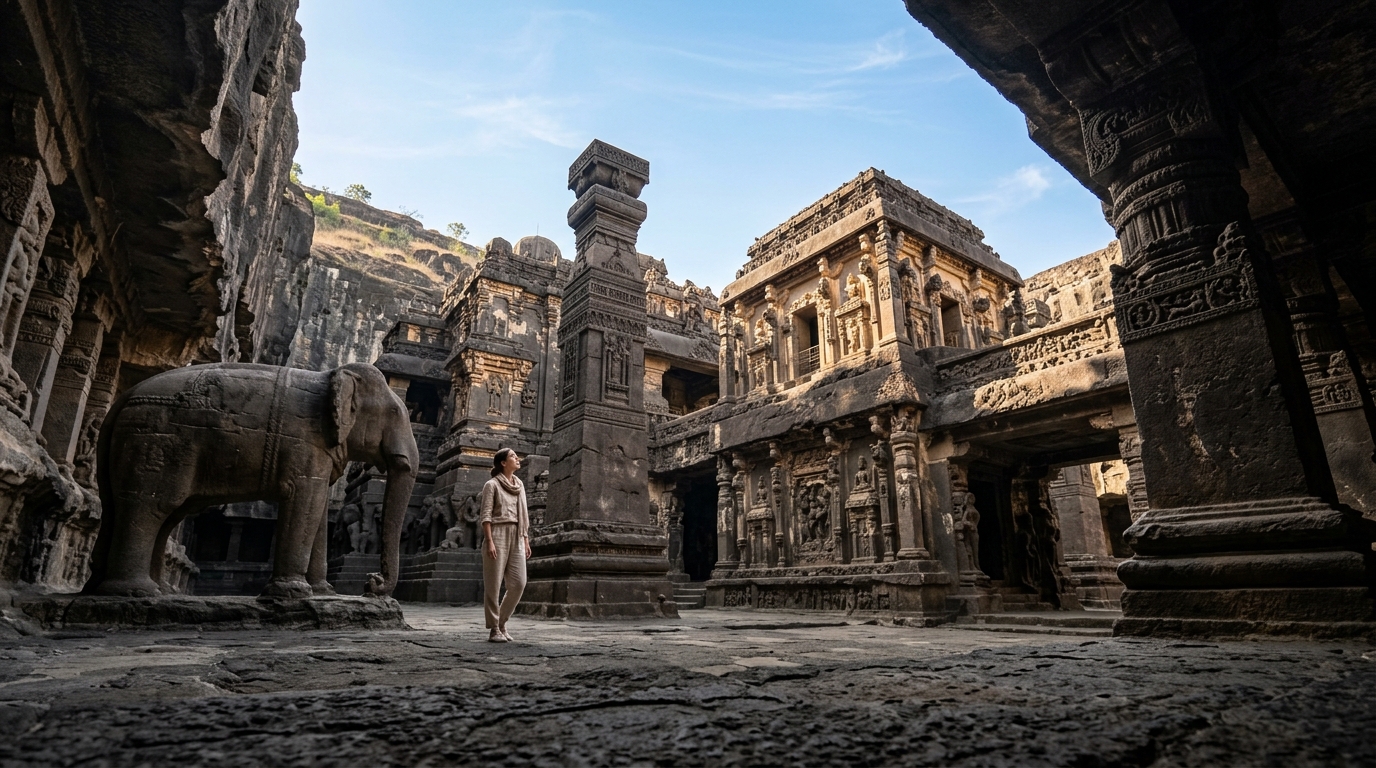
Critics say rock-cut architecture is inherently limited in its interior light. They are not entirely wrong, but they underestimate how the builders of Ellora bypassed this constraint by carving out massive, open courtyards that let in the shifting natural light. Every surface of the largest cave temple of india is covered with intricate carvings, structural moldings, and narrative relief panels. The main temple structure sits on a high plinth carved with life-sized elephants (a structural decision that required absolute mathematical certainty). This dramatic visual metaphor highlights the structural stability of the temple and its connection to cosmic order. The layout was designed to guide visitors from the outer courtyard into the sacred interior.
The Vertical Excavation Method: Carving from Top to Bottom
The engineering method used to construct the largest cave temple of india is perhaps its most remarkable feature. Traditional stone temples are built from the ground up, starting with foundations. The Kailash Temple, however, was constructed in reverse. The builders began at the top of the basalt hill and carved downward into the rock. This vertical excavation method required a completely different approach to planning.
First, architects marked out the boundaries of the temple on the upper surface of the hill. Stone cutters then carved deep trenches into the rock, outlining the central block. As they worked downward, they carved the exterior features of the upper levels before excavating the lower chambers. This top-down approach meant that the roof was completed before the floors were planned. It required absolute precision, as any structural mistake at the top would compromise the integrity of the lower levels of the largest cave temple of india.
The choice of vertical excavation also solved several practical problems. It eliminated the need for scaffolding, as workers could stand on the uncarved rock. It also made it easier to remove the excavated stone, which could be rolled down the sloping sides of the hill. But still, the physical effort required to carve the largest cave temple of india using only hand tools was monumental. This top-down method remains one of the most daring engineering decisions in human history, though some regional variations in the basalt stone may have dictated slight adjustments to the original plan.
Structural Components: From Gopuram to Sanctum Sanctorum
The largest cave temple of india is organized along a central axis, leading the visitor through increasingly sacred spaces. The journey begins at the gopuram, a monumental entrance gateway carved into the outer rock wall. This gateway acts as a transition point, separating the busy outside world from the quiet courtyard. Once inside, visitors enter the main court, where they are confronted by two massive, free-standing victory pillars, known as dhvajasthambhas, which rise over fifteen meters.
At the center of the courtyard stands the Nandi shrine, dedicated to Shiva’s sacred bull. This shrine is connected to the main temple by rock-cut bridges, which allow visitors to walk between different elevated sections. The main temple of the largest cave temple of india consists of an entrance porch, a central assembly hall (known as a mandapa), and the innermost sanctum sanctorum (or garbhagriha), which houses a massive stone Shiva lingam.
The main temple structure is topped by a towering pyramid-like spire (known as a shikhara), which rises in three distinct tiers. This shikhara is carved with exquisite detail, featuring miniature shrines and celestial figures. The complexity of the largest cave temple of india ensures that every structural component serves both a functional purpose and a symbolic one, creating a unified architectural vision.
Intricate Sculptural Panels and Iconography
The walls of the largest cave temple of india serve as a canvas for some of the finest rock-cut sculptures in the world. The narrative relief panels depict scenes from major Hindu epics, including the Ramayana and the Mahabharata. These sculptures are not merely decorative. They are dynamic works of art that capture movement and spiritual drama with remarkable skill.
The most famous sculptural panel in the largest cave temple of india is the relief depicting the demon king Ravana attempting to shake Mount Kailash. Located on the lower plinth, this panel shows Ravana trapped beneath the mountain, using his twenty arms to lift it, while Shiva calmly presses down with his toe to trap him. The sculptors captured the contrast between Ravana’s physical struggle and Shiva’s serene power with incredible dramatic force.
Other notable panels in the largest cave temple of india include representations of Shiva as the cosmic dancer (Nataraja) and Durga slaying the buffalo demon. Each sculpture was positioned to receive natural light at specific times of the day, enhancing the visual impact. The variety of themes shows the deep theological knowledge of the patrons and artists, though some regional variations indicate that multiple workshops contributed to the work.
Comparative Analysis of India’s Great Cave Temples
To understand the unique position of the largest cave temple of india, it is useful to compare it with other major rock-cut sites. India has a rich tradition of cave architecture, spanning several centuries and multiple religious traditions. While sites like Ajanta and Elephanta are world-famous, the Kailash Temple represents a different level of engineering achievement.
The table below provides a comparative overview of three of India’s most significant rock-cut temple sites, highlighting their architectural styles, key features, and construction methods. This comparison demonstrates why the Kailash Temple is uniquely classified as the largest cave temple of india, standing apart from its peers in scale and structural design.
| Feature / Site | Kailash Temple (Ellora Cave 16) | Ajanta Caves (Cave 19 & 26) | Elephanta Caves (Main Cave) |
|---|---|---|---|
| Architectural Style | Dravidian (monolithic rock-cut) | Buddhist Chaitya (bas-relief) | Shaivite Rock-Cut (columnar hall) |
| Primary Excavation Style | Top-down vertical excavation | Horizontal cliff excavation | Horizontal chamber excavation |
| Primary Deity / Theme | Lord Shiva (Shaivism) | Lord Buddha (Buddhism) | Lord Shiva (Sadashiva) |
| Approximate Construction Era | 8th Century CE (Rashtrakuta) | 2nd Century BCE to 5th Century CE | 5th to 8th Century CE |
| Monolithic Courtyard | Yes (Fully excavated open court) | No (Interior chambers only) | No (Pillared interior hall) |
As the table shows, while other sites feature impressive interior carvings, only the largest cave temple of india features a fully excavated, open-air monolithic structure that mimics a free-standing temple in every detail. This structural distinction is what makes Cave 16 a unique monument in the history of global architecture.
Kailash Temple vs. Elephanta and Ajanta
While the Elephanta Caves are famous for their monumental Sadashiva sculpture, they lack the vertical scale of the largest cave temple of india. Elephanta consists of large pillared halls carved into the rock, but it does not feature an external facade or a towering spire carved from the same stone mass. The physical scale of the Kailash Temple far exceeds that of Elephanta, which was designed primarily as an interior sanctuary.
Similarly, the Ajanta Caves represent some of the finest Buddhist art, but their focus is primarily on interior murals and horizontal cliff-face carvings. The builders of Ajanta carved deep into the basalt cliffs to create monastic halls. But still, they did not attempt to excavate an entire free-standing temple from the top of the hill. The largest cave temple of india remains unique in its ability to combine the interior spatial qualities of a cave with the external structural presence of a free-standing monument.
Earlier, we noted the removal of roughly two hundred thousand tonnes of basalt. That immense clearance explains why the Kailash Temple feels so spacious compared to the cramped interiors of other cave complexes. This spatial liberation allowed the architects to plan an open courtyard that transforms the interior mountain space into a sunlit outdoor sanctuary. The largest cave temple of india stands as a monument of this architectural evolution, showing how ancient builders pushed the boundaries of what was considered structurally possible in rock-cut architecture.
Practical Guide for Visitors to Ellora
Planning a visit to the largest cave temple of india requires some preparation to ensure a comfortable and rewarding experience. The Ellora Caves are a massive complex, and exploring Cave 16 alone can take several hours. Visitors should plan their trip carefully, taking into account seasonal weather patterns, local travel logistics, and the physical scale of the monument itself.
To make the most of a visit to the largest cave temple of india, it is essential to understand the layout of the site. The complex is well-maintained and features modern amenities, but the physical environment can be challenging for those unprepared for the heat and walking. The following practical guide provides all the necessary information for planning a successful trip to this remarkable heritage site.
| Key Parameter | Details & Guidelines |
|---|---|
| Indian Visitors Entry Fee | ₹40 per person (Cash/Online) |
| SAARC and BIMSTEC Entry Fee | ₹40 per person |
| Foreign Tourists Entry Fee | ₹600 per person |
| Operating Hours | Sunrise to Sunset (approx. 6:00 AM to 6:00 PM) |
| Weekly Closure Day | Closed every Tuesday |
| Recommended Duration | 3 to 4 hours for Cave 16 (Kailash Temple) |
Optimal Times for Visitation and Climate Considerations
The climate of central Maharashtra can be extremely hot, especially during the summer months from March to May. To ensure a pleasant experience, the best time to visit the largest cave temple of india is during the cooler winter months, from October to March. During this period, the temperature is mild and comfortable, making it easier to explore the open courtyards and climb the surrounding hills.
To maximize comfort and visual experience, consider these crucial timing factors:
- Weekly Off: The entire Ellora Caves complex remains closed on Tuesdays.
- Early Arrival: Plan to enter right at sunrise (around 6:00 AM) to beat the intense midday heat and avoid the heavy crowds of tour groups.
- Photography Windows: The soft, golden early morning light is highly recommended for photographers, as it beautifully accentuates the intricate rock-cut relief panels and physical depth of the temple facade.
Key Highlights and Photography Points within Cave 16
When exploring the largest cave temple of india, there are several key highlights that visitors should not miss. The main courtyard is the best place to start, offering a complete view of the monumental scale of the temple. From here, visitors can appreciate the life-sized elephant carvings that line the base of the structure and the towering victory pillars.
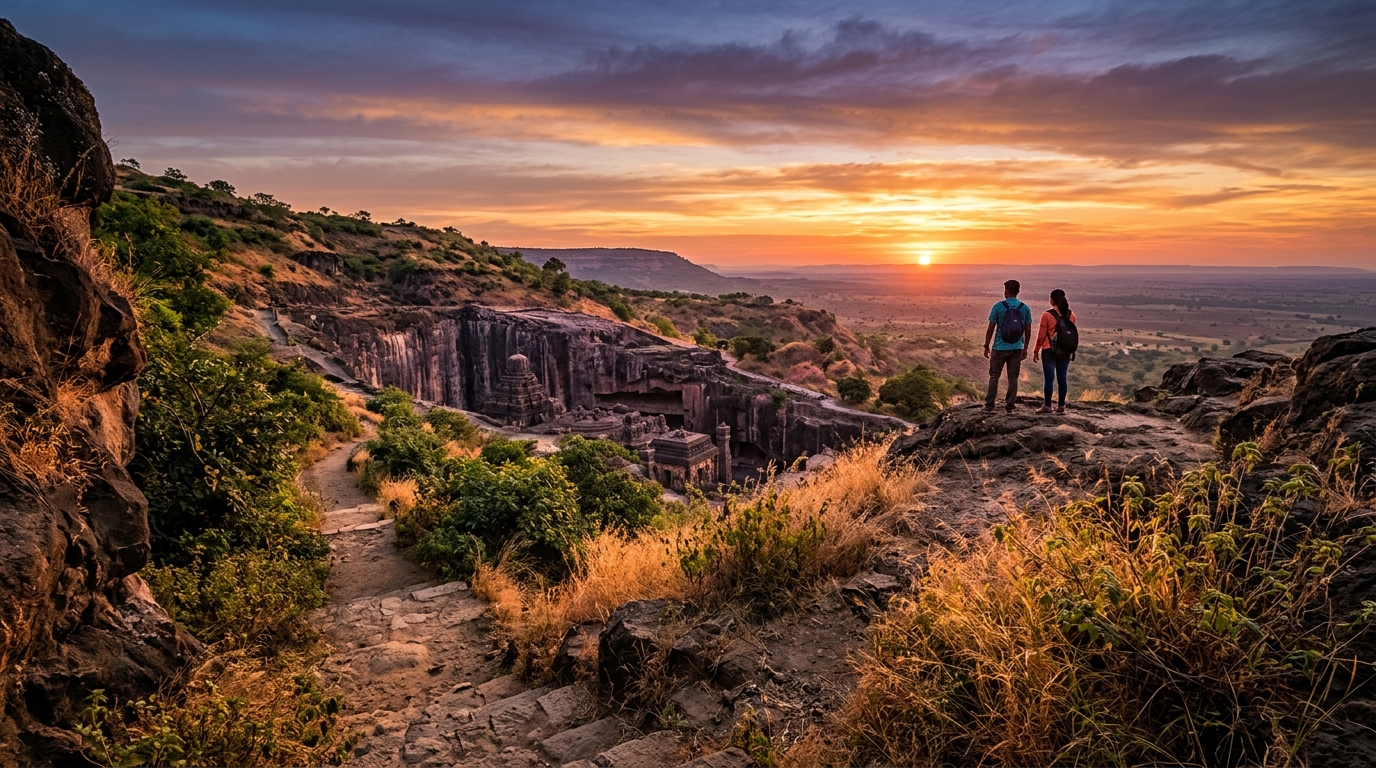
For the best photographic views of the largest cave temple of india, visitors should climb the pathway that leads up the cliffs on either side of the excavation. From these elevated vantage points, one can look down into the open courtyard and see the complete layout of the temple, including the complex design of the shikhara and the rock-cut bridges. In particular, photographers should prioritize the following positions:
- The main entrance pathway, which provides a dramatic ground-level perspective of the massive gopuram.
- The elevated cliff trails on the left flank, ideal for capturing the entire layout of the temple courtyard.
- The base of the victory pillars, where the detailed carvings of the lower plinth are most visible.
- The outer galleries, which offer soft, indirect light for photographing the delicate relief panels.
Travel Logistics and Nearby Maharashtra Attractions
The largest cave temple of india is located approximately thirty kilometers from the city of Aurangabad, which was recently renamed Chhatrapati Sambhajinagar. This city serves as the primary gateway for travelers visiting the Ellora Caves. Aurangabad is well-connected to major Indian cities by road, rail, and air, making it an accessible destination for domestic and international tourists alike. Visitors can easily hire taxis or use local public buses to travel from the city to the cave complex.
While visiting the largest cave temple of india, travelers should also explore other historic sites in the region. The Ajanta Caves, located roughly one hundred kilometers from Aurangabad, offer a spectacular collection of early Buddhist murals and carvings. Additionally, the Bibi Ka Maqbara, a beautiful seventeenth-century tomb that resembles the Taj Mahal, is located within Aurangabad itself.
For those planning a comprehensive journey through western India, combining a visit to the largest cave temple of india with a wider exploration of the state’s cultural heritage is highly recommended. Utilizing professional travel packages, such as those available through the Maharashtra tour options on TravelDham, can simplify the planning process. These curated itineraries ensure that travelers can experience the full scale of Maharashtra’s historic monuments, from the coastal attractions of Mumbai to the ancient rock-cut sanctuaries of the interior.
For bespoke travel planning and personalized assistance, travelers can consult the experts at the TravelDham contact portal to design a customized itinerary. Planning a trip to the largest cave temple of india with professional support ensures that all aspects of the journey, including transport, accommodation, and guided tours, are handled with care, leaving visitors free to immerse themselves in the beauty of this ancient architectural masterpiece.