

Navigating India for the first time is immensely rewarding, but it requires thorough logistical preparation. The country’s travel ecosystem has modernized rapidly: digital payments, express rail quotas, and paperless arrival procedures have largely replaced older paper systems. Applying these practical india travel tips for first timers will help you clear arrival immigration efficiently, handle payments with ease, navigate trains and flights, and avoid standard tourist scams.
Essential India Travel Tips for First Timers: Visas and Entry Requirements
Before booking flights, ensure your entry clearance is sorted through official government channels. Most foreign nationals must obtain a visa prior to travel.
Official Online e-Visa Application
India offers an electronic visa (e-Visa) for citizens of over 180 countries, including the United States, Canada, the United Kingdom, Australia, European Union nations, and the UAE. Always apply directly through the official portal at indianvisaonline.gov.in. Beware of third-party agency websites that mirror the government interface and charge inflated processing fees.
The primary sub-categories for leisure travelers include:
- 30-Day e-Tourist Visa: Allows double entry. Applications can be submitted between 4 and 30 days prior to your arrival date.
- 1-Year e-Tourist Visa: Allows multiple entries. Applications open from 4 to 120 days prior to arrival.
- 5-Year e-Tourist Visa: Allows multiple entries over five years. Applications open from 4 to 120 days prior to arrival.
Required Documents and Fee Structures
To complete your online application, you will need:
- A passport valid for at least six months from your arrival date, containing at least two blank pages.
- A digital passport-style photo (JPEG format, square aspect ratio, white background, under 1 MB).
- A PDF scan of your passport’s personal particulars page (file size between 10 KB and 300 KB).
e-Visa fees vary by nationality and season. For example, a 30-day e-Tourist visa costs approximately $10 USD during the lean season (April to November) and $25 USD during the peak tourist season (July to March). A 1-year visa costs roughly $40 USD, while a 5-year visa is around $80 USD. A mandatory 2.5% payment gateway surcharge is added at checkout. Visa fees are non-refundable regardless of the application outcome.
Digital e-Arrival Card
Paper disembarkation forms handed out on flights have been phased out at major Indian airports. International arriving passengers must complete a digital e-Arrival Card online prior to stepping up to immigration counters.
Practical India Travel Tips for First Timers: Payments and UPI One World
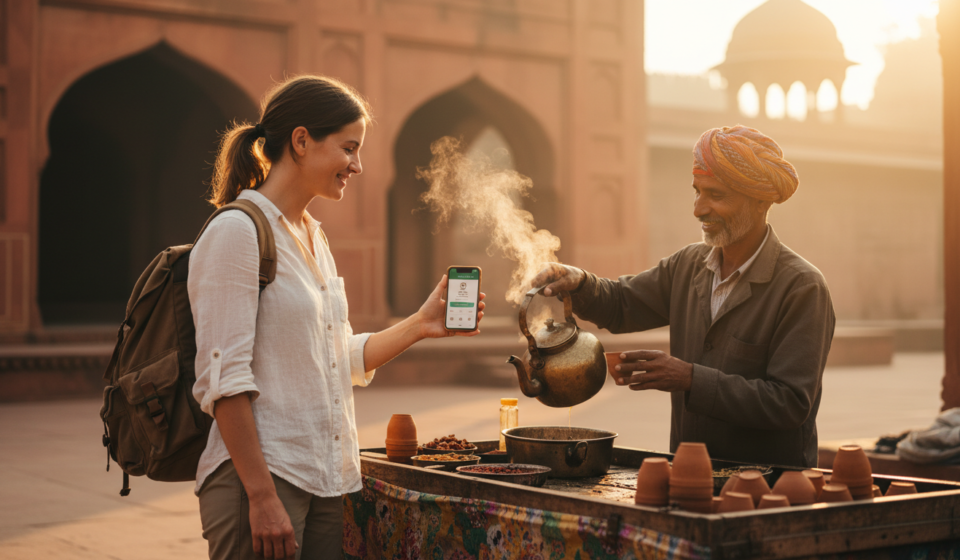
Older travel blogs frequently state that cash is the only way to pay in India. That advice is completely outdated. India relies heavily on the Unified Payments Interface (UPI)—a instant QR-code payment system used everywhere from high-end boutiques to street cart vendors selling chai.
UPI for Foreign Tourists (UPI One World)
Foreign tourists can access this digital payment ecosystem without an Indian bank account using UPI One World, a prepaid digital wallet regulated by the Reserve Bank of India (RBI) and National Payments Corporation of India (NPCI).
You can set up a UPI wallet upon arrival through authorized airport counters (such as EbixCash or Thomas Cook at Delhi, Mumbai, or Bengaluru airports) or via approved digital applications like Cheq UPI, Mony, or NamasPay. The setup requires physical verification using your original passport, valid Indian visa, and foreign phone number.
Key rules for using tourist UPI wallets include:
- Wallet Limit: You can load up to ₹2,00,000 (around $2,400 USD) per month into the account.
- Merchant-Only Payments (P2M): Tourist wallets allow payments to commercial merchants displaying a business UPI QR code (restaurants, shops, taxi apps, rickshaws). They cannot be used for peer-to-peer (P2P) transfers to private personal bank accounts.
- Funding & Cash-Out: Top up your balance using an international credit card, debit card, or foreign cash at exchange counters. Any unused balance at the end of your trip can be transferred back to your original payment card or bank account.
Navigating Indian Airports: DigiYatra vs. e-Passports
Understanding airport entry technology saves time when catching flights within the country.
India’s facial-recognition entry system, DigiYatra, allows seamless terminal access without physical ID checks. However, the standard mobile application currently relies on Indian Aadhaar card verification. Foreign passport holders cannot register on the standard app for domestic travel and must use the standard manual security gates by presenting a physical passport and boarding pass. For step-by-step guidance on domestic terminals, refer to our First Time Flying in India Airport Guide.
For international arrivals, automated e-passport biometric kiosks are available at select hubs, including Delhi (DEL) and Bengaluru (BLR), allowing foreign visitors with chip-enabled passports to bypass standard manual immigration lines. If you are flying in from North America, read our First-Time Travel to India from USA Checklist for custom entry details.
Train Travel Logistics and the Foreign Tourist Quota
Railways are the classic way to explore India, but securing tickets requires planning ahead. The Indian Railways Catering and Tourism Corporation (IRCTC) manages all digital train bookings.
Registering on IRCTC as a Foreign National
Foreign passport holders can create an account on the official portal (irctc.co.in) using an international mobile number. IRCTC charges a non-refundable registration fee of ₹100 + GST (approx. $1.50 USD) to send an international SMS OTP verification code to your phone.
The Foreign Tourist Quota (FTQ)
To help international travelers secure train seats on popular routes, Indian Railways reserves a specific inventory of seats known as the Foreign Tourist Quota (FTQ).
- Booking Window: FTQ tickets can be booked up to 365 days in advance of travel, compared to the 60-day window for general quota tickets.
- Eligible Travel Classes: FTQ is available in First AC (1A), Executive Chair Car (EC), and 2-Tier AC (2A).
- Pricing: FTQ fares carry a 1.5x base ticket markup plus a processing fee of ₹200 + taxes per ticket.
If the IRCTC payment gateway repeatedly declines your international credit card, third-party ticketing platforms like ConfirmTkt, 12Go, or MakeMyTrip accept international payment cards and offer smoother checkout options.
Understanding Train Classes
| Class Code | Name | Features & Layout |
|---|---|---|
| 1A | First AC | Lockable 2-berth or 4-berth quiet compartments, cleanest standard, bedding included. |
| 2A | 2-Tier AC | Air-conditioned, 4 berths per bay plus 2 side berths, includes privacy curtains. |
| 3A | 3-Tier AC | Air-conditioned, 6 berths per bay plus 2 side berths, open layout, busier environment. |
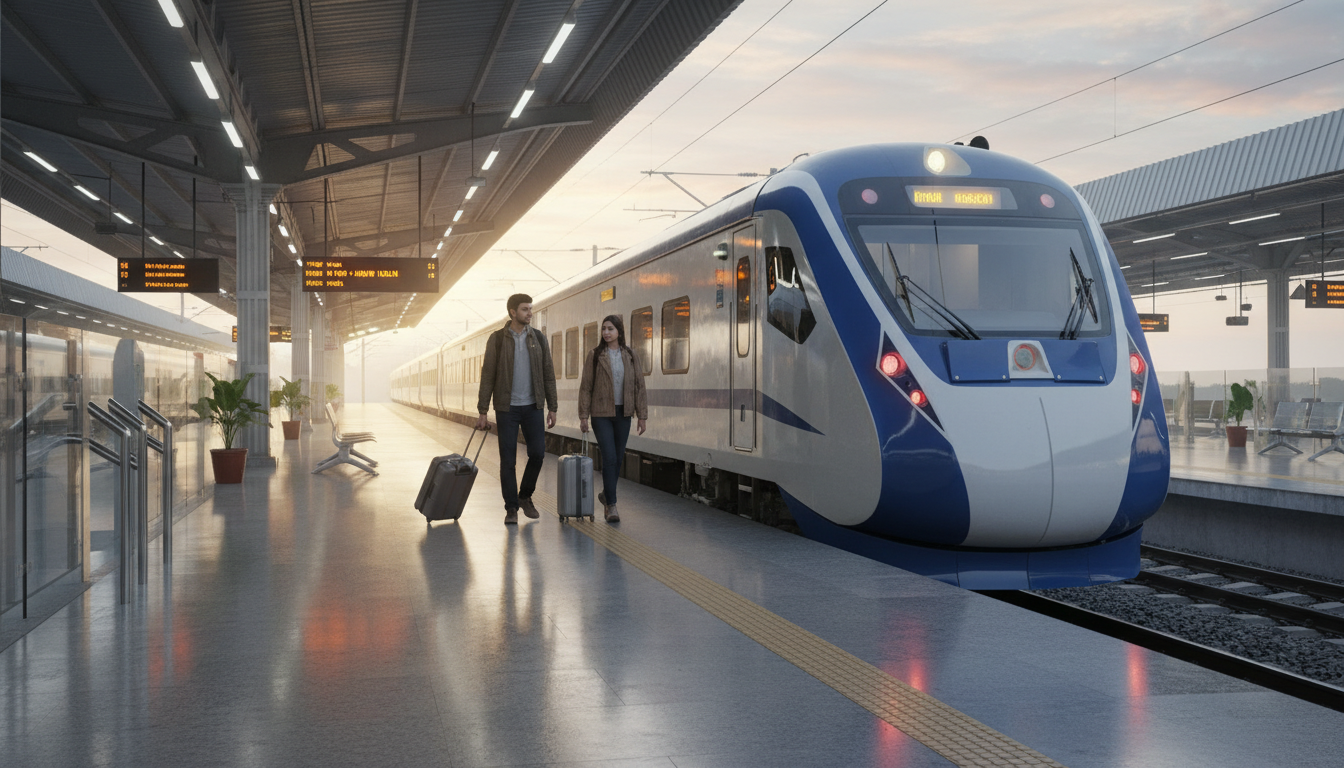
| CC / EC | AC Chair Car / Executive | Reclining airplane-style seating used on daytime express trains (Shatabdi & Vande Bharat). |
Mobile Data: Physical SIM vs. eSIM
Having continuous mobile connectivity is necessary for app-based bookings and digital payments. You can choose between setting up an eSIM before departure or purchasing a local physical SIM upon arrival.
| Feature | Pre-Travel eSIM (e.g., Airalo, Maya) | Local Physical SIM (Airtel / Jio) |
|---|---|---|
| Setup Time | Instant digital download before flying | 30–60 min airport queue + 2–4 hour activation wait |
| Required Documents | None | Passport, e-Visa copy, photo, hotel address |
| Local Phone Number | Data-only (usually no local calls/SMS) | Includes local Indian number + daily SMS quota |
| Cost Range | $4.50 – $18 USD (for 1–5 GB data) | ₹350 – ₹1,299 ($4.50 – $16 USD for 28 days of daily data) |
| Best Suitable For | Short stays (< 3 weeks), immediate navigation | Longer stays (> 3 weeks), receiving SMS OTPs |
Crucial Regional Exception: Prepaid SIM cards purchased anywhere else in India will not work in the mountain territories of Jammu & Kashmir or Ladakh due to security regulations. If traveling to Leh or Srinagar, you must purchase a local post-paid SIM on arrival.
India Travel Tips for First Timers: Food and Water Safety
Preventing gut disruptions (“Delhi Belly”) relies on simple daily habits regarding drinking water and food preparation.
Water Safety Guidelines
Do not drink untreated tap water anywhere in India. Tap water should also not be used for brushing your teeth. Follow these rules for hydration:
- Packaged Bottled Water: Purchase recognized, sealed national brands such as Bisleri, Kinley, or Aquafina. Check that the plastic neck seal is intact before opening.
- Filtered Water: RO (Reverse Osmosis) and UV-filtered water provided at upscale hotels and established restaurants is safe to drink.
- Ice Usage: Avoid ice at small roadside eateries, as it is often manufactured from unfiltered block ice.
Eating Street Food Safely
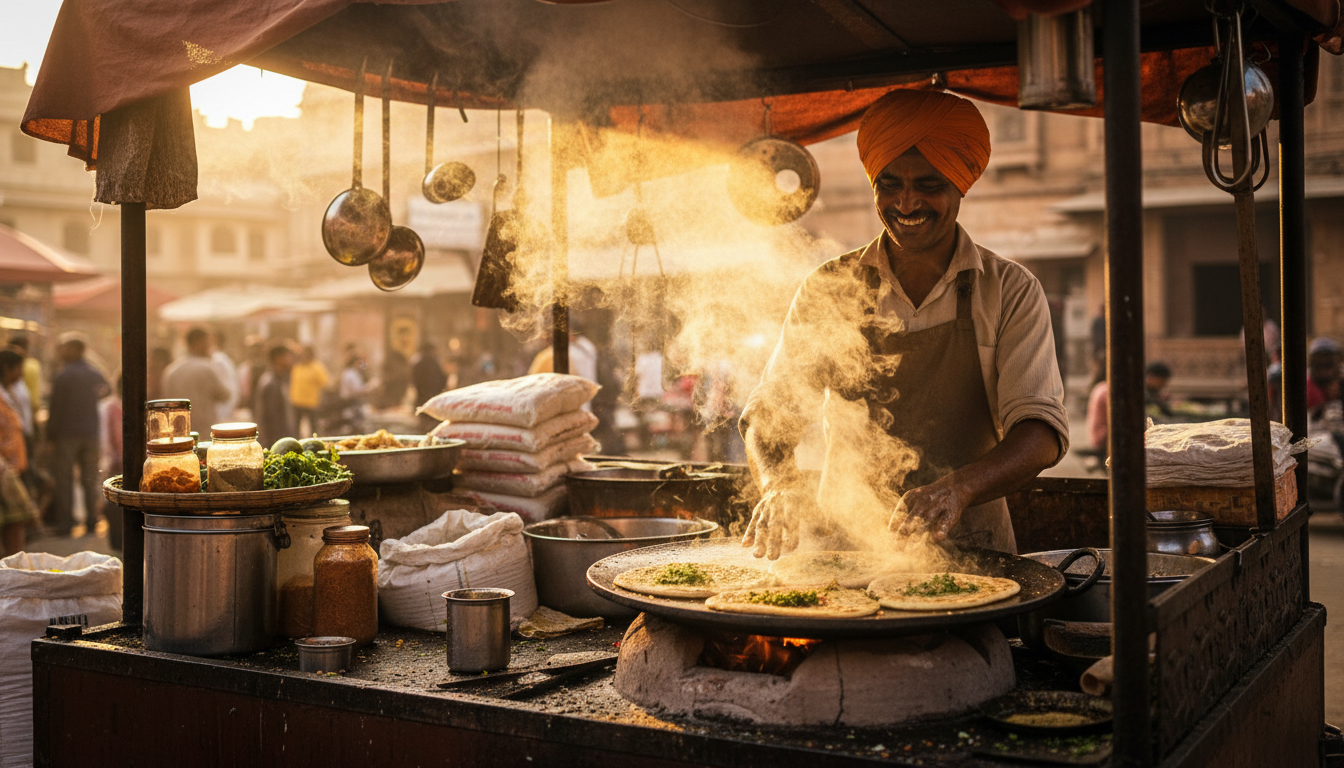
Sampling local dishes is a highlights of traveling in India. To minimize risk, follow three simple safety filters:
- Choose Busy Stalls: Eat at food vendors with long queues of local families. A rapid turnaround of ingredients ensures food is cooked fresh and hasn’t sat out.
- Eat Hot Food: Make sure your food is prepared fresh right in front of you and served steaming hot. Avoid lukewarm buffet trays.
- Avoid High-Risk Items: Avoid pre-cut unpeeled fruits, fresh raw salads, and unpasteurized dairy items at budget street stands. Choosing vegetarian options also significantly reduces the risk of foodborne bacteria.
Always pack an emergency health kit containing Oral Rehydration Salts (ORS), gut probiotics, Loperamide, and broad-spectrum antibiotics recommended by your physician prior to leaving home.
Restaurant Service Charges and Tipping Etiquette
Understanding local billing practices prevents unnecessary overpayment while ensuring service workers are fairly tipped.
Consumer Protection Laws on Service Charges
Under Central Consumer Protection Authority (CCPA) guidelines, restaurants in India are legally prohibited from levying an automatic, mandatory service charge on dining bills. If a restaurant includes a mandatory “Service Charge” item on your bill, you have the legal right to request its removal before paying.
Standard Tipping Benchmarks
- Dine-In Restaurants: If no automatic service charge is billed, leaving a 5% to 10% tip for good service is standard. If a service charge was already billed and paid, no additional tip is expected.
- Private Multi-Day Drivers: Tip ₹600 to ₹1,000 per day total per vehicle.
- Local Day Guides: Tip ₹500 to ₹1,000 per day for private guidance.
- Hotel Porters: Tip ₹50 to ₹100 per bag.
- Housekeeping Staff: Leave ₹100 to ₹300 per night in a sealed envelope.
Avoiding Touts, Scams, and Transport Hassles
While India is generally safe for travelers, high-density tourist areas require basic awareness of common street scams.
Three Common Scams in North India
- The “Closed Attraction” Scam: A taxi driver, rickshaw operator, or street tout claims the monument, temple, or official booking office you are heading to is closed for a holiday or private event. They offer to drive you to an alternate “government tourist office.” Ignore these claims and walk straight to the site entrance.
- Fake Government Tourist Offices: Private storefronts in areas like Delhi’s Paharganj or Connaught Place display logos mimicking official state tourism boards. They sell overpriced private car rentals and fake train tickets. The Ministry of Tourism does not operate walk-in commercial retail outlets in shop bazaars.
- The Hotel Switch Scam: A driver claims your booked hotel has burned down, closed down, or is located in a dangerous area, offering to take you to a “better” hotel run by their relative. Call your hotel front desk directly using your phone to confirm your reservation status.
Urban Transportation Best Practices
To prevent fare disputes, rely on ride-hailing apps like Uber and Ola in major metropolitan cities. In southern hubs like Bengaluru, Hyderabad, and Chennai, auto-rickshaw rides can be booked using apps like Rapido or Namma Yatri. When leaving airports or major railway terminals without an app booking, always line up at the official police-prepaid taxi counters rather than taking unmetered street cabs.
Best Time to Visit and Sample Itinerary Blueprint
Because India spans multiple climate zones, seasonal timing determines the quality of your trip.
Seasonal Timing Breakdown
- Peak Season (October to March): Best weather across North, Central, and South India. Expect warm sunny days and cool nights with virtually no rain.
- Summer Season (April to June): Plain regions across the north and center experience intense heat, often exceeding 40°C (104°F). This is the best season for traveling to high-altitude Himalayan regions like Ladakh.
- Monsoon Season (July to September): Heavy rains hit the West Coast and South India. Landscapes turn green, making it a budget-friendly time to explore inland Rajasthan and Kerala backwaters. For details on North Indian weather windows, check our guide on When to Visit Golden Triangle India.
Classic 8-Day Golden Triangle Itinerary
For first-time travelers planning their schedule, the Golden Triangle route offers a structured introduction to historical sights in North India. You can review full regional route alternatives in our Guide to Planning a North India Trip.
Days 1–3: New Delhi
- Explore historic Old Delhi: Chandni Chowk street markets and Jama Masjid.
- Visit southern monuments: Humayun’s Tomb, Qutub Minar, and drive past India Gate.
- Board the early morning Gatimaan Express train to Agra (approx. 2 hours).
Days 4–5: Agra
- Visit the Taj Mahal at sunrise for light and low crowd levels.
- Tour Agra Fort in the afternoon.
- Travel by road or train west to Jaipur, stopping at the historic city of Fatehpur Sikri en route.
Days 6–8: Jaipur (The Pink City)
- Tour Amber Fort, City Palace, and view the facade of Hawa Mahal.
- Explore the astronomical instruments at Jantar Mantar.
- Fly back to Delhi for your homeward international flight, or take an onward flight south to explore the Kerala backwaters.
Frequently Asked Questions
Can foreign tourists use UPI in India without an Indian bank account?
Yes. Foreign travelers can use UPI One World, an RBI-authorized prepaid digital wallet. You can register at airport counters or through approved partner mobile apps by completing physical identity verification using your passport and valid Indian visa.
How far in advance can foreign tourists book Indian train tickets?
Foreign passport holders booking under the Foreign Tourist Quota (FTQ) on the official IRCTC portal can reserve seats up to 365 days in advance of their travel date, compared to 60 days for standard ticket quotas.
Is tap water safe to drink in India?
No. Tap water is not safe to drink anywhere in India. You should rely exclusively on sealed, branded bottled water (such as Bisleri, Kinley, or Aquafina) or RO-filtered water provided by established hotels, and use bottled water when brushing your teeth.
Is tipping mandatory in restaurants in India?
Tipping is voluntary. Central Consumer Protection Authority guidelines prohibit restaurants from adding mandatory automatic service charges to dining bills. If no service charge is added to your bill, leaving a tip of 5% to 10% is customary for attentive service.