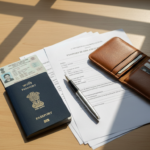

Planning your first time travel to india from usa involves managing a long-haul journey, navigating a unique visa system, and setting up payment methods that work on the ground. Whether you are traveling for leisure, visiting family, or exploring historic cultural corridors, crossing 10 to 12 time zones requires structured preparation. From securing the correct e-Visa on the official portal to understanding why your US mobile payment apps won’t work at local shops, this guide breaks down every step of your trip preparation.
Indian e-Visa for US Citizens: Rules, Fees, and Application
US passport holders must obtain a valid visa prior to boarding a flight to India. The standard route for tourism is the Indian e-Tourist Visa (eTV), processed entirely online. You do not need to submit your original passport to a consulate unless you are ineligible for an e-Visa.
Official Visa Portal vs. Commercial Aggregators
Always apply through the official government portal: indianvisaonline.gov.in. Searching online often yields third-party agency sites designed to look identical to the official portal while charging service fees of $100 to $200 above government tariffs. The government portal never charges extra processing fees beyond standard bank transaction fees.
e-Tourist Visa Sub-Types & Government Fees
As of August 2026, the following e-Tourist visa structures apply to US passport holders:
- 30-Day e-Tourist Visa: $25 USD fee for arrivals between July and March; $10 USD fee for arrivals between April and June (plus a 2.5% bank processing fee). It permits double entry. The 30-day validity window starts from the actual date of arrival in India.
- 1-Year e-Tourist Visa: $40 USD fee (plus 2.5% bank fee). Grants multiple entries. The validity period starts on the date the Electronic Travel Authorization (ETA) is issued, not your arrival date.
- 5-Year e-Tourist Visa: $80 USD fee (plus 2.5% bank fee). Grants multiple entries over five years from the date of issue.
The 180-Day Continuous Stay Limit: For both 1-Year and 5-Year e-Tourist Visas, American passport holders are allowed a maximum continuous stay of 180 days per visit. You must depart the country before 180 consecutive days elapse.
Application Rules and Documentation
Submit your application at least 4 calendar days before departure (the portal accepts submissions up to 120 days prior to your travel date). Standard turnaround time is 24 to 72 hours. Required uploads include:
- A scanned PDF copy of your passport bio page (file size: 10 KB to 300 KB). Your passport must have at least 6 months of validity remaining from your planned date of arrival and contain at least two blank pages.
- A square, recent digital photograph with a plain white background (JPEG format, 2 inches x 2 inches, file size: 10 KB to 1 MB).
OCI & Heritage Exceptions: If you are a US citizen of Indian origin holding an Overseas Citizen of India (OCI) card, you do not need a visa and have lifelong multi-entry travel privileges. However, US passport holders of Pakistani origin (or those with parents/grandparents born in Pakistan) cannot use the e-Visa portal. They must submit a regular paper visa application via VFS Global to an Indian Embassy or Consulate.
Booking Flights for First Time Travel to India from USA
Flying to India from the United States involves flights lasting between 13.5 and 16 hours direct, or 18 to 24 hours with a connection.
Active Nonstop Flight Corridors
Direct routes fluctuate depending on airspace routing and airline schedules. Check active nonstops directly with carriers for your exact travel dates:
- Air India: Operates direct flights connecting New York (JFK) to Delhi (DEL); Newark (EWR) to Delhi (DEL) and Mumbai (BOM); Chicago (ORD) to Delhi (DEL); and San Francisco (SFO) to Delhi (DEL). Note: The westbound SFO to DEL route includes a scheduled technical refueling stop in Kolkata on select frequencies, while the return DEL to SFO operates direct nonstop.
- United Airlines: Newark (EWR) to Delhi (DEL) (typically the fastest direct flight from the East Coast, averaging 13 hours and 40 minutes).
- American Airlines: New York (JFK) to Delhi (DEL) (averaging 14 hours and 35 minutes).
Suspension Notice: Direct nonstops like Air India’s Washington Dulles (IAD) to Delhi or SFO to Mumbai/Bengaluru nonstops have experienced extended seasonal suspensions or route restructuring via Delhi. Confirm nonstops on airline booking engines rather than third-party aggregators. For internal flights upon arrival, review our guide to first-time domestic flying in India.
Connecting Routes (One-Stop Options)
Connecting flights through Middle Eastern, European, or Asian hubs are often competitively priced and offer high levels of service:
- Middle East Carriers: Emirates (via Dubai), Qatar Airways (via Doha), and Etihad (via Abu Dhabi) serve multiple gateway cities across India, including Delhi, Mumbai, Bengaluru, Hyderabad, Chennai, and Kochi.
- European Carriers: Lufthansa (via Frankfurt/Munich), SWISS (via Zurich), and British Airways (via London Heathrow) offer easy connections to northern and western India.
- Asian Carriers (Best from West Coast): Singapore Airlines (via Singapore) and Cathay Pacific (via Hong Kong) offer comfortable connections into South and East India.
Average round-trip Economy fares generally range between $900 USD and $1,600 USD depending on whether you travel during peak winter or shoulder seasons.
Navigating Money in India: Foreign Cards, Cash, and UPI One World
Payment systems in India rely heavily on digital transactions, but US travelers often encounter friction when trying to use familiar apps or cards.
The Google Pay / Apple Pay Trap
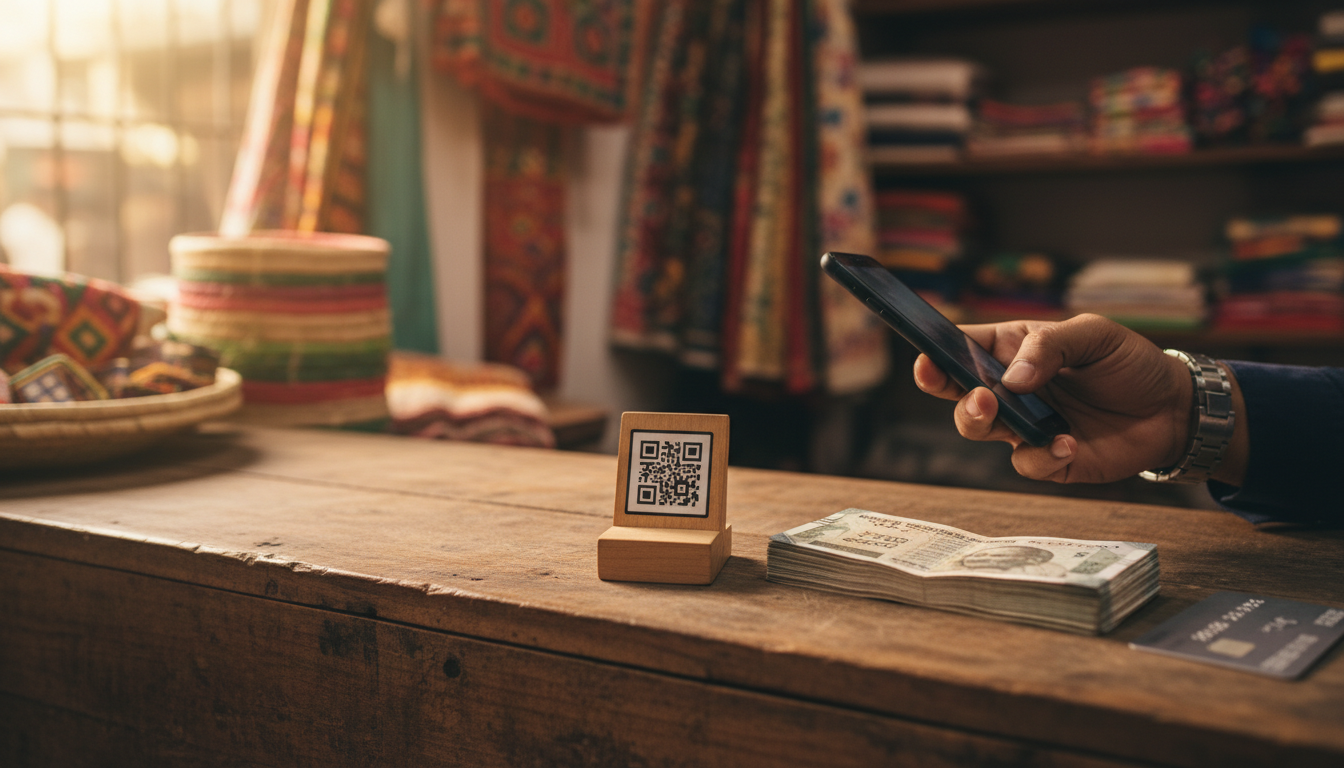
US mobile wallets like Apple Pay, Google Pay, or Venmo do not work for scanning standard Indian payment QR codes. Indian merchant QR codes run on the Unified Payments Interface (UPI) managed by the National Payments Corporation of India (NPCI), which is tied to the Indian banking system. US-linked apps cannot process transactions on this switch.
UPI One World for Foreign Travelers
To let foreign visitors use digital payments without an Indian bank account, the NPCI introduced UPI One World. This system lets international travelers scan local QR codes using a prepaid wallet loaded with foreign currency.
- Download an Authorized Partner App: Platforms such as CheQ, Mony, NamasPay, or IDFC First Bank offer UPI One World onboarding for non-residents.
- Complete Airport Verification (KYC): After registering on the app with your US phone number, visit an authorized currency exchange counter (such as EbixCash or Thomas Cook) located in the arrival halls of Delhi (DEL), Mumbai (BOM), or Bengaluru (BLR) airports. Staff will verify your US passport and valid Indian e-Visa.
- Load Wallet Funds: Load Indian Rupees into the wallet app using your US credit card, debit card, or foreign cash.
Crucial Restriction: UPI One World works at merchant QR codes (hotels, restaurants, retail shops, and official taxi counters). It cannot transfer money to individual bank accounts (P2P). Small street stalls or unorganized auto-rickshaw drivers using personal bank QR codes still require cash.
Credit Cards and Foreign Currency Rules
Visa and Mastercard are accepted at major hotels, fine-dining establishments, modern retail outlets, and official travel portals. American Express has limited acceptance. Use a card with 0% Foreign Transaction Fees (such as Chase Sapphire or Capital One Venture) to avoid 3% surcharges on every swipe.
Cash Regulations: Non-residents are prohibited from importing Indian Rupee (INR) cash into India. Bring $200 to $500 in clean, undamaged USD cash ($20 or $100 bills) to exchange at airport FX desks, or use your US debit card at major bank ATMs (State Bank of India, HDFC, ICICI) to withdraw cash in rupees. If you carry more than $5,000 USD in physical cash or $10,000 in total currency/traveler’s checks, you must declare it on a Customs Currency Declaration Form (CDF) upon landing. For more details on incoming limits, consult Indian customs baggage rules.
eSIM vs. Local Physical SIM: Mobile Data Setup
Reliable mobile internet is essential for accessing rideshare apps, navigating destinations, and using payment tools. You can choose between an international travel eSIM or a physical local SIM card upon arrival.
| Feature | Travel eSIM (Airalo, Nomad, Maya) | Local Physical SIM (Airtel, Jio) |
|---|---|---|
The Airport SIM Delay: If you buy a local physical SIM card (Airtel or Jio) at the airport arrival hall, identity processing takes 4 to 12 hours before service activates. If you land at midnight, you will not have immediate mobile data to hail an airport Uber. Install an international travel eSIM before leaving the US so you have instant data upon landing, then purchase a local SIM later if you need a local phone number for longer stays.
The 110V vs. 230V Voltage Trap: Electronics and Adapters
The electrical grid in India operates on 230V at 50Hz. The United States operates on 110V–120V at 60Hz.
Dual-Voltage vs. Single-Voltage Devices
Most modern personal electronics—such as iPhones, iPads, MacBooks, camera chargers, and dual-voltage shavers—support 100V–240V naturally. Check the fine print on the power adapter brick. If it reads INPUT: 100-240V 50/60Hz, your device only requires a physical plug adapter to fit Indian wall sockets.
The Hair Styling Tool Warning: Single-voltage (110V-only) American hair dryers, curling irons, or straighteners will short-circuit, melt, or cause a fire hazard if plugged into an Indian 230V socket using a simple adapter plug. Leave 110V single-voltage hair tools at home or purchase a dual-voltage travel tool.
Plug Socket Types
India primarily uses Type D outlets (3 large round pins arranged in a triangle) and Type C outlets (2 round pins, standard Europlug). Carry a universal travel adapter that includes a Type D configuration.
Health Precautions, Water Safety, and “Delhi Belly” Prevention
Taking practical health precautions ensures stomach bug issues won’t interrupt your itinerary.
CDC Vaccine Recommendations
Consult a travel health clinic 4 to 6 weeks before departure. Recommendations generally include:
- Routine Boosters: Tdap (Tetanus), MMR, Polio booster, and annual Flu shot.
- Recommended Travel Vaccines: Typhoid (oral or injectable) and Hepatitis A.
- Selective Vaccines: Hepatitis B, Rabies (if handling animals or trekking outdoors), and Japanese Encephalitis (for long stays in rural areas during monsoon season).
- Yellow Fever Note: A Yellow Fever vaccination certificate is required only if arriving from or transiting through a Yellow Fever endemic region in Africa or South America.
Water and Food Guidelines
Avoid drinking untreated tap water under any circumstances. Stick to these safeguards:
- Drink sealed bottled water from reliable brands (check that the cap seal is intact) or Reverse Osmosis (RO) purified water provided by reputable hotels.
- Use bottled water for brushing your teeth.
- Avoid ice in street beverages unless you can confirm it is made from commercial purified water.
- Eat hot, freshly cooked street food from busy, high-turnover vendors. Avoid pre-cut fruit, unpeeled raw produce, or salads washed in tap water.
- Pack a health kit containing Loperamide (Imodium), Pepto-Bismol, Oral Rehydration Salts (ORS packets), and a standby prescription antibiotic (such as Azithromycin) prescribed by your doctor.
Getting Around: Trains, Cabs, and IRCTC Foreign Tourist Quota
Navigating domestic travel options effectively helps cut down on long transit times.
Booking Indian Railways via Foreign Tourist Quota (FT Quota)
The Indian Railways system allows foreign passport holders to book train seats up to 365 days in advance through the Foreign Tourist (FT) Quota—well ahead of the standard 60-day window for general passengers.
- Go to the official Indian Railways website (
irctc.co.in). - Register an account using your US mobile number. Pay the foreign registration verification fee (₹100 INR + GST) to receive your mobile OTP code.
- Select trains under the Foreign Tourist Quota class. Fares under FT Quota carry a 1.5x surcharge over base rates, but secure seats on popular routes (like Delhi to Agra or Jaipur).
- Pay using an international credit card. Carry the physical US passport registered during booking when traveling on the train.
Modern train options include the semi-high-speed Vande Bharat Express (clean, air-conditioned chair cars), alongside traditional overnight sleeper options like the Rajdhani Express.
Ridesharing vs. Local Rickshaws
Rideshare services like Uber and Ola operate extensively in major metropolitan areas (Delhi, Mumbai, Bengaluru, Jaipur, Kochi). Using an app avoids fare negotiation issues, locks in route pricing, and lets you pay via linked credit cards or cash. For unmetered street auto-rickshaws, negotiate the fare before getting in or use an app like Uber Auto or Rapido to book them at standard rates.
Essential 14-Day Itineraries for First Time Travel to India from USA
Trying to cover all of India in two weeks can cause severe travel fatigue. Focus on a defined geographic region instead.
Option A: The North India Heritage Route (Golden Triangle + Rajasthan & Varanasi)
This classic circuit covers historic landmarks, iconic monuments, and cultural hubs in Northern India. If you want a detailed breakdown of climate conditions by month, read our guide on when to visit the Golden Triangle.
- Days 1–3: Delhi — Touchdown at Indira Gandhi International Airport (DEL). Explore Old Delhi, Humayun’s Tomb, Qutub Minar, and Agrasen ki Baoli. For seasonal tips, check our guide to planning a trip to North India.
- Days 4–5: Agra — Travel via the Yamuna Expressway or Gatimaan Express train. Visit the Taj Mahal at sunrise, explore Agra Fort, and view sunset from Mehtab Bagh.
- Days 6–8: Jaipur — Drive to the “Pink City.” Tour Amber Fort, City Palace, Hawa Mahal, and Jantar Mantar.
- Days 9–11: Udaipur — Take a short domestic flight to the “City of Lakes.” Enjoy a boat cruise on Lake Pichola and visit the City Palace museum.
- Days 12–13: Varanasi — Fly to Varanasi to witness the evening Ganga Aarti ceremony along the ghats and take a sunrise boat tour on the Ganges.
- Day 14: Return to Delhi — Fly back to Delhi for your international departure connection to the USA.
Option B: North & South Harmony (Golden Triangle + Kerala Backwaters)
This balanced route pairs northern heritage sites with the serene, tropical landscapes of Southern India.
- Days 1–3: Delhi — City sightseeing and acclimatizing to the time zone difference.
- Days 4–5: Agra — Taj Mahal and historic sites.
- Days 6–8: Jaipur — Palaces and local bazaars.
- Days 9–10: Kochi (Kerala) — Fly from Jaipur to Kochi (COK). Explore Fort Kochi, watch Kathakali dance performances, and tour the historic spice trading districts. For regional variations, see our guide to planning a South India trip.
- Days 11–12: Alleppey / Kumarakom — Board an overnight luxury houseboat cruise through the Kerala backwaters.
- Days 13–14: Marari Beach & Departure — Relax along the coast before departing via Kochi Airport or connecting back to Delhi/Mumbai for your flight home.

Common Pitfalls First-Time American Travelers Make
Avoid Travel Fatigue: Adjusting to a 9.5 to 12.5-hour time difference takes 24 to 48 hours. Avoid scheduling heavy back-to-back day tours immediately after landing.
- Relying Only on Credit Cards: Toll booths, small heritage entry points, tipping, and roadside vendors often require cash. Keep ₹2,000 to ₹3,000 in physical cash (in ₹100 and ₹500 bills) at all times.
- Ignoring Dress Codes at Religious Sites: Temples, mosques, and gurdwaras require modest clothing. Shoulders and knees must be covered, and shoes must be removed before entering. Carry a lightweight scarf to cover your head when requested.
- Hailing Unmetered Street Taxis at Midnight: Avoid taking unmetered street cabs outside airport exits without a pre-negotiated rate. Instead, use official airport prepaid taxi desks or rideshare apps like Uber and Ola.
- Packing Single-Voltage High-Wattage Appliances: Avoid plugging 110V US hair dryers directly into 230V Indian outlets to prevent electrical shorts.
Frequently Asked Questions
Is it safe for a first-time American solo female traveler in India?
Yes, millions of solo female travelers visit India comfortably every year. Key precautions include using verified rideshare platforms (Uber/Ola) for late-night transit, booking well-reviewed accommodations, dressing modestly outside resort areas, and keeping a working travel eSIM active on your phone for continuous maps and connectivity access.
Do I need physical cash if I use a foreign credit card and UPI One World?
Yes. Keep ₹2,000 to ₹3,000 INR in cash (ideally in ₹100 and ₹500 notes). Small roadside tea stalls, public restrooms, tip distributions, and unorganized auto-rickshaws generally do not have merchant UPI accounts and cannot process foreign cards.
Can I use my US iPhone in India?
Yes, provided your US iPhone is unlocked by your carrier (AT&T, Verizon, T-Mobile). Unlocked iPhones support dual-eSIM profiles, letting you keep your US line active for bank multi-factor SMS codes while using an Indian mobile data eSIM for local navigation and browsing.
What is the tipping etiquette in India?
Tipping is customary but less aggressive than in the United States. At sit-down restaurants, a 7% to 10% tip is standard if a service charge is not automatically included in the bill. For private hired drivers, tipping ₹300 to ₹500 INR per day is standard practice. For hotel baggage porters, ₹50 to ₹100 INR per bag is customary.
How far in advance should I apply for an Indian e-Visa from the US?
Submit your application 2 to 3 weeks before departure to give yourself a comfortable buffer. While the official minimum window is 4 calendar days prior to travel, applying early ensures you have time to resolve any documentation issue—like incorrect photo dimensions or passport scanning errors—without risking your flight schedule.