
Learning how to plan a trip to vietnam from india comes down to managing five critical logistics: applying through the correct $25 government visa portal, navigating strict low-cost airline carry-on limits, withdrawing cash without high bank fees, matching your travel dates to Vietnam’s regional weather zones, and knowing how to order food if you have dietary restrictions. With direct flights taking just 3.5 to 5.5 hours from major Indian hubs, Vietnam offers a world-class international holiday that is often more affordable than a domestic trip in India.
This guide walks you step-by-step through every phase of planning a trip to Vietnam from India—from paperwork and airline fine print to currency rules, vegetarian phrases, itineraries, and exact cost breakdowns.
Step-by-Step Timeline for How to Plan a Trip to Vietnam from India
To avoid last-minute delays and unnecessary surcharges, follow this practical checklist starting two months before your intended travel date:
- 6 to 8 Weeks Before: Route & Flight Booking
Decide whether you are visiting the North, Central, or South regions (or all three). Book an “open-jaw” flight—for example, flying into Hanoi (HAN) in the North and out of Ho Chi Minh City (SGN) in the South—to save time and avoid backtracking. - 4 Weeks Before: E-Visa & Major Excursions
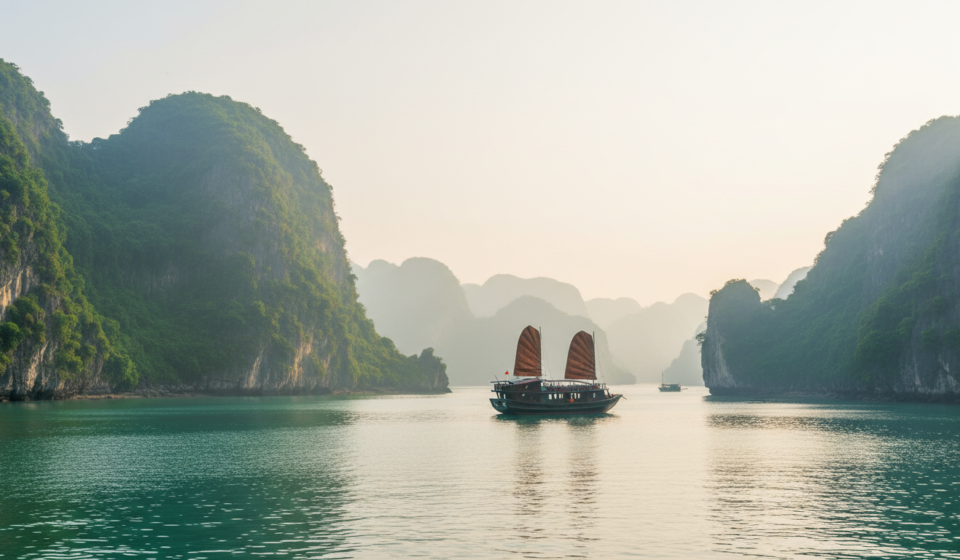
Apply for your official e-visa on the government website. Once flight dates are fixed, reserve high-demand activities like overnight cruises in Ha Long Bay or soft-sleeper train berths. - 2 Weeks Before: Forex, Connectivity & Domestic Flights
Apply for a zero-forex-markup card, set up your mobile data plan, and book any internal domestic flights between regional hubs. - 1 Week Before: Document Verification & Printing
Print hard copies of your approved e-visa, flight tickets, and hotel confirmation vouchers. Language cards for food preferences should also be saved on your phone. - Departure Day: Luggage Check & Currency Setup
Weigh your carry-on luggage combined with personal items to ensure it stays strictly under 7 kg. Upon landing in Vietnam, collect your baggage and use a fee-free local ATM to withdraw Vietnamese Dong (VND).
Vietnam E-Visa Requirements for Indian Passport Holders
Indian passport holders must obtain a visa before entering Vietnam. While the process is digital, falling for scam websites is one of the most common mistakes Indian travellers make.
The Official Visa Portal vs. Scam Websites
Numerous commercial agency websites mimic the official government portal, charging service fees of $80 to $120 for a standard visa. The official Vietnam Immigration Department portal is evisa.gov.vn.
- Single-Entry E-Visa Fee: USD 25 (~₹2,390), valid for up to 90 days.
- Multiple-Entry E-Visa Fee: USD 50 (~₹4,780), valid for up to 90 days.
- Processing Time: 3 to 5 official working days. Always submit your application at least 10 to 14 days prior to departure to account for official holidays or minor application corrections.
- Fee Reference: Vietnam Ministry of Finance Circular 28/2026/TT-BTC.
Required Documents & Non-Negotiable Rules
When applying online, you need a digital copy of your passport bio page and a 4×6 cm photo with a plain white background (no glasses allowed). Your passport must have at least six months of validity beyond your arrival date and contain at least two blank pages.
Crucial Entry Rule: You must print physical paper copies of your approved E-Visa PDF. Digital copies on a smartphone screen are not accepted at airport immigration counters. Additionally, your approved e-visa strictly locks in your designated port of entry. If you change your flight to land at a different airport (e.g., switching from Hanoi to Ho Chi Minh City), your visa becomes invalid, and you must reapply.
Flights from India and Airline Fine Print
Direct flights operate daily between Indian metros and Vietnam’s primary international gateways: Hanoi (HAN), Ho Chi Minh City (SGN), and Da Nang (DAD). Direct flights from New Delhi (DEL), Mumbai (BOM), Kolkata (CCU), and Ahmedabad (AMD) take between 3.5 and 5.5 hours.
Main carriers on these routes include VietJet Air, Vietnam Airlines, IndiGo, and Air India. Average round-trip fares range from ₹15,000 to ₹28,000 per person when booked 6 to 8 weeks in advance.
The VietJet Air Baggage Trap
VietJet Air frequently offers the cheapest initial fares, but its strict baggage enforcement can lead to unexpected fees at the airport if you are unprepared.
- 7 kg Cabin Baggage Rule: On Eco and Deluxe fares, your main carry-on bag and your personal item (laptop bag, handbag, or purse) combined must not exceed 7.0 kg.
- Mandatory Cabin Baggage Tagging: All hand luggage must be weighed and tagged with an official sticker at the VietJet check-in counter. Ground crew at boarding gates turn back passengers with untagged bags or additional shopping bags.
- Zero Included Checked Baggage: VietJet Eco fares include 0 kg of checked luggage. You must pre-purchase checked baggage allowances (15 kg, 20 kg, or 30 kg) online prior to check-in. Paying for excess baggage at the airport gate can cost more than double the online rate.
When packing hand luggage, remember to keep electronics organized and adhere to standard civil aviation guidelines regarding external power banks. If you are uncertain about carry-on restrictions for electronics, check our detailed guide on rules for carrying power banks on flights before heading to the airport.
Money Matters: Forex Cards, Cash, and ATM Fees in Vietnam
Vietnam runs predominantly on cash for street food, traditional markets, small family cafes, and taxi fares. Credit cards are accepted at hotels, modern restaurants, and high-end retail outlets, but cash remains necessary for day-to-day spending.
The local currency is the Vietnamese Dong (VND). Exchange rates fluctuate around 1 INR = 290 to 300 VND (or 1 USD = 25,000 VND). Indian UPI does not work at payment terminals in Vietnam.
Using ATMs & Avoiding Extra Charges
Carrying a zero-forex-markup card is the most efficient way to access currency at mid-market conversion rates. You can review the best forex card for international travel options to pick one with low international withdrawal fees.
- VPBank (Fee-Free Option): VPBank charges 0 VND in local ATM service fees for foreign Visa and Mastercard cardholders, allowing cash withdrawals up to 10,000,000 VND (~₹33,000) per transaction.
- TPBank Fee Update: TPBank previously offered zero-fee withdrawals, but introduced a ~3.3% service fee on foreign card transactions starting in mid-2025.
- Other ATM Surcharges: MSB charges a flat 22,000 VND fee; BIDV charges 33,000 VND; Vietcombank and Techcombank charge 55,000 VND per withdrawal.
- Avoid Dynamic Currency Conversion (DCC): When an ATM or credit card machine asks whether you want to be billed in Indian Rupees (INR) or local currency (VND), **always choose VND**. Selecting INR applies an extra 4% to 8% in foreign conversion markups.
SIM Cards and Local Connectivity Options
Staying connected across Vietnam is simple, with options available for both virtual and physical SIM cards.
Network coverage across Vietnam is led by Viettel (which covers roughly 98.6% of the country), followed by Vinaphone and Mobifone. You have two main connectivity choices:
- Option A: International eSIM (Recommended): Purchasing an eSIM prior to departure allows your phone to connect to the Viettel network as soon as your flight touches down, bypassing airport counter lines. Review our practical guide on eSIM for international travel to compare data packages and installation steps.
- Option B: Airport Physical SIM: Physical SIM cards are readily available at Noi Bai International Airport (Hanoi) and Tan Son Nhat International Airport (Ho Chi Minh City). A 15-to-30-day tourist plan with daily high-speed data costs between 150,000 and 300,000 VND (~₹500 to ₹1,000). You must present your original passport for regulatory registration at the counter.
Vegetarian and Jain Food Navigation in Vietnam
A common concern for Indian travellers is finding vegetarian or Jain-friendly food in a country known for fish sauce (nước mắm) and broth-based cuisine. However, due to Vietnam’s strong Mahayana Buddhist heritage, vegetarian food (Ăn Chay) is widely available once you know what to ask for.
Essential Phrase Dictionary for Dining
Save these essential phrases on your phone to show restaurant staff:
| Vietnamese Phrase | Pronunciation | English Meaning |
|---|---|---|
| Ăn Chay | ‘an chai’ | Eat Buddhist Vegetarian / Plant-based |
| Quán Chay / Cơm Chay | ‘kwan chai / kom chai’ | Vegetarian Eatery / Rice Shop |
| Tôi ăn chay | ‘toy an chai’ | I am vegetarian |
| Không nước mắm | ‘khom nook mum’ | No fish sauce |
| Không mắm tôm | ‘khom mum tom’ | No shrimp paste |
| Không thịt, không cá, không trứng | ‘khom thit, khom ka, khom trung’ | No meat, no fish, no eggs |
| Không tỏi, không hành | ‘khom toi, khom hanh’ | No garlic, no onions (For Jain diets) |
Naturally Vegetarian Local Dishes
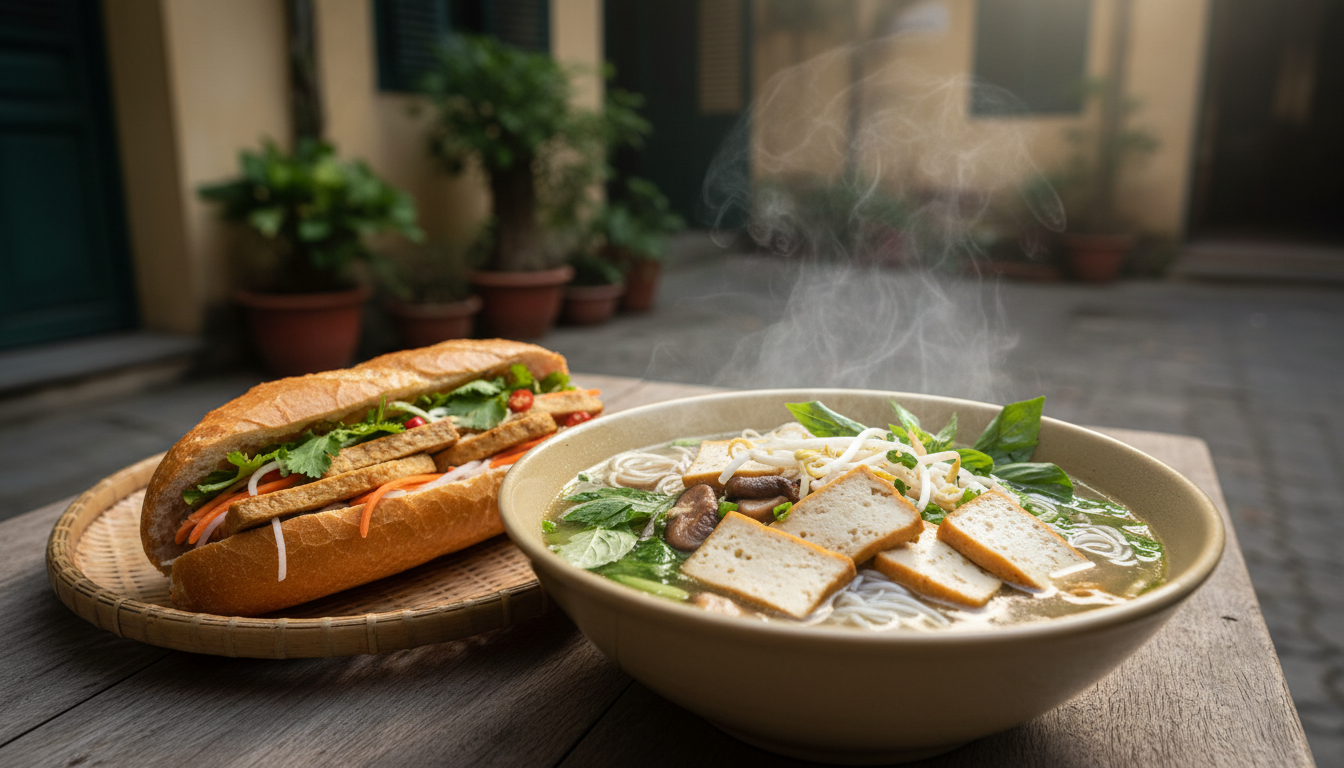
- Bánh Mì Chay: Crisp French baguette stuffed with lemongrass-grilled tofu, mushrooms, fresh cucumber, cilantro, and pickled carrots (request no meat pate and no mayo).
- Phở Chay: Vietnam’s national noodle soup served in a slow-simmered vegetable broth loaded with tofu, assorted mushrooms, and fresh garden herbs.
- Gỏi Cuốn Chay: Fresh, translucent rice paper roll packed with thin rice vermicelli, herbs, and tofu, served with a sweet peanut dipping sauce.
- Cơm Chay: A traditional plate of steamed jasmine rice topped with braised tofu, sautéed morning glory, and stir-fried seasonal vegetables.
Indian and Pure-Veg Restaurants Across Major Cities
If you prefer dedicated Indian or pure-vegetarian options during your journey, you can visit these highly rated options:
- Hanoi: Tanishq Indian Pure Veg, Curry Home, or local Cơm Chay buffet shops near the Old Quarter.
- Da Nang: Gujarat Indian Restaurant, Rasoi Pure Veg, and MAAZI Da Nang.
- Hoi An: Baba’s Kitchen and Ganesh Indian Restaurant.
- Ho Chi Minh City: Baba’s Kitchen (Bùi Viện Street), The TAJ Indian Restaurant, and Tandoor Saigon.
Best Time to Visit Vietnam by Region
Vietnam stretches over 1,000 kilometers north to south, creating three distinct regional climate zones. Selecting the right season for your itinerary prevents trip disruptions caused by localized heavy monsoons or extreme weather. Much like when planning a trip to Japan from India, understanding seasonal weather trends in Vietnam helps you get the most out of your holiday.
| Region | Key Destinations | Ideal Months | Weather & Conditions |
|---|---|---|---|
| North Vietnam | Hanoi, Ha Long Bay, Sapa, Ninh Binh | October to April | Cool, dry winters (15°C–22°C). June to August is hot, humid, and experiences heavy rain. |
| Central Vietnam | Da Nang, Hoi An, Hue, Phong Nha | February to August | Warm, dry, sunny weather. Avoid September to November due to monsoons and coastal flooding. |
| South Vietnam | Ho Chi Minh City, Mekong Delta, Phu Quoc | November to April | Tropical dry season (25°C–32°C). May to October brings short afternoon downpours. |
The Ideal Nationwide Window: If you plan to travel from North to South in a single trip, the sweet-spot months with balanced weather nationwide are March to April and October to November.
How to Plan a Trip to Vietnam from India: Essential Regional Itineraries
Here are three battle-tested routes based on common trip durations, complete with transport logistics between destinations.
Local Transport Mechanics
- Ride-Hailing Apps: Download Grab and Xanh SM before arriving. Xanh SM operates an all-electric fleet of VinFast vehicles that are consistently clean, quiet, and slightly cheaper than standard taxis.
- Sleeper Buses: Long-distance buses operated by Futa Bus (Phương Trang) or Sapa Express are budget-friendly ($8 to $20 per leg). Note that passengers must remove their shoes at the door and place them in a provided plastic bag. Sleep bunks are designed primarily for regional height profiles and comfortably fit travellers up to ~180 cm (6 feet).
- Trains: Vietnam Railways sleeper trains offer a scenic way to travel between Hanoi, Hue, and Da Nang. Book 4-berth soft-sleeper cabins online via verified aggregators like 12Go Asia or Baolau.
Route 1: The 7-Day Highlights (North & Central)
- Day 1: Arrive in Hanoi. Explore the historic Old Quarter and Hoàn Kiếm Lake.
- Day 2: City sightseeing in Hanoi (Temple of Literature, St. Joseph Cathedral, Train Street).
- Day 3: Morning transfer to Ha Long Bay or Lan Ha Bay. Board an overnight cruise.
- Day 4: Morning cruise activities, return to Hanoi, and catch an evening 1.5-hour domestic flight to Da Nang.
- Day 5: Visit Bà Nà Hills (Golden Bridge) and transfer to Hoi An Ancient Town in the evening.
- Day 6: Hoi An street walks, coconut basket boat ride, and tailored clothing shops.
- Day 7: Visit Marble Mountains in Da Nang; evening departure flight home from Da Nang (DAD).
Route 2: The 10-Day Classic Route (North to South)
- Days 1–2: Hanoi street markets, historic sights, and food tours.
- Days 3–4: Ha Long Bay overnight cruise with kayaking and cave excursions.
- Day 5: Day trip to Ninh Binh (Tràng An boat tour and Múa Cave lookout). Take an evening train or short flight to Da Nang.
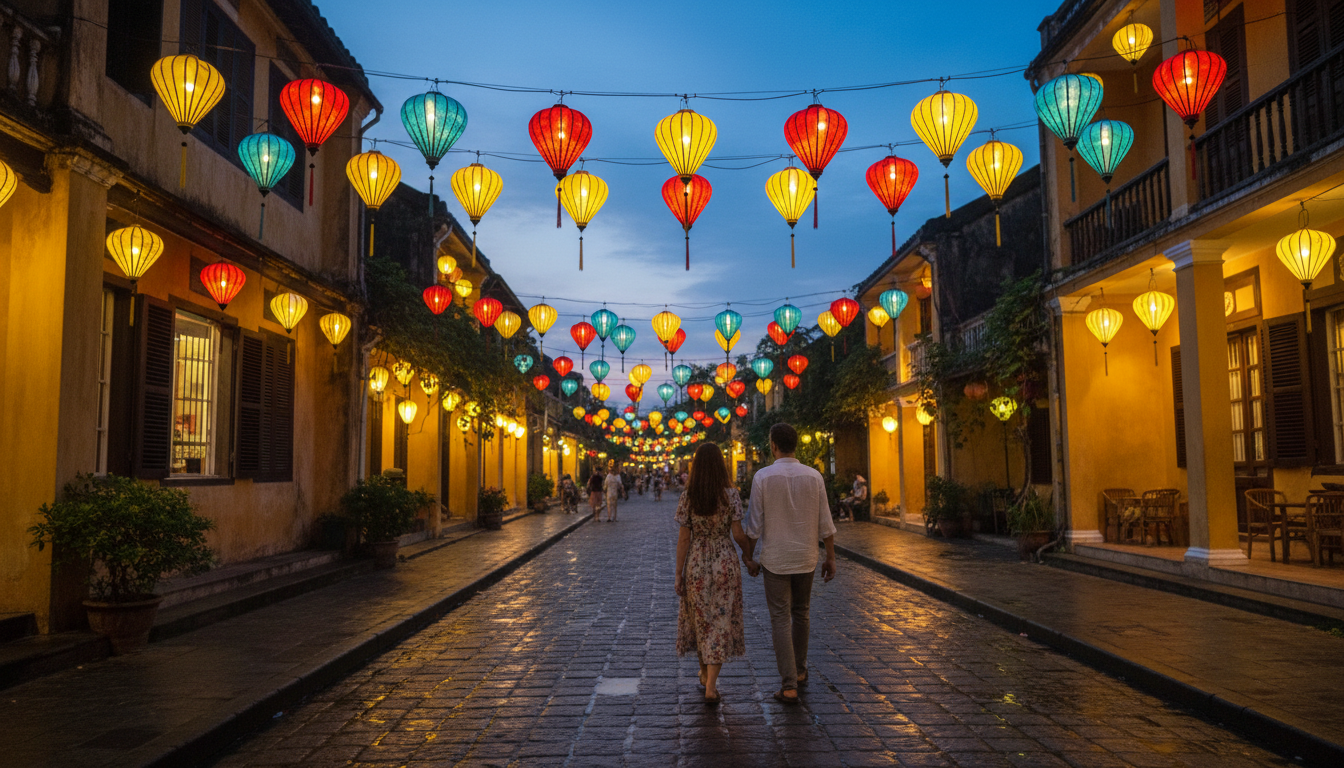
- Days 6–7: Explore Da Nang coastal attractions and Hoi An Ancient Town lanterns.
- Day 8: Fly to Ho Chi Minh City. Visit the War Remnants Museum and Ben Thanh Market.
- Day 9: Guided day trip to Cu Chi Tunnels and the Mekong Delta waterways.
- Day 10: Final local shopping; return flight home from Ho Chi Minh City (SGN).
Route 3: The 14-Day Grand Tour
- Days 1–3: Hanoi arrival, followed by an overnight bus or train to Sapa for valley trekking and rice-terrace views.
- Days 4–6: Ha Long Bay overnight cruise, returning via Ninh Binh boat sanctuary.
- Days 7–9: Fly to Central Vietnam: explore Imperial City Hue, cross the Hai Van Pass, and stay in Hoi An.
- Days 10–12: Fly south to Ho Chi Minh City and tour the Mekong Delta.
- Days 13–14: Fly to Phu Quoc Island for beach relaxation and the island cable car, then fly back home via SGN.
How to Plan a Trip to Vietnam from India on a Budget: Cost Breakdown
Below is a realistic 7-day cost breakdown per person for Indian travellers, calculated using average exchange rates (1 USD = ₹83–₹85 | 1 INR = ~290 VND).
| Expense Head | Budget / Backpacker | Mid-Range (Couples / Comfort) | Luxury / Premium |
|---|---|---|---|
| Return Flights (India–Vietnam) | ₹14,000 – ₹18,000 | ₹18,000 – ₹25,000 | ₹30,000 – ₹45,000 |
| Visa Fee (Single Entry) | ₹2,390 ($25) | ₹2,390 ($25) | ₹4,780 ($50 Multi) |
| Accommodation (7 Nights) | ₹3,500 – ₹7,000 (Hostels) | ₹14,000 – ₹22,000 (3–4★ Hotels) | ₹45,000 – ₹90,000 (5★ Resorts) |
| Internal Transport | ₹2,500 – ₹4,000 (Buses/Trains) | ₹6,000 – ₹10,000 (Flights + Grab) | ₹15,000 – ₹25,000 (Private Cars) |
| Food & Dining (7 Days) | ₹3,500 – ₹5,500 (Street food / Chay) | ₹8,000 – ₹14,000 (Cafes / Indian) | ₹20,000 – ₹35,000 (Fine dining) |
| Sightseeing & Activities | ₹4,000 – ₹6,000 (Basic entries) | ₹12,000 – ₹18,000 (Cruise included) | ₹25,000 – ₹40,000 (Private tours) |
| eSIM & Incidentals | ₹600 – ₹1,000 | ₹1,200 – ₹2,000 | ₹2,500 – ₹4,000 |
| ESTIMATED TOTAL (Per Person) | ₹30,000 – ₹44,000 | ₹61,500 – ₹92,000 | ₹1,42,000 – ₹2,43,000+ |
Note for Couples: An average 7-day mid-range vacation for an Indian couple sharing hotel rooms and booking a mid-range Ha Long Bay cruise costs approximately ₹1,20,000 to ₹1,50,000 combined including direct flights.
5 Common Traps and Scams to Avoid
- Unofficial Visa Websites: Double-check your browser address bar to ensure you are using
evisa.gov.vn. Third-party agency sites charge inflated fees and may issue invalid paperwork. - VietJet Excess Carry-On Charges: Keep your hand luggage strictly within the 7.0 kg combined weight limit. Pre-book checked bags online if you plan on bringing extra items back home.
- Confusing High-Denomination Banknotes: Vietnamese Dong bills feature multiple zeroes and can look similar. In particular, the 20,000 VND note and the 500,000 VND note share a similar shade of blue. Count your notes carefully when paying in cash. Note that vendor prices stated as “50k” translate to 50,000 VND (~₹170).
- Unmetered Taxis at Airports: Avoid taking unmetered street taxis waiting outside airport terminals. Use ride-hailing apps like Grab or Xanh SM for transparent pricing and digital route tracking.
- Fake Travel Shop Fronts: Dozens of independent tour agencies in Hanoi run under copied names like “The Sinh Tourist” or “Sinh Cafe”. Book your intercity sleeper buses or day tours online using verified platforms like 12Go Asia or Vexere to avoid seat downgrades.
Frequently Asked Questions
Can Indian passport holders get a visa on arrival in Vietnam?
No. Vietnam does not offer a walk-up visa on arrival for Indian passport holders without prior approval. You must apply online for an electronic visa (E-Visa) via evisa.gov.vn before departing India, print the PDF approval document, and present it at airport border control.
How much cash should I carry to Vietnam from India?
Carrying around $100 to $150 USD in physical cash for emergencies is good practice. However, carrying thousands of Rupees to convert locally is unnecessary. You can withdraw Vietnamese Dong directly from local fee-free ATMs (such as VPBank) using an Indian zero-forex debit or credit card at competitive rates.
Is it difficult to find vegetarian or Jain food in Vietnam?
Not at all. Look for signs reading “Quán Chay” or “Cơm Chay”, which indicate Buddhist vegetarian eateries. To ensure your food is free from fish sauce, garlic, or onions, save simple Vietnamese phrases on your phone to show the staff when ordering.
What happens if my VietJet cabin bag exceeds 7 kg?
If your combined carry-on items exceed 7.0 kg at the departure gate, VietJet staff will require you to check the bag and pay gate excess fees starting from 600,000 to 1,200,000 VND (~₹2,000 to ₹4,000) per bag. Always weigh your hand luggage before leaving your hotel.
What is the shortest flight duration from India to Vietnam?
Direct flights operating out of eastern and northern Indian cities (such as Kolkata or New Delhi) to Hanoi take approximately 3.5 to 4 hours. Direct flights from western cities like Mumbai take roughly 4.5 to 5.5 hours.