
Finding quiet, uncrowded travel destinations across Western India has become a challenge as popular spots like Lonavala, Calangute, Mahabaleshwar, and Udaipur face heavy weekend rush. Discovering genuine hidden places to visit in west india gives you access to 52,000-year-old meteorite impact craters, ocean floor coral walks accessible on foot, serene river islands, and secluded turtle-nesting beaches. This guide breaks down 15 exceptional offbeat destinations across Maharashtra, Gujarat, Goa, and the Union Territories of Daman, Diu, and Dadra & Nagar Haveli, complete with exact travel routes, seasonal timing warnings, and practical trip expenses.
Maharashtra’s Best Kept Secret Destinations
1. Lonar Crater Lake (Buldhana District)
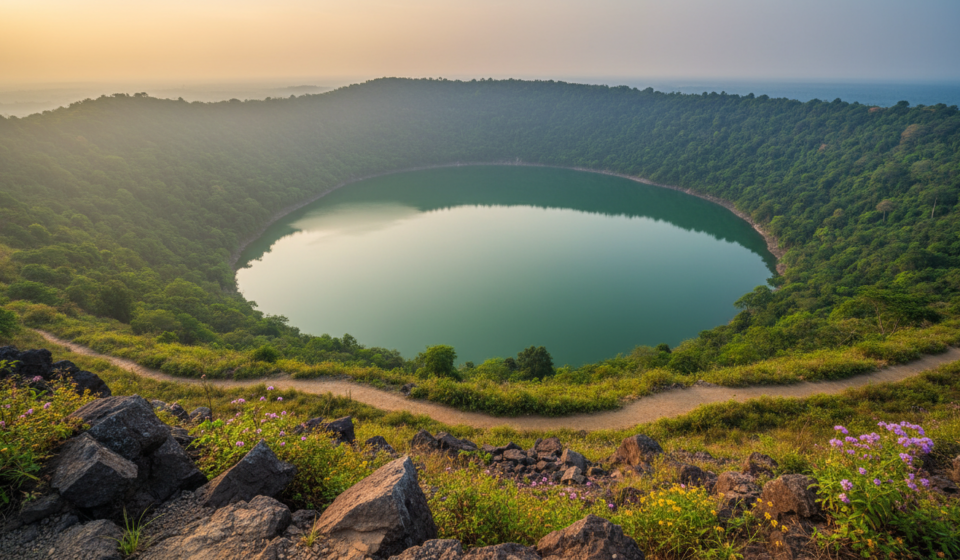
Formed nearly 52,000 years ago when a hyper-velocity meteorite struck basalt rock, Lonar Lake is one of the world’s few basaltic impact craters. Located in Vidarbha near the Marathwada border, the crater spans 1.8 kilometers across and houses a unique closed-basin lake that is both saline and alkaline.
A trek down the steep, boulder-strewn crater rim brings you into a dense canopy filled with over 160 bird species and ancient 12th-century Hemadpanthi temple ruins, including the Kamalja Devi and Daitya Sudan temples. While the lake famously turned pink briefly in 2020 due to haloarchaea microbes, it has returned to its natural emerald green shade.
- How to Reach: It takes roughly 3.5 to 4 hours (140 km) to drive from Chhatrapati Sambhajinagar (Aurangabad) via Jalna. The nearest major railway station is Jalna (90 km).
- Best Time to Visit: October to March. Summer temperatures exceed 42°C, making the crater descent dangerous.
- Practical Tips: Access to the rim is free, though a nominal forest entry fee (₹20–₹50) applies at the main trail head. Hire a certified local guide (₹300–₹500) to safely navigate the loose basalt gravel. Wear sturdy trekking shoes with strong grip; smooth-soled footwear will cause slips.
- Where to Stay: MTDC Resort situated right on the crater rim offers clean rooms with direct views of the lake.
2. Jawhar (Palghar District)
Positioned just 130 km from Mumbai along the Western Ghats, Jawhar is a tranquil tribal hill station that serves as a quiet alternative to Lonavala and Khandala. Jawhar is famous for its preserved Warli tribal culture and grand heritage architecture.
The standout architectural attraction is the 1930s Jai Vilas Palace (Raj Bari), built from stone by the Mukne tribal kings. Nature lovers can explore seasonal roaring cascades like Dabhosa Waterfall—which plummets 300 feet into a deep rocky gorge—and Kalmandvi Waterfall. Historic vantage points include Shirpamal, where Chhatrapati Shivaji Maharaj rested en route to Surat, and Hanuman Point.
- How to Reach: Drive 3 to 3.5 hours from Mumbai via NH48, turning off at Manor/Wada. From Pune, the drive takes around 5.5 hours (250 km).
- Best Time to Visit: June to September for full-flowing monsoon waterfalls; October to February for clear, pleasant weather. If you enjoy rainy escapes, check out our guide to places to visit in India during monsoon.
- Practical Tips: Entry to Jai Vilas Palace grounds costs ₹50–₹100 per person (access inside private living quarters depends on the royal family’s current guidelines). Road routes involve winding ghat sections, so drive cautiously during monsoon downpours.
- Where to Stay: Book local eco-resorts like Prakriti Agro Farm, MTDC-affiliated stays, or village homestays serving homestyle Pithla Bhakri.
3. Amboli (Sindhudurg District)
Situated in the far south of Maharashtra before the Goa border, Amboli sits atop the Sahyadri hill range at an altitude of 690 meters. Unspoiled by large commercial chains, Amboli receives extremely heavy rainfall, earning it the title of the “Cherrapunji of Maharashtra.”
During the rains, misty clouds blanket the highways while Amboli Falls and Nangartas Falls cascade down vertical rock walls. Beyond waterfalls, Amboli is an ecological hot-spot. Nature lovers visit for guided night “herping” trails inside sanctuary buffer zones to spot the endemic Malabar Pit Viper, Malabar Gliding Frog, and bioluminescent fungi that glow on decaying wood.
- How to Reach: Drive 90 km (2.5 hours) from Panjim, Goa via Sawantwadi. Belagavi in Karnataka is just 70 km away.
- Best Time to Visit: July to October for monsoon waterfalls; November to February for wildlife and herpetology night trails.
- Practical Tips: Night trails require an experienced local naturalist guide (₹500–₹1,000 per group) for safety and biodiversity protection. Stop by nearby Sawantwadi (~30 km) to purchase authentic, hand-painted wooden toys.
- Where to Stay: Whistling Woods Amboli or local family-run homestays serving fresh Malvani fish curries and Kombdi Vade.
4. Velas Beach & Guhagar (Ratnagiri District)
For an authentic coastal Konkan experience away from commercialized beach towns, head to the quiet duo of Velas and Guhagar. Velas is renowned for its community-led conservation project that protects endangered Olive Ridley sea turtles.
Every year during hatching season, visitors gather on Velas Beach to watch baby turtles emerge from protected sand hatcheries and make their journey into the Arabian Sea. Further south along the coast lies Guhagar, featuring long expanses of white sand lined with betel nut groves and the historic Vyadheshwar Shiva Temple.
- How to Reach: Velas is roughly 220 km from Mumbai (via Mangaon) and 190 km from Pune via Tamhini Ghat. Guhagar is located 90 km further south down the Ratnagiri coast.
- Best Time to Visit: February to April for the Velas Turtle Festival; November to February for Guhagar’s serene beach weather.
- Practical Rules & Timing: Turtle releases occur strictly at 7:00 AM and 5:00 PM under local volunteer supervision. Flash photography and touching hatchlings are strictly banned. Velas operates a village-collective homestay model—there are no commercial hotels in Velas, only simple village homes offering clean floor bedding, shared washrooms, and vegetarian Konkani meals like Modak and Sol Kadi.
5. Sandhan Valley (Ahmednagar District)
Known as the “Valley of Shadows,” Sandhan Valley is a rock canyon located near Bhandardara near the base village of Samrad. Carved out by water over thousands of years, the narrow canyon reaches depths of 200 feet, spanning roughly 2 kilometers where sunlight rarely reaches the bottom.
An adventure trek through the valley involves walking over large boulders, wading through waist-deep natural water pools, and technical rappelling down steep rock faces to reach the camping grounds beneath the stars.
- How to Reach: Drive to Samrad village (~180 km from Mumbai via Igatpuri/Ghoti, or 195 km from Pune via Sangamner).
- Best Time to Visit: November to March for the full canyon trek and overnight camping.
- CRITICAL SAFETY WARNING: Treks into the deep canyon bottom are strictly prohibited during the peak monsoon season (July through September). Flash floods can fill the narrow gorge rapidly, creating extreme life safety hazards. Restricted monsoon visits should stay strictly at base village viewpoints.
- Practical Tips: Entering the deep gorge requires hiring local guides equipped with safety ropes and harnesses (₹1,200–₹2,000 per group).
Top Hidden Places to Visit in West India: Gujarat
6. Polo Forest / Vijaynagar (Sabarkantha District)
Spanning over 400 square kilometers near the Gujarat-Rajasthan border, Polo Forest is an eco-tourism destination filled with dense deciduous woodlands, ancient stone temple ruins, and riverbanks.
The forest surrounds 15th-century Hindu and Jain temple ruins, such as the Sharaneshwar Shiva Temple and Lakhena Jain Temple, which are intertwined with wild vines and jungle roots. Visitors can walk along the Harnav River, visit the Harnav Dam, and trek through forest paths that host over 275 bird species.
- How to Reach: Drive 150 km (3.5 hours) northeast from Ahmedabad via NH8 through Himmatnagar and Idar. From Udaipur, it is a 120 km drive.
- Best Time to Visit: September to February when the forest is lush green following the monsoon.
- Practical Tips: Forest entry is free; basic vehicle parking costs ₹20–₹50. Mobile network signal is weak inside deep forest patches, so download offline maps before driving. Avoid visiting in May when temperatures exceed 40°C and foliage dries up.
- Where to Stay: Book Polo Tent City (operated under Forest Department initiatives) or private eco-resorts near Abhapur village. Food options center on traditional Gujarati and Kathiawadi thalis.
7. Narara Marine National Park (Jamnagar District)
Located on the Gulf of Kutch coast near Jamnagar, Narara is one of India’s few accessible marine national parks where you can observe living marine life on the sea bed without putting on scuba gear or needing to swim.
During daily low tides, the ocean water recedes up to 3 kilometers, allowing visitors to take a guided walk in ankle-to-knee-deep water over coral reefs. You can observe live hard and soft corals, octopuses, sea anemones, pufferfish, sea cucumbers, and crabs in their natural tide pools.
- How to Reach: Drive 56 km (1.5 hours) from Jamnagar city toward Vadinar. Hiring a private cab from Jamnagar is the most convenient option.
- Best Time to Visit: October to February. The park is strictly closed mid-May through mid-October due to monsoon breeding seasons.
- CRITICAL TIDE RULES: Access is entirely dictated by daily tide charts. The walking window opens roughly 3 hours after high tide and lasts for only 2 to 3 hours. Check exact daily tide timings with local guides or the Forest Office in Jamnagar before setting off.
- Permits & Gear: Forest permits cost ~₹50 per Indian visitor, camera fees are ₹200, and a certified forest guide is mandatory (~₹300). Never wear flip-flops or walk barefoot; wear thick-soled strap sandals or old canvas sneakers to protect your feet from sharp coral formations and stonefish risks. Removing shells or marine life is illegal under the Wildlife Protection Act.
8. Little Rann of Kutch & Wild Ass Sanctuary (Surendranagar District)
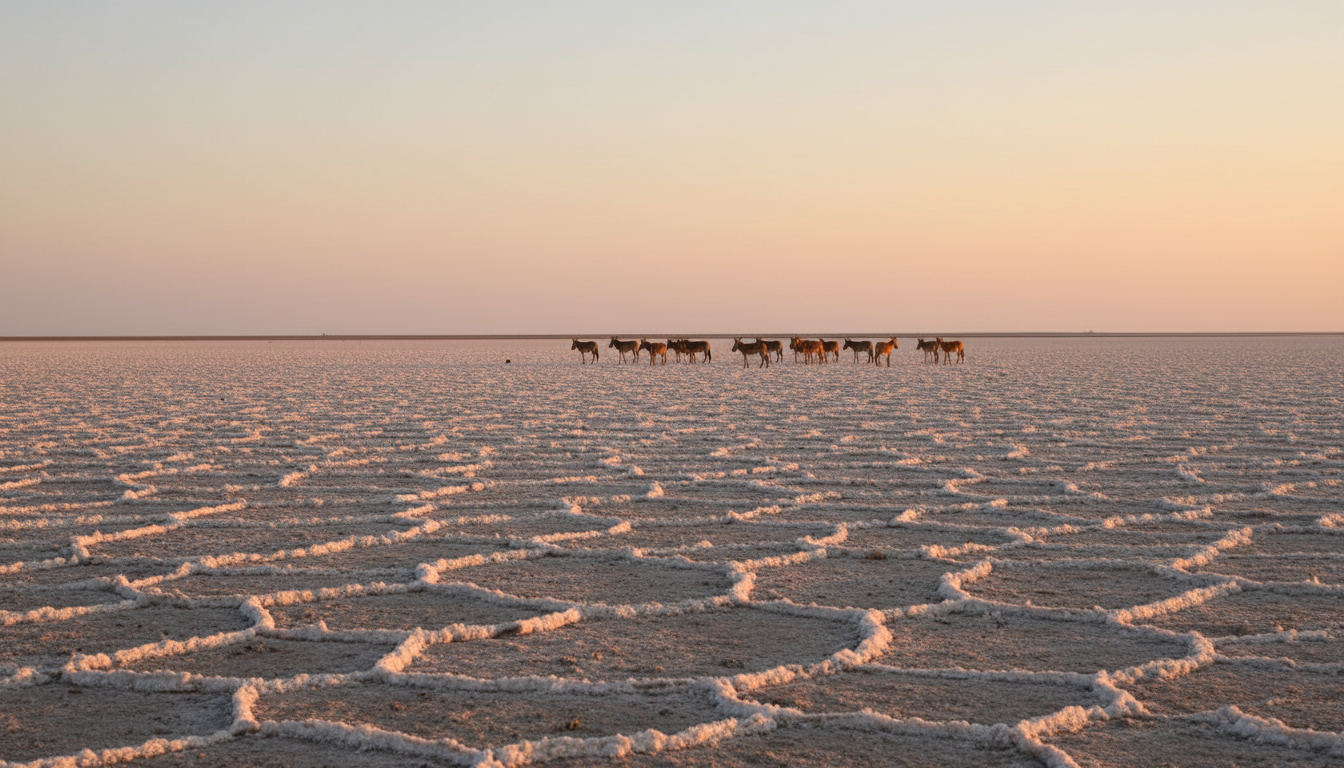
While most travelers head to the White Rann of Dhordo in Great Kutch, the Little Rann of Kutch (LRK) offers a raw desert experience focused on wildlife conservation and vast cracked-earth salt flats.
The 4,950 sq km sanctuary protects the last remaining population of the endangered Asiatic Wild Ass (*Khur*). Open jeep safaris across the dried salt pans provide sightings of these fast mammals alongside migratory winter birds at the Bajana and Nava Talao wetlands, where thousands of flamingos, pelicans, and cranes gather. You can also meet the *Agariya* salt-farming community to learn how salt is traditionally extracted from groundwater beneath the cracked crust.
- How to Reach: Base yourself at Dasada or Zainabad, located 95 km to 110 km (2 to 2.5 hours drive) west of Ahmedabad.
- Best Time to Visit: November to March. The sanctuary closes for animal breeding from July to October.
- Practical Tips: Never drive standard personal vehicles onto the salt flats independently—the thin top crust can break, stranding cars in deep, wet mud beneath. Safari jeep tours cost ₹2,500–₹3,500 per vehicle including guide and entry fees.
- Where to Stay: Eco-resorts like Rann Riders in Dasada or Desert Coursers in Zainabad, featuring Kutchi-style *Bunga* cottages.
9. Don Hill Station & Girmal Waterfall (Dang District)
Tucked away in the forested Dang district of South Gujarat on the Maharashtra border lies Don Hill Station. Positioned at an elevation of 1,000 meters, Don is actually higher in altitude than Gujarat’s popular hill resort, Saputara (875 meters), yet remains remarkably peaceful and underdeveloped.
Nearby, deep inside the forest, flows Girmal Waterfall—Gujarat’s highest waterfall, plunging more than 100 feet down a cliff face. The surrounding drive passes through green tribal valleys, offering viewpoints like the Horseshoe Bend on the Gira/Ambika river.
- How to Reach: Drive 145 km to 160 km (3.5 to 4 hours) from Surat via Vyara or Ahwa. From Mumbai, the drive takes 5.5 to 6 hours (270 km) via NH48.
- Best Time to Visit: July to October to witness peak monsoon greenery and maximum waterfall power.
- Practical Tips: Infrastructure in Don village is minimal. Fill up your fuel tank and withdraw cash in Ahwa (~35 km away) before heading into interior Dang roads. Avoid driving along narrow forest roads after sunset.
- Where to Stay: Forest Department campsites (such as Mahal Eco Campsite) or hotels in Saputara (~50 km away). Taste local Dangi staples like *Nagli* (ragi) rotla served with bamboo shoot curry.
10. Lakhpat Fort & Khadir Bet (Kutch District)
Perched on the far north-western edge of Kutch overlooking the Kori Creek and Pakistan border marshes, Lakhpat is a grand 18th-century ghost town enclosed within 7 kilometers of intact, high stone fort walls.
Once a booming port town that generated vast daily revenue (hence the name *Lakhpat*), the town lost its sea connection when an earthquake in 1819 altered the course of the Indus River. Today, under 600 residents remain within the fort walls. Key sites include the historic **Gurudwara Pehli Patshahi** (commemorating Guru Nanak Dev Ji’s stay before traveling to Mecca, recognized with a UNESCO Heritage award), the tomb of Sufi saint Ghaus Muhammad, and desolate watchtowers overlooking the salt marshes.
- How to Reach: Drive 135 km (2.5 to 3 hours) northwest from Bhuj via Nakhatrana. Hiring a private taxi from Bhuj is recommended.
- Best Time to Visit: October to March.
- Practical Tips: Entry to the fort grounds and Gurudwara is free. Carry government photo ID (Aadhaar or Passport) as BSF border checkpoints operate in the nearby creek areas. No fuel stations exist inside Lakhpat, so refuel in Nakhatrana. Combine your visit with a trip down the scenic “Road to Heaven” toward Dholavira on Khadir Bet.
- Where to Stay: Simple langar meals and basic rooms are offered at Lakhpat Sahib Gurudwara. Standard hotels are located in Nakhatrana (80 km) or Bhuj.
Hidden Places in Goa Beyond Beaches
11. Divar Island (Mandovi River, North Goa)
Located in the Mandovi River just off the coast of Old Goa, Divar Island offers a quiet glimpse into traditional Goan life, completely isolated from mainland party crowds. To explore more tranquil spots across the state, read our guide on hidden places to visit in Goa beyond beaches.
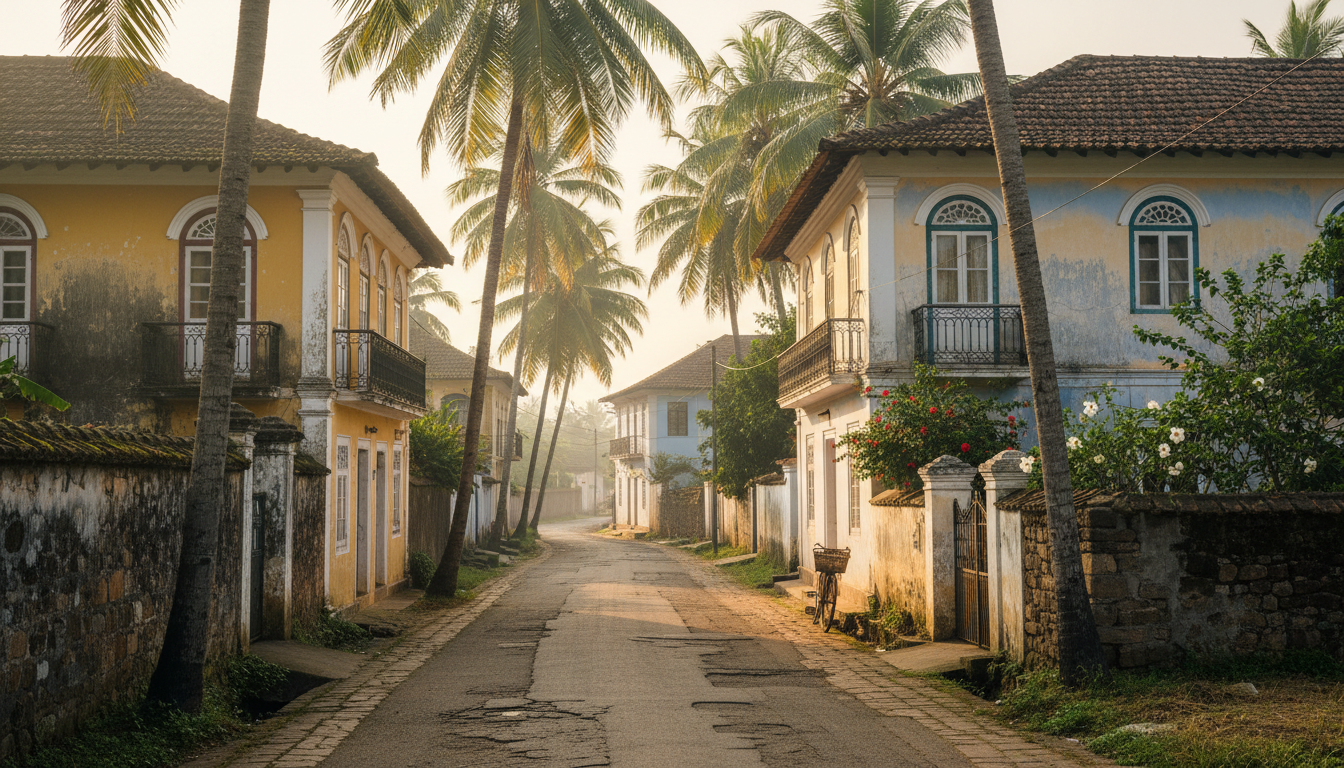
Divar features narrow asphalt lanes flanked by pastel-painted Goan-Portuguese ancestral homes, lush paddy fields, and ancient churches. At the highest point in Piedade sits the Church of Our Lady of Compassion, offering sweeping views across the Mandovi River and the spires of Old Goa.
- How to Reach: Accessible strictly via government-operated roll-on/roll-off vehicle ferries across the Mandovi River. Primary ferry points include:
- Old Goa Jetty to Piedade Terminal (10 mins drive from Panjim)
- Ribandar Jetty to St. Pedro Terminal
- Narve/Bicholim Jetty to Naroa Terminal
- Ferry Schedule & Cost: Ferries operate every 15 to 30 minutes from 6:00 AM to 2:00 AM. Pedestrians and two-wheelers ride completely free; four-wheelers pay a nominal fee of ₹10.
- Best Time to Visit: Year-round. Late August is special due to the traditional Bonderam Festival, held on the 4th Saturday of August. Park oversized vehicles near the jetty and explore the island using an electric bicycle or on foot.
12. Netravali Wildlife Sanctuary & Savri Waterfalls (South Goa)
Occupying 211 square kilometers in the interior Sanguem taluka of South Goa, Netravali is an expansive rainforest sanctuary located along the slopes of the Western Ghats.
The sanctuary features rainforest treks leading to Savri Waterfall and Mainapi Waterfall, where clear water tumbles into deep plunge pools. Netravali is also home to the mysterious Budbudyanchi Tali (Bubbling Lake) at the Gopinath Temple—an ancient stone tank where steady streams of bubbles rise to the surface whenever you clap your hands near the water’s edge.
- How to Reach: Drive 50 km (1.5 hours) from Margao via Quepem and Sanguem, or 80 km from Panjim.
- Best Time to Visit: June to November for full waterfalls and green forest cover.
- Practical Logistics: Sanctuary entry fees cost ₹100–₹150 per person at the checkpost. The sanctuary entry gate strictly closes at 3:30 PM. Life jacket rentals (₹50) are mandatory if swimming near waterfall pools during high water levels. Leeches are common during monsoons, so bring salt or wear leech socks. For a complete South Goa and North Goa trip itinerary, read our full 4-day Goa itinerary.
13. Galgibaga Beach (Canacona, South Goa)
Situated in far South Goa near the Talpona River estuary, Galgibaga Beach is one of the most untouched coastal stretches in the state. Along with Morjim and Agonda, Galgibaga is a designated nesting site for the protected Olive Ridley sea turtle.
Spanning 1.7 kilometers, the beach features golden sand bordered by tall pine trees rather than commercial concrete structures. The Goa Coastal Zone Management Authority (GCZMA) strictly regulates development here, keeping the beach free of commercial activity.
- How to Reach: Drive 15 km south from Palolem Beach, or 45 km south from Margao via NH66.
- Best Time to Visit: November to April. Turtle nesting season runs from December through March.
- Silent Zone Regulations: Permanent beach shacks, night lights, and loud outdoor parties are strictly prohibited to protect nesting turtles. Do not touch or enter fenced sand pits marked by forest department volunteers.
- Where to Stay: Small eco-villas and family homestays set back behind the pine tree line. Local eateries across the coastal road serve homestyle Goan fish curry rice.
Union Territory Escapes: Daman, Diu, Dadra & Nagar Haveli
14. Simbor Fort / Fortim do Mar (Diu Enclave)
Located on a small coastal enclave near the village of Simbor (roughly 45 km east of Diu island), Simbor Fort—historically known as *Fortim do Mar*—is a ruined 18th-century Portuguese sea fort built on a stone islet at the mouth of the Simbor River creek.
Unlike Diu Fort, Simbor Fort stands offshore isolated in the sea, surrounded by wild, undeveloped beaches. Visiting the fort requires taking a short boat trip across the creek directly to the fort’s stone walls.
- How to Reach: Drive 45 km east from Diu town along the coastal road toward Delvada and Simbor village. From the creek shore, negotiate with local fishermen to hire a small motorboat for the 10-minute crossing.
- Best Time to Visit: October to March when sea conditions remain calm.
- Practical Warnings: There are no official tourism ticket counters or scheduled ferries. Boat crossings cost roughly ₹300–₹600 round trip via direct negotiation with local fishermen. Visit **strictly during calm, low tide conditions**. Never attempt to cross during the monsoon months (June through September), as high swells make landing on the fort rocks hazardous.
15. Dudhani Lake & Khanvel (Dadra & Nagar Haveli)
Located inside the Union Territory of Dadra and Nagar Haveli just 40 km from Silvassa, Dudhani Lake is a large waterfront reservoir created by the Madhuban Dam on the Daman Ganga River.
Surrounded by forested hills, the lake is a popular spot for water sports. Visitors can take rides on Kashmiri-style decorated *Shikaras*, speedboats, and rowboats operated by the tourism department. Nearby Khanvel offers quiet forest trails, deer parks, and insights into local Warli and Kokna tribal heritage.
- How to Reach: Drive 40 km (1 hour) from Silvassa. From Mumbai, drive 165 km (3.5 to 4 hours) via NH48 through Vapi. From Surat, it is a 135 km drive.
- Best Time to Visit: October to March for water sports and pleasant lake weather; July to September for green monsoon drives.
- Practical Tips: Boat ride fees range between ₹250 and ₹600 for 30 to 60-minute sessions. Book a stay at the government tourism resort (Van Vihar Dudhani) directly overlooking the lake for great sunset views. If you are open to exploring other offbeat options across India, read our destination guide on hidden places to visit in South India.
Overview Table & Estimated Travel Budgets (2026)
Planning an offbeat trip requires clear logistical expectations. Below is a quick comparison of all 15 destinations along with practical budget estimates for different travel styles.
| Destination | State / UT | Primary Attraction | Best Window | Nearest Metro Hub |
|---|---|---|---|---|
| Lonar Crater Lake | Maharashtra | Meteorite Crater & Ancient Ruins | Oct – Mar | Ch. Sambhajinagar (Aurangabad) |
| Jawhar | Maharashtra | Warli Heritage & Waterfalls | Jun – Feb | Mumbai / Thane |
| Amboli | Maharashtra | Misty Ghats & Wildlife Trails | Jul – Feb | Panjim / Belagavi |
| Velas & Guhagar | Maharashtra | Turtle Hatching & Quiet Beaches | Feb – Apr | Mumbai / Pune |
| Sandhan Valley | Maharashtra | Canyon Trekking & Camping | Nov – Mar | Mumbai / Pune |
| Polo Forest | Gujarat | 15th-Century Temple Ruins | Sep – Feb | Ahmedabad |
| Narara Marine Park | Gujarat | Low-Tide Sea Bed Walking | Oct – Feb | Jamnagar / Rajkot |
| Little Rann of Kutch | Gujarat | Wild Ass Safaris & Salt Pans | Nov – Mar | Ahmedabad |
| Don & Girmal | Gujarat | High Altitude Tribal Plateau | Jul – Oct | Surat |
| Lakhpat Fort | Gujarat | Historic Ghost Fort & Creek Views | Oct – Mar | Bhuj |
| Divar Island | Goa | Portuguese Village Heritage | Year-round | Panjim |
| Netravali Sanctuary | Goa | Rainforest Treks & Bubbling Lake | Jun – Nov | Margao / Panjim |
| Galgibaga Beach | Goa | Protected Turtle Nesting Shore | Nov – Apr | Margao |
| Simbor Fort | Diu (UT) | Offshore Sea Fort Ruins | Oct – Mar | Diu Town |
| Dudhani Lake | Dadra & Nagar Haveli | Reservoir Boating & Shikaras | Oct – Mar | Mumbai / Surat |
Realistic Daily Budget Benchmarks
- Budget Backpackers (₹1,200 – ₹1,800 per day): Utilizing state transport buses or shared jeeps, staying in village homestays, Gurudwaras, or simple tents, and dining at local thali joints.
- Mid-Range Couples & Families (₹3,500 – ₹6,000 per day): Traveling via personal car or private cab rentals, staying in mid-range eco-resorts, MTDC/Gujarat Tourism guest houses, hiring local guides, and enjoying sit-down meals.
- Boutique & Slow Travelers (₹8,000 – ₹14,000 per day): Hiring private SUVs, staying in heritage villas or luxury eco-tents (such as Polo Tent City or Divar boutique stays), and booking dedicated wildlife naturalists.
Frequently Asked Questions
Which hidden place in West India is best for a quick weekend road trip from Mumbai?
Jawhar in Palghar district (~130 km) and Dudhani Lake in Silvassa (~165 km) are two of the best choices. Both offer short drive times under 4 hours, smooth road access, clear routes, and quiet environments away from major highway congestion.
Can we walk on corals at Narara Marine National Park without knowing how to swim or dive?
Yes. Narara Marine National Park allows visitors to walk directly on the ocean floor in ankle-to-knee-deep water during daily low tide periods. No swimming or diving experience is required. However, you must align your arrival strictly with daily tide charts provided by the forest department or local guides.
Are there commercial beach shacks or nightlife at Galgibaga Beach in Goa?
No. Galgibaga Beach is a protected government-designated silent zone created to safeguard Olive Ridley sea turtle nesting habitats. Commercial beach shacks, loud amplified music, permanent concrete construction, and night lighting are strictly banned on the beach.
Is it safe to trek inside Sandhan Valley during the monsoon season?
No. Treks into the narrow gorge of Sandhan Valley are dangerous and strictly restricted during peak monsoon months (July through September). Flash floods can fill the narrow canyon quickly. Monsoon visitors should stay at base village viewpoints like Samrad rather than entering the gorge.
How do cars cross over to Divar Island in Goa if there is no bridge connection?
Divar Island is connected to the Goan mainland via government-operated roll-on/roll-off vehicle ferries running from Old Goa, Ribandar, and Narve. Drivers simply drive their car directly onto the flatbed ferry deck. The crossing takes 5 to 10 minutes, runs regularly from 6:00 AM to 2:00 AM, and costs ₹10 per car (free for pedestrians and two-wheelers).