
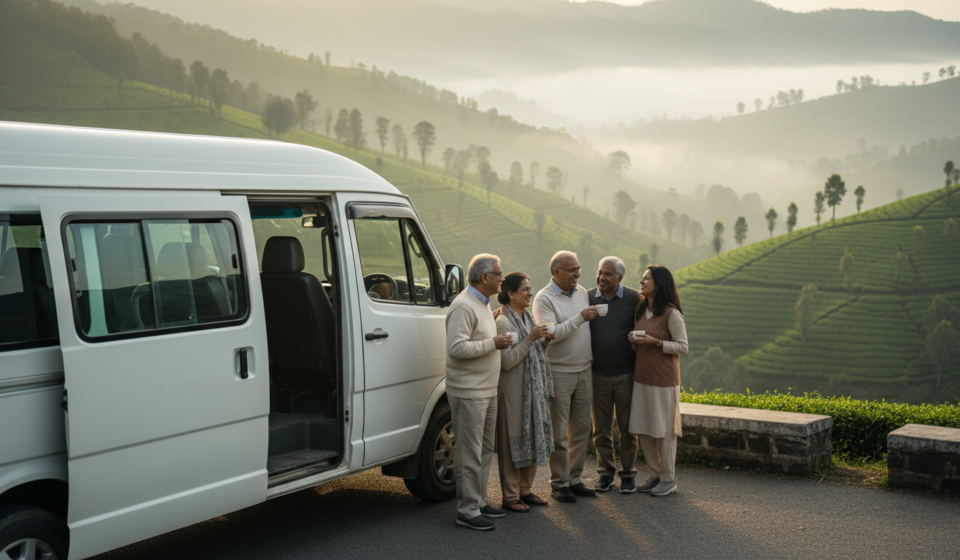

Planning group tour packages south india requires balancing distinct regional circuits, complex inter-state transport permits, strict temple dress codes, and diverse dietary needs across multi-generational families. Whether you are coordinating a pilgrimage for senior citizens, a extended family vacation, or a multi-city getaway with friends, a successful trip comes down to practical logistics rather than generic destination lists. This comprehensive guide details exact per-person costs, vehicle rental rates, verified regional circuits, crucial state border permit rules, and daily operational schedules to help you plan a seamless South Indian group tour for 2025 and 2026.
Realistic Costs for Group Tour Packages in South India
The cost of a South India group package depends heavily on group size, vehicle choice, hotel category, and meal inclusions. When traveling as a group, private road transport—typically a dedicated Tempo Traveller or mini-bus—delivers the best value per head compared to individual taxi bookings or fixed public transport.
| Package Category | Duration | Estimated Cost per Person | What Is Included |
|---|---|---|---|
| Budget Circuit | 5 to 7 Days | ₹8,000 – ₹18,000 | Train transfers (IRCTC), standard 2-star/3-star guest houses, shared mini-bus, basic breakfast. |
| Standard Family Group | 7 to 9 Days | ₹18,000 – ₹32,000 | 3-star hotel rooms, dedicated air-conditioned Tempo Traveller, daily breakfast, selected local sightseeing transfers. |
| Premium / Heritage Group | 7 to 10 Days | ₹35,000 – ₹55,000+ | 4-star resort stays, premium backwater houseboat cruise, flight inclusions, dedicated vehicle, full breakfast and dinner buffets. |
When evaluating quotes, always review the details using a comprehensive Tour Package Inclusions Checklist to confirm whether driver allowances, toll charges, and border taxes are explicitly covered.
Commercial Vehicle Rental Breakdown
For dedicated group travel across southern states, private commercial vehicles (yellow-plate tourist transport) charge based on per-kilometer rates combined with a guaranteed minimum daily billing distance (usually 250 km to 300 km per day).
- 9 to 12-Seater Tempo Traveller: ₹22 to ₹24 per km (Minimum daily billing: 250 km/day = ₹5,500 to ₹6,000 base daily rate).
- 16 to 17-Seater Tempo Traveller: ₹25 to ₹27 per km (Minimum daily billing: 250 km/day = ₹6,250 to ₹6,750 base daily rate).
- 20 to 26-Seater Executive Mini-Bus: ₹28 to ₹35 per km (Minimum daily billing: 250–300 km/day = ₹7,500 to ₹10,000 base daily rate).
- Driver Night Allowance / Batta: ₹500 to ₹700 per day across South India for driver lodging and meals.
Cross-Border Vehicle Permits and Taxes
Cross-border road trips require commercial vehicles to pay inter-state entry taxes under Motor Vehicles Act Section 88(8) whenever crossing state boundaries (such as moving from Karnataka into Tamil Nadu or Kerala). Budget tour operators often fail to pay these state taxes online in advance, leading to unexpected 2-to-3-hour administrative delays at physical border checkposts.
- Karnataka to Tamil Nadu Entry (e.g., Hosur Checkpost): Approx. ₹800 for Sedans, ₹1,500 for SUVs/MUVs, and ₹2,000 to ₹3,500 for Tempo Travellers for a 7-day temporary tourist permit.
- Karnataka / Tamil Nadu to Kerala Entry (e.g., Walayar Checkpost): Approx. ₹1,500 to ₹3,500 for MUVs (Innova) and ₹3,500 to ₹5,000+ for Tempo Travellers, plus mandatory Kerala Green Tax and Road Tax fees.
- All India Tourist Permit (AITP): Reputable operators utilize commercial vehicles holding valid AITP authorizations paid online via the Ministry of Road Transport & Highways (Parivahan portal), allowing seamless passage through border toll points.
Top 4 Circuits for Group Tour Packages in South India
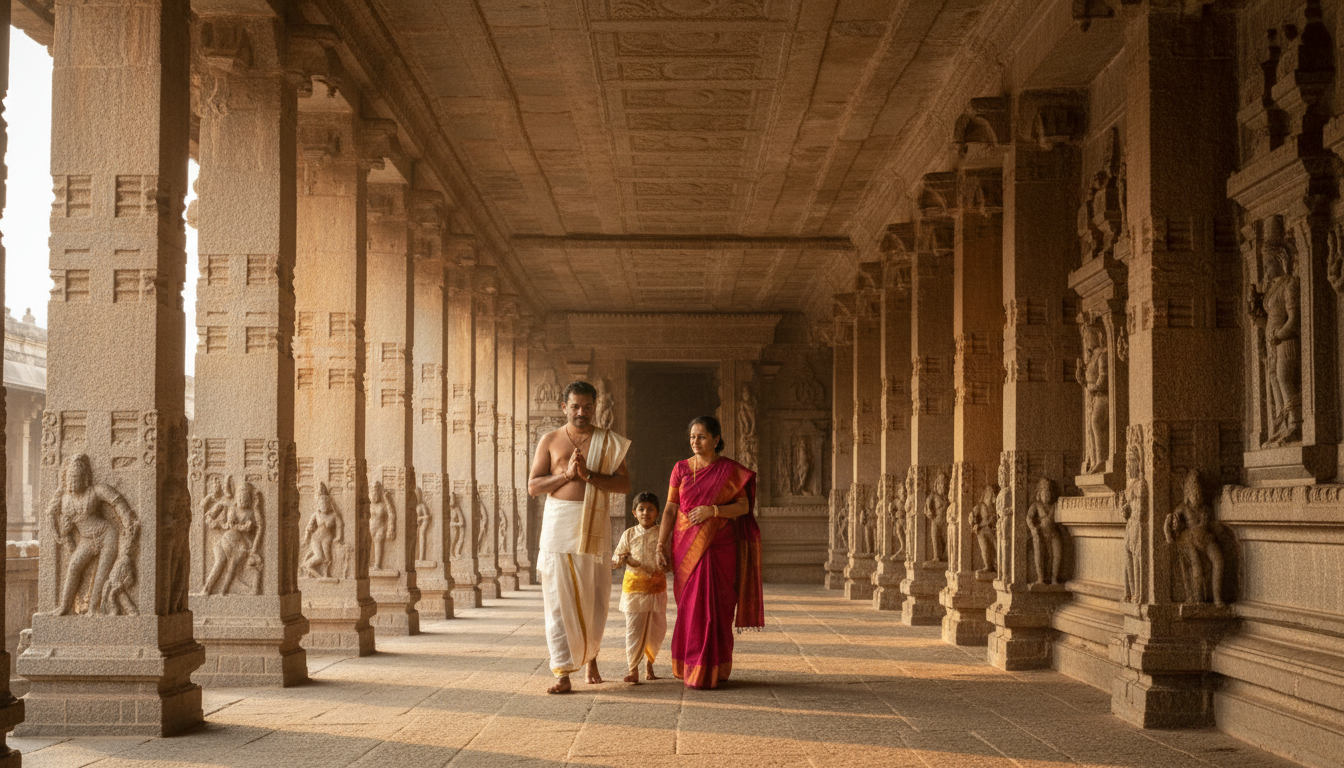
South India covers diverse topographies, from Dravidian temple cities and highland tea estates to serene backwaters and royal heritage hubs. Selecting the right regional loop prevents unnecessary driving hours and keeps the itinerary comfortable for every age group.
Circuit 1: Grand Tamil Nadu Temple & Heritage Trail
This circuit is designed for heritage enthusiasts, multi-generational families, and pilgrimage groups looking to experience architectural monuments and sacred coastal towns.
- Route: Chennai → Mahabalipuram → Puducherry → Thanjavur → Madurai → Rameshwaram → Kanyakumari (Drop at Trivandrum or Madurai).
- Ideal Duration: 7 Nights / 8 Days to 9 Nights / 10 Days.
- Key Highlights: UNESCO World Heritage Shore Temples in Mahabalipuram, French colonial streets in Puducherry, the colossal Brihadeeswarar Temple in Thanjavur, Madurai Meenakshi Amman Temple, Rameshwaram’s Ramanathaswamy Temple and Dhanushkodi beach, and sunset over the Thiruvalluvar Statue in Kanyakumari.
- Driving Conditions: Well-paved national highways (NH 38 and NH 44) with flat terrain and smooth transit, averaging 100 to 200 km per day.
- Estimated Cost (3-Star Group Package): ₹22,000 – ₹28,000 per head (Ex-Chennai or Ex-Madurai).
Circuit 2: Kerala Hills, Backwaters & Coastal Bliss
Focusing on relaxation and scenery, this trail fits family reunions, friends groups, and leisure travelers who prefer cool hill stations combined with palm-fringed backwaters.
- Route: Kochi → Munnar → Thekkady (Periyar) → Alleppey / Kumarakom → Kovalam / Thiruvananthapuram.
- Ideal Duration: 6 Nights / 7 Days.
- Key Highlights: Colonial Fort Kochi, Eravikulam National Park tea estates in Munnar, spice plantation tours and Periyar lake boat safaris in Thekkady, an overnight houseboat stay in the Alleppey backwaters, and Sree Padmanabhaswamy Temple alongside Kovalam Beach.
- Driving Conditions: Mountainous ghat roads with tight curves. For instance, the 130 km drive from Kochi to Munnar requires roughly 4 to 5 hours in a Tempo Traveller due to steep ascents and narrow passes.
- Estimated Cost (3-Star Group Package + Houseboat): ₹20,000 – ₹30,000 per head.
Circuit 3: Deccan Heritage & Coffee Plantation Trail (Karnataka & Nilgiris)
Combining royal history, cool plantation highlands, and serene wildlife habitats, this circuit is popular among corporate retreats and family groups traveling from Western and Northern India.
- Route: Bengaluru → Mysuru → Coorg (Madikeri) → Ooty & Coonoor → (Optional drop at Coimbatore or Bengaluru).
- Ideal Duration: 6 Nights / 7 Days.
- Key Highlights: The illuminated Mysore Palace and Chamundi Hill, Namdroling Tibetan Monastery and coffee estate stays in Coorg, and the heritage Nilgiri Mountain Toy Train ride to Ooty’s Botanical Gardens.
- Driving Conditions: Winding mountain roads. Commercial tourist buses face strict regional traffic rules on hill routes—for example, the steep Kalhatty ghat road leading into Ooty features 36 hairpin bends, and heavy commercial vehicles are diverted via the longer Gudalur route.
- Estimated Cost (3-Star Group Package): ₹18,000 – ₹25,000 per head.
Circuit 4: Pan-South Sacred Tirupati & Tamil Nadu Pilgrimage Loop
A structured pilgrimage loop specifically crafted for senior citizens and religious family groups covering major South Indian temples.
- Route: Chennai → Tirupati (Tirumala) → Kanchipuram → Tiruvannamalai → Srirangam (Trichy) → Madurai → Rameshwaram.
- Ideal Duration: 8 Nights / 9 Days.
- Key Highlights: Lord Balaji Special Entry Darshan at Tirupati, silk weaver colonies and Ekambareswarar Temple in Kanchipuram, Annamalaiyar Arunachaleswarar Temple in Tiruvannamalai, the massive Sri Ranganathaswamy Temple complex in Srirangam, and holy baths in Rameshwaram’s 22 Theerthams.
- Driving Conditions: Early morning starts required to match temple opening hours and avoid mid-day heat.
- Estimated Cost (Standard Group Package): ₹21,000 – ₹29,000 per head.
If you are comparing structured group itineraries against fully tailored arrangements for your family, read our breakdown on Group Tour vs Customized Tour Package choices.
Navigating Temple Rules, Timings & Dress Codes
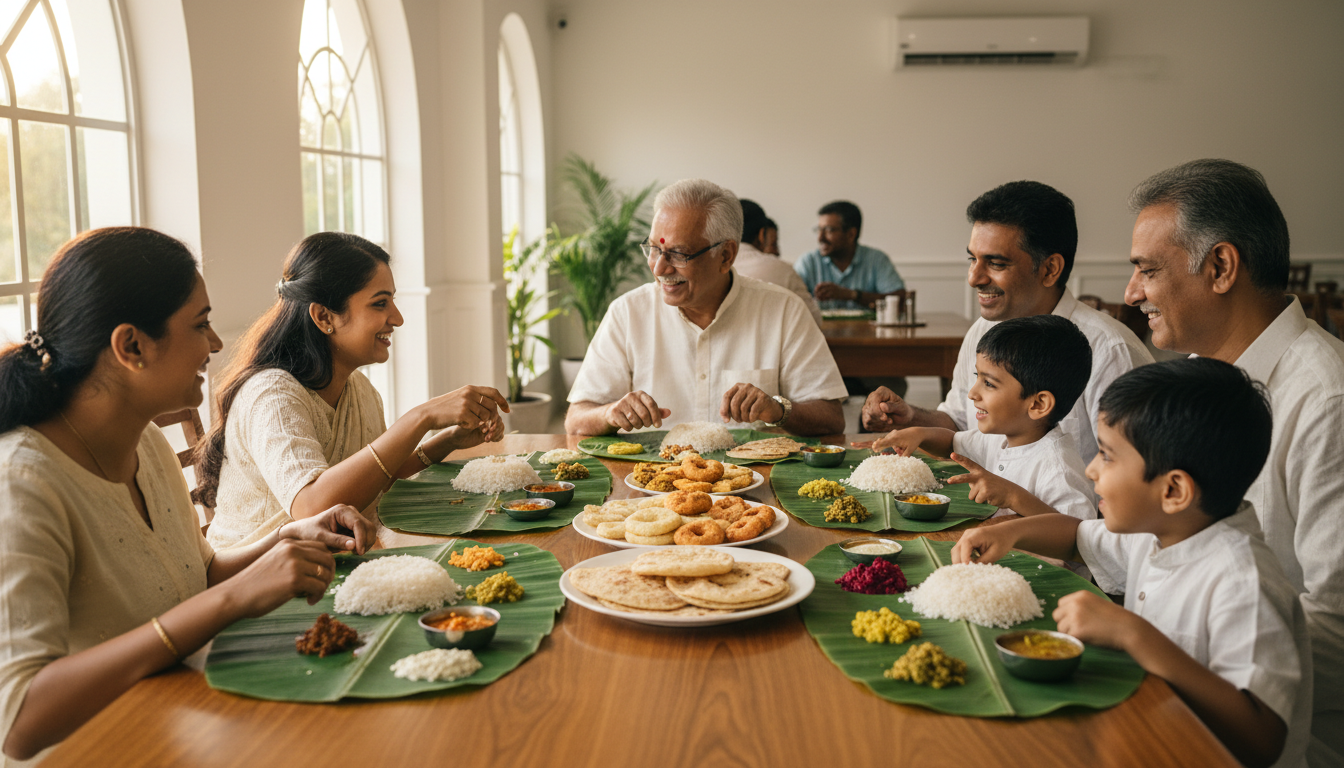
One of the most overlooked aspects of South Indian group travel is the strict enforcement of traditional temple regulations. Unlike many North Indian pilgrimage sites where casual clothing is accepted, ancient shrines across Tamil Nadu, Kerala, and Andhra Pradesh enforce specific dress codes and security policies.
South India Temple Dress Code & Entry Rules
| Temple / Location | Men’s Dress Code | Women’s Dress Code | Key Prohibitions & Security Rules |
|---|---|---|---|
| Sree Padmanabhaswamy (Thiruvananthapuram, KL) | White Mundu / Dhoti wrapped around the waist. Upper body must remain bare (or covered only with an Angavastram shawl). Shirts and trousers are strictly banned. | Saree, Set-Mundu, or long skirt/blouse. Salwar Kameez is permitted only if wrapped with a Mundu cover around the waist. | Mobile phones, cameras, smartwatches, and leather belts are prohibited. Only practicing Hindus are permitted inside the inner sanctum. |
| Guruvayur Sri Krishna (Guruvayur, KL) | Bare chest with a plain white/cream Dhoti/Mundu. Shirts, vests, trousers, and jeans are forbidden inside the inner enclosure. | Saree, skirt and blouse, or Churidar/Salwar Kameez. Jeans and trousers are forbidden. | Strict queue management. No electronic items or footwear inside outer perimeter gates. |
| Ramanathaswamy (Rameshwaram, TN) | Dhoti with a shirt or Kurta-Pyjama. Trousers are permitted in the outer corridors. | Saree or Salwar Kameez with a Dupatta. | Mobile phones are banned inside the main temple walls (paid storage lockers available). Performing ritual baths in the 22 sacred wells requires a change of dry clothes. |
| Meenakshi Amman (Madurai, TN) | Full-length trousers, Dhoti, or Kurta-Pyjama. Shorts and sleeveless tops are banned. | Saree or Salwar Kameez with a Dupatta. Ripped jeans and short skirts are strictly banned. | Electronics, cameras, and mobile phones are banned inside premise gates. Strict multi-tier security checks. |
| Tirumala Venkateswara (Tirupati, AP) | Traditional Dhoti with a Kurta/Shirt or Pyjama. Western t-shirts and jeans are not allowed for Special Entry Darshan. | Saree, Half-Saree, or Salwar Kameez with a Dupatta. | Prior online booking (Special Entry Darshan – ₹300) is mandatory 60 to 90 days in advance to avoid 12-to-24-hour general line wait times. |
Understanding Afternoon Temple Closures
Commercial travel sites often list 4 to 5 temple visits in a single day without accounting for mandatory afternoon closures. Almost all major traditional temples across Tamil Nadu and Kerala close their main sanctums between 12:00 PM / 12:30 PM and 4:00 PM / 4:30 PM daily.
Routing your days around these closures is crucial. Plan long road transfers, regional sightseeing, shopping, or hotel check-ins during the mid-day window from 12:00 PM to 4:00 PM, reserving early mornings (6:00 AM to 11:00 AM) and late afternoons (4:30 PM to 8:30 PM) for temple visits.
Food & Catering Solutions for Group Travelers
When traveling in South India, food management is a critical consideration for group organizers. While local cuisine features excellent vegetarian dishes like idli, dosa, sambar, and traditional banana-leaf thalis, groups traveling from Northern, Western, or Eastern India often prefer North Indian meals or strict Jain options throughout a multi-day itinerary.
Custom Catering and Maharaj Services
For large extended family groups or pilgrimage groups of 20 or more travelers, hiring a professional mobile catering team (often referred to as a “Maharaj service”) offers complete control over meals. The tour operator arranges kitchen space or tie-ups with halt hotels, allowing dedicated cooks to prepare fresh North Indian breakfasts, Marwari thalis, and onion/garlic-free Jain meals on schedule.
Verified Pure Veg and Jain Establishments
For smaller groups (8 to 15 passengers) using a Tempo Traveller, dedicated catering may not be cost-effective. In these cases, package providers pre-book meal arrangements with verified pure-vegetarian North Indian or Marwari bhojanalayas located near key temple nodes. Cities like Madurai, Rameshwaram, Mysuru, Tirupati, and Guruvayur feature well-established North Indian vegetarian dining hubs near major shrines.
Best Time to Visit South India
Selecting your travel dates depends on whether your chosen circuit focuses on coastal temples, inland hill stations, or wildlife reserves.
- Peak Winter Season (November to February): The ideal climate across all southern states. Daytime temperatures range between 20°C and 30°C in the plains, while hill stations like Ooty, Munnar, and Coorg offer cool weather between 10°C and 18°C. This period sees high tourist demand; private Tempo Travellers and quality hotel rooms require booking 2 to 3 months in advance.
- Summer Season (March to May): Hot and humid across coastal and plain regions (Tamil Nadu, Andhra Pradesh, and lower Kerala reach 35°C to 40°C). During summer, structure your group tour exclusively around highland circuits like Ooty, Kodaikanal, Wayanad, Coorg, and Munnar.
- South-West Monsoon (June to September): Brings heavy rainfall to Kerala, coastal Karnataka, and the Western Ghats. While scenic and ideal for discounted wellness retreats, winding mountain roads face occasional landslide delays.
- North-East Retreating Monsoon (October to November): Brings significant rain along the coastal Tamil Nadu belt (Chennai, Puducherry, and Thanjavur). Keep rain gear handy and build flex time into temple schedules during these months.
Planning Steps & Pitfalls to Avoid
Coordinating a smooth group road trip across southern India requires thorough preparation long before arrival at the airport or railway station.
Step-by-Step Group Planning Blueprint
- Vehicle Sizing Margin: Always select a vehicle capacity larger than your passenger count to comfortably accommodate luggage. For a group of 10 to 12 adults, book a 16-seater Tempo Traveller rather than a 12-seater. This provides ample luggage space in the rear and ensures every passenger gets a reclining seat.
- Pre-Book VIP and Darshan Passes: Reserve Tirupati Special Entry Darshan tickets (₹300 per head) 60 to 90 days ahead via the official Tirumala Tirupati Devasthanams (TTD) portal. For high-footfall shrines like Madurai Meenakshi or Srirangam, pre-book special entrance passes through verified operator counters to cut down long queue times.
- Confirm Inter-State Tax Clearance: Ensure your operator provides commercial vehicles with valid All India Tourist Permits (AITP) or pays border taxes online via the Parivahan portal before arrival at border checkposts.
- Account for Senior Citizen Mobility: Large temple grounds like Srirangam, Thanjavur, and Madurai require walking 1 to 2 kilometers across open granite stone courtyards that absorb intense heat by mid-day. Ensure your package provider arranges battery-operated golf buggies or wheelchairs where available. For dedicated multi-generational group guidance, consult our Senior Citizen Group Tour Packages Guide.
- Pack Accessible Temple Attire: Keep a dedicated small hand-carry bag inside the vehicle containing traditional clothes (dhotis/mundus for men, sarees/salwar kameez with dupattas for women) so passengers can easily change before visiting temples during long road transit days.
Common Pitfalls to Avoid
- Over-Packing the Itinerary: Attempting to visit four states in seven days means spending 8 hours daily inside a vehicle. Keep daily transit under 200 km whenever possible to allow time for sightseeing.
- Assuming Large Buses Can Access Hill Stations: Narrow roads and local municipal rules prohibit 26-seater or larger commercial buses from accessing certain sights in Fort Kochi, Munnar, or inner Ooty. Compact 12-to-17-seater Tempo Travellers offer much better maneuverability on narrow mountain roads.
- Neglecting Driver Regulations: Driving long distances on mountain roads requires adequate rest. Verify that your itinerary allows your driver a minimum 8-hour overnight break and complies with standard daily driving limits.
When selecting professional assistance to organize your trip, compare established service providers using our guide to the 10 Best Group Tour Operators in India for Families & Groups.
Frequently Asked Questions
What is the ideal group size for hiring a Tempo Traveller in South India?
For comfortable multi-day road journeys, a group of 8 to 10 passengers fits best in a 12-seater Tempo Traveller, while 12 to 14 passengers comfortably fit a 17-seater vehicle. This leaves sufficient space for large luggage bags and lets passengers recline comfortably on long highway trips.
Are non-Hindus allowed inside all South Indian temples?
Rules vary by destination. Major historical and Dravidian architectural sites—such as Madurai Meenakshi Temple, Tanjore Brihadeeswarar Temple, and the UNESCO monuments at Mahabalipuram—welcome non-Hindu visitors into outer corridors and complex grounds. However, the inner sanctums of traditional Kerala shrines (including Sree Padmanabhaswamy in Thiruvananthapuram and Guruvayur Sri Krishna Temple) strictly permit entry to practicing Hindus only.
How do group tour packages handle meals for North Indian pure-vegetarian or Jain travelers?
Reputable tour operators partner with pre-verified pure-vegetarian North Indian and Marwari restaurants in major destination cities. For private customized groups of 15 or more travelers, operators can arrange a dedicated mobile cook (“Maharaj on call”) to travel along or prepare fresh Jain and pure-vegetarian meals at pre-arranged hotel stops.
Do tour package quotes include inter-state vehicle border entry taxes?
Transparent group package quotes explicitly include state entry permits, highway tolls, parking charges, and driver daily allowances (batta). Budget quotes often omit these fees to appear cheaper upfront. Always confirm in writing that cross-border permit fees for Tamil Nadu, Kerala, Karnataka, or Andhra Pradesh are pre-paid before booking.
Which is better for a family group tour: Tamil Nadu or Kerala?
Tamil Nadu is best suited for heritage, ancient Dravidian temple architecture, spiritual pilgrimages, and cultural history. Kerala is ideal for nature, cool hill stations, backwater houseboat cruises, wildlife parks, and coastal beaches. A balanced 9-to-10-day multi-state tour can comfortably integrate highlights from both states.