
The Ultimate Guide to Ethno-Climatic Tourism Packages in India: Immersive Journeys into Regions Defined by Their Unique Weather Traditions

Travel practices often focus exclusively on clear skies and temperate seasons, bypassing the profound relationship between indigenous communities and extreme weather. In the Indian subcontinent, meteorological cycles have shaped human architecture, culinary preservation, and spiritual practices for millennia. Rather than treating seasonal shifts as disruptions, traditional societies developed complex adaptations to welcome monsoons, survive sub-zero winters, and thrive in arid summers. Travelers seeking these deep encounters often choose specialized ethno-climatic tourism packages in india to explore the complex relationship between seasonal patterns and regional heritages. Understanding these weather traditions provides an authentic path into local lifeways, moving beyond standard sightseeing to reveal how humanity coexists with changing seasons.
Key Takeaways
- Climatic Resilience: Ethno-climatic tourism focuses on how indigenous communities adapt to and celebrate extreme meteorological seasons rather than avoiding them.
- Deep Cultural Immersion: Prominent examples include Kashmir’s winter Chillai Kalan heating rituals and Kerala’s Karkidaka monsoon wellness traditions.
- Sustainable Architecture: Itineraries showcase eco-friendly, thermally efficient architectural wonders like Gujarat’s circular Bhungas and Meghalaya’s living root bridges.
- Preservation and Gastronomy: Travel packages highlight traditional winter or monsoon preservation techniques, including slow-cooked warming foods and dry-season ferments.
- Strategic Planning: Successful trips require physical preparation and specialized gear tailored to extreme high-altitude cold, heavy rainfall, or harsh desert climates.
Understanding Ethno-Climatic Tourism in India
Ethno-climatic travel represents a departure from traditional holiday planning. Instead of seeking destinations with mild, predictable weather, this specialized travel format invites visitors to explore regions during their most intense meteorological phases. The core objective is to experience how local populations adapt their lifestyle, housing, diet, and social structures to cope with, and celebrate, their environment. The emergence of curated ethno-climatic tourism packages in india signals a shift from conventional sightseeing toward climate-focused cultural travel. This approach treats weather not as a backdrop, but as the active designer of local heritage.
Defining the Link Between Heritage and Weather
Every cultural practice in rural India has an environmental origin. The construction of homes, the fermentation of seasonal vegetables, and the timing of local festivals are closely linked to climate patterns. Historically, communities could not rely on artificial temperature controls or imported food systems. Survival required an intimate understanding of wind patterns, rain volumes, and soil temperatures (a discipline that modern science is only beginning to document fully). Indeed, early adapters of ethno-climatic tourism packages in india often discover that historical climate challenges produced the most compelling local art forms. When travelers witness these adaptations firsthand, they gain a profound appreciation for human ingenuity under environmental pressure.
Why Indigenous Weather Adaptations Shape Modern Journeys
In a world increasingly insulated by modern climate control, many travelers seek to reconnect with raw environmental rhythms. Engaging with communities that live in harmony with extreme weather offers valuable lessons in sustainability and resource management. By analyzing these patterns, operators designing ethno-climatic tourism packages in india can match regional meteorological events with cultural practices. These curated itineraries do not merely show tourists a destination; they invite them to participate in the physical reality of a region. This active participation creates a memorable bond between visitors and hosts, fostering mutual respect and preserving traditional knowledge systems that are otherwise threatened by modernization.
Regional Spotlights: Immersive Climate-Driven Traditions
India contains multiple distinct climate zones, ranging from alpine tundra to hot desert and tropical wet forests. This climatic variety has fostered an equally diverse array of cultural survival strategies. When selecting among the best ethno-climatic tourism packages in india, travelers should pay close attention to the specific meteorological transitions of each province.
Kashmir’s Chillai Kalan: Winter Customs in the Valley
The Kashmir Valley undergoes a profound meteorological phase during the winter, characterized by intense cold and heavy snowfall. As documented by Jammu and Kashmir’s state records, Chillai Kalan spans exactly 40 days, beginning on December 21 each year. This period represents the harshest phase of the winter, when water bodies freeze and high-altitude passes become impassable. Consequently, high-quality ethno-climatic tourism packages in india visiting the valley during these cold months emphasize indoor gatherings, heating traditions, and slow-cooked foods. Visitors can explore these rich winter customs through dedicated Kashmir travel options that bring them close to local families.
During Chillai Kalan, daily life centers around distinct adaptation strategies designed to maintain internal body temperature and facilitate indoor community living:
- The Kangri: A delicately woven wicker basket containing an earthenware pot filled with glowing charcoal embers, which residents carry beneath loose-fitting woolen robes (Phirans) for localized heat.
- Thermal Phirans: Loose, heavy-knit wool robes worn over standard attire to trap rising heat from the Kangri.
- Gastronomy of Harissa: A highly nutritious, slow-cooked paste of mutton, rich fats, and aromatic spices that is prepared overnight and eaten at dawn for sustained thermal energy.
Kerala’s Karkidaka Monsoon: Healing in the Rainy Season
The arrival of the southwest monsoon in Kerala brings torrential downpours and high atmospheric humidity. While most tourists avoid the rainy season, local traditions view this period as a vital phase for bodily renewal. According to historic Ayurvedic treatises revived during the late nineteenth century, the human metabolic system experiences a notable vulnerability during the heavy monsoons of July and August. This systematic approach to wet-season health has made monsoon wellness a major focus of ethno-climatic tourism packages in india. Visitors can experience these ancient therapeutic systems by booking specialized Kerala travel itineraries designed specifically for the monsoon season.
Those who book ethno-climatic tourism packages in india focusing on the southern monsoons can expect a highly structured daily routine centered on physical balance and environmental harmony:
- Karkidaka Chikitsa: Rejuvenation therapies taking advantage of open body pores (widened due to high ambient humidity) to deeply absorb medicinal and herbal oils.
- Dietary Focus on Karkidaka Kanji: Consumption of a specialized medicinal rice gruel infused with over twenty-four forest herbs and grains to aid digestion and bolster immunity.
- Therapeutic Rest: Balanced routines of meditation and physical rest aligned with the persistent rain patterns of the region.
Ladakh’s High-Altitude Dry Cold: Living with Extreme Winters
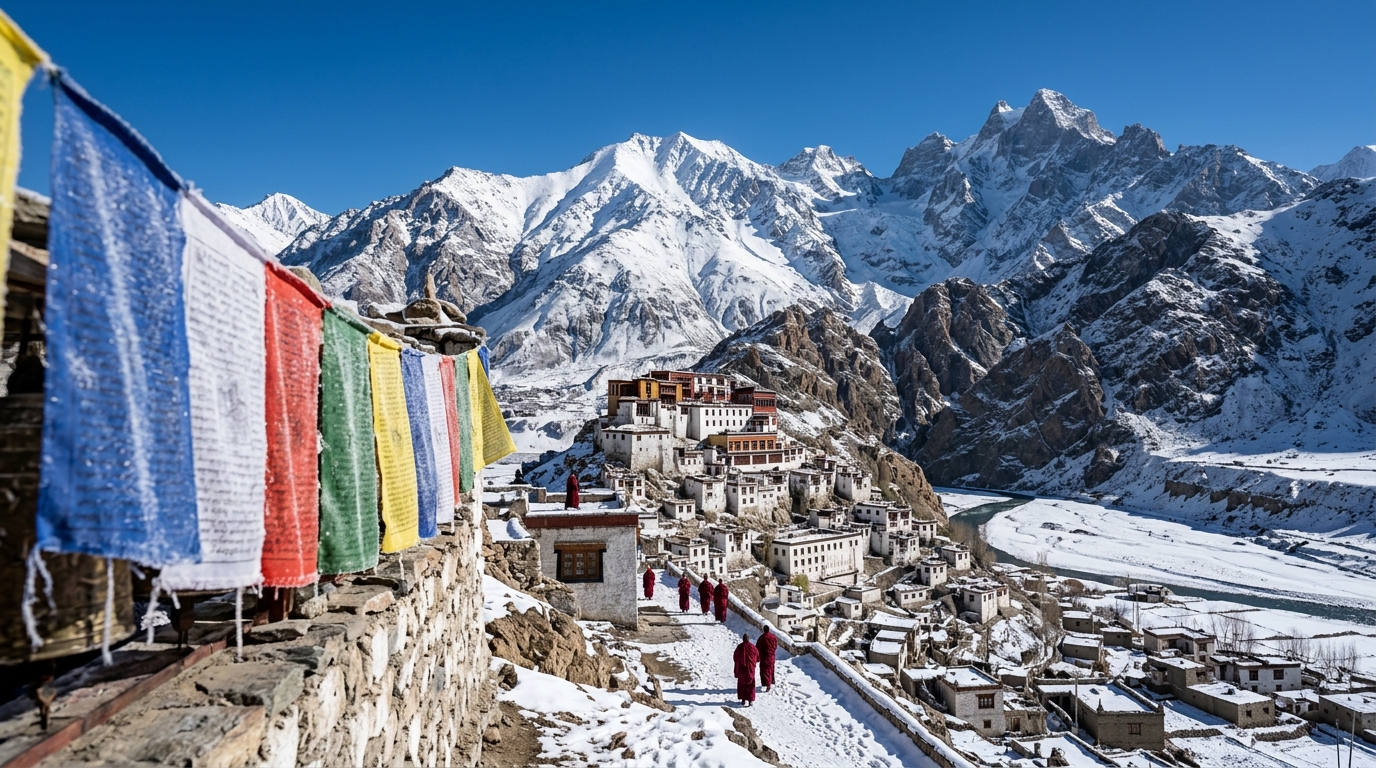
In the high-altitude cold desert of Ladakh, winter temperatures regularly fall below minus fifteen degrees Celsius. With the mountain passes closed by snow, the Ladakhi people transition to an insular, community-oriented lifestyle. Modern ethno-climatic tourism packages in india designed for Ladakh focus heavily on these high-altitude winter strategies. This offers a rare chance to see how social structures function when physical connection with the outside world is minimized. To explore this cold-desert lifestyle, travelers can consult specialized Leh Ladakh travel programs that operate during the winter months.
By choosing ethno-climatic tourism packages in india that venture into the Trans-Himalayan winter, travelers can engage with communities whose entire social calendar is dictated by snow. With agricultural work halted, villagers gather in central, wood-heated kitchens to share stories, weave woolen garments, and practice traditional music. This seasonal confinement has also preserved Ladakh’s monastic festivals, such as the Spituk Gustor, where monks perform sacred mask dances in the freezing mountain air. The local diet shifts entirely to stored resources, featuring dried apricots, roasted barley flour (known as Tsampa), and salted butter tea, which provides essential fats to counter the dry, high-altitude cold.
Meghalaya’s Rain Culture: Living Bridges and Wet Terrains
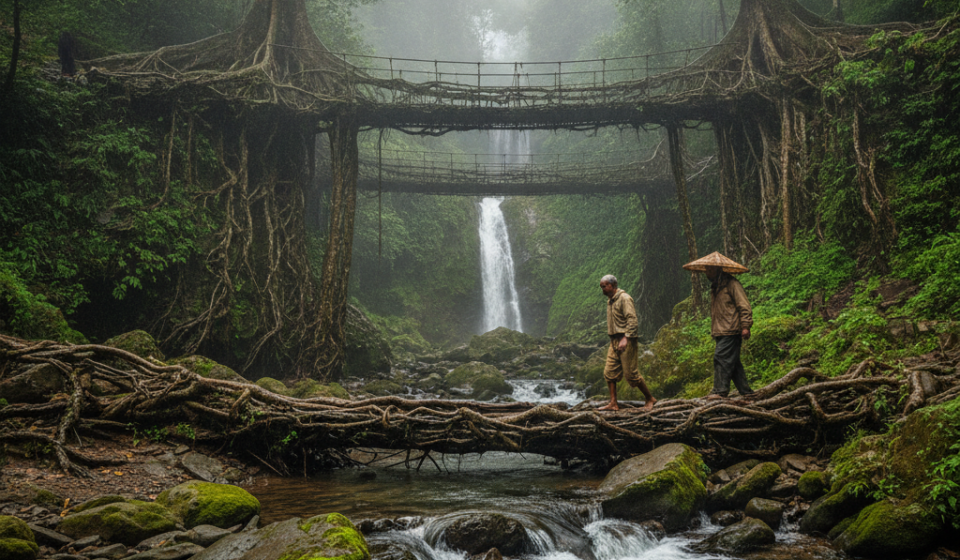
The state of Meghalaya contains some of the wettest inhabited places on Earth. The India Meteorological Department recorded that Mawsynram receives an average of 11,872 millimeters of annual rainfall, making it a focal point of monsoon study. This intense precipitation has shaped a unique way of life for the indigenous Khasi and Jaintia communities. For this reason, rain-focused ethno-climatic tourism packages in india offer an unparalleled opportunity to observe communities that treat downpours as a functional partner rather than an obstacle.
Travelers booking ethno-climatic tourism packages in india to the Northeast will see how the Khasi people work alongside nature to build living architecture. Over generations, they have trained the aerial roots of the Ficus elastica tree to grow across raging rivers, forming sturdy, living root bridges. Unlike wooden structures, these living bridges do not rot in the high humidity. Instead, they grow stronger over time as the root systems thicken. To walk through these forests, locals use the Knup, a shell-shaped rain shield woven from bamboo and wild banana leaves. This shield leaves both hands free for physical labor, demonstrating how simple materials can provide elegant solutions to extreme weather.
The Salt Desert of Kutch: Winter Celebrations in the Arid Plain
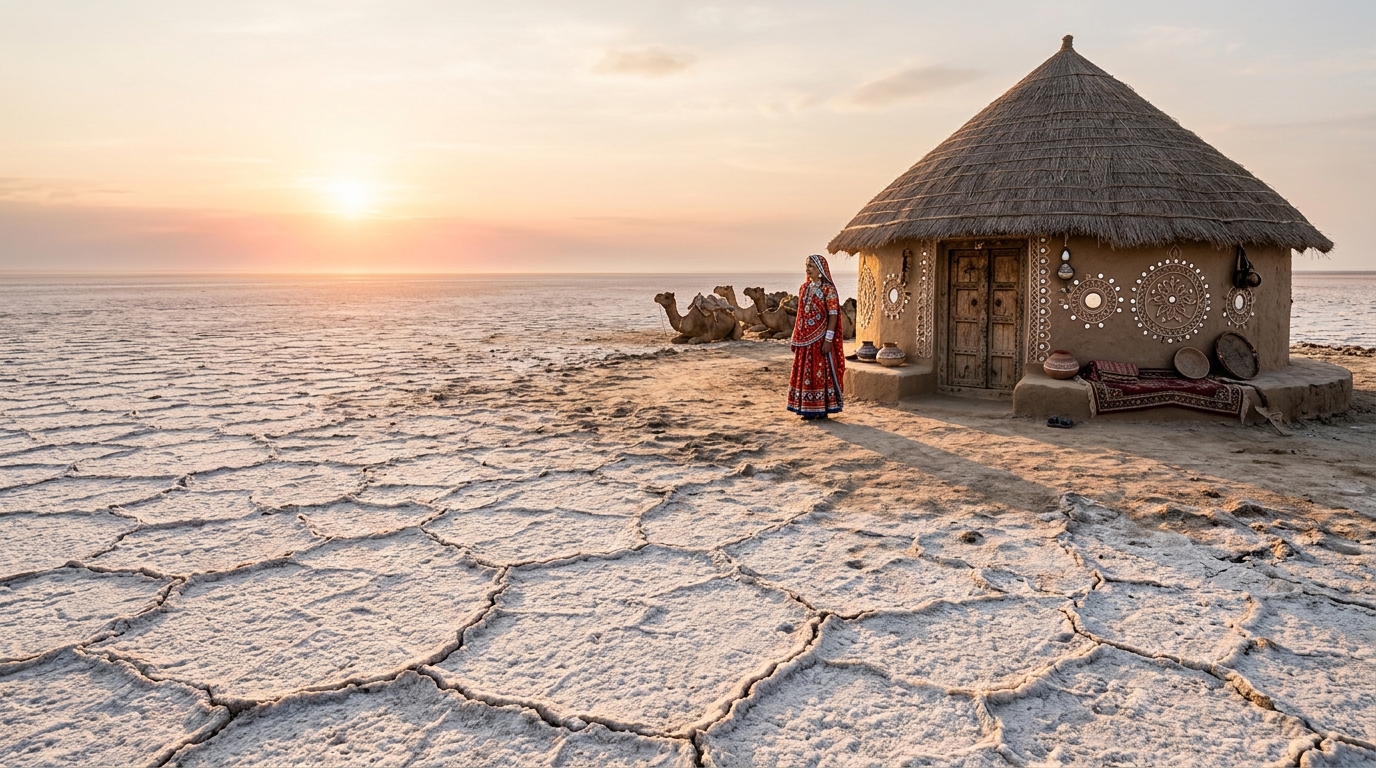
The Rann of Kutch presents a stark geographic shift, transitioning from a shallow wetland during the monsoon to a dry, white salt desert in winter. This environmental adaptation has inspired unique desert-based itineraries within ethno-climatic tourism packages in india. The local pastoralist communities, such as the Mutwa and Rabari, have developed distinct nomadic lifestyles, architecture, and crafts to survive this extreme dry environment. Travelers interested in these desert adaptations can access specialized Rann of Kutch travel arrangements to witness this salt desert environment firsthand.
The primary architectural adaptation in this region is the Bhunga, a circular mud house with a conical thatch roof. The circular design is highly effective at deflecting strong desert winds and minimizing solar heat absorption. Inside, these structures remain remarkably cool during the blistering day and warm during the cold desert night. As a result, contemporary ethno-climatic tourism packages in india to Gujarat prioritize visits to these circular homes to study their ancient climate resistance. This architectural study is paired with an exploration of Kutchi embroidery, an art form where women use mirrors and colorful threads to create vibrant patterns that contrast with the stark white desert.
Structural Elements of Authentic Ethno-Climatic Itineraries
Designing a successful seasonal itinerary requires careful balance. It must ensure traveler safety while maintaining direct contact with indigenous practices. This ensures that ethno-climatic tourism packages in india maintain a high standard of architectural authenticity, safety, and cultural integrity.
Indigenous Building Styles and Thermal Efficiency
Traditional architecture in India is deeply rooted in local microclimates. Rather than relying on modern energy-intensive heating or cooling systems, regional builders use local materials to achieve thermal comfort. The thermal dynamics of traditional housing form a cornerstone of the learning modules included in premium ethno-climatic tourism packages in india. Travelers can study several distinct architectural styles, each tailored to its specific climatic zone:
- Kath-Kuni Architecture (Himachal Pradesh): This technique uses alternating layers of deodar wood and stone without mortar. It provides excellent seismic flexibility and natural insulation against alpine cold.
- Bhungas (Gujarat): The circular mud walls and thatch roofs of these desert dwellings naturally regulate indoor temperatures. This design keeps the interior comfortable despite extreme desert temperature swings.
- Nalukettu (Kerala): These traditional homesteads feature an open central courtyard (known as the Courtyard System) that facilitates continuous air ventilation and rainwater harvesting during heavy monsoons.
- Traditional Mud Houses (Spiti Valley): Thick, sun-baked clay walls absorb solar heat during the day and slowly release it inward during the freezing Himalayan nights.
Preservation Methods and Seasonal Culinary Arts
Before refrigeration, food preservation was essential for surviving seasonal changes. These historical techniques have evolved into sophisticated regional culinary traditions. For travelers on ethno-climatic tourism packages in india, learning these historical preservation techniques offers deep insights into sustainable resource management. These preservation methods vary by region, reflecting the local climate and available ingredients:
- Sundrying and Pickling (Rajasthan): Because fresh vegetables are scarce during the dry summer, desert communities rely on Ker Sangri, a dish made from dried wild berries and beans that can be stored for months.
- Fermentation (Northeast India): In the high-humidity, high-rainfall regions of the Northeast, communities ferment bamboo shoots, fish, and mustard greens to preserve nutritional value through the monsoon.
- Meat Curing (Himalayan Belt): High-altitude communities in Ladakh and Himachal Pradesh air-dry sheep and yak meat during the dry, cold autumn to provide essential protein through the isolated winter months.
- Herbal Preservation (South India): The harvesting and drying of medicinal roots, barks, and seeds during the dry season ensures a steady supply of ingredients for winter immunity brews.
Culinary sessions focused on weather-specific diets are now standard features in regional ethno-climatic tourism packages in india. These sessions teach travelers how traditional food systems support human health through seasonal transitions.
Local Festivals Rooted in Meteorological Cycles
In agrarian societies, religious and social celebrations are closely linked to solar transitions, wind patterns, and rain cycles. Because these events are highly seasonal, ethno-climatic tourism packages in india must be precisely timed with the local astronomical and seasonal calendars. Experiencing these specialized festivals remains a primary draw for people purchasing ethno-climatic tourism packages in india. These festivals celebrate the vital connection between communities and their environment:
- Lohri and Makar Sankranti (North India): These winter festivals celebrate the passing of the winter solstice and the return of longer, warmer days. They are marked by bonfires, sesame sweets, and harvest rituals.
- Nuakhai (Odisha): This agrarian festival welcomes the new rice harvest, emphasizing community gratitude for the timely arrival of the monsoon rains.
- Wangala (Meghalaya): Known as the Hundred Drums Festival, this post-harvest celebration by the Garo tribe thanks the sun god for a bountiful harvest at the start of the dry winter.
- Sajibu Cheiraoba (Manipur): This spring festival marks the start of the local lunar new year. It features ritual hill climbs to symbolize human progress alongside the changing season.
Selecting and Preparing for Your Ethno-Climatic Journey
Traveling to areas with extreme weather requires careful planning, physical preparation, and an open mind. To help you make an informed decision, let us explore how different ethno-climatic tourism packages in india align with various travel motivations.
A Comparative Guide to Seasonal Travel Windows
The table below provides a detailed comparison of the primary regional weather traditions, helping you choose the trip that best matches your interests and physical comfort level. A clear understanding of these regional variations helps travelers evaluate the suitability of specific ethno-climatic tourism packages in india.
| Region and Climate Zone | Primary Weather Tradition | Ideal Travel Window | Key Cultural Experience | Physical Comfort Level Required |
|---|---|---|---|---|
| Kashmir (Alpine Cold) | Chillai Kalan Gatherings | December to January | Kangri warming and Harissa preparation | Moderate (sub-zero indoor heating) |
| Kerala (Tropical Monsoon) | Karkidaka Ayurveda | July to August | Rejuvenation therapies and herbal gruel | Easy (humid, rainy environment) |
| Ladakh (High-Altitude Tundra) | Winter Monastic Gatherings | January to February | Masked dances and dry-cold social life | Demanding (extreme cold, thin air) |
| Meghalaya (Wet Subtropical) | Rain Harvesters and Bridges | June to September | Root bridge treks and bamboo rain-shields | Moderate (wet terrains, heavy hikes) |
| Kutch (Arid Desert) | Salt Desert Nomadic Life | November to February | Bhunga dwelling stays and embroidery study | Easy (dry, cool winter days) |
Specialized Gear and Document Checklist
Before embarking on these specialized journeys, ensure you have the appropriate gear prepared. The following checklist details the exact functional requirements for each microclimate:
| Climate Zone | Essential Outerwear | Footwear Requirements | Core Health & Safety Gear |
|---|---|---|---|
| High-Altitude Alpine (Ladakh, Kashmir) | Heavy down jacket (down to -20°C), thermal base layers | Insulated, waterproof high-ankle hiking boots | UV-protection sunglasses, SPF 50+ sunscreen, oxygen canister (for Ladakh) |
| Heavy Monsoon (Meghalaya, Kerala) | Gore-Tex breathable raincoat, waterproof backpack cover | Non-slip trail shoes or quick-drying sandals | Insect repellent (high DEET), dry bags for electronics, personal water purification |
| Arid Salt Desert (Kutch) | Lightweight windbreaker, breathable linen clothing | Close-toed walking shoes or sturdy canvas sneakers | Hydration bladder (2L+), wide-brimmed hat, polarized sunglasses |
Practical Planning and Cultural Etiquette
When preparing for the demanding environments featured in ethno-climatic tourism packages in india, a methodical packing plan is essential. Travelers must pack specialized gear suited to their destination’s specific climate conditions:
- Thermal Layering for Cold Regions: In cold regions like Kashmir and Ladakh, pack high-quality woolens and wind-resistant outer layers. Layering is key, as indoor spaces heated by wood fires can be significantly warmer than the freezing outdoors.
- Waterproofing for Wet Regions: When traveling to Meghalaya or Kerala during the monsoon, prioritize high-grade waterproof jackets, quick-drying clothing, and sturdy footwear with non-slip soles for wet forest trails.
- Hydration and Sun Protection for Arid Regions: For desert trips to Kutch, carry wide-brimmed hats, polarized sunglasses, and hydration packs to counter the dry heat and intense solar reflection off the salt plains.
In addition, the success of ethno-climatic tourism packages in india relies heavily on deep respect for local cultural norms. When staying in traditional homes like Bhungas or alpine villages, remember that these are private residences, not museum exhibits. Always ask for permission before taking photographs of residents, and respect local guidelines regarding water conservation and waste management. In these delicate environments, resource scarcity is a daily reality, and travelers should minimize their ecological footprint accordingly.
Conclusion
Ethno-climatic travel offers a unique way to experience India’s diverse landscapes and heritages. By choosing to travel during intense weather seasons, visitors move beyond standard tourist trails to witness the deep connection between human culture and the natural environment. Whether experiencing the warmth of a Kashmiri home during Chillai Kalan, undergoing Ayurvedic rejuvenation during Kerala’s monsoons, or crossing living root bridges in wet Meghalayan forests, these trips offer deep lessons in ecological living. Ultimately, choosing targeted ethno-climatic tourism packages in india allows travelers to experience a deep connection between human culture and the elements, revealing that weather is not something to be avoided, but a powerful force that shapes our shared human heritage.