The Ultimate Dhankar Travel Guide: How to Explore Spiti Valley’s Spectacular Cliffside Hanging Village and Mystical Lake

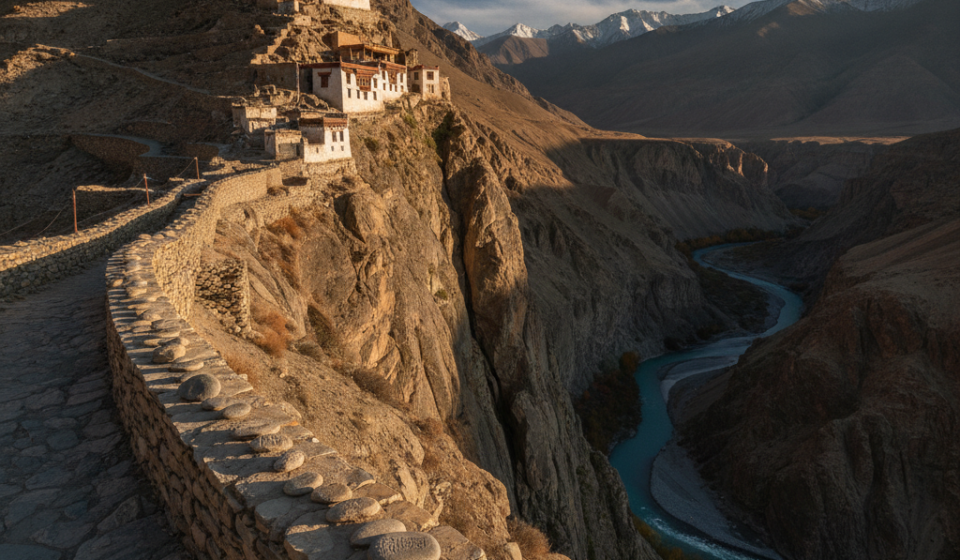
Spiti Valley holds many secrets, but few are as captivating as the ancient village of Dhankar. Perched precariously on a jagged cliff overlooking the confluence of the Spiti and Pin rivers, this settlement serves as a testament to the resilience of human civilization in the high Himalayas. This Dhankar travel guide provides the essential framework for visitors seeking to understand and experience this remote, ethereal destination. Proper planning remains critical, as the extreme altitude and rugged terrain demand both respect and careful preparation.
Key Takeaways
- Altitude & Location: Dhankar is perched at 3,894 meters on a cliffside overlooking the Spiti and Pin rivers confluence.
- Rich History: It is the former capital of the Spiti Kingdom, housing the iconic ancient Dhankar Monastery.
- Top Adventure: The trek to the stunning turquoise Dhankar Lake is a moderate but challenging high-altitude hike.
- Acclimatization: Prior acclimatization is essential to avoid acute mountain sickness (AMS).
- Practical Tips: Basic homestay options are available; travelers should carry sufficient cash and respect local Buddhist customs.
Understanding Dhankar: A Historical Perspective
Dhankar once served as the capital of the Spiti Kingdom. Its name translates to “fort” or “place of the cliff.” Today, the iconic Dhankar Monastery, which sits above the village, remains the primary point of interest. This historic Buddhist site features traditional Tibetan architecture and contains valuable ancient thangkas and statues that offer a glimpse into the region’s spiritual past.
- The monastery is built on a high spur at an altitude of approximately 3,894 metres.
- Architecture relies on mud and stone, adapted for the harsh mountain climate.
- The site has survived centuries of regional conflict and seismic activity.
Planning Your Journey to Dhankar
Accessing such a remote location requires logistical precision. Most travelers arrive via road from Shimla or Manali, though the route from Manali through the Atal Tunnel offers the quickest approach. Regardless of the route, acclimatization is non-negotiable. Reaching these altitudes too rapidly invites acute mountain sickness, which can quickly derail any trip.
There are two primary routes to access Dhankar. The table below compares these travel options:
| Route Option | Key Milestones | Travel Time | Acclimatization Risk |
|---|---|---|---|
| Manali Route | Manali – Atal Tunnel – Kaza – Dhankar | Approx. 6–8 hours | High (rapid altitude gain) |
| Shimla Route | Shimla – Reckong Peo – Tabo – Dhankar | Approx. 2 days (split journey) | Low (gradual ascent) |
The following table outlines the travel seasons to help with scheduling:
| Season | Conditions | Recommendation |
|---|---|---|
| Summer (June to August) | Mild days, clear skies | Best time for travel |
| Autumn (September to October) | Crisp air, golden landscapes | Ideal for photography |
| Winter (November to May) | Extreme cold, heavy snowfall | Avoid unless experienced |

The Dhankar Lake Trek
The hike to Dhankar Lake is a rite of passage for visitors. Located roughly two kilometres above the village, this turquoise water body provides a stark, stunning contrast to the arid, brown mountains surrounding it. To help you prepare for the hike, keep the following trek details in mind:
- Distance: Approximately 2 kilometers from the village.
- Difficulty: Moderate, but challenging due to the thinning air and steep incline.
- Duration: Typically takes between 45 and 90 minutes, depending on your physical fitness and acclimatization level.
- Terrain: Dusty, steep, and gravel-heavy trails requiring careful footwork.
The silence at Dhankar Lake is profound. It provides a rare moment of stillness in an environment defined by the relentless movement of clouds and shifting mountain shadows.
Accommodation and Practical Logistics
Do not expect luxury resort amenities in this part of Spiti. Infrastructure in Dhankar focuses on basic guesthouses and homestays. These options typically offer:
- Clean, comfortable, and basic bedding.
- Warm, home-cooked traditional Ladakhi and Spitian meals.
- Shared or attached basic bathrooms with bucket hot water.
- An excellent opportunity to interact with host families and learn about local Himalayan life.
Essential packing list for visitors:
- High-SPF sunscreen and lip balm to combat intense UV radiation.
- Sturdy, waterproof hiking boots with excellent ankle support.
- Moisture-wicking base layers and a high-quality down jacket.
- Portable power banks, as electricity supply can be intermittent.
Safety and Responsible Tourism
Environmental preservation in the Himalayas represents a significant challenge. Visitors contribute to the problem by leaving waste behind or using single-use plastics. Dhankar operates on a fragile ecosystem that cannot process urban-scale refuse. Responsible tourism requires carrying every piece of trash back to a major town like Kaza.
Also, please observe local customs when visiting religious sites. Key rules of etiquette include:
- Circumambulation: Always walk clockwise around prayer wheels, chortens, and mani walls.
- Photography: Ask for permission before taking photographs of residents, monks, or the interior of the monastery, as some areas remain restricted for spiritual reasons.
- Dress Code: Dress modestly when entering sacred spaces, ensuring shoulders and knees are covered.
FAQs
What is the best way to reach Dhankar?
Most travelers hire a private taxi from Manali or Kaza to ensure a safe journey over the rugged roads. While public bus services exist, they are infrequent and unreliable for such specific destinations.
Do I need a special permit for the Spiti Valley?
Indian nationals do not require an Inner Line Permit. However, foreign nationals must obtain one to enter the Spiti Valley. Ensure you have copies of your documentation ready for check-posts along the route.
Is there medical help available in the village?
Basic medical facilities in Dhankar are limited. The nearest hospital capable of handling serious emergencies is located in Kaza. Always carry a personal first-aid kit containing essential medicines for altitude, stomach ailments, and headaches.
Can I find ATM services in Dhankar?
No. The village does not have ATMs or banking facilities. Travelers should withdraw sufficient cash in Kaza before arriving. Relying on digital payments in such remote areas is not recommended.
For those interested in exploring more of this region, our Spiti Valley tour packages offer curated itineraries that include professional guidance through these high-altitude villages. Alternatively, check our resource page for detailed maps and updated road status reports before departing.

Conclusion
Dhankar stands as a vital reminder of the enduring nature of human life in challenging environments. This Dhankar travel guide serves only as a starting point. The true experience of visiting this cliffside village lies in the slow pace, the thin, cold air, and the quiet beauty of the high-altitude landscape. Approach the journey with patience, prioritize your health through proper acclimatization, and engage with the local culture mindfully. Spiti is not a destination for the hurried; it is a region that rewards those who take the time to look closely at the world around them.