
The pristine forests of the Indian subcontinent contain some of the most biodiverse ecosystems on earth, sheltering species that exist nowhere else. From the misty heights of the Himalayas to the swampy grasslands of Assam, these protected habitats offer unparalleled opportunities for conservation-focused tourism. Travelers seeking encounters with the royal Bengal tiger, the Indian one-horned rhinoceros, or the elusive Asiatic lion increasingly rely on structured itineraries. Selecting premium wildlife tour packages in India provides a seamless synthesis of wilderness exploration and logical operational coordination. Rather than managing complex permits and remote logistics independently, experienced platforms such as TravelDham curate tailored itineraries that ensure structured access to core sanctuary zones.
Key Takeaways
- Hassle-Free Logistics: Premium wildlife tour packages in India secure highly restricted core-zone safari permits up to 120–180 days in advance.
- Expert Trackers: Certified local naturalists greatly increase sighting chances of tigers, rhinos, and lions by reading subtle jungle alarm signals.
- Diverse Ecosystems: From the dry deciduous forests of Gir to the wet grasslands of Kaziranga, India offers incredibly varied wildlife habitats.
- Optimized Seasons: While winter (October to March) is ideal for pleasant weather and birdwatching, peak summer (April to June) is unmatched for tiger sightings.
Why Choose Wildlife Tour Packages in India?
Planning an independent journey through India’s vast reserves can quickly overwhelm even seasoned travelers. Each state forestry department operates under distinct administrative protocols, maintaining its own reservation systems and vehicle guidelines. Opting for professional wildlife tour packages in India eliminates these logistical bottlenecks by securing crucial entry permits well in advance. Since government-regulated national parks in India strictly limit daily vehicle entry, delayed booking attempts often result in missed opportunities. Exploring various national parks in India allows travelers to experience distinct ecosystems under structured conditions.
Furthermore, authentic conservation-focused tourism relies on the expertise of seasoned naturalists. Professional wildlife tour packages in India include certified local trackers who possess deep knowledge of animal behavior, alarm calls, and territory boundaries. These specialists transform a standard forest drive into an educational expedition, identifying subtle tracks that untrained eyes would inevitably overlook.
The diverse terrain across the subcontinent requires highly specialized transportation. Standard rental cars cannot handle these environments. Premium packages solve this with:
- Dedicated 4×4 Vehicles: Open-topped safari jeeps specifically designed for rugged, unpaved forest tracks.
- Curated Accommodations: Pre-vetted eco-resorts and jungle lodges positioned close to the park entry gates.
- Seamless Coordination: Bundled regional logistics, driver allowances, and expert-led drives that prioritize traveler safety and comfort.
| Aspect of Travel | Independent Planning | Wildlife Tour Packages in India |
|---|---|---|
| Safari Permit Acquisition | Requires coordinating with multiple regional government portals with limited daily slots. | Managed entirely by the operator, ensuring guaranteed access to core zones. |
| Expert Naturalists | Subject to daily availability at park gates, with variable quality. | Certified, highly experienced trackers secured for every single excursion. |
| Logistics & Vehicles | High risk of local taxi disputes and unsuitable standard vehicles. | Dedicated, rugged 4×4 safari vehicles suited for rough forest terrains. |
| Accommodation | Hard-to-verify forest lodges that may lack necessary amenities. | Pre-vetted eco-resorts and premium lodges close to park entry gates. |
Top Wildlife Destinations to Include in Your Itinerary
Jim Corbett National Park: The Land of the Roaring Tiger
Nestled in the picturesque foothills of Uttarakhand, Jim Corbett National Park stands as the oldest national park in India, established in 1936. The sanctuary boasts dense sal forests, rolling grasslands, and the meandering Ramganga River which is home to rich aquatic wildlife. For travelers researching wildlife tour packages in India, Corbett represents an essential cornerstone of northern wilderness exploration across distinct ecotourism zones such as Dhikala and Bijrani.
The Dhikala zone, characterized by its sprawling patli dun valley, is particularly renowned for overnight forest lodge stays, which are a highly coveted feature in premium wildlife tour packages in India. This zone offers unparalleled opportunities to observe wild elephants, leopards, and the majestic Bengal tiger in their natural habitat. According to the 2022 Tiger Census released by the National Tiger Conservation Authority, India is home to 3,682 wild tigers, representing roughly 75% of the global wild tiger population [National Tiger Conservation Authority, 2022]. This remarkable density makes Corbett a premier destination for big cat enthusiasts.
Ranthambore National Park: Royal Ruins and Majestic Predators
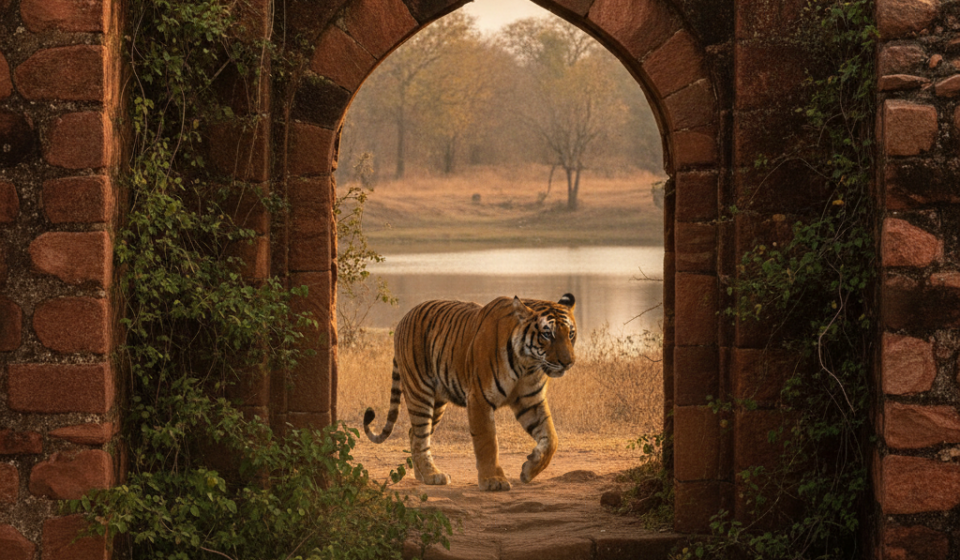
In contrast to Uttarakhand, Ranthambore National Park in Rajasthan presents an evocative blend of natural history and ancient heritage. The park is famous for diurnal Bengal tigers, which are frequently photographed roaming amidst the ruins of a 10th-century fort. When selecting wildlife tour packages in India, prioritizing Ranthambore guarantees a dramatic backdrop where wildlife and historical monuments coexist in striking harmony.
The safari routes in Ranthambore are meticulously distributed across ten distinct zones. Well-curated wildlife tour packages in India strategically schedule safaris across a combination of these zones to maximize sighting probabilities. Beyond tigers, the park shelters a rich array of biodiversity, including:
- Indian leopards and striped hyenas stalking the dry deciduous forests
- Sloth bears foraging near termite mounds
- Marsh crocodiles basking along the shores of Padam Talao
- Sambar deer, chital, and nilgai grazing in the valleys
Kaziranga National Park: Home of the One-Horned Rhinoceros
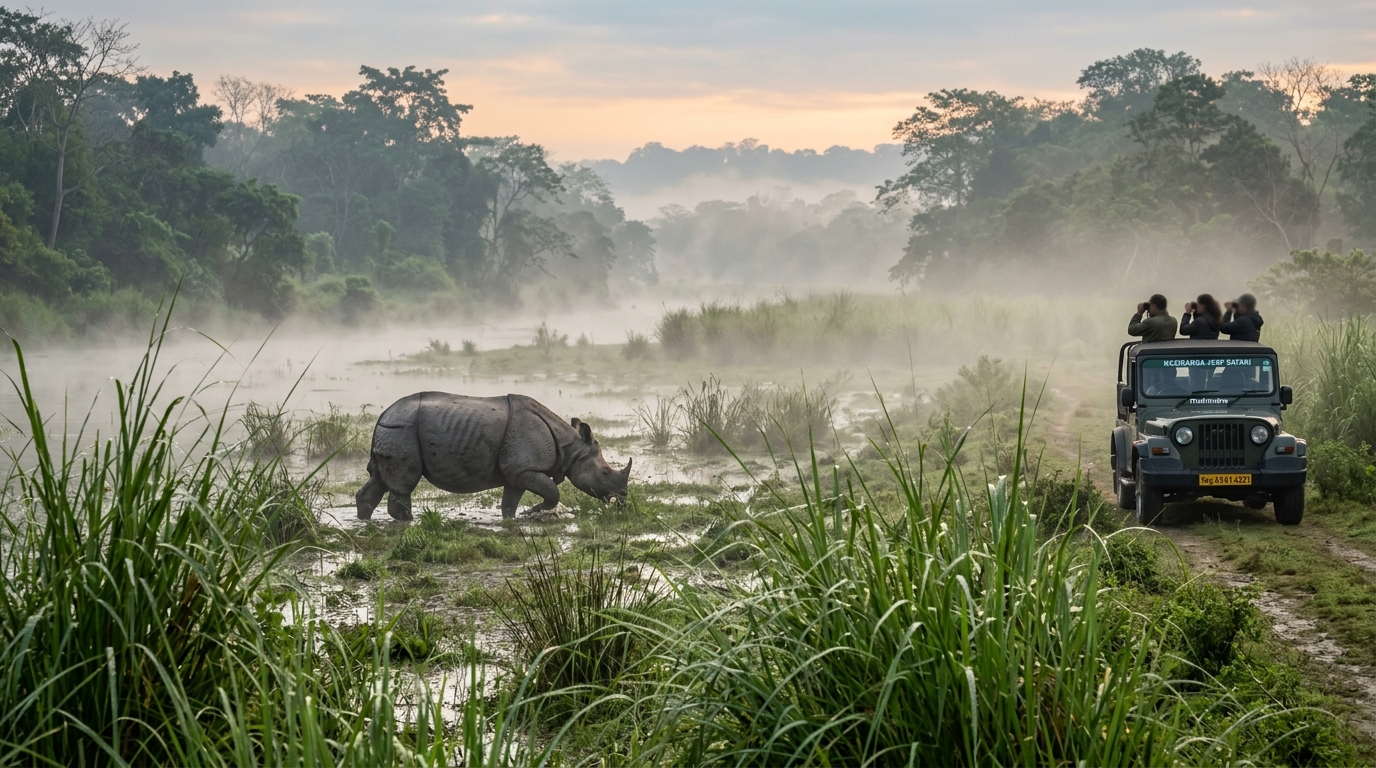
Moving toward the floodplains of the Brahmaputra River in Assam, Kaziranga National Park presents a completely different ecological setting. This UNESCO World Heritage site serves as the primary refuge for the great Indian one-horned rhinoceros. Including Kaziranga in chosen wildlife tour packages in India allows travelers to witness prehistoric beasts grazing peacefully against a lush setting of tall elephant grass and dense marshlands.
The Forest Department of Assam reported that Kaziranga National Park housed approximately 2,613 one-horned rhinoceroses during its last systematic census in 2022 [Forest Department of Assam, 2022]. This remarkable density represents more than two-thirds of the world’s remaining population of this vulnerable species. Comprehensive wildlife tour packages in India operating in Kaziranga typically feature early morning elephant safaris alongside standard open-jeep safaris.
Gir Forest National Park: The Last Bastion of Asiatic Lions
Located in the dry, scrubby terrain of Gujarat, Gir Forest National Park is the only place in the world where the Asiatic lion can be observed in its natural habitat. For travelers booking comprehensive wildlife tour packages in India, Gir offers an exclusive opportunity to explore a dry deciduous forest ecosystem that differs dramatically from the moist tiger sanctuaries of central and northern India.
The park’s undulating hills and teak forests are also home to Indian leopards, chital, sambar, and the four-horned antelope. Standard wildlife tour packages in India designed for Gujarat usually combine safaris in Gir with visits to the nearby blackbuck sanctuary in Velavadar or the avian paradise of Nalsarovar, ensuring a highly diverse wildlife portfolio that showcases the best of western Indian fauna.
Bandhavgarh and Kanha: Deep in the Heart of Central India
The state of Madhya Pradesh, often referred to as the tiger heartland of India, hosts some of the country’s most celebrated national parks. Among these, Bandhavgarh National Park and Kanha National Park are global benchmarks for big cat conservation and research. Bandhavgarh, with its rocky hills and historic ruins, is widely regarded as a top destination for photography expeditions, while Kanha offers vast, scenic landscapes dominated by majestic sal forests.
Integrating both parks into multi-destination wildlife tour packages in India allows travelers to appreciate different facets of central Indian biodiversity. Kanha is particularly famous for saving the hard-ground barasingha (swamp deer) from extinction, while the steep cliffs and ancient caves of Bandhavgarh provide an atmospheric backdrop for tracking the elusive Bengal tiger. Designing the best wildlife tours requires matching local track conditions with peak predator movement times.
| Feature | Bandhavgarh National Park | Kanha National Park |
|---|---|---|
| Topography | Rocky hills, steep cliffs, mixed deciduous forest. | Expansive sal forests, bamboo thickets, large meadows. |
| Core Attraction | Exceptionally high tiger density and historic fort ruins. | Scenic landscapes, tigers, and the rare hard-ground barasingha. |
| Key Zones | Tala, Magadhi, Khitauli. | Kanha, Kisli, Mukki, Sarhi. |
| Safari Type | High-intensity tracking in dense rocky terrain. | Leisurely, scenic tracking across wide plains and valleys. |
Keoladeo National Park (Bharatpur Bird Sanctuary): A Haven for Avian Enthusiasts
For those whose interests lean toward ornithology, Keoladeo National Park in Rajasthan is an irreplaceable destination. This UNESCO World Heritage site is a unique man-made wetland that hosts thousands of migratory birds during the winter months, drawing species from as far as Siberia and Central Asia. Incorporating this avian paradise into broader wildlife tour packages in India offers a tranquil contrast to the high-adrenaline tracking of big cats in nearby reserves.
The park hosts over 370 bird species, including rare storks, herons, eagles, and waterfowl. Unlike the motorized safaris of other reserves, exploration in Keoladeo is conducted quietly on foot, by bicycle, or via cycle rickshaws. This slow-paced, low-impact tourism makes it a highly sustainable addition to specialized wildlife tour packages in India, appealing directly to slow travelers and dedicated birdwatchers.
| National Park | Primary Wildlife Focus | Best Visiting Months | Recommended Number of Safaris |
|---|---|---|---|
| Jim Corbett | Bengal Tiger, Asian Elephant, Gharial | November to May | 3 to 4 Safaris |
| Ranthambore | Bengal Tiger, Leopard, Sloth Bear | October to April | 4 Safaris (across diverse zones) |
| Kaziranga | One-Horned Rhinoceros, Wild Water Buffalo | November to April | 2 Jeep & 1 Elephant Safari |
| Gir Forest | Asiatic Lion, Leopard, Chousingha | December to March | 3 Safaris |
| Kanha & Bandhavgarh | Bengal Tiger, Barasingha, Indian Wild Dog | November to May | 4 to 5 Safaris |
Key Components of Premium Wildlife Tour Packages in India
When evaluating various wildlife tour packages in India, understanding what goes into a premium itinerary is vital for setting realistic expectations. Comparing different safari packages in India helps travelers evaluate inclusions such as guide fees, local permits, and vehicle upgrades. A well-constructed package is a carefully synchronized schedule designed around animal activity patterns and seasonal variances. High-quality wildlife tour packages in India differentiate themselves by prioritizing low-impact tourism that does not disrupt delicate forest ecosystems.
Jeep Safari vs. Canter Safari: Which Option Suits You Best?
A central decision when booking any safari-based holiday is the choice of vehicle. Most national parks in India operate open 4×4 jeeps and larger open-topped canters. Premium wildlife tour packages in India typically focus on exclusive jeep safaris because they offer key advantages over the larger vehicles, such as better maneuverability, reduced engine noise, and superior photographic angles.
But still, canters remain a highly viable, cost-effective alternative for larger groups. Some specialized wildlife tour packages in India offer a strategic mix of both vehicle types to balance costs while still ensuring intimate jeep excursions in premier zones.
Eco-Resorts and Luxury Lodges: Where Comfort Meets Wilderness
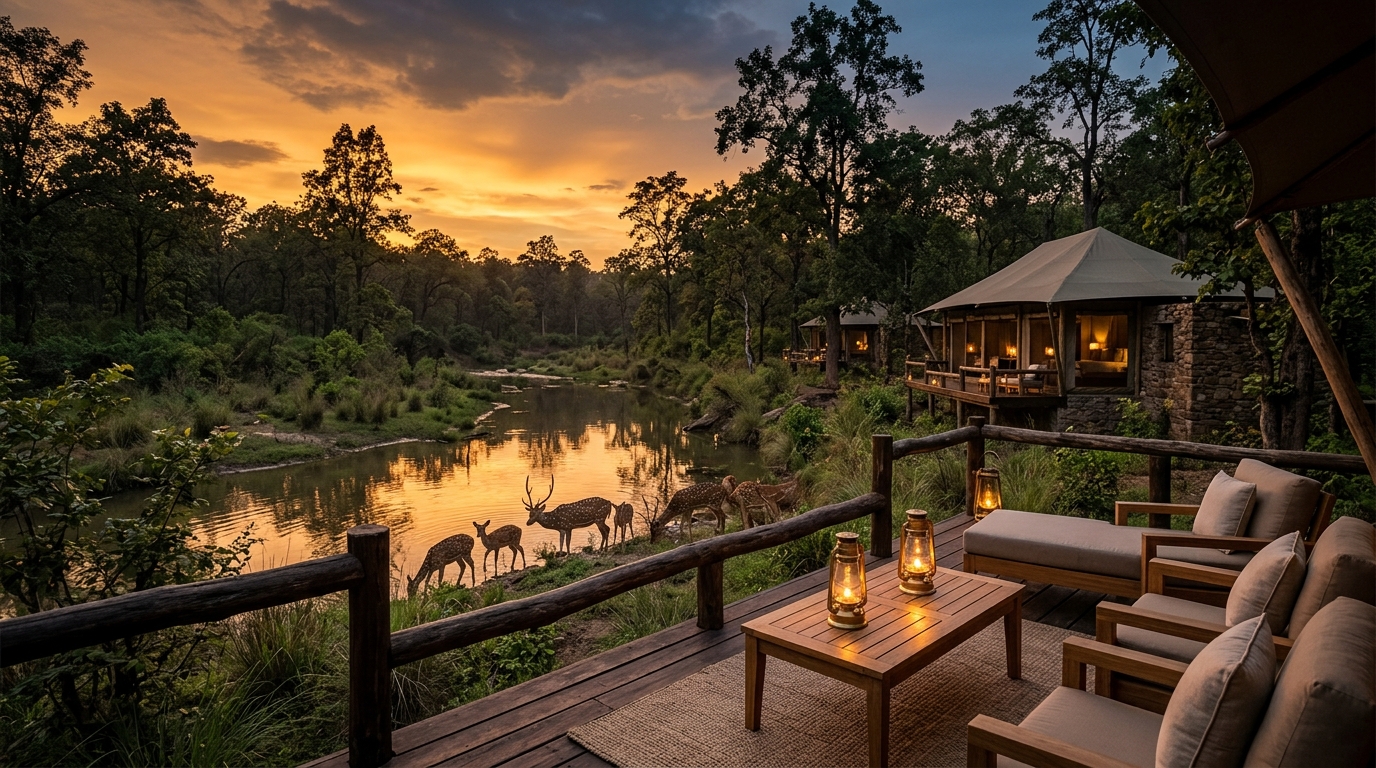
Accommodation quality plays a massive role in the overall success of a wilderness expedition. Modern wildlife tour packages in India have evolved far beyond basic forest rest houses. Today, travelers can choose from highly sophisticated eco-resorts, rustic-luxury tented camps, and ultra-premium wilderness lodges that offer premium amenities such as private decks, spa facilities, and organic fine dining in the heart of the wilderness.
These properties are designed to blend seamlessly with their surroundings, utilizing local building materials, natural water filtration systems, and solar energy. Selecting top-tier wildlife tour packages in India ensures lodging at establishments that actively support local tribal communities through employment and local conservation initiatives.
Curated Photography Expeditions and Guided Nature Walks
For serious hobbyists and photographers, standard safaris can sometimes feel rushed. To address this, specialized wildlife tour packages in India offer curated photography expeditions led by professional photographers who provide field instruction on lighting and composition.
Furthermore, several parks permit guided nature walks along designated buffer zone trails. These walks offer an intimate, ground-level perspective on the ecosystem, focusing on insects and track identification. Including these active elements in wildlife tour packages in India provides a holistic understanding of the jungle that cannot be achieved solely from a vehicle. Engaging in jungle safaris and guided walks offers a complete wilderness perspective.
Best Season for Planning Wildlife Holidays in India
The timing of your trip is arguably the most critical factor determining the success of your safari experience. Most of the major national parks in India close completely during the monsoon season (typically from July to September) due to washed-out forest roads and breeding seasons. Consequently, the operating window for standard wildlife tour packages in India spans from October through June, with distinct seasonal changes altering the nature of the sightings:
- October to January (Winter Landscape): Features lush, green landscapes and excellent birdwatching as migratory species arrive from Siberia and Central Asia.
- February to March (Spring Transition): Offers pleasant weather and thinning foliage, which naturally improves visibility.
- April to June (Peak Summer): The undisputed best time for tiger sightings, as animals congregate around remaining waterholes in the park’s core areas.
Selecting the right window for wildlife tour packages in India depends largely on personal priorities, balancing weather comfort against wildlife visibility. Planning your dates carefully ensures that you align your travel goals with the specific animal behaviors of that season.
Essential Packing and Preparation Guide for Jungle Safaris
Venturing into the Indian wilderness requires careful physical preparation and a thoughtful approach to packing. Because safaris occur in open vehicles during the early morning and late afternoon, travelers must prepare for dramatic temperature fluctuations within a single day. A successful excursion relies on functional, durable gear that keeps you protected from the elements while minimizing your visual impact on the environment.
When preparing for wildlife tour packages in India, travelers should prioritize neutral-colored clothing (such as khaki, olive green, and beige) to avoid startling animals in their habitat. Layered apparel is crucial for cold mornings that transition into hot, dry afternoons. Additionally, a dedicated pair of binoculars, high-factor sun protection, and a telephoto lens (ideally 300mm or higher) are indispensable for capturing clear shots of distant wildlife.
Additionally, checking health requirements and regional advisories is an integral part of preparing for wildlife tour packages in India. Some regions may require specific vaccinations or malaria prophylaxis depending on the season and geographic location. Ensuring that all camera batteries are fully charged and that you have ample memory cards before entering the park zones prevents avoidable disappointment in the field. To safeguard against unexpected itinerary alterations or medical emergencies, securing comprehensive travel insurance is highly recommended before departure.
FAQs
What is typically included in wildlife tour packages in india?
Standard wildlife tour packages in India are designed to offer a comprehensive, hassle-free travel experience. Typically, these packages include pre-booked accommodations at selected eco-lodges or resorts, all meals, private intercity transfers, and a pre-determined number of jungle safaris (including park entry permits, vehicle fees, and local guide charges). Some premium itineraries also bundle domestic flights, travel insurance options, and specialized photography gear rentals. It is always advisable to clarify with your tour operator whether camera fees are included in the initial package cost.
How far in advance should safari bookings be completed?
Because forestry departments strictly regulate daily vehicle entry, securing safari permits early is paramount. It is highly recommended to book wildlife tour packages in India at least 120 to 180 days before your planned travel date. This is especially critical for premier parks like Ranthambore or Jim Corbett, where core-zone permits sell out almost instantly. Last-minute bookings often restrict travelers to buffer zones with lower sighting densities.
Are wildlife safaris in India safe for families with young children?
Yes, wild safaris are highly safe when park rules are followed. Most professional wildlife tour packages in India welcome families and can customize itineraries to suit the patience levels of younger children. However, safaris involve spending several hours in an open vehicle with no restroom facilities, meaning children must be mature enough to sit quietly. Opting for parks with shorter, flexible private jeep safaris is highly recommended.
Which national park offers the highest probability of tiger sightings?
For travelers whose primary goal is to spot a wild tiger, parks in Central India generally offer the highest success rates. Bandhavgarh National Park, Kanha National Park, and Tadoba-Andhari Tiger Reserve are world-famous for their high tiger populations and optimal sighting conditions. When booking wildlife tour packages in India specifically for tiger tracking, choosing an itinerary that schedules multiple safaris across different zones of these parks dramatically increases your chances. Additionally, planning your visit during the hotter dry season (from March to June) ensures that tigers can be easily tracked as they visit known water sources daily.