

When you book a holiday, understanding what should be included in a tour package before paying your deposit is the single best way to avoid surprise expenses. Many travelers pay a substantial upfront fee for an “all-inclusive” itinerary, only to arrive at their destination and face thousands of rupees in unexpected costs—from local taxi union surcharges and night driver allowances to mandatory holiday hotel dinners and regional tourist taxes. Knowing how to read the fine print turns an uncertain travel estimate into an accurate, predictable holiday budget.
The Core Baseline: What Should Be Included in a Tour Package?
A standard travel package from an Indian travel agency or tour operator should provide a clear baseline of core services. Before evaluating destination-specific rules, verify that your quote clearly defines the following essential categories.
1. Dedicated Transportation and Fuel
In a standard land package, transportation covers point-to-point transit in a designated private vehicle (such as a Swift Dzire, Etios, Innova, or Tempo Traveller) or scheduled shared transfers. A proper inclusions list specifies:
- Pickup from the designated airport, railway station, or city starting point.
- All fuel costs for the agreed-upon itinerary distance.
- Standard driver daily allowance (bata) for normal day hours (typically 6:00 AM to 10:00 PM).
- Intercity drops and specified day-sightseeing routes.
2. Accommodation and Meal Plan Codes
Hotels should not merely be listed by name; their specific room category and meal plan code must be documented in writing. In the travel industry, standard meal plans follow standardized codes:
- EP (European Plan): Room stay only. No meals are included.
- CP (Continental Plan): Room stay plus daily breakfast.
- MAP (Modified American Plan): Room stay plus daily breakfast and one major meal (usually dinner).
- AP (American Plan): Room stay plus all three primary meals (breakfast, lunch, and dinner).
Always verify whether the third adult in a triple-sharing room receives a proper extra bed or simply an extra mattress laid on the floor, as this varies significantly across budget and mid-range hotel properties.
3. Sightseeing Drops vs. Actual Entry Tickets
One of the most frequent points of confusion is the word “sightseeing.” In standard tour package phrasing, “sightseeing included” means the vehicle will physically drive you to the parking lot of a tourist site and wait for you. It rarely includes entry tickets, camera permits, professional local guide fees, or internal activity passes unless specifically itemized. If you want a truly comprehensive option, explore detailed itineraries such as world tour packages from India to see how fully inclusive quotes are constructed.
The “Second Cab” Trap: Regional Taxi Union Restrictions
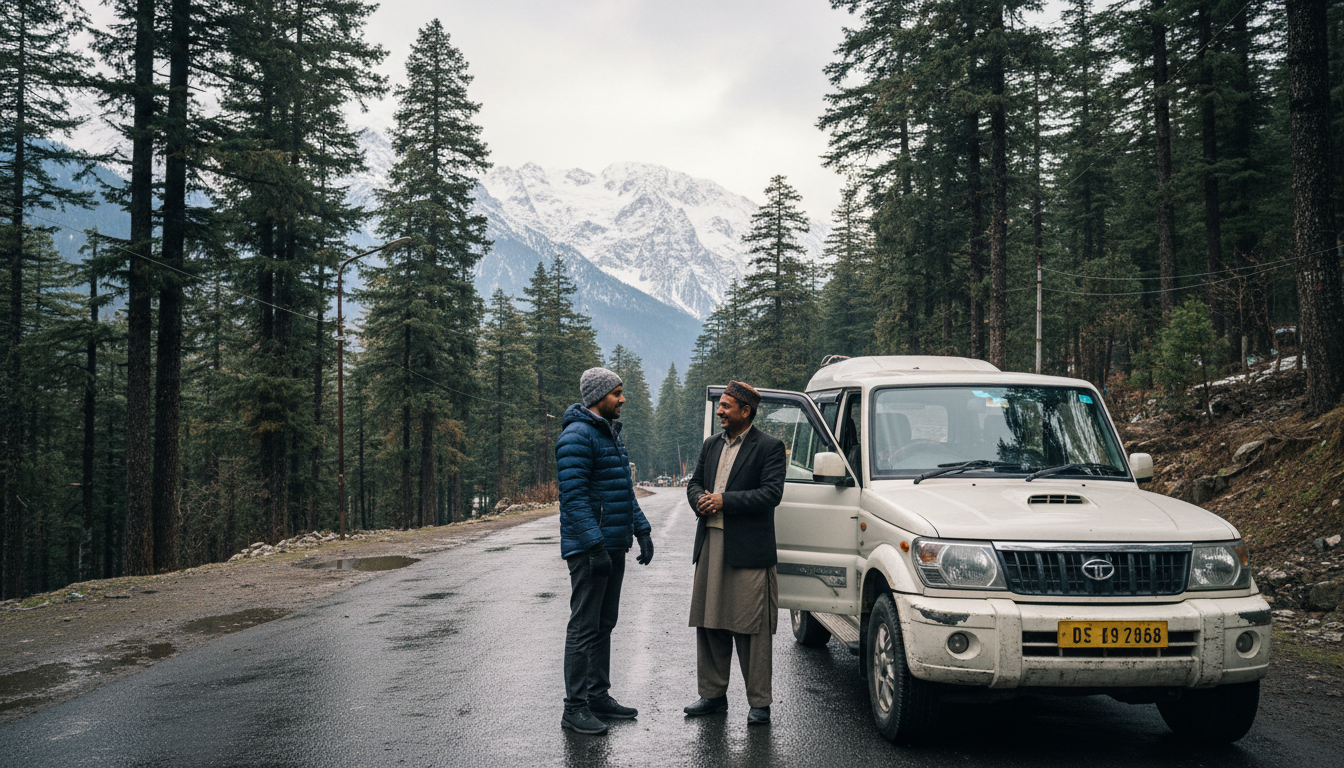
The single largest unexpected cash outflow for domestic Indian travelers involves regional taxi union regulations. In several top tourist destinations, vehicles coming from outside the immediate town or state are legally barred from taking tourists to specific sightseeing points. When this happens, you must hire a “second cab” locally at your own expense, regardless of what your primary tour package agent promised.
Kashmir: Srinagar Cabs vs. Local Area Unions
If you rent a private vehicle in Srinagar for a circuit tour, that vehicle is only permitted to transport you from Srinagar to your hotel in Pahalgam, Gulmarg, or Sonamarg. It cannot conduct internal local sightseeing due to regional taxi union enforcement.
- Pahalgam: To visit Aru Valley, Betaab Valley, and Chandanwari (the “ABC Valley”), you must rent a Pahalgam Taxi Union cab at the local stand. This adds an out-of-pocket cost ranging from ₹2,300 to ₹4,000 per vehicle depending on the season and route choice.
- Sonamarg: Main Srinagar cabs drop passengers at the main town stand. Accessing Thajiwas Glacier or Zero Point requires hiring a local Sonamarg union taxi or pony, costing an additional ₹3,500 to ₹5,000 per vehicle/route.
- Gulmarg in Winter: From January to March, heavy snow blocks standard tourist vehicles at Tangmarg (14 km below Gulmarg). Tourists must pay ₹1,000 to ₹2,500 extra for local 4×4 vehicles fitted with snow chains to reach Gulmarg town. Additionally, Gulmarg Gondola tickets (approx. ₹2,400 per person for Phase 1 + Phase 2) must be booked independently online months in advance and are almost never part of a basic land package quote. For a fully structured itinerary that breaks down these operational logistics, review our guide to the Kashmir honeymoon package from India.
Leh-Ladakh: The ARTO Leh Directives
Commercial taxis registered outside Ladakh (including cabs from Srinagar, Manali, Jammu, or Delhi) are strictly prohibited by the Assistant Regional Transport Office (ARTO) Leh and the Ladakh Taxi Union from conducting internal sightseeing. Outside cabs can only drop you off at your hotel in Leh town.
All travel to Nubra Valley, Pangong Tso, Tso Moriri, and Hanle must be conducted in a local, Leh-registered commercial taxi (yellow plate). The only exception to this rule is private, non-commercial white-plate vehicles registered directly under your name or an immediate family member’s name. Self-drive rental cars with black-and-yellow commercial plates rented outside Ladakh are regularly turned back at union checkpoints.
Sikkim: Protected Area Permits and Local SUVs
Non-Sikkim commercial vehicles cannot operate internal tourist routes within Sikkim. Furthermore, sensitive border zones like Nathula Pass, Tsomgo Lake, Baba Mandir, and North Sikkim (Lachen and Lachung) require Protected Area Permits (PAP).
- Permit administration processing costs approximately ₹200 per person.
- Hiring an authorized local Sikkim-registered SUV (such as an Innova, Xylo, Sumo, or Bolero) for a private day excursion to Nathula Pass ranges between ₹4,500 and ₹8,000 per vehicle depending on tourist season demand.
- Shared vehicle seats cost roughly ₹999 per person.
When evaluating options like a Sikkim family tour package from India, always confirm whether these local SUV charges and permit fees are fully prepaid or billed on the spot.
Himachal Pradesh: Spiti Valley and Rohtang Pass
In Spiti Valley, the Kaza Taxi Union mandates that local taxis be hired for internal sightseeing around high-altitude villages including Langza, Hikkim, Komic, Key Monastery, and Chicham Bridge. In Manali, driving up to Rohtang Pass requires a National Green Tribunal (NGT) permit with capped daily vehicle limits, creating seasonal price spikes for local permit-backed cabs.
Taxes Decoded: Indian GST and Foreign TCS Rules
Understanding travel taxes prevents invoice shock at final payment. The Indian tax framework treats domestic and international tour packages under very specific statutory rules.
GST on Tour Packages (SAC 9985)
When you purchase a bundled holiday package, your operator applies Goods and Services Tax under standard Service Accounting Codes:
- Composite Package Scheme (SAC 9985 / 998555): A flat 5% GST is applied to the total package cost for bundled travel services (combining hotel, transit, and sightseeing). Under this 5% flat rate, the tour operator receives no Input Tax Credit (ITC).
- Component / Service Fee Scheme (SAC 998559): If an agent charges a explicit service fee or commission for booking unbundled services, an 18% GST applies strictly to their commission portion, with full ITC available to the agent.
- Unbundled Direct Component Booking: If items are invoiced individually, standard component GST rates apply:
- Hotels: 12% GST for room tariffs between ₹1,000 and ₹7,499 per night; 18% GST for room tariffs ₹7,500 per night and above.
- Flights: 5% GST on economy tickets; 12% GST on business class tickets.
- Car Rentals / Cabs: 5% or 12% depending on the vendor’s billing scheme.
TCS on Outbound Foreign Tour Packages (Section 206C(1G))
For international holidays purchased through Indian travel agents, Section 206C(1G) of the Income Tax Act mandates the collection of Tax Collected at Source (TCS). Current active operational slabs are structured as follows:
- Up to ₹7 Lakh per buyer per Financial Year: 5% TCS is collected on the package amount.
- Exceeding ₹7 Lakh per Financial Year: 20% TCS is collected on the portion of package spend that exceeds ₹7 Lakh.
Important Tax Clarity: TCS is not an additional tax expense or permanent financial loss. It is an advance income tax credit deposited directly against your PAN. The collected TCS reflects in your Form 26AS and Annual Information Statement (AIS). When filing your annual Income Tax Return (ITR), you can adjust this full TCS amount against your total income tax liability or claim a 100% refund if your net tax liability is lower.
Driver Allowances, Hill Climbs & Mileage Rules
Vehicle rental terms contain fine print regarding operating hours, daily distance limits, and terrain conditions that directly impact your out-of-pocket spending.
Driver Bata (Daily Allowance) and Night Charges
A standard vehicle quote includes “driver allowance” (bata) covering standard daytime driving hours, typically between 6:00 AM and 10:00 PM. Rates generally range from ₹300 to ₹600 per day within this window.
However, if your schedule requires driving past 10:00 PM (such as late-night airport transfers or night road travel) or starting before 6:00 AM, a mandatory Night Driver Bata applies—typically an extra ₹300 to ₹500 per night. Driver bata covers the driver’s basic daily living expenses, but it does not automatically cover tolls, state entry taxes, or parking fees unless specified.
Minimum Daily Kilometre Limits
Outstation taxi rentals in India operate under a minimum billing threshold of 250 km to 300 km per calendar day (calculated from 00:00 to 23:59 Hours). Even if you travel only 50 km on a rest day, you will be billed for the full 250 km or 300 km daily baseline. Standard per-kilometer base rates average:
- Sedans (Dzire, Etios): ₹11 to ₹14 per kilometer.
- SUVs (Innova Crysta, Ertiga): ₹17 to ₹21 per kilometer.
Air Conditioning Restrictions in Hill Stations
In hill destinations such as Munnar, Manali, Ooty, Shimla, and Darjeeling, drivers routinely turn off the vehicle’s Air Conditioning (AC) during mountain climbs. This is not a cost-cutting trick by the driver; turning off the AC during steep uphill ascents is a mechanical necessity to prevent engine overheating and maintain engine power on steep gradients.
Hotel & Seasonal Hidden Surcharges
Accommodations frequently pass on operational surcharges during peak periods or non-standard arrival times.
Compulsory Festive Gala Dinners
If your travel overlaps with major festive dates—specifically Christmas Eve (December 24/25) and New Year’s Eve (December 31)—resorts and hotels across destinations like Goa, Kerala, Rajasthan, and Himachal Pradesh enforce mandatory Gala Dinner surcharges. These range from ₹2,000 to ₹15,000+ per person.
These charges are levied directly by the property management for specialized festive buffets and live entertainment programs. They are mandatory for all guests staying on those dates, regardless of whether you choose to attend or dine elsewhere.
Peak Season Pricing Spikes
During peak demand windows—such as December 20 to January 5, Diwali week, and key multi-day long weekends—hotel tariffs routinely carry a 20% to 30% peak season surcharge above standard room rates. Always verify whether seasonal markups are incorporated into your initial quote.
Early Check-in / Late Check-out Fees
Standard hotel check-in times across India range between 12:00 PM and 2:00 PM, while check-out is set between 10:00 AM and 11:00 AM. If you take an early morning flight or train arriving at 6:00 AM, hotels will not provide immediate room access unless early check-in was explicitly pre-booked. Expect properties to charge anywhere from 50% to 100% of the full daily room tariff to accommodate early morning check-in requests on the spot.
International Tour Package Fine Print
International trips come with external regulatory fees and operational conditions that cannot be billed in India beforehand.
Local Hotel City Taxes
Many foreign municipal governments levy mandatory tourist or city taxes collected in local cash directly at the hotel front desk during check-in or check-out. Tour operators in India cannot legally collect or pre-pay these fees on your behalf:
- European Cities (Rome, Paris, Venice, Florence): €1 to €10 per person, per night, varying based on the hotel’s star rating.
- Dubai (UAE): Tourism Dirham fee of AED 10 to AED 20 per room, per night.
- Malaysia: Tourism Tax of MYR 10 per room, per night for foreign tourists.
Similar “Resort Fees” ($15 to $50 per night) are charged directly upon arrival at destination hotels in North America, Thailand, and Bali for basic property amenities like Wi-Fi and pool access.
Inter-City Low-Cost Flight Baggage Limits
When foreign packages include internal regional flights on low-cost carriers (such as AirAsia, VietJet, or Ryanair), the default ticket class often includes 0 kg checked luggage or a strict 15 kg limit. Conversely, your primary long-haul international flights from India usually allow 23 kg to 30 kg of checked luggage per passenger. Buying excess baggage weight at airport check-in counters abroad can cost three to four times more than pre-purchasing baggage allowances online during initial booking.
Forex Markups and Dynamic Currency Conversion (DCC)
Using Indian credit or debit cards abroad incurs bank foreign exchange markup fees ranging from 1.5% to 3.5%, plus 18% GST applied on the markup fee. Additionally, when swiping your card abroad, point-of-sale terminals may offer to bill your card in Indian Rupees (INR) rather than the local foreign currency. Choosing to pay in INR triggers Dynamic Currency Conversion (DCC), which adds hidden merchant exchange rate losses of 3% to 5%. Always select payment in the local currency of the destination country when swiping cards overseas.
Master Tour Package Inclusions Checklist & Verification Protocol
Before paying a booking deposit to any travel agency, use this comprehensive checklist to evaluate what should be included in a tour package quote versus what will require out-of-pocket cash.
| Category | Standard Inclusion (What SHOULD Be Covered) | Frequently Hidden / Excluded Costs | Practical Verification Action |
|---|---|---|---|
| Transport | Point-to-point transfers, fuel, standard daytime driver allowance (6 AM–10 PM). | Tolls, state entry taxes, parking, night driver bata, local union cabs (Kashmir/Ladakh/Sikkim). | Ask: “Does the transport quote include all tolls, state permits, parking fees, and local union points?” |
| Accommodation | Room stay, hotel taxes, verified room category, base meal plan (EP/CP/MAP/AP). | Early check-in fees, compulsory holiday Gala Dinners, front-desk city taxes, extra bed configuration. | Ask: “Is early check-in pre-booked for early arrivals, and are Gala Dinners included?” |
| Sightseeing | Vehicle drop-off and pickup at listed tourist site parking areas. | Monument entry tickets, camera fees, guide fees, Gondola/safari/pony/boating activity tickets. | Ask: “Does ‘sightseeing’ cover actual entry passes and activity tickets or just driver drop-off?” |
| Taxes & TCS | Clear base package cost breakdown. | 5% GST added at final step, 5%/20% foreign TCS surcharge added later. | Ask: “Is the final price inclusive of 5% GST, and how is TCS recorded against my PAN?” |
| Flights / Airfare | Base airfare with primary route main baggage allowance. | Baggage restrictions on internal regional flights (e.g., 15 kg limit vs 30 kg main flight), seat selection fees. | Ask: “What is the checked baggage limit on internal low-cost flights inside the package?” |
Step-by-Step Pre-Booking Verification Protocol
- Request an Itemized Breakdown: Before paying a 30% advance deposit, require your tour agent to provide a written invoice separating Land Package Cost, Flight Cost, 5% GST, TCS (for international trips), and optional add-ons.
- Review Vehicle Specifics: Confirm whether your vehicle is dedicated exclusively to your group for the full itinerary or structured as point-to-point drops. Get written confirmation that toll charges, parking, and driver bata are included.
- Verify Union Cab Excursions:
- Kashmir Trips: Confirm if Pahalgam ABC Valley, Sonamarg Zero Point, and Tangmarg snow-chain cabs are prepaid or self-paid.
- Ladakh Trips: Ensure a Leh-registered yellow-plate taxi is assigned for Nubra and Pangong routes.
- Sikkim Trips: Confirm Protected Area Permit assistance and local Sikkim SUV allocations in writing.
- Check Hotel Meal Codes: Match the invoice codes (EP, CP, MAP, AP) with your actual meal expectations. If you book an rail-inclusive holiday through services like IRCTC tour packages, verify which meals on board trains are provided versus off-train hotel dining.
- Cross-Check Arrival and Check-in Times: If your flight or train arrives early in the morning, pre-arrange early check-in or request day-use holding rooms to avoid unexpected extra daily tariffs upon arrival.
Frequently Asked Questions
Is driver bata mandatory if my package says “all transfers and transport included”?
Standard packages include the driver’s base daily allowance (bata) for regular daytime operational hours (6:00 AM to 10:00 PM). However, if your schedule requires driving past 10:00 PM or early morning starts before 6:00 AM, a night driver bata applies (typically ₹300–₹500 per night). Tipping the driver is discretionary but customary in India (₹300–₹500 per day total based on service quality).
Why do I have to pay for a second cab in Pahalgam or Gulmarg when I already paid for an Innova for the whole Kashmir trip?
Regional taxi unions in places like Kashmir, Ladakh, and Sikkim enforce territorial jurisdiction rules to protect local driver livelihoods. Your primary Srinagar vehicle can transport you to the main town stands in Pahalgam or Gulmarg, but local sightseeing points (Aru, Betaab Valley, and Chandanwari in Pahalgam; snow-chain cabs in winter from Tangmarg to Gulmarg) must be operated by vehicles registered with that specific local union.
Is 20% TCS on foreign packages an extra expense that I lose forever?
No. TCS (Tax Collected at Source) under Section 206C(1G) is an advance tax collection, not an additional cost or penalty. The tour operator deposits this money directly against your PAN, and it reflects in your Form 26AS and Annual Information Statement (AIS). You can set off 100% of this amount against your annual income tax liability or claim it as a direct cash refund when filing your annual Income Tax Return (ITR).
Why is AC turned off in vehicle hill climbs during trips to Munnar, Manali, or Ooty?
Vehicle AC is switched off during steep mountain climbs to prevent engine overheating and maintain necessary engine power on steep, high-altitude ascents. This is standard mechanical procedure for driving in hill regions, not driver cost-cutting.
Are monument entry fees and activity passes included when a package lists “sightseeing”?
Usually, no. In most Indian and international tour package itineraries, “sightseeing” refers strictly to vehicle transport to the attraction site and driver waiting time. Monument entry tickets, camera permits, adventure activities (scuba, rafting), cable car/Gondola rides, and local guide fees are excluded unless explicitly itemized as “inclusive of entry tickets.”
What is a compulsory Gala Dinner charge, and can I opt out of it?
Hotels and resorts levy mandatory Gala Dinner surcharges on festive dates—primarily Christmas Eve (December 24/25) and New Year’s Eve (December 31). These charges cover special buffet meals and live entertainment programs organized by the property. They are mandatory for all staying guests and cannot be opted out of, even if you choose to dine outside the hotel.