
The heritage of southern India is deeply anchored in the historic city of Mysore (officially renamed Mysuru), a region that has preserved its royal legacy with remarkable integrity. Known as the cultural capital of Karnataka, this elegant city offers an immersive journey through grand palaces, ancient temples, manicured gardens, and busy spice markets. When planning an extensive exploration of southern India’s rich cultural corridor, travelers often ask what are the places to visit in mysore to maximize their experience. The answers reveal a harmonious blend of royal history and modern preservation, making it a compelling destination for scholars, families, and solo explorers alike. To fully appreciate this heritage, understanding what are the places to visit in mysore is essential for curating a structured itinerary.
Key Takeaways
- Rich Royal Legacy: Mysore is the cultural capital of Karnataka, offering magnificent palaces and deep historical depth.
- Diverse Attractions: From the iconic Mysore Palace to serene lakes and vibrant local markets, there is something for every traveler.
- Spiritual Hub: The city is home to historical temples, monolithic structures, and grand cathedrals.
- Connectivity: Easily accessible from Bengaluru via the Bangalore-Mysore Expressway or regular train services.
The Royal Heritage of Mysore
Mysore is synonymous with royalty, having served as the capital of the Kingdom of Mysore under the Wodeyar dynasty for over six centuries (with a brief interruption by Hyder Ali and Tipu Sultan). This royal patronage shaped the city’s architecture, music, and arts, leaving behind a physical legacy that remains remarkably intact. When determining what are the places to visit in mysore, the royal residences must serve as the primary focus of any historical investigation.
Mysore Palace (Amba Vilas Palace)
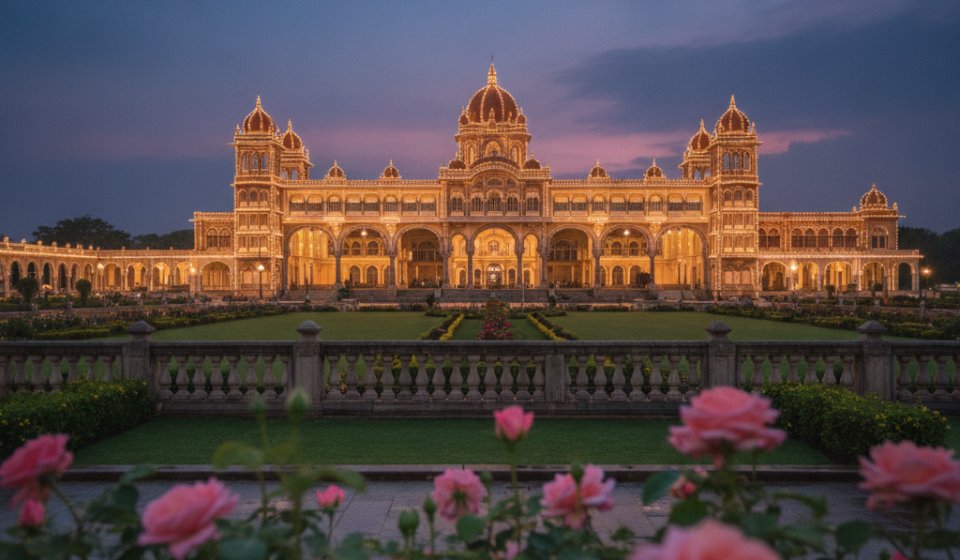
For any visitor compiling a list of what are the places to visit in mysore, the Amba Vilas Palace is the non-negotiable starting point. Originally constructed of wood and subsequently destroyed by fire in 1897, the current palace was designed by the British architect Henry Irwin and completed in 1912. The building represents a masterpiece of Indo-Saracenic architecture, combining Hindu, Muslim, Rajput, and Gothic styles (a design choice that emphasizes the syncretic nature of the dynasty).
The interior architecture highlights the sheer artistic genius of the era:
- Ornate Interiors: Characterized by stained-glass ceilings, carved mahogany doors, and solid silver doors.
- Royal Artwork: Filled with delicate paintings depicting grand royal processions and historical events.
- The Durbar Hall: Featuring majestic columns and painted ceilings, it served as the ceremonial assembly hall for the King.
- Spectacular Illumination: On Sundays and public holidays, the palace exterior is lit by nearly 100,000 light bulbs, creating a breathtaking visual display.
Jaganmohan Palace and Art Gallery
If you are assessing what are the places to visit in mysore for classical Indian art, the Jaganmohan Palace is highly recommended. Built in 1861 by Maharaja Krishnaraja Wodeyar III, it served as the alternate home for the royal family while the new Mysore Palace was being rebuilt. In 1915, it was converted into an art gallery and renamed the Sri Jayachamarajendra Art Gallery.
The gallery houses an invaluable collection of over 2,000 paintings. It features works by legendary Indian artist Raja Ravi Varma, known for his lifelike depictions of Hindu epics. The collection also includes traditional Mysore-style gold-leaf paintings, historical weapons, musical instruments, and rare photographs of the royal family. It provides an intimate look at the private cultural patronage of the Wodeyars.
Lalitha Mahal Palace
When deciding what are the places to visit in mysore that offer a glimpse of colonial-era grandeur, this palace is unmatched. Commissioned in 1921 by Maharaja Krishnaraja Wodeyar IV, it was designed by E.W. Fritchley, an architect based in Mumbai. The structure was built specifically to accommodate the Viceroy of India and other high-ranking European guests.
The design was inspired by St. Paul’s Cathedral in London, featuring twin domes and grand Italian-style ionic columns. Set amidst sprawling manicured lawns, the palace is painted a pristine white and offers sweeping views of Chamundi Hills. Today, operated as a heritage hotel, it retains its historic ballroom, Belgian crystal chandeliers, and a vintage hand-operated lift, allowing visitors to experience royal hospitality first-hand.
| Site Name | Key Architectural Style | Landmark Highlight |
|---|---|---|
| Mysore Palace | Indo-Saracenic | Durbar Hall, Golden Howdah, and 100,000 illumination bulbs |
| Jaganmohan Palace | Traditional Hindu | Raja Ravi Varma paintings and Mysore gold-leaf art |
| Lalitha Mahal Palace | Renaissance-style (Neoclassical) | Double-column porticos and a grand banquet hall |
Sacred Temples and Spiritual Landmarks
Beyond the opulence of royal palaces, Mysore is a significant spiritual center in Karnataka. The city’s religious architecture spans several centuries and faiths, reflecting a deep-seated tradition of religious tolerance. For travelers seeking spiritual insights, knowing what are the places to visit in mysore helps in experiencing local religious traditions and sacred spaces.
Chamundeshwari Temple on Chamundi Hills
When evaluating what are the places to visit in mysore for spectacular views, Chamundi Hills must occupy a prominent spot. Located at an altitude of roughly 1,000 meters above sea level, the hill is home to the Chamundeshwari Temple, dedicated to the patron goddess of Mysore, Chamundeshwari (a fierce manifestation of Goddess Durga).
When visiting the temple, travelers can observe several unique features:
- Ancient Origins: The temple’s foundation dates back to the 12th century, with major expansions by the Wodeyar rulers in the 17th century.
- Towering Gopuram: Features an imposing seven-tier entrance tower adorned with intricate carvings of various Hindu deities.
- The Stone Stairway: Active travelers can ascend the hill via a historic flight of 1,000 stone steps carved in the 17th century.
St. Philomena’s Cathedral
If you are mapping out what are the places to visit in mysore with unique architectural variety, this cathedral is essential. Built in 1936 to cater to the growing Christian community in the region, the cathedral is a magnificent example of Neo-Gothic architecture. It was designed by a French architect named Daly, who drew inspiration from the famous Cologne Cathedral in Germany.
The cathedral features twin spires that rise to a height of approximately 175 feet, making it one of the tallest churches in Asia. Inside, the stained-glass windows depict scenes from the life of Jesus Christ, including his birth, the Last Supper, and the Crucifixion. The crypt below the altar houses a relic of Saint Philomena, drawing pilgrims from all over the country.
Sri Nandi Temple
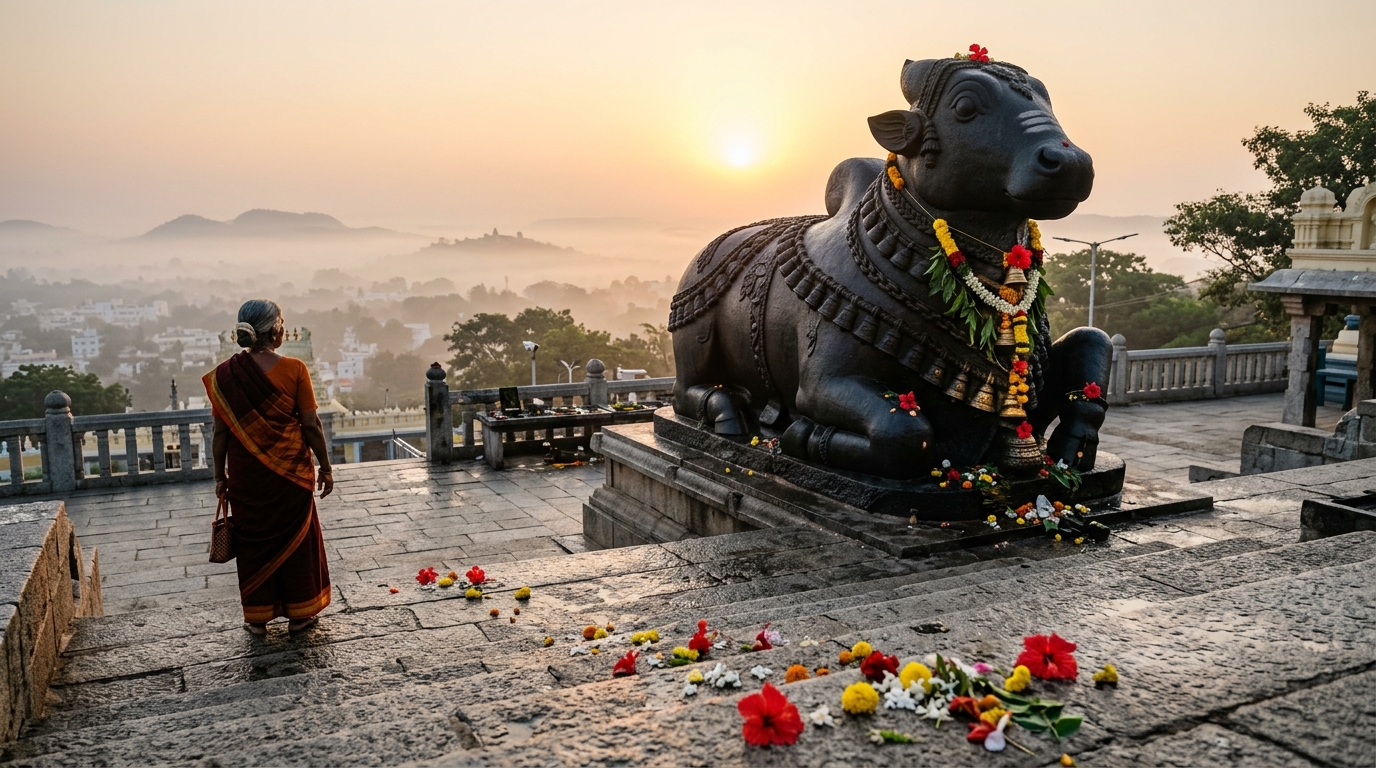
When considering what are the places to visit in mysore on a spiritual journey, the monolithic Nandi bull is a critical stop. Located halfway up the Chamundi Hills, this massive statue of Nandi, the sacred mount of Lord Shiva, is carved from a single black granite boulder. Commissioned by Maharaja Dodda Devaraja Wodeyar in 1659, the statue stands at over 15 feet in height and is 24 feet in length.
The statue is carved with exquisite detail, showing chains, bells, and ornaments draped over the bull’s back. Unlike many other Nandi statues that are housed inside dark temples, this monument sits in an open plaza, allowing visitors to inspect the ancient craftsmanship closely.
| Spiritual Landmark | Key Focus / Deity | Architectural Era |
|---|---|---|
| Chamundeshwari Temple | Goddess Durga (Chamundeshwari) | 12th Century (with 17th-century expansions) |
| St. Philomena’s Cathedral | Saint Philomena | 20th Century (Neo-Gothic, 1936) |
| Sri Nandi Temple | Nandi Bull (Mount of Lord Shiva) | 17th Century (Monolithic structure, 1659) |
Scenic Nature and Man-Made Marvels
Mysore’s dry, temperate climate is perfectly complemented by its green spaces and water bodies. The city has managed to preserve its natural lakes and create grand public gardens that provide a clean, green environment. For outdoor enthusiasts looking at what are the places to visit in mysore, the city offers beautifully preserved ecological sites and historic water infrastructure.
Brindavan Gardens and KRS Dam
When tourists ask what are the places to visit in mysore for evening recreation, Brindavan Gardens is the typical answer. Adjoining the Krishna Raja Sagara (KRS) Dam across the Kaveri River, these terraced gardens were designed by Sir Mirza Ismail, the Diwan of Mysore, and completed in 1932. The garden’s layout is based on the classical Mughal pattern, featuring symmetric lawns, water fountains, and floral pathways.
The main attraction is the musical fountain show, where water jets are synchronized to classical and popular music, illuminated by multi-colored lights. The KRS Dam itself is an engineering marvel of its time, designed by the legendary engineer Sir M. Visvesvaraya, which remains critical for irrigating regional agricultural fields.
Karanji Lake
If you want to know what are the places to visit in mysore for birdwatching, Karanji Lake is highly suitable. Spanning over 90 acres, this lake was originally created by the Wodeyar kings as a percolation pond. Today, it has been developed into an ecological park by the Mysore Zoo Authority.
The park features the largest walk-through aviary in India, allowing visitors to observe peacocks, hornbills, and waterfowl in a semi-natural habitat. It also houses a dedicated butterfly park and the Regional Museum of Natural History, making it an excellent educational destination for children and naturalists alike.
Kukkarahalli Lake
For nature lovers discussing what are the places to visit in mysore, Kukkarahalli Lake provides a serene alternative to the busier tourist spots. Commissioned by Mummadi Krishnaraja Wodeyar in 1864 to provide water to the city, the lake sits adjacent to the University of Mysore campus.
It is highly favored by local residents for early morning walks and birdwatching. Over 180 species of migratory and resident birds have been recorded here, including the spot-billed pelican and painted stork. The quiet walking trail surrounding the lake provides a peaceful respite from the urban hustle.
Wildlife, Science, and Museum Expeditions
Mysore’s contribution to education and scientific preservation is visible in its specialized museums and conservation facilities. The city was one of the early adopters of modern zoo management in India, focusing on animal welfare and breeding programs. To understand what are the places to visit in mysore for educational tours, the local museums offer excellent resources.
Sri Chamarajendra Zoological Gardens (Mysore Zoo)
When families ask what are the places to visit in mysore, the Chamarajendra Zoological Gardens represents a mandatory excursion. Established in 1892 by Maharaja Chamarajendra Wadiyar X, this is one of the oldest zoos in India and a pioneer in open-enclosure design. Spanning over 157 acres, the zoo is home to an impressive collection of animals, including tigers, elephants, giraffes, and gorillas.
The zoo is widely respected for its successful captive breeding programs and wildlife rehabilitation efforts. The well-shaded paths, historic stone buildings, and dense vegetation make walking through the zoo a comfortable and highly informative experience.
Railway Museum Mysore
If you are researching what are the places to visit in mysore with historical transportation relics, the Railway Museum is ideal. Established in 1979 by Indian Railways, this museum is the second of its kind in India (after the National Railway Museum in New Delhi). It houses an outdoor collection of vintage steam locomotives, signals, and inspection cars.
The crown jewel of the collection is the Maharani’s saloon car, built in 1899, which features a private kitchen, dining room, and elaborate wooden interiors. The museum also displays historical photographs and old technical instruments, documenting the evolution of rail travel in southern India.
Mysore Sand Sculpture Museum
When seeking unique artistic installations, knowing what are the places to visit in mysore should lead you to this sand museum. Conceptualized and created by artist M.N. Gowri, this is India’s first dedicated sand sculpture museum. It houses around 150 sand sculptures made from 115 truckloads of construction sand.
The exhibits depict various themes, including Mysore’s royal heritage, wildlife, mythological stories, and popular culture. The sculptures are housed under a canopy to protect them from weather damage, showing the high level of detail that can be achieved using only sand and water.
Local Markets and Authentic Mysore Experiences
To truly appreciate local culture beyond landmarks, one should ask what are the places to visit in mysore for authentic interactions. The city’s local commerce is deeply tied to old trade routes, preserving traditional crafts and agricultural produce that have defined the region for centuries.
Devaraja Market
If you ask any local guide what are the places to visit in mysore to observe traditional commerce, Devaraja Market is the answer. Operating since the reign of Tipu Sultan and formalized in the late 19th century under Maharaja Chamarajendra Wodeyar, this is a vibrant open-air bazaar located in the center of the city.
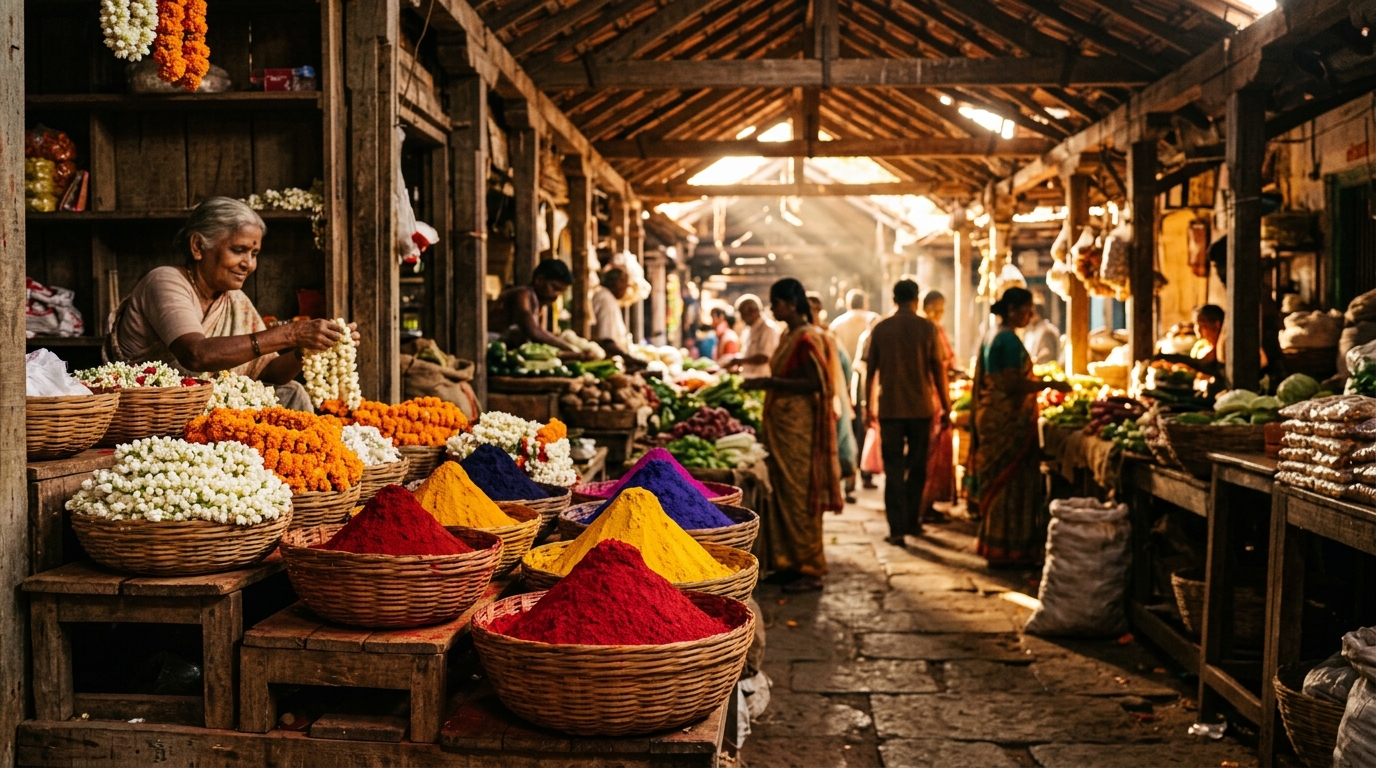
The market is divided into sections selling fresh fruits, vegetables, flowers, traditional perfumes (ittar), and local spices. It is particularly famous for its colorful heaps of kumkum (vermilion powder) and fresh jasmine flowers, offering an intense sensory experience and excellent photography opportunities.
The Legacy of Mysore Silk and Sandalwood
When analyzing what are the places to visit in mysore for retail therapy, the Government Silk Weaving Factory is paramount. Established in 1912 by Maharaja Krishnaraja Wodeyar IV, the factory was set up to produce silk fabric specifically for the royal family and military uniforms. Today, operated by the Karnataka Silk Industries Corporation (KSIC), it produces the world-famous Mysore Silk sarees.
Weavers create the fabric using pure silk threads and genuine gold zari (embroidery thread). Similarly, the Government Sandalwood Oil Factory, established in 1916, offers an educational look at how pure sandalwood oil, soaps, and incense are manufactured, allowing visitors to purchase authentic geographical indication (GI) tagged products directly.
Practical Information for Travelers
Planning a trip requires careful coordination of weather, local transport, and event calendars. To help you organize what are the places to visit in mysore, we have compiled a comprehensive travel matrix and practical logistics.
| Attraction Name | Approx. Entry Fee (Indian / Foreigner) | Visiting Hours | Recommended Duration |
|---|---|---|---|
| Mysore Palace | ₹100 / ₹200 | 10:00 AM – 5:30 PM | 2 – 3 Hours |
| Chamundeshwari Temple | Free (Special entry: ₹100) | 7:30 AM – 9:00 PM | 1 – 2 Hours |
| Brindavan Gardens | ₹50 / ₹50 | 9:00 AM – 8:00 PM | 2 Hours (Evening preferred) |
| Mysore Zoo | ₹100 / ₹300 | 8:30 AM – 5:30 PM (Closed Tuesdays) | 3 Hours |
Best Time to Visit Mysore
When deciding what are the places to visit in mysore, aligning your visit with the climate is critical. The city experiences a moderate tropical climate, but the winter months are universally preferred for outdoor exploration.
| Season | Months | Temperature Range | Travel Advisory |
|---|---|---|---|
| Winter | October to March | 15°C – 30°C | Ideal for sightseeing. Highly popular due to pleasant daytime temperatures. |
| Summer | April to June | 22°C – 35°C | Warm during midday. Best for indoor museums and evening garden visits. |
| Monsoon | July to September | 20°C – 28°C | Heavy rain showers. Lakes and gardens are lush, but outdoor travel can be restricted. |
A major highlight is the Mysore Dasara festival, typically held in October. This ten-day celebration features grand royal processions, classical music concerts, and the spectacular illumination of the entire Mysore Palace.
How to Reach Mysore
To optimize what are the places to visit in mysore, selecting the right mode of transit is highly important.
- By Air: Mandakalli Airport in Mysore offers limited regional domestic connections. For major international and national travelers, Kempegowda International Airport in Bengaluru (roughly 170 kilometers away) serves as the primary gateway.
- By Rail: Mysore Junction is well-connected to major Indian cities. Several daily express trains, including the high-speed Shatabdi and Vande Bharat Express, run regularly between Bengaluru and Mysore.
- By Road: The Bangalore-Mysore Expressway has reduced travel times between the two cities to roughly two hours, making road trips exceptionally convenient. For travelers planning a comprehensive regional itinerary, exploring curated Bangalore Mysore Tour Packages can greatly simplify the logistical challenges of coordination.
Essential Local Travel Tips
For those seeking to maximize what are the places to visit in mysore, these practical guidelines will ensure a seamless trip:
- Footwear Regulations: Ensure you wear easily removable footwear, as shoes are strictly prohibited inside temple complexes and specific parts of royal palaces.
- Photography Permissions: Camera fees apply at most historical monuments. Note that photography is strictly banned inside the main hall of the Mysore Palace.
- Local Transportation: Auto-rickshaws are widely available, but using app-based ride services (such as Ola or Uber) is recommended to ensure transparent pricing.
Conclusion
In conclusion, determining what are the places to visit in mysore depends largely on your personal travel interests. The city stands as a rare example of an Indian destination that has managed to preserve its royal architecture and traditional heritage without resisting modern civic development. By utilizing this structured guide to what are the places to visit in mysore, you can curate a truly memorable itinerary that balances royal history, spiritual landmarks, and beautiful natural ecosystems. Ensure you book your travel packages in advance to secure the best historical tours and local guides for your upcoming journey.