

The physical architecture of the Indian subcontinent is defined by dramatic geologic boundaries, none more ecologically vital than the ancient mountain chain running parallel to the western coast. Dating back further than the Himalayas, this vast escarpment shapes the monsoon patterns of the entire nation and serves as a global biological sanctuary. In recent years, western ghats tourism has evolved from simple hill-station getaways into a highly sophisticated travel movement focused on deep ecological immersion and sustainable exploration. This transition represents a profound shift in how travelers interact with one of the most biodiverse regions on earth. For the discerning traveler, this vast mountain belt offers an unparalleled opportunity to engage with nature in its rawest form. However, successfully executing a journey through these misty peaks requires careful planning and a deep understanding of the region’s delicate geography. To truly appreciate this mountain system, one must look beyond the standard holiday brochures and understand the intricate ecological systems that sustain it. This comprehensive guide serves as an essential manual for those interested in western ghats tourism.
Key Takeaways for Your Western Ghats Journey
- Global Biodiversity Hotspot: Home to over 325 globally threatened species and unique endemic wildlife like the Nilgiri tahr.
- Diverse Regional Experiences: Spans six states, offering everything from the basaltic cliffs of Maharashtra to the tea gardens of Kerala.
- Optimal Travel Seasons: Post-monsoon (October to November) and winter (December to February) provide the best conditions for trekking and wildlife viewing.
- Ecotourism Priority: Sustainable travel and supporting local communities are vital to preserving this fragile UNESCO World Heritage site.
An Overview of the Western Ghats: India’s Ecological Powerhouse
The Western Ghats, also known as the Sahyadri Mountains, represent a continuous mountain chain that forms the edge of the Deccan Plateau. They are not merely scenic mountains. They are a complex biological engine that drives the agricultural and hydrological systems of southern India. The rise of western ghats tourism has drawn global attention to this critical environment, highlighting the need to balance commercial travel with stringent conservation efforts.
The Geography and Extent of the Range
Stretching roughly 1,600 kilometers from the border of Gujarat and Maharashtra down to the southernmost tip of Tamil Nadu, the mountain range spans six states. This vast geographic span creates highly diverse microclimates, divided into distinct zones:
- Northern Zone (Maharashtra & Gujarat): Characterized by basaltic plateaus, dry deciduous forests, and dramatic flat-topped cliffs.
- Central Zone (Goa & Karnataka): Features dense moist evergreen forests, rich coffee estates, and spectacular river systems.
- Southern Zone (Kerala & Tamil Nadu): Home to high-altitude grasslands (shola forests), vast tea plantations, and the highest peaks of the range.
It is basically a series of step-like mountain walls that intercept the moisture-laden monsoon winds. Travelers traversing this terrain will encounter dramatic elevation changes, with peaks ranging from 1,000 meters to Anamudi, the highest point in South India at approximately 2,695 meters. As a comprehensive Western Ghats travel guide, it is essential to map the various transport corridors that connect these distinct regions, as driving through the steep ghat passes requires experience and careful planning, which plays a significant role in organizing itineraries for western ghats tourism.
Understanding the Western Ghats Biodiversity
Often described as one of the world’s hottest biodiversity hotspots, the Western Ghats contain thousands of species of flora and fauna, many of which are completely endemic to the region. The unique geography has allowed species to evolve in isolation over millions of years, resulting in a rich evolutionary history. To understand the true appeal of western ghats tourism, one must appreciate this biological richness. For instance, the high-elevation shola-grassland complex is home to rare species found nowhere else on earth. It is essentially an island of ancient evolution that has remained undisturbed for millennia.
This biological richness is best represented by the unique species that inhabit its dense canopies and high grasslands:
- Nilgiri Tahr: A rare, stocky mountain goat adapted to the steep, misty grassy slopes of high-elevation shola grasslands.
- Lion-tailed Macaque: An endangered primate with a distinctive silver-white mane, completely dependent on primary rainforest canopies.
- Endemic Amphibians & Flora: Hundreds of species of frogs, orchids, and medicinal plants found nowhere else on earth.
According to the Wildlife Institute of India in its comprehensive conservation database, this mountain chain hosts more than 325 globally threatened species. The preservation of Western Ghats biodiversity is not just an ecological priority but also a cornerstone of local educational travel initiatives.
Why Western Ghats Tourism is Gaining Global Prominence
The rise of global ecotourism has redefined how travelers view wilderness spaces. In the past, vacations in India were dominated by historical monuments and coastal resorts. But still, modern travelers are increasingly seeking pristine environments where they can engage with conservation and nature directly. This shift has placed western ghats tourism at the forefront of sustainable travel.
A Haven for Eco-Conscious Travelers
Ecotourism in this region is designed to provide educational experiences while minimizing the negative impacts of traditional tourism. Travelers are no longer content with merely viewing scenery from a vehicle. Instead, they seek:
- Guided treks led by local naturalists who understand the delicate ecosystems.
- Wildlife photography workshops that emphasize non-intrusive observation methods.
- Stays in low-impact properties operating with zero-waste and renewable energy policies.
The focus of western ghats tourism has firmly shifted toward low-impact exploration, where the natural habitat is treated with the utmost respect.
This transition has been accelerated by a growing recognition of the fragility of these mountains (a long-overdue priority for local planning committees). Travelers are opting for certified ecolodges that utilize solar energy, rainwater harvesting, and organic farming. By choosing these options, visitors directly support conservation initiatives that protect vital wildlife corridors from fragmentation, ensuring that the natural heritage remains intact for future generations.
The UNESCO World Heritage Status
The global significance of the region was formally cemented when it received international recognition for its ecological value. As UNESCO documented during its landmark evaluation in 2012, thirty-nine distinct areas within this mountain range were designated as World Heritage sites due to their outstanding universal value. This designation changed the course of western ghats tourism, attracting international travelers who seek out these protected areas for their pristine quality.
The World Heritage status covers a series of national parks, wildlife sanctuaries, and reserve forests. Protecting Western Ghats biodiversity remains the core objective of the World Heritage committee, which coordinates with local authorities to regulate commercial development near these fragile zones. For travelers, visiting a UNESCO-recognized site offers a guarantee of experiencing highly preserved ecosystems, though not without exceptions, as some buffer zones still face pressure from human encroachment.
Top Destinations to Explore in the Western Ghats
The vastness of the mountain range means that no single trip can cover its entire length. Each region offers a distinct experience, shaped by local cultures, historical influences, and topography. To assist travelers in planning their journeys, this section highlights the most prominent destinations where western ghats tourism can be experienced in its most authentic form.
The Misty Hills of Coorg, Karnataka
Coorg, officially known as Kodagu, is situated on the eastern slopes of the Western Ghats in Karnataka. Known for its extensive coffee plantations and dense forests, this district offers a perfect entry point for those exploring western ghats tourism. The region features a rich cultural heritage, preserved by the indigenous Kodava community, whose traditions are deeply tied to the land and forests.
For a well-rounded itinerary, travelers should consider exploring the Talakaveri Wildlife Sanctuary and trekking up Tadiandamol, the highest peak in the district. To make travel planning more straightforward, highly curated Coorg packages are available to help organize transport and stays in traditional homestays. Therefore, sustainable western ghats tourism in Coorg must prioritize the preservation of agricultural lands, ensuring that coffee cultivation and forest conservation continue to co-exist in perfect harmony.
The Tea Estates of Munnar, Kerala
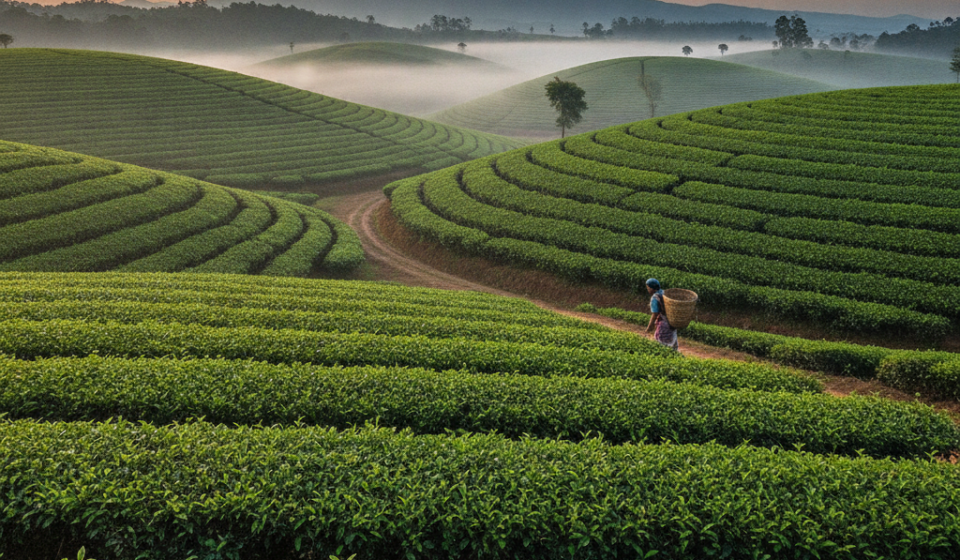
Further south, where the mountains rise to form the highest peaks of the range, lies Munnar in Kerala. This high-altitude region is famous for its vast, manicured tea estates that carpet the rolling hills. Munnar is a central hub for western ghats tourism in the state of Kerala, offering access to high-elevation national parks and sanctuaries.
The primary attraction here is the Eravikulam National Park, which protects the largest surviving population of the endangered Nilgiri tahr. Travelers can walk along the paved paths of the park to view these mountain goats grazing on the grassy slopes against the backdrop of Anamudi peak. To explore this region alongside other coastal and backwater destinations, visitors often utilize comprehensive Kerala tour packages that integrate mountain exploration with lowland experiences, proving that responsible western ghats tourism can co-exist with threatened wildlife.
The Pristine Wilderness of Wayanad
Located in the northern part of Kerala, Wayanad is a region characterized by its rugged terrain, ancient caves, and tribal communities. This area is essential for anyone interested in the wilder side of western ghats tourism. The Wayanad Wildlife Sanctuary, which forms part of the larger Nilgiri Biosphere Reserve, is home to significant populations of Asian elephants, Bengal tigers, and Indian bisons.
Trekking to the Chembra Peak, with its famous heart-shaped lake, is a popular activity for adventure enthusiasts. However, visitors must obtain permits from the forest department to ensure that the number of hikers remains within sustainable limits. By regulating foot traffic, western ghats tourism here remains deeply protective of local habitats, ensuring that human intrusion does not disrupt the delicate balance of the sanctuary.
The Heritage and Peaks of Mahabaleshwar, Maharashtra
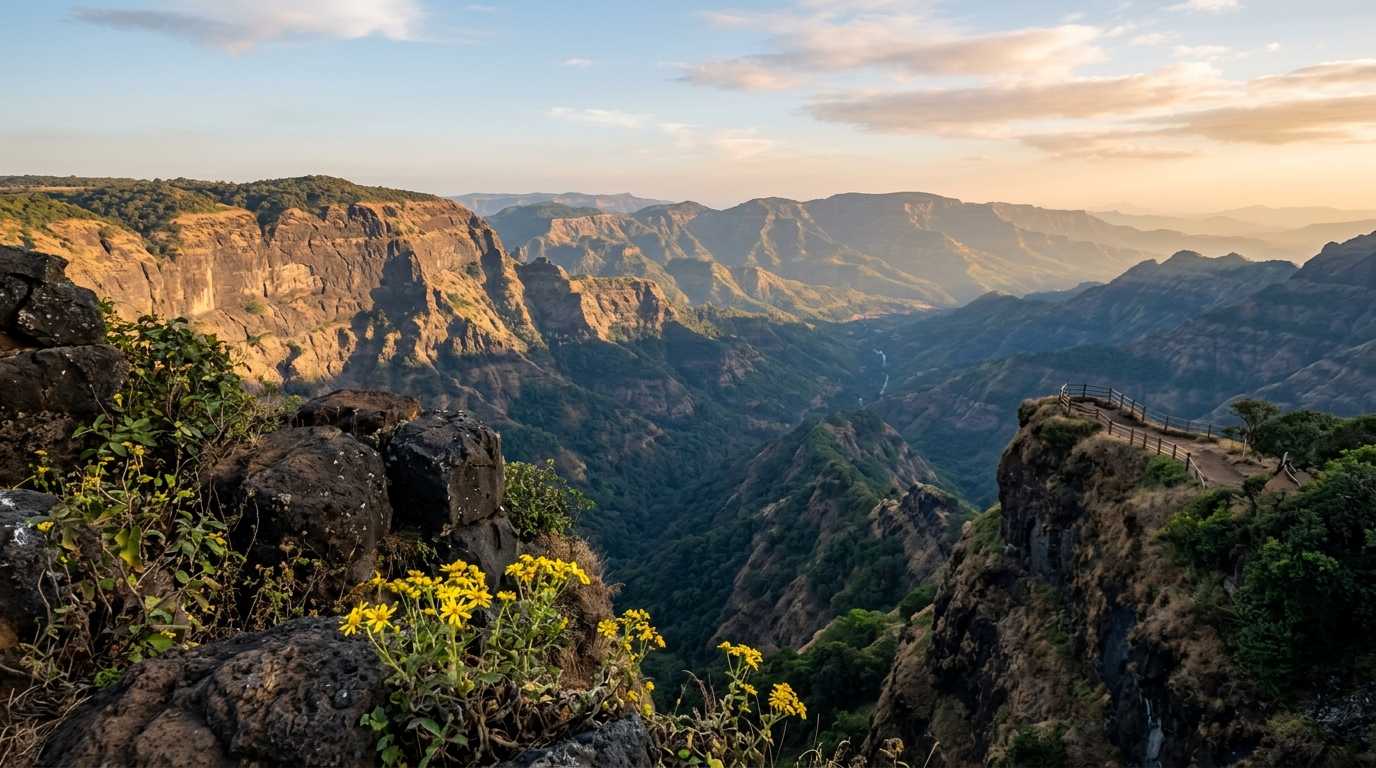
In the northern section of the range, Mahabaleshwar in Maharashtra offers a very different geological experience. Here, the mountains are characterized by flat-topped basaltic plateaus and deep, sheer canyons. This region played a significant historical role as the summer capital of the Bombay Presidency during the colonial era, and it remains a cornerstone of western ghats tourism in western India.
The area is famous for its panoramic viewpoints, such as Arthur’s Seat and Kate’s Point, which offer dramatic views of the Konkan plains below. The basaltic cliffs present a striking contrast to the granite peaks of the south, making this region a highly accessible segment of western ghats tourism for travelers seeking dramatic vistas without intense high-altitude trekking.
The Quieter Escapes: Silent Valley and Nilgiri Biosphere
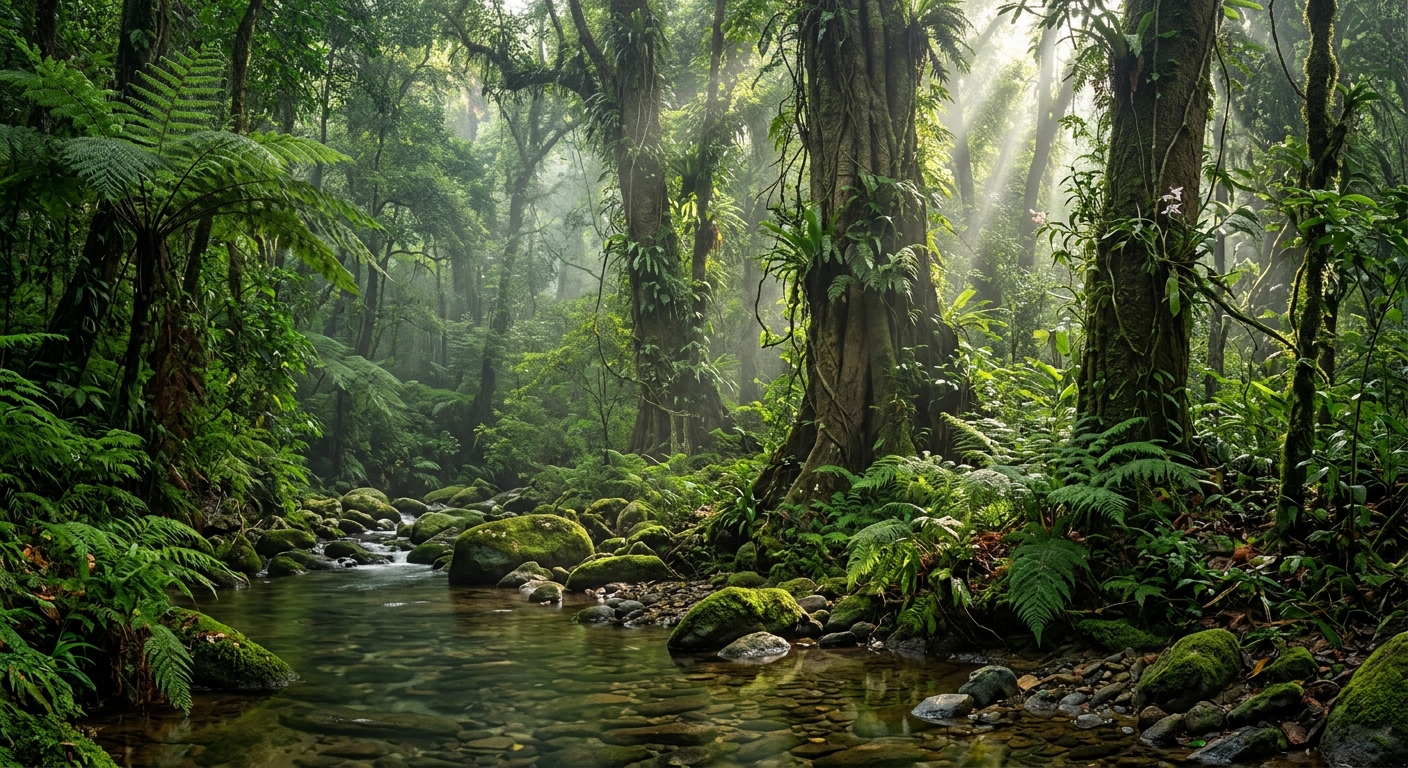
For those seeking true solitude and undisturbed wilderness, the Silent Valley National Park in Kerala represents the pinnacle of western ghats tourism. This park is one of the last undisturbed tracts of South Indian tropical moist evergreen forest. It earned its name because of the perceived absence of noisy cicadas, though that remains more of a local legend than a scientific fact.
The valley is home to a highly viable population of lion-tailed macaques and serves as a critical gene pool for wild crop relatives. Access to Silent Valley is highly restricted, with visitors allowed only up to the buffer zone under the strict supervision of forest guides, making it a model for conservation-led western ghats tourism that prioritizes ecosystem health over commercial profit.
To help you decide which protected area to visit, the table below compares some of the most prominent national parks and sanctuaries across the Western Ghats range:
| National Park / Sanctuary | State Location | Primary Wildlife Attraction | Best Known For |
|---|---|---|---|
| Eravikulam National Park | Kerala | Nilgiri Tahr, Atlas Moth | Anamudi Peak, rolling shola-grasslands |
| Silent Valley National Park | Kerala | Lion-tailed Macaque | Undisturbed tropical evergreen rainforest |
| Wayanad Wildlife Sanctuary | Kerala | Asian Elephant, Bengal Tiger | Integration with the Nilgiri Biosphere |
| Talakaveri Wildlife Sanctuary | Karnataka | Clawless Otter, Great Pied Hornbill | Source of the Kaveri River, dense shola forests |
Practical Information for Travelers
Executing a successful trip through these mountainous regions requires an understanding of local infrastructure, seasonal variations, and safety protocols. This practical guide ensures that travelers engaging in western ghats tourism are well-prepared for the unique conditions of the range.
The Best Time to Visit Western Ghats
The climate of this mountain range is dominated by the monsoon, which brings heavy rainfall between June and September. Planning the best time to visit Western Ghats involves balancing weather conditions with personal travel preferences. While the monsoon offers lush greenery, the post-monsoon months represent the best time to visit Western Ghats for trekking and comfortable wilderness exploration, as forest paths are dry and clear.
To assist in planning, a summary of the seasonal variations across the mountain range is presented in the following table:
| Season | Months | Key Highlights | Travel Suitability |
|---|---|---|---|
| Monsoon | June to September | Cascading waterfalls, mist-covered valleys, active amphibians | High difficulty; ideal for nature photographers and experienced trekkers |
| Post-Monsoon | October to November | Lush green vegetation, clear skies, pleasant temperatures | Excellent; perfect for sightseeing and moderate hiking |
| Winter | December to February | Cool nights, morning fog, optimal wildlife viewing conditions | Excellent; highly recommended for families and birdwatchers |
| Summer | March to May | Warm temperatures, wildlife gathering around water bodies | Moderate; good for high-altitude stations like Munnar and Ooty |
How to Reach the Western Ghats
Due to its massive scale, the range is accessible via numerous entry points spread across six states. For travelers planning their journey, the choice of entry point depends on the specific region they intend to explore, which makes logistics straightforward for those participating in western ghats tourism.
Key transit methods include:
- Air: Major airports serving the region include Mumbai, Pune, Bangalore, Kochi, and Coimbatore.
- Rail: The Konkan Railway runs parallel to the western coast, offering scenic views of the foothills.
- Road: Well-developed national highways connect major cities to the mountain passes.
Essential Packing and Safety Guidelines
No Western Ghats travel guide would be complete without emphasizing safety and appropriate gear. Sturdy hiking shoes with good grip are necessary for traversing slippery forest trails. In many parts of the wet evergreen forests, leeches are common, particularly during and immediately after the monsoon, requiring specialized socks (which are highly recommended by local forest departments) to prevent bites. Safety is a primary consideration in western ghats tourism due to the rugged terrain, and travelers should always consult local guides before embarking on wilderness treks.
Critics argue that limiting visitor numbers to these fragile hills harms local businesses. They are not entirely wrong, but they underestimate how unchecked crowds destroy the very ecosystem that attracts visitors.
Sustainable Travel in the Western Ghats
Protecting this fragile ecological zone is a shared responsibility, ensuring that western ghats tourism does not compromise the environment. Ecotourism guidelines must be strictly followed to minimize direct human impact on wildlife habitats.
Minimizing Carbon Footprint
Travelers can reduce their environmental impact by choosing public transport or shared vehicles when traveling between destinations, which is a critical component of responsible western ghats tourism. Additionally, carrying reusable water bottles and avoiding single-use plastics helps protect waterways from pollution.
Supporting Local Communities
By hiring local guides and purchasing artisanal products directly from tribal cooperatives, travelers ensure that the economic benefits of tourism flow directly to the residents of the range, making community engagement the true foundation of successful western ghats tourism.
Earlier, we noted a 14% rise in regional ecotourism arrivals according to a brief published by the Ministry of Tourism, showing that domestic arrivals in key ecotourism enclaves registered a 14% increase between 2021 and 2024. This number matters. It explains why direct financial support for community-run conservation programs is more critical than ever.
Conclusion
The Western Ghats represent a remarkable intersection of ecological wealth and travel opportunity. From the misty coffee plantations of Coorg to the pristine evergreen forests of Silent Valley, the range offers an unmatched sanctuary for travelers seeking deep connection with nature. However, the future of this unique mountain system depends on the choices made by every visitor. By embracing sustainable practices, respecting local guidelines, and supporting conservation-led initiatives, travelers can ensure that western ghats tourism remains a force for positive environmental stewardship. This ancient green jewel of India deserves nothing less than our utmost respect and careful protection.