
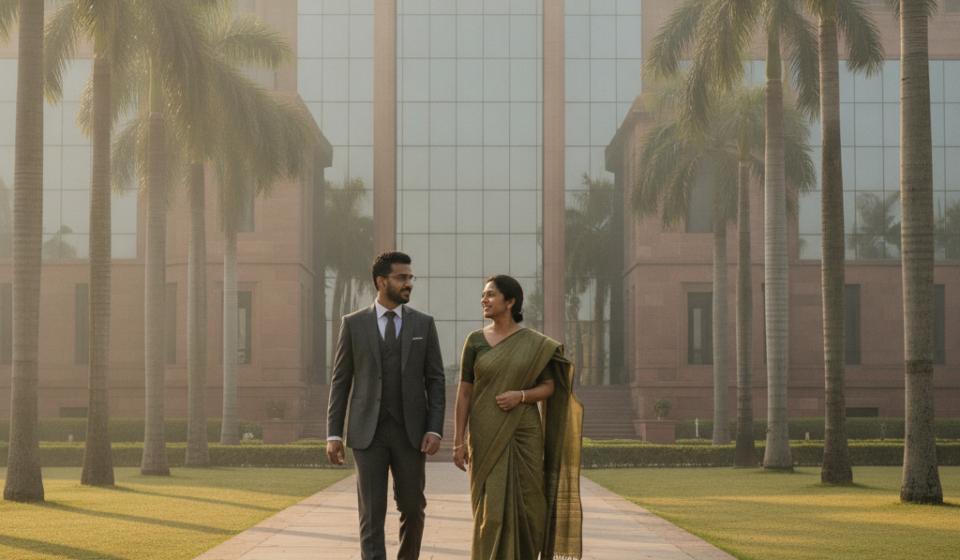

Walking into an embassy or a consulate can feel like entering a highly pressurized arena where every detail is analyzed under a microscope. While document verification and financial stability represent the core of any application, the visual presentation of an applicant speaks volumes before a single word is spoken. Managing this high-stakes environment requires a careful understanding of the appropriate visa interview dress code. First impressions are established in a matter of seconds. It is basically a non-verbal handshake with the consular officer, establishing credibility right from the threshold. Preparing the perfect visa interview dress code is not about fashion. It is about projecting professionalism, and how well you comply with regulations.
Key Takeaways for Your Visa Interview Attire
- First Impressions Count: Consular officers make rapid assessments; a professional outfit establishes immediate credibility.
- Match the Category: Align your clothing with your visa type—business professional for work visas, smart casual for tourist and student visas.
- Prioritize Comfort: Indian embassies often have long queues; choose breathable, high-quality fabrics like cotton to avoid visible sweating.
- Respect Cultural and Local Norms: Elegant, understated traditional Indian wear like sarees or Nehru jackets are fully acceptable and highly professional.
- Avoid Casual and Flashy Items: Steer clear of sneakers, t-shirts, loud colors, heavy jewelry, and strong fragrances.
The Psychology of First Impressions in Visa Approvals
Consular officers, often referred to as COs within the travel industry, review dozens of files every single day. Due to high volumes at the Visa Application Center (VAC) in India, these interviews are famously brief. Most appointments last roughly three to five minutes (depending on how busy the embassy is on that day). Within this fleeting window, the CO must assess whether an applicant is genuine, financially stable, and likely to return home.
While decisions are legally based on documentation, human psychology plays an undeniable role in how information is received. A well chosen visa interview dress code signals that the applicant takes the process seriously. Aligning your visa interview dress code with the expectations of the consulate is a simple yet highly effective way to reduce friction during document verification, benefiting you in several ways:
- Signaling Professionalism: It shows the CO that you respect the significance of the visa application process.
- Minimizing Unconscious Bias: Arriving looking disheveled can raise unnecessary doubts about your attention to detail or credibility.
- Aiding Borderline Cases: While documentation is primary, a polished visual presentation can sway a close, subjective decision in your favor.
- Establishing Confidence: An embassy interview outfit that projects competence immediately sets a positive, professional tone for the conversation that follows.
Core Principles of the Visa Interview Dress Code
When deciding what to wear, the primary goal is to look respectable, organized, and reliable. The overall presentation should lean heavily toward conservative styling. This means avoiding flashy logos, loud colors, or highly experimental cuts. The principles of the visa interview dress code are meant to help you blend in, not stand out. It should reassure the consular officer that the applicant is a law-abiding individual with legitimate professional goals.
Another crucial aspect of the visa interview dress code is physical comfort. Consulates in India, such as those in Delhi, Mumbai, or Chennai, often require long waiting times in outdoor queues before entering the air-conditioned interview halls. To manage these environments, keep the following in mind:
- Select Breathable Fabrics: Prioritize high-quality cotton or light wool blends to remain comfortable across varying temperatures.
- Avoid Restrictive Cuts: A highly formal but suffocating suit might cause visible sweating, which a consular officer could easily misinterpret as nervousness or dishonesty.
- Ensure Mobility: Your chosen visa interview dress code must allow you to sit, stand, and walk comfortably for extended periods.
Quick Visa Interview Dress Code Do’s and Don’ts
| Style Element | Recommended Do’s | Mistakes to Avoid (Don’ts) |
|---|---|---|
| Color Selection | Neutral, dark, or muted pastel colors (navy blue, grey, beige, white). | Neon shades, overly bright patterns, or distracting animal prints. |
| Clothing Fit | Tailored, well-fitted, comfortable garments. | Skin-tight styles, oversized/baggy silhouettes, or low-cut tops. |
| Footwear Types | Closed-toe leather dress shoes, professional flats, block heels. | Sneakers, athletic shoes, flip-flops, sandals, high stilettos. |
| Accessories | Minimal jewelry (simple watch, wedding band). | Flashy gold chains, dangling earrings, loud jingling bracelets. |
Understanding Business Professional vs. Smart Casual Standards
Choosing between business professional and smart casual depends heavily on the visa category. An applicant seeking a corporate transfer or a business visa must adopt business professional attire to match their stated purpose. Conversely, a student or tourist might find a neat smart casual look more appropriate. Many formal categories strictly require business professional attire. Understanding how business professional attire differs from casual wear is the first step in planning your wardrobe.
To clarify these distinctions, refer to the comparative table below:
| Attire Category | Key Elements | Recommended Visa Types |
|---|---|---|
| Business Professional | Dark tailored suits, formal button-down shirts, ties, formal leather shoes, or structured pantsuits. | Work visas (H-1B, L-1), business visitor visas (B-1), investor visas. |
| Smart Casual | Chino trousers, collared polo shirts, conservative blouses, neat skirts, or modest traditional wear. | Tourist visas (B-2, Schengen tourist), student visas (F-1), transit visas. |
Determining the right baseline helps prevent the mistake of being either over-dressed or under-dressed. A student applying for an F-1 visa in a three-piece suit might look slightly performative. But still, a neat appearance always works in your favor. Striking the right balance within the visa interview dress code framework is key to a smooth interaction.
Men’s Visa Interview Dress Code Recommendations
For men, the ideal outfit projects a clean, structured silhouette. It is always safer to lean slightly more formal than casual. A sharp appearance indicates a methodical mind, which is a trait highly valued by immigration authorities. Whether opting for Western or Indian clothing, the fit must be precise. Baggy or overly tight garments immediately detract from a professional image. Selecting the right visa interview dress code requires paying close attention to these fit details.
Western Formal Outfits for Men
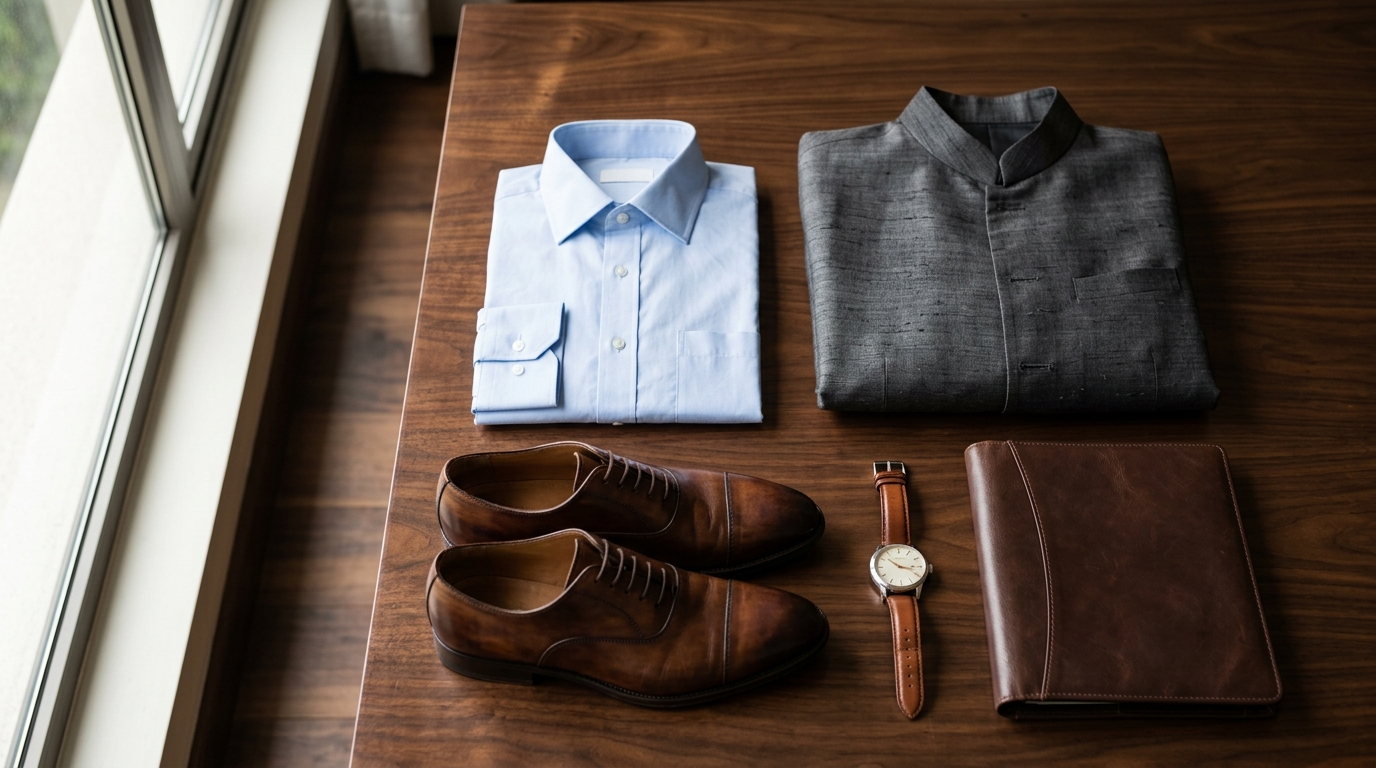
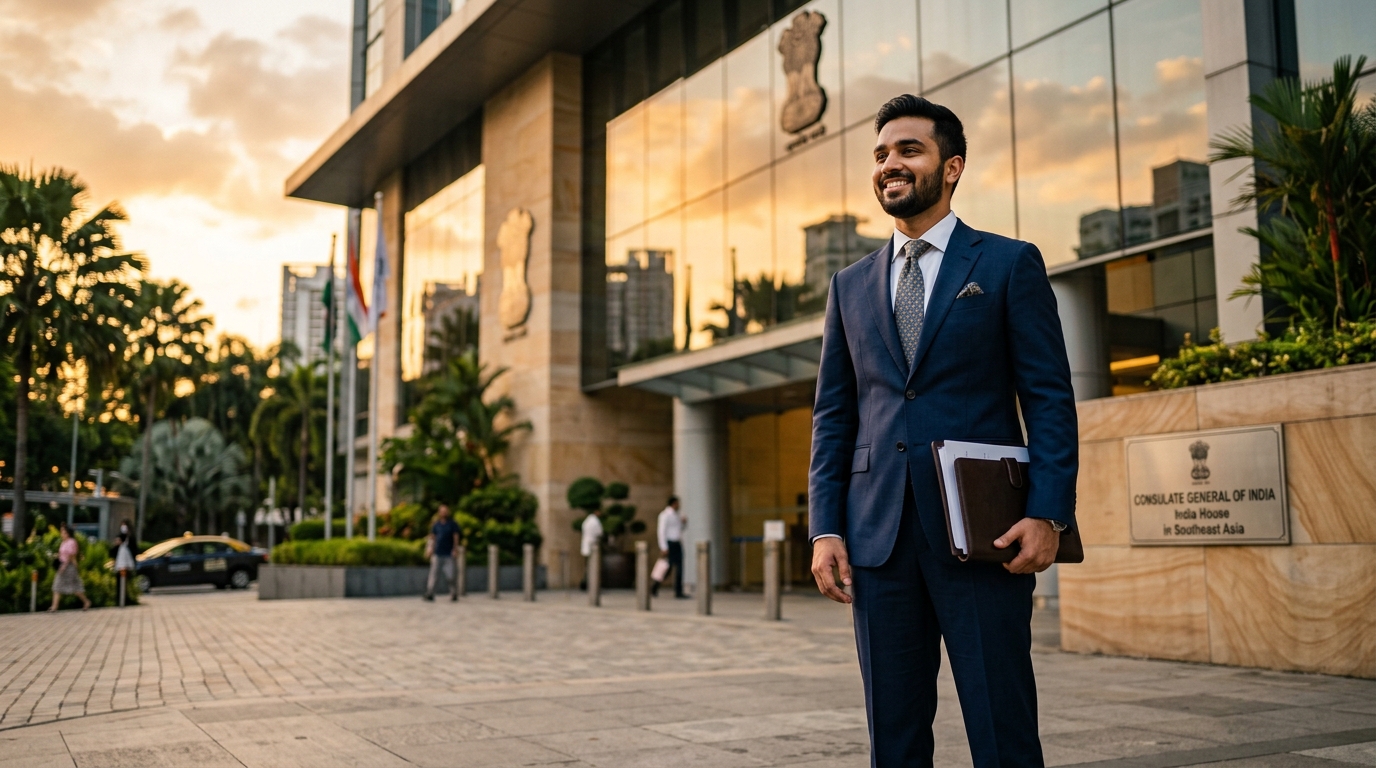
For those choosing Western wear, a well-tailored suit (arguably the safest option for any corporate applicant) remains the gold standard. When planning a US visa interview outfit for a business or work visa, a classic navy blue or charcoal grey suit is recommended. Your US visa interview outfit should prioritize structured tailoring and clean lines. This is the standard visa interview dress code for professional pathways.
If the visa category is tourist or student, a full suit is unnecessary. Men should wear:
- Pressed cotton chinos or formal trousers in beige, navy, or grey.
- A crisp, collared button-down shirt with the sleeves buttoned.
- A conservative leather belt matching the shoes.
Avoid wearing denim jeans, cargo pants, or t-shirts. Your choice of a visa interview dress code should always reflect your respect for the consular process.
Indian Ethnic Wear Options for Men
In India, traditional formal wear is completely acceptable for embassy interviews, provided it is understated and neat. A high-quality Nehru jacket paired with a light-colored, solid kurta and fitted pajama trousers can make an excellent impression. This ensemble balances cultural heritage with formal dignity. Using a refined ethnic outfit as your visa interview dress code shows both respect and cultural pride.
However, it is vital to avoid festive or wedding-style ethnic wear. Heavy embroidery, shiny silk fabrics, and bright patterns must be avoided. Stick to matte fabrics like fine cotton, linen, or high-grade khadi. The colors should remain neutral, such as off-white, beige, or soft grey. A well-fitted bandhgala suit is another highly professional ethnic alternative. Selecting this traditional visa interview dress code for men works beautifully for senior executives.
Women’s Visa Interview Dress Code Recommendations
Women have a wide range of wardrobe options for a consular interview, which can sometimes make the selection process more complex. The guiding principle remains the same. The outfit must project professionalism, modesty, and confidence. Adhering to the standard visa interview dress code guidelines ensures that the focus remains entirely on your credentials and interview answers. The visa interview dress code for women should avoid drawing attention for the wrong reasons.
Western Formal Outfits for Women
For business or high-level employment visas, women should consider a tailored pantsuit or a skirt suit in dark, neutral tones. A navy, dark grey, or black suit paired with a light-colored shell or button-down blouse is highly effective. If opting for a skirt suit, the skirt must reach the knee or fall below it to maintain a professional standard. This is the baseline for professional visa interview dress code requirements, though not without exceptions depending on the specific corporate culture.
For student and tourist visa categories, formal suits are rarely mandatory. A neat pairing of formal trousers with a conservative blouse or a structured, knee-length dress is a great option. When assembling a Schengen visa interview dress code, a classic blazer can be added if the weather demands. Adhering to the Schengen visa interview dress code helps project the image of a genuine tourist who respects local norms. Avoid low-cut tops, sleeveless shirts, or excessively tight fits.
Traditional Indian Attire for Women
Traditional Indian wear is an excellent, widely accepted choice for female applicants in India. A formal salwar kameez or an elegant saree can project immense grace and professionalism. When choosing a saree, opt for lightweight, structured fabrics like cotton, linen, or raw silk. Avoid georgette or chiffon sarees that drape loosely or look overly casual. A structured saree is a perfect example of a professional visa interview dress code.
For a salwar kameez or an elegant kurta set, ensure the following:
- The fabric is non-transparent and of high quality.
- The colors are muted or pastel rather than neon or heavily patterned.
- The dupatta, if worn, is pinned neatly to prevent it from slipping during document handling.
Heavy zari work, sequins, and mirror work should be saved for social events. The outfit must look like business wear, not festive wear. Incorporating these details into your visa interview dress code ensures a polished look.
Grooming, Accessories, and Footwear Guidelines
A perfect outfit can easily be undermined by poor grooming or inappropriate accessories. Consular officers notice these details, which collectively build the narrative of an applicant’s background. Furthermore, practical security constraints at embassies mean that accessory choices must be carefully curated. When planning your visa interview dress code, grooming should be treated with the same importance as the clothes themselves.
To ensure all aspects of personal presentation are aligned, applicants should follow this comprehensive grooming checklist:
- Hair and Beard: Hair must be neatly combed and styled away from the face. For men, facial hair must be either cleanly shaven or neatly trimmed.
- Nails and Makeup: Makeup must be natural and minimal. Nails should be clean and trimmed, with neutral polish if used.
- Fragrance: Avoid strong colognes or perfumes. The interview booths are enclosed, and strong scents can cause discomfort to the interviewing officer.
- Jewelry: Keep jewelry minimal. A simple watch and wedding band are acceptable. Avoid dangling earrings or loud bracelets.
Footwear and Embassy Security Realities
Footwear is a critical element of the visa interview dress code. Men should wear closed-toe leather dress shoes, such as Oxfords or loafers, in black or brown. Women should opt for closed-toe flats, block heels, or conservative pumps. High stilettos are highly impractical, especially since applicants must stand in queues for long periods. Your footwear choices should align with the overall visa interview dress code standard.
Additionally, security at the VAC and various embassies in India is incredibly strict. Carrying large bags, laptops, or excessive metal accessories will delay entry and cause unnecessary stress. It is best to carry documents in a clean, transparent plastic folder and keep personal accessories to an absolute minimum. To streamline your preparation, seeking professional visa services can help you organize your paperwork, ensuring you only carry what is strictly necessary. Your embassy interview outfit should be selected with these security constraints in mind.
Wardrobe Mistakes to Avoid at the Embassy
Even the most well-intentioned applicants can make simple mistakes that detract from their overall presentation. Understanding what to avoid is just as important as knowing what to wear. Here is a breakdown of common wardrobe errors seen at consulates across India. Avoiding these mistakes is a vital part of perfecting your visa interview dress code:
- Dressing for the Destination Weather, Not India: If applying for a visa to Canada in December, do not show up to the Delhi consulate in a heavy down jacket and snow boots. Dress for the local climate inside the embassy.
- Uncomfortable Clothing: Wearing brand-new shoes that cause blisters or a collar that is too tight will make you fidget. Consular officers might misinterpret this physical restlessness as anxiety.
- Sloppy Footwear: Wearing sneakers, sports shoes, sandals, or flip-flops is a major error. Even for tourist visas, footwear must be clean and structured.
- Wrinkled or Stained Garments: Ensure all clothes are thoroughly ironed and checked for stains under bright light the night before.
But still, while these guidelines are comprehensive, they are not meant to make you overthink. The core idea of any embassy interview outfit is to show respect to the host country’s representatives. When in doubt, always choose the simpler, more conservative option.
Conclusion
The visual presentation of an applicant is a silent, powerful component of the immigration process. Selecting the correct visa interview dress code shows preparation, respect, and serious professional intent. While it cannot replace solid financial documents or a genuine travel itinerary, it ensures that your first impression supports your case rather than raising unnecessary questions.
If you are planning an international journey and want to ensure every detail of your application is flawless, utilizing TravelDham visa assistance can provide the expert guidance needed to manage the entire process with confidence. From document preparation to interview tips, professional support makes all the difference. Dress professionally, prepare thoroughly, and step into your interview with the confidence of a well-prepared traveler.