
India’s heritage is deeply intertwined with its indigenous communities, whose traditions offer an extraordinary glimpse into ancient ways of life. For travelers seeking experiences beyond the typical tourist corridors, exploring tribal festivals in India provides an unparalleled opportunity to witness rituals, music, and art forms that have survived for centuries. These celebrations are not merely performances staged for visitors. Instead, they are vital, living expressions of community identity, spiritual devotion, and ecological balance. Engaging with tribal festivals in India allows one to appreciate the profound relationship these communities maintain with the natural world, transforming a standard holiday into a deep, educational journey.
Key Takeaways
- Cultural Preservation: Tribal festivals in India are critical events for safeguarding centuries-old traditions, languages, and ecological knowledge.
- Regional Diversity: From the Hornbill Festival in the Northeast to the Baneshwar Fair in the West, each region displays highly localized ancestral rituals.
- Sustainable Practices: Many tribal celebrations center on ecological balance, sacred groves, and a harmonious relationship with nature.
- Economic Support: Responsible cultural tourism directly empowers indigenous artisans, dancers, and local communities.
- Permits & Planning: Some festivals, especially in the northeastern states, require Inner Line Permits (ILP) and demand booking months in advance.
The Cultural Tapestry of India’s Indigenous Communities
To appreciate the significance of tribal festivals in India, one must first understand the sheer scale of the country’s indigenous population. A 2024 demographic report by the Ministry of Tribal Affairs notes that India is home to exactly 104.5 million tribal citizens, constituting 8.6% of the total population.
This vast demographic mosaic ensures that tribal festivals in India are incredibly diverse, characterized by:
- Distinct Dialects: Each community communicates in its own unique linguistic system.
- Cosmological Beliefs: Deeply rooted ancestral myths and localized spiritual views.
- Ceremonial Attire: Intricate handwoven clothing, vibrant beadwork, and symbolic ornaments.
Unlike mainstream religious celebrations that often center on major temples, tribal festivals in India are typically deeply rooted in localized terrains, agricultural cycles, and ancestral worship. Whether celebrating the harvest, seeking rain, or paying homage to forest deities, these events showcase a worldview where humanity is part of nature, not its master. Consequently, the preservation of tribal festivals in India is vital not only for cultural conservation but also for highlighting ancient, sustainable ecological practices.
Historically, cultural tourism in India overlooked these remote regions. Today, however, there is a growing realization that participating in tribal festivals in India fosters mutual respect and provides critical economic opportunities for indigenous artisans. When managed responsibly, travel to these celebrations helps safeguard intangible heritage while offering travelers a rare look at the country’s foundational cultures.
Major Tribal Festivals in India by Region
The geographic distribution of indigenous communities creates distinct regional patterns among tribal festivals in India. From the forested hills of the northeast to the arid plains of the west, the cultural expressions adapt to the local environment and history. Exploring these regional variations reveals how tribal festivals in India serve as communal repositories of historical memory and artistic innovation.
In the northeastern states, the celebrations are characterized by complex community dances, vibrant handloom textiles, and deep warrior traditions. In contrast, the central Indian tribal belt, stretching across Chhattisgarh, Madhya Pradesh, and Odisha, features complex rituals that pay homage to earth deities and ancestral spirits. Meanwhile, western tribal festivals in India often merge indigenous customs with regional trade fairs, creating lively socio-cultural gatherings where commerce and ritual coexist.
Hornbill Festival: The Festival of Festivals in Nagaland
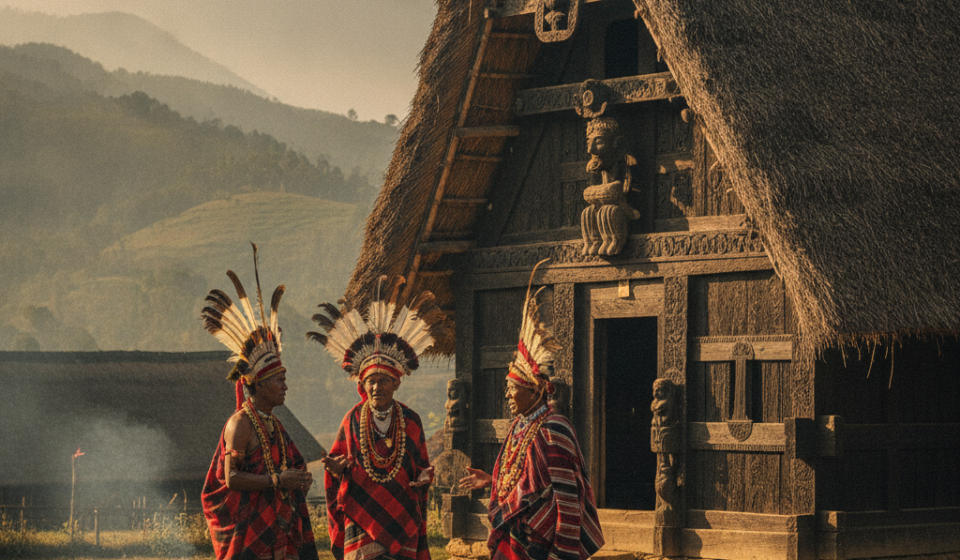
Perhaps the most famous of all tribal festivals in India, the Hornbill Festival is a spectacular showcase of Nagaland’s rich cultural heritage. Named after the Indian hornbill (a bird deeply revered in Naga folklore), this event brings together seventeen major Naga tribes in the scenic Naga Heritage Village of Kisama (a beautifully preserved heritage site designed to replicate traditional architectural forms) located just outside the state capital of Kohima. Organized annually during the first week of December, the festival provides a singular platform where tourists can witness the diverse dances, sports, and culinary traditions of Nagaland in a single, consolidated venue.
As one of the premier tribal festivals in India, Hornbill features an array of events, from traditional archery and wrestling matches to the famous Naga chili-eating competition. Each tribe constructs its own traditional hut (known as a morung, which serves as a youth dormitory and communal house) displaying tribal artifacts, weapons, and hand-woven textiles. For travelers, this is an exceptional opportunity to interact directly with tribal elders, learn about the symbolic meanings behind their intricate beadwork, and taste authentic local cuisine. To experience the magic of the northeastern region, you can explore customized packages through our Northeast India tour packages, which often align with these remarkable seasonal events.
Understanding the complexity of Hornbill requires recognizing its dual identity as both a cultural preservation effort and a major driver of cultural tourism. While critics sometimes point to the commercial aspects of the event, the festival remains a crucial mechanism for younger Naga generations to learn and reclaim their ancestral heritage. It stands as a brilliant example of how tribal festivals in India can adapt to modern tourism while maintaining a strong sense of cultural pride and communal integrity.
Bastariya Dussehra: A Seventy-Five Day Celebration in Chhattisgarh
While mainstream Dussehra celebrations across India commemorate the victory of Lord Rama over Ravana, Bastariya Dussehra in Chhattisgarh is entirely different. Spanning seventy-five days (making it the longest festival in the world), this event is one of the most complex tribal festivals in India. It is dedicated entirely to Goddess Danteshwari, the chief deity of the Bastar region, and involves a complex series of rituals performed by various local tribal communities, including the Maria, Muria, Bhatra, and Halba tribes.
What makes Bastariya Dussehra stand out among tribal festivals in India is its focus on community unity and the total absence of the Rama-centric mythology found elsewhere. Instead, the festival centers on the symbolic royal court of Bastar, where the local ruler acts as the high priest, mediating between the human world and the divine. The rituals involve the construction of a massive wooden chariot by local artisans using traditional, non-industrial tools, followed by a dramatic procession where thousands of tribal representatives carry local deities from remote forest shrines to the town of Jagdalpur.
For cultural researchers, Bastariya Dussehra offers a deep look into the socio-political structures of central Indian indigenous groups. The festival serves as a platform where ancient tribal alliances are renewed and communal disputes are resolved. As recorded in the 2023 Bastar District Gazette, this celebration has been held continuously since its inception in 1410, retaining its spiritual authority and structural integrity despite the rapid modernization of the surrounding region. It remains a cornerstone of tribal festivals in India, offering a highly dramatic and spiritually intense experience for any traveler willing to venture into the heart of Chhattisgarh.
Baneshwar Fair: The Kumbh of Tribals in Rajasthan
In the western state of Rajasthan, the Baneshwar Fair is an extraordinary religious and cultural gathering that represents the peak of western tribal festivals in India. Held at the confluence of the holy rivers Som, Mahi, and Jakham in the Dungarpur district, this fair is primarily celebrated by the Bhil tribe. The event takes place during the auspicious period of Magh Purnima (typically in February) and draws hundreds of thousands of pilgrims who gather to perform rituals, trade goods, and celebrate communal ties.
Often called the “Kumbh of Tribals,” this gathering is unique among tribal festivals in India for its seamless integration of solemn religious rites and lively commercial activity. The Bhil tribesmen and women travel from Rajasthan, Gujarat, and Madhya Pradesh to pay respects to Lord Shiva, performing ancestral rituals that are deeply spiritual. At the same time, the fairgrounds come alive with traditional puppet shows, folk dances, acrobatics, and stalls selling exquisite tribal handicrafts.
Travelers interested in exploring the rustic, tribal side of Western India can combine this journey with visits to historic royal capitals. Utilizing curated itineraries, such as those found on our Udaipur tours, provides a convenient base from which to explore the southern reaches of Rajasthan where the Bhil community resides. The Baneshwar Fair stands as a testament to the enduring vitality of tribal festivals in India, proving that ancient spiritual customs can remain completely relevant in the twenty-first century.
Bhagoria Haat: The Spring Celebration of Madhya Pradesh
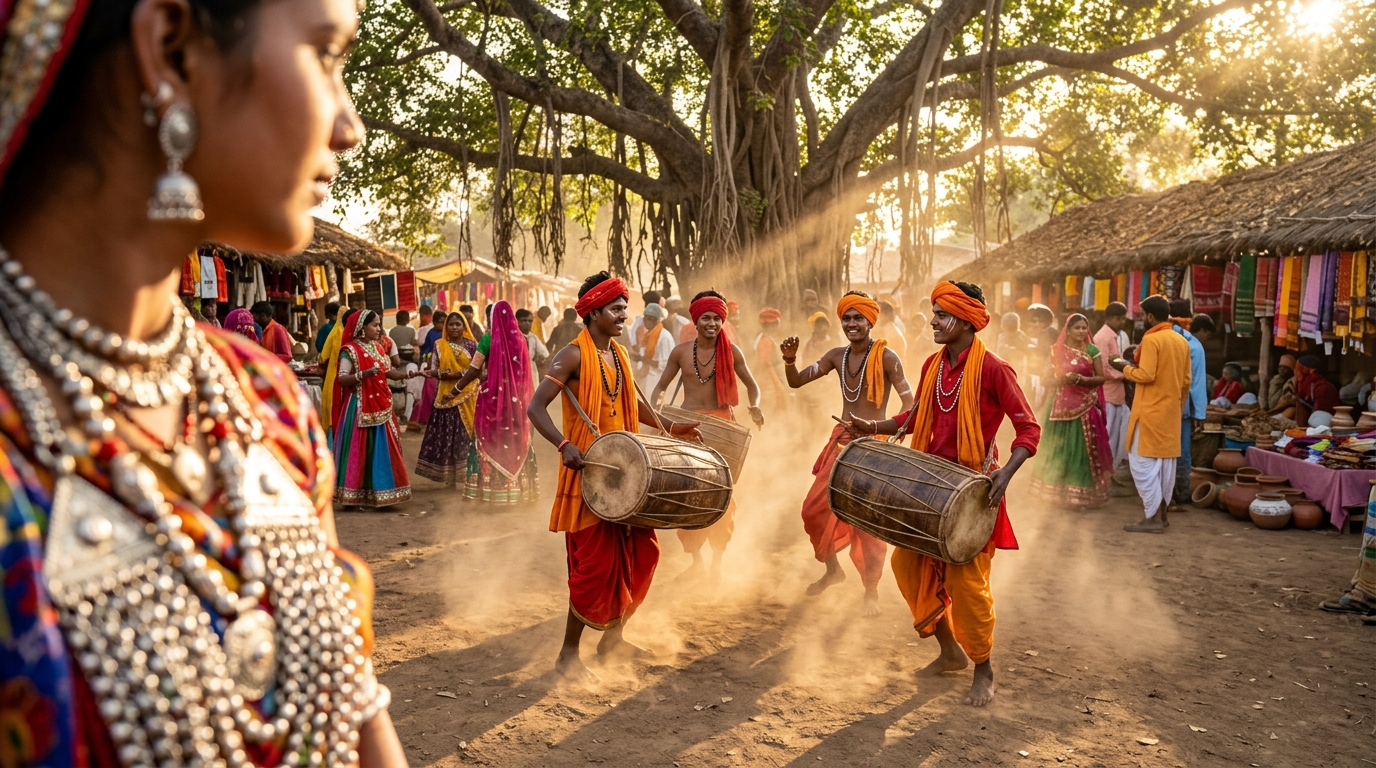
Another magnificent event in the central Indian tribal belt is Bhagoria Haat, celebrated by the Bhil and Bhilala tribes of Madhya Pradesh and Maharashtra. Occurring in the week leading up to the spring festival of Holi, this vibrant celebration is among the most colorful tribal festivals in India. Historically, Bhagoria served as a traditional matchmaking festival where young men and women could choose their life partners, though today it has evolved primarily into an expansive celebration of spring, harvest, and agricultural fertility.
The word “Bhagoria” translates to “running away,” a reference to the ancient custom where couples would express their mutual consent and run away together, only to return later to receive tribal sanction for their marriage. During these special market days (known as haats), the atmosphere is charged with excitement. Participants dress in their finest, most colorful attire, with women wearing elaborate silver jewelry and men carrying traditional musical instruments like the dhol (a large drum) and flute.
As one of the most visually stunning tribal festivals in India, Bhagoria Haat provides an excellent opportunity to observe the traditional dances and musical heritage of the Bhil community. The synchronized group dances, accompanied by the hypnotic beat of traditional drums, can last for hours. It is an intense, sensory-rich experience that demonstrates the sheer joy and resilience of India’s tribal communities as they welcome the arrival of spring and celebrate the completion of the winter crop harvest.
Anthurium Festival: Celebrating Mizoram’s Rich Heritage
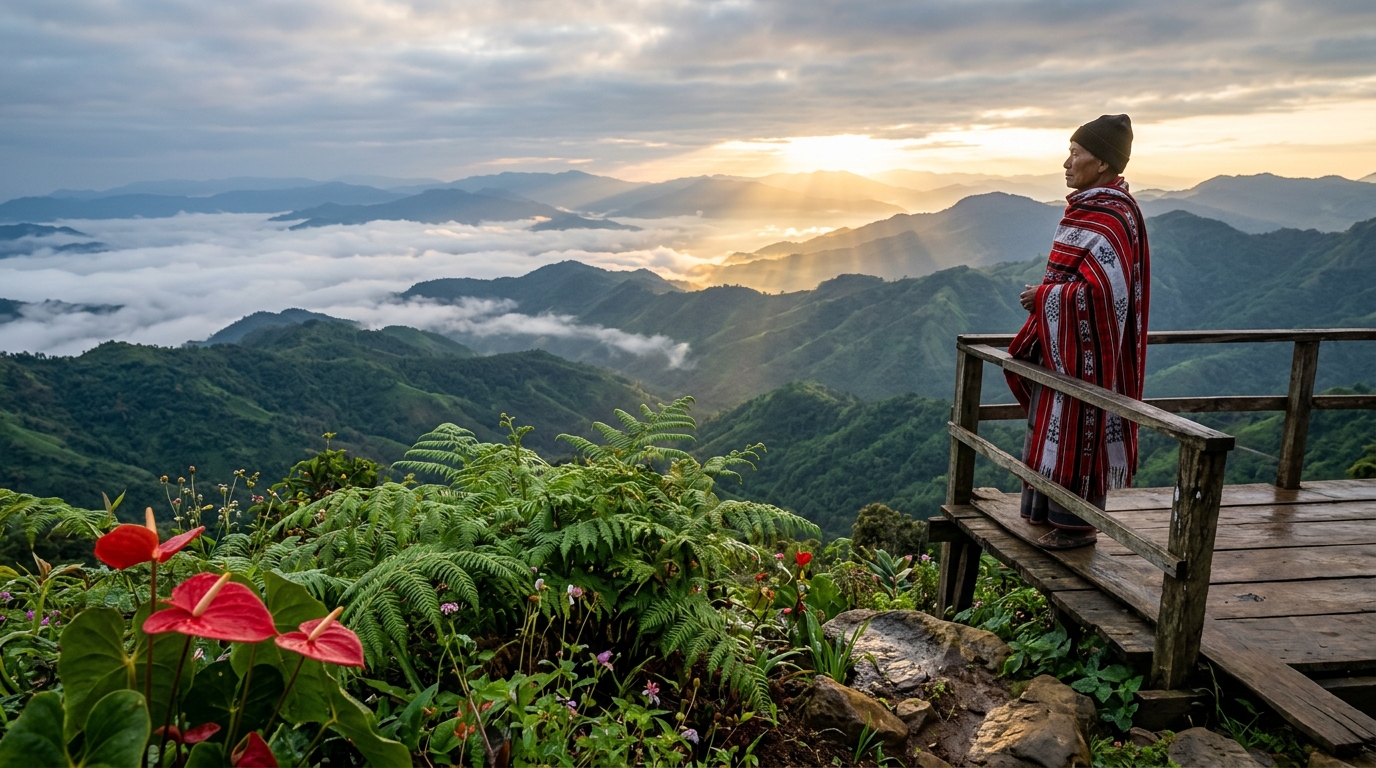
In the rolling hills of Mizoram, the Anthurium Festival stands out as a unique modern celebration designed to promote both tribal culture and local horticulture. Held annually in the scenic tourist village of Reiek, about an hour’s drive from the capital city of Aizawl, this event is one of the most fascinating contemporary tribal festivals in India. The festival is named after the exotic anthurium flower, which thrives in Mizoram’s humid, subtropical climate and has become a symbol of economic empowerment for local tribal women.
Unlike some of the older tribal festivals in India that are rooted in complex spiritual rituals, the Anthurium Festival is a curated celebration of Mizo identity, folk arts, and ecological wealth. The three-day event features captivating performances of traditional Mizo dances, including the famous Cheraw (the bamboo dance), where dancers jump in and out of beating bamboo poles with incredible precision. Visitors can also enjoy traditional Mizo wrestling, folk music performances, and culinary stalls offering traditional smoked meats and local bamboo shoot delicacies.
For travelers seeking a less commercialized, highly scenic cultural experience, the Anthurium Festival represents the perfect balance. It shows how modern tribal festivals in India can successfully merge environmental conservation, agricultural promotion, and cultural pride. The festival not only boosts local tourism but also encourages the preservation of ancient Mizo crafts, such as basketry and loin-loom weaving, ensuring that these invaluable traditions continue to thrive in a changing world.
Unique Rituals and Cultural Signification
To truly understand tribal festivals in India, one must look beyond the surface aesthetics of colorful costumes and energetic dances. These events are deeply functional rituals designed to maintain balance within the community and the natural ecosystem. In many tribal traditions, there is no separation between the sacred and the secular. An artistic performance serves multiple profound functions:
- Spiritual Petitions: Acts as a direct prayer for rain and agricultural abundance.
- Ecological Dialogues: Works as a spiritual negotiation with forest deities and local spirits.
- Historical Preservation: Functions as an active, moving archive of ancient community history.
One of the defining features of tribal festivals in India is the central role played by the local shaman or priest (often called a dewar, gaddaji, or bhumka depending on the tribe). These spiritual leaders act as intermediaries between the human community and the spirit world, performing complex rituals to ward off illness, ensure agricultural success, and honor ancestral deities. The active participation of the entire community in these rituals reinforces social cohesion, ensuring that no individual feels isolated or disconnected from their cultural roots.
Furthermore, tribal festivals in India highlight the sophisticated ecological knowledge possessed by indigenous communities. Many festivals are directly linked to the preservation of sacred groves (patches of forest dedicated to local deities where hunting and logging are strictly prohibited). By celebrating the bounty of the forest through ritual and song, these festivals instill a deep respect for the natural environment, proving that conservation is not a modern scientific concept but an ancient, spiritually mandated way of life.
Practical Travel Guide for Cultural Enthusiasts
Traveling to witness tribal festivals in India requires careful planning, cultural sensitivity, and a high degree of adaptability. Many of these celebrations take place in remote, forested regions where tourism infrastructure is minimal. Travelers must be prepared for basic accommodation options, rustic local transport, and limited connectivity. However, the reward for stepping out of one’s comfort zone is an incredibly authentic and unforgettable cultural experience.
First and foremost, obtaining the necessary permits is a critical step for anyone planning to attend tribal festivals in India, particularly in the northeastern states. Certain regions require Inner Line Permits (ILP) or Protected Area Permits (PAP) for both domestic and international travelers. It is highly recommended to work with experienced cultural travel agencies to manage these administrative requirements smoothly. For comprehensive assistance with documentation, travelers can utilize specialized services like our visa and permit assistance portal to ensure all entry requirements are fully met before departure.
To assist with your pre-travel preparations, the following table outlines the travel logistics and permit requirements for each major tribal festival:
| Festival Name | Nearest Airport / Station | Permit Requirements | Recommended Stay Type |
|---|---|---|---|
| Hornbill Festival | Dimapur (DMU) / Kohima | Inner Line Permit (ILP) required for Indian citizens; registration for foreigners | Local homestays in Kisama or Kohima hotels |
| Bastariya Dussehra | Jagdalpur (JGB) / Raipur (RPR) | No special permit required | Bastar eco-resorts or local guesthouses |
| Baneshwar Fair | Udaipur (UDR) | No permit required | Heritage hotels in Dungarpur or Udaipur |
| Bhagoria Haat | Indore (IDR) | No permit required | Standard hotels in Jhabua or Dhar |
| Anthurium Festival | Lengpui Airport (AJL) / Aizawl | Inner Line Permit (ILP) required for Indian citizens; registration for foreigners | Reiek tourist lodges or Aizawl hotels |
Additionally, practicing responsible and respectful travel is paramount when attending tribal festivals in India. Travelers should always ask for permission before taking photographs, dress modestly, and respect local customs and taboos (such as avoiding entry into sacred spaces reserved strictly for tribal members). By choosing local homestays, hiring indigenous guides, and purchasing handicrafts directly from artisans, travelers can ensure their visit has a positive, direct economic impact on the host communities.
To help you plan, we have detailed some essential logistics and tips for attending tribal festivals in India:
- Plan Months in Advance: Accommodations near remote festival sites, such as Kohima during the Hornbill Festival, book out up to six months ahead.
- Engage Local Guides: A guide from the specific community can explain the nuances of the rituals, translate local dialects, and ensure you do not inadvertently violate local customs.
- Carry Cash: ATMs are virtually non-existent in remote tribal villages, and digital payment systems may fail due to poor connectivity.
- Respect the Sacred: Remember that these are active religious ceremonies, not tourist spectacles. Maintain a respectful distance during rituals.
Comparing Key Tribal Festivals in India
To help travelers choose the celebration that best aligns with their travel goals, we have compiled a comparison of the key tribal festivals in India discussed in this guide. Each event offers a completely unique atmosphere, cultural focus, and physical setting.
| Festival Name | Primary Location | Timing of Event | Key Tribal Group | Major Highlights & Focus |
|---|---|---|---|---|
| Hornbill Festival | Kohima, Nagaland | 1-10 December | 17 Naga Tribes | Inter-tribal dances, traditional food, music, crafts exhibition |
| Bastariya Dussehra | Bastar, Chhattisgarh | September-October (75 days) | Maria, Muria, Halba | Worship of Goddess Danteshwari, massive wooden chariot procession |
| Baneshwar Fair | Dungarpur, Rajasthan | February (Magh Purnima) | Bhil Tribe | Holy river dip, Shiva worship, folk arts, rustic trade market |
| Bhagoria Haat | Jhabua, Madhya Pradesh | March (Pre-Holi week) | Bhil & Bhilala | Spring celebration, historic matchmaking customs, energetic drumming |
| Anthurium Festival | Reiek, Mizoram | September-October | Mizo Tribes | Traditional bamboo dance, flower show, folk music, scenic beauty |
This comparison table highlights the immense diversity of tribal festivals in India. While some events, like the Hornbill Festival, are highly organized cultural showcases designed to represent an entire state’s heritage, others, like Bhagoria Haat, remain deeply organic community gatherings centered on the local agricultural calendar. Depending on your interest – whether it is the visual spectacle of the northeast, the deep spiritual mysticism of central India, or the rustic charm of western fairgrounds – there are tribal festivals in India to suit every type of cultural explorer. To start organizing your itinerary, consider visiting our central domestic travel services page for tailored assistance.
Conclusion
Attending tribal festivals in India is more than just a sightseeing trip. It is a transformative educational experience that challenges our understanding of culture, community, and our relationship with the natural world. These celebrations represent the living history of the subcontinent, preserved through centuries of change with incredible resilience and pride. But still, they face constant pressure from modern homogenization. By choosing to visit these festivals responsibly, you support the preservation of invaluable heritage while gaining memories that will last a lifetime.
Whether you find yourself watching the mesmerizing bamboo dances of Mizoram, standing in awe before the massive wooden chariots of Bastar, or sharing a traditional meal in a Naga morung, the tribal festivals in India will leave an indelible mark on your soul. They remind us that true luxury in travel is not about five-star hotels. Instead, it is about witnessing rare, authentic moments of human connection and spiritual expression. Plan your journey with TravelDham today, and discover the deep, beating heart of India’s indigenous cultures.