

Thailand ETA for Indian Citizens: Complete 2026 Guide on Entry Rules, Validity, and How to Apply Online

Planning a trip to Bangkok or Phuket requires keeping up with the latest immigration updates, particularly the rollout of the new thailand eta for indian citizens. Thailand remains one of the top choices for Indian travelers seeking cultural heritage, pristine beaches, and culinary diversity. But still, the entry rules have changed to focus on modern, digital security protocols. In an effort to make border control more efficient, the Ministry of Foreign Affairs now mandates an electronic registration before arrival. This system represents a major shift from the traditional paper-based entry cards. It is designed to speed up airport clearance while maintaining strict safety standards. Understanding these changes is vital for anyone preparing to cross Thai borders in 2026. Failing to obtain this electronic clearance can result in boarding denials at the airport or delayed entry at customs checkpoints. With the current implementation of this electronic authorization, Thailand is aligning its border management with modern global standards, making travel straightforward for compliant tourists.
- Mandatory Requirement: Under the 2026 guidelines, the thailand eta for indian citizens is a mandatory digital pre-clearance for all visa-exempt travelers.
- Generous Stay Limits: Allows a stay of up to 60 days, with the potential to extend for an additional 30 days locally in Thailand.
- 100% Digital Process: Completely online application removes the need to visit embassies or wait in physical queues on arrival.
- Automated Boarding Verification: Automatically integrates with your passport chip for rapid verification at departures and arrival smart gates.
Understanding the Thailand ETA for Indian Citizens
The Electronic Travel Authorization (ETA) is a digital entry requirement for travelers who benefit from visa-exempt entry into Thailand. The key purposes of the thailand eta for indian citizens include:
- Modernized Security: Pre-screens visitors before arrival using a system similar to those of Western nations.
- Digital Integration: Automatically links to the traveler’s passport rather than using a physical visa sticker.
- Direct Communication: Instantly notifies the Thai Immigration Bureau of an upcoming arrival.
When applying for the thailand eta for indian citizens, travelers will experience a fully digital process. The application resides entirely online, removing the need to visit an embassy or stand in long queues at the airport terminal. Once approved, the travel authorization integrates directly with the passport database. This pre-screening process allows Thai border officials to identify potential issues before passengers depart from India, which ultimately makes the physical entry process much smoother. For genuine tourists, this means spending less time at the immigration desk. The system integrates with the Royal Thai Police database to pre-screen arrivals against security watchlists. Fortunately, the interface remains user-friendly, ensuring that genuine tourists experience no unnecessary delays.
Current Entry Rules and Stay Limits in 2026
The entry rules for Indian tourists visiting Thailand have undergone notable updates. In previous years, Indian nationals had to rely on the Visa on Arrival (VoA) system, which often involved unpredictable processing times and long physical queues at major international hubs like Suvarnabhumi Airport. Under the current 2026 regulations, Indian passport holders enjoy visa-exempt status for tourism and short-term business engagements. However, this exemption is strictly contingent on obtaining prior digital authorization. The introduction of the thailand eta for indian citizens does not replace the bilateral agreement but adds an authorization layer to ensure better monitoring of tourist inflows.
For tourists, utilizing the thailand eta for indian citizens allows a maximum stay of 60 days per visit. This period provides ample opportunity to experience the diverse regions of the country. Under the current framework, this stay can be extended once under the following conditions:
- Additional Stay: Up to an extra 30 days, bringing the total potential stay to 90 days.
- Location: Must be processed at a local immigration office within Thailand.
- Fee: A standard administrative fee of 1,900 Thai Baht (approximately 4,500 Indian Rupees).
- Approval: Extension is subject to administrative approval.
Travelers must note that entering multiple times consecutively via land borders without a physical consular visa can prompt additional questioning from immigration officers. This progressive policy supports the tourism sector by encouraging longer itineraries. By allowing up to 60 days initially, visitors can travel deeper into the country rather than rushing through standard circuits. Overstaying without proper authorization is a serious offense that can lead to heavy fines, deportation, or future travel bans.
Key Features of the Thai Electronic Travel Authorization
To ensure a hassle-free travel experience, it is essential to understand the technical parameters and rules governing this system. One of the major benefits of the thailand eta for indian citizens is that it remains valid for single-entry access. Each time an Indian national plans to enter Thailand under the visa-exemption scheme, a fresh application must be submitted and approved. Under the 2026 guidelines, the thailand eta for indian citizens must be used within the specific window of approval, which is typically 30 days from the date of issuance. Since the ETA is linked electronically, getting a new passport immediately invalidates your approval. The passport used for the online application must exactly match the physical document presented at the border. If the travel dates change significantly beyond this period, the traveler must submit a new application.
The following table outlines the fundamental parameters of this digital authorization system:
| Feature | Details and Specifications |
|---|---|
| Validity Period | Valid for entry within 30 days from the date of online approval. |
| Number of Entries | Strictly single-entry; a new authorization is required for every trip. |
| Maximum Duration of Stay | Up to 60 days per visit, extendable by an additional 30 days. |
| Standard Processing Time | Typically processed within 24 to 72 hours under normal conditions. |
| Government Application Fee | Currently issued free of charge (though external processing fees apply). |
| Integration | Digitally linked to the passport chip; requires no physical passport sticker. |
This digital linking ensures that the airline staff can verify the traveler’s boarding eligibility at the departure gate in India. If the record is missing, boarding will be denied immediately.
Required Documents for the Online Application
Preparing the correct files before starting the application for the thailand eta for indian citizens ensures a quick decision. The digital portal uses optical character recognition technology to scan and verify uploads, meaning that blurred images or incomplete documents can lead to automatic rejection. All uploaded scans must be in clear color, with no reflections or shadows covering critical information. Glare from mobile phone scans often triggers automated rejection, so using a flatbed scanner is highly recommended.
Indian citizens must compile the following documents before starting the online process:
- Valid Indian Passport: Your passport must be valid for at least six months from the arrival date to secure the thailand eta for indian citizens. It must contain two blank pages.
- Digital Passport Photograph: A recent, high-resolution color photograph with a white background.
- Confirmed Flight Tickets: A complete round-trip or onward travel ticket proving departure within 60 days.
- Accommodation Proof: Detailed evidence of lodging, such as a hotel booking confirmation.
- Proof of Sufficient Funds: Evidence of financial self-sufficiency during the trip, demonstrating access to at least 10,000 Thai Baht.
The following table details the necessary document upload specifications for the application portal:
| Document Checklist | Format & Size Rules | Key Verification Criteria |
|---|---|---|
| Indian Passport | Color scan of bio-page (PDF or JPEG) | Must have 6 months validity & 2 blank pages |
| Passport Photo | Digital JPEG (under 500kb) | Recent color photo, white background, no glasses |
| Flight Tickets | Confirmed PDF itinerary | Must show a confirmed return/onward flight within 60 days |
| Accommodation Proof | Hotel booking PDF | Must specify the complete street address of the hotel |
| Financial Self-Sufficiency | Bank statement or cash declaration | Proof of at least 10,000 Thai Baht (approx. 24,000 INR) |
The financial proof requirement is occasionally checked at random by customs officials. Carrying cash is a smart precautionary measure. Additionally, the accommodation proof must detail the full street address of your hotel or apartment. Simply writing a general city name will trigger an automated error or lead to manual rejection.
For travelers who prefer structured planning and professional assistance to avoid document errors, securing a comprehensive package through trusted services like TravelDham can simplify the transition from paperwork to departures. You can explore their dedicated visa services to handle the digital submission process on your behalf.
Step-by-Step Guide: How to Apply Online
Here is a breakdown of how to obtain the thailand eta for indian citizens online. The official portal for the thailand eta for indian citizens is designed to process applications within 24 hours, but starting the process at least three to five days before departure is highly recommended. Once submitted, you will receive a confirmation email with a reference number. Use this number to track the status of your application. If the immigration office requests additional documentation or a clarification, you will receive an alert. Responding promptly to these requests is critical to preventing delays in your approval.
The application follows a structured digital workflow:
- Access the Portal: Navigate to the official Thai e-Visa portal and select the Electronic Travel Authorization option.
- Create a User Account: Register a secure account using a valid email address.
- Fill Out the Personal Information Form: Enter personal details exactly as they appear in the passport.
- Upload Supporting Documents: Upload high-quality scans of passport pages, flight itineraries, and hotel vouchers.
- Review and Submit: Carefully review all entered information to ensure absolute accuracy.
- Receive Approval: Once the system issues the thailand eta for indian citizens, download the PDF and print a physical copy. Keep both digital and physical versions with you during transit.
This systematic process replaces the stressful manual filing that used to occur inside crowded airport transit zones.
Arrival Procedures at Thai Borders
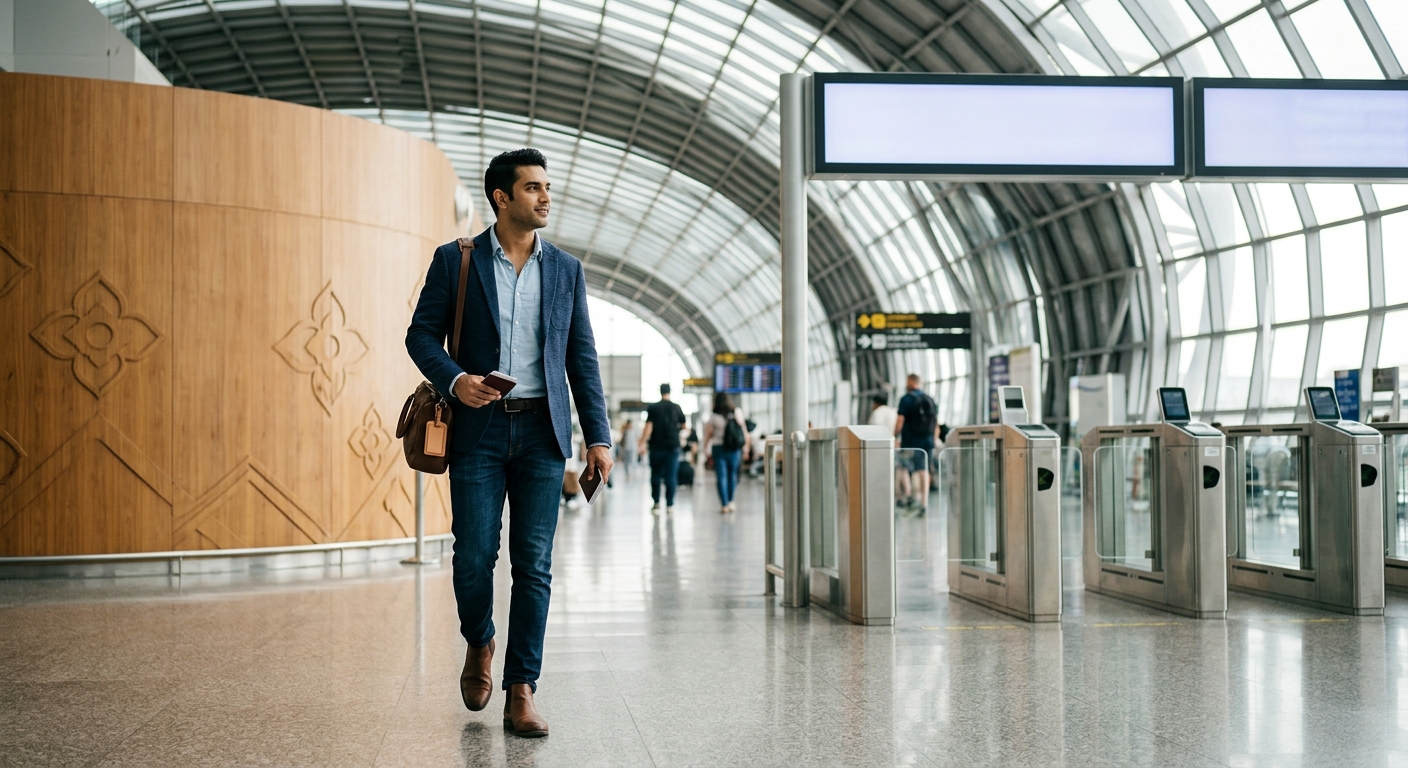
Landing at a Thai airport with a completed authorization makes the entry process highly efficient. Presenting the thailand eta for indian citizens at the airport allows you to use the automated immigration gates. These smart gates are installed at major entry points, including Suvarnabhumi Airport and Phuket International Airport. In the rare event that the automated gate fails to read your passport chip, do not panic. Dedicated manual immigration desks are situated adjacent to the automated gates, where officers can quickly process your entry using the physical copy of your digital authorization. This hybrid backup ensures that travel flows remain uninterrupted under all circumstances.
Upon arrival, travelers must follow a quick clearance procedure:
- Locate the dedicated lanes marked for automated gates or designated digital authorization lines.
- Scan the passport bio-page at the automated reader.
- Immigration officers will verify the thailand eta for indian citizens digital record against your passport chip.
- Complete the biometric screening process, which includes facial recognition and digital fingerprint capture.
- Receive the physical entry stamp in the passport, which explicitly states the maximum permitted date of departure.
This automated system reduces the average queue wait time to less than 2 minutes, showcasing how technology can improve international tourism.

Important Differences: ETA vs Visa on Arrival vs Tourist Visa
Comparing the new entry system with older methods shows why the thailand eta for indian citizens is highly preferred. While the Visa on Arrival had long queues, the thailand eta for indian citizens bypasses administrative friction. Understanding these key differences helps travelers select the correct option for their travel needs. Choosing the right option depends entirely on your travel duration and style. For those planning quick, spontaneous weekend getaways or standard 2-week holidays, the online authorization is unmatched in convenience. However, business professionals attending long-term conferences or students enrolling in short-term courses should verify whether their specific activity requires a dedicated non-immigrant visa category.
The table below contrasts the three primary entry methods available to Indian passport holders:
| Parameter | Electronic Travel Authorization (ETA) | Visa on Arrival (VoA) | Regular Tourist Visa |
|---|---|---|---|
| Application Medium | 100% Online prior to departure | At the Thai airport terminal | Thai Embassy or VFS Global center |
| Maximum Stay | 60 days (extendable by 30 days) | 15 days (non-extendable) | 60 days per entry |
| Purpose of Visit | Tourism and short-term business | Strictly tourism only | Tourism, business, or medical |
| Cost | Free government fee (processing fees may apply) | 2,000 Thai Baht | Consular fees apply |
| Queue Time | Automated gates (minimal wait) | Manual queues (often 1-2 hours) | Standard manual immigration queue |
The modern thailand eta for indian citizens combines the ease of visa exemption with digital pre-clearance. For most leisure travelers, the automated authorization is the most practical choice. However, if the plan involves a stay longer than 90 days, applying for a regular visa remains necessary. Planning your trip with expert-curated Thailand tour packages from TravelDham can help align your itinerary with these regulatory requirements.
FAQs
Is the Thailand ETA mandatory for infants and children?
Yes, the entry rules apply uniformly to all travelers regardless of age. Many travelers wonder if children need a separate thailand eta for indian citizens. Every individual passport holder must obtain a thailand eta for indian citizens before departure, meaning that infants and minors traveling with their parents must have their own digital authorizations linked to their passports.
Can I extend my stay in Thailand beyond the 60-day limit?
Yes, travelers can extend their stay once. If you wish to stay longer than 60 days, you cannot simply renew the thailand eta for indian citizens from within the country. Instead, you must visit a local office of the Thai Immigration Bureau. There, you can apply for a 30-day extension by submitting the extension form, providing proof of accommodation, and paying the non-refundable fee of 1,900 Thai Baht.
What happens if my ETA application is rejected?
A minor typo can cause the rejection of the thailand eta for indian citizens. If your application is denied, you will receive an email notification detailing the grounds for rejection. Common reasons include blurry document uploads, mismatched passport details, or incomplete hotel addresses. In such cases, you must correct the errors and submit a new application online. Using professional services from TravelDham makes getting the thailand eta for indian citizens simple and stress-free, ensuring that all submissions are accurate and verified before submission to the authorities.