

Planning a journey across the southern peninsula of India requires more than just booking flights and selecting hotels. The geographical diversity, ranging from the dry plains of Tamil Nadu to the lush canals of Kerala, demands a highly coordinated strategy. Crafting a comprehensive south india travel plan is the first step toward transforming what could be a chaotic journey into a structured, rewarding exploration. A successful trip balances historical immersion with natural relaxation, ensuring that travelers do not succumb to the fatigue of constant transit. To truly experience the deep cultural roots of this region, one must understand how to link heritage sites, highland sanctuaries, and coastal networks into a singular, cohesive route. Organizing a balanced south india travel plan ensures that every cultural encounter is deep rather than superficial.
- Optimum Duration: A 14-day itinerary is the gold standard for first-time visitors to balance Tamil Nadu and Kerala.
- Best Travel Window: The winter months (November to February) offer the most pleasant weather for comfortable exploration.
- Seamless Logistics: Hiring a private driver is highly recommended for cross-border and winding mountain transits.
- Respect Local Norms: Modest dress codes and specific footwear rules must be followed when visiting sacred temple complexes.
Defining the Scope of a South India Travel Plan
Developing a robust south india travel plan requires an understanding of regional distinctions. South India is not a singular destination. It is a collection of diverse cultures, languages, and topographies across five major states:
- Karnataka: Offers a mix of royal heritage and technological hubs.
- Tamil Nadu: Stands as the guardian of ancient Dravidian architecture.
- Kerala: Provides tranquil waterways and spice-laden highlands.
- Andhra Pradesh and Telangana: House historic forts and rich culinary traditions.
Attempting to cover all these regions in a single visit is a common error. It leads to superficial sightseeing and significant travel exhaustion. A well-considered south india travel plan prioritizes depth over superficial coverage. For instance, focusing on the southern duo of Tamil Nadu and Kerala allows travelers to experience contrasting environments without spending entire days in transit. While one state offers the soaring stone towers of Madurai temples, the other provides the silent, shaded canals of the backwaters.
A balanced south india travel plan acknowledges these variations and structures transitions smoothly. It is basically about selecting complementary regions that prevent traveler burnout while maximizing cultural exposure. Critics sometimes argue that focusing on only two states limits the overall experience. They are not entirely wrong. But still, they underestimate how much time is lost to transit in a broader itinerary. To establish an effective foundation, travelers must align their available vacation days with realistic regional distances. Designing a realistic south india travel plan ensures that time is spent exploring rather than sitting in highway traffic.
Strategic Duration Options for Regional Exploration
Time is the primary constraint when organizing any journey. The length of stay dictates whether a south india travel plan should target a single state or attempt a cross-border loop. While a short seven-day stay forces a narrow geographic focus, a longer duration unlocks deep cross-state connections.
For those operating with limited schedules, a highly focused south india travel plan centered on a single sub-region is ideal. But still, for a comprehensive introduction to the southern peninsula, a two-week window is the gold standard. This timeframe allows for a logical progression from the historic east coast to the tropical west coast. It provides a natural rhythm of active cultural exploration followed by nature-based relaxation. Let us analyze the primary travel durations to help determine which approach suits your south india travel plan.
| Duration | Primary Geographic Focus | Expected Highlights | Recommended Travel Pace |
|---|---|---|---|
| 7 Days | Single State Focus | Munnar tea estates, Alleppey backwaters, Kochi heritage | Fast-paced with minimal transfers |
| 14 Days | Classic Cross-Border Route | Mahabalipuram temples, Pondicherry, Madurai, Munnar, Backwaters | Moderate, balancing cultural sights and nature |
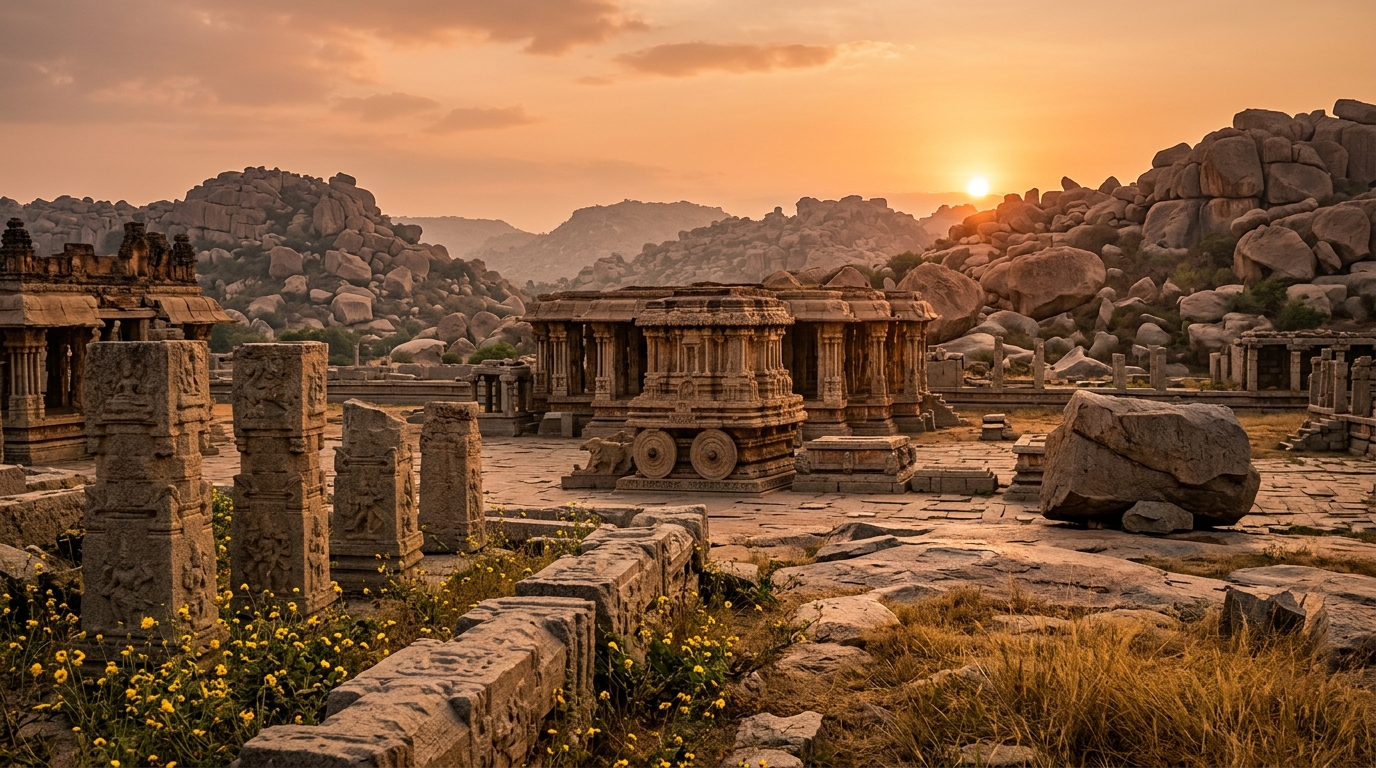
| 21 Days | Grand South India Loop | Hampi ruins, Mysore Palace, Nilgiri hills, Kerala backwaters | Leisurely, highly comprehensive |
Selecting the correct timeline is the cornerstone of a successful trip. A standard fourteen-day South India itinerary is the most reliable option for first-time international visitors, balancing structural diversity with manageable transit legs. When finalizing your south india travel plan, allocating at least two nights per major destination ensures sufficient recovery time. This strategy prevents the journey from feeling like a continuous series of hotel check-ins and check-outs (a major source of vacation stress). An optimal south india travel plan respects these operational limits to deliver a seamless journey.
The Complete 14-Day South India Itinerary
This curated fourteen-day South India itinerary is designed as a balanced cross-border route. It begins on the east coast in Chennai and concludes on the west coast in Kochi. This path allows travelers to transition from the architectural marvels of the Coromandel Coast to the tranquil landscapes of the Malabar Coast. By structuring the south india travel plan in this manner, the cultural intensity of the first week is balanced by the slow-paced relaxation of the second.
Phase 1: Temple Architecture and Colonial Heritage in Tamil Nadu
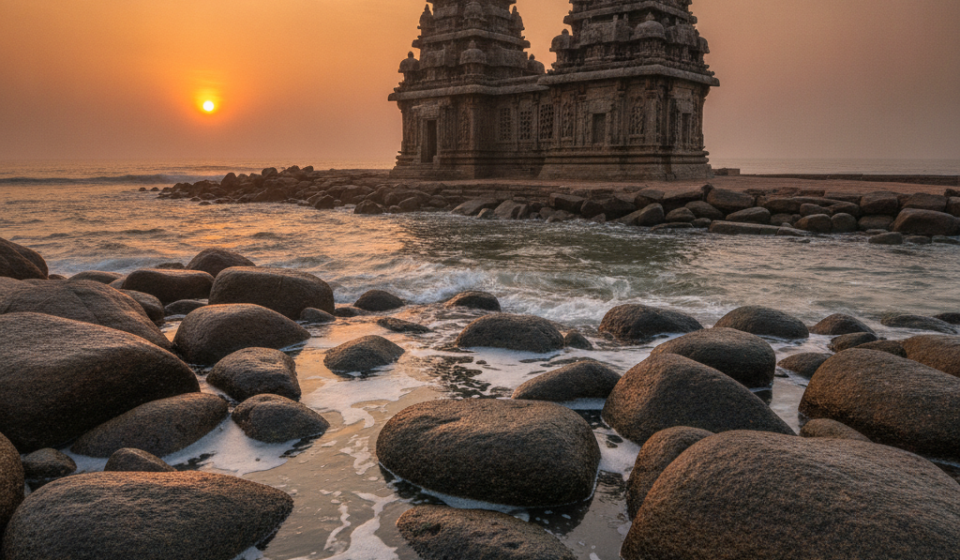
The journey begins in Chennai, the gateway to the south. After an initial day of recovery and light urban exploration, the south india travel plan moves southward along the coast to Mahabalipuram. This seaside town is famous for its seventh-century rock-cut monuments and the iconic Shore Temple, which stand as enduring monuments to Pallava craftsmanship.
Day 1: Arrival in Chennai – Arrive in the capital of Tamil Nadu. Check into your hotel and recover from international travel. If time permits, visit the historic Fort St. George or stroll along Marina Beach, the second-longest urban beach in the world, to observe local life at sunset.
Day 2: Chennai to Mahabalipuram – Depart Chennai for a short drive south along the scenic East Coast Road. Arrive in Mahabalipuram, a UNESCO World Heritage site. Spend the afternoon exploring the monolithic Pancha Rathas and the intricate rock relief known as Arjuna’s Penance.
Day 3: Mahabalipuram to Pondicherry – Wake early to view the Shore Temple at sunrise, a vital inclusion in any south india travel plan. Afterward, drive to Pondicherry, a unique coastal enclave with a rich French colonial heritage. Stroll through the cobblestone streets of the white town in the evening.
Day 4: Exploring Pondicherry and Auroville – Spend the morning visiting Auroville, an experimental township dedicated to human unity. In the afternoon, explore the quiet ashrams, local boutiques, and colonial architecture of Pondicherry. Enjoy a quiet dinner at a French heritage restaurant along the promenade.
Day 5: Pondicherry to Tanjore – Travel inland toward the fertile Cauvery Delta, a crucial transit leg in your south india travel plan. Stop at Chidambaram to view the ancient Nataraja Temple, dedicated to the cosmic dancer Shiva. Arrive in Tanjore (Thanjavur) by late afternoon and rest.
Day 6: Tanjore to Madurai – Visit the majestic Brihadisvara Temple, a thousand-year-old marvel built entirely of granite. Explore the Tanjore Royal Palace before driving southwest to Madurai, one of the oldest continuously inhabited cities in the world.
Day 7: Exploring Madurai’s Heritage – Spend the day exploring the massive Meenakshi Amman Temple complex. Admire the fourteen colorful gopurams and the Hall of a Thousand Pillars. In the evening, witness the traditional night ceremony where the deity is carried in a formal procession, concluding a rich week of Dravidian culture in your south india travel plan.
Utilizing structured Tamil Nadu tour itineraries ensures that logistics between these historic cities remain seamless. A reliable south india travel plan relies heavily on coordinating these inland transits ahead of time, especially when arranging private drivers for long highway journeys.
Phase 2: Hills, Backwaters, and Coastal Vistas of Kerala
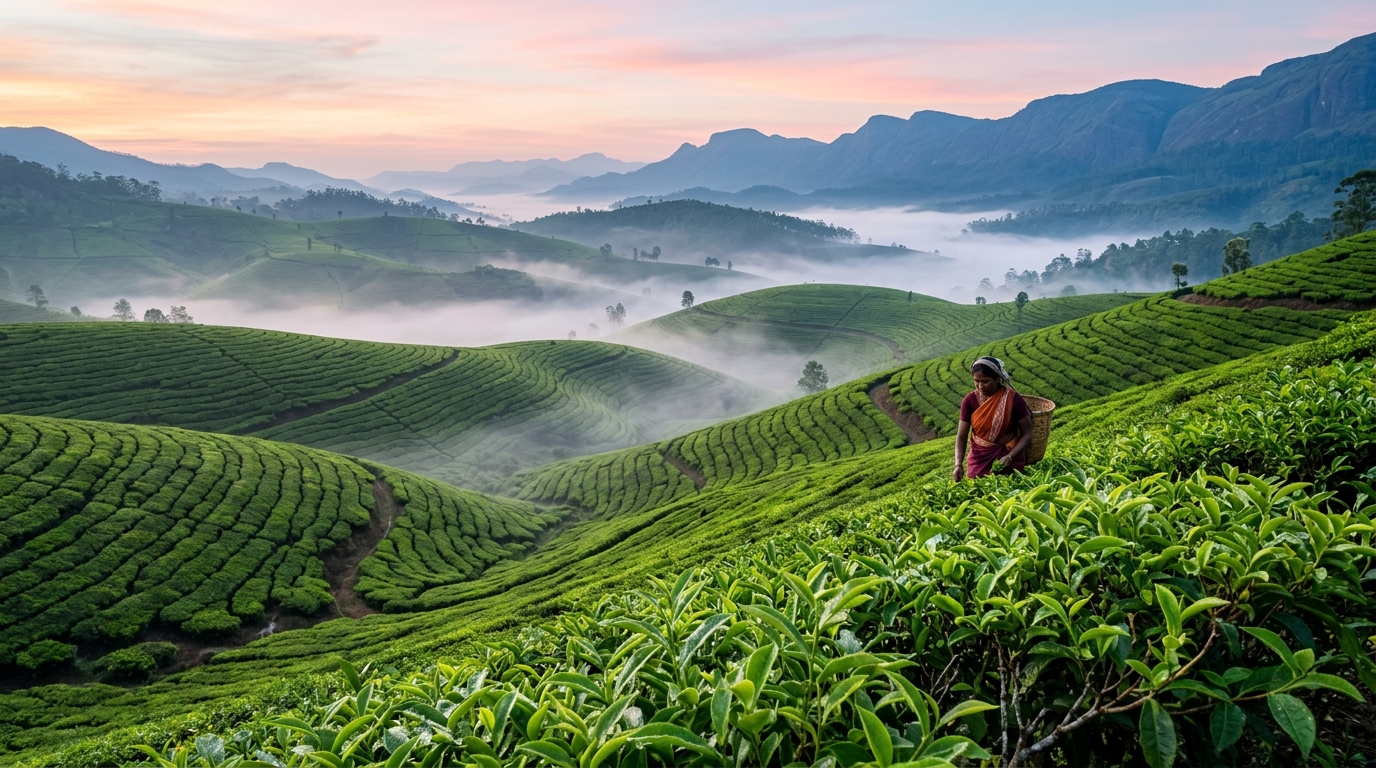
The second week of the south india travel plan transitions from the plains of Tamil Nadu to the Western Ghats of Kerala. The drive from Madurai to Munnar is a dramatic ascent, winding through steep mountain passes where dry scrub yields to vast, emerald-green tea plantations. Munnar sits at an altitude of roughly 1600 meters (depending on the specific valley), offering a cool, refreshing escape from the humid lowlands.
Day 8: Madurai to Munnar – Cross the state border into Kerala. The winding ascent into the Western Ghats offers spectacular mountain views. Arrive in Munnar, a historic hill station, and spend the evening relaxing in the cool mountain air, a refreshing shift in your south india travel plan.
Day 9: Munnar Exploration – Spend the day exploring Munnar’s vast tea estates. Visit the Lockhart Tea Factory to learn about tea processing, hike through the scenic hills, and enjoy panoramic views of the mist-shrouded peaks of Anamudi, the highest summit in South India.
Day 10: Munnar to Thekkady – Drive south through mountain roads to Thekkady, the gateway to Periyar National Park. This sanctuary is famous for its wild elephants and dense spice plantations. In the afternoon, take a guided tour of a local spice farm to see how black pepper, cardamom, and vanilla are grown.
Day 11: Thekkady to Alleppey Houseboat – Descend from the hills to Alleppey, the heart of the Kerala backwaters. Board a traditional private houseboat (kettuvallam) for an overnight cruise. Gliding past coconut groves and quiet villages is arguably the most memorable experience in your south india travel plan.
Day 12: Alleppey to Kochi – Disembark from the houseboat and take a short drive north to the historic port city of Kochi. Check into your hotel in Fort Kochi and spend the afternoon observing the iconic Chinese fishing nets along the coastline.
Day 13: Kochi Historical Tour – Explore Fort Kochi’s multicultural heritage. Visit the Santa Cruz Basilica, the Mattancherry Dutch Palace, and the Jewish Synagogue. In the evening, watch a traditional Kathakali dance performance, which features elaborate costumes and expressive facial movements.
Day 14: Departure from Kochi – Complete your shopping for local spices, tea, and handicrafts. Transfer to Cochin International Airport for your departure flight, concluding a highly comprehensive and memorable south india travel plan.
Securing a reputable provider through structured Kerala tour packages guarantees a high-quality vessel with professional onboard staff. Incorporating these varied stops into your south india travel plan ensures a rich, well-rounded perspective of the region’s diverse heritage.
Crucial Logistics: Transportation and Regional Connectivity
Executing a successful south india travel plan requires close attention to local transportation logistics. The geography of South India is vast, and roads through hilly regions like Munnar can be slow, narrow, and winding. Choosing the correct mode of transport is critical to maintaining a comfortable pace throughout the journey.
For regional travel between major cities, hiring a private vehicle with a professional driver is the most efficient and reliable method. This option provides flexibility, allowing for spontaneous stops at roadside temples, spice stalls, or scenic viewpoints. Some travelers argue that private vehicles are expensive compared to public trains. They are not entirely wrong. But still, they underestimate the time saved on long, winding routes. A private driver also handles local traffic complexities with ease, ensuring that your south india travel plan remains on schedule.
| Transport Mode | Best For | Cost Level | Travel Efficiency |
|---|---|---|---|
| Private Vehicle with Driver | Inland transfers, temple runs, & mountain routes | Moderate to High | Excellent (highly flexible) |
| Domestic Flights | Long distances (e.g., Bangalore to Cochin) | High | Very High (saves transit days) |
| Express Trains (AC Class) | Intercity travel with scenic rural views | Low to Moderate | Good (requires booking in advance) |
For longer distances, such as traveling between Bangalore and Kochi, domestic flights are highly efficient. Major airports in Chennai, Kochi, Bangalore, and Madurai offer frequent, affordable connections. But still, a standard train journey offers an unmatched look at the rural landscape. Booking tickets in the premier air-conditioned classes (such as First Class AC or Two-Tier AC) is essential for a comfortable experience. Train tickets should be reserved several weeks in advance, as popular routes fill up rapidly. Incorporating a mix of private road transport, domestic flights, and a short train ride creates a balanced south india travel plan that maximizes efficiency while offering authentic local experiences.
Essential Cultural Etiquette and Dress Codes
A thoughtful south india travel plan must account for regional cultural norms and religious practices. South India is home to deep-seated traditions, particularly regarding sacred spaces. Understanding these local customs is essential for showing respect and ensuring smooth interactions with local communities.
When visiting temples, strict dress codes apply. Both men and women must dress modestly, keeping shoulders and knees covered. In many traditional temples in Tamil Nadu and Kerala, men may be required to wear a traditional sarong (dhoti or mundu) and remove their shirts before entering the inner sanctum (which remains the standard for temple entry across the state). Leather items, including belts, wallets, and bags, are strictly prohibited inside many temple premises.
- Footwear Etiquette: Always remove shoes before entering temples, shrines, and private homes. Most major temples have dedicated shoe-keeping stalls near the entrance for a nominal fee.
- Temple Entry Restrictions: Some highly traditional temples restrict access to their innermost sanctums to practicing Hindus only. These rules are usually posted clearly at the entrance gates.
- Dining Customs: Eating with the right hand is the standard custom across the region. The left hand is traditionally considered unclean and should not be used to handle food or pass items to others.
Integrating these cultural observations into your south india travel plan helps prevent uncomfortable situations. It also fosters positive, respectful connections with the people you meet along the way. Showing awareness of local customs is the hallmark of a responsible traveler.
Optimal Weather Patterns and Best Time to Visit
Weather is a critical variable that can make or break a south india travel plan. The region experiences a tropical climate with distinct seasonal variations that influence accessibility, comfort, and sightseeing. To maximize comfort, travelers must align their itinerary with the regional weather patterns:
- Winter (November to February): The absolute best time to visit South India. Temperatures range from a comfortable 22°C to 30°C, and humidity levels drop significantly, making urban exploration and temple tours highly enjoyable.
- Summer (March to May): Soaring temperatures often exceed 38°C in the interior plains. While hill stations remain pleasant, outdoor sightseeing in places like Madurai or Tanjore can be physically exhausting.
- Monsoon Season (June to November): The southwest monsoon hits Kerala in June, followed by the northeast monsoon in Tamil Nadu from October. While landscapes are incredibly lush, travelers must prepare for potential transport delays.
Therefore, finalizing your south india travel plan during the cooler winter window ensures the most reliable conditions for a multi-state itinerary.
Conclusion
Crafting a detailed south india travel plan is key to unlocking the true essence of this captivating region. From the towering granite temples of Tamil Nadu to the serene, green backwaters of Kerala, South India offers an incredible contrast of cultural heritage and natural beauty. By carefully structuring a fourteen-day itinerary, selecting reliable private transport, and respecting local cultural norms, travelers can ensure a seamless, deeply enriching journey.
Whether exploring the ancient streets of Madurai or relaxing on a houseboat in Alleppey, a well-conceived plan ensures that every moment of the journey is both comfortable and meaningful. Investing time in a comprehensive south india travel plan guarantees that the rich history, diverse cuisine, and stunning landscapes of the south are experienced to their absolute fullest.