
Planning a journey through the southern peninsula of India requires more than just booking flights and selecting hotels. The region spans five distinct states, presenting a unique combination of Dravidian heritage, hill stations, and culinary traditions that vary every hundred kilometres. A well-structured south india travel plan prevents the common pitfall of attempting to cover too much territory, ensuring a deeper engagement with the local culture. Whether the objective is to trace ancient temple architecture in Tamil Nadu or drift along the backwaters of Kerala, a methodical approach to logistics makes all the difference.
Key Takeaways
- Diverse Travel Experiences: South India offers a rich mix of Dravidian heritage, coastal backwaters, and lush hill stations.
- Seasonal Timing: The ideal time to visit is during the cooler months from October to March.
- Methodical Planning: Focus on specific regional routes (Tamil Nadu, Kerala, or Karnataka) to avoid travel fatigue.
- Cultural Respect: Familiarize yourself with local temple dress codes and religious etiquette.
- Budget Flexibility: Options span from affordable homestays to high-end luxury resorts.
Why Plan a Trip to South India?
To understand the appeal of the southern peninsula, one must look beyond standard tourism brochures. Unlike the rapid pace of the northern plains, this region operates on a distinct rhythm, evident in the shade of coconut groves and the unhurried preparation of filter coffee. When executing a south india travel plan, travellers encounter a geographical diversity that ranges from the dry Deccan Plateau to the mist-covered peaks of the Western Ghats.
Historic preservation remains a defining feature here. Ancient dynasties like the Cholas and Chalukyas left behind structural marvels that remain active places of worship today. For those interested in culinary exploration, regional cuisines offer a masterclass in spice. Achieving a successful south india travel plan means balancing these cultural experiences with comfortable transit.
“The temple architecture of South India is not merely a collection of historical monuments; it represents a living tradition where art, spirituality, and community have thrived in unbroken continuity for over a thousand years.”
Critics say that the region’s intense humidity can make travel exhausting. They are not entirely wrong (especially during midday coastal heat), but they underestimate how an afternoon rest can make evenings pleasant. The cultural rewards of witnessing an evening prayer ceremony far outweigh the temporary discomfort of the climate.
Choosing the Right South India Travel Plan
Selecting the correct path is the most critical step in organizing your journey. The vastness of the region makes it impossible to experience everything in a single vacation, so one must choose a focused path. A successful south india travel plan requires aligning personal travel preferences with the distinct characteristics of each state. Different routes highlight different strengths, whether those are architectural wonders, natural retreats, or historic towns. Determining the best time to visit south india also shapes this decision. Let us examine the three primary geographic routes to help determine which south india travel plan fits your personal travel style.
The Classic Temple Trail (Tamil Nadu & Pondicherry)
For travellers drawn to ancient history, the eastern coast offers an unparalleled experience. This route focuses heavily on Tamil Nadu, where classical Dravidian culture has been preserved for over two millennia. This journey typically begins in Chennai, moving south to the coastal monuments of Mahabalipuram before heading deep into the temple towns of Tanjore and Madurai.
As reported by the Ministry of Tourism in their recent annual data, Tamil Nadu recorded over 280 million domestic tourist visits, making it one of the most visited states in India. The scale of these structures explains the high footfall. The Brihadeeswarar Temple in Tanjore, for instance, features a cupola carved from a single block of granite. It remains a marvel of eleventh-century architecture.
Including this route in a south india travel plan also allows for a fascinating cultural detour. A short drive from Mahabalipuram leads to Pondicherry, a former French colonial territory. Here, the architecture shifts to bright mustard-coloured villas and tree-lined avenues, offering a distinct contrast to the grand temple towns nearby. Explore the Tamil Nadu travel offerings to understand how these diverse elements fit together into a cohesive travel experience.
The Nature and Backwaters Route (Kerala)
If relaxation, lush greenery, and slow travel are the primary goals, the western coast is the logical choice. Kerala offers a distinct scenery dominated by water and tropical forests.
A typical route here connects several unique destinations:
- Kochi: A historic port city with colonial charm and Chinese fishing nets.
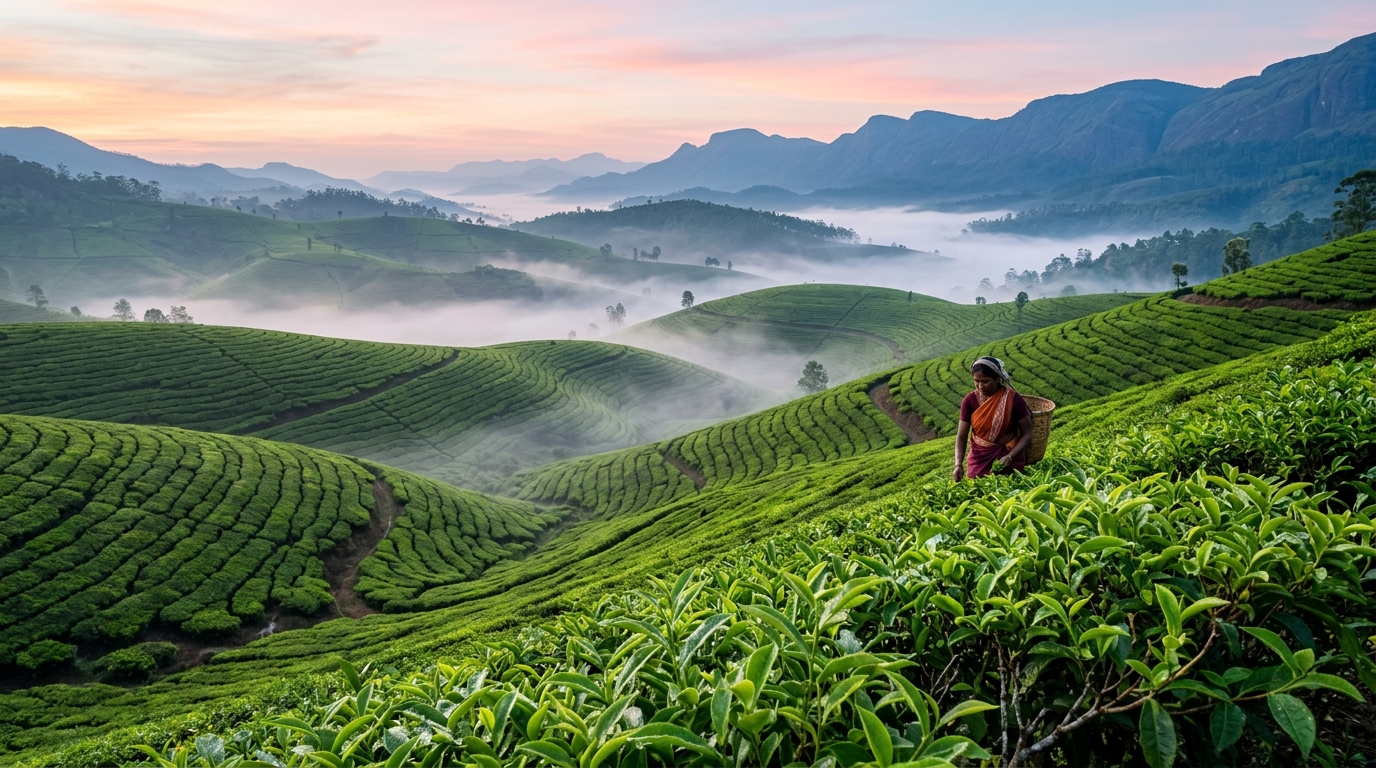
- Munnar: Mist-shrouded tea gardens offering scenic trekking trails.
- Thekkady: A lush wildlife sanctuary known for elephants and spice plantations.
- Alappuzha: Quiet backwaters perfect for an overnight stay on a traditional houseboat (kettuvallam).
An essential part of this south india travel plan is a stay on one of these traditional houseboats. Constructed without a single nail, these vessels drift along quiet canals shaded by palms, offering a meditative way to witness rural life.
But still, the journey is not just about quiet waters. The spice plantations of Kumily provide an educational experience, explaining how pepper and cardamom are grown. This route is highly popular, especially for those seeking wellness tourism. Kerala is widely recognized as a major global centre for traditional Ayurvedic medicine. Many travellers dedicate several days to therapeutic treatments in serene lakeside resorts. For a well-planned escape into these tropical waterways, checking the tailored itineraries for Kerala tour packages can simplify the logistical planning.
The Hills, Heritage, and Coffee Country (Karnataka)
Karnataka offers a diverse blend of royal history, high-altitude coffee plantations, and striking stone ruins. This route is ideal for travellers who appreciate both historic depth and outdoor exploration. The journey generally commences in the modern hub of Bengaluru, moving to the royal city of Mysuru before climbing into the cool heights of Coorg. In Coorg, the aroma of ripening coffee beans and cardamom fills the mountain air. A well-rounded south india travel plan must include a visit to a working coffee estate here to learn about bean cultivation from tree to cup.
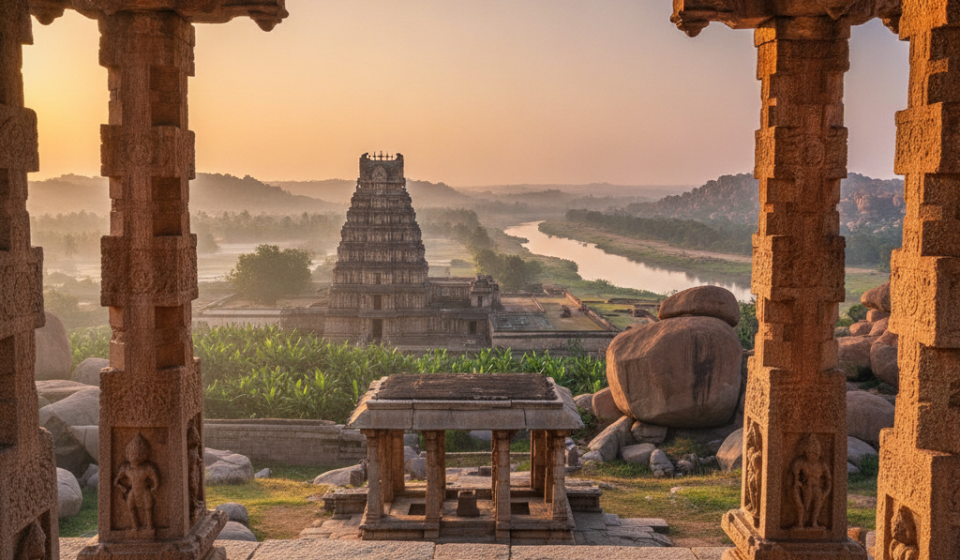
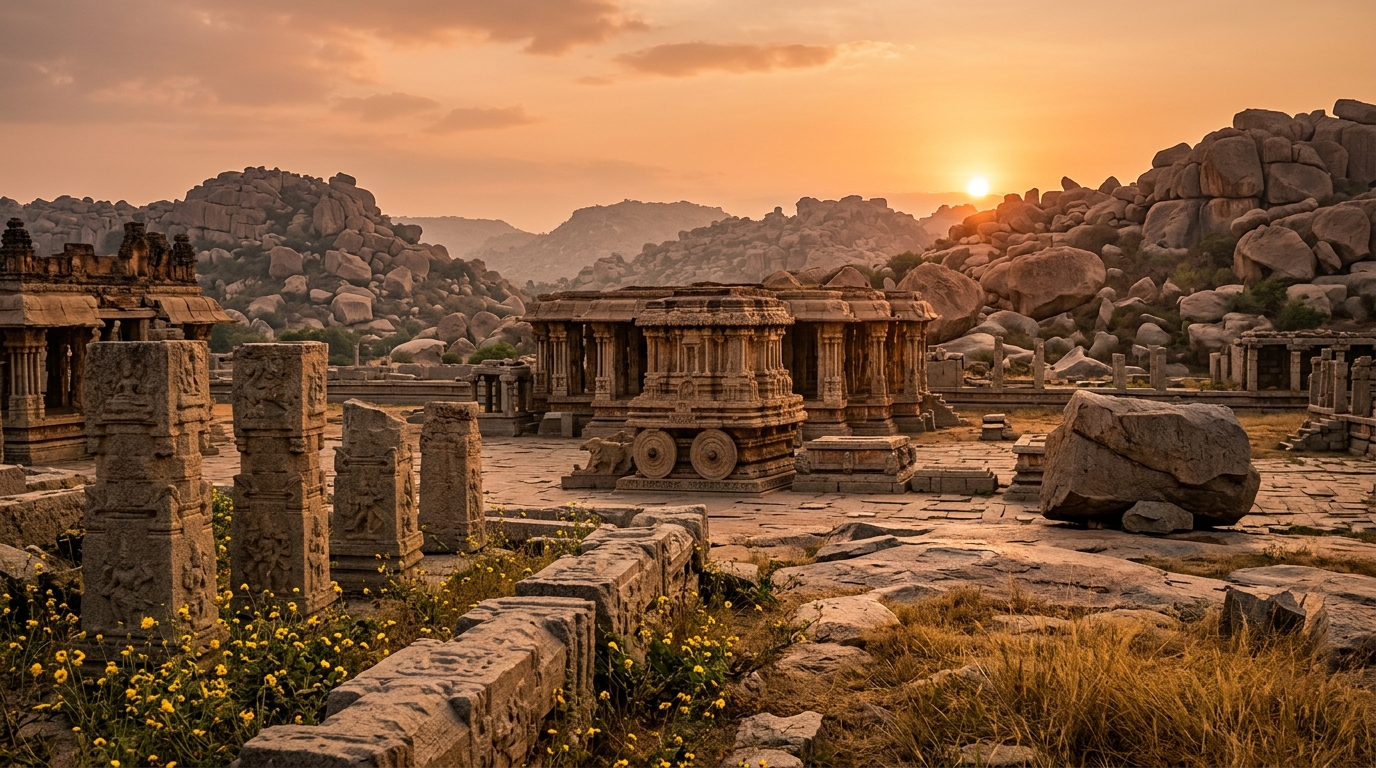
Beyond the hills, the route can extend northward to Hampi, the grand capital of the historic Vijayanagara Empire. The ruins of Hampi present a beautiful terrain of giant boulders and carved temples spread over many square kilometres. For travellers wishing to explore these mountain estates and historic palaces, checking the options for Coorg travel packages or a combined tour of Bangalore and Mysore provides excellent structure.
| Route Name | Primary Focus | Ideal Duration | Key Destinations |
|---|---|---|---|
| The Classic Temple Trail | Dravidian architecture, ancient history, and colonial culture | 7 – 10 Days | Chennai, Mahabalipuram, Pondicherry, Tanjore, Madurai |
| The Nature & Backwaters Route | Relaxation, houseboats, tea gardens, and wellness | 7 – 10 Days | Kochi, Munnar, Thekkady, Alappuzha |
| Hills, Heritage & Coffee Country | Royal palaces, coffee plantations, and ancient ruins | 8 – 12 Days | Bengaluru, Mysuru, Coorg, Hampi |
Drafting Your Detailed South India Itinerary
Creating a workable itinerary requires a balance between distance and depth. The geography of the region means that travel times can be deceptively long, even when distances seem short. A realistic south india itinerary must account for winding roads and monument exploration. To help structure your journey, we have designed two separate routes (a concise 10-day option and an expansive 15-day route). Both options ensure that your south india travel plan remains manageable and highly rewarding.
Option 1: The 10-Day Essential South India Itinerary
This 10-day south india itinerary is designed for first-time visitors who want a balanced introduction, combining the cultural heritage of Tamil Nadu with the natural beauty of Kerala. The journey begins in Madurai, spending two days exploring the massive Meenakshi Amman Temple and the Thirumalai Nayakkar Palace. On day three, drive to Munnar in the Western Ghats to walk through rolling tea estates.
On day six, descend to Alappuzha for an overnight backwater houseboat experience. This offers a peaceful transition before heading to Kochi on day eight to see the historic Chinese fishing nets and Jew Town. This structured plan ensures you experience the best of both worlds within a single, highly efficient south india travel plan.
Option 2: The Comprehensive 15-Day Route
For travellers who can dedicate more time, a 15-day route allows for a deeper dive into the region’s diverse heritage. This path spans three states, starting in Karnataka, crossing into Kerala, and ending in Tamil Nadu. It is a comprehensive south india travel plan covering royal cities, mountain retreats, backwaters, and coastal temples. The journey starts in Bengaluru, moving to Mysuru on day two to see the Mysore Palace. On day four, travel to Coorg to experience coffee culture and visit the Namdroling Monastery, a significant Tibetan Buddhist centre. On day seven, take a scenic train ride to Kochi in Kerala.
After two days in Kochi, proceed to Munnar’s high-altitude tea estates. Day eleven brings you to the backwaters of Alappuzha for an overnight houseboat stay. On day thirteen, cross into Tamil Nadu to reach Madurai. Spend your final days exploring this ancient cultural capital. This expansive route provides a rich, varied experience.
Essential Tips for Travelling in South India
A successful journey depends on more than just a well-planned route. Understanding the regional infrastructure, climate, and cultural expectations is crucial for a smooth trip. When executing your south india travel plan, keeping a few practical guidelines in mind will prevent common travel frustrations and ensure a respectful, enjoyable experience.
Transport and Connectivity
Getting around the region is relatively straightforward, but it requires some advance planning. Here are the main transport options to integrate into your south india travel plan:
- Indian Railways: Highly efficient for long distances between major cities. Booking tickets in the AC Sleeper or AC Chair Car classes well in advance is highly recommended.
- Private Car with Driver: The most flexible option for regional travel and hilly terrains, allowing spontaneous stops at roadside spice stalls, small temples, or scenic viewpoints.
- Auto-Rickshaws: Widely available for short, local journeys within cities.
- Mobile Connectivity: Generally excellent, with high-speed mobile networks covering most towns and cities.
Integrating these transport choices into your itinerary ensures smooth transitions between destinations.
Cultural Etiquette and Temple Norms
The southern states place high value on tradition and religious customs. When visiting active temples, visitors must adhere to specific dress codes. Both men and women should dress modestly, keeping shoulders and knees covered. Some traditional temples in Tamil Nadu and Kerala require men to wear a dhoti (a traditional wrapped lower garment) and remove their shirts before entering the inner sanctum to receive darshan (the sacred viewing of the deity). Shoes must always be left at the temple entrance, often with a designated shoe-keeper for a nominal fee. It is also important to respect photography restrictions; taking pictures inside the main shrine is strictly prohibited. Beyond religious spaces, a simple gesture of greeting with folded hands is highly appreciated by locals. Showing this cultural respect is an essential, rewarding part of any south india travel plan.
Estimating Your South India Tour Budget
Budgeting for a trip to this region is highly flexible, as it accommodates both luxury seekers and budget-conscious travellers. A realistic south india tour budget should account for accommodation, meals, transport, and monument entry fees. While costs are generally lower than in Western Europe or North America, prices can rise during the peak tourist season from November to February. To help you structure your south india travel plan financially, we have broken down the typical expenses you can expect across different travel styles.
Accommodation and Dining Estimates
The cost of staying and dining in the south varies depending on your comfort preferences. Mid-range hotels and heritage homestays offer exceptional value, often including home-cooked local meals that showcase authentic regional flavours. Dining in the region is surprisingly affordable, particularly if you enjoy local vegetarian meals, commonly referred to as meals or thalis. These traditional spreads are served on banana leaves and offer unlimited refills of rice, sambar, and various vegetable side dishes for a very modest price. Below is an overview of estimated daily costs for accommodation and dining, helping you refine your south india tour budget.
| Travel Style | Accommodation (Per Night) | Dining (Per Day) |
|---|---|---|
| Budget | ₹1,200 – ₹2,500 | ₹400 – ₹800 |
| Mid-Range | ₹3,000 – ₹7,000 | ₹1,000 – ₹2,000 |
| Luxury | ₹10,000 – ₹25,000 | ₹2,500 – ₹5,000 |
By choosing a mix of mid-range heritage homestays and local dining, travellers can enjoy an incredibly rich experience without overspending. This approach keeps your south india travel plan both authentic and economically sound.
Transport and Sightseeing Costs
Transport is typically the largest component of a travel budget, particularly if you choose the comfort and flexibility of a private vehicle. Hiring an air-conditioned sedan with a driver generally costs between ₹3,500 and ₹5,000 per day, depending on the distance covered and the terrain. For public transport, train tickets are very economical, with a standard AC 3-Tier ticket for a six-hour journey costing roughly ₹800. Entry fees for major historical monuments and national parks vary. Here is a breakdown of common transport and sightseeing expenses to assist in your south india travel plan.
| Expense Category | Estimated Cost (INR) | Frequency / Details |
|---|---|---|
| Private Car with Driver | ₹3,500 – ₹5,000 | Per day (all-inclusive) |
| Intercity Train (AC 3-Tier) | ₹600 – ₹1,200 | Per journey (mid-distance) |
| Auto-Rickshaw Ride | ₹100 – ₹300 | Per short ride (local) |
| Monument Entry Fees | ₹300 – ₹600 | Per major historical site (for foreigners) |
| Houseboat Cruise (Alappuzha) | ₹8,000 – ₹15,000 | Per night (private bedroom, includes meals) |
Allocating funds carefully between private transport for difficult routes and trains for long distances helps keep the overall budget manageable. This practical approach ensures that your south india travel plan remains within your desired financial limits.
FAQs
Planning a trip to a new region always brings up practical questions. Here are some of the most common queries answered to help you finalize your south india travel plan.
What is the best time to visit South India?
The best time to visit south india is during the winter months, specifically from October to March. During this period, the weather is pleasant and dry, with temperatures ranging from a comfortable 18°C to 30°C. This makes it ideal for exploring ancient temple complexes, walking through tea gardens, and enjoying houseboat cruises. The summer months (April to June) can be intensely hot, though hill stations like Munnar and Coorg remain pleasantly cool.
How many days are enough for a South India travel plan?
For a comprehensive south india travel plan, a duration of 10 to 15 days is highly recommended. This allows you to explore at least two distinct regions, such as Tamil Nadu and Kerala, without feeling rushed. A shorter trip of 7 days is possible, but it requires focusing strictly on a single sub-region, such as the Kerala backwaters. If you wish to cover all five southern states, you would need at least three weeks to travel comfortably.
Is South India safe for solo female travellers?
Yes, South India is widely considered to be one of the safest regions in India for solo female travellers. The local culture is conservative and welcoming, though standard precautions should always be observed. It is advisable to avoid travelling alone late at night, dress modestly (particularly when visiting active temples), and use reputable transport services. Homestays offer an extra layer of security and local connection throughout your south india travel plan.