
The Indian peninsula presents a starkly different landscape from the dusty northern plains, offering a profound sensory shift. Towering Dravidian temple gateways, vast spice plantations, and quiet palm-fringed waterways define this diverse geographic expanse. Crafting a comprehensive South India travel plan is the first step toward unlocking these diverse encounters without feeling overwhelmed by the sheer scale of the region. Rather than viewing the southern states as a singular destination, experienced travelers treat them as an intricate mosaic of distinct languages, ancient architectures, and classical culinary traditions. This approach demands deliberate scheduling. A well-designed South India travel plan allows visitors to balance active historical exploration with deep, restorative natural retreats.
Key Takeaways for Your South India Travel Plan
- Optimal Duration: A 14-day itinerary provides the perfect balance to explore Tamil Nadu, Kerala, and Karnataka without rushing.
- Best Travel Season: October to March offers pleasant weather (25–30°C), ideal for heritage walks and outdoor exploration.
- Diverse Highlights: Experience a unique mix of Dravidian stone architecture in Tamil Nadu, tranquil backwaters in Kerala, and imperial ruins in Karnataka.
- Budget-Friendly: Highly affordable daily costs ranging from ₹800/day for delicious regional meals to cost-effective railway connections.
- Cultural Etiquette: Modest dress codes are strictly enforced at major temples—shoulders and knees must be fully covered.
Why South India Belongs on Your Travel Radar
The regional character of the southern peninsula is marked by a deep sense of historical continuity and architectural preservation. Unlike the northern plains, which experienced successive waves of foreign invasions that reshaped the cultural fabric, the south remained relatively isolated. This isolation preserved ancient traditions, temple rituals, and artistic expressions in their purest forms. For any traveler seeking depth over superficial sightseeing, integrating these distinct states into a cohesive South India travel plan is paramount.
To understand this diversity, one must compare the primary highlights across the states. The following table provides a comparative breakdown designed to help structure a logical South India travel plan:
| State or Territory | Primary Geographic Highlight | Cultural and Artistic Focus | Recommended Duration |
|---|---|---|---|
| Tamil Nadu | Dravidian Stone Temples | Classical Carnatic Music and Bharatanatyam Dance | 4 to 5 Days |
| Kerala | Backwaters, Houseboats, and Hills | Ayurvedic Wellness and Kathakali Theater | 4 to 5 Days |
| Karnataka | Monolithic Ruins and Coffee Hills | Hoysala Architecture and Heritage Palaces | 4 to 5 Days |
| Pondicherry | Colonial Promenade and Beaches | French-Indian Fusion and Spiritual Ashrams | 1 to 2 Days |
This structural variation means that a single journey can easily transition from the vibrant, bustling streets of Madurai to the quiet, misty tea fields of Munnar. Critics sometimes suggest that traveling across these states requires too much transit time. They are basically correct, but they underestimate how the journey itself serves as a cultural transition. The shifting languages, changing spices, and altering temple structures provide a continuous narrative of regional identity. This is why a precise South India travel plan is essential for anyone wishing to experience the subcontinent’s authentic heritage.
Choosing Your Perfect Route: 14-Day South India Itinerary
A fortnight is the optimal duration to experience the core elements of the southern peninsula without rushing through the highlights. Attempting to cover all five states in two weeks is counterproductive, as the travel distances are significant. A balanced South India travel plan focuses on a logical geographic loop that minimizes travel fatigue while maximizing cultural exposure. The most efficient route typically begins in the cultural capitals of the east coast and moves westward toward the Arabian Sea.
By structuring the journey in this manner, travelers experience a steady decrescendo of pace, moving from busy heritage cities to relaxing natural sanctuaries. Let us examine how to allocate these fourteen days to form a cohesive South India travel plan.
The Cultural Heart: Tamil Nadu Heritage
The journey commences in Chennai, the regional gateway, before moving south toward the temple towns of Madurai and Tanjore. Tamil Nadu represents the cradle of classical Dravidian culture, where monumental temples function as active centers of community life. Including these living heritage sites in your South India travel plan provides a rare glimpse into continuous traditions that date back over a thousand years.
The coastal town of Pondicherry offers a sudden stylistic shift, with its French Quarter characterized by mustard-colored colonial villas and quiet cobblestone streets. Roughly speaking, two days are sufficient to absorb this Mediterranean influence before plunging back into the heart of Dravidian architecture in Thanjavur. Here, the Brihadisvara Temple stands as an architectural triumph of the Chola Empire, built entirely from granite blocks. According to historical records from the Archaeological Survey of India in 2010, the temple completed its millennium of existence, retaining its structural integrity without foundation shift.
- Pondicherry: A unique blend of French colonial design, spiritual ashrams, and pristine coastal promenades.
- Madurai: Centered around the massive Meenakshi Amman Temple, a labyrinthine complex featuring twelve soaring gopurams decorated with thousands of brightly painted stone figures.
Integrating these destinations into a structured Tamil Nadu portion of the South India travel plan ensures a profound historical foundation before entering the natural landscapes of the west coast.
The Serene Escape: Kerala Backwaters and Hills
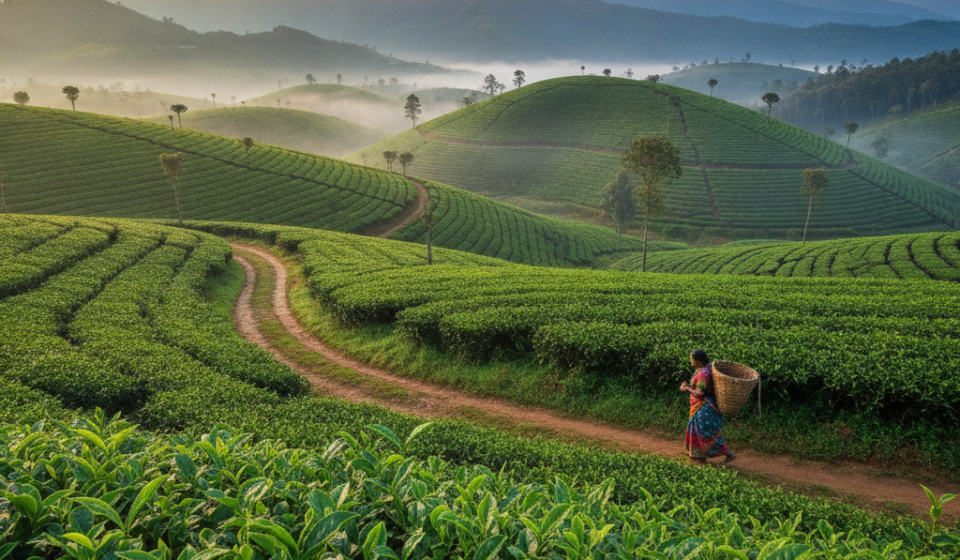
Crossing the Western Ghats brings a dramatic change in both climate and pace. The state of Kerala represents a sanctuary of natural landscapes, where the humid coastal plains give way to misty high-altitude tea plantations. For many, this segment is the most relaxing phase of a South India travel plan. The transition from the dry heat of Tamil Nadu to the cool breezes of Munnar is incredibly refreshing.
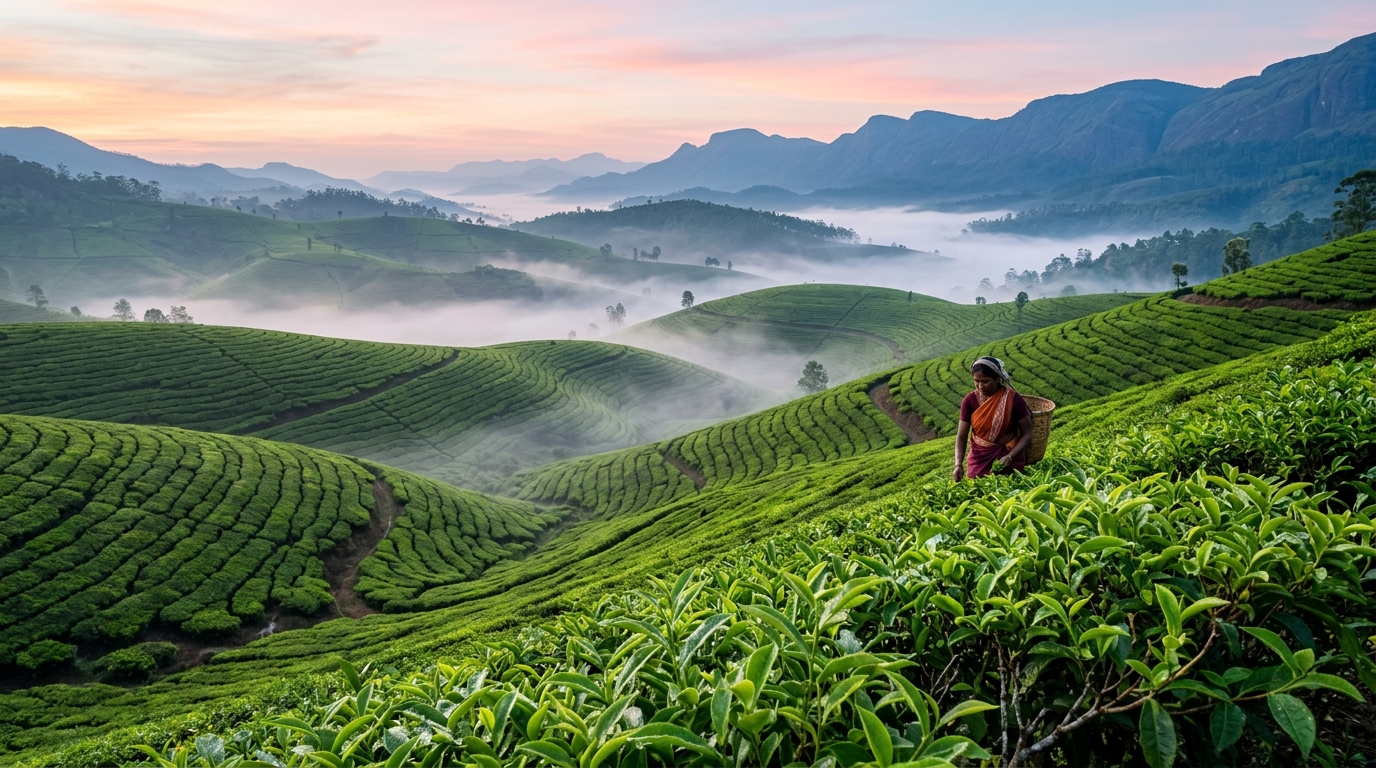
Munnar, situated at an elevation of roughly 1,600 meters above sea level, is characterized by manicured tea estates that cover the hillsides like green carpets. Moving further south, the backwaters of Alleppey present an entirely unique aquatic ecosystem. Traveling via a traditional houseboat (locally called a Kettuvallam) along these quiet canals is a vital addition to any South India travel plan. The houses are constructed using organic materials, utilizing coir ropes and bamboo poles without a single nail.
- Munnar: Ideal for trekking, visiting tea factories, and witnessing the rare Nilgiri Tahr in Eravikulam National Park.
- Alleppey: Famous for overnight houseboat cruises through palm-fringed canals, offering a window into rural riverine life.
This natural sanctuary provides an excellent counterweight to the intense historical exploration of the eastern states. It is a necessary component of a well-rounded South India travel plan. For those seeking coastal relaxation, a quick excursion to the sandy cliffs of Kovalam can also be integrated into this route.
The Architectural Wonders: Karnataka Ruins and Palaces
If time permits, the state of Karnataka offers a magnificent display of medieval empire building. Karnataka bridges the Deccan Plateau and the coastal plains, featuring landscapes dotted with dramatic boulder fields. Incorporating these locations into your South India travel plan introduces a completely different style of architecture.
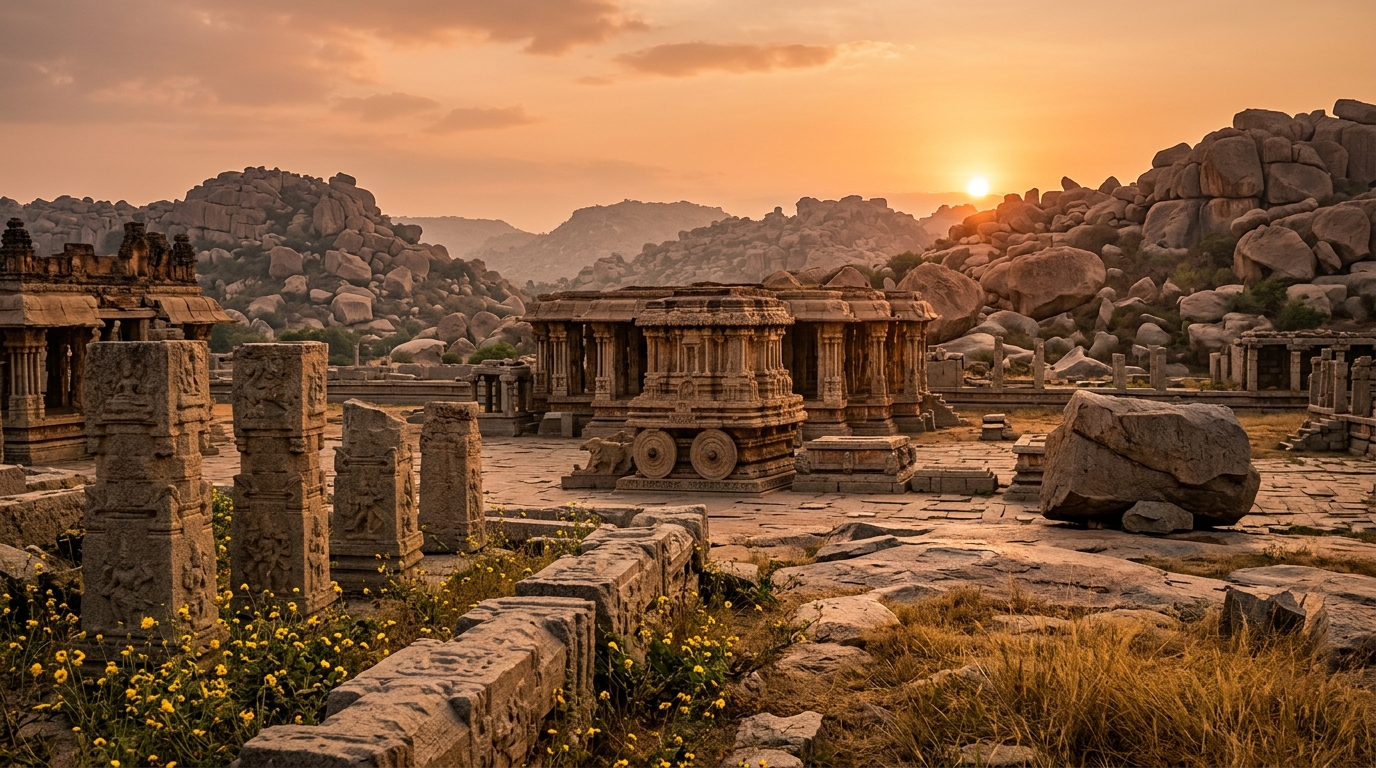
The ruins of Hampi, the former capital of the Vijayanagara Empire, are arguably one of the most spectacular archaeological sites in Asia. Spread over 4,100 hectares of rugged terrain, the site features towering monolithic sculptures and active riverside temples. Moving south, the city of Mysore presents a contrast with its grand Indo-Saracenic palace, which looks particularly spectacular when illuminated on Sunday evenings. Our specialized Bangalore and Mysore tour provides a guided exploration of these royal sites.
- Hampi: A vast outdoor museum of ruins, temples, and dramatic boulder-strewn hills.
- Coorg: A misty highland region of Coorg is known for its sprawling coffee plantations and unique Kodava culture.
This combination of imperial history and high-altitude coffee culture completes a comprehensive South India travel plan. Travelers can easily connect back to Bangalore, the regional technology hub, which offers excellent air connectivity.
Best Time to Plan Your South India Trip
Climatic conditions in the southern peninsula are largely tropical, meaning that temperature and rainfall variations play a significant role in determining travel comfort. Unlike northern India, which experiences distinct winters, the southern states remain warm throughout the year. But still, the high-altitude hill stations offer a cool escape during the warmer months. Understanding these seasonal nuances is vital when designing your South India travel plan. Here is a breakdown of what to expect during different seasons:
- Peak Season (October to March): The ideal period for exploring outdoor archaeological sites. Winter daytime temperatures hover around a comfortable 25 to 30 degrees Celsius, with lush green landscapes following the monsoon.
- Summer Season (April to June): Brings intense heat to the plains, with temperatures often exceeding 40 degrees Celsius. Travelers during this period should focus on high-altitude retreats like Munnar, Ooty, or Coorg.
- Monsoon Season (July to September): Heavy rainfall can disrupt outdoor travel schedules, but it offers highly discounted resort rates and incredibly lush scenery, making it an appealing option for budget-conscious travelers.
Travel Budget Breakdown for South India
Financial planning is a key aspect of executing an enjoyable trip across the southern states. Fortunately, the region remains highly affordable compared to Western destinations, offering excellent value across all budget tiers. Establishing a realistic budget for your South India travel plan involves understanding the major cost categories. These typically include lodging, meals, regional transport, and monument entry fees.
Whether traveling as a budget backpacker, mid-range explorer, or luxury seeker, the costs are predictable. The following breakdown helps project daily expenses during the journey:
| Budget Category | Budget Traveler (INR) | Mid-Range Traveler (INR) | Luxury Traveler (INR) |
|---|---|---|---|
| Accommodation (Per Night) | ₹500 – ₹1,200 (Homestays/Hostels) | ₹2,500 – ₹5,000 (Standard Hotels) | ₹10,000+ (Heritage Resorts/Palaces) |
| Meals & Dining (Daily) | ₹300 – ₹600 (Local Eateries) | ₹1,000 – ₹2,000 (Mid-Range Cafes) | ₹3,500+ (Fine Dining) |
| Local & Intercity Transport | ₹200 – ₹500 (Local Trains/Buses) | ₹1,500 – ₹3,000 (Trains/Cabs) | ₹4,500+ (Private Chauffeur) |
| Activities & Sightseeing | ₹100 – ₹300 (Public Sites) | ₹500 – ₹1,500 (Guided Tours) | ₹2,500+ (Private Custom Experiences) |
Accommodation Options
Lodging represents a major cost in any South India travel plan. Accommodations range from basic guesthouses to luxury palaces. Consider these primary options:
- Homestays: Highly recommended in Kerala, offering authentic local interactions and home-cooked meals at modest rates.
- Mid-Range Hotels: Comfortable hotels with air conditioning are widely available across all cities.
- Luxury Palaces & Tea Bungalows: High-end travelers can choose heritage estates in Mysore or colonial tea bungalows in Munnar.
Food and Dining Costs
Culinary traditions of the south are both diverse and exceptionally economical. To manage your dining budget, keep the following in mind:
- Traditional Meals: Often served on fresh banana leaves, these daily staples consist of rice, sambar, rasam, and fresh vegetables.
- Mid-Range Dining: Clean local restaurants offering a mix of regional specialties and classic continental options.
- Estimated Cost: Budgeting roughly 800 Indian Rupees per day is generally sufficient, making food an incredibly manageable aspect of your South India travel plan.
Transport and Commute Expenses
Moving between destinations requires balancing travel time and budget. Consider these main options:
- Railways: The most cost-effective way to cover long distances. Booking air-conditioned sleeper classes (such as 2AC or 3AC) ensures comfort at reasonable rates.
- Private Chauffeurs: Hiring a private car offers great flexibility for spontaneous stops, which is easy to integrate into your South India travel plan.
Essential South India Travel Tips
A successful journey across the southern states requires navigating cultural nuances, regional transport systems, and culinary differences. These practical tips are designed to minimize travel friction and maximize appreciation during your trip. Here are the core guidelines to include in your South India travel plan.
Cultural Etiquette and Dress Codes
Respecting customs is important when visiting regional temples, which maintain strict dress codes. Both men and women must dress modestly, covering shoulders and knees. Always remove footwear before entering temple premises or local homes.
This simple rule demonstrates respect and ensures a welcoming reception, making it a vital detail for your South India travel plan.
Navigating Local Transport
Local city transport is dynamic. Auto-rickshaws are common, but negotiating fares can be challenging. Using ride-hailing applications like Uber or Ola is recommended where available for transparent pricing.
For intercity train travel, booking tickets early via the IRCTC portal is critical, as peak seasons cause trains to sell out quickly, leading to the dreaded FBT (Fully Booked Train) status. Navigating bookings early is key to any South India travel plan.
Food Safety and Culinary Advice
Southern cuisine is famous for vibrant spices, which can be intense for new visitors. To avoid issues, stick to freshly prepared food, drink only bottled water, and choose busy local restaurants where food turnover is high.
These precautions ensure dining remains a highlight of your South India travel plan.
Conclusion
A journey through the southern peninsula of India is far more than a simple vacation. It is a profound exploration of ancient civilizations, pristine natural landscapes, and enduring cultural traditions. By structuring a detailed South India travel plan, travelers can seamlessly bridge the monumental stone temples of Tamil Nadu, the serene hill stations of Kerala, and the majestic ruins of Karnataka.
Whether looking for spiritual reflection, historical depth, or a simple escape into nature, the southern states deliver an unparalleled experience. With careful preparation, a realistic budget, and an open mind, this journey will undoubtedly become one of your most cherished travel memories. Plan your journey today and discover the magic of this remarkable region.