
Planning a journey across India’s southern states often presents a stark contrast to typical northern holiday circuits. The region spans five diverse states, each defined by distinct linguistic roots, dynastic legacies, and culinary traditions. Developing a well-structured south india travel plan requires shifting focus away from simple checklist sightseeing toward deep cultural immersion. From the tranquil backwaters of Kerala to the towering gopurams of Tamil Nadu, executing a seamless travel route hinges on strategic logistical planning and seasonal awareness rather than spontaneous decisions. The vast geographical spread demands a methodical approach to choosing destinations that align with seasonal variations and travel preferences. Understanding these factors is the key to creating an unforgettable journey through one of the country’s most culturally rich regions. By focusing on regional character, travelers can discover a slower, more deliberate style of exploration. The reward is a profound connection to living traditions that have survived unchanged for centuries.
Key Takeaways for Your Journey
- Choose Focus Over Breadth: Avoid rushing across all five states; select a targeted circuit (such as Kerala’s nature or Tamil Nadu’s heritage) for a meaningful experience.
- Time it with Local Monsoons: Plan your visits around the distinct southwest and northeast monsoons, prioritizing the dry, pleasant winter window from November to February.
- Factor in Slower Road Speeds: Expect winding, narrow mountain routes in hill stations like Munnar and Coorg, where average travel speeds drop to 30–40 km/h.
- Respect Local Temple Decorum: Be mindful of strict, traditional dress codes required at southern spiritual sites, keeping cover-up clothing handy.
- Secure Logistics Early: Pre-book popular interstate rail journeys, luxury houseboats, and curated tour packages well in advance.
Designing Your Ultimate South India Travel Plan
Why do so many generic itineraries fail? They treat the southern peninsula as a single destination. But the reality is far more complex. The region comprises distinct topographies, from the high-altitude tea estates of the Western Ghats to the flat plains of the Coromandel Coast. A successful south india travel plan must account for these geographic contrasts. Without careful segmentation, a traveler risks spending more time in transit than in actual exploration. It is basically a puzzle of micro-climates and regional holiday calendars.
Choosing a regional focus is the first critical step. While cross-peninsular routes require at least two weeks of uninterrupted travel, selecting a dedicated regional focus allows for a much more immersive experience:
- For Relaxation and Natural Serenity: The southwestern coastal belt, highlighted by the lush backwaters and houseboats of Kerala.
- For Heritage and Architectural Splendor: The southeastern plains of Tamil Nadu, which house some of India’s most ancient active temple networks.
- For Wildlife and Hill Escapes: The mist-shrouded coffee plantations of Coorg and the historic royal palaces of Karnataka.
Most travelers overlook how local state holidays can halt interstate bus services during major festivals like Pongal, demanding careful preparation and buffer days in your itinerary.
When finalizing a south india travel plan, it is also essential to consider the pace of travel. Unlike the expressways of northern India, the roads in the southern hills are narrower and more winding. A distance of 150 kilometers can easily take four to five hours to cover. Focus on depth rather than breath. A successful holiday is about the quality of time spent in each destination.
Seasonal Insights: When to Plan Your Journey
Climatic variations in South India are pronounced, as they do not mirror the seasonal shifts of northern India. The monsoon patterns are particularly complex, with the southwest monsoon hitting the west coast in June, followed by the northeast monsoon affecting the east coast later in the year. Consequently, timing your south india travel plan requires understanding these local weather patterns. This understanding is vital when establishing a cohesive south india travel plan that balances outdoor activities with cultural tours.
The winter period, spanning from November to February, is widely considered the prime travel window. During these months, humidity levels drop, and daytime temperatures hover between 22 and 30 degrees Celsius. Conversely, the summer months of March through May bring intense heat to the inland plains, though the hill stations remain pleasantly cool. These changes impact how a south india travel plan is organized.
| Season | Months | Temperature Range | Ideal Destinations |
|---|---|---|---|
| Peak Winter | November to February | 20C – 30C | Hampi, Madurai, Alleppey |
| Hot Summer | March to May | 30C – 40C | Ooty, Coorg, Munnar |
| Southwest Monsoon | June to September | 24C – 32C | Wayanad, Athirappilly |
| Northeast Monsoon | October to November | 23C – 31C | Pondicherry, Chennai |
The shoulder seasons of September and October are also worth considering. During these months, post-monsoon landscapes are incredibly lush, and waterfalls are at their peak flow. While there is still a chance of occasional rain, crowds are significantly smaller and accommodation prices are more competitive, making it a fantastic window for photography enthusiasts.
Core Regional Highlights and Destination Route Ideas
Developing a south india travel plan requires understanding what each sub-region offers. The southern peninsula is not a monolith; rather, it is a collection of distinct cultural territories. To help you select the ideal route, we must examine these regional corridors.
The Classic Kerala Experience
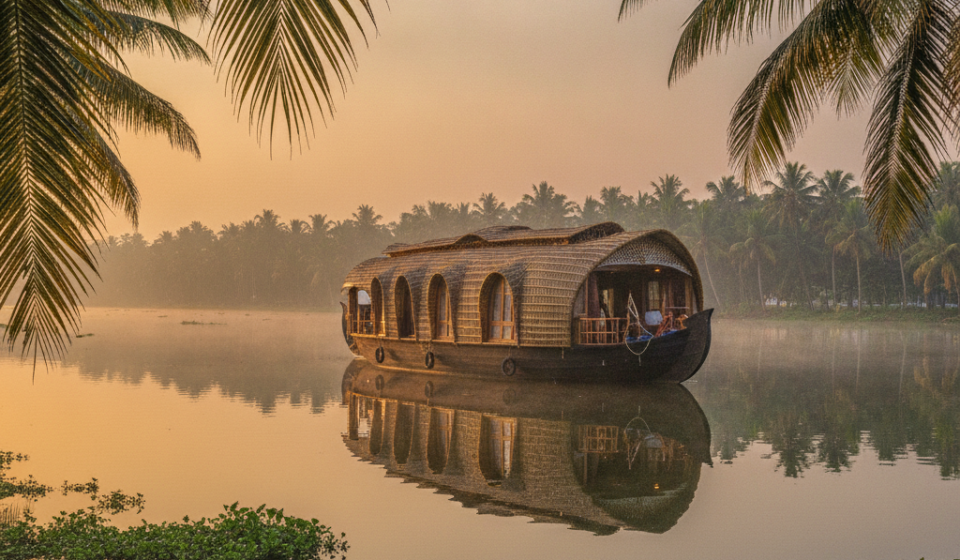
For many, a south india travel plan begins in Kerala. The state is characterized by its network of canals and lagoons. These backwaters form a unique ecosystem best experienced on a houseboat. To explore the southwest coast, travelers often book a dedicated Kerala tour package through specialized operators.
To optimize this classic route, consider the following structured transit sequence to experience diverse landscapes in a compact area:
- Kochi: Explore colonial history, the Jewish Synagogue, and iconic Chinese fishing nets.
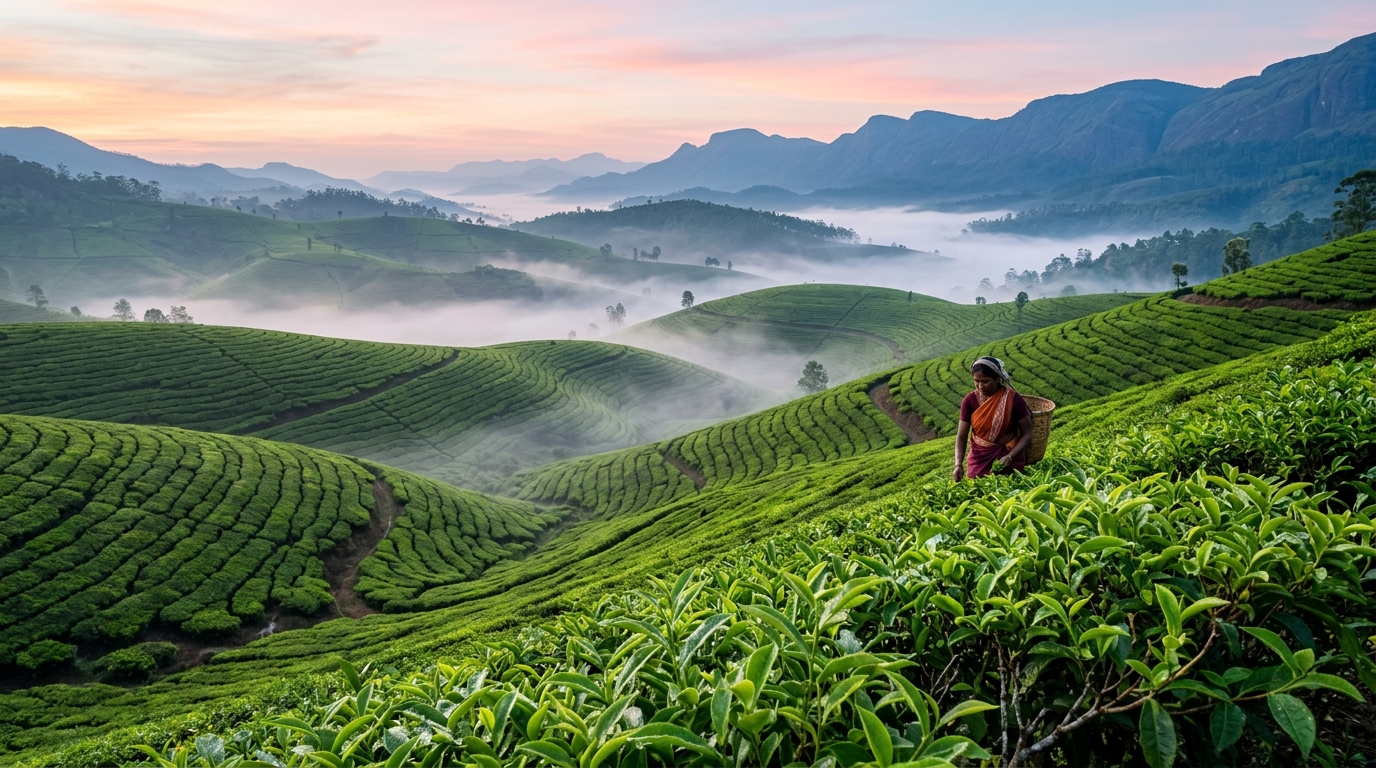
- Munnar: Drive up to the mist-covered Western Ghats and trek through emerald tea gardens.
- Thekkady: Discover local spices and diverse wildlife at Periyar National Park.
- Alleppey: Relax on an overnight cruise along tranquil backwater canals.
- Kovalam (Optional): Head south to wind down on scenic beaches for a coastal finale.
The Western Ghats contain over 7,402 species of flowering plants according to a biological inventory report [1], making it a critical biodiversity hotspot. This natural wealth translates into scenic drives, which remain essential to any comprehensive south india travel plan.
The Heritage and Spiritual Paths of Tamil Nadu
If Kerala represents nature, Tamil Nadu represents heritage. The state is home to some of the world’s oldest active temples. A heritage-focused south india travel plan must feature the historic temple towns of Madurai, Thanjavur, and Trichy. Those seeking a deeper dive can coordinate their route with curated Tamil Nadu itineraries. These historical stops form a crucial element of a heritage-focused south india travel plan.
To plan your spiritual journey effectively, here is a quick comparison of the state’s most iconic temple destinations:
| Temple Hub | Main Deity | Architectural Legacy | Unique Key Highlight |
|---|---|---|---|
| Madurai | Meenakshi Amman | Dravidian (Nayak Style) | 14 majestic gopurams decorated with thousands of colorful stone figures |
| Thanjavur | Lord Shiva (Brihadisvara) | Great Living Chola Temples | The 66-meter-high vimana built using a single solid block of granite |
| Trichy (Srirangam) | Lord Ranganatha | Dravidian (Vijayanagara/Chola) | The largest functioning temple complex in the world spanning 156 acres |
The architecture here is monumental. For example, the Brihadisvara Temple in Thanjavur was completed in 1010 AD by Raja Raja Chola I [2], standing as a testament to medieval engineering. Unlike northern temples, these southern sanctuaries have remained active centers of worship for over a thousand years. This continuity offers an authentic cultural encounter.
As the Ministry of Tourism reported in their 2024 annual statistics, Tamil Nadu consistently ranks among the top states for domestic tourist visits [3], a trend driven largely by its rich spiritual heritage and local temple networks.
The Scenic Splendours of Karnataka and Coorg
Karnataka offers a mix of modern cities, ancient ruins, and coffee hills. The entry point is Bengaluru, leading to royal Mysuru and the green hills of Coorg. Selecting this route can greatly enhance a nature-oriented south india travel plan.
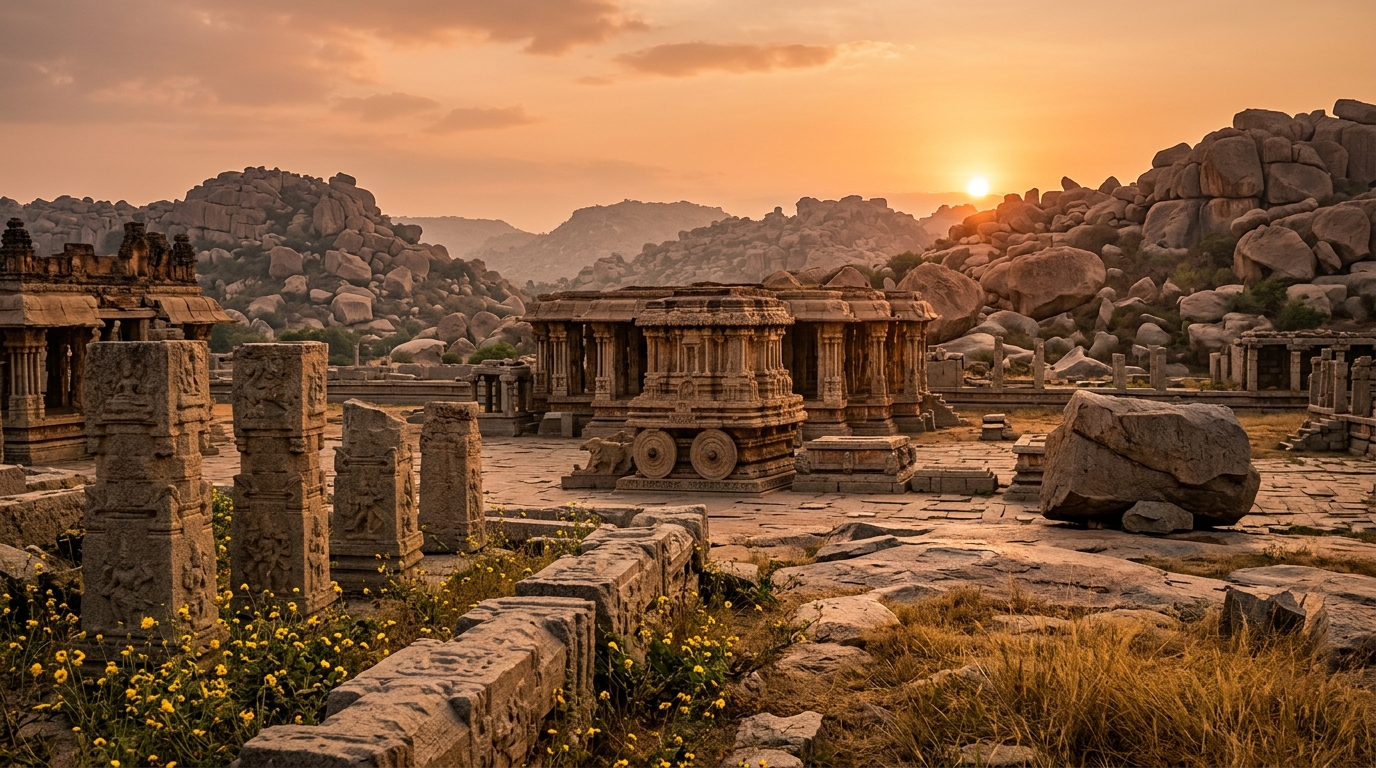
Planning a getaway here is simple, and travelers can secure premium stays through customized Coorg tour packages. The region is famous for misty weather and spice plantations. Beyond the hills, the ruins of Hampi showcase the wealth of the Vijayanagara Empire, forcing travelers to appreciate the geological diversity.
The state is also home to some of India’s finest national parks, including Nagarhole and Bandipur. These reserves offer excellent opportunities to spot wild elephants and gaurs, making Karnataka an essential component of any southern travel plan.
The Coastal Charm of Pondicherry and Kovalam
No south india travel plan is complete without experiencing the coast. Pondicherry, a former French colony, offers a unique aesthetic. The French Quarter, with its mustard-colored colonial villas, feels entirely different from the rest of the region. To experience this, travelers can plan a route using Pondicherry travel guides. These seaside locations are ideal for completing a coastal-themed south india travel plan.
On the western side, Kovalam offers a more traditional beach experience. Known for its iconic striped lighthouse, Kovalam has been popular since the 1930s. The beaches are crescent-shaped, protected by natural rock promontories that keep the waters calm. While Pondicherry is ideal for slow walks, Kovalam is suited for seaside relaxation and Ayurvedic therapies. Combining both coasts reveals how different histories have shaped the shoreline.
Constructing Your Itinerary: 7-Day vs. 14-Day Options
How many days are necessary for a comprehensive south india travel plan? The answer depends on your geographical scope. A common mistake is trying to cover too much ground in a single week. To prevent travel exhaustion, it is wiser to choose between a focused 7-day loop or an expansive 14-day cross-peninsular route. Both options establish the core architecture of your south india travel plan.
A 7-day south india travel plan should focus on a single state. A classic Kerala route fits perfectly into a seven-day window, while a heritage loop of Chennai-Pondicherry offers a rich cultural experience without long transit times, forming the baseline of a modern south india travel plan.
In contrast, a 14-day south india travel plan allows for a multi-state expedition across the peninsula, starting from the Arabian Sea and ending at the Bay of Bengal, moving from Kochi to Pondicherry.
- The 7-Day Nature Loop (Kerala focus)
- Day 1-2: Arrival in Kochi, exploration of Fort Kochi.
- Day 3-4: Drive to Munnar, visit tea museums.
- Day 5-6: Travel to Alleppey, overnight stay in a backwater houseboat.
- Day 7: Return to Kochi for departure.
- The 14-Day Heritage and Coast Route (Multi-state focus)
- Day 1-3: Bengaluru and Mysuru, exploring palaces.
- Day 4-6: Wayanad and Coorg, visiting spice estates.
- Day 7-9: Drive to Ooty and Munnar for mountain views.
- Day 10-11: Madurai, visiting the ancient Meenakshi Temple.
- Day 12-13: Pondicherry, exploring the French Quarter.
- Day 14: Departure from Chennai airport.
Logistics and Transportation Strategies
The logistics of a south india travel plan can be challenging due to the varied terrain. While the rail network is extensive, connecting hill stations requires road transport. Consequently, a mix of trains and private cabs is usually the most efficient approach. In truth, logistics are the backbone of any south india travel plan.
The Indian Railways network connects all major cities in the south. Trains like the Shatabdi Express offer fast, comfortable daytime travel between Bengaluru, Chennai, and Mysuru. For the hilly sectors, hiring a private vehicle with a local driver is highly recommended. Local drivers are familiar with the steep hairpin bends, ensuring a safer journey when designing a road-based south india travel plan.
“When planning road travel in the Western Ghats, always calculate your travel time based on an average speed of 30 to 40 kilometers per hour rather than the standard highway speeds of 80 kilometers per hour. The winding roads, steep gradients, and frequent fog significantly slow down transit times.”
| Transport Mode | Best Suited For | Booking Window | Pro Tip |
|---|---|---|---|
| Trains (IRCTC) | Long-distance city transfers | 60 – 120 days in advance | Opt for AC Chair Car on day routes |
| Private Cabs | Hill stations and local sightseeing | 1 – 2 weeks in advance | Hire drivers with hill-driving licenses |
| State Buses | Budget travel between towns | On the day of travel or online | Choose KSRTC (Kerala/Karnataka) fly buses |
| Flights | Crossing long distances quickly | 30 – 45 days in advance | Use Bengaluru or Chennai as main hubs |
Budgeting for Your Southern India Expedition
Financial planning is crucial for a successful holiday. Realistic budgeting is a critical step in a south india travel plan. The cost of a south india travel plan can vary widely based on your choice of accommodation and transport. Fortunately, the region offers excellent value across all budget levels, from backpacker hostels to ultra-luxury heritage resorts. Managing expenses within a south india travel plan is highly feasible with advanced planning.
To help you establish solid financial projections for a typical south india travel plan, we have broken down the estimated daily expenses for different categories of travelers based on 2026 market rates.
| Budget Category | Daily Accommodation Cost | Meal Expenses | Transportation Cost | Estimated Daily Total |
|---|---|---|---|---|
| Budget (Hostels / Homestays) | ₹1,200 – ₹2,500 | ₹500 – ₹1,000 | ₹300 – ₹800 (Public transport) | ₹2,000 – ₹4,300 |
| Mid-range (3-star hotels) | ₹3,500 – ₹7,000 | ₹1,200 – ₹2,500 | ₹1,500 – ₹3,000 (Private cab) | ₹6,200 – ₹12,500 |
| Luxury (Heritage / 5-star) | ₹12,000 – ₹30,000 | ₹3,500 – ₹7,000 | ₹4,000 – ₹8,000 (Premium SUV) | ₹19,500 – ₹45,000 |
Critics say budget travel in the south is too demanding due to the language barrier and hot weather. They are not entirely wrong, but with the rise of modern co-living spaces and app-based transport services, even budget travelers can now explore the region with relative ease. It is basically a matter of prioritizing comfort where it matters most, such as opting for air-conditioned transport during the hot afternoon hours.
Practical Tips for Indian Travelers
To ensure a smooth south india travel plan, there are several cultural and practical nuances to keep in mind. Respecting local customs will elevate your south india travel plan and foster warm interactions. Indeed, the success of a south india travel plan relies heavily on personal preparation and local respect.
- Strict Temple Dress Codes: Many temples across Tamil Nadu and Kerala strictly enforce dress regulations. Men are often required to wear a traditional dhoti (mundu) and remove their shirts, while women are expected to wear sarees or salwar kameez. Short dresses, ripped jeans, and sleeveless tops are generally prohibited. Carry a lightweight cotton shawl or sarong in your daypack for convenient covering before entering sacred sites.
- Fiery Local Cuisine: While delicious items like idlis, dosas, and appams are standard, traditional meals served on banana leaves often feature intensely hot local curries. If you have a lower spice tolerance, do not hesitate to request milder preparations. Be sure to enjoy local filter coffee, traditionally poured and frothed between a metal tumbler and dabarah.
- Navigating Language Differences: Although English and Hindi are common in major transport and urban centers, knowing a few words in the local language (like Tamil or Malayalam) opens doors in smaller towns. Basic greetings like “Vanakkam” in Tamil Nadu or “Namaskaram” in Kerala are always appreciated by locals and demonstrate respectful travel etiquette.