
Solo travel since its early beginnings has always been about discovery and absolute autonomy. In a vast country like India, where landscapes, languages, and local traditions shift every few hundred kilometers, planning a solo travel itinerary india requires more than just booking flights and picking hotels. It demands a structured approach to logistics, cultural nuances, and regional routes. Success on such a journey lies in balancing meticulous preparation with the flexibility to embrace unexpected local interactions. This solo travel guide India breaks down the essential planning stages to help build a reliable solo travel itinerary india.
The subcontinent is basically a collection of highly distinct regions, each possessing its own culinary heritage and pace of life. For an individual traveler, this sheer variety can feel overwhelming (and occasionally exhausting) without a clear framework. Developing a well-structured solo travel itinerary india is the most effective way to manage this complexity, ensuring that transition periods are manageable and cultural experiences are deeply immersive. The following sections provide a comprehensive blueprint for structuring a solo trip to India that is both secure and profoundly rewarding.
Key Takeaways for Your Solo Trip
- Regional Focus: Prioritize depth over geographical coverage; choose 1-2 regions for trips under two weeks.
- Logistics Planning: Book Indian Railways tickets (AC classes recommended) 30 to 60 days in advance.
- Accommodation: Leverage social hostel chains (like Zostel or goStops) to meet other travelers easily.
- Safety & Customs: Dress modestly and maintain continuous cellular connectivity with a local SIM card.
Essential Foundations of an Indian Solo Journey
Serving as a reliable solo travel guide India, this section outlines the core operational factors that define a successful journey. Before plotting destinations on a map, establishing a solid baseline of knowledge regarding India’s operational realities is crucial. Travelers often underestimate the sheer scale of the country. A single state in India can be larger than many European nations, meaning that attempting to see everything in a single trip is a recipe for physical burnout. When establishing a solo travel itinerary india, the priority must be depth of experience over geographical coverage.
“Travel in India is less about moving through physical space and more about navigating your own sensory boundaries.” – Travel Advisory Board, 2026 Report
Understanding Regional Diversities
India is broadly divided into distinct geographic and cultural zones. The northern plains are defined by historical monuments and major architectural wonders like the Taj Mahal. The southern peninsula, by contrast, offers a slower pace focused on heritage temples, coastal environments, and wellness traditions. The west features deserts, while the northeast presents mountains and distinct indigenous cultures.
When incorporating these distinct zones into a solo travel itinerary india, one must recognize that travel times between these regions can be substantial. A train journey from Delhi in the north to Bengaluru in the south can exceed 36 hours (depending on the specific route and train class). Understanding these differences allows for realistic expectations regarding daily transit and local interactions, making a solo trip to India far more enjoyable.
India Tourist Visa Options for Solo Travelers
| Visa Type | Validity | Estimated Fee (USD) | Processing Time | Key Requirement |
|---|---|---|---|---|
| e-Tourist Visa (30 Days) | 30 Days (Double Entry) | $10 – $25 (Seasonal) | 72 Hours | Passport scan, Photo, Return ticket |
| e-Tourist Visa (1 Year) | 365 Days (Multiple Entry) | $40 | 72 Hours | Passport scan, Passport-size photo |
| e-Tourist Visa (5 Years) | 5 Years (Multiple Entry) | $80 | 72 Hours | Passport scan, Passport-size photo |
Assessing Safety and Local Social Norms
Safety is a primary consideration for anyone planning a solo trip to India, particularly regarding solo female travel India. While the country is generally welcoming to international guests, navigating public spaces requires situational awareness and a clear understanding of local social norms. Dress codes remain conservative in many regions, especially when visiting religious sites or rural areas. Dressing modestly (covering shoulders and knees) is a simple way to respect local customs and reduce unwanted attention.
A crucial aspect of a solo travel itinerary india is learning to manage the intense social interaction characteristic of Indian cities. Keep these core safety practices in mind during your trip:
- Establish Firm Boundaries: A polite but decisive “No, thank you” is an essential skill to avoid unwanted attention or scams.
- Secure Digital Backups: Keeping digital copies of critical documents secured in cloud storage is an indispensable practice.
- Be Mindful of Night Navigation: Avoid navigating poorly lit or isolated areas late at night, depending on the specific urban situation.
- Dress Modestly: Respect local customs by covering shoulders and knees, especially in religious or rural locations.
Designing Your Solo Travel Itinerary India: A Step-by-Step Guide
Creating a reliable solo travel itinerary india involves a series of logical decisions. Rather than booking flights based on internet trends, a traveler must construct a systematic framework that accounts for seasonality, transit infrastructure, and accommodation choices. Using a comprehensive India travel planner can help structure these decisions effectively. This India travel planner assists in streamlining regional choices so that travelers remain energetic throughout their journey.
Phase 1: Determining Your Trip Duration and Regional Focus
The duration of the journey dictates how much ground can be realistically covered. For a trip of 10 to 14 days, sticking to a single geographic circuit is highly recommended. Combining distant regions like Rajasthan and Kerala in a two-week period results in excessive transit time.
When constructing a solo travel itinerary india, a three-week duration is arguably the minimum required to experience two contrasting regions without feeling rushed. A shorter, focused solo travel itinerary india allows for deeper cultural immersion, fewer logistical headaches, and a lower overall budget. The table below outlines how to allocate time across different regions based on specific travel preferences.
| Region | Best Suited For | Recommended Days | Transit Difficulty |
|---|---|---|---|
| North India (Delhi, Agra, Rajasthan) | History, architecture, desert landscapes | 10-14 Days | Moderate (Extensive train/bus network) |
| South India (Kerala, Tamil Nadu, Karnataka) | Backwaters, temples, coffee plantations | 12-15 Days | Low (Relaxed pace, reliable local transit) |
| Himalayan Region (Ladakh, Himachal Pradesh) | Trekking, mountain culture, adventure | 10-14 Days | High (Mountain roads, seasonal closures) |
| East and Northeast (Sikkim, Meghalaya) | Nature, indigenous culture, offbeat travel | 14-18 Days | High (Limited rail, depends on shared cabs) |
Selecting the right region depends heavily on the season. Roughly speaking, the prime travel window for most of India is between October and March, when temperatures are cooler and more comfortable. For those planning a summer itinerary (April to June), focusing on high-altitude destinations like Himachal Pradesh or Ladakh is essential to avoid extreme heat. Conversely, the monsoon season (July to September) can bring heavy rainfall, which turns rural landscapes vibrant green.
Phase 2: Deciding on Transit Methods and Booking Timelines
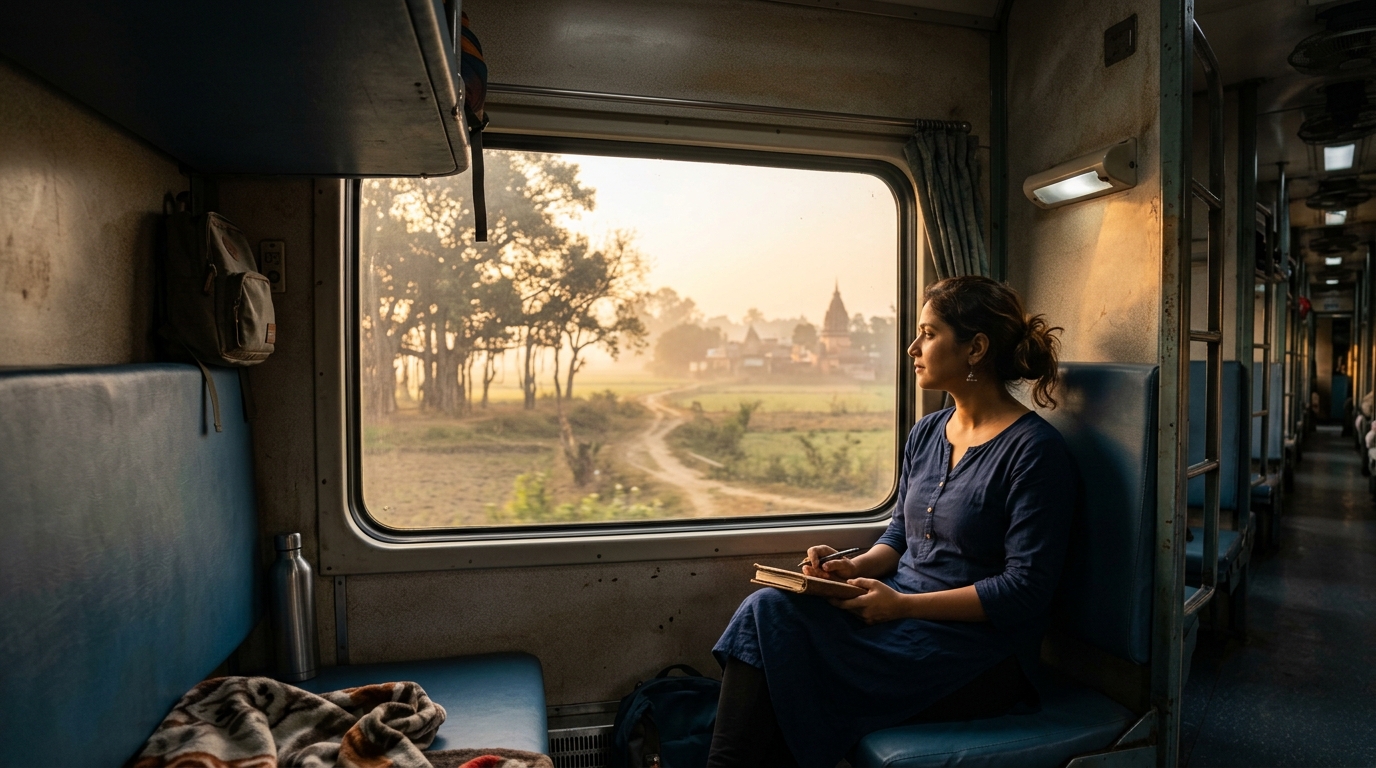
Intercity transit is a critical element of any solo travel itinerary india. The Indian Railways network is one of the largest in the world, carrying millions of passengers daily. For solo travelers, train travel offers an authentic experience and is highly cost-effective. However, securing tickets requires advanced planning due to immense demand.
Understanding ticket classes is integral to a solo travel itinerary india. For overnight journeys, booking AC 2-Tier (2A) or AC 3-Tier (3A) classes is recommended. These compartments provide air conditioning, bedding, and a higher level of security than non-AC sleeper classes. To book these tickets, solo travelers should familiarize themselves with the IRCTC (Indian Railway Catering and Tourism Corporation) booking system, which requires an active account. Critics say train travel in India is too chaotic for solo journeys. They are not entirely wrong, but they overlook the unique community aspect of sleeper compartments. Below is the step-by-step process for booking train tickets as a solo traveler.
- Create an official IRCTC account (international travelers can register using a foreign mobile number for a verification fee).
- Download the IRCTC Rail Connect mobile application or use the official website to search for trains between your desired stations.
- Verify train schedules and check seat availability well in advance, aiming to book 30 to 60 days before the travel date.
- Select preferred travel classes, such as AC 2-Tier (2A) for extra space, or AC 3-Tier (3A) for a balance of comfort and budget.
- Enter passenger details carefully, ensuring they match the name on your passport exactly.
- Keep track of your PNR (Passenger Name Record) status, especially if your ticket is on a Waitlist (WL) or Reservation Against Cancellation (RAC) status.
- Download your electronic ticket and carry a valid physical ID card during the journey.
For longer distances where train travel is impractical, domestic low-cost carriers offer efficient alternatives. Airlines operate frequent flights connecting major hubs like Delhi, Mumbai, Bengaluru, and Chennai. For short-distance regional transits, private taxis or app-based ride-hailing services provide safe, metered options that eliminate the need to negotiate fares.
Phase 3: Selecting Solo-Friendly Accommodations
Where one stays significantly impacts the overall travel experience, especially when navigating India solo. The accommodation market has evolved rapidly, offering excellent options that cater specifically to independent travelers. Hostel networks have expanded across the country, providing clean, secure dormitory beds and private rooms alongside communal spaces.
Solo travelers should prioritize these properties when writing a solo travel itinerary india, as they facilitate meet-ups with other international and domestic voyagers. These social hubs often organize guided city walks and shared transport, simplifying the solo travel itinerary india planning process. For a more authentic, quiet experience, homestays are an excellent alternative, offering home-cooked meals and local insights directly from host families.
- Social Hostels (e.g., Zostel, goStops)
- Pros: Vibrant social atmosphere, easy to find travel partners, highly budget-friendly, organized group activities, central locations.
- Cons: Can be noisy, limited privacy in dormitories, less cultural immersion, primarily young crowd.
- Boutique Homestays
- Pros: Authentic cultural exchange, quiet and private environments, freshly prepared local meals, personalized local recommendations from hosts.
- Cons: Higher cost per night, fewer opportunities to meet other travelers, locations can sometimes be tucked away in residential neighborhoods.
Curated Route Blueprints for Solo Travelers
Having established the practical frameworks, the next step is selecting a specific geographic route. The following blueprints for a solo travel itinerary india are tailored to different travel styles, combining accessibility with profound experiences. These routes are designed to balance active sightseeing with rest periods, helping solo travelers avoid burnout.
The Golden Triangle and Rajasthan Heritage Route
For first-time visitors, the Golden Triangle—comprising Delhi, Agra, and Jaipur—is the classic starting point for a solo travel itinerary india. This route provides a dense concentration of UNESCO World Heritage sites, including the Red Fort, the Taj Mahal, and Amer Fort. Because this path is heavily touristed, the tourism infrastructure is highly developed, making navigation relatively straightforward.
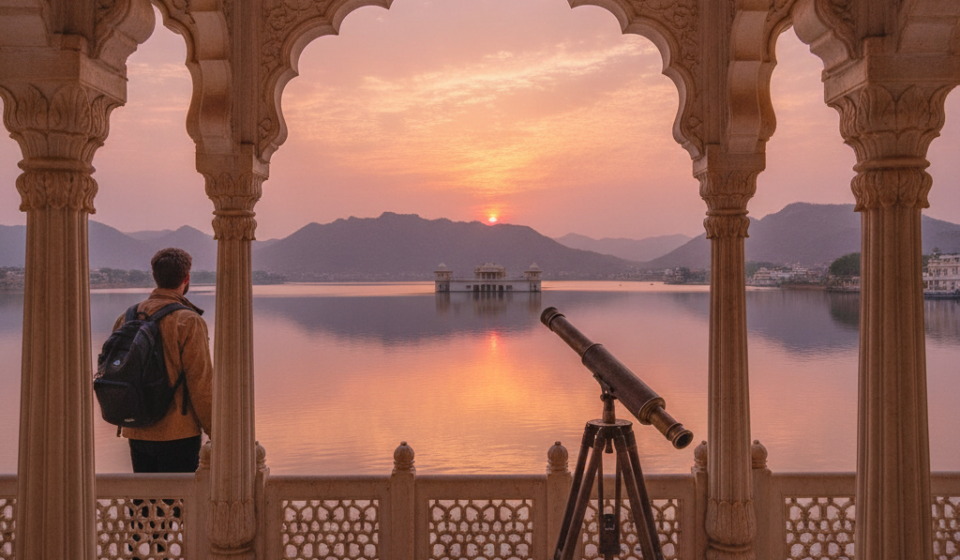
To enhance this classic solo travel itinerary india, one can extend the journey into Rajasthan’s deeper heritage cities. From the pink-hued streets of Jaipur, solo travelers can take a comfortable express train to the blue city of Jodhpur, dominated by the Mehrangarh Fort. Continuing westward brings travelers to the golden sands of Jaisalmer, where overnight desert camps under the stars offer a memorable experience. Alternatively, traveling south to the lakeside city of Udaipur reveals a romantic, slower-paced destination ideal for winding down. This western circuit is exceptionally solo-friendly, with hostels that facilitate easy social connections.
The Southern Tranquility and Coastal Route
For those seeking a more relaxed, nature-centric journey, a southern route focusing on Karnataka, Goa, and Kerala is highly recommended. This area offers a stark contrast to the hectic energy of the northern plains, making a solo trip to India feel significantly more manageable for those who prefer quieter environments.
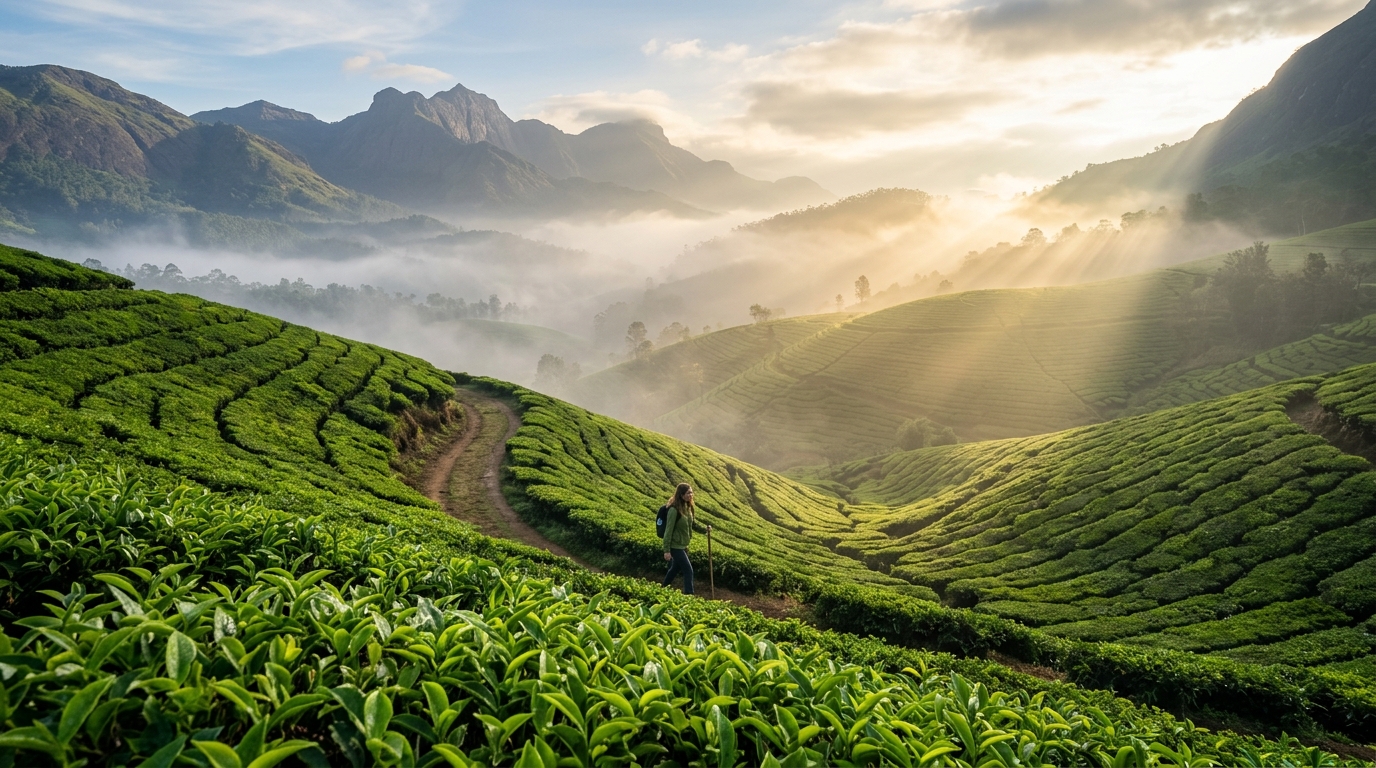
Starting in the coastal state of Goa, solo travelers can enjoy serene beaches, Portuguese-influenced architecture, and a laid-back lifestyle. Moving southward leads into the state of Kerala, known as ‘God’s Own Country.’ Key highlights here include exploring the historic spice-trading port of Fort Kochi, cruising the quiet backwaters of Alappuzha on a traditional houseboat, and trekking through the tea plantations of Munnar. This southern circuit is highly regarded for its high literacy rates, welcoming local population, and exceptionally fresh coastal cuisine, making it a stellar choice for a slower, coastal solo travel itinerary india. Adding this region balances a more intense northern journey.
The Himalayan Adventure Route
Mountain enthusiasts and spiritual seekers should look north to the Indian Himalayas. This route is ideal for an outdoor enthusiast’s solo travel itinerary india, offering dramatic high-altitude landscapes, Buddhist monasteries, and world-class trekking.
The journey typically begins in Rishikesh, situated on the banks of the Ganges. Known as the yoga capital of the world, Rishikesh is incredibly popular with solo travelers, offering an abundance of ashrams, cafes, and white-water rafting opportunities. Moving deeper into the mountains, destinations like Dharamshala and McLeod Ganj (the home of the Dalai Lama) provide a unique blend of Tibetan culture and Himalayan views. For the ultimate adventure, traveling to Leh Ladakh during the summer months reveals an arid, high-altitude desert surrounded by snow-capped peaks. Factor in acclimatization days and check for seasonal road closures in this high-altitude region, as these demand adjustments in a solo travel itinerary india.
Practical Strategies for On-the-Ground Navigation
Executing a solo travel itinerary india successfully requires a set of practical on-the-ground strategies. Managing your daily logistics efficiently ensures that more time is spent enjoying the destination rather than solving unexpected problems. This section outlines key operational details that keep solo travelers safe and connected.
Managing Connectivity and Digital Tools
Staying online is vital for any solo travel itinerary india. Reliable mobile data is necessary for using navigation apps, booking rides, and accessing digital translation tools. Upon arrival at major international airports, solo travelers should acquire a local Indian SIM card (with major providers like Airtel or Jio offering excellent coverage across most regions).
Having a functional phone number is crucial because many local services and transit applications require OTP (One-Time Password) verification. This simple step guarantees the smooth operation of a solo travel itinerary india. Utilizing offline maps is also recommended, especially when traveling through remote mountainous areas where signal strength can be inconsistent.
- Google Maps: Indispensable for route planning, live train tracking, and city walking directions.
- Uber and Ola: Vital for booking reliable, metered rides without price negotiations.
- IRCTC Rail Connect: Crucial for real-time train status and booking ticket updates.
- MakeMyTrip or ixigo: Excellent for booking short-notice domestic flights and buses.
- Google Translate: Useful for translating local signs and rural communication.
Managing Finances and Local Transactions
India is rapidly transitioning to a cashless economy, largely driven by the Unified Payments Interface (UPI). But still, international travelers can find it challenging to access UPI without an Indian bank account (though some specialized digital services now offer UPI setups for tourists). Therefore, carrying a mix of cash and reliable international debit cards is necessary when budgeting for a solo travel itinerary india.
Navigating financial logistics smoothly requires active planning. Follow these essential cash and card guidelines:
- Diversify Cards: Carry multiple cards from different banks to avoid automated blocks or machine rejections.
- Keep Emergency Cash: Stash paper currency in small denominations (such as 100 and 500 rupee notes) in multiple separate compartments.
- Use Safe ATMs: Withdraw cash from ATMs located inside official bank lobbies, which are less prone to skimming devices.
- Alert Your Bank: Set travel notices on your accounts before departure to prevent unexpected security freezes.
Staying Healthy and Handling Dietary Shifts
Adjusting to the rich, spiced culinary culture of India is a highlight of any trip. However, maintaining digestive health is an essential part of a solo travel itinerary india. The most common advice is to drink only bottled, sealed mineral water or water that has been thoroughly purified.
When exploring street food, prioritize vendors with high turnover, as the ingredients are more likely to be fresh. Opting for vegetarian food is often a safer choice for solo travelers, as vegetarianism is widely practiced across India, and the hygiene standards for vegetables are generally easier to maintain than for meat.
Essential Packing and Security Checklist for Solo Journeys
Packing effectively for a solo travel itinerary india requires balancing climate versatility with security requirements. Over-packing is a common mistake that complicates transit on trains and buses. Choosing lightweight, quick-drying clothing that can be layered is the most practical strategy.
When completing a solo travel itinerary india checklist, prioritize personal security items. This includes a high-quality money belt to keep your passport and primary credit card secure under your clothing. A sturdy padlock is also essential for securing your luggage in train compartments and hostel lockers. Finally, keeping a compact power bank ensures your mobile devices remain charged during long train journeys, allowing you to use navigation tools and emergency contacts without interruption.
Frequently Asked Questions About Solo Travel in India
How many days are ideal for a solo travel itinerary india?
A duration of 14 to 21 days is generally ideal for a solo travel itinerary india. This timeframe allows you to explore one or two regions thoroughly without experiencing transit fatigue.
Is it safe to design a solo travel itinerary india for female travelers?
Yes, it is entirely feasible to create a safe solo travel itinerary india for female travelers. Prioritizing daytime travel, staying in reputable social hostels, dressing conservatively, and maintaining continuous cellular connectivity significantly reduce travel risks.