


Obtaining minor travel documents can be complex. This is especially true when a single parent applying for child passport in india handles the paperwork alone. Indian passport regulations historically required signatures from both mother and father. This practice created significant hurdles for solo guardians. However, the Ministry of External Affairs updated the rules to make the process smoother. Today, a solo guardian can secure a child’s travel document with proper documentation. The main requirement is understanding which specific annexures and court orders apply to each personal situation. By preparing the correct paperwork in advance, guardians can successfully secure the passport without unnecessary delays. This comprehensive guide details the exact legal structures, documentation requirements, and step-by-step processes for solo applicants in India.
Key Takeaways
- Simplified Rules: Both parent names are no longer mandatory; solo parents can legally leave the uncooperative or absent parent’s name blank on minor passport forms.
- Annexure C vs. D: Annexure C is for absent or uncooperative parents (unilateral declaration), while Annexure D is for cooperative joint consent.
- No Notarization: Clean declarations on plain paper have replaced expensive stamp paper and notary verification requirements.
- Mandatory Presence: The minor child must physically accompany the applying parent to the Passport Seva Kendra (PSK) for biometric capture.
- Tatkaal Availability: Urgent minor passports can be issued within 1 to 3 days under the Tatkaal scheme for an extra fee of INR 2,000.
Legal Framework for Minor Passport Applications in India
The legal framework governing a single parent applying for child passport in india has seen significant progressive updates. In past decades, a single parent applying for child passport in india faced immense bureaucratic hurdles. The system previously assumed that both parents must consent to the minor’s travel. This assumption often left solo mothers in difficult legal positions. To address these challenges, the Ministry of External Affairs updated the Passport Rules in December 2016. This update substantially simplified the entire application process for minor children.
As the Ministry of External Affairs reported in their December 2016 policy update, both parent names are no longer mandatory on minor passport forms. Applicants can now provide the name of only one parent or legal guardian. This change was a massive relief for many families. It is basically a system designed to protect the rights of solo guardians and children. But still, the applicant must provide a clear legal declaration explaining why the other parent’s consent is missing.
The legal framework relies heavily on specific declarations known as annexures. These documents replace the need for a joint signature. The primary goal is to prevent child trafficking while allowing genuine solo guardians to travel freely. In practice, the Passport Seva Kendra (which is the physical office where document verification occurs) evaluates each application based on these standardized declarations. Knowing which document to file can save weeks of administrative delays. Some legal experts claim that solo passport applications are still excessively difficult. They are not entirely wrong – but recent reforms have made the path much clearer.
Annexure C: When the Spouse is Absent or Uncooperative
Annexure C is the essential declaration designed for a single parent applying for child passport in india under specific solo custody situations. For a single parent applying for child passport in india, understanding when to use Annexure C is vital. This declaration is utilized when one parent is completely unavailable, refuses to sign, or cannot be contacted. It is a unilateral declaration made by the applying parent under oath.
The applicant must declare that they are the primary caregiver and that the other parent is not involved. Annexure C specifically covers situations such as:
- A spouse has deserted the family and their whereabouts are unknown.
- One parent refuses to cooperate or sign documents due to ongoing matrimonial or legal disputes.
- The child is born out of wedlock and the father is not legally or socially involved.
The document must be printed on plain paper, as stamp paper is no longer mandatory for these declarations. This change has greatly reduced the cost and effort involved in the process.
The legal text of Annexure C requires the applicant to state that the child is in their sole custody. They must also declare that they are fully responsible for the child’s upkeep and safety. The declaration includes a clause protecting the passport office from future legal claims by the absent parent. If the absent parent raises objections later, the applying parent bears the legal responsibility.
While Annexure C is a powerful tool, it must be filled out with absolute honesty. Any false statement on this declaration can lead to the cancellation of the passport. It may also attract financial penalties under the Passport Act of 1967. Therefore, the applying guardian must ensure that all stated facts match their actual legal and personal circumstances.
Annexure D: Standard Declaration for Minors
While Annexure C handles cases of missing or non-consenting partners, a single parent applying for child passport in india may also use Annexure D under joint consent. Annexure D is the standard declaration for a minor’s passport application when both parents are cooperative. In a typical scenario, both parents sign this document to confirm their consent. However, a single parent applying for child passport in india can also use Annexure D under specific circumstances.
For instance, if the parents are separated but maintain an amicable relationship, both can sign Annexure D. This is often the smoothest path to securing the passport. The document confirms that both parents agree to the child obtaining a passport. It also states that the information provided in the application is true and accurate.
If the single parent applying for child passport in india has joint custody, Annexure D is usually the preferred document. It demonstrates to the passport officer that both legal guardians are in agreement. This minimizes the risk of legal disputes after the passport is issued. The document is straightforward and does not require notarization.
In some cases, the Regional Passport Office (RPO) might request additional proof of consent. Having a signed Annexure D from both parents eliminates these secondary inquiries. However, if the other parent is unreachable, the applicant must shift to Annexure C. The distinction between these two documents is the most critical aspect of the entire process.
| Criteria | Annexure C | Annexure D |
|---|---|---|
| Consent Level | Unilateral (Signed by applying parent only) | Bilateral (Signed by both parents or guardians) |
| Primary Use Case | Absent, uncooperative, or missing spouse; unmarried mothers | Amicable separation, joint custody, deceased spouse, standard applications |
| Notary / Stamp Duty | No stamp paper or notary required; plain paper accepted | Plain paper declaration; no notarization needed |
| Legal Liability | Solely borne by the applying parent for any future dispute | Shared equally by both signing parents |
Crucial Scenarios and Required Documentation
Different family structures require different document sets. A single parent applying for child passport in india must match their exact personal situation to the correct legal category. This prevents administrative rejection at the PSK. Below are the most common scenarios and the specific paperwork required for each.
Divorced Parents with Sole Custody
If a court grants sole custody, the single parent applying for child passport in india must present the certified copy of the divorce decree. This decree must explicitly state that the applying parent has legal custody of the child. Along with the decree, the parent must submit Annexure D to the passport office.
The court order acts as the ultimate proof of legal guardianship. It overrides any objections the other parent might raise later. But still, the passport office will examine the custody terms closely. If the court granted visitation rights to the non-custodial parent, the office might require their consent. In such cases, a single parent applying for child passport in india may need to clarify these details with the RPO.
The document checklist for sole custody includes:
- Certified copy of the court-approved divorce decree
- An updated birth certificate of the minor child
- Proof of address of the applying single parent
- Annexure D signed by the parent holding custody
This clear documentation ensures a smooth processing experience at the PSK.
Divorced Parents with Joint Custody
Joint custody presents unique circumstances for a single parent applying for child passport in india. In this scenario, both parents share legal responsibility for the child. Therefore, the consent of both parents is legally required. Both parents must sign Annexure D to move the application forward.
If one parent refuses to sign, the other cannot easily proceed. A single parent applying for child passport in india in a joint custody arrangement must seek legal mediation if disputes arise. Alternatively, they can petition the family court for a specific order allowing the passport application. The court can grant permission if travel is in the child’s best interest.
For joint custody, the required documents include:
- Annexure D signed by both parents
- Divorce decree detailing the joint custody arrangement
- Address proof of the parent with whom the child resides
- Official birth certificate of the minor
Having these documents ready prevents unexpected delays during verification.
Unmarried Single Mothers
An unmarried mother represents a common profile of a single parent applying for child passport in india. The Ministry of External Affairs made it easier for an unmarried single parent applying for child passport in india by removing the requirement to name the father. This progressive rule protects the privacy and rights of the mother and child.
In this situation, the mother does not need to provide the father’s consent. She only needs to submit Annexure C. In this declaration, she must state that the child was born out of wedlock. She must also declare that she is the sole caregiver and guardian of the child.
The paperwork required for unmarried single mothers is minimal:
- Annexure C signed by the mother under oath
- Birth certificate of the child (ideally listing only the mother’s name)
- Proof of address of the mother
This process ensures that unmarried mothers can secure travel documents without facing social stigma.
Deceased Spouse Scenario
In the event of a spouse’s demise, a single parent applying for child passport in india must provide the official death certificate. This scenario is relatively straightforward compared to active disputes. The surviving parent becomes the sole natural guardian under Indian law.
The applying parent must submit Annexure D along with the death certificate of the deceased partner. This acts as proof that joint consent is physically impossible. The passport office will verify the death certificate through official databases.
The required documents for this scenario are:
- Official death certificate issued by a competent municipal authority
- Annexure D signed by the surviving parent
- Address proof of the surviving parent
- Birth certificate of the minor child
This clear set of documents ensures that the application is processed without legal hurdles.
Abandonment by One Parent
Abandonment presents a difficult path for a single parent applying for child passport in india. If one parent has disappeared, obtaining their signature is impossible. In this case, the active parent must submit Annexure C. They must declare that the other parent has abandoned the family and their whereabouts are unknown.
The applying parent does not need a formal police report in most cases. However, they must state the facts clearly under oath. The passport office will review the case to ensure there is no custody dispute. If the abandonment is proven, the office will proceed with the issuance.
The documentation required for abandonment cases includes:
- Annexure C declaring abandonment and lack of contact
- Address proof of the active parent
- Minor’s birth certificate
A clear declaration ensures the active parent can successfully secure the passport.
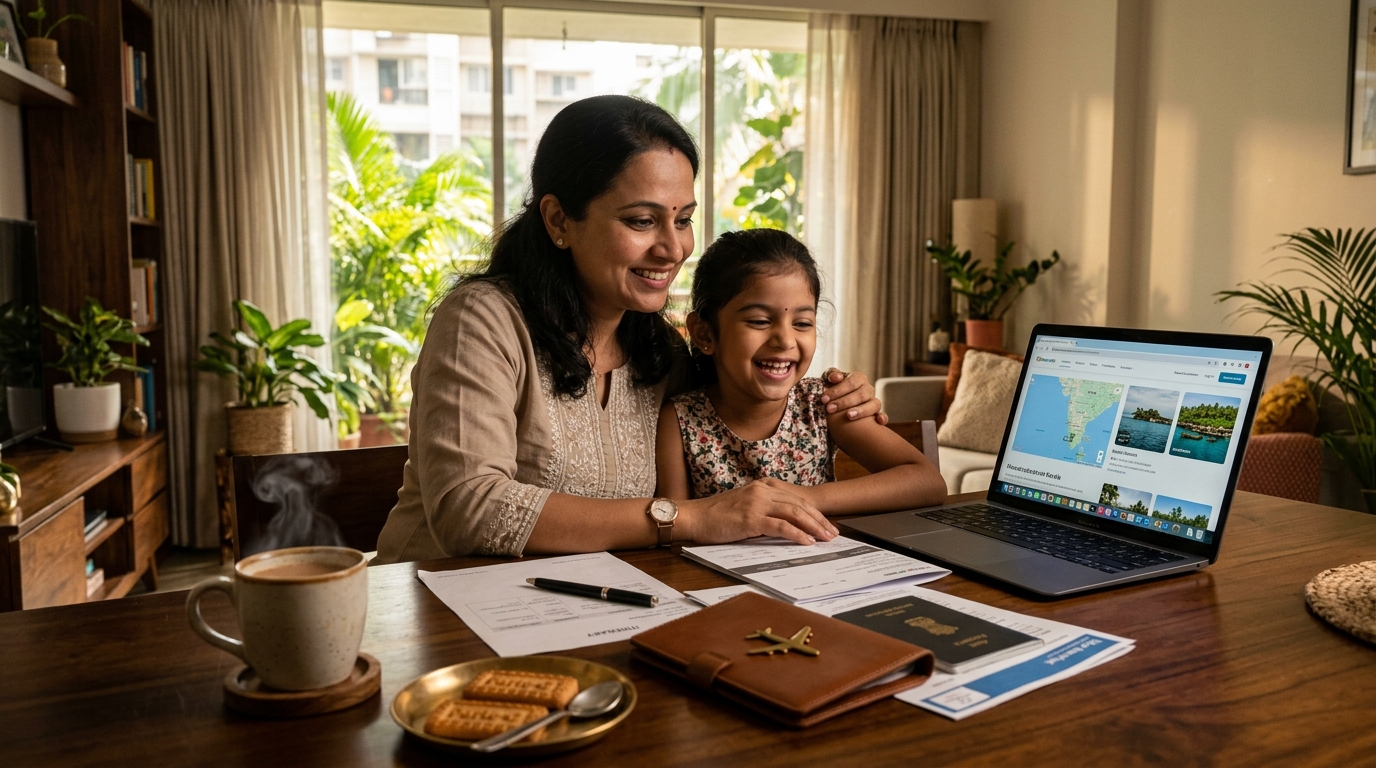
Step-by-Step Passport Application Process for Single Parents
The process of securing a minor’s passport involves several distinct administrative stages. A single parent applying for child passport in india must follow each step carefully to avoid errors. The entire process is managed online through the official Passport Seva portal, followed by an in-person visit.
Step 1: Online Registration and Form Filing
To begin, the single parent applying for child passport in india must register on the official Passport Seva portal. After creating an account, the user must log in and select the ‘Apply for Fresh Passport/Re-issue of Passport’ option. The essential online filing steps include:
- Account Creation: Register on the official portal with active contact credentials.
- Form Selection: Select ‘Fresh Passport’ or ‘Re-issue’ depending on the minor’s status.
- Parental Details: Fill in the active parent’s details. If the father’s name is not being provided, leave that field blank and check the “Single Parent” box if prompted.
Once all details are filled, the user must submit the form online.
Step 2: Scheduling the Appointment
After completing the application form, the single parent applying for child passport in india must schedule an appointment. This requires paying the passport fee online. The fee can be paid using internet banking, credit cards, or UPI. Once the payment is successful, the user can select an appointment slot at the nearest PSK.
According to official statistical metrics, minor applications account for roughly 15% of all annual passport processing in India, depending on the source. The applicant will receive an appointment confirmation SMS and email containing a unique Application Reference Number (ARN). This must be kept secure for the physical visit.
Step 3: Document Verification at the Seva Kendra
During the physical appointment, the single parent applying for child passport in india must carry all original documents. The minor child must also accompany the parent to the PSK. This is a mandatory requirement for biometric capture and photograph verification.
At the PSK, the documents will go through multiple levels of verification. The process generally moves through three counters:
- Counter A: Photograph capture, biometric verification (fingerprints/iris scan), and initial document scanning.
- Counter B: Detailed verification of original civil documents, custody decrees, and matching of Annexure signatures by verification officers.
- Counter C: Final validation and clearance by a senior granting officer who determines if the passport is approved.
If everything is in order, the application will be approved and sent for police verification. The parent can track the application status online using the ARN.
Key Differences: Normal vs. Tatkaal Passport Processing for Minors
The choice between Normal and Tatkaal processing affects how a single parent applying for child passport in india manages their travel timeline. Tatkaal processing offers a faster route for a single parent applying for child passport in india when travel plans are urgent. Below is a detailed comparison of the two processing modes.
| Feature | Normal Processing | Tatkaal Processing |
|---|---|---|
| Processing Time | Typically 15 to 30 working days | Usually 1 to 3 working days (subject to police verification rules) |
| Application Fee | INR 1,000 for minors (below 15 years) | Additional INR 2,000 (Total INR 3,000) |
| Police Verification | Conducted before passport issuance in most cases | Conducted after passport issuance (Post-PV mode) |
| Required Documents | Standard set (Birth certificate, address proof, Annexure C/D) | Standard set plus additional urgency proof if requested by RPO |
| Suitability | Best for planned, non-urgent travel | Best for sudden, urgent international travel |
While Tatkaal is highly efficient, a single parent applying for child passport in india must ensure that their documentation is completely flawless before choosing this route. Any discrepancy can cause the application to be downgraded to Normal processing. In such cases, the additional fee may not be refunded. Therefore, meticulous preparation is key to a successful Tatkaal application.
Crucial Travel Guidelines for Minor Single Parent Travel
Once the document is issued, the single parent applying for child passport in india must prepare for international border crossings. Many countries have strict entry regulations to prevent international child abduction. Even with a valid Indian passport, a minor traveling with only one parent may face questioning at immigration checkpoints.
To avoid issues, it is highly recommended to carry a consent letter from the non-traveling parent. This letter should explicitly permit the travel. If the other parent is deceased or absent, carrying the relevant legal documents (like the death certificate or sole custody court order) is essential. These documents act as proof of the guardian’s unilateral authority.
Additionally, securing comprehensive travel insurance is a critical step for international trips. Unexpected medical issues or trip delays can be challenging to manage alone. Parents should secure a robust travel insurance policy before departure. This ensures peace of mind and financial security during the journey. For visa requirements, check out the specialized services at TravelDham’s visa services portal.
FAQs
Applying for a child’s passport as a single parent can bring up many questions. Below are answers to some of the most frequently asked questions about this process.
Can a single parent apply for a child’s passport without the father’s consent?
Yes, a single parent applying for child passport in india can absolutely secure a passport without the other parent’s signature. This is done by submitting Annexure C instead of Annexure D. This declaration states that the other parent’s consent cannot be obtained due to specific circumstances like abandonment or non-cooperation. This ensures that the child is not denied a passport due to parental disputes.
What happens if the father refuses to sign the passport application?
If one parent refuses to cooperate, the single parent applying for child passport in india must submit a declaration under Annexure C. This document explains the situation to the passport authorities. The passport office has the legal authority to issue the passport based on this declaration. However, the applying parent must take full legal responsibility for any future disputes regarding the passport.
Do I need a court order to apply for my child’s passport as a single mother?
Generally, a single parent applying for child passport in india does not require a court order if they fulfill the criteria of Annexure C. However, if there is an active legal dispute regarding custody, the passport office may request a court order. If a court has granted joint custody, a specific court order or mutual consent is necessary to apply for the passport.
How long does it take to get a child’s passport under the single parent category?
The processing time for a single parent applying for child passport in india ranges from a few days under Tatkaal to a few weeks under normal processing. The standard fee is INR 1,000 for minor applications as set by the Passport Rules 1980. Under normal processing, it typically takes 15 to 30 working days. If you choose the Tatkaal scheme, it can be issued within 1 to 3 days, provided all documents are correct and police verification is completed successfully.
Conclusion
Ultimately, being a single parent applying for child passport in india requires attention to detail but is highly achievable. The Ministry of External Affairs has made the process much more accessible for single parents. By understanding the specific requirements and preparing the correct annexures, you can secure your child’s passport without unnecessary stress.
Once the passport is ready, you can start planning your international adventures. To ensure a seamless travel experience, explore the comprehensive travel insurance options at TravelDham’s travel insurance page, and feel free to contact us for any travel assistance. With the right preparation, you and your child can look forward to exploring the world together with confidence.