Schengen Visa Photo Size for Indian Citizens: Your Complete Guide to Requirements and Specifications

Planning a journey to Europe is an exciting prospect, but the administrative preparation requires rigorous attention to detail. One of the most critical aspects of the application process is the submission of compliant passport-style photographs. Statistics indicate that a significant portion of application delays stems from non-compliant documentation, where incorrect photograph specifications play a prominent role. For Indian travelers, ensuring that the submitted photograph matches the exact schengen visa photo size is a mandatory requirement that cannot be overlooked. Consular offices across India employ automated biometric scanning systems that reject any image failing to conform to these guidelines. Understanding the exact schengen visa photo size parameters is crucial to ensure a successful application and to prevent unnecessary processing delays. This comprehensive guide outlines the exact specifications, lighting requirements, and common pitfalls that applicants must manage to secure approval.
Key Takeaways
- Exact Dimensions: The mandatory Schengen visa photo size is exactly 35 mm x 45 mm, which is a rectangular format distinct from standard Indian passport sizes.
- Biometric Alignment: The applicant’s face must cover between 70% and 80% of the photograph, measuring 32 mm to 36 mm from chin to the top of the hair.
- Background Requirements: Photos must feature a uniform light grey or light blue background with neutral lighting and zero shadows.
- Recency Rule: Submitted photos must be captured within the past six months and display a perfectly neutral expression.
- Digital & Physical Standards: Digital uploads require a minimum of 600 DPI, while physical prints must be on high-grade matte or semi-glossy photographic paper.
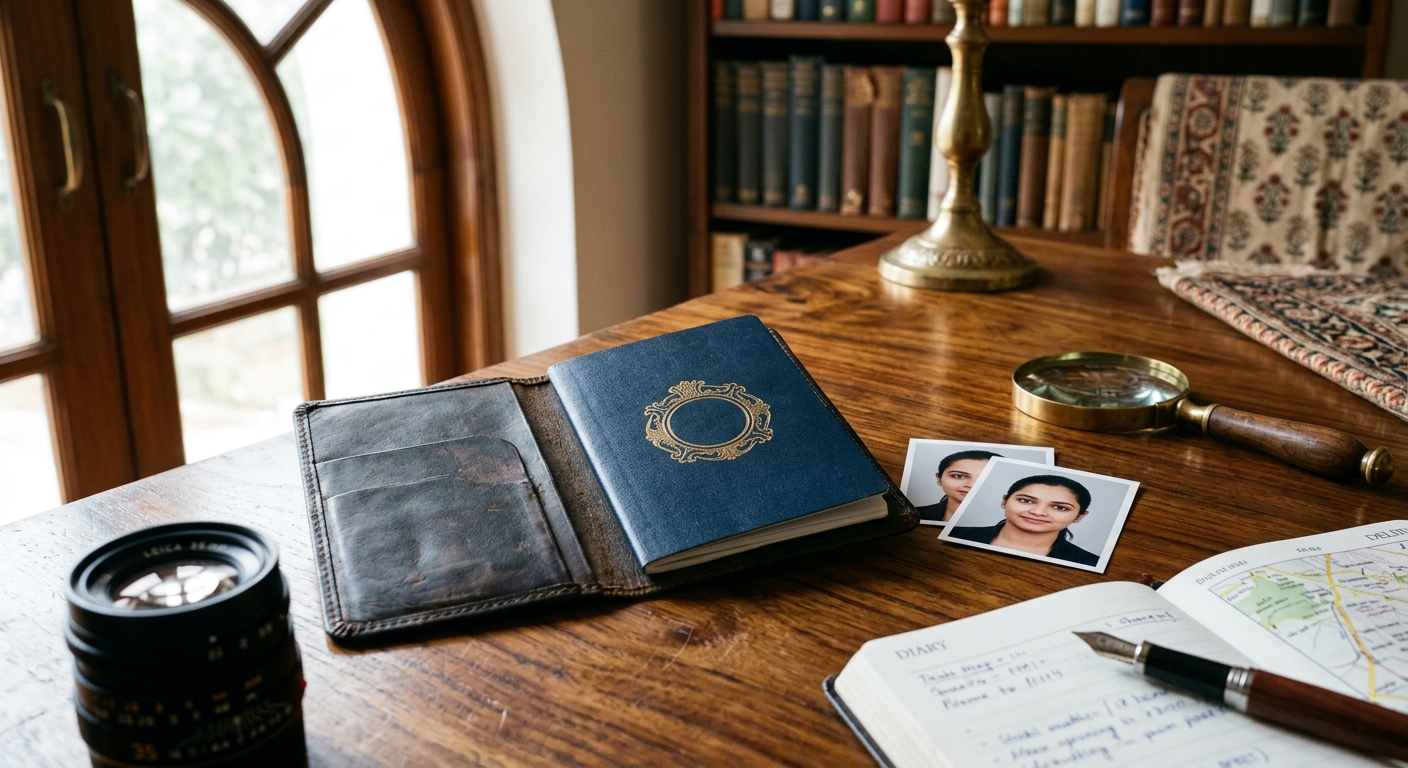
Understanding the Schengen Visa Photo Size Requirements
To understand why the schengen visa photo size is so strictly monitored, one must look at biometric systems. Modern European border control systems rely heavily on facial recognition technology. It is basically an electronic verification method designed to confirm identity and enhance security across the borderless Schengen zone. When a traveler submits a visa application, the consulate scans the photograph to create a digital template of their facial geometry. This digital profile is stored in the Visa Information System (VIS) and is later cross-referenced at border crossings. If the physical print does not match the standardized dimensions, the scanning software will fail to register the biometric data points. Consequently, this failure forces consular staff to reject the photograph, which leads to the rejection of the entire visa application.
Standard Dimensions and Border Specifications
The official schengen visa photo size is exactly 35 mm in width by 45 mm in height. This is a rigid standard that applies across all twenty-nine Schengen member states. Many Indian professional photographers mistake standard dimensions for domestic passports with the required schengen visa photo size. In India, the standard Indian passport photo size is typically 51 mm by 51 mm, which is a square format. Submitting a square photo for a European application is a guarantee of immediate rejection. The format must be rectangular, and the photo must be cut cleanly to the exact dimensions without any white margins, borders, or decorative frames. The entire area of the 35 mm by 45 mm space must be occupied by the applicant’s head, neck, and shoulders.
The following table provides a clear comparison between the Schengen visa photo dimensions and other common photographic formats used in India:
| Photo Type | Width (mm) | Height (mm) | Aspect Ratio / Shape | Key Application |
|---|---|---|---|---|
| Schengen Visa Photo | 35 mm | 45 mm | Rectangular (7:9) | All Schengen Member States |
| Indian Passport Photo | 51 mm | 51 mm | Square (1:1) | Indian Passport Applications |
| US Visa Photo | 51 mm | 51 mm | Square (1:1) | United States Visas |
The 80 Percent Face Coverage Rule
Within the 35 mm by 45 mm frame, the applicant’s face must occupy a specific proportion of the space. This facial proportion is a core aspect of the schengen visa photo size regulation. Specifically, the face must cover between 70% and 80% of the entire image. This vertical measurement, taken from the chin to the top of the head, must measure between 32 mm and 36 mm. Consulates use specialized templates to verify that the submitted print fits the schengen visa photo size mask. Additionally, the head must be centered horizontally and vertically. There must be a clear space of approximately 5 mm between the top of the hair and the upper edge of the photo. This ensures that the biometric scanner can isolate facial features without interference from background borders or clothing patterns.
Detailed Photo Specifications for Indian Applicants
While measuring the schengen visa photo size is a good start, there are other biometric standards to maintain. Achieving compliance requires a thorough understanding of lighting, posture, and facial expression. The European Union has established detailed Schengen visa photo specifications to ensure uniformity across all consulates worldwide. Indian applicants must pay close attention to these guidelines, as photo studio setups in India can vary widely. Preparing a high-quality photo for Schengen visa processing requires absolute attention to lighting and facial positioning. Ensuring the correct schengen visa photo size works in tandem with proper lighting and positioning. These elements must be executed flawlessly to guarantee acceptance.
Background Color and Lighting
To ensure proper contrast and biometric scanning compatibility, the background and lighting must meet the following strict conditions:
- Background Color: Must be a completely uniform light grey or light blue. Pure white is discouraged due to potential contrast issues with light-colored clothing, while dark or patterned backgrounds are strictly rejected.
- No Shadows: The background and the applicant’s face must be free of shadows, particularly under the eyes, nose, or chin.
- Lighting Quality: Light must be natural, evenly distributed, and diffused to prevent overexposure, glare, or harsh highlights.
- Contrast: Strong, balanced contrast must be maintained to clearly distinguish facial features and hair against the backdrop.
The photographer must ensure that there are no shadows on the face or background. Shadows under the eyes or chin obscure biometric landmarks, making recognition difficult. Even when the printed schengen visa photo size is accurate, poor contrast can invalidate the document. The light must be natural and diffused, preventing overexposure.
Head Position and Facial Expression
Applicants must maintain a perfectly straight head position, looking directly at the camera lens. The head must not be tilted, turned, or angled. Both ears and both sides of the face must be visible in equal proportion. This frontal view is essential for biometric assessment.
The facial expression must remain entirely neutral. The mouth must be completely closed, and the applicant should not smile, frown, or squint. Correct head alignment ensures that the physical features fit within the standard schengen visa photo size frame, allowing the biometric scanners to measure facial distances accurately.
Eyes and Gaze Direction
The eyes are the most critical element of the biometric photograph. They must be completely open, clear, and visible. Gaze must be directed straight at the camera lens. Hair must not drape across the forehead or cover any part of the eyes. Even a minor obstruction, such as a stray strand of hair, can cause the automated scanning software to reject the photo. The scanning process checks eye coordinates within the specified schengen visa photo size dimensions, meaning pupils must be perfectly visible. Red-eye effects are unacceptable and must be corrected by retaking the photo.
Glasses, Headwear, and Religious Attire
For applicants who wear prescription glasses, removing them for the photograph avoids any risk of rejection. If glasses are worn, lenses must be completely clear with no tint or glare. Frames must be thin and must not cover or obscure the eyes. Sunglasses are strictly prohibited.
Headwear is only allowed for religious purposes. Turbans, hijabs, and other religious head coverings are permitted, but they must not cover any part of the face. The facial area from the bottom of the chin to the top of the forehead must be fully visible. These rules ensure that religious garments do not obscure features inside the schengen visa photo size borders.
Below is a comprehensive summary of these specific requirements to help applicants prepare for their photo session:
| Specification Category | Required Standard | Strictly Prohibited |
|---|---|---|
| Background | Uniform light grey or light blue | Dark colors, patterns, or pure white with white shirts |
| Facial Expression | Neutral, mouth completely closed | Smiling, showing teeth, squinting, or frowning |
| Head Alignment | Straight, centered, no tilt | Profile views, side-angle shots, or tilted head |
| Glasses | Clear lenses, thin frames, no reflection | Sunglasses, tinted lenses, thick or colorful frames |
| Headwear | Permitted only for verified religious reasons | Caps, hats, beanies, or headwear covering facial edges |
Common Mistakes to Avoid in Schengen Visa Photos
Most rejections related to the schengen visa photo size occur due to careless cropping or poor print quality. Small errors in documentation can lead to significant delays. Despite the availability of clear Schengen visa photo guidelines, understanding the common mistakes made by Indian applicants is essential to avoid these setbacks. Avoiding these errors is as vital as getting the schengen visa photo size right. Consular officers inspect every document with extreme precision.
Incorrect Dimensions or Cropping
Many applicants try to save time by resizing or cropping an existing photograph to fit the schengen visa photo size. This approach is highly problematic. Cropping a larger image often leads to poor resolution and pixelation, which is unacceptable for biometric processing. Furthermore, resizing an image manually can alter the aspect ratio, making the face appear unnaturally stretched. Using a ruler to check the printed schengen visa photo size is a simple yet effective precaution that every applicant should take before submitting their documents.
Issues with Contrast and Shadow
Improper lighting is another major cause of photo rejections. Photographs that are too dark, too bright, or feature uneven contrast are unsuitable. Shadows can alter the perceived shape of the face within the schengen visa photo size boundary, which interferes with facial recognition algorithms. Furthermore, using digital software to artificially increase contrast or remove shadows is not allowed. The photograph must be a natural representation of the applicant’s skin tone, features, and contours.
Using Old or Recycled Photographs
Schengen consulates require photographs to be recent, specifically taken within the past six months. Submitting an old photo that matches the schengen visa photo size but does not look like you is a severe mistake. Consular officers check the photograph against the issued dates of other visas in your passport. If they discover that the same photograph was used years ago, they will reject it immediately. If your appearance has changed significantly, you must obtain new photographs.
Schengen Visa Photo Requirements for Children
Taking compliant photographs of young children and infants presents unique challenges. The required schengen visa photo size remains identical for children of all ages, and the visual quality must be high. Applying the standard schengen visa photo size to infants requires patience and specific techniques to ensure that facial measurements are met without compromising the child’s comfort.
Specifications for Infants and Babies
While the required schengen visa photo size is identical for infants, some regulations are slightly relaxed for babies under six months:
- Gaze and Eyes: It is preferred that the baby looks at the camera, but partially closed eyes are acceptable.
- Positioning: The baby’s head must still be centered within the frame. You can lay the baby down on a plain light grey or light blue sheet to capture the photo from above.
- No Obstructions: No toys, pacifiers, car seat straps, parent’s hands, or other people must be visible in the frame.
Tips for Photographing Young Children
For children between the ages of one and six, the requirements are more strictly enforced. Their eyes must be open, their mouth closed, and they must look directly at the camera.
Ensuring your child remains calm helps in capturing the required schengen visa photo size template. The following strategies can make the process easier:
- Avoid direct flash: Direct flash can startle children and cause them to blink or cry. Utilize diffused natural light instead.
- Maintain a calm environment: Schedule the photo session when the child is well-fed and rested to prevent fussiness.
- Use attention-grabbing objects: Hold a small toy or a brightly colored object near the camera lens to encourage the child to look straight ahead.
- Take multiple exposures: Taking a rapid sequence of photos increases the likelihood of capturing a perfectly compliant image.
These steps will help you obtain a photo that fits the strict biometric layout without causing distress to the child.
Digital Photo Requirements vs. Physical Prints
As visa application processes increasingly incorporate digital elements, applicants must understand the transition from physical prints to digital uploads. Depending on the Schengen country, you may need to upload a digital file online. The digital file dimensions must scale exactly to the physical schengen visa photo size to maintain biometric validity.
Resolution and Quality Guidelines
When uploading a digital photograph, resolution is a key factor. The image must be sharp and free of digital noise or pixelation. The minimum resolution is usually 600 DPI, which corresponds to roughly 413 pixels wide by 531 pixels high. High resolution is mandatory to maintain clarity when printed at the schengen visa photo size. The file format must be JPEG or PNG, and the file size must remain within the limits specified by the consular portal.
Paper Quality and Printing Standards
For physical submissions, paper quality is critical. Photos must be printed on high-grade photographic paper, which can be matte or semi-glossy. Matte finishes are preferred because they do not reflect light, making scanning easier for consular staff. The paper must be sturdy enough to prevent warping of the schengen visa photo size print. Using home inkjet printers is not recommended, as ink can smudge. Always use a professional printing service that utilizes dye-sublimation technology.
To help you navigate between online applications and physical document packages, here is a specification breakdown for digital uploads versus physical prints:
| Specification Parameter | Digital Upload Requirements | Physical Print Requirements |
|---|---|---|
| Dimensions | Minimum 413 x 531 pixels (equivalent to 35×45 mm) | Exactly 35 mm x 45 mm (borderless) |
| Resolution / Paper | Minimum 600 DPI (high-resolution) | High-grade matte or semi-glossy photo paper |
| File Format / Tech | JPEG or PNG format | Dye-sublimation professional printing |
| File Size Limits | Usually between 20 KB and 240 KB | N/A (must be clean, unbent, and free of marks) |
Frequently Asked Questions
Can I wear makeup in my visa photo?
Subtle makeup is acceptable as long as it does not distort features within the schengen visa photo size. The photograph must represent your natural appearance. Avoid heavy contouring, excessive highlighting, or dramatic lipsticks that alter your facial contours. Ensure that there is no glare from cosmetics under the studio lights, as shiny skin can interfere with biometric scanners. It is advisable to use a matte powder to reduce facial shine before the photograph is taken.
Is a selfie acceptable if edited?
Selfies cannot replicate the flat perspective required for the official schengen visa photo size. The short focal length of smartphone front cameras distorts facial geometry, often making the nose appear larger and the ears smaller. This distortion fails to meet biometric standards. The photo must be taken by a professional or by another person using a standard camera from a distance of at least 1.5 meters to ensure natural proportions.
How many photos do I need to submit?
You must provide two physical copies of the correct schengen visa photo size. One photo should be glued to the application form, and the other should be kept loose for scanning. It is highly recommended to print four to six copies to have spares in case of damage or loss.
In addition to preparing your photos, obtaining a Schengen visa involves arranging several crucial documents. One of the most critical requirements is a comprehensive policy for travel insurance, which must cover medical emergencies up to thirty thousand euros. Ensuring all your documents, from photos to insurance, are in order will ensure a smooth journey to Europe.