
The hum of rubber on warm asphalt, the sudden drop in temperature as mountain roads bend upward, and the changing dialects spoken at highway tea stalls tell a story that cannot be experienced from an airplane window. To experience the subcontinent in its truest form is to travel overland. While flights save hours, they erase the texture of the country, reducing dramatic geographical shifts into mere departure and arrival points. Exploring the vast subcontinent via long-distance driving has become a rite of passage for adventurers seeking raw, authentic experiences. Deciding to embark on road trips in india requires a willingness to embrace the unexpected, from livestock resting on national highways to breathtaking vistas that emerge after hours of driving through thick dust.
Key Takeaways:
- Preparation is Paramount: Rigorous mechanical checks and a pre-funded FASTag are essential for hassle-free travel.
- Diverse Terrains: Routes cover high-altitude mountain passes, coastal routes, and vast desert plains.
- Acclimatization: Mountain routes require gradual ascent planning to avoid Acute Mountain Sickness (AMS).
- Document Readiness: Keep physical copies of registration, PUC, insurance, and local permits handy.
The Allure of Road Trips in India
Driving across this country is not merely a method of transportation. It is an active engagement with geography and culture. When discussing road trips in india, one must understand that the road network is a living, breathing entity. As the Ministry of Road Transport and Highways documented in its late-2024 report, India’s national highway network reached 146,145 kilometers, which represents a massive logistical shift. This immense network connects remote mountain villages with coastal metropolises, allowing travelers to witness transitions in cuisine, language, and architecture in real time.
But still, the physical road conditions can be highly unpredictable. A newly paved four-lane expressway can suddenly transition into a dusty, single-lane track due to local construction or monsoon damage. This contrast of high-speed modern infrastructure and rugged, rustic paths is precisely what makes road trips in india so compelling. It forces a driver to remain fully present, adapting to the rhythm of local traffic and the whims of changing terrain. It is basically an exercise in patience and alertness.
To illustrate, consider the transition from the humid plains of Maharashtra to the cool altitude of the Western Ghats. In a span of just three hours, the vegetation changes from dry scrub to dense, evergreen canopy. The roadside food stalls change their offerings from spicy vada pav to fresh strawberries with cream. These micro-environment shifts are lost when traveling by air or rail. The highway becomes a school of geography, offering lessons that are sensory rather than academic.
Iconic Mountain Passes of the North
The northern frontier of the country presents some of the most challenging and visually spectacular driving environments on earth. For those planning road trips in india through the high altitudes of the Himalayas, these journeys are less about speed and more about survival, mechanical endurance, and sheer focus. The roads here are carved directly into vertical granite cliffs, where a single miscalculation can have severe consequences.
Manali to Leh: Traversing the High Passes
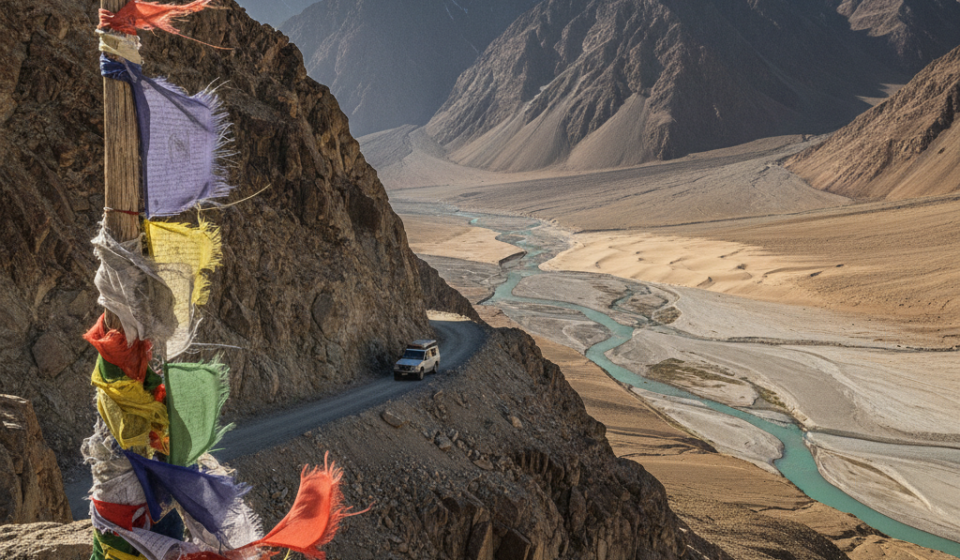
Spanning roughly 428 kilometers (depending on the exact route taken and recent bypasses), the highway connecting Manali to Leh is widely considered the benchmark for road trips in india. This route is not for the faint-hearted. It crosses several of the world’s highest drivable passes, including Rohtang La, Baralacha La, and the formidable Tanglang La, which sits at an elevation of 5,328 meters.
Of all road trips in india, this one demands the most rigorous mechanical preparation. Vehicles must cope with thin air, which reduces engine power, and steep gradients that test braking systems to their limits.
The terrain changes dramatically as you cross the Pir Panjal range, offering a sequence of stark transitions:
- Lush Valleys to Arid Deserts: The emerald hills of Himachal Pradesh transition rapidly into the rain-shadow desert of Ladakh.
- High-Altitude Sand Dunes: Vast, sweeping dunes situated thousands of meters above sea level.
- Glacial Crossings: Active rivers fed by melting glaciers that cut directly across the roads.
For travelers looking to experience this incredible high-altitude terrain without the stress of driving, booking a curated itinerary can make all the difference. Exploring options like Leh Ladakh tour packages allows adventurers to focus entirely on the dramatic scenery while experienced local drivers handle the treacherous mountain passes.
Shimla to Spiti Valley: The Cold Desert Odyssey
The journey through the Spiti Valley, starting from Shimla and concluding in Manali, is often described as the middle land trek. Unlike other road trips in india, the Spiti loop offers a more gradual ascent, which helps with acclimatization, but the road conditions are arguably more rugged than the Leh highway. The route follows the Sutlej River before turning north along the Spiti River, taking drivers through deep gorges and past ancient mud-brick monasteries clinging to mountain walls.
When evaluating high-altitude road trips in india, Spiti stands out for its sheer isolation. Key challenges on this route include:
- Erratic Connectivity: Mobile signals are extremely sparse, with only select networks operating reliably in pocket areas.
- Scarce Fuel Stations: Refueling points can be separated by hundreds of kilometers, making extra fuel cans a necessity.
- Demanding Terrain: The stretch between Kaza and Manali features the high-altitude Kunzum Pass and unpredictable water crossings at Chhatru.
It is a raw, unshielded encounter with nature that rewards drivers with views of untouched peaks and pristine, turquoise lakes.
Scenic Coastal and Southern Corridors
In contrast to the stark heights of the northern mountains, the southern peninsula offers roads wrapped in tropical greenery, marine breezes, and smooth coastal highways. Southern routes offer a different flavor of road trips in india, characterized by historical temple towns, spice plantations, and miles of sandy shores.
Mumbai to Goa: The Western Ghats Experience
The journey from the bustling financial capital of Mumbai to the relaxed beaches of Goa is the gold standard of coastal road trips in india. Drivers have two primary routes to choose from: the smooth, multi-lane National Highway 48 (which runs inland through Pune and Kolhapur) or the scenic, winding State Highway 4, commonly known as the Bombay-Goa Highway.
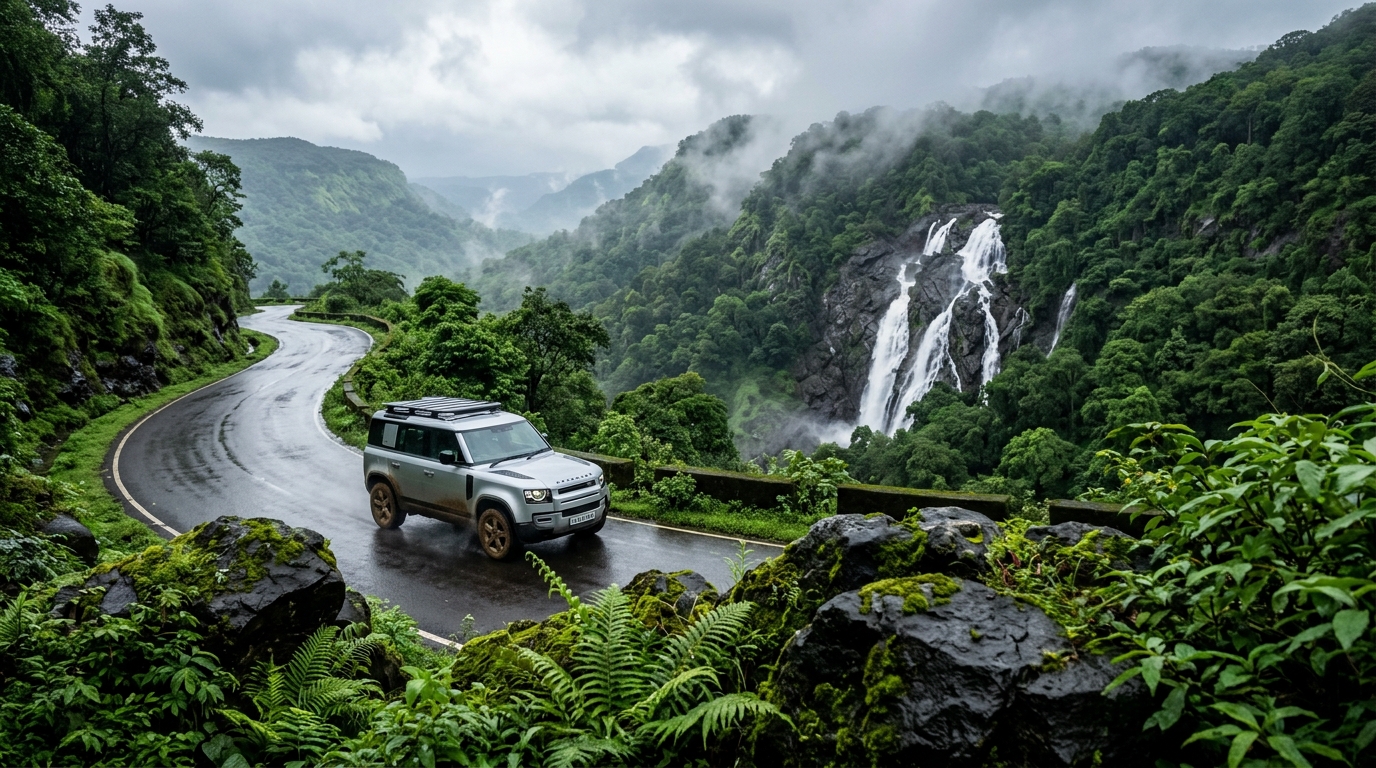
The coastal route, while slower and more demanding due to its narrow lanes and frequent curves, is highly rewarding. It crosses numerous estuaries, offering glimpses of old Portuguese forts, quiet fishing villages, and dense mango orchards. The descent through the Amboli Ghat or the Radhanagri wildlife sanctuary is spectacular, especially immediately after the monsoon when hundreds of temporary waterfalls cascade down the black basalt cliffs of the Western Ghats. This blend of driving challenge and coastal beauty makes it one of the most popular road trips in india. To extend the adventure, travelers often pair this road trip with relaxed Goa tour packages to unwind after the long drive.
Chennai to Pondicherry: The East Coast Road
For those who prefer smooth, straight highways with ocean views, the East Coast Road (ECR) stretching from Chennai to Pondicherry is unmatched. This two-lane (and in parts four-lane) highway hugs the Bay of Bengal, providing a driving experience where the sea is almost always visible on the left.
Historically speaking, coastal road trips in india are often defined by heavy traffic, but the ECR is a pleasant exception. The road is well-maintained and relatively flat, making it an excellent weekend drive. Along the way, the route passes the UNESCO World Heritage site of Mahabalipuram, known for its 7th-century rock-cut temples, before entering the French-influenced quarters of Pondicherry. The transition from Tamil culture to French colonial architecture is sudden and fascinating, marked by yellow-washed villas and tree-lined avenues.
The Nilgiri Route: Bangalore to Ooty and Coorg
Ascending into the Western Ghats from the Deccan Plateau, the route from Bangalore to Ooty via Mysore is a sensory masterclass. Among the mountain road trips in india, the drive to Ooty is famous for its 36 hairpin bends, which climb steeply through the Nilgiri hills.
The first half of the journey is flat and fast, but as you pass the Bandipur National Park, the speed limit drops, and the environment changes. Drivers must watch for wild elephants and spotted deer crossing the road. Once past the forest check-post, the steep climb begins. The air turns crisp, smelling of eucalyptus and damp earth. This region highlights why road trips in india are so diverse. In a five-hour drive, you transition from India’s silicon valley to quiet colonial hill stations surrounded by sprawling tea estates.
Historic and Cultural Desert Trails
The western state of Rajasthan provides a starkly different canvas for driving. Here, the roads are wide, flat ribbons of asphalt that cut through yellow sands, connecting massive medieval forts and vibrant desert cities.
The Golden Triangle: Delhi, Agra, and Jaipur
Connecting the national capital with the city of the Taj Mahal and the pink city of Rajasthan, this loop represents the most accessible road trips in india for families. The Yamuna Expressway and the newly constructed Delhi-Mumbai Expressway have slashed travel times, transforming what used to be a grueling journey into a fast, comfortable drive.
But still, while some road trips in india demand rough-road driving skills, the Golden Triangle is about historical immersion. The drive allows travelers to witness the architectural transition from Mughal grandeur in Delhi and Agra to Rajput fortifications in Jaipur. The roads are heavily toll-protected, ensuring high-speed travel, though drivers must remain alert for slow-moving agricultural vehicles that occasionally stray onto the expressways.
The Thar Highway: Jodhpur to Jaisalmer
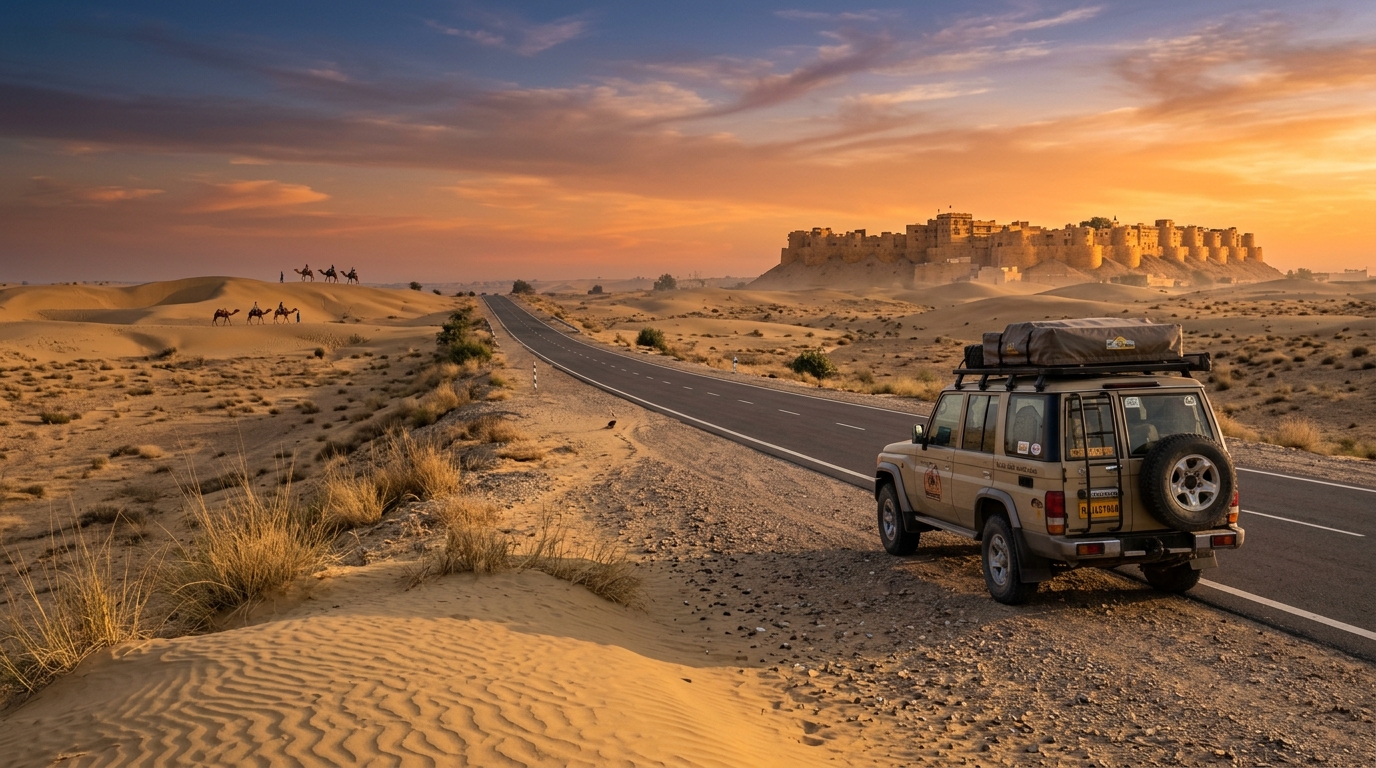
For a true wilderness experience, the drive from Jodhpur to Jaisalmer across the heart of the Thar Desert is exceptional. The road is flat, straight, and remarkably empty, allowing for long, uninterrupted stretches of driving.
These desert road trips in india show a different side of the country’s geography. The chaotic towns fade away, replaced by vast stretches of dry scrubland, occasional camel caravans, and windmills turning slowly against the clear blue sky. As you approach Jaisalmer, the sand dunes grow larger, and the soil turns a deep golden hue. The final sight of the Jaisalmer Fort rising like a massive sandcastle from the desert floor is a powerful reward for the long hours spent behind the wheel.
Practical Planning and Preparation Guidelines
A successful long-distance journey requires thorough preparation. Managing the unique challenges of the country’s road network requires both mechanical preparation and an adaptable mindset.
Vehicle Checks and Roadside Safety
Ensuring your vehicle is mechanically sound is crucial for road trips in india, as maintenance facilities can be non-existent in remote regions. Before setting out, a complete multi-point inspection is necessary.
“The key to surviving long-distance highway travel is prevention. A minor cooling system leak that goes unnoticed in city traffic will become a catastrophic failure when climbing a mountain pass at midday.”
To ensure proper preparation across different terrains, refer to this regional vehicle checklist:
| Terrain Type | Critical Vehicle Check | Recommended Spares / Gear |
|---|---|---|
| Mountain Passes (Himalayas) | Brake pad wear, coolant boiling point, tire tread depth | Auxiliary fuel cans, tow strap, snow chains (seasonal) |
| Coastal Highways (Western Ghats) | Wiper blades, tire grip for wet roads, window seals | Rain repellent, emergency flashlight, basic first aid kit |
| Desert Trails (Thar Desert) | Air filter cleanliness, radiator health, AC performance | Extra drinking water, tire pressure gauge, sand traction mats |
At a minimum, drivers should verify the following before departure:
- Tire tread depth and air pressure, including the spare tire.
- Engine oil, coolant, and brake fluid levels.
- The condition of brake pads, especially for mountain routes.
- Wiper blades and windshield washer fluid.
- A fully functional tool kit, including a jack and a towing rope.
Navigating Mountain Sickness and Remote Areas
When embarking on road trips in india that scale high altitudes, health safety is just as important as vehicle maintenance. Acute Mountain Sickness (AMS) is a real danger when crossing Himalayan passes.
A study published by the Himalayan Rescue Association in 2023 indicated that roughly 30% of travelers ascending rapidly to altitudes above 3,000 meters suffer from some form of Acute Mountain Sickness (AMS). To prevent this, drivers must plan their ascent gradually. It is highly recommended to spend at least two nights at intermediate altitudes (such as Shimla or Leh) before climbing higher. Carrying portable oxygen cylinders and keeping hydrated are vital precautions.
In remote areas, self-reliance is key. Always carry dry food rations, several liters of drinking water, and basic medical supplies. Mobile signals can be erratic, so downloading offline maps is a sensible backup.
Permits, Documentation, and Local Tolls
The official rules governing road trips in india can be complex, especially when crossing state lines. Drivers must ensure all vehicle documentation is up to date and readily accessible.
The necessary documents include:
- The vehicle’s original Registration Certificate (RC).
- A valid driving license.
- An active Pollution Under Control (PUC) certificate.
- Comprehensive vehicle insurance papers.
- Any required regional permits, such as the Inner Line Permit (ILP) for parts of Ladakh or Northeast India.
Toll collection has been modernized significantly. The National Highways Authority of India (NHAI) reported in early 2025 that electronic toll collection through FASTag reached an all-time high of over 97% of all toll transactions. This RFID-based system is mandatory, and driving without an active, funded FASTag will result in a double-toll penalty at physical booths.
A Comparative Guide to India’s Premier Road Routes
To help you choose among the top road trips in india, this guide provides a structured comparison of the country’s most celebrated driving routes. Selecting the right journey depends on your vehicle type, driving experience, and available time.
The table below outlines the key metrics of these iconic drives, ranking different road trips in india based on their difficulty, ideal seasons, and primary attractions.
| Route Name | Approx. Distance | Difficulty Level | Best Time to Visit | Primary Highlight |
|---|---|---|---|---|
| Manali to Leh | 428 km | Extreme | June to September | High-altitude mountain passes |
| Mumbai to Goa | 590 km | Moderate | October to March | Western Ghats and coastal views |
| Chennai to Pondicherry | 150 km | Easy | October to March | Ocean views along the East Coast Road |
| Jodhpur to Jaisalmer | 280 km | Easy | November to February | Thar Desert plains |
| Bangalore to Ooty | 270 km | Moderate | September to May | Nilgiri Hills and wildlife reserves |
Each of these routes offers a unique window into the country’s diverse terrains. While the flat highways of Rajasthan allow for a relaxed cruising experience, the steep hairpin turns of the Nilgiris or the high-altitude tracks of Ladakh demand constant vigilance and advanced technical skills.
Frequently Asked Questions
What is the safest time of year to drive in India?
Generally speaking, planning safe road trips in india is best done during the winter months from October to March. During this period, the weather is cool and dry, reducing the risk of engine overheating and ensuring clear visibility. Conversely, the monsoon season from June to September should be avoided for hill driving, as heavy rains frequently cause landslides and severe waterlogging on highways.
Are international driving permits valid across all Indian states?
Yes, an International Driving Permit (IDP) is legally recognized across all Indian states and union territories, provided it is accompanied by the traveler’s original domestic driving license. It is highly advisable to carry physical printed copies of both documents, as local traffic authorities in remote regions may not always have access to digital verification systems.
How should travelers prepare for high-altitude sickness during mountain drives?
Preparing for high-altitude sickness requires a combination of gradual acclimatization and medical readiness. Drivers should plan routes that do not ascend more than 500 meters per day once above an elevation of 2,500 meters. Additionally, carrying preventive medications like Acetazolamide (after consulting a medical professional) and avoiding physical overexertion during the first 24 hours at high altitude are critical steps to ensure a safe journey.