
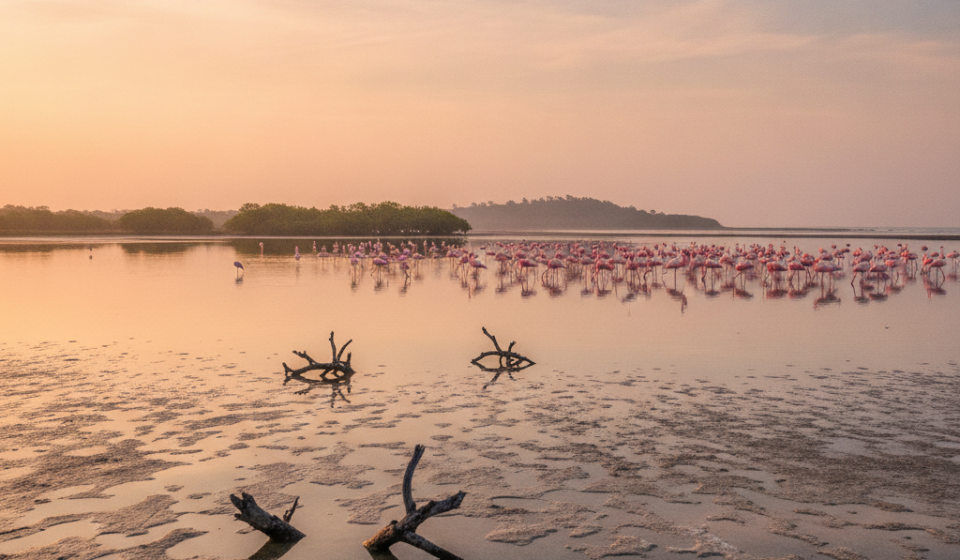
The Ultimate Point Calimere Travel Guide: How to Visit Tamil Nadu’s Pristine Coastal Sanctuary, Lighthouses, and Flamingo Haven

Planning a trip to Point Calimere requires a shift in perspective. This coastal sanctuary in Tamil Nadu is not a typical tourist resort. It is a place where land meets the Bay of Bengal in a quiet, undisturbed manner. For bird watchers and nature enthusiasts, this Point Calimere travel guide provides the essential details needed to explore one of India’s most important ecological zones. The region serves as a critical habitat for migratory birds, making the timing of your visit the single most important factor for success.
Key Takeaways for Your Visit
- Best Visiting Window: Plan your trip between November and February to witness the peak migratory bird season.
- Top Attraction: The sanctuary is famous for thousands of wintering Greater Flamingos and herds of wild Blackbuck.
- Two Iconic Lighthouses: Explore both the historical British-era lighthouse and the modern functional beacon.
- Local Logistics: Set up your base in nearby Vedaranyam or Nagapattinam, as there are no luxury hotels inside the sanctuary.
- Permit Requirements: Ensure you stop at the forest department gate to obtain standard entry permits.
Understanding the Geography of Point Calimere
Point Calimere, also known as Kodikkarai, sits at the southeastern tip of the Nagapattinam district. It functions as a unique interface between the Palk Strait and the Bay of Bengal. The area is dominated by dry evergreen forests, mangroves, and vast tidal mudflats. These diverse environments support a complex array of wildlife that remains relatively shielded from modern development.
The sanctuary covers roughly 21 square kilometres. This variation in habitat is the primary reason the sanctuary attracts such a high volume of biodiversity. Understanding these distinct zones allows for better planning when moving through the park. The three primary ecological zones to explore include:
- Dry Evergreen Forests: Home to many land mammals and unique plant species adapted to the coastal breeze.
- Mangrove Swamps: Critical breeding grounds for marine life and natural buffers against coastal erosion.
- Salt Marshes and Mudflats: The prime feeding grounds for migratory birds during the winter months.
The Best Time to Visit
Ecological activity dictates the optimal travel window. The sanctuary reaches its peak interest for observers during the winter migration period. From November through February, tens of thousands of waterbirds arrive from across the globe to winter in these wetlands.
| Season | Conditions | Travel Recommendation |
|---|---|---|
| November to February | Cool and pleasant | Peak season for bird watching |
| March to June | Hot and humid | Lower visitor traffic |
| July to October | Monsoon activity | Limited access; check local alerts |

Essential Wildlife Sightings
The primary attraction at Point Calimere remains the migratory waterbird population. The vast mudflats become a canvas of activity as species congregate in massive numbers. Beyond the avian life, the sanctuary hosts significant populations of mammals that have adapted to this saline environment.
- Greater Flamingo: The most famous winter resident, often seen in vast, pink-hued groups.
- Blackbuck: These antelopes are frequently spotted grazing in the open grasslands near the forest edges.
- Spotted Deer: Common within the scrub forest areas.
- Migratory Waterfowl: Various species of ducks, teals, and plovers that arrive from Central Asia and Europe.

The Lighthouses of Point Calimere
The coastline features two distinct lighthouses that serve as historical and functional markers. They offer a unique vantage point to view the intersection of the sea and the sanctuary. The older structure stands as a testament to the maritime history of the Coromandel Coast, while the newer beacon provides modern navigational support.
- The British-Era Lighthouse: Built by the British, this older brick structure stands as a testament to the rich maritime history of the Coromandel Coast.
- The Modern Lighthouse: A fully functional, towering concrete beacon providing modern navigational support and panoramic views of the Palk Strait.
Visiting the lighthouses offers a rare perspective of the confluence of the Palk Strait and the Bay of Bengal, an area historically significant for trade and navigation.
Logistics and Travel Tips
Accessing the sanctuary requires a degree of preparation. The nearest major transport hub is Trichy, located roughly 150 kilometres away. Visitors typically rely on private hired vehicles to navigate the final leg of the journey, as public transport options to the sanctuary entrance are limited.
| Hub City | Distance to Point Calimere | Primary Mode of Transport | Estimated Travel Time |
|---|---|---|---|
| Vedaranyam | 11 km | Local Auto / Taxi | 20 minutes |
| Nagapattinam | 60 km | State Bus / Private Cab | 1.5 hours |
| Thanjavur | 115 km | Private Cab / Direct Bus | 3 hours |
| Tiruchirappalli (Trichy) | 150 km | Hired Taxi / Connecting Train | 4 hours |
- Permits: Ensure you obtain the necessary entry permits from the forest department office at the sanctuary gate.
- Transport: Renting a car from Trichy or Thanjavur provides the most flexibility for exploring the surrounding coastline.
- Footwear: Carry sturdy, comfortable shoes suitable for walking on sandy, uneven, and sometimes muddy terrain.
- Guides: Hiring a local forest guide is highly recommended to improve the likelihood of spotting wildlife and to ensure you remain on designated paths.
FAQs
What is the entry fee for the sanctuary?
Entry fees are nominal and collected by the forest department at the main gate. It is advisable to carry cash in local currency for these charges.
Are there accommodation options inside the sanctuary?
There are no luxury hotels within the sanctuary limits. Most visitors stay in nearby towns like Vedaranyam or Nagapattinam, which offer basic guesthouses and hotels.
Is it possible to visit the beach area?
Yes, the beach is accessible, but it is part of a protected ecosystem. Always respect the natural surroundings and avoid leaving any waste behind.
Do I need binoculars?
Yes, binoculars are essential for any Point Calimere travel guide recommendation, especially for bird watching, as many species remain at a distance from the main viewing trails.
Conclusion
Point Calimere offers a quiet, observational experience for those willing to venture off the beaten path. By timing your visit during the winter migration and respecting the local regulations, you ensure a meaningful interaction with one of Tamil Nadu’s most vital coastal ecosystems. For more guidance on exploring hidden gems in the state, visit our destination resources page or reach out to our team via our contact service portal.