
Packing for travel in India during autumn can feel like preparing for four different seasons in a single suitcase. Whether you are navigating the muggy post-monsoon heat of Mumbai, attending late-night Garba in Gujarat, or watching the sunset over chilly Himalayan valleys, building a practical packing list for india in october requires a smart, region-specific approach. October is India’s primary transitional month—monsoon clouds recede from the west, the Northeast monsoon moves into the south, and mountain regions experience their sharpest temperature drops of the late year.
To pack effectively, you need to understand not just where you are going, but how local climate shifts, festival schedules, and transport rules dictate what belongs in your bag. If you are arriving from abroad for your first trip, combining these gear choices with general India travel tips for first timers will help you travel comfortably across the subcontinent.
Regional Weather Breakdown for Your Packing List for India in October
The single biggest mistake travelers make in October is assuming India has unified weather. In reality, a journey taking you from Delhi to Mumbai to Chennai in the same week requires three entirely different outfit strategies.
In Northern and Western India, the retreat of the Southwest Monsoon creates a weather pattern known locally as “October Heat.” Clear skies allow direct sunlight to bake soil still damp from monsoon rains. High daytime temperatures (32°C to 35°C) combined with high humidity make 32°C feel closer to 40°C in places like Mumbai, Ahmedabad, and the Gangetic plains.
Conversely, the Northeast Monsoon (NEM) sets in across South India—particularly Tamil Nadu, coastal Andhra Pradesh, and parts of Kerala—around mid-October. While the north dries out, the south sees heavy afternoon downpours, lightning, and high mugginess. Meanwhile, altitude changes everything in the north: Himalayan destinations like Shimla, Manali, and Gangtok enjoy crisp, sunny days but drop near freezing once the sun sets.
| Region | Key Destinations | Daytime Temp (°C) | Nighttime Temp (°C) | Climate Pattern | Key Packing Requirement |
|---|---|---|---|---|---|
| North Plains & Golden Triangle | Delhi, Agra, Jaipur, Varanasi | 30°C – 34°C | 18°C – 21°C | Warm sunny days, clear skies, dry air, pleasant cool nights. | Breathable cottons for day; light shawl/cardigan for late nights. |
| Himalayas (North & NE) | Manali, Shimla, Dharamshala, Gangtok, Leh | 15°C – 22°C | 2°C – 10°C (Sub-zero in high passes/Leh) | Pre-winter conditions. Intense daytime sun, rapid freezing drops at night. | Thermal innerwear, fleece jacket, windbreaker, lip balm. |
| West & Central India | Mumbai, Goa, Ahmedabad, MP | 32°C – 35°C | 24°C – 26°C | Intense “October Heat”: trapped soil moisture, strong sun, muggy air. | Ultra-light linens, loose cottons, sun hats, sweat-wicking base layers. |
| South India (East & West Coasts) | Chennai, Madurai, Bengaluru, Kochi | 28°C – 32°C | 22°C – 24°C | Northeast Monsoon onset: sudden afternoon downpours, high humidity. | Quick-dry synthetics, waterproof sandals, compact windproof umbrella. |
| East India | Kolkata, Bhubaneswar, Assam | 28°C – 32°C | 22°C – 24°C | Post-monsoon clearing, muggy afternoons, evening breezes. Peak festival crowds. | Light traditional wear, comfortable walking flats for pandal hopping. |
Master Packing List for India in October: Clothes & Layering
To keep your bag manageable while tackling varying regional conditions, structure your wardrobe around breathable fabrics, modular layers, and quick-drying materials.
1. Base Layers & Tops (Universal)
- 4 to 5 Light Cotton or Linen T-Shirts/Shirts: Loose-fitting tops allow air circulation in hot regions. Neutral shades (khaki, olive, light grey, navy) show less sweat marks during muggy afternoons and dry faster after laundering.
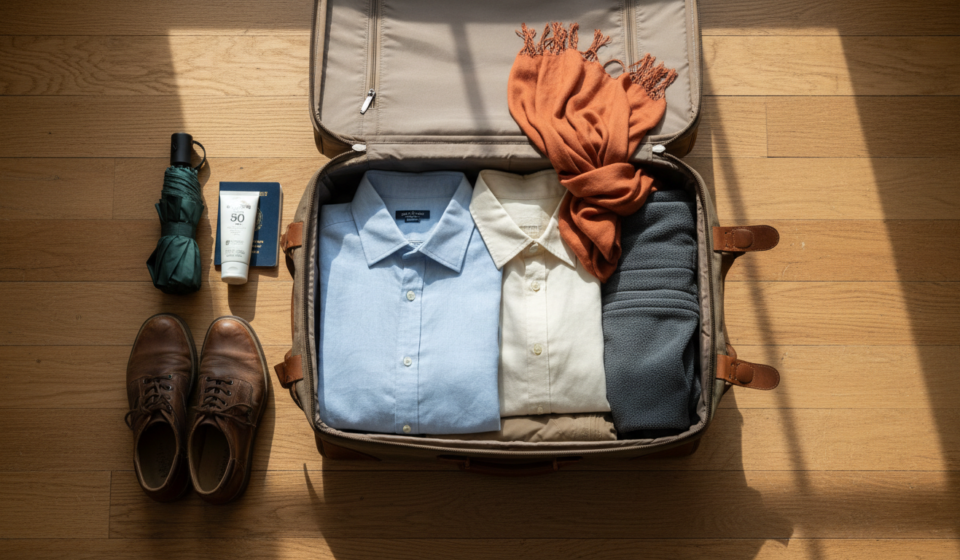
- 2 Long-Sleeved Linen Shirts: Essential for sun protection during daytime sightseeing in Rajasthan or Delhi, and useful for covering arms when visiting temples.
2. Bottom Wear
- 2 to 3 Lightweight Chinos or Linen Trousers: Breathable, loose bottoms protect against daytime heat and evening mosquito bites.
- Avoid Thick 100% Cotton Denim: Heavy jeans trap humidity during “October Heat” in coastal areas, cause inner-thigh chafing, and take more than 24 hours to air-dry if caught in an Indian shower.
3. Warm Layers for the Himalayas & North Plains
- 1 Mid-Weight Fleece or Light Down Jacket: Essential if your itinerary includes high-altitude stops in Himachal Pradesh, Uttarakhand, Ladakh, or Sikkim. If you plan to travel further into the cold season, compare these choices with our packing list for India in December to see how winter requirements shift.
- 1 Thermal Innerwear Set (Merino Wool or Synthetic): Takes up minimal room in your bag but keeps you warm when night temperatures drop below 10°C in hill stations.
- 1 Pashmina, Light Wool Shawl, or Scarf: Perfect for chilly evening auto-rickshaw rides in Northern India or covering your shoulders when entering religious sites.
4. Rain Layers for South & East India
- 1 Breathable Raincoat or Trench-Style Poncho: If your trip involves planning a trip to South India in places like Chennai, Madurai, or Kochi, expect sudden afternoon downpours. Choose a rain jacket with underarm ventilation zippers. Heavy non-breathable plastic ponchos trap body heat and leave you soaked in sweat underneath.
Festive Wear: Navratri, Durga Puja, and Dussehra
October sits at the heart of India’s festival calendar. Depending on your travel dates, you may experience Navratri garba nights in Gujarat, grand Durga Puja pandal hopping in Kolkata, or Dussehra processions in Mysore and North India.
- Women: Pack 1 or 2 wrinkle-resistant silk-blend sarees, pre-stitched fusion kurtas, or cotton-silk palazzos. A lightweight dupatta is essential—it adds a festive touch while serving as a practical head or shoulder cover at temples.
- Men: Pack 2 lightweight cotton-silk or linen Kurta-Pyjama sets, or pair a tailored Nehru jacket over a light long-sleeved shirt and chinos.
- Packing Logistics: Fold delicate embroidered outfits inside soft cotton saree bags or wrap them in tissue paper before placing them in the center of your hard-shell suitcase to prevent snags and crushing.
- Jewellery Safety: Leave expensive gold or high-value real jewellery at home. Festival crowds at pandals and night markets are densely packed; high-quality costume or fashion jewellery is safer and easier to travel with.
The Footwear Blueprint
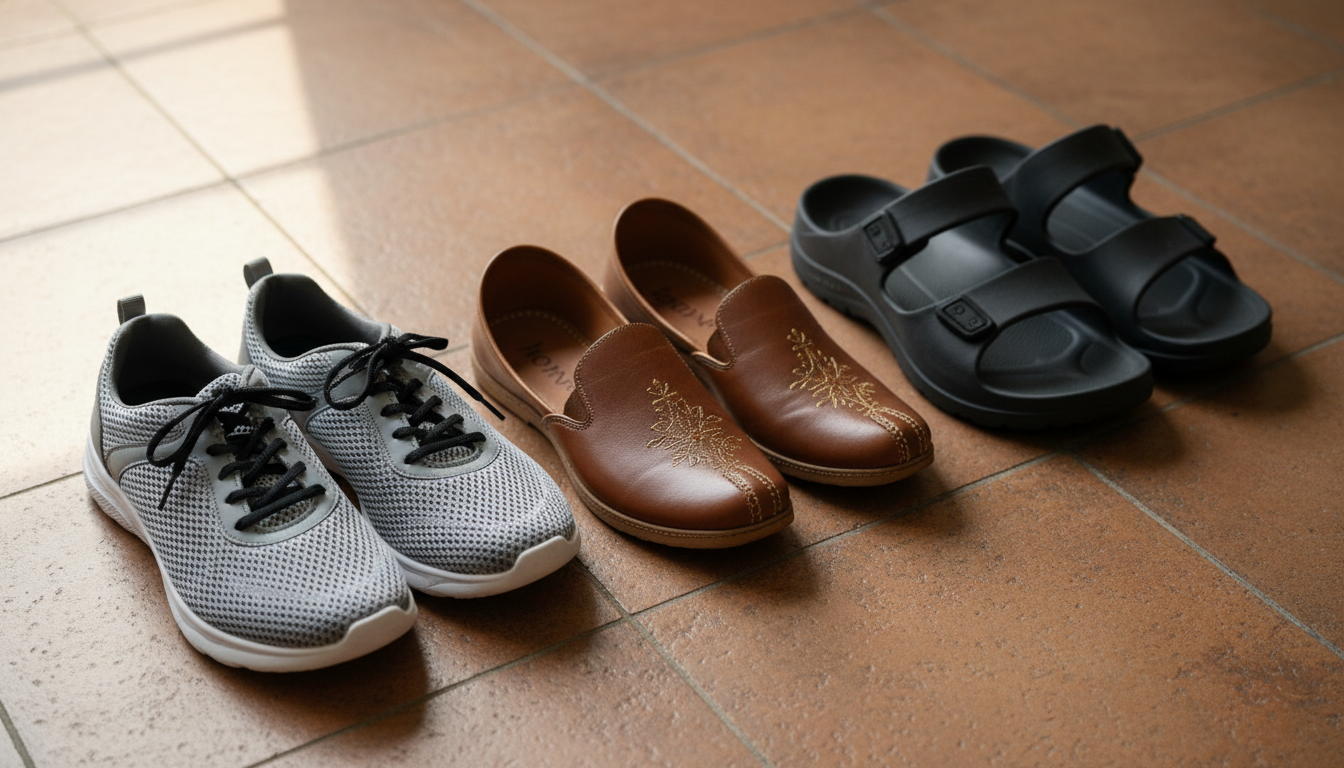
Sightseeing in India requires walking on uneven pavements, traversing dusty temple courtyards, and removing shoes regularly at religious sites. Bringing the wrong shoes will cause discomfort quickly. A three-shoe strategy works best:
- Daily Sightseeing: 1 pair of well-broken-in mesh running shoes or breathable walking sneakers. Mesh uppers allow heat to escape during hot afternoons.
- Temples & Festive Events: 1 pair of comfortable slip-on sandals, leather mojris, or kolhapuris. Slip-on shoes save you from untying laces dozens of times outside temples and festive venues.
Pro Tip for Hot Temple Stones: Midday sun can make marble or stone temple courtyards burning hot. Because shoes are prohibited inside temple premises, keep a clean, thick pair of dark cotton ankle socks in your daypack to walk comfortably over hot tiles.
- Wet Weather & Coastal Zones: 1 pair of anti-slip, waterproof EVA or rubber sandals (e.g., Decathlon water sandals or EVA slip-ons). These dry instantly after rain showers in Tamil Nadu or Kerala and offer traction on wet stone steps.
Post-Monsoon Health, Toiletries & Hygiene Gear
Post-monsoon dampness creates specific hygiene challenges across India in October. Packing targeted health items will keep minor inconveniences from disrupting your itinerary.
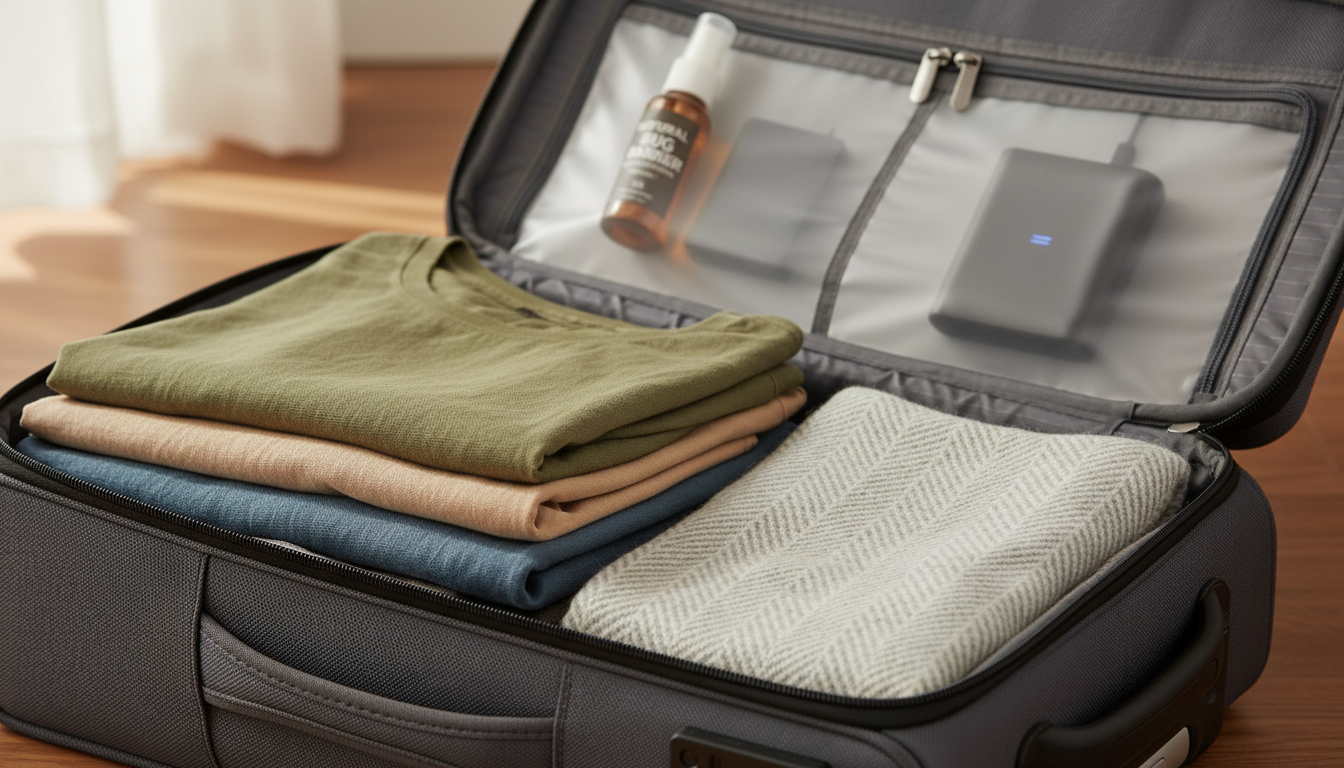
- Insect Protection: Vector-borne illnesses like Dengue and Chikungunya peak right after the Southwest monsoon recedes due to lingering stagnant water. Bring a repellent containing 20–30% DEET or Picaridin. Carry mosquito repellent patches or wristbands if traveling with young children.
- Skin Care & Heat Management: Broad-spectrum SPF 50+ sunscreen (PA+++) is non-negotiable under the intense October sun. Pack anti-fungal dusting powder (such as Clotrimazole-based powders) to prevent heat rash and skin chafing caused by humidity under high daytime temperatures.
- Hydration & Digestives: Sweating under the “October Heat” causes rapid electrolyte loss. Carry 10–15 sachets of Oral Rehydration Salts (ORS) or Electral. Keep hand sanitizer gel, anti-diarrheal medication, and motion sickness tablets (for winding mountain roads in the Himalayas or Western Ghats) easily accessible in your daypack.
Electronics and Essential Gear
Modern travel requires steady power and moisture protection, particularly when navigating long train rides or rainy southern afternoons.
- Power Bank (10,000mAh to 20,000mAh): Long festival nights, photo-heavy sightseeing, and train journeys mean your phone battery will drain quickly. If flying domestically, review the strict rules for carrying a power bank on domestic flights—remember that power banks must always be in hand luggage and are prohibited inside checked baggage.
- Multi-Plug Adapter: India uses Type D and Type M three-pin round sockets (230V, 50Hz). While higher-end hotels feature universal sockets, heritage properties and budget guesthouses often have older, loose-fitting round outlets where international plugs slip out easily.
- Dry Bags / Backpack Covers: A 10L to 15L waterproof dry bag or lightweight rain cover for your daily camera bag will keep electronics dry during sudden rain in South or East India.
Transit Logistics, Baggage Rules & Local Costs
Understanding transportation logistics in India helps you choose the right physical luggage and avoid unexpected fees or inconvenience at airports and railway stations.
Indian Airline Baggage Limits
Domestic airlines (including IndiGo, Air India, and SpiceJet) enforce strict baggage allowances on standard economy tickets:
- Checked Baggage: 15 kg per passenger (1 piece rule is increasingly applied).
- Cabin Baggage: 1 piece up to 7 kg.
- Personal Item Allowance: Airlines allow 1 small personal item (such as a laptop bag or small handbag) not exceeding 3 kg.
- 100ml LAGs Rule: Security personnel (CISF) at Indian airports strictly enforce limits on Liquids, Aerosols, and Gels in hand luggage. All containers must be 100ml or under and fit into a single clear re-sealable bag. Water bottles bought before security check points cannot be brought through screening.
Indian Railways Luggage Realities
If you are taking overnight trains in AC 2-Tier, AC 3-Tier, or Sleeper classes, your luggage must fit under the lower berth.
- Under-Berth Height Clearance: Storage space under the lower berth measures approximately 35 to 38 cm (14 to 15 inches) high. Large, rigid hard-shell suitcases thicker than 28 inches will not slide beneath the seat and will block narrow coach aisles.
- Recommended Luggage: Choose a medium 24-inch spinner suitcase or a soft-sided duffel bag with wheels.
- Train Security: Pack a simple steel cable lock and small combination padlock. You can loop the cable through your bag’s handle and attach it to the iron ring mounted beneath the lower berth.
Local Replacement Gear Costs in India
If you forget basic rainy-weather gear or cultural clothing, you can buy replacements easily in local markets at reasonable prices:
- Compact Folding Umbrella: ₹200 – ₹400 at local street markets.
- Cotton Stole / Dupatta (Temple shoulder cover): ₹150 – ₹500.
- ORS / Electral Hydration Sachet: ₹20 – ₹30 per sachet at any retail pharmacy (chemist).
- Emergency Rain Poncho: ₹50 – ₹100.
5 Common Packing Mistakes to Avoid in October
- Wearing Heavy Denim Jeans in Coastal Regions: Wearing thick 100% cotton denim in Mumbai, Goa, or Gujarat in October traps sweat against your skin, causing friction rashes in the high humidity. Choose linen, lightweight chinos, or quick-dry synthetic travel pants instead.
- Assuming October is Completely Dry Nationwide: Packing only summer cottons and ignoring wet-weather gear when visiting Tamil Nadu or Kerala often leaves travelers unprepared for the onset of the Northeast Monsoon.
- Overpacking Heavy Winter Coats for North Indian Plains: Carrying thick down jackets for Delhi, Agra, or Jaipur in October is unnecessary. Daytime temperatures reach up to 34°C. A light jacket or cotton shawl is all you need for late nights.
- Traveling with High-Value Real Gold Jewellery: Wearing expensive gold or precious stones in crowded festival markets creates unnecessary security risks. Use fashion or costume jewellery for festival outings.
- Visiting Temples Without Socks in Your Daypack: Walking barefoot across open marble or stone courtyards under direct midday sun can scorch your feet. Carrying a simple pair of socks in your bag makes temple visits comfortable.
Frequently Asked Questions
Is October hot or cold in India?
It depends entirely on where you travel. The Himalayan north (Shimla, Manali, Ladakh) is cool to cold, with night temperatures between 2°C and 10°C. North Indian plains are warm by day (30°C–34°C) and pleasant at night. Western and Central India feel hot and muggy due to post-monsoon “October Heat” (32°C–35°C), while South India experiences warm temperatures accompanied by monsoon rain showers.
What should I wear during Navratri and Durga Puja while travelling?
Opt for lightweight, breathable traditional wear such as cotton-silk kurtas, lightweight sarees, or comfortable tunic-and-palazzo sets. Pair them with flat, easily removable footwear like mojris or slip-on sandals, as you will need to remove your shoes frequently when entering pandals, temples, and venue enclosures.
Do I need an umbrella in October in India?
Yes. An umbrella is necessary if you are traveling to South India (Tamil Nadu, Kerala) or East India due to late afternoon monsoon showers. In drier regions like Rajasthan or Delhi, a compact umbrella doubles as sun protection during hot midday tours.
Can I bring a hard-shell suitcase on Indian trains?
Yes, provided it is medium-sized (up to 24 inches). Extra-large hard-shell suitcases (28 inches or deeper) frequently exceed the 35–38 cm under-berth clearance height on AC 2-Tier and AC 3-Tier train coaches, forcing them into narrow aisle spaces where they block passage.