The Ultimate Mirik Travel Guide: How to Explore the Serene Lake, Tea Gardens, and Monasteries of Darjeeling’s Peaceful Neighbor

Mirik stands as a distinct alternative to the bustling hill stations of West Bengal. While many travellers fixate on the crowded streets of Darjeeling, this quiet destination offers a focused experience centred on its expansive lake, rolling tea gardens, and peaceful atmosphere. A comprehensive Mirik travel guide helps visitors handle the logistics of reaching this high-altitude valley and structuring an itinerary that balances outdoor activity with reflective leisure. The following sections outline the essential preparations for a successful visit to this region.
Key Takeaways
- Quiet Appeal: An ideal, peaceful alternative to crowded Darjeeling, perfect for slow travel.
- Sumendu Lake: Features an iconic 1.25 km walking path and the beautiful Indreni Bridge.
- Best Timing: March-May provides pleasant sightseeing weather; October-February is cold but clear.
- Cash & Logistics: Carry ample cash due to limited ATM connectivity and book stays in advance.
Why Mirik Remains a Premier Destination
The primary appeal of Mirik is the deliberate absence of urban chaos. Located at an elevation of roughly 1,767 metres, the town maintains a temperate climate throughout the year. The central feature, Sumendu Lake, provides a natural anchor for the town. It is not merely a sight to behold but a functional space for boating and walking. The surrounding forest of Japanese cedars adds a layer of depth to the landscape that many other hill stations lack.
Another compelling reason to visit is the integration of local commerce and nature. The key aspects that make Mirik unique include:
- Active Tea Gardens: The local tea estates are functional economic assets where visitors can witness the harvesting process.
- Slower Pace of Life: The town encourages unhurried, mindful exploration rather than checklist tourism.
- Respite from Urban Stress: The serene, high-altitude setting is an ideal escape from professional demands and fast-paced city life.
Best Time to Visit Mirik
Selecting the right period for a trip depends on specific atmospheric preferences. While the region remains accessible across all four seasons, the experience changes significantly based on the chosen dates. The weather patterns typically dictate the visibility of the surrounding peaks and the comfort of outdoor exploration.
- March to May: These months offer the most pleasant temperatures, usually ranging from 15 to 25 degrees Celsius. This is the peak window for sightseeing.
- June to September: The monsoon season brings heavy rainfall, often leading to restricted movement. However, the vegetation is at its most vibrant during this period.
- October to February: Winter brings crisp, clear mornings and cold nights. Temperatures can dip near freezing, necessitating heavy woollen clothing.
How to Reach Mirik
Logistics require planning, as the town is situated deep within the Darjeeling district. Most travellers approach from the plains of Siliguri. The ascent involves winding roads that offer steady views of the transition from tropical to alpine terrain.
| Mode of Transport | Approximate Travel Time |
|---|---|
| Flight (to Bagdogra Airport) | 3 to 4 hours from airport to town |
| Train (to New Jalpaiguri Station) | 3.5 to 4.5 hours from station to town |
| Road (Private Taxi/Cab) | Depends on starting point in Siliguri |
When planning your journey from Siliguri, keep these essential transport tips in mind:
- Private Taxis: Pre-booked private cabs offer the most reliable and direct service to Mirik.
- Public Transport: Local buses and shared jeeps exist but may not align with strict itineraries due to irregular schedules.
- Driver Expertise: Always hire experienced drivers who are comfortable navigating steep mountain curves, particularly during monsoons.
Must-Visit Places in Mirik
Structuring a visit requires prioritising the most impactful locations. The geographical layout allows for a logical flow between the lakefront, the religious sites, and the surrounding plantations.
| Attraction | Key Highlights | Recommended Duration |
|---|---|---|
| Sumendu Lake | Boating, walking trails, and horse riding | 2 to 3 hours |
| Tea Gardens & Orchards | Tea processing tours, local orange shopping | 1 to 2 hours |
| Bokar Monastery | Tibetan architecture, meditation halls, and panoramic views | 1 hour |
Sumendu Lake
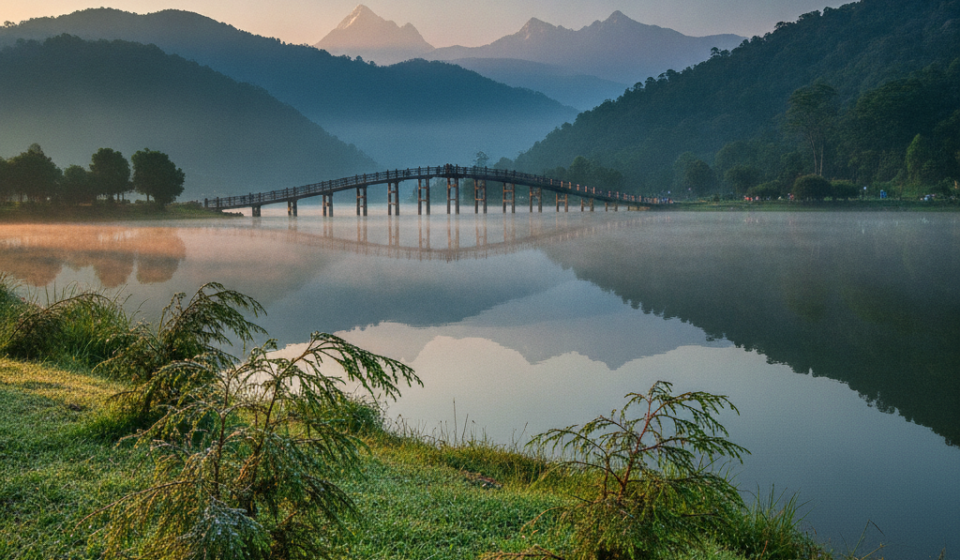
The heart of Mirik is undoubtedly Sumendu Lake. It spans 1.25 kilometres and features a walking path that circles the entire perimeter. An arched footbridge, known as the Indreni Pool, connects the two sides of the lake. It is a preferred spot for photography and quiet reflection.

Tea Gardens and Orchards
The local economy thrives on tea production. Visitors can tour active estates where the process of harvesting and drying tea leaves is often demonstrated. In addition to tea, the region is famous for orange orchards. If visiting in late autumn, the sight of ripe oranges against the mountain backdrop is a significant highlight.

Bokar Monastery
Perched on a hilltop, this monastery offers a view of both the town and the distant mountains. It serves as a centre for Buddhist study and meditation. Visitors are encouraged to maintain silence and respect the ongoing religious practices of the monks living on-site.
Essential Travel Tips
Success in this region requires attention to detail. Because the infrastructure is modest, travellers should manage expectations accordingly. The town is smaller than neighbouring Darjeeling, so service levels reflect a quieter, more localized operation.
- Carry Cash: Digital payment penetration remains inconsistent in remote areas. Always have enough physical currency to cover daily expenses.
- Pack Layers: Mountain weather is unpredictable. Even in the summer, temperatures can drop rapidly after sunset.
- Book Accommodation Early: During peak holiday weekends, quality lodging fills up quickly. Secure reservations at least one month in advance.
- Respect the Environment: Mirik is a plastic-free zone in many areas. Ensure all waste is disposed of in designated containers.
FAQs
Is Mirik safe for solo travellers?
Yes, the town is generally safe and peaceful. It is recommended that solo travellers avoid walking on isolated forest paths after dark.
Are there medical facilities available in Mirik?
The town has basic medical clinics for routine issues. For serious emergencies, travellers are usually transported to facilities in Siliguri.
Can I find vegetarian food easily?
Vegetarian options are widely available in local eateries. The local diet heavily features seasonal vegetables and grains.
Do I need a permit to visit Mirik?
Domestic tourists do not require special permits. Foreign nationals should check current documentation requirements regarding inner-line permits if travelling close to the international border.
Conclusion
A well-planned journey to this region rewards the visitor with genuine stillness. By understanding the climate, the transport routes, and the key landmarks, any traveller can effectively use this Mirik travel guide to build an itinerary. Focus on the core experiences, such as walking the lake circuit or visiting the monasteries, to get the most from this peaceful destination. Careful preparation turns a simple mountain trip into a restorative retreat.