


Managing international travel logistics demands absolute administrative clarity. Among the various steps involved, renewing an official travel document is a primary priority. However, a major point of confusion for Indian citizens remains the specific regulatory trigger for background checks. Specifically, many applicants find themselves asking: is police verification required for passport renewal under current Consular, Passport and Visa (CPV) Division rules? The short answer is that it depends on whether personal details have changed, the status of the previous document, and the internal database record of the applicant. Understanding these specific criteria saves time and prevents unnecessary processing delays.
Key Takeaways
- No Verification (No PV): If your address and personal details remain identical to your old passport, physical verification is usually bypassed.
- Address & Personal Changes: Any modification in your name, spelling, date of birth, or residential address will trigger Pre-Verification (Pre-PV).
- Tatkaal Scheme: Expedited applications are processed via Post-Verification (Post-PV), meaning the passport is dispatched before verification.
- Lost or Damaged Passports: These scenarios always require fresh physical verification and supporting documents like an FIR.
- mPassport App Integration: Modern digitization has reduced verification timelines to roughly 10–15 working days.
Understanding the Core Rules of Passport Renewal in India
The legal structure governing the issuance and reissue of Indian travel documents is anchored in the Passports Act of 1967. In the past, every reissue of Indian passport required a comprehensive physical background check by local law enforcement authorities. This approach frequently resulted in prolonged turnaround times, sometimes stretching into several weeks. An applicant must understand that the fundamental rules dictate when is police verification required for passport renewal based on historical records.
Basically, the system today relies heavily on centralized databases and digital validation mechanisms. The current framework features key administrative distinctions:
- mPassport Police App: Highly integrated system that significantly reduces the time required for local law enforcement to submit their Police Verification Report (PVR).
- Fresh Application: Meant exclusively for first-time applicants, which strictly mandates pre-police verification.
- Reissue (Passport Renewal): Requested when the applicant holds an expired or about-to-expire passport, allowing for flexible verification tracks.
The Basic Framework for Renewal and Verification
At the core of the evaluation is the security profile of the applicant. When an application for passport renewal is submitted through the Passport Seva Kendra (PSK), it is routed to the respective Passport Office (PO). Here, the passport officer reviews the historical records. If the prior passport was issued with a clean Police Verification Report (PVR) and there are no adverse records in the national database, the system is designed to minimize friction.
When evaluating a standard application, the primary question remains: is police verification required for passport renewal if the applicant’s address has not changed? In most cases, if the address remains identical to the one printed on the existing passport, the physical visit is bypassed. This is classified as a No Verification scenario. This makes passport renewal police verification rules much easier to handle for those with stable residencies (which is arguably a major administrative relief).
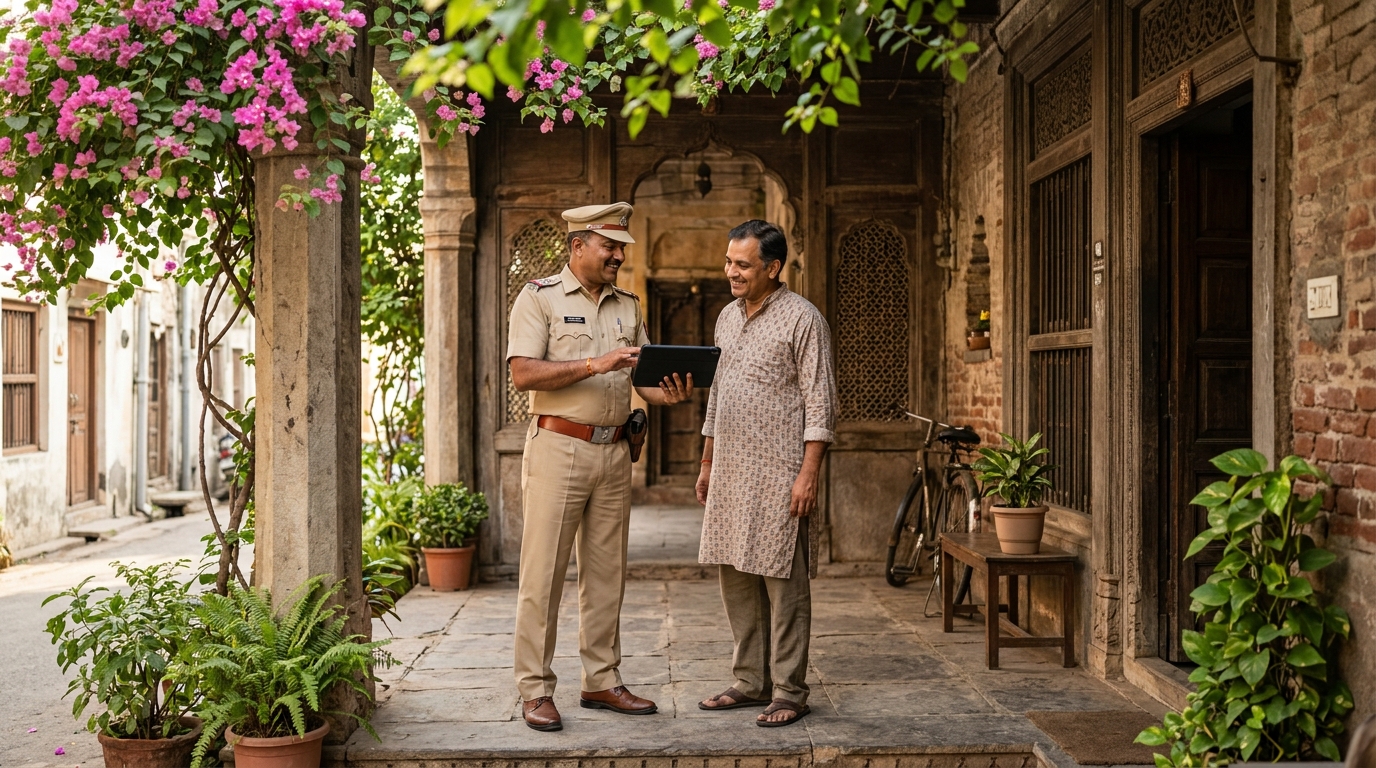
Is Police Verification Required for Passport Renewal? The Deciding Factors
Determining whether your application will trigger a background check involves evaluating several specific factors. The Ministry of External Affairs has established clear operational guidelines that segment applications into different categories. By understanding these parameters, applicants can accurately predict their application pathway and prepare the necessary documentation. Some argue that physical checks are outdated in a digitized administration. They are not entirely wrong, but the security risks of identity theft justify the continued use of manual validation.
To assess your pathway, consider these critical deciding factors that determine the requirement of a background check:
- Alteration of Personal Particulars: Any modification in name, spelling, date of birth, place of birth, or signature triggers manual inspection.
- Change in Residence: Changing your current city of residence or local address will result in a definitive yes.
- Booklet Condition: Lost, damaged, or heavily worn out physical booklets always mandate fresh verification.
| Application Scenario | Verification Category | Key Requirements / Triggers |
|---|---|---|
| Expiry of validity (no changes) | No Verification (No PV) | Matches existing records; clean previous report. |
| Change of residential address | Pre-Verification (Pre-PV) | Requires physical validation of new address. |
| Major change in name spelling | Pre-Verification (Pre-PV) | Deed poll, newspaper ads, and magistrate affidavit. |
| Tatkaal scheme application | Post-Verification (Post-PV) | Priority printing; verification initiated post-dispatch. |
| Lost or damaged passport | Pre-Verification (Pre-PV) | Copy of FIR, lost report, and physical address check. |
Pre-Verification vs Post-Verification vs No Verification
The passport authorities utilize three distinct processing tracks for passport renewal applications. Each track has its own timeline and set of requirements, which directly impacts when the applicant receives their new booklet. Under the Pre-Verification (Pre-PV) track, the passport booklet is printed and dispatched only after the local police conduct a physical check and submit a Clear report. Many applicants view this phase with a sense of dread, picturing endless administrative delays. But still, the process has become far more efficient than in previous decades.
| Verification Track | Dispatch Timeline | Verification Timing | Default Criteria |
|---|---|---|---|
| No Verification (No PV) | Standard (approx. 3–7 days) | Skipped entirely | Identical details, clear previous record. |
| Pre-Verification (Pre-PV) | Post-PVR Approval (15–20 days) | Before passport dispatch | Address changes, major name corrections, minors to adults. |
| Post-Verification (Post-PV) | Priority (1–3 days) | After passport dispatch | Tatkaal applications, urgent travel needs with valid proofs. |
The Post-Verification (Post-PV) track represents a compromise. Here, the passport is printed and dispatched first. The verification is initiated simultaneously. To clarify, if you are asking under what conditions is police verification required for passport renewal, the No PV track is the direct alternative when all criteria for a clean record are met.
Key Triggers for Mandating Police Verification
While many applicants hope to qualify for the No PV track, several key triggers will automatically mandate a background check. First, any change in the applicant’s residential address is a trigger for verification. Even if the change is within the same city, a physical verification is required (depending on the internal jurisdiction of the regional office) to validate the new residence.
Second, major name changes will mandate verification. This includes a complete change of first or last name. Third, applications submitted by minors transitioning to adults frequently trigger verification. Fourth, any historical adverse entry in the passport system will trigger a check. If an applicant has previously had an application rejected, the system will flag the application for Pre-PV.
Documentary Requirements for Passport Reissue
The documentation required for the reissue of Indian passport varies based on the reason for renewal and the specific changes being requested. Providing accurate documentation is the single most effective way to avoid administrative delays and ensure that the application is processed under the most favorable verification track. When renewing a travel document, the passport office determines whether is police verification required for passport renewal by verifying database entries.
Generally, the Passport Seva system guides applicants through a customized checklist of documents based on the inputs provided in the online application form. However, having a comprehensive understanding of the standard requirements allows applicants to gather their papers well in advance. This proactive approach is beneficial for frequent travelers who need their documents processed swiftly to facilitate visa applications, such as a holiday booked through TravelDham Visa Services.
Standard Documents Required for All Applicants
For a standard passport renewal where no personal details are being modified, the documentary requirements are straightforward. Applicants must present:
- The original old passport booklet (along with self-attested photocopies of the first and last pages, and the ECR or Non-ECR page).
- Proof of current residential address (if it differs from the address in the old passport).
- A copy of the online appointment confirmation receipt.
If the previous passport was issued under the minor category and the applicant is now applying as an adult, they must also provide proof of date of birth and an updated set of identity proofs to reflect their adult status. Any discrepancy in the documents can cause the passport officer to shift the application from the No PV track to the Pre-PV track, thereby raising the question of is police verification required for passport renewal in your specific case.
Additional Proofs for Address and Name Changes
When an applicant requests an update to their residential address or a modification of their personal name, the passport authorities require specific documents to validate these changes.
For an address change, acceptable proofs include:
- Water bill, electricity bill, or landline telephone bill reflecting the current address.
- Active bank passbook or statement from a scheduled bank with the photo of the applicant.
- A registered rent agreement or a registered sale deed.
For a name change, the requirements are more stringent. If a female applicant is updating her surname post-marriage, she typically only needs to provide her husband’s passport copy or a marriage certificate. However, for a major name change, the applicant must produce a deed poll or sworn affidavit, two advertisements published in prominent daily newspapers, and at least two public documents reflecting the new name. These standards prevent identity fraud, confirming that is police verification required for passport renewal when documentation is incomplete.
The Tatkaal Scheme and Police Verification Rules
For applicants who require their passports urgently, the Ministry of External Affairs offers the Tatkaal scheme. This expedited service is designed to process applications on a priority basis, with passports often being printed and dispatched within a matter of working days. However, the rules governing tatkaal passport renewal verification are distinct.
The Tatkaal scheme operates on a higher fee structure and requires additional identity proofs. Despite the rapid turnaround, the authorities do not bypass security protocols. Instead, they shift the verification phase to a later stage of the process, ensuring that national security is not compromised. This structured framework manages the transition between priority dispatch and essential security reviews seamlessly, providing peace of mind for urgent travel (though not without exceptions in highly sensitive profile cases).
How Verification Works for Urgent Applications
When applying under the Tatkaal scheme, the applicant must present a specific set of documents, which typically includes at least three documents from a prescribed list of thirteen acceptable identification proofs (such as Aadhaar card, PAN card, voter ID, or driving license).
If the documents are in order and the passport officer is satisfied, the application is processed under the Post-PV track. The passport is printed and dispatched within roughly one to three working days. Once the document is in transit, the system automatically triggers a verification request. Therefore, while the Tatkaal scheme answers the immediate query by delaying the check, the core question of is police verification required for passport renewal remains relevant for the post-issuance phase.
The Police Verification Process Explained Step-by-Step
Understanding the exact mechanics of the police verification process can demystify what is often perceived as a daunting hurdle. Whether your application is routed through the Pre-PV or Post-PV track, the actual verification follows a structured sequence coordinated between the passport office and local law enforcement. Earlier, we noted a high reliance on digital tools. That development matters because it keeps the physical step transparent and trackable.
Modern systems have simplified this workflow into the following sequential steps:
- The passport officer initiates the digital request upon reviewing your documents at the PSK.
- Data is transferred instantly via secure government networks to the district police headquarters.
- The local police station assigns an officer to conduct the physical verification.
- The mPassport Police App is used to upload the field report in real-time, instantly updating the passport system database.
What Happens During the Physical Police Visit
The physical visit by the local police officer is the most critical stage. Applicants should ensure that they are physically present at the registered address during the scheduled visit. If the applicant is away, a close family member must be present to explain the temporary absence and present the necessary documents.
The officer will ask to see original documents and require signatures from two neighbors. Any hostility or refusal to provide requested information can result in an Adverse report, showing how is police verification required for passport renewal under unfavorable administrative conditions. It is basically a physical compliance check to confirm that the applicant is indeed residing where they claim.
Tracking Your Verification Status Online
Once the verification process is underway, applicants do not need to remain in the dark. The Passport Seva portal offers tracking mechanisms that allow citizens to monitor the progress of their application and the status of their Police Verification Report (PVR) in real-time.
To track your status, you can visit the official Passport Seva website and enter your 15-digit File Number and Date of Birth. This proactive approach helps resolve queries, clarifying how is police verification required for passport renewal tracking can actively prevent long-term delays.
Common Reasons for Police Verification Delays or Adverse Reports
While the vast majority of passport renewal applications proceed smoothly, a small percentage encounter delays or receive adverse reports during the verification phase. Understanding the common reasons for these administrative hurdles is essential for avoiding them and ensuring a successful renewal.
An Adverse or Incomplete report is a serious matter. Most of these issues do not stem from criminal intent, but rather from administrative carelessness, typographical errors, or a lack of understanding of when is police verification required for passport renewal. Correcting these errors before submission is the most effective safeguard.
Discrepancies in Address or Personal Details
The single most common cause of verification delays and adverse reports is a mismatch in the applicant’s address details. This issue frequently arises when applicants provide their permanent home address on the application form but are currently residing in a different city for work or education.
Under passport rules, the applicant must provide the address where they are currently residing at the time of application. Such mismatches raise immediate questions about identity verification, highlighting is police verification required for passport renewal validation to resolve administrative inconsistencies before the passport can be issued.
Pending Legal Cases and Criminal Records
Another critical area that triggers adverse reports is the existence of pending legal cases or criminal records. The Passports Act of 1967 contains strict provisions regarding the issuance of travel documents to individuals involved in ongoing criminal proceedings.
During the background check, the local police department does not just verify your address; they also conduct a database search against local crime records and national judicial databases. If you are wondering is police verification required for passport renewal when you have a resolved legal matter, the answer is yes, as you must present the certified court copy showing your acquittal to clear your record.

How to Ensure a Seamless Verification Process
Navigating the passport renewal process does not have to be a source of anxiety. By taking a proactive, organized, and transparent approach, you can ensure that your application moves through the system with minimal friction and that any required police verification is completed quickly and successfully.
Following these steps minimizes the administrative burden on both you and the verifying authorities, ensuring that the question of is police verification required for passport renewal is resolved in the most efficient and stress-free manner possible:
- Double-Check All Details: Ensure that spellings of names and address details match perfectly across all submitted proofs.
- Provide Your True Current Address: Always list the address where you are physically residing at the time of application.
- Keep Originals Ready: Organize all your original supporting documents and photocopies in a dedicated folder.
- Inform Your Neighbors: Let your neighbors know that an officer may visit to ask routine questions about your residence.
Frequently Asked Questions
This section outlines the exact scenarios explaining under what conditions is police verification required for passport renewal, focusing on address updates and structural detail changes.
Is police verification required for passport renewal if the address is the same?
When considering if a physical visit is bypassed, many want to know: is police verification required for passport renewal when there are no modifications to the profile? In most standard cases, if your current residential address is identical to the address printed on your existing passport, a physical background check is not required.
Under what conditions is police verification required for passport renewal?
As far as current guidelines suggest, physical verification is mandatory when there is a change in the residential address, a major change in the name of the applicant, a transition from a minor to an adult passport, or if the previous passport was reported lost or damaged.
Can I travel abroad while the is police verification required for passport renewal process is pending?
If your passport has been issued under the Post-PV track, you may wonder: is police verification required for passport renewal before I can fly? Legally, you can travel, but it carries a significant administrative risk if the police visit occurs while you are away and they submit an Adverse report because you were not available.
Does tatkaal passport renewal verification completely skip the police check?
When utilizing the Tatkaal scheme, applicants often ask: is police verification required for passport renewal under urgent processing? The answer is that the check is not skipped; it is simply deferred to the Post-PV track, meaning the verification occurs after the passport has been printed and dispatched.
How many days does police verification take for a renewed passport?
Under modern digital systems utilizing the mPassport Police App, the police verification process has become highly expedited. On average, the local police department takes roughly 10 to 15 working days to conduct the physical visit and upload the electronic report back to the passport system, depending on the internal jurisdiction of the regional office.