
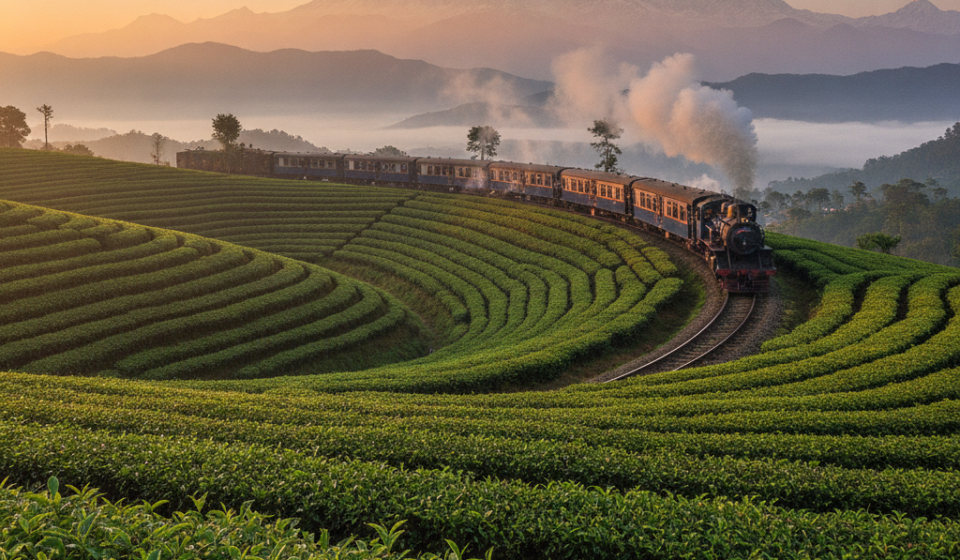

The diverse topography of the Indian subcontinent spans from vast coastal stretches to the frozen heights of the northern mountain ranges. Within this geographical matrix, the numerous elevated sanctuaries, widely referred to as hill stations in india, stand out as vital sanctuaries of natural beauty, cultural heritage, and ecological significance. Developed primarily during the nineteenth century as seasonal sanctuaries from the intense summer heat of the Indo-Gangetic plains, these high-altitude retreats have transformed into mature, multi-faceted travel destinations. They provide critical economic support to mountain communities while serving as key preservation areas for unique alpine and sub-tropical biodiversity. Exploring these highland sanctuaries reveals not only breathtaking panoramic vistas but also a complex historical background that reflects the evolution of modern tourism. From the rugged passes of the far north to the misty slopes of the southern ranges, these iconic hill stations in india remain indispensable for those seeking both adventure and tranquility. An analysis of the premier elevated destinations reveals their distinct geographical, cultural, and ecological characteristics.
- Diverse Topography: Hill stations in India span multiple mountain systems, from the snowy Himalayas in the north to the rolling Western Ghats and Nilgiris in the south.
- Colonial Origins: Most major hill stations were developed during the 19th century as cool summer retreats for British officials.
- Adventure & Leisure: These destinations cater to all travelers, offering high-altitude trekking, winter sports, tea estate tours, and tranquil retreats.
- Eco-Tourism & Preservation: Modern travel emphasizes sustainable tourism to protect fragile ecosystems, particularly in high-altitude zones.
The Historical and Geographical Context of Hill Stations in India
The genesis of elevated retreats in the subcontinent is closely tied to colonial administrative history. During the British Raj, the establishment of administrative centers in high-altitude zones was a matter of health and political strategy. Officers and their families migrated to these cooler zones to escape the tropical diseases of the plains. It was basically a practical search for relief that ended up reshaping the local topography. Over time, these temporary cantonments evolved into permanent municipal hubs with transport networks, timber-framed cottage architecture, and formal civic spaces. Developed initially as key summer retreats in India, these destinations recreated European environments in Asia. The development of early hill stations in india was motivated by this desire for familiarity.
Geographically, the major mountain resorts are distributed across three primary mountain systems, each possessing a distinct geological profile:
- The Himalayas (North & Northeast): Characterized by steep, rugged peaks, glacial valleys, and temperate forests of deodar, pine, and oak. These contain some of the highest hill stations in india.
- The Western Ghats (Western Coastline): A major biodiversity hotspot featuring flat-topped volcanic plateaus, dense evergreen canopies, and unique microclimates.
- The Nilgiri and Anaimalai Hills (South): Characterized by older, rounded massifs, highly weathered soils, extensive tea plantations, and unique grassland ecosystems.
This geographic variation dictates the microclimates and agricultural outputs of each region. In recent decades, the rapid growth of domestic tourism has necessitated a balance between infrastructural expansion and environmental conservation. The modern preservation of these hill stations in india represents a critical policy objective, as local authorities manage landslide risks, waste management, and the challenges of sustainable development. Many of these regions now enforce strict construction regulations to prevent ecological degradation while promoting eco-friendly tourism models.
Prominent Northern Himalayan Getaways
The northern mountain belts present some of the most dramatic elevations on earth, serving as the setting for highly sought-after high-altitude resorts. These high elevations feature some of the highest hill stations in india that draw tourists seeking cold climates and snow. From the historic colonial capital of Shimla to the rugged terrains of Leh-Ladakh, these locations showcase the raw power and beauty of the Himalayan mountain system. Among the primary Himalayan getaways, the regional infrastructure has undergone major developments to support year-round tourism.
Shimla: The Architectural Legacy of the British Raj
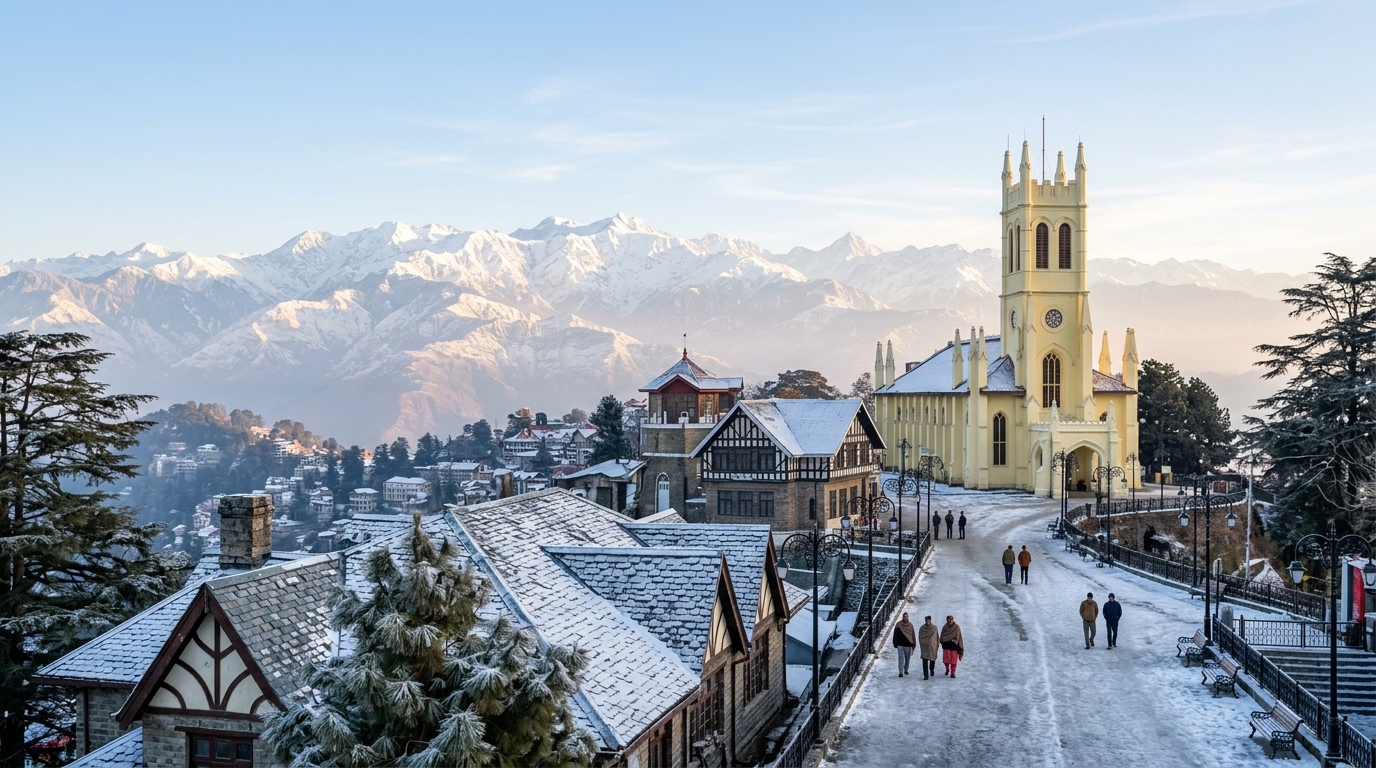
Shimla, located at an average altitude of roughly 2,205 meters above sea level, serves as the capital of Himachal Pradesh. Historically designated as the summer capital of British India, the town retains an architectural character dominated by Victorian Gothic, Tudor, and Neo-Gothic styles. The central arterial road, known as the Mall Road, alongside the spacious ridge, remains free of vehicular traffic (a deliberate urban planning measure that enhances the pedestrian experience).
Iconic heritage sites that showcase this architectural legacy include:
- Viceregal Lodge: The former summer residence of the British Viceroy, displaying classic Jacobethan style and vast manicured lawns.
- Christ Church: The second oldest church in North India, renowned for its majestic neo-Gothic architecture and stained-glass windows.
- Gaiety Theatre: A historic Victorian-era theatre that remains a vibrant cultural hub.
- The Mall Road and Ridge: Pedestrian-only zones that offer panoramic views, bustling shops, and colonial-era charm.
As one of the most visited hill stations in india, Shimla acts as a major transport junction for the state. The historic Kalka-Shimla Toy Train, a UNESCO World Heritage site completed in 1903, offers a slow, scenic ascent through 103 tunnels (though only 102 remain active today), presenting passengers with classic mountain vistas. Travelers often explore the town as a starting point before venturing deeper into the Kinnaur and Spiti valleys. For those planning an organized journey, booking comprehensive Shimla tour packages provides a structured way to explore these architectural landmarks and surrounding pine forests. The local hospitality industry operates at a high standard, though peak season crowds can occasionally strain municipal infrastructure. Tourism remains the main economic driver, though not without exceptions, and the local municipal corporation has introduced water conservation initiatives to manage the seasonal influx of visitors during the dry summer months.
Manali: Alpine Solitude and Adventure Sports
Situated at the northern end of the Kullu Valley at an elevation of approximately 2,050 meters, Manali offers a distinct transition from colonial heritage to active adventure tourism. The town is bordered by dense deodar forests, the fast-flowing Beas River, and the snow-clad peaks of the Pir Panjal range. While Old Manali retains a traditional charm with its stone-and-wood houses and orchards, the bustling newer commercial areas cater heavily to modern adventure seekers and family vacationers alike.
The region has established itself as the adventure capital of northern India. Solang Valley, located a short distance from the main town, serves as a hub for paragliding, zorbing, and winter skiing, depending on the seasonal snow cover. The completion of the road under the Rohtang Pass has changed accessibility, allowing year-round transit to the high-altitude Lahaul and Spiti valleys. But still, the fragile ecology of the Rohtang pass requires strict regulation of vehicular traffic through a daily permit system. This is a common challenge for high-altitude hill stations in india that must balance environmental preservation with economic growth. Travelers can find various itineraries that highlight these adventure options, making it a top choice among adventure-focused hill stations in india.
Leh-Ladakh: High-Altitude Desert Landscapes
Leh, the joint capital of the union territory of Ladakh, is situated at an extreme altitude of roughly 3,500 meters. The region is characterized by a high-altitude cold desert environment, vastly different from the forested hill stations in india that rely on monsoon rains. Surrounded by the towering peaks of the Karakoram and Himalayan ranges, Leh features a unique landscape of barren mountains, deep valleys, and stark blue skies. The local culture is deeply influenced by Tibetan Buddhism, visible in the numerous whitewashed monasteries, such as Thiksey and Hemis, that perch on rocky cliffs.
The city’s high-altitude environment presents unique physiological challenges for visitors. Acute Mountain Sickness (AMS) is a primary concern, requiring newly arrived travelers to undergo mandatory rest for at least 36 to 48 hours to ensure proper acclimatization. Key tourist attractions include the historic Leh Palace, the Shanti Stupa, and the high-altitude Pangong Tso and Tso Moriri lakes, which freeze completely during the harsh winter months. Road access is limited to the summer season via the Leh-Manali and Srinagar-Leh highways, both of which traverse some of the highest motorable passes in the world.
Serene Retreats of Northeast India
The northeastern states of India present a different mountain landscape, characterized by dense tropical vegetation, deep river gorges, and a distinct cultural matrix. These regions feature diverse microclimates that characterize the eastern hill stations in india. Eastern Himalayan getaways are distinct from other hill stations in india due to their rich tribal heritage and proximity to international borders. Darjeeling and Gangtok represent the cultural and geographical core of tourism in this region, offering views of the eastern Himalayas.
Darjeeling: Tea Plantation Heritage and Himalayan Views
Darjeeling, situated in the Lesser Himalayas of West Bengal at an altitude of approximately 2,042 meters, is internationally celebrated for its black tea production and its panoramic views of Kangchenjunga, the third-highest mountain in the world. The town grew in prominence in the mid-nineteenth century when the British established a sanatorium and experimental tea plantations. Today, the surrounding slopes are blanketed by over 80 active tea gardens, producing leaves that are highly sought after by global connoisseurs.
The town’s historical charm, combined with its agricultural prominence, elevates its status among the finest hill stations in india. The local heritage is further preserved through the Darjeeling Himalayan Railway, a narrow-gauge system that utilizes vintage steam locomotives. This railway remains a classic engineering marvel, capturing the attention of heritage enthusiasts worldwide. Tiger Hill, located at an elevation of 2,590 meters, attracts visitors in the early hours of the morning to witness the sunrise over the Himalayan range, illuminating the snow-covered peaks in shades of gold and orange. The local culture is a rich synthesis of Nepalese, Tibetan, and Bengali influences, which is reflected in the diverse local cuisine.
Gangtok: Buddhist Monasteries and Alpine Lakes
Gangtok, the capital of Sikkim, sits at an elevation of roughly 1,650 meters along a cloud-draped ridge of the eastern Himalayas. The town serves as a modern, clean, and highly organized urban center that serves as the gateway to the rest of the state. Sikkim’s strict environmental laws, including a ban on single-use plastics and a commitment to 100% organic farming, have preserved the local ecosystem, setting a standard for clean hill stations in india.
The local architecture and culture are deeply rooted in Buddhist traditions. Major monastic complexes such as the Rumtek Monastery, a seat of the Kagyu sect, and the Enchey Monastery showcase intricate Tibetan-style architecture and religious relics. Gangtok also serves as the administrative base for arranging permits to visit high-altitude border zones, such as the Nathu La Pass and the pristine Tsomgo Lake. The city’s pedestrianized commercial center, Mahatma Gandhi Marg, is notable for its cleanliness and orderly traffic management, providing a relaxed environment for visitors exploring the local handicraft markets.
Charming Destinations of Western India and the Western Ghats
While the northern and eastern regions are defined by the grand heights of the Himalayas, the western and southern parts of the country feature older, highly weathered mountain systems. These regions contain unique geographical formations, defining the southern and western hill stations in india. The Western Ghats, a major biodiversity hotspot, contain several key retreats that provide relief from coastal humidity.
Mahabaleshwar: Ancient Temples and Strawberry Cultivation
Mahabaleshwar is situated in the Sahyadri mountain range of Maharashtra at an elevation of roughly 1,353 meters. This region is a vast volcanic plateau characterized by rugged cliffs, dense evergreen forests, and deep valleys. Unlike the steep slopes of the Himalayas, the landscape here features flat-topped hills (locally referred to as tablelands) that offer expansive views of the surrounding valleys and coastal plains.
The town is famous for its unique agricultural sector, specifically its strawberry cultivation. According to reports from regional agricultural boards, Mahabaleshwar accounts for roughly 85% of India’s total strawberry cultivation. Visitors can tour active farms and sample fresh produce, particularly during the winter harvest season. Key geographical landmarks include Arthur’s Seat, Wilson Point, and the ancient Mahabaleshwar Temple, which displays classic Hemadpanti architectural style and serves as the source of the sacred Krishna River. This unique combination of geological features and intensive agriculture distinguishes it from the pine-dominated hill stations in india.
Munnar: Endless Canopy of Southern Tea Estates
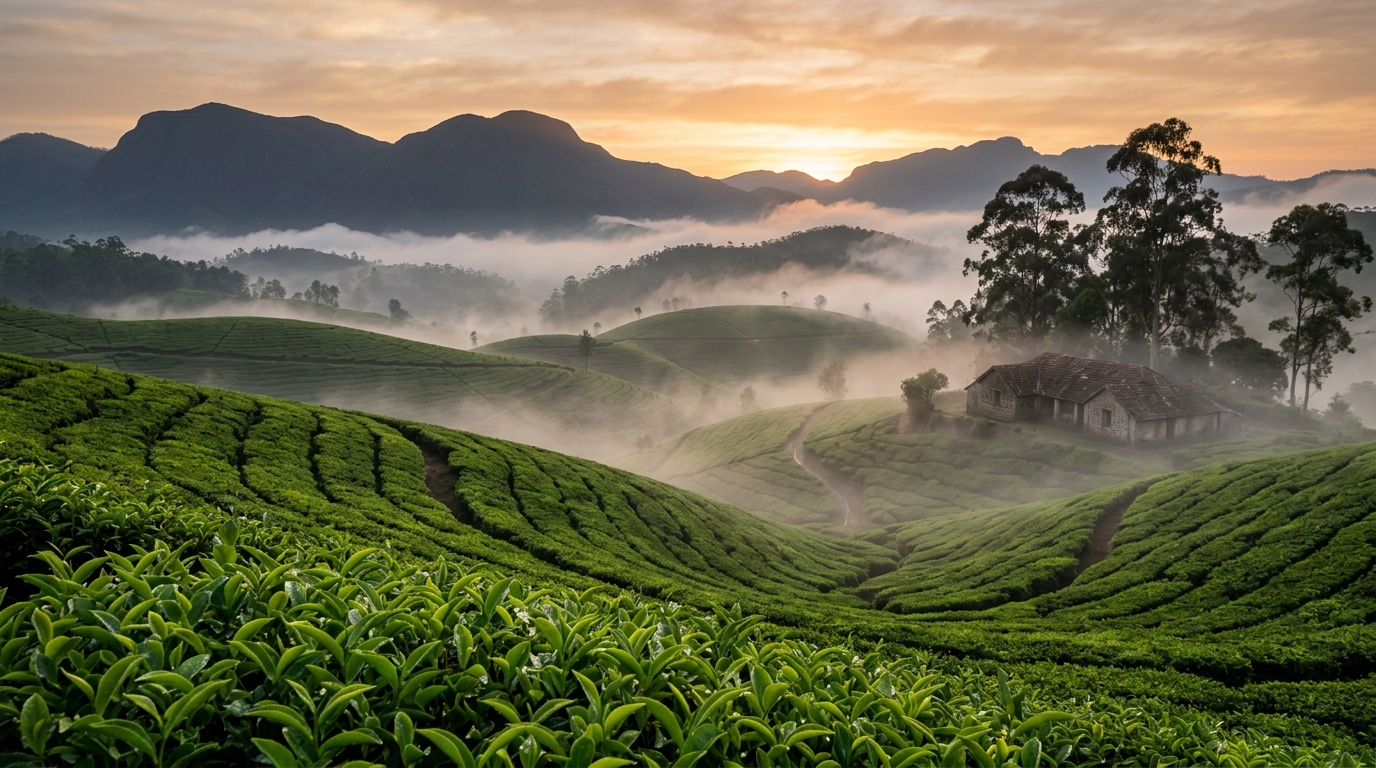
Munnar is located at the confluence of three mountain streams in the Idukki district of Kerala, sitting at an altitude of approximately 1,600 meters. The region is famous for its vast, neatly manicured tea estates that cover the hills like a green carpet, making Munnar unique among the hill stations in india. These estates were established in the late nineteenth century and continue to be major production centers, managed by cooperative corporations.
The local ecosystem is highly diverse, containing the Eravikulam National Park, which is home to the endangered Nilgiri Tahr (a rare mountain goat species endemic to the Western Ghats). The park also witnesses the rare blooming of the Neelakurinji flower, an event that occurs only once every twelve years, turning the hillsides into a sea of blue. Munnar’s climate remains mild and pleasant throughout the year, though the monsoon season brings heavy rainfall that rejuvenates the numerous waterfalls in the area. The presence of historic bungalows and modern luxury resorts makes it a highly versatile destination, appealing to both luxury group packages and the growing demographic of the FIT (Fully Independent Traveler).
Ooty: Botanical Gardens and Colonial Bungalows
Oudhagamandalam, commonly known as Ooty, is located in the Nilgiri Hills of Tamil Nadu at an elevation of roughly 2,240 meters. Established by the British in the early nineteenth century as the summer headquarters of the Madras Presidency, Ooty is distinguished among the early hill stations in india. The town is situated in a basin surrounded by rolling hills, featuring extensive eucalyptus plantations, pine forests, and well-maintained public gardens.
The town’s unique appeal lies in its well-preserved attractions and activities:
- Ooty Botanical Gardens: Established in 1848, housing a vast collection of exotic plants, shrubs, and a fossilized tree trunk estimated to be millions of years old.
- Nilgiri Mountain Railway: A UNESCO World Heritage site connecting Ooty with the plains below, using a historic rack-and-pinion system to navigate the steep gradients.
- Pykara Lake and Waterfalls: A serene destination surrounded by pine forests, popular for boating and peaceful nature walks.
- Local Tea & Chocolate Industry: Famous for producing high-quality Nilgiri tea and handmade chocolates.
While urban expansion has impacted some of the natural areas, the surrounding reserve forests and the serene Pykara Lake remain a core draw for this classic of hill stations in india.
Comparing India’s Premier Hill Stations
Choosing the correct destination among the premier hill stations in india depends heavily on preferences regarding climate, accessibility, and activities. Northern retreats offer dramatic snowscapes but require longer travel times, while southern options feature mild weather and rolling grasslands. Skeptics argue that rapid commercialization is eroding their original charm. They are not entirely wrong, but careful planning still allows travelers to experience untouched pockets of wilderness.
To assist in vacation planning, the following table compares these key hill stations in india based on altitude, regional location, and primary features.
| Hill Station | Region | Altitude (m) | Primary Feature | Best Time to Visit |
|---|---|---|---|---|
| Shimla | North | 2,205 | Colonial Heritage | March to June |
| Leh | North | 3,500 | Cold Desert Lakes | May to September |
| Darjeeling | East | 2,042 | Tea Plantation | October to May |
| Munnar | South | 1,600 | Tea Estates | September to May |
This comparative structure highlights the geographical diversity available to travelers. While northern destinations offer high-altitude thrills, southern retreats provide a more relaxed and easily accessible mountain experience.
Strategic Logistics for High-Altitude Travel
Planning a successful journey to the elevated hill stations in india requires careful attention to logistics and health. Travel to high-altitude zones, particularly in northern regions, can present significant physical challenges. Acclimatization is essential for destinations located above 2,500 meters to prevent altitude sickness.
To assist with your transit planning, here is a detailed breakdown of the connectivity options for these major mountain destinations:
| Hill Station | Nearest Airport | Nearest Railway Station | Road Accessibility |
|---|---|---|---|
| Shimla | Jubbarhatti Airport (22 km) | Kalka Railway Station (90 km) | Well-connected via NH 5 |
| Manali | Bhuntar Airport (50 km) | Joginder Nagar Railway Station (144 km) | Accessible via NH 21 |
| Leh | Kushok Bakula Rimpoche Airport (In Leh) | Jammu Tawi Railway Station (700 km) | Srinagar-Leh & Manali-Leh Highways (Seasonal) |
| Darjeeling | Bagdogra Airport (70 km) | New Jalpaiguri (NJP) Railway Station (75 km) | Accessible via Hill Cart Road |
| Munnar | Cochin International Airport (110 km) | Aluva Railway Station (110 km) | Well-connected via NH 85 |
| Ooty | Coimbatore Airport (88 km) | Mettupalayam Railway Station (40 km) | Accessible via Nilgiri Ghat Roads |
To ensure a safe and comfortable trip, travelers should prioritize the following preparations:
- Acclimatization: Rest for at least 36 hours when arriving in high-altitude zones above 2,500 meters to prevent altitude sickness.
- Layered Clothing: Pack thermal wear, windproof jackets, and sturdy trekking shoes to handle rapid temperature shifts.
- Route Planning: Check seasonal road closures and landslide advisories, particularly during the wet monsoon months.
- Travel Documentation: Obtain necessary permits like the Inner Line Permit well in advance for border regions.
While southern retreats are easily accessible via highways, some northern Himalayan regions require navigating winding mountain roads. For those prioritizing safety and convenience, booking structured itineraries through established agencies, such as TravelDham’s domestic packages, is a practical option. It is advisable to monitor weather forecasts and plan routes meticulously.
FAQs
To help travelers plan their upcoming alpine vacations, here are brief answers to common inquiries regarding hill stations in india.
What is the ideal season to plan a trip to hill stations in India?
The ideal time to visit most hill stations in india is from March to June for mild weather. For snow, December and January are best, while the monsoon period (July to September) should be avoided due to landslide risks. traveling to the northern hill stations in india during winter requires preparation for sub-zero temperatures.
Are permits required for traveling to Leh-Ladakh?
Yes, all visitors to Leh-Ladakh must obtain an Inner Line Permit for high-altitude border areas such as Nubra Valley and Pangong Tso, which can be applied for online or through local administrative offices. Fortunately, not all high-altitude hill stations in india require these permits, making planning simpler for other destinations.
Which hill stations offer the best train journeys?
Shimla, Darjeeling, and Ooty offer the finest train journeys on historic narrow-gauge toy railways, which are UNESCO World Heritage sites connecting some of the most historic hill stations in india with the plains below. These train journeys connect these mountain resorts with the plains below through scenic routes.