
The relentless rise of global tourism has transformed once-secluded retreats into congested commercial hubs. While famous monuments continue to draw millions of visitors annually, the search for authentic immersion has led discerning travelers to seek out the most compelling hidden tourist places in india. The modern traveler no longer seeks merely to tick off standardized itineraries, focusing instead on destinations that offer ecological harmony, historical depth, and genuine solitude. India, with its vast geographical diversity, contains an abundance of these secluded sanctuaries that remain largely untouched by commercial tourism. Unlocking these geographical secrets requires more than just a map. It requires an understanding of regional microclimates, indigenous traditions, and the subtle rhythms of local life.
- Authentic Immersion: Journey beyond typical itineraries to discover destinations defined by ecological harmony, deep history, and genuine solitude.
- Dispersal Tourism Support: Traveling to remote gems relieves pressure on congested hotspots and directly empowers indigenous economies.
- Cultural & Natural Preservation: Discover communities like the Apatani of Ziro Valley or the eco-conscious village of Mawlynnong that champion conservation.
- Meticulous Planning Required: Successful offbeat exploration necessitates securing regional permits, carrying cash, and preparing for limited connectivity.
The Appeal of Uncharted Horizons
For decades, mainstream tourism focused heavily on a select few destinations, such as the Golden Triangle or the crowded beaches of North Goa. While these sites hold undeniable historical and cultural value, they are increasingly prone to overtourism, which compromises both the traveler’s experience and the local environment. Consequently, identifying genuine hidden tourist places in india requires a systematic understanding of geography and seasonal patterns. Travelers are increasingly prioritizing places that have successfully resisted mass commercialization, maintaining their cultural integrity and pristine ecosystems intact.
This shift in consumer behavior is supported by empirical data. According to a 2025 report by the World Travel and Tourism Council, roughly 73% of modern travelers actively seek experiences that support local economies while minimizing environmental footprints. In this context, these pristine enclaves are more than just quiet retreats; they represent the true character of hidden tourist places in india. They offer a rare opportunity to observe traditional ways of life, from organic farming methods in the Himalayas to ancient fishing techniques along the Malabar Coast. By shifting focus toward these lesser-known zones, travelers play a crucial role in dispersal tourism (the deliberate distribution of visitor footfall to economically underserved regions). This practice not only relieves the immense pressure on overcrowded urban hotspots but also provides sustainable livelihoods for indigenous communities who rely on low-impact, high-value tourism.
Curated Offbeat Gems Across India
Ziro Valley, Arunachal Pradesh: A Verdant Cultural Haven
Located in the lower Subansiri district, Ziro Valley presents an extraordinary synthesis of natural beauty and indigenous heritage. Home to the Apatani tribe, this high-altitude valley is celebrated for its unique agricultural practices, which involve wet rice cultivation integrated with fish farming. The tribe’s sustainable relationship with nature has earned the valley a place on the tentative list for UNESCO World Heritage status. When exploring the north-eastern frontier, Ziro Valley emerged as one of the premier hidden tourist places in india. The area is characterized by pine-clad hills, sprawling terraced fields, and traditional bamboo stilt houses that reflect an architectural style optimized for seismic resilience.
For those planning an expedition, the regional package for Arunachal Pradesh provides a structured way to experience this unique community. Notable experiences in this high-altitude valley include:
- Engaging directly with local elders, learning about the tribe’s animist beliefs and their distinctive facial tattoos and nose plugs, which were historically used to protect tribal identity.
- Attending the famous Ziro Festival of Music, an outdoor event that blends contemporary indie music with traditional tribal performances.
- Experiencing an unmatched sense of tranquility and cultural preservation even during the non-festival seasons, cementing its status among the hidden tourist places in india.
Gokarna, Karnataka: The Serene Coastal Alternative
For coastal enthusiasts weary of crowded commercial beaches, Gokarna has steadily gained recognition among the crucial hidden tourist places in india. Located on the rocky coast of Karnataka, this temple town offers a quiet, spiritually charged alternative to its northern neighbor, Goa. The town’s geography is defined by a series of crescent-shaped beaches accessible only via scenic cliffside trekking trails or local wooden boats, including:
- Kudle Beach: A wide, relaxed beach popular for sunset viewing and beach yoga.
- Half Moon Beach: A smaller, quieter cove shaped like a crescent moon.
- Paradise Beach: An isolated, rugged stretch perfect for absolute coastal seclusion.
Choosing a specialized package for Gokarna allows travelers to experience both the sacred traditions of the Mahabaleshwar Temple and the pristine, undeveloped coastline. Unlike heavily commercialized beach destinations, the local administration has maintained strict regulations regarding beachfront construction. This protective stance has successfully preserved the nesting grounds of olive ridley sea turtles and kept the water remarkably clean. The relative isolation of these beaches makes them ideal for yoga retreats, meditation, and low-impact coastal hiking, making it a standout destination within the broader list of hidden tourist places in india.
Mawlynnong and Dawki, Meghalaya: Purity and Crystal Waters
In the East Khasi Hills of Meghalaya, Mawlynnong has earned international acclaim as one of the cleanest villages in Asia. This community-driven settlement is a testament to the power of indigenous ecological management, where roughly 98% of the community households participate directly in waste recycling and conservation efforts (depending on how municipal cleanliness is measured locally). Key characteristics of this pristine ecosystem include:
- Paths lined with hand-woven bamboo dustbins to manage waste effectively.
- A strict prohibition on the use of single-use plastics throughout the entire village.
- An environment that exemplifies why pristine, community-preserved spaces remain highly prized among hidden tourist places in india.
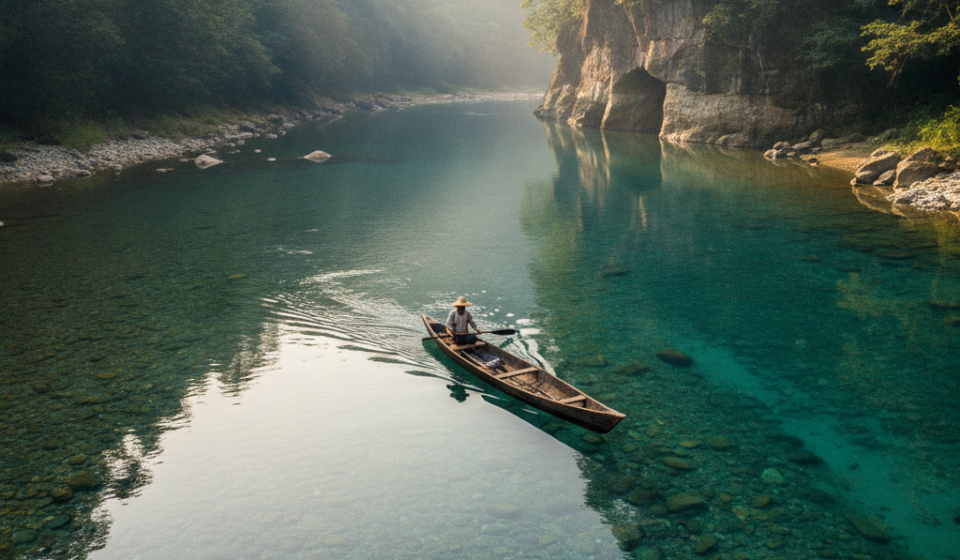
Just a short drive from Mawlynnong lies Dawki, famous for the Umngot River. During the post-monsoon months, the waters of the Umngot River are so exceptionally clear that boats appearing to float in mid-air are a common sight. Visitors can experience these clear waters by booking a curated travel experience to Meghalaya, which combines the clean living of Mawlynnong with the breathtaking aquatic views of Dawki. The area also features the famous living root bridges, which are engineered by training the roots of the Ficus elastica tree over several decades, establishing Meghalaya as a core region for discovering hidden tourist places in india.
Gurez Valley, Kashmir: The Untouched Northern Borderland
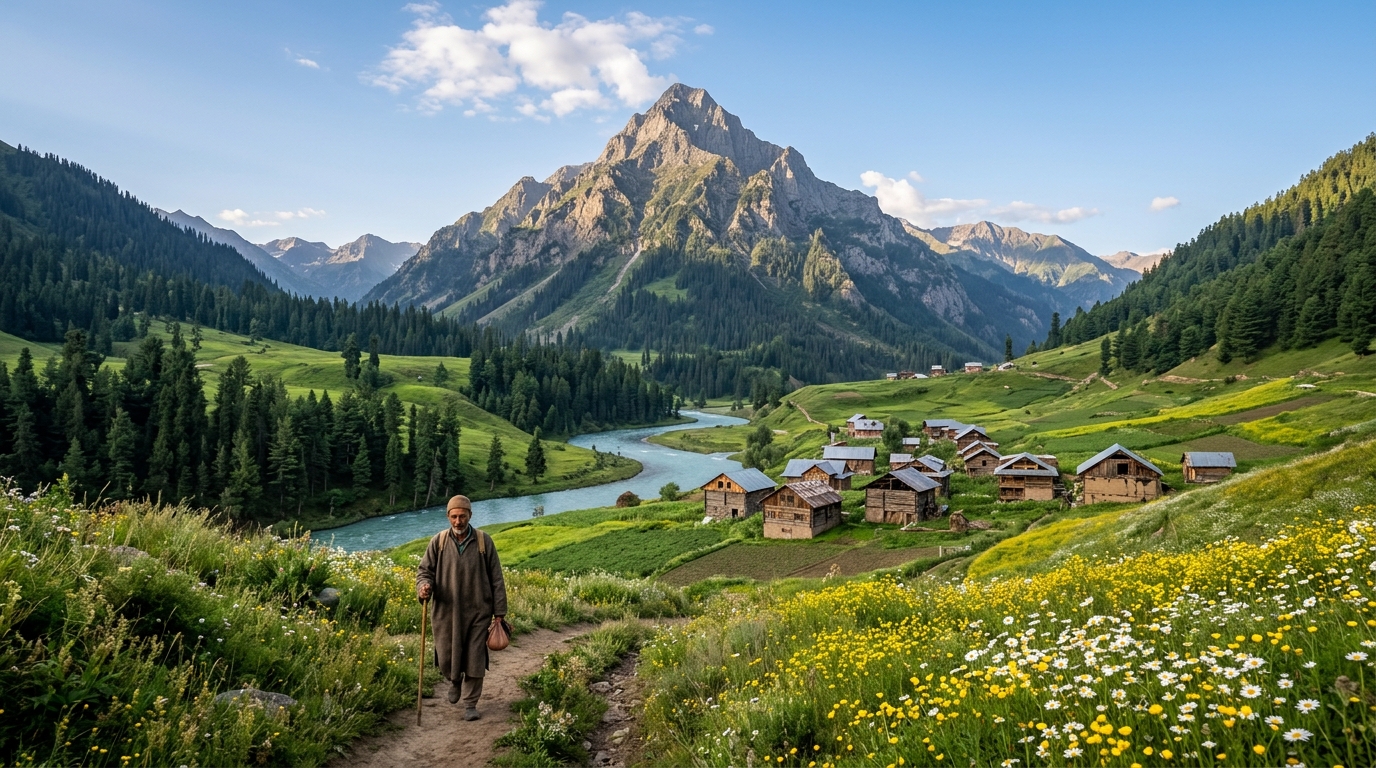
Situated at an elevation of roughly 2,400 meters above sea level, Gurez Valley remains one of Kashmir’s most closely guarded secrets. For decades, geopolitical sensitivities restricted civilian access to this high-altitude valley, but recent administrative shifts have opened it to discerning travelers. This northern borderland is arguably one of the most secure yet under-visited hidden tourist places in india. The landscape is dominated by the majestic Habba Khatoon peak, a pyramid-shaped mountain named after the legendary Kashmiri poetess, and the roaring Kishanganga River that winds through the fertile valley floor.
The inhabitants of Gurez are the Dard-Shin people, an ancient tribe with a distinct culture, language, and architectural style characterized by wooden log huts. The valley experiences heavy snowfall in the winter, making it accessible only from May to October. During these warmer months, the meadows are covered in wildflowers, and the local forests are filled with musk deer and Himalayan brown bears. It is basically a sanctuary for biodiversity, proving that remote high-altitude regions hold the most profound secrets among hidden tourist places in india.
Chopta, Uttarakhand: The Mini Switzerland of Garhwal
Moving to the alpine meadows of Uttarakhand, Chopta serves as a classic illustration of hidden tourist places in india. Located at an altitude of approximately 2,680 meters, Chopta is part of the Kedarnath Wildlife Sanctuary and acts as the starting point for the trek to Tungnath, the highest Shiva temple in the world. The region remains largely untouched by major hotel chains, with accommodation limited to eco-friendly camps and small homestays. This lack of heavy infrastructure has preserved the local birdlife, making Chopta a paradise for birdwatchers who come to spot the colorful Himalayan Monal and various species of pheasants.
The panoramic views of the snow-clad Himalayan peaks, including Nanda Devi, Trishul, and Chaukhamba, are unmatched. In the winter, Chopta is blanketed in thick snow, offering a serene, quiet getaway for those seeking absolute isolation. In the spring, the dense forests of rhododendron burst into vibrant red and pink blooms, creating a stark contrast against the green meadows. This tranquil sanctuary is a vital asset when compiling hidden tourist places in india, proving that spirituality and nature can coexist without the pressures of mass tourism.
Orchha, Madhya Pradesh: The Architectural Sleepers
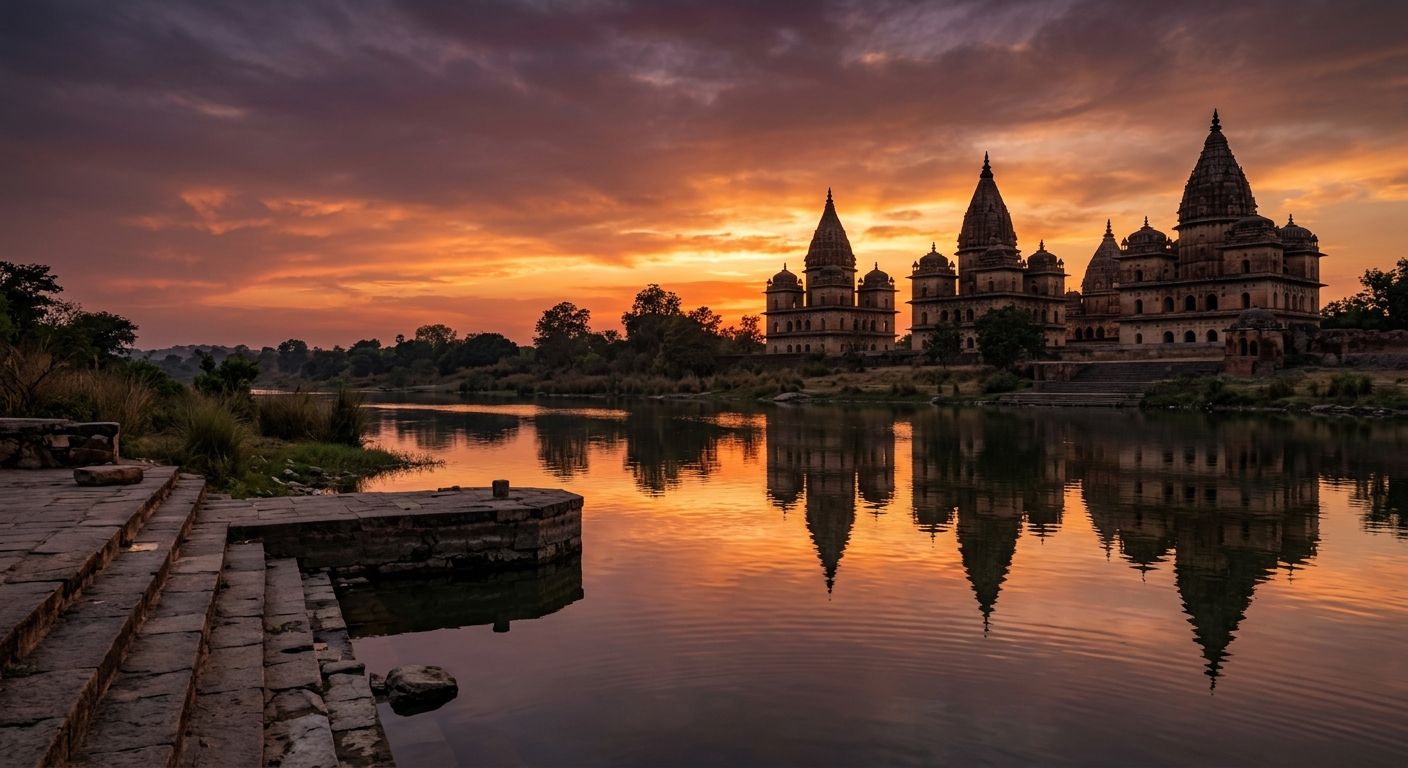
In Central India, Orchha represents the architectural division of hidden tourist places in india. Established in the 16th century by the Bundela Rajput chief Rudra Pratap Singh, Orchha is situated on the banks of the Betwa River and features an extraordinary collection of palaces, temples, and cenotaphs that remain largely ignored by the crowds that flock to neighboring Khajuraho. The Orchha Fort complex, which houses the Jahangir Mahal and the Raj Mahal, displays a brilliant fusion of Rajput and Mughal architectural styles, with intricate stone carvings, delicate balconies, and fading murals that depict scenes from Hindu mythology.
What makes Orchha unique is its quiet, contemplative atmosphere. Unlike other historical sites in India, visitors can explore these massive stone structures in near-solitude. The Betwa River also offers opportunities for low-impact river rafting and kayaking, with the historic cenotaphs (chhatris) providing a dramatic backdrop at sunset. Critics argue that promoting remote regions ruins their isolation. They are not entirely wrong. But still, controlled heritage tourism in Orchha has provided the financial resources necessary to preserve these crumbling monuments, making Orchha a unique historical entry among the hidden tourist places in india.
| Hidden Gem Location | Best Time to Visit | Key Highlights & Activities | Permit Requirements |
|---|---|---|---|
| Ziro Valley, Arunachal Pradesh | March – May, Sep – Nov | Apatani tribal culture, Wet rice fish farming, Music Festival | Inner Line Permit (ILP) Required |
| Gokarna, Karnataka | October – March | Trekking, Quiet beaches (Half Moon, Paradise), Temple tours | None |
| Mawlynnong & Dawki, Meghalaya | September – May | Umngot River boat rides, Cleanest village, Living Root Bridges | None |
| Gurez Valley, Jammu & Kashmir | May – October | Kishanganga River, Habba Khatoon Peak, Dard-Shin culture | Security Checkpoint Permissions Required |
| Chopta, Uttarakhand | April – November | Tungnath temple trek, Birdwatching, Himalayan views | Forest Entry Permits (At checkpoint) |
| Orchha, Madhya Pradesh | October – March | Jahangir Mahal, Betwa river rafting, Ancient Chhatris | None |
Comparative Analysis of Offbeat and Mainstream Destinations
To systematically categorize these hidden tourist places in india, one must analyze key travel metrics against more conventional, heavily visited destinations. While mainstream locations offer highly developed infrastructure and immediate accessibility, the true charm lies in the hidden tourist places in india, where the absence of mass commercial crowds allows for a deeper connection with nature and local cultures.
When selecting between a crowded commercial hub and a tranquil offbeat destination, travelers must weigh factors such as ecological carrying capacity, average daily expenditure, and the level of local community engagement. The following comparative matrix outlines these distinctions, allowing travelers to enjoy the hidden tourist places in india with realistic operational expectations.
| Destination Category | Typical Crowds (Peak Season) | Cost Index (Daily Average) | Environmental Footprint | Primary Attraction Style |
|---|---|---|---|---|
| Mainstream Coastal (e.g., North Goa) | Extremely High (Congested) | Premium (INR 6,000 – 12,000) | High (Waste management strain) | Nightlife and commercial water sports |
| Offbeat Coastal (e.g., Gokarna) | Low to Moderate (Spaced out) | Budget to Mid-range (INR 2,500 – 5,000) | Low (Protected eco-zones) | Cliff trekking and quiet beaches |
| Mainstream Hill Station (e.g., Shimla) | High (Severe traffic congestion) | Premium (INR 5,500 – 10,000) | High (Water scarcity issues) | Colonial architecture and busy malls |
| Offbeat Alpine (e.g., Chopta) | Minimal (Secluded) | Budget (INR 1,500 – 3,500) | Minimal (Strict conservation rules) | Rhododendron forests and high treks |
| Mainstream Heritage (e.g., Jaipur) | Very High (Long queues) | Mid to Premium (INR 4,500 – 9,000) | Moderate (Urban strain) | Royal palaces and commercial bazaars |
| Offbeat Heritage (e.g., Orchha) | Low (Uninterrupted exploration) | Budget to Mid-range (INR 2,000 – 4,000) | Low (Minimal urban impact) | Bundela architecture and quiet river sunsets |
As the data demonstrates, choosing a lesser-known alternative dramatically reduces the daily cost of travel while significantly lowering the ecological strain on fragile environments. The lower average daily cost reflects a lack of commercial middlemen, meaning a larger percentage of your travel spend goes directly to the local homestay owners, guides, and artisans who form the backbone of these secluded economies.
Practical Strategies for Planning Offbeat Travel
Planning an expedition to these hidden tourist places in india demands a meticulous approach to logistics, safety, and cultural sensitivity. Unlike major tourism hubs, offbeat areas often lack immediate medical facilities, reliable cellular network coverage, or automated teller machines (ATMs). Therefore, thorough preparation is critical to ensuring that your journey through the hidden tourist places in india remains safe and rewarding.
First, travelers must conduct exhaustive research regarding regional permits. Several border areas, such as Gurez Valley or certain sectors of Arunachal Pradesh, require Inner Line Permits (ILPs) or Protected Area Permits (PAPs) for both domestic and international visitors. These permits must be secured well in advance from regional government offices or online portals. Second, packing must be highly strategic, prioritizing self-sufficiency.
Below is a structured guide to the essential processes involved in executing a successful offbeat journey:
- Administrative and Regulatory Compliance
- Acquire necessary government permits (such as Inner Line Permits for North-East border regions) at least three weeks prior to departure.
- Carry multiple printed copies of government identification documents, as digital verification systems are often offline in remote areas.
- Financial and Communications Redundancy
- Withdraw sufficient physical currency in major transit cities, as local shops and homestays rarely accept digital payments.
- Procure a secondary SIM card from a service provider with high regional network coverage (typically state-run networks like BSNL in remote zones).
- Physical and Medical Self-Sufficiency
- Pack a comprehensive personal medical kit containing broad-spectrum antibiotics, water purification tablets, and altitude sickness medication.
- Understand that the physical demands of reaching hidden tourist places in india require advanced physical preparation and stamina.
- Cultural Alignment and Etiquette
- Familiarize yourself with local religious and tribal customs before arrival, keeping in mind that respecting local norms is paramount when visiting delicate hidden tourist places in india.
- Always seek explicit verbal permission before photographing local inhabitants, particularly elders and religious ceremonies.
The Economic and Ecological Impact of Offbeat Tourism
The growing interest in hidden tourist places in india carries significant socio-economic implications. When managed responsibly, low-impact tourism can be an effective tool for rural development, offering an alternative source of income for agricultural communities. By choosing local homestays instead of large commercial resorts, travelers ensure that their financial contribution directly benefits the host family, thereby supporting rural preservation. This model of community-based tourism provides an economic incentive for residents to preserve their traditional heritage and natural surroundings.
However, the rapid influx of visitors can also present severe ecological challenges. Remote ecosystems are often highly fragile, with limited waste management infrastructure and vulnerable water resources. Without strict guidelines, the sudden increase in tourism can lead to pollution, deforestation, and the commercialization of local cultures. Therefore, implementing a strict policy of ‘Leave No Trace’ is essential, preventing the degradation that often ruins less-regulated hidden tourist places in india.
Travelers must take active steps to minimize their footprint. This includes carrying all non-biodegradable waste back to major cities, conserving water in arid high-altitude zones, and choosing eco-certified operators. Ultimately, sustainable stewardship is what will preserve these hidden tourist places in india for future generations, ensuring that these pristine spots remain beautiful and vibrant.
Essential Travel Gear and Checklist for Remote Sites
To ensure a seamless journey to the diverse hidden tourist places in india, having the correct equipment is vital. Remote terrains present unpredictable weather conditions, rugged walking paths, and a complete absence of commercial convenience stores.
The following checklist categorizes the essential items that every traveler must carry when visiting remote areas. Equipping yourself correctly guarantees that your exploration of these hidden tourist places in india remains a flawless experience.
| Equipment Category | Recommended Items & Specifications |
|---|---|
| Navigation and Electronics | Rugged power banks (minimum 20,000 mAh), physical topographic maps, and offline GPS applications. |
| Water and Hydration | Reusable insulated stainless steel bottles, portable gravity water filters, or chlorine dioxide purification tablets. |
| Apparel and Footwear | Sturdy waterproof hiking boots with deep ankle support, moisture-wicking base layers, and windproof thermal jackets. |
| Emergency and Health | Compact multi-tool pocket knife, tactical headlamp with spare rechargeable batteries, and a comprehensive wilderness first-aid kit. |
Embarking on a journey to explore the lesser-known corners of the Indian subcontinent is ultimately a pursuit of genuine discovery. It requires a willingness to trade predictable luxury for authentic, raw encounters. By choosing these secluded destinations and packing thoughtfully, travelers not only protect delicate ecosystems but also participate in a more equitable form of travel. The rewards of these journeys extend far beyond simple sightseeing, offering memories of untouched peaks, clear waters, and warm cultural hospitality that linger long after the return home.