


Planning a Mediterranean getaway requires a clear understanding of the financial commitment involved. Determining the accurate Greece trip cost from India involves more than just booking flights, as currency fluctuations, seasonal demand, and travel style significantly influence the final expenditure for 2026. This guide provides a structured approach to budgeting, ensuring all essential components of the journey remain covered without compromising on the quality of the experience.
Key Takeaways:
- Average Budget: A 10-day mid-range Greece trip cost from India typically ranges from 1,50,000 to 2,50,000 INR per person.
- Best Booking Window: Secure your flights, accommodation, and popular ferry routes 3 to 4 months in advance to get the best deals.
- Schengen Visa & Insurance: Indian travelers must apply for a Schengen Visa and obtain mandatory travel medical insurance of at least €30,000.
- Seasonality Matters: Traveling in shoulder months (May or September) can significantly lower accommodation and local transport prices compared to peak summer.
Factors Influencing the Total Budget
The total expense of an international trip depends on several variables. Travellers often underestimate the impact of timing and booking habits on the overall cost. Managing these factors early allows for better financial control throughout the planning phase.
- Travel Season: Prices peak during summer (June to August) due to high demand. Travelling during shoulder months, such as May or September, often results in lower costs for accommodation and internal transport.
- Booking Lead Time: Securing international flights and popular island ferries three to four months in advance typically leads to better pricing compared to last-minute bookings.
- Accommodation Standards: Choosing between boutique hotels, luxury resorts, or budget hostels creates a substantial difference in the daily burn rate.
- Island Hopping Costs: The number of islands included in the itinerary directly impacts ferry costs and internal logistics.
- Dining Preferences: Dining at popular tourist spots versus frequenting local tavernas creates significant variation in the daily food budget.
Estimated Cost Breakdown for 2026
A realistic assessment of costs requires looking at the essential categories separately. These figures represent an average for a mid-range traveller, assuming a duration of roughly 10 days.
| Expense Category | Estimated Cost Range (INR) |
|---|---|
| Return Flights (per person) | 65,000 to 95,000 |
| Visa and Insurance | 8,000 to 12,000 |
| Accommodation (mid-range, per night) | 8,000 to 15,000 |
| Daily Meals and Drinks (per person) | 4,000 to 7,000 |
| Internal Transport (ferries/local) | 15,000 to 25,000 |
Visa and Insurance Requirements
Securing entry remains the first professional step in the planning process. Greece requires a Schengen visa for Indian citizens, which involves specific documentation and fees. Aside from the mandatory visa fee, travel insurance is a non-negotiable requirement for all Schengen applications.
Insurance coverage must meet the minimum requirement of 30,000 EUR for medical emergencies and repatriation. Procuring this policy before submitting the visa application is essential, as the policy document must be presented at the visa centre. For further details on entry requirements, consult our visa assistance services to ensure all documentation meets the current regulatory standards.
| Requirement / Fee Component | Details for Indian Citizens (2026) |
|---|---|
| Schengen Visa Fee (Adults) | 90 EUR (approx. 8,200 INR) |
| Schengen Visa Fee (Children 6-12) | 45 EUR (approx. 4,100 INR) |
| Standard Processing Time | 15 to 45 working days |
| Mandatory Insurance Coverage | Minimum €30,000 (must include medical emergency and repatriation) |
| Key Documentation Checklist | Valid passport, dynamic itinerary, flight bookings, proof of accommodation, ITR (3 years), and bank statements |
Flights and Internal Transport
Flight costs constitute the largest single expense for most travellers. Direct flights between India and Greece are limited, so most itineraries involve a connection in a major European or Middle Eastern hub. Monitoring pricing through comparison tools several months before the intended departure is standard practice for budget optimisation.
Internal transport adds complexity to the budget. To streamline your itinerary and budget, consider these primary modes of transport:
- High-Speed vs. Conventional Ferries: High-speed vessels offer fast island transfers but charge a premium. Slower, conventional ferries are far more budget-friendly.
- ATV or Small Car Rentals: Very popular for exploring larger islands like Crete, Naxos, or Milos. Remember to budget for fuel, local insurance, and parking fees.
- Public Buses (KTEL): The most economical way to commute across popular islands, though services operate on fixed local schedules.
Accommodation Strategy
Strategic selection of accommodation balances comfort with fiscal responsibility. To optimize your budget across different locations, look at these key strategies:
- Athens Neighborhoods: Choose historic Plaka for direct monument access, or explore budget-friendly guesthouses in Koukaki or Pangrati to save on nightly rates.
- Island Booking Window: Santorini and Mykonos accommodations get booked out rapidly. Reserving 4 to 6 months in advance is essential for reasonable rates.
- Off-Center Stays: Booking properties located slightly away from the main caldera or town centers will drastically cut down your overall accommodation bill.
Pro-tip: Booking accommodation slightly away from the main caldera view or the centre of the town significantly reduces nightly rates without detracting from the overall island experience.
Dining and Daily Expenses
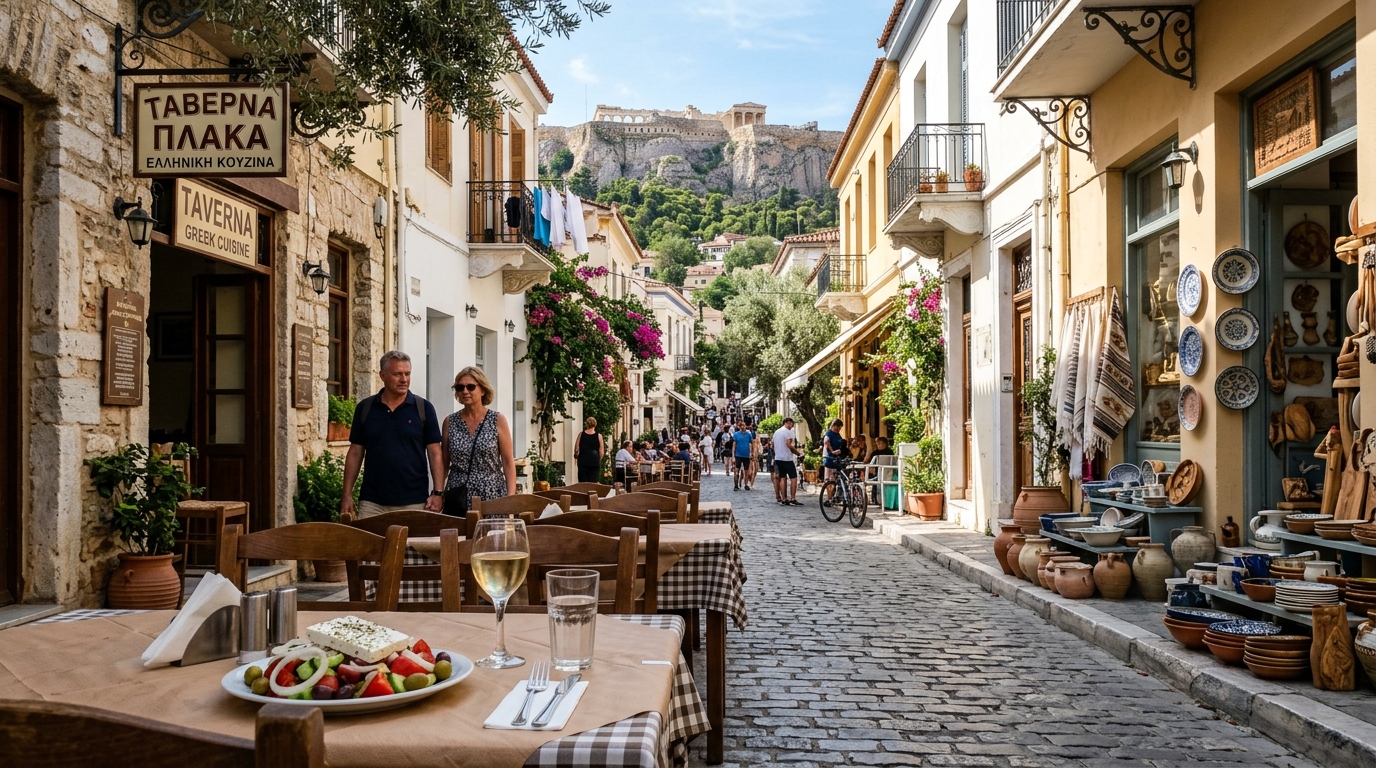
Greek culinary culture is vast, ranging from simple street food to high-end dining. A typical gyros or souvlaki wrap from a local vendor remains an affordable and authentic option for lunch. For dinner, traditional tavernas offer a more relaxed atmosphere where the bill depends largely on the selection of fresh seafood versus locally sourced meat dishes.
Allocating a daily buffer for incidental costs is recommended. Entrance fees for historical sites such as the Acropolis are fixed, but the cumulative cost of museum tickets, guided tours, and local transport adds up over a ten-day period. Keeping a daily expense tracker helps maintain focus on the original budget.
Tips for Cost-Effective Travel
Professional travel planning involves identifying where to save and where to splurge. By prioritising experiences over luxury, travellers can often extend their stay without exceeding their total budget. For expert help in curating your route and managing your itinerary, explore our custom tour packages.
- Tap Water: In most mainland cities, tap water is safe. On smaller islands, clarify with the hotel staff, though bottled water is generally inexpensive.
- Student/Senior Discounts: Always carry valid ID as many historical sites offer reduced entry fees for students and seniors.
- Local Markets: Purchasing snacks and breakfast items from local supermarkets keeps daily costs low.
- Avoid Tourist Traps: Restaurants located directly next to major landmarks often carry inflated prices. Walking two or three streets further into local neighbourhoods usually yields better food at a lower cost.

Conclusion
Accurately calculating the Greece trip cost from India requires attention to detail and a willingness to adjust plans based on seasonal trends. By managing the primary expenses of flights and accommodation while staying flexible with dining and daily activities, a memorable trip remains well within reach. Establishing a realistic budget early provides the necessary freedom to enjoy the cultural and historical richness of the region.