
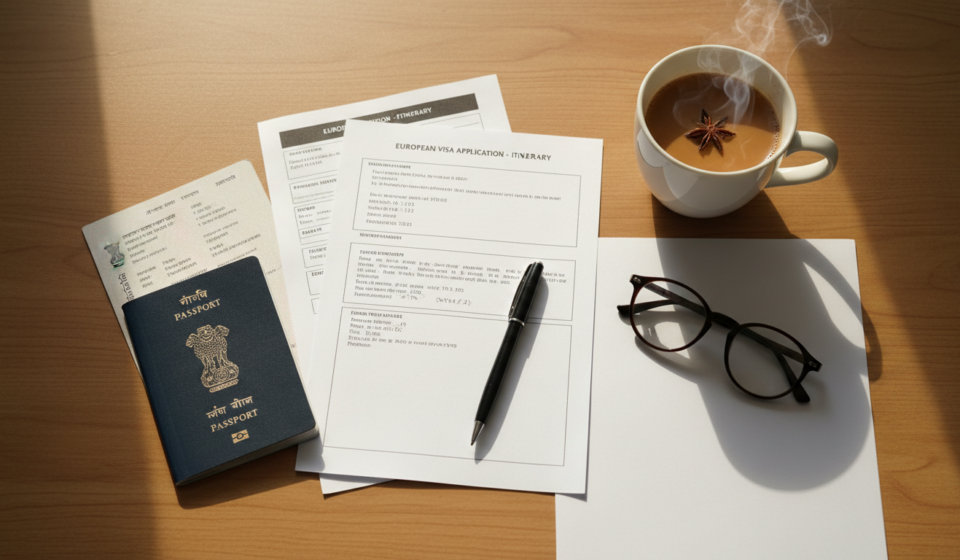

Securing a valid flight reservation for visa application india submissions is one of the most confusing steps for Indian passport holders. Buying fully paid round-trip tickets before your visa is approved carries huge financial risk. A international flight from Delhi, Mumbai, or Bengaluru to Europe or North America costs between ₹50,000 and ₹1,500,000 per person. If your visa decision takes weeks or gets delayed, cancellation penalties can wipe out a massive portion of your savings.
Foreign consulates acknowledge this financial risk. Almost all major embassies explicitly advise applicants not to purchase confirmed, non-refundable tickets prior to visa approval. Instead, they require proof of travel intent—commonly referred to as a flight itinerary, flight reservation, or in consumer slang, a “dummy ticket.” However, submitting the wrong type of flight document can lead to immediate visa refusal or long-term travel bans.
What Is a Flight Reservation for Visa Application India?
A flight reservation is an un-ticketed seat hold created inside an airline’s Computer Reservation System (CRS) or Global Distribution System (GDS). It reserves a real seat on a specific flight without requiring full airfare payment upfront. When created correctly, it generates a live, 6-character Passenger Name Record (PNR) containing your full name, flight numbers, departure dates, and route.
The travel industry often uses the term “dummy ticket” casually, but immigration authorities make a strict distinction between a legitimate reservation and a forged document:
- Verifiable Flight Reservation: A real seat hold backed by a live GDS booking. Visa officers can log into their systems, enter your PNR, and confirm that your seat is actively held in the airline database.
- Fake Ticket: A photoshopped PDF, a generated fake barcode, or a document created via free online ticket generators. These have no backing in any airline database. Submitting one is treated as document fraud.
Visa processing at centers like VFS Global, BLS International, or TLScontact across India typically takes 15 to 30 working days. During peak Indian holiday seasons—such as May through July or around Diwali—processing times can stretch even longer. A verifiable flight reservation bridges the gap: it proves your travel dates and route to the embassy while protecting your bank account from non-refundable flight penalties.
Official Embassy Mandates by Destination
Different embassies handle onward travel requirements differently. Knowing the exact requirements for your destination prevents overpaying for tickets or submitting invalid documents.
1. Schengen Area (29 European States)
Article 14 of the EU Visa Code lists a round-trip flight reservation as a standard supporting document, **not** a paid ticket. Consulates like France, Germany, Switzerland, Italy, and Spain expect an itinerary that includes flight numbers, travel dates, passenger details, and a valid PNR. If your visa is delayed or denied, you are not out of pocket for full airfare. If your application is rejected, you will need to review the root cause using a comprehensive Schengen visa refusal and reapplication guide before filing again.
2. United Kingdom (UKVI)
UK Visas and Immigration (UKVI) guidance explicitly warns applicants against buying tickets before receiving a decision. A provisional flight itinerary can be included to clarify your schedule, but visa decisions depend on your financial stability and ties to India, not paid airfare. Submitting a fake ticket with an invalid PNR is classified as deception under Paragraph 320(7A) of the UK Immigration Rules and carries an automatic 10-year entry ban.
3. Canada (IRCC)
Immigration, Refugees and Citizenship Canada (IRCC) Guide 5256 asks applicants to demonstrate their intent to leave Canada at the end of their authorized stay. IRCC does not require a paid ticket; an un-ticketed flight reservation uploaded under your travel history proves your intended timeline. For complete documentation details, consult our guide on the Canada tourist visa for Indian applicants.
4. Japan
The Embassy of Japan in India (processing through VFS and Japan eVISA) requires a detailed “Schedule of Stay” alongside your flight itinerary details. Official Japanese consular rules explicitly state that ticket purchase is not required before visa approval, as the embassy assumes no responsibility for financial losses from processing delays. The dates on your flight reservation must match your Schedule of Stay exactly.
5. United States (B1/B2 Tourist Visa)
The US Department of State explicitly warns applicants: “Do not make final travel plans or buy tickets until you have a visa.” You do not need to upload or bring a flight ticket or PNR hold to your US Embassy interview in Delhi, Mumbai, Chennai, Hyderabad, or Kolkata. Intended travel dates entered on your Form DS-160 are sufficient.
| Destination | Flight Reservation Required? | Fully Paid Ticket Required? | Official Consular Policy |
|---|---|---|---|
| Schengen Area | Yes (GDS Reservation / Itinerary) | No | Do not purchase tickets prior to visa approval. |
| United Kingdom | Optional (Provisional Itinerary) | No | Strictly advises against buying non-refundable tickets. |
| Canada | Recommended (Proof of Exit) | No | Provide proof of travel plans; paid ticket not required. |
| Japan | Yes (Flight Itinerary) | No | Officially states ticket purchase is not required. |
| United States | No (DS-160 dates only) | No | Explicitly warns against purchasing travel tickets upfront. |
How Consulates Verify Your Flight Reservation
Understanding how visa officers verify flight details helps explain why a simple PDF generator ticket will fail.
Global airline inventories are managed across three major Global Distribution Systems (GDS):
- Amadeus: Used by most European, Asian, and Indian legacy carriers (including Air India, Lufthansa, Air France, and Qatar Airways).
- Sabre: Predominant among North American and select international airlines.
- Travelport (Galileo, Worldspan): Widely used across the Middle East, the UK, and Africa.
When your application is reviewed at a consulate, officers have three primary ways to check your flight details:
- Direct GDS Terminal Checks: Consular staff enter your 6-character PNR code and surname directly into an Amadeus or Sabre terminal. If active, your itinerary displays instantly.
- Airline Booking Portals: Staff visit the airline’s official website and enter the PNR and last name under “Manage Booking.”
- Automated Document Verification: Automated scanning systems parse submitted PDFs for correct PNR formatting and verify live status via airline APIs.
Why Some Valid GDS Holds Don’t Appear on Public Airline Websites
When an authorized travel agent creates a hold inside a GDS network (like Amadeus) without issuing a 13-digit electronic ticket number, some consumer-facing airline websites do not display third-party unticketed holds. However, the booking remains active inside the GDS network—the exact database consular officers query. As long as the PNR is active in the GDS, your reservation will clear embassy checks.

3 Legitimate Ways to Get a Flight Reservation in India
Indian travellers have three main options for obtaining a valid flight reservation for a visa application.
Method 1: Direct Airline Fare Locks (“Time to Think”)
Several major airlines operating out of Indian metro airports allow you to lock a fare for a small fee on their official websites:
- Air India (“Fare Lock”): Holds seats for 48 hours. Fees start at ₹300 for domestic routes, ₹850 for short-haul international, and ₹1,500 for long-haul international flights per passenger. Must be booked at least 10 days before departure.
- IndiGo (“6E Fare Hold”): Holds seats for 24 to 72 hours. Fees range from ₹49 to ₹99 for domestic flights, with higher rates for international destinations.
- Lufthansa / SWISS / Austrian (“Time to Think”): Holds seats for 24 to 48 hours. Fees range from €7 to €30 (~₹630 to ₹2,700) per passenger.
- KLM / Air France (“Time to Think”): Holds seats for 24 to 72 hours. Fees range from €10 to €30 (~₹900 to ₹2,700).
- Qatar Airways / Emirates (“Hold My Fare”): Holds seats for 24 to 72 hours. Fees range between $10 and $25 (~₹800 to ₹2,100).
The Hidden Catch: Direct airline holds usually expire within 24 to 48 hours. Because VFS and embassy processing takes 10 to 30 working days, an airline hold will expire before a visa officer reviews your file. When they check the PNR a week later, the system will return an “Expired Booking” status. If you are applying as a freelancer or remote worker, timing issues like this can trigger extra financial scrutiny—see our dedicated visa guide for Indian freelancers to keep your application solid.
Method 2: Specialist GDS Visa Reservation Services
Specialist travel agencies and licensed GDS operators can issue extended seat holds specifically structured for visa applications.
- Hold Duration: Kept active for 7 to 14 days, or auto-renewed through the processing period.
- Cost in India: Typically ₹500 to ₹1,500 ($7 to $18 USD) per applicant.
- Deliverable: An official PDF itinerary displaying an active GDS PNR, IATA airport codes, flight numbers, and passenger names matching your passport.
Method 3: Purchasing Fully Refundable Airline Tickets
You can buy fully flexible, 100% refundable economy or business class tickets directly from an airline.
- Pros: 100% legitimate, includes an e-ticket number, and stays active indefinitely until you cancel.
- Cons: Locks up significant funds (often ₹2,000,000+ for a family trip). Airlines may charge administrative cancellation fees (₹3,000 to ₹8,000 per ticket), and refunds back to Indian bank accounts can take 14 to 45 business days.
Risks of Fake Tickets: Photoshop Generators vs. Verifiable Holds
Using online “free dummy ticket generators” or buying cheap $2 Photoshop templates is dangerous. Free PDF generators invent fake 6-character codes that are not registered in any GDS database. Consulates treat these documents as visa fraud.
Consequences of Submitting a Forged Ticket
If an embassy catches a fake ticket, the consequences extend far beyond a single visa rejection:
- Schengen Visa Information System (VIS): The rejection is flagged under “Document Fraud” in VIS and the Schengen Information System (SIS II), accessible by all 29 member states.
- United Kingdom 10-Year Ban: Under Paragraph 320(7A) of UK Immigration Rules, submitting false documents results in a mandatory 10-year refusal ban.
- Canada IRPA Misrepresentation: Section 40(1)(a) of the Immigration and Refugee Protection Act (IRPA) penalizes misrepresentation with a 5-year ban from entering Canada.
| Feature | Fake Ticket Generator | Verifiable GDS Reservation | Fully Refundable Ticket |
|---|---|---|---|
| GDS / PNR Status | Invalid / Non-existent | Live & Active in GDS | Live with E-Ticket Number |
| Embassy Verification | Fails instantly | Passes check | Passes check |
| Upfront Cost | Free to ₹200 | ₹500 – ₹1,500 | ₹50,000 – ₹200,000+ |
| Legal & Refusal Risk | Extreme (Fraud ban) | Zero (Official method) | Zero (Fully paid) |
How to Secure a Flight Reservation for Visa Application India: Step-by-Step
Follow these steps to ensure your flight reservation passes visa checks smoothly:
Step 1: Align Your Travel Documents
Your dates must match across all supporting documents:
- Employment Leave Letter / NOC: Approved leave dates must cover your proposed departure and return.
- Hotel Bookings: Check-in and check-out dates must match your flight arrival and departure dates.
- Travel Insurance: Policy coverage must start on or before your flight out of India and end on or after your return flight.
- Visa Application Form: Travel dates entered on the form must match your flight itinerary exactly.
Step 2: Check Entry and Exit Points
If you are applying for a Schengen visa for a multi-country trip, apply to the country where you will spend the most nights. If your stay is split equally, apply to your country of first entry. Your flight itinerary must reflect this entry point logically.
Pay close attention to transit layovers. Laying over in certain international hubs may require an extra transit visa. Review our airport transit visa guide for Indian passport holders before finalizing your route to avoid layover complications.
Step 3: Secure a Fresh GDS Reservation
Obtain your verifiable flight reservation 24 to 48 hours before your VFS, BLS, or TLScontact appointment so the PNR is fresh when submitted.
Step 4: Verify Your Name Formatting
Double-check that passenger names on the reservation match your Indian passport letter-for-letter. Indian passports often list full names under “Given Name” with the “Surname” field left blank. Ensure your travel agent formats your name correctly in the GDS system to prevent booking errors.
Step 5: Address the Reservation in Your Cover Letter
Include a brief explanation of your flight reservation in your visa cover letter to maintain complete transparency:
“Please find enclosed my tentative flight reservation for my proposed trip to [Destination] from [Departure Date] to [Return Date]. In accordance with official embassy advice against purchasing non-refundable tickets prior to visa approval, I have reserved these seats to confirm my travel timeline. I will purchase the final confirmed flight tickets immediately upon visa issuance.”
Step 6: Buy Your Final Tickets After Approval
Once your visa sticker is stamped in your passport, you are free to purchase tickets on any airline, class, or route you prefer. You do not have to use the exact airline listed on your dummy ticket, provided your travel dates fall within your visa’s validity window.

Common Mistakes Indian Applicants Make
- Passport Name Splits: If your passport lists “Rahul Kumar” under Given Name and leaves Surname blank, booking a reservation as First Name: “Rahul”, Last Name: “Kumar” can cause verification discrepancies. Make sure your reservation matches your passport layout.
- Submitting Expired Holds: Using a 24-hour airline fare lock 5 days before your VFS appointment means the hold will be expired long before an embassy officer views your file.
- Inconsistent Port of Entry: Submitting a French Schengen visa application with a flight reservation landing in Zurich without including internal transit details (train or regional flight) to France.
- Double Layovers in Europe: Booking a flight route with two layovers inside the Schengen Area (e.g., Delhi to Frankfurt to Paris to Madrid) transforms your transit into an internal Schengen flight, which requires a full visa before landing.
- Exceeding Short-Stay Limits: Submitting a flight itinerary that spans longer than the maximum allowed short-stay visa window (e.g., over 90 days for a Schengen C-type visa).
Frequently Asked Questions
Is using a flight reservation legal for visa applications in India?
Yes. Using a verifiable flight reservation with an active GDS hold is completely legal and recommended by major embassies (including EU, UK, Canada, and Japan). Submitting a altered or photoshopped fake ticket, however, is illegal document fraud.
What happens if the embassy checks my ticket with the airline?
If an officer checks your PNR in a GDS terminal or on the airline portal, a verifiable reservation will show an active seat hold. If you submitted a fake ticket, the airline system will return “Booking Not Found,” leading to immediate visa refusal.
Do I have to fly on the exact same flight used in my dummy ticket?
No. After your visa is issued, you can book any flight, airline, or route that suits your travel plans, provided your travel dates fall within the valid period of your approved visa.
How much does a valid dummy ticket cost in India?
A genuine, GDS-verifiable flight reservation provided by licensed agencies in India typically costs between ₹500 and ₹1,500 per person. Direct airline holds range from ₹300 to ₹2,700 depending on the airline and hold duration.
Can I use a flight reservation for e-Visas or Visa on Arrival?
Yes, verifiable flight reservations work for online e-visa applications. However, when checking in at an Indian airport, airline staff will require a fully paid, confirmed onward or return ticket before issuing your boarding pass.