


Travel once revolved around checking off landmarks, collecting passport stamps and returning with heavy bags. Today, a quieter, more deliberate shift is taking place across the subcontinent. Massive concrete resorts are losing ground to solar-powered forest lodges, and fragile ecosystems are finally getting the protection they deserve. Genuine sustainable travel is no longer a niche choice for the highly idealistic traveler. Instead, eco tourism in india has emerged as a major driving force in preserving the country’s rich biodiversity while supporting the communities that live on its frontlines. From the mist-draped hills of the Western Ghats to the high-altitude deserts of the north, the focus has pivoted toward leaving places better than they were found. This shift is reshaping how people explore, moving away from high-impact mass tourism toward itineraries that respect both culture and ecology. By adopting mindful practices, travelers can experience the spectacular diversity of the subcontinent without leaving a destructive footprint behind. It is basically a collaborative effort where the traveler and the local host work in tandem to protect the delicate balance of nature.
- Shifting Paradigms: Eco tourism in india has transitioned from a niche interest to a mainstream movement focusing on conservation and community empowerment.
- Government & Local Frameworks: Comprehensive strategies like the National Strategy for Eco-Tourism standardize green practices and prevent greenwashing.
- Regional Highlights: Distinct sustainable models exist across India, from Kerala’s responsible backwater tourism to Ladakh’s high-altitude water conservation.
- Traveller Action: Individual choices, such as using reusable purifiers and choosing eco-certified homestays, collectively mitigate environmental impact.
Understanding the Rise of Eco Tourism in India
Historically, the concept of travel in the Indian subcontinent was deeply intertwined with pilgrimages and natural appreciation. However, the modern surge in commercial tourism during the late twentieth century placed immense pressure on fragile habitats. Forests were cleared for hotels, and local resources were depleted. This unsustainable trajectory prompted a major policy re-evaluation. The formal recognition of eco tourism in india began to take shape as both state governments and private stakeholders realized that the long-term survival of the travel industry depended on the preservation of its primary assets. Today, the country’s diverse topography, which includes roughly 7% of all recorded global species, demands a highly structured conservation strategy. Without dedicated protection, the rapid influx of visitors threatens to degrade these irreplaceable natural wonders.
The transition toward genuine eco tourism in india relies heavily on strict ecological guidelines and community involvement. It is no longer sufficient to merely label a hotel as green because it asks guests to reuse towels. True sustainability requires a comprehensive approach that covers waste management, water conservation, and renewable energy integration. The Government of India recognized this necessity by launching the National Strategy for Eco-Tourism in 2021 (a landmark framework designed to standardize green travel practices). This policy outlines a clear roadmap for state tourism boards, local panchayats, and private tour operators to collaborate under a unified set of ecological standards. By establishing these guidelines, the government aims to professionalize the sector and eliminate deceptive greenwashing practices.
Furthermore, the growing awareness among domestic and international travelers has accelerated this transition. Travelers are increasingly seeking out meaningful connections with local cultures and natural landscapes, rejecting the sterile, isolated environments of mass-market resorts. This shift in demand has forced tour operators to redesign their offerings, putting sustainability at the core of their business models. As a result, conservation-led itineraries have moved from the margins of the travel industry into the mainstream, transforming how tourism is planned and experienced across the country.
Why Sustainable Travel Matters Now
The environmental challenges of the twenty-first century have made sustainable practices an absolute necessity rather than an optional luxury. Rapid urbanization and climate change are threatening India’s most pristine environments, from the melting glaciers of Ladakh to the rising sea levels in the Sundarbans. When tourists flock to these sensitive zones without proper regulations, they inadvertently accelerate the destruction of the very landscapes they came to admire. This is why eco tourism in india must be prioritized as a critical tool for habitat preservation. By channeling tourism revenue directly into conservation funds, national parks and marine reserves can afford the high costs of anti-poaching patrols, scientific research, and habitat restoration.
Moreover, the socio-economic impact of unregulated tourism often marginalizes local populations. When large international corporations dominate the tourism market, the economic benefits rarely reach the villagers living near wildlife sanctuaries. Sustainable travel reverses this trend by ensuring that local communities are the primary beneficiaries of tourism revenue. This economic model turns erstwhile poachers into wildlife guides and farmers into homestay hosts, aligning human survival with environmental conservation. But still, achieving this balance requires continuous monitoring and strict adherence to carrying capacity limits to ensure that local resources are not overwhelmed by the volume of visitors.
In discussing the necessity of sustainable development, the evolution of eco tourism in india provides a compelling blueprint. When local residents understand that a standing forest or a living animal is worth more to their economy than logged timber or poached wildlife, they become the most effective guardians of their environment. This alignment of economic incentives with ecological conservation is the only viable path forward for preserving India’s natural heritage in an era of rapid global change.
Key Principles of Indian Eco Tourism
To understand how these itineraries function, one must look at the foundational principles that govern successful green travel initiatives. These principles are not merely abstract theories. They are highly practical guidelines that shape every aspect of a traveler’s journey. When executing eco tourism in india, successful operators and travelers alike must adhere to the following core tenets:
- Minimising Ecological Footprint: Ensuring that all travel activities, from transport to accommodation, produce the lowest possible carbon emissions and physical waste.
- Preserving Biodiversity: Designing tour packages that actively support the protection of native flora and fauna, often through direct contributions to conservation initiatives.
- Promoting Cultural Respect: Educating travelers about local customs, traditions, and historical heritage, thereby preventing the commercial exploitation of indigenous cultures.
- Empowering Local Communities: Sourcing food, guiding services, and handicrafts directly from local residents to foster sustainable economic independence.
Top Eco Tourism Destinations and Sustainable Itineraries
Developing sustainable travel itineraries requires deep local knowledge and a commitment to low-impact exploration. India offers an extraordinary range of environments, each requiring a tailored approach to conservation. The following regional itineraries represent the gold standard of eco tourism in india, demonstrating how mindful travel can protect fragile ecosystems while delivering unforgettable travel experiences.
| Eco-Tourism Region | Primary Conservation Focus | Sustainable Itinerary Highlight | Key Accommodation Choice |
|---|---|---|---|
| Kerala | Backwater conservation and community livelihoods | Solar-powered punting boats and non-motorized canoes | Certified eco-lodges with greywater recycling |
| Northeast India | One-horned rhino and rainforest habitat protection | Living root bridge trekking and community wildlife tracking | Community-run stilt houses (Chang ghars) |
| Ladakh | Cold desert resource management | Citizen-science snow leopard tracking | Traditional village homestays with dry compost toilets |
| Western Ghats | Rainforest biodiversity and wildlife corridors | Shade-grown, organic coffee estate exploration | Eco-lodges built from mud, bamboo, and reclaimed wood |
Kerala: The Pioneers of Backwater Conservation
Kerala has long been at the forefront of the sustainable travel movement. The state’s Responsible Tourism Mission, established formally in 2017, completely transformed how tourism interacts with local communities. Rather than allowing luxury cruise liners to dominate the fragile backwaters of Kumarakom and Alleppey, the state implemented strict regulations to empower local fishermen and farmers. This initiative has made the region a stellar example of eco tourism in india.
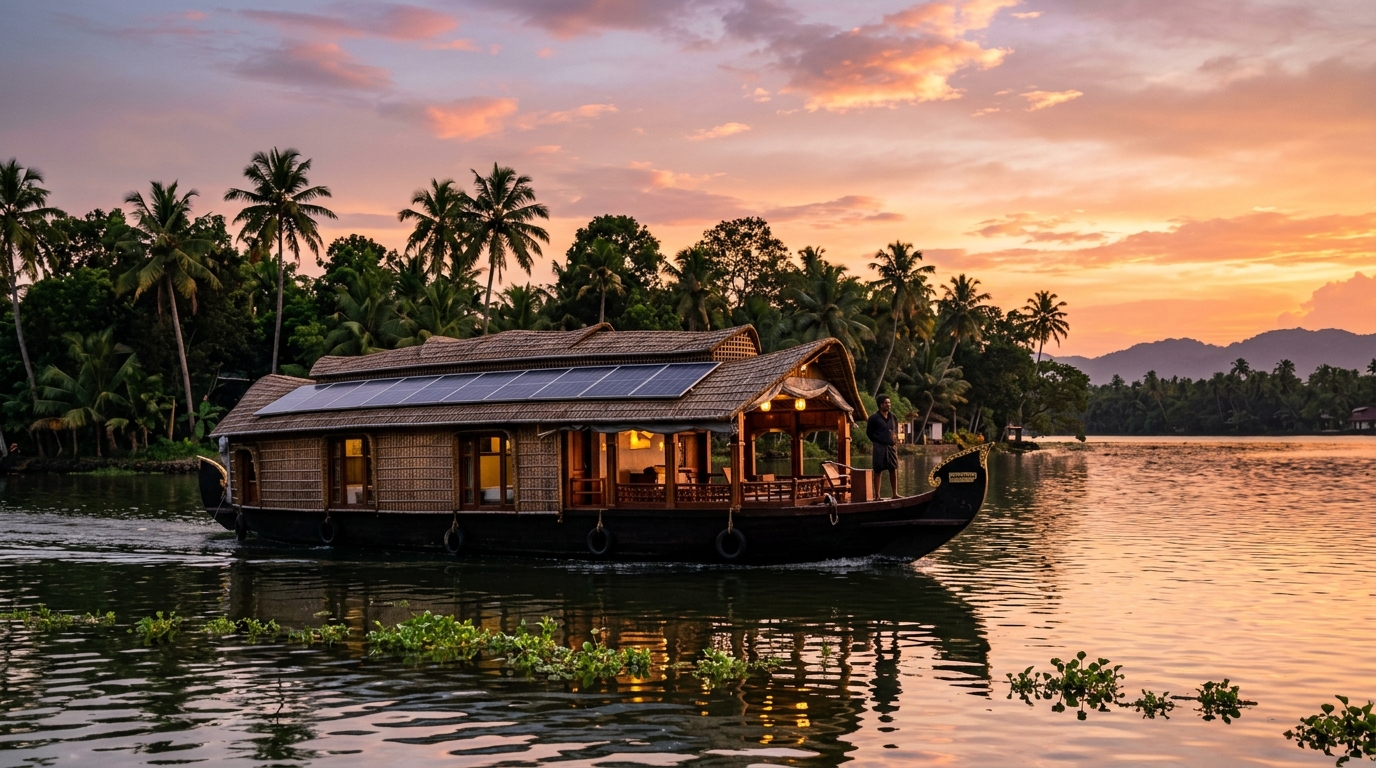
An ideal five-day sustainable itinerary in Kerala begins in Cochin, where travelers can witness the historic Chinese fishing nets before heading to the inland waterways. Instead of renting a massive, diesel-guzzling houseboat, conscious travelers are encouraged to opt for traditional, solar-powered punting boats or non-motorized canoes. This approach drastically reduces noise pollution (which disturbs local bird populations) and prevents fuel leakage into the delicate aquatic ecosystem. Travelers can stay in certified eco-lodges that utilize greywater recycling systems to irrigate their organic vegetable gardens.
A typical day on this itinerary actively engages travelers with the local community through immersive activities:
- Traditional Crafts: Visiting local coir-weaving units to support heritage cottage industries.
- Organic Farming: Participating in traditional organic paddy farming alongside local farmers.
- Sustainable Dining: Savoring locally sourced, seasonal, plant-based meals that reduce food miles.
- Low-Impact Water Travel: Exploring peaceful backwaters using non-motorized canoes or solar-powered boats.
By booking a Kerala eco-tour package, travelers directly support the livelihood of over twenty thousand local families who participate in the Responsible Tourism network. This ensures that travel dollars remain within the local economy, fostering a sense of pride and stewardship among the residents. It is a powerful reminder that conservation and economic development can go hand in hand when managed with foresight.
Northeast India: Community-Led Wildlife Protection in Assam and Meghalaya
The northeastern states of India contain some of the most biodiverse rainforests and wetlands in Asia. However, this region is also highly vulnerable to climate change and habitat fragmentation. In response, local communities have taken charge of conservation efforts, creating some of the most innovative models of eco tourism in india.
In Assam, the focus is squarely on protecting the great Indian one-horned rhinoceros. Kaziranga National Park and Manas National Park have successfully integrated local communities into their anti-poaching networks. An eco-friendly itinerary in Assam involves staying in community-run stilt houses (known locally as Chang ghars) and hiring local youths as naturalists and trackers. This direct employment has dramatically reduced poaching, as community members now view live wildlife as a continuous source of sustainable income rather than a one-time poaching payout. It has turned potential environmental threats into active conservation partnerships.
Moving into Meghalaya, the itinerary shifts toward the Khasi hills, famous for their living root bridges. These marvels of bio-engineering are grown over decades by guiding the roots of the Ficus elastica tree across rushing rivers. Unlike steel or concrete bridges, these living structures grow stronger over time and do not disrupt the local hydrology. A sustainable itinerary here emphasizes low-impact trekking, staying in community homestays in Mawlynnong (celebrated as one of the cleanest villages in Asia), and participating in forest conservation walks guided by village elders. For those looking to explore this remote wilderness responsibly, customized Assam and Meghalaya itineraries offer a perfect balance of adventure and ecological preservation.
Ladakh: High-Altitude Eco Conservation
The cold desert of Ladakh is one of the most extreme environments on earth. It is also one of the most fragile. With the opening of the region to mass tourism, Ladakh has faced severe water scarcity and plastic waste crises. But still, a dedicated network of local NGOs and homestay owners is working tirelessly to promote high-altitude eco tourism in india.
A sustainable itinerary in Ladakh must prioritize resource conservation and physical safety through specific mindful choices:
- Acclimatisation First: Spend at least forty-eight hours in Leh to adjust to the high altitude (3,500 meters above sea level), preventing medical emergencies that strain local healthcare systems.
- Traditional Homestays: Stay in villages like Hemis, Likir, or Temisgam rather than water-intensive luxury hotels.
- Water Conservation: Utilise dry compost toilets, which are perfectly adapted to conserve precious water in this arid desert.
- Local Gastronomy: Dine on traditional meals made from locally grown barley, apricots, and wild vegetables.
Transportation in Ladakh is a major contributor to carbon emissions. To mitigate this, sustainable itineraries advocate for shared electric vehicles or organized trekking routes that connect villages on foot. Travelers can participate in citizen-science projects, such as tracking the elusive snow leopard with conservationists from the Snow Leopard Conservancy India Trust. This ensures that your presence actively contributes to the preservation of this endangered predator. If you want to experience the raw beauty of the Himalayas while protecting its fragile ecosystem, consider booking a dedicated Leh Ladakh sustainable tour package.
Western Ghats: Rainforest Lodges and Organic Plantations in Coorg
The Western Ghats are older than the Himalayas and represent one of the world’s eight hottest biodiversity hotspots. Within this region, the district of Coorg (known locally as Kodagu) stands out for its lush coffee plantations and dense evergreen forests. However, the expansion of commercial resort properties has threatened the region’s delicate topsoil and wildlife corridors. This makes Coorg a critical battleground for eco tourism in india.
A sustainable itinerary in Coorg focuses on shade-grown, organic coffee plantations. Unlike sun-grown coffee, which requires clearing vast tracts of forest, shade-grown coffee is cultivated under the canopy of native rainforest trees. This agricultural method preserves the natural habitat for hundreds of bird species, wild elephants, and endemic amphibians. Travelers stay in eco-lodges constructed from local materials like mud, bamboo, and reclaimed wood. These properties are designed to blend seamlessly into the forest canopy, minimizing visual and acoustic disturbances to local wildlife.
Activities on this itinerary include guided canopy walks, organic coffee-tasting sessions, and volunteering at local reforestation nurseries. By understanding the complex relationship between agriculture and conservation, travelers gain a deeper appreciation for the delicate balance required to preserve the Western Ghats. It shows that responsible tourism can co-exist with productive agriculture, providing a robust model for other agrarian regions in India. This landscape must be protected by ensuring all visitor activities are strictly controlled and managed.
Key Components of an Eco-Friendly Travel Itinerary
When evaluating sustainable travel itineraries, it is essential to look beyond the marketing brochures. A truly sustainable itinerary must be built on a foundation of low-impact choices, certified providers, and direct community support. Understanding these key components allows travelers to make informed decisions that protect the destinations they visit. These structural elements define how eco tourism in india is planned and executed by professional operators.
Low-Impact Transport Options
The carbon footprint of transportation is arguably the largest environmental challenge facing the travel industry today. To address this, eco tourism in india must prioritize rail travel and electric vehicles wherever feasible. India’s extensive railway network offers an incredibly low-emission alternative to domestic flights, particularly for journeys between major cultural hubs. It allows travelers to witness the changing topography of the country while minimizing their environmental impact.
When road travel is unavoidable, sustainable itineraries utilize shared transport or electric vehicles (EVs). Many progressive state tourism boards are actively transitioning their shuttle fleets to electric models, particularly in ecologically sensitive zones like national parks and hill stations. Additionally, promoting non-motorized transport, such as cycling or walking tours, allows travelers to experience destinations at a slower, more intimate pace while producing zero carbon emissions. This slow-travel approach enriches the overall journey, transforming transport from a simple utility into an immersive experience.
Eco-Certified Accommodations and Homestays
The choice of where to sleep is one of the most impactful decisions a traveler can make. Genuine eco-accommodations operate under strict environmental management policies. These properties are often certified by recognized bodies such as the Global Sustainable Tourism Council (GSTC) or adhere to the guidelines set by the Ministry of Tourism’s eco-certification schemes. This certification provides an objective guarantee that the property meets rigorous international standards.
These accommodations are distinguished by their commitment to resource efficiency. This includes utilizing solar or wind energy, implementing rainwater harvesting systems, and completely eliminating single-use plastics from their operations. Many of these lodges also feature dry-compost systems and greywater treatment plants that recycle wastewater for landscaping. Homestays represent another excellent low-impact option, as they utilize existing residential infrastructure rather than requiring new construction in pristine natural areas. This minimizes land degradation and direct environmental disruption.
Supporting Local Economies and Indigenous Communities
A sustainable itinerary must place local people at its center. This means ensuring that tourism revenues directly support local livelihoods and cultural preservation. When travelers hire local guides, buy handicrafts directly from artisans, and dine at family-run eateries, they contribute to a highly equitable distribution of tourism wealth. This strategy forms the bedrock of eco tourism in india, linking economic survival with habitat protection.
This economic empowerment has a direct conservation benefit. When local communities derive their income from sustainable tourism, they are highly motivated to protect their natural surroundings from destructive industries like logging, mining, or poaching. Indigenous guides possess an unparalleled depth of knowledge about local ecosystems, offering travelers rich, authentic insights that no standard guidebook can replicate. This mutual exchange of knowledge and economic support creates a resilient, long-term partnership between travelers and hosts.

Practical Tips for the Conscious Traveler in India
Adopting sustainable travel habits is a continuous process of learning and adaptation. While tour operators play a crucial role, the individual choices made by travelers on the ground have a cumulative impact on local environments and communities. Maintaining these habits is crucial when engaging in eco tourism in india, as even small changes in behavior can lead to significant reductions in environmental pressure:
- Carry a Reusable Water Purifier: Avoid purchasing single-use plastic water bottles. Instead, invest in a reusable bottle equipped with a high-quality UV or physical filtration system. This simple switch can prevent dozens of plastic bottles from entering local landfills during a single trip.
- Respect Wildlife Boundaries: When participating in wildlife safaris, maintain a respectful distance from animals. Never encourage guides to drive off-road to get closer to wildlife, as this destroys native vegetation and causes immense stress to the animals.
- Conserve Water and Energy: Treat resources in hotels with the same care as you would at home. Keep showers short, reuse towels, and ensure that all lights, air conditioners, and fans are turned off when leaving your room. This is particularly critical in arid regions like Rajasthan and Ladakh.
- Support Authentic Local Crafts: Avoid buying mass-produced souvenirs imported from other regions. Instead, seek out local co-operatives that sell authentic handicrafts, ensuring that your purchases directly support the artisans who keep traditional crafts alive.
- Choose Eco-Friendly Toiletries: Use biodegradable soaps, shampoos, and reef-safe sunscreens. Standard chemical toiletries can severely contaminate local groundwater systems, particularly in remote areas that lack advanced sewage treatment infrastructure.
Measuring the Environmental Impact of Your Journey
To truly understand the value of eco tourism in india, one must look at how sustainable practices translate into measurable ecological benefits. By tracking and comparing key operational metrics, environmental scientists have demonstrated that conscious travel choices can dramatically reduce resource consumption and waste generation, supporting the long-term viability of tourism destinations.
| Travel Component | Standard Tourism Impact | Sustainable Eco Tourism Impact | Measurable Environmental Benefit |
|---|---|---|---|
| Accommodation | High water and energy consumption; high plastic waste; concrete structures in sensitive areas. | Solar-powered lodges; rainwater harvesting; locally sourced building materials. | Up to 60% reduction in carbon footprint and 80% decrease in water waste. |
| Transportation | Frequent short-haul domestic flights; private diesel SUVs for single travelers. | Utilisation of rail networks; shared electric vehicles; walking and cycling tours. | Over 70% lower greenhouse gas emissions per passenger kilometer. |
| Dining & Sourcing | Imported ingredients; high food miles; corporate-owned supply chains. | Locally grown, organic produce; seasonal plant-based menus; community-run eateries. | Near-zero food miles; direct economic support to local farmers and communities. |
| Waste Management | Unregulated plastic disposal; open landfills in mountain ecosystems. | Zero-waste policies; dry-compost facilities; strict recycling protocols on-site. | Prevention of plastic pollution in wildlife corridors and water sources. |
This data demonstrates that transitioning to sustainable travel itineraries is not merely about aesthetic choices. It is a highly practical, scientifically backed methodology for reducing the negative impacts of global tourism. By choosing eco tourism in india, travelers participate in a collective effort to preserve some of the world’s most valuable natural resources for future generations. This systemic change is vital for safeguarding our planet.
FAQs
What is the best time to experience eco tourism in india?
The ideal window for eco tourism in india depends heavily on the specific region you plan to visit. For high-altitude regions like Ladakh, the summer months from June to September are perfect, as the mountain passes are clear and homestays are fully operational. For wildlife-focused itineraries in Central India and the Northeast, the dry winter season from October to April is recommended, as national parks are open and wildlife sighting conditions are optimal. The monsoon season from June to September is highly rewarding for exploring the lush rainforests of the Western Ghats, though travelers should be prepared for heavy rainfall and limited outdoor activities. Aligning your travel dates with local ecological cycles ensures a safe and enriching journey.
How do I verify if an eco resort is truly sustainable?
Verifying the sustainability credentials of a resort requires looking past generic marketing terms like green, eco, or organic. A genuinely sustainable property should be transparent about its resource management practices. Look for certifications from recognized bodies such as the Global Sustainable Tourism Council (GSTC) or the Indian Ministry of Tourism’s eco-certification programs. These standards are critical for evaluating the credibility of properties engaged in eco tourism in india. Additionally, do not hesitate to ask properties direct questions about their waste disposal systems, the source of their energy, and the percentage of their staff hired from the local community. A legitimate eco-lodge will always be proud to share these details with prospective guests.
Are sustainable tour packages more expensive?
Not necessarily. While some high-end, low-impact luxury eco-lodges do carry a premium due to the high costs of off-grid renewable energy and advanced waste treatment systems, many of the most sustainable travel options are highly budget-friendly. Opting for local homestays, using public transport like railways, and dining at local family-run eateries can significantly lower the overall cost of your journey. In fact, sustainable travel often represents excellent value, as it prioritizes authentic, local experiences over expensive, standardized commercial luxury. When analyzing the long-term economics of eco tourism in india, choosing green options often proves highly cost-effective for both the traveler and the host community.
Conclusion
The choices made during travel have deep, lasting consequences for the destinations visited. The growth of eco tourism in india represents a vital path forward, showing that travel can be a powerful force for environmental conservation and community empowerment rather than a source of destruction. By choosing sustainable itineraries, staying in certified eco-lodges, and supporting local economies, travelers ensure that India’s magnificent natural heritage remains vibrant for generations to come. Planning a responsible journey does require extra care and research, but the reward is a far deeper, more authentic, and ultimately more meaningful travel experience. If you are ready to explore the subcontinent mindfully, TravelDham is here to help you customize the perfect sustainable itinerary. Explore our diverse range of domestic tour packages to begin planning your eco-friendly journey today.