


Global travel patterns are experiencing a profound realignment as conservation priorities shift from peripheral discussions to central operational requirements. In the context of the Indian subcontinent, this change manifests as a deliberate transition away from high-density, low-impact commercial operations toward ecologically balanced travel models. Emerging travel statistics indicate that modern travelers increasingly prioritize destinations that actively preserve ecological integrity and support community welfare. Understanding the complex networks of national parks, community reserves, and organic states has become essential for anyone discovering the vast possibilities of eco tourism in india. This detailed manual examines how ecologically sound tourism operates, highlights premier green destinations, and provides actionable guidelines to minimize footprints while maximizing the positive socio-economic impacts of travel.
- Carrying Capacity Focus: Modern eco tourism in India shifts from mass tourism to controlled-capacity models that protect sensitive biomes.
- Community-Based Tourism (CBT): Prioritizing local ownership ensures tourism revenue stays within rural community economies.
- Diverse Eco-Destinations: From Sikkim’s 100% organic model to Meghalaya’s living root bridges, regions use customized conservation strategies.
- Wildlife Protection: Regulated safaris in parks like Kaziranga and Jim Corbett fund anti-poaching and habitat restoration.
- Responsible Practices: Travelers can reduce footprints by using reusable filtration bottles, choosing homestays, and minimizing waste.
Understanding Eco Tourism in India: A Path Beyond Footprints
As an analytical framework, eco tourism in india has progressed far beyond simple nature walks. Today, the administrative approach focuses heavily on carrying capacity, which represents the maximum number of visitors a specific ecosystem can tolerate without suffering irreversible damage. Implementing these structural limits requires active collaboration between state forestry departments, municipal councils, and local communities. For instance, controlled visitation in sensitive biomes prevents the displacement of native fauna and preserves the soil chemistry of pristine forest paths. This operational shift represents a major departure from conventional mass tourism. By focusing on low-impact structures, the nation aims to protect its bio-diverse regions while fostering scientific literacy among travelers.
Defining the Sustainable Travel Mindset
To understand these ecological concepts, one must distinguish between sustainable travel and general recreational travel. Sustainable travel focuses on maintaining long-term ecological balance (a long-overdue priority in rapid development zones). Implementing this mindset is crucial to the expansion of eco tourism in india, requiring travelers to adopt specific priorities:
- Carbon Minimization: Prioritizing low-emission transit and energy-efficient habits.
- Localized Sourcing: Directing tourism spend to community-owned resources and goods.
- Community-Based Tourism (CBT): Choosing services owned and managed by local residents to ensure economic benefits remain entirely within the community.
- Ecological Preservation: Valuing long-term environmental durability over superficial luxury and convenience.
The Rise of Ecological Initiatives in Indian Tourism
The administrative framework supporting eco tourism in india has seen substantial developments over the past decade. These governmental measures are designed to curb unregulated growth of commercial resorts in ecologically sensitive zones (known scientifically as ESZs) through several key policy shifts:
- Environmental Impact Assessments (EIAs): Now strictly mandated for all tourism infrastructure developed near protected areas.
- Eco-Lodge Subsidies: State governments provide financial incentives for properties utilizing rainwater harvesting, solar power grids, and zero-waste systems.
- Direct Reinvestment: Regions that reinvest tourist entry fees directly into local forest preservation show notably higher habitat recovery rates.
Top Eco Tourism Destinations in India
Analyzing the spatial distribution of eco tourism in india reveals a diverse collection of regional models. From high-altitude cold deserts to tropical backwaters, each geographic zone demands a customized conservation methodology. These regions have developed distinct strategies to manage visitor flow while protecting native biodiversity. To help travelers understand these regional distinctions, the table below outlines the core ecological focus and key conservation practices across several prominent destinations featuring eco tourism in india.
| Region Name | Primary Ecological Focus | Key Conservation Strategy | Optimal Visiting Window |
|---|---|---|---|
| Kerala Backwaters | Wetland Conservation & Solar Transport | Strict emission controls on local houseboats | September to March |
| Leh-Ladakh | Water Preservation & Waste Management | Community homestays and plastic restrictions | June to September |
| Meghalaya Forests | Bio-engineered Living Architecture | Indigenous clan-managed forest reserves | October to April |
| Sikkim Highlands | 100% Organic Agriculture & Alpine Protection | State-enforced organic farming mandates | March to June |
| Andaman Islands | Coral Reef & Marine Habitat Defense | Restricted island access and dive permits | November to April |
Kerala: The Pioneer of Eco-Friendly Tourism
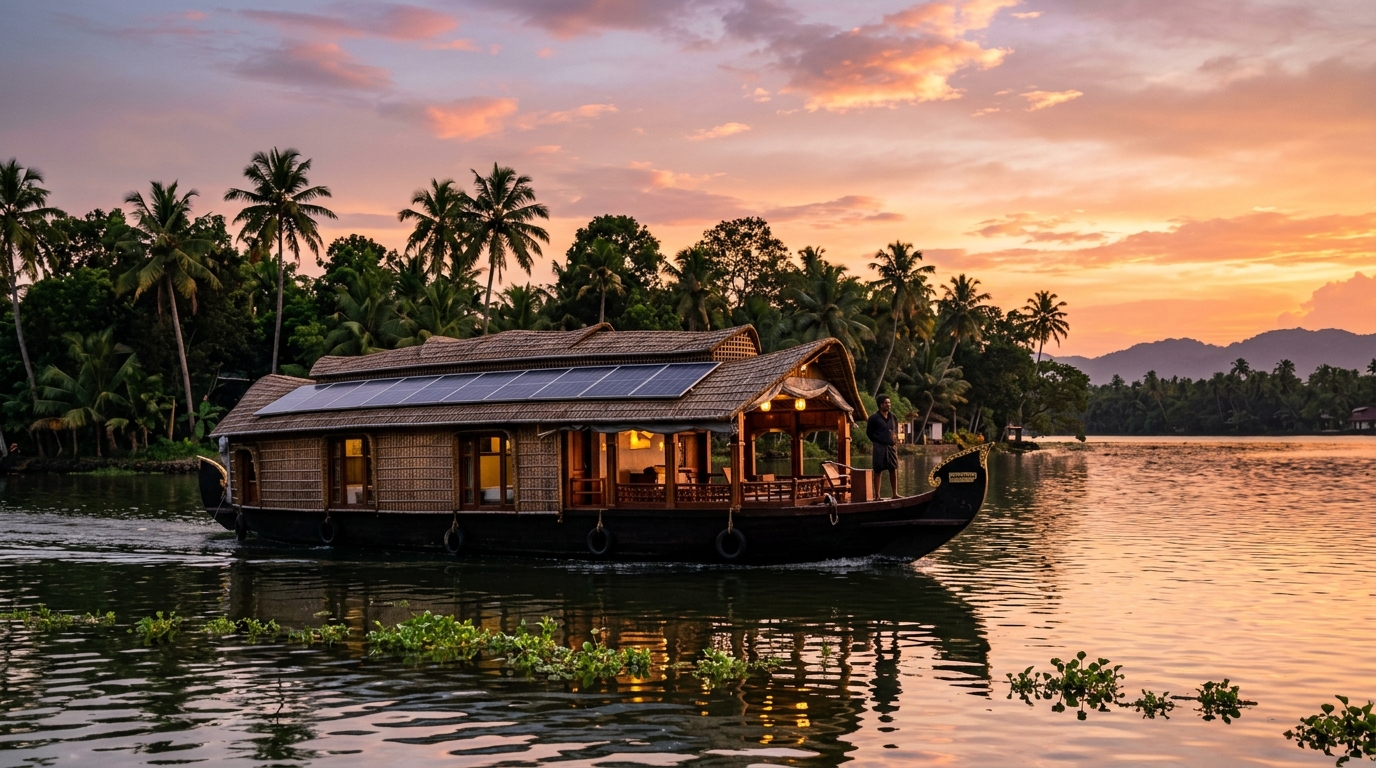
The southern state of Kerala has earned international recognition by establishing some of the earliest structured programs for eco-friendly tourism. As a pioneer of eco tourism in india, Thenmala remains a widely documented example of a planned ecotourism destination in the country. This initiative focuses on wilderness conservation, adventure tourism, and deep cultural immersion. In the backwater regions of Kumarakom and Ashtamudi, localized efforts have successfully converted traditional wood-and-thatch boats into solar-powered vessels equipped with advanced bio-toilets. To experience these sustainable projects firsthand, travelers can utilize dedicated Kerala tour packages that prioritize low-impact accommodations and community-guided canal tours. These systematic efforts show that the state has built an exemplary model of eco tourism in india, demonstrating that high-volume tourism can coexist with rigorous environmental protection.
Leh-Ladakh: High-Altitude Green Adventures
High-altitude cold deserts present highly complex environmental challenges, making Leh-Ladakh a critical area for eco tourism in india. The region is highly vulnerable to climate fluctuations, with water scarcity being an acute concern (especially during the peak summer dry periods). Traditional Ladakhi dry toilets, which require no water and produce organic fertilizer, are being revived in local guest houses to counter the resource drain caused by western plumbing. Furthermore, the Homestay Program in Hemis National Park has successfully transformed local perceptions of the endangered snow leopard. Once viewed as a threat to livestock, the cats are now a vital source of tourism revenue for rural families who host wildlife enthusiasts. Travelers looking to support these initiatives can select specialized Leh-Ladakh travel itineraries. These curated programs emphasize responsible water usage, waste reduction, and direct financial contributions to rural mountain cooperatives.
Meghalaya: Living Architecture and Clean Villages
The northeast state of Meghalaya offers a profound demonstration of indigenous ecological engineering. The local Khasi and Jaintia clans have spent centuries developing living root bridges. These bio-engineered structures are formed by guiding the aerial roots of the Ficus elastica tree across swift mountain rivers. Unlike conventional steel or concrete bridges, these organic structures grow stronger over time and survive severe monsoon floods. Additionally, the village of Mawlynnong has earned global praise for its community-led sanitation programs. Every villager participates in keeping the public spaces clean, utilizing bamboo trash bins and converting organic waste into compost. This organic integration of daily life and natural preservation represents a magnificent display of community-driven eco tourism in india. It proves that preserving the natural environment does not require artificial infrastructure, but rather a deep, culturally integrated respect for local ecosystems.
Sikkim: India’s Fully Organic State
Sikkim has established itself as a globally recognized case study for eco tourism in india. In 2016, the state became the first sub-national entity in the world to transition completely to 100% organic agricultural practices (Sikkim Organic Mission, 2016). This political decision drastically reduced chemical runoff into the state’s pristine river systems, protecting aquatic life and stabilizing soil health in the fragile Himalayan foothills. Sikkim’s forest cover of roughly 47% is protected under strict state conservation laws (Forest Survey of India, 2021). The state government has also implemented a total ban on single-use plastic water bottles in tourist-heavy zones like Lachen and Lachung. Visitors are instead provided with reusable bamboo bottles filled with clean mountain spring water. This systematic approach to eco tourism in india demonstrates how administrative policy can directly support green adventures while preserving delicate mountain biomes.
Andaman Islands: Marine Wildlife and Island Ecology
With its rich marine biology and isolated geographical position, the Andaman Islands require a dedicated approach to eco tourism in india. The marine ecosystems surrounding Mahatma Gandhi Marine National Park in Wandoor are highly sensitive to coastal development and commercial shipping. To counter these pressures, regional authorities have restricted tourist access to specific coral reef zones and established strict licensing for scuba diving operators. These measures prevent physical damage to fragile coral structures and help monitor water quality. Additionally, island-based conservation groups have introduced community-led sea turtle nesting monitoring programs on several beaches. Travelers are educated on the importance of keeping nesting beaches dark and free of debris during breeding seasons. This careful balance between marine exploration and habitat protection is essential for preserving the pristine coastal environments of the archipelago.
Wildlife Conservation and National Parks
The relationship between wildlife conservation and eco tourism in india represents a delicate balance of ecological and economic interests. National parks and tiger reserves contain some of the country’s most threatened biodiversity, requiring specialized management strategies to prevent human-animal conflict. When properly managed, tourism acts as a powerful funding mechanism for anti-poaching squads and habitat restoration projects. But still, unregulated vehicle flow and noise pollution can cause physiological stress to wild populations. Modern wildlife management therefore relies on strict scientific zoning, limiting tourist activities to designated buffer zones while keeping core habitats entirely undisturbed. This approach ensures that conservation remains the primary goal of all wilderness excursions.
Responsible Safaris in Kaziranga National Park
Kaziranga National Park in Assam is globally celebrated for its success in protecting the great Indian one-horned rhinoceros. Managing tourism in this marshy grassland requires a highly structured approach to minimize impact on the wildlife. Jeep safaris are strictly limited to designated routes, and the number of daily vehicles is capped to prevent trail erosion and air pollution. To ensure that local communities benefit directly from these conservation efforts, the park administration employs rural residents as forest guards, trackers, and drivers. This economic integration is vital to the long-term success of eco tourism in india. It aligns the financial well-being of local families with the survival of the park’s wildlife. For those looking to support these sustainable conservation models, Kaziranga wildlife packages offer structured excursions that respect the natural habitat while funding essential protective operations.
Eco-Conscious Travel in Jim Corbett
Jim Corbett National Park in Uttarakhand, established as the country’s first national park, illustrates the historical evolution of eco tourism in india. As a premier tiger conservation zone, the park faces immense pressure from high visitor volumes due to its proximity to urban centers. The park spans an area of roughly 520 square kilometers of core wildlife habitat (National Tiger Conservation Authority, 2022). To mitigate the visitor impact, the administration has introduced a zone-based entry system that spreads tourist vehicles across multiple sectors, reducing overcrowding in sensitive habitats. The surrounding resort sector is also undergoing a gradual shift, with several establishments adopting eco-lodge designs that emphasize greywater recycling, solar heating, and organic kitchens. By choosing responsibly managed Jim Corbett tour packages, travelers can actively support these environmentally conscious lodging choices.

Eco-Friendly Activities: Embracing Green Adventures
Engaging in eco-friendly activities allows travelers to experience the diverse natural heritage of the country without causing structural harm to fragile biomes. These specialized activities emphasize low-carbon movement, authentic cultural exchange, and direct participation in ecological preservation efforts within the broader framework of eco tourism in india. By selecting these green adventures over high-impact mechanized recreation, visitors can dramatically reduce their personal carbon footprint while gaining a deeper understanding of local environmental challenges. Let us examine the specific practices that define these low-impact outdoor activities.
Trekking and Minimal Impact Camping
Trekking represents the most direct form of low-impact recreation within the framework of eco tourism in india. When traversing wilderness areas, hikers must adhere strictly to established “Leave No Trace” principles to prevent trail degradation. This involves packing out all non-biodegradable waste, using portable LPG stoves instead of gathering local firewood, and setting up camps only on durable surfaces like gravel or dry grass. In high-altitude meadows (often referred to as bugyals), fragile alpine flora can take years to recover if trampled by careless campsite placement. To prevent this, professional trekking guides utilize designated camping grounds and carry specialized waste disposal bags to ensure that no human waste contaminates local water sources. This disciplined approach to wilderness travel is essential for keeping remote mountain paths pristine.
Community-Based Homestays and Organic Farming
Opting for community-based homestays over commercial luxury hotels is a highly effective way to support eco tourism in india. These local accommodations are typically built using traditional regional architecture, utilizing locally sourced materials like stone, timber, or mud, which naturally regulate temperature without relying on energy-intensive air conditioning. Additionally, homestay hosts often prepare meals using organic produce harvested directly from their family farms, reducing the carbon emissions associated with transporting food over long distances. This model of hospitality keeps capital directly within the host community, providing rural families with a sustainable source of income. It also fosters genuine cross-cultural dialogue, giving travelers a firsthand look at traditional resource management practices that have sustained these communities for generations.
| Accommodation Type | Primary Benefit | Resource Management Focus | Average Cost Range (INR) |
|---|---|---|---|
| Community Homestays | Direct economic benefit to rural families | Traditional dry toilets, local food sourcing | ₹1,500 – ₹4,000 / night |
| Certified Eco-Lodges | Reduced physical footprint near reserves | Solar power, rainwater harvesting, greywater recycling | ₹5,000 – ₹12,000 / night |
| Conservation Wilderness Camps | Funding for local wildlife monitoring | Zero-waste policies, minimal temporary structures | ₹8,000 – ₹20,000 / night |
Practical Rules for the Responsible Traveler
To support the long-term viability of eco tourism in india, travelers must translate conservation theory into personal action. Responsible travel is not defined by destination alone, but by the daily decisions made by individual visitors. Adhering to structured behavioral guidelines ensures that tourist presence does not disrupt local wildlife or erode traditional social values. Below are the key practices that every eco-conscious traveler should integrate into their journey:
- Carry Reusable Water Purification Systems: Utilize stainless steel bottles paired with ultraviolet or filtration caps to eliminate the need for single-use plastic bottles.
- Support Local Conservation Initiatives: Participate in beach cleanups or contribute to local wildlife protection funds during your stay.
- Minimize Water and Energy Consumption: Keep showers short and ensure all electrical appliances are turned off when leaving your accommodation.
- Hire Local Guides: Engage certified community guides who possess deep knowledge of regional flora and fauna, ensuring fair wages remain in the community.
Waste Management and Carbon Offsetting
Effectively managing solid waste remains one of the most critical challenges facing eco tourism in india. Proper infrastructure is essential for the long-term viability of eco tourism in india, as the lack of formal recycling options in remote mountain villages and coastal islands means that plastic waste often ends up in open landfills or local waterways. Travelers must take personal responsibility by carrying their non-biodegradable waste back to major urban centers where proper recycling facilities exist. In addition to physical waste management, addressing the carbon emissions associated with long-distance travel is vital. Responsible travelers can calculate their transport emissions and offset them by funding regional reforestation projects or clean energy initiatives.
Respecting Local Cultures and Indigenous Communities
Promoting social sustainability is a fundamental pillar of eco tourism in india. Fragile ecological zones are often home to indigenous communities who have developed unique cultural systems deeply tied to their natural surroundings. Travelers must approach these communities with humility and respect, seeking explicit permission before taking photographs of individuals or religious rituals. Additionally, dressing modestly and adhering to local customs when visiting temples or sacred groves prevents cultural friction. Supporting local artisans by purchasing authentic hand-made crafts directly from creators ensures that traditional crafts remain economically viable. This ethical approach to cultural interaction fosters mutual respect, ensuring that tourism remains a positive force for both visitors and hosts alike.
Planning Your Eco-Friendly Tour Package
As the demand for green travel grows, identifying authentic conservation-focused itineraries has become increasingly complex. Many commercial operators use green terminology superficially without implementing actual sustainable practices (a practice known as greenwashing). To find genuine eco-friendly options, travelers should carefully inspect the operational policies of tour providers. Authentic green packages will clearly outline their waste management protocols, detail how they support local communities, and limit tour group sizes to prevent overcrowding in sensitive biomes. By demanding this level of transparency, consumers can ensure their travel investments directly support authentic conservation initiatives rather than superficial marketing claims as they plan their journey with providers of eco tourism in india.
How TravelDham Curates Sustainable Itineraries
To support the growing demand for sustainable travel, TravelDham has developed specialized tour packages focusing on eco tourism in india. These structured itineraries ensure that eco tourism in india remains viable, practical, and highly rewarding for international and domestic travelers. Every itinerary is thoroughly vetted to ensure that transport logistics minimize emissions and accommodations utilize eco-friendly infrastructure. Furthermore, TravelDham partners with certified local guides and community cooperatives, ensuring that your travel spend directly contributes to regional welfare. By prioritizing ecological integrity and authentic cultural engagement, these packages allow you to enjoy thrilling green adventures without compromising the environmental health of the destination. Planning your next journey through these curated solutions guarantees a meaningful travel experience that actively preserves India’s rich biodiversity.