
Traveling through India has never been a simple matter of checking off coordinates on a map; it represents a profound encounter with centuries of living history. For global travelers seeking more than superficial sightseeing, cultural tourism in india offers an unmatched doorway into ancient philosophies, intricate architectural traditions, and the food. The classical performing arts come later. This specialized form of travel does not merely observe communities from a distance but actively engages with their heritage. By understanding the deep historical forces that shaped the subcontinent, travelers can move beyond the typical visitor experience to find a complex, welcoming world. India has preserved its custom through centuries of change, making it a unique destination where the past remains entirely visible in daily routines. Exploring this vast subcontinent requires patience and a willing mind. But still, the rewards are intellectual and personal enrichment.
Key Takeaways for Cultural Travelers
- Living Traditions: Experience an unbroken continuity of centuries-old rituals, daily lifestyle customs, and artistic practices.
- Diverse Architecture: Explore 43 UNESCO World Heritage sites, showcasing ancient stone-carving mastery and grand Indo-Islamic designs.
- Spiritual Centers: Connect with ancient philosophies through profound pilgrimage routes like Char Dham and sacred cities like Varanasi.
- Direct Economic Support: Empower local communities, preserve generational crafts, and sustain rural economies through ethical tourism.
The Essence of Cultural Tourism in India
To grasp the true meaning of travel in this region, one must understand that history is not confined to museums here. It is lived, spoken, and practiced on every street corner. Cultural tourism in india allows outsiders to witness this continuity firsthand, creating a deep sense of connection that few other places can match. This form of tourism has grown rapidly as international visitors seek meaningful and authentic experiences rather than standardized leisure. The shift in traveler preferences toward cultural depth has made the subcontinent a primary choice for academic researchers, history enthusiasts, and general travelers alike.
Defining the Cultural Heritage of India
The vast cultural heritage of india is not merely preserved in monuments; it exists in a dynamic state. It is found in the rhythmic patterns of local dialects, the preparation of traditional meals, and the persistence of ancient social structures. To fully comprehend the depth of cultural tourism in india, one must first dismantle the notion that heritage is static. It is basically a living, breathing archive of human expression. Every region possesses its own distinct identity, often shaped by centuries of isolation followed by periods of intense trade or migration. For example, the languages spoken in the northern states differ fundamentally from those of the south (a linguistic division that reflects ancient historical migrations).
In many ways, cultural tourism in india serves as a bridge between historical preservation and local livelihood. By visiting traditional craft villages, buying handmade textiles, and supporting local guides, travelers contribute directly to the survival of these ancient arts. This economic support ensures that younger generations can afford to continue practicing their family trades, rather than migrating to crowded urban centers for manual labor. The preservation of this heritage is therefore not just an academic concern; it is a vital economic strategy for rural communities across the nation.
Why India is a Global Cultural Hotspot
The rapid expansion of cultural tourism in india is not accidental. As the Ministry of Tourism noted in its recent annual report, the rising global interest in heritage tourism has positioned the country as a leading destination for cultural immersion. This stems from the country’s unique geographical position, which has historically made it a crossroads for international trade and cultural exchange. From the Silk Road in the north to the spice routes in the south, India has absorbed influences from Central Asia, Persia, Europe, and East Asia. This continuous absorption has created a complex society where multiple religions, languages, and artistic traditions exist side by side. It is this diversity that attracts millions of visitors annually, each seeking to explore different aspects of this intricate social fabric.
Governments and local stakeholders have recognized that cultural tourism in india can stimulate rural economies, leading to increased investment in infrastructure and heritage conservation. National initiatives have focused on:
- Improving overall accessibility and safety measures at remote monuments.
- Providing professional training programs and certification for local guides.
- Preserving natural ecosystems and habitats that surround historic sites.
This systematic focus has not only protected critical monuments but has also made the travel experience safer and more educational for international tourists. By providing access to the tangible and intangible cultural heritage of india, these initiatives ensure that the country remains a premier global destination for cultural discovery.
Historic Architecture and UNESCO Heritage Sites
The physical structures of the subcontinent offer, arguably, the clearest record of its artistic and technological development over several millennia. According to the latest historical records, there are roughly 43 globally recognized heritage sites in india, ranging from ancient rock-cut caves to grand colonial municipal buildings. These sites are not merely tourist attractions; they are masterpieces of engineering that reflect the philosophical and religious beliefs of their builders. Examining these structures closely reveals the high level of scientific knowledge possessed by ancient Indian architects, particularly in fields like geometry, metallurgy, and water conservation.
The Grand Monuments of North India
When people plan their first itinerary for cultural tourism in india, the architectural wonders of the north usually dominate their attention. The Indo-Islamic architectural style, which developed during the Delhi Sultanate and reached its peak under the Mughal Empire, is characterized by grand domes, delicate stone inlay work, and vast courtyards. Many of these structures are classified as prominent heritage sites in india, drawing millions of visitors who come to admire their scale and precision. The use of red sandstone and white marble creates a striking visual contrast that defines the urban scenery of cities like Delhi, Agra, and Fatehpur Sikri.
This synthesis of Islamic and indigenous styles remains a major pillar of cultural tourism in india. Beyond the famous mausoleums, the historic forts of Rajasthan offer a window into the defensive military architecture of the Rajput kingdoms. These massive fortresses, built on high rocky ridges, contain within their walls elaborate palaces, stepwells, and temples. Many of these structures are managed by the ASI (the Archaeological Survey of India), which oversees their preservation. The architectural sophistication of these structures shows how Rajput rulers balanced the practical needs of warfare with a deep appreciation for art and luxury (an balance that is evident in the delicate frescoes and mirror work of Jaipur’s Amber Fort).
The Ancient Temples of South India
Moving southwards, cultural tourism in india shifts its focus from Mughal grandiosity to ancient stone-carving traditions. The temple architecture of South India, dominated by the Dravidian style, is characterized by massive pyramidal towers known as gopurams. These towers, covered in thousands of brightly painted stucco figures of deities and mythological creatures, serve as monumental entrance gates to the temple complexes. Unlike northern temples, which often suffered damage during historical invasions, the temples of the south have remained in continuous active use for over a thousand years.
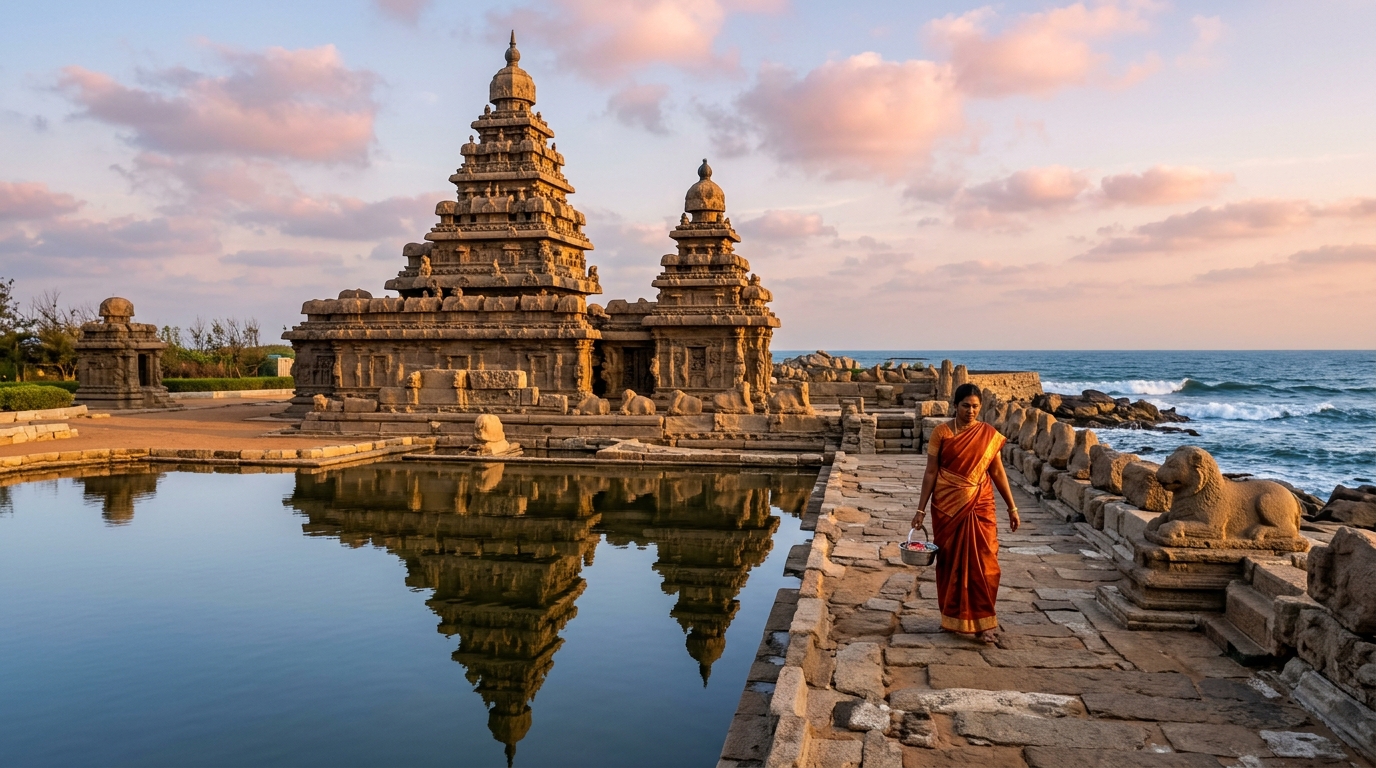
For scholars of temple architecture, cultural tourism in india is incomplete without exploring these granite wonders. The Shore Temple at Mahabalipuram and the Great Living Chola Temples in Tamil Nadu demonstrate an extraordinary mastery of stone carving. Builders carved these structures from solid granite blocks, using only hand chisels and hammers (a feat of manual labor that seems almost impossible given the hardness of the material).
These monumental temple complexes functioned as:
- Spiritual centers of worship and continuous ritual activities.
- Administrative and community hubs supporting local settlements.
- Dedicated spaces housing traditional Vedic schools, treasuries, and classical dance theaters.
Spiritual and Religious Traditions
Religion is not a separate activity in the subcontinent; it is the foundation of daily existence. It is impossible to discuss this subject without examining spiritual tourism in india, which attracts seekers from every corner of the world. The country is the birthplace of four major global religions: Hinduism, Buddhism, Jainism, and Sikhism. This deep spiritual history has left behind a vast network of sacred places, monasteries, and pilgrimage routes that offer travelers a chance to observe ancient rituals practiced in the modern era.
Varanasi: The Spiritual Heartland
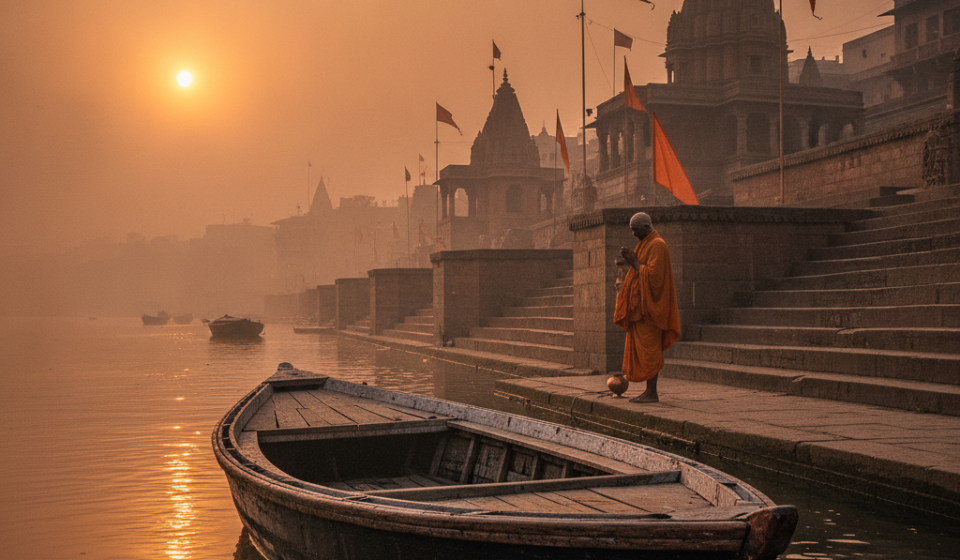
Indeed, Varanasi represents the absolute zenith of cultural tourism in india. Situated on the banks of the sacred Ganges River, this city is considered one of the oldest continuously inhabited cities in the world. For Hindus, dying in Varanasi or having one’s ashes scattered in the Ganges ensures liberation from the cycle of rebirth. Visitors can observe this profound relationship with mortality along the riverbanks, where cremation rituals take place daily beside pilgrims performing their morning purification baths. To experience this ancient city, visitors often book a Varanasi travel package, which allows them to walk the narrow alleys and witness the evening Ganga Aarti ceremony with experienced local guides.
Some critics claim that tourism commodifies sacred practices. They are not entirely wrong. But still, they underestimate how travelers bring critical revenue that preserves these rituals. By incorporating such destinations, cultural tourism in india transitions from a simple holiday into a deeply reflective journey. The city is also a major center for classical Sanskrit learning, music, and yoga, making it a vital node for spiritual tourism in india. The sensory experience of Varanasi, with its smell of burning incense, the sound of temple bells, and the sight of marigold garlands floating on the water, is intense and memorable. It offers an unfiltered look at the core tenets of Hindu philosophy, particularly the concepts of impermanence and devotion.
The Char Dham and Sacred Pilgrimage Routes
Pilgrimage travel constitutes a major percentage of cultural tourism in india. Among the most revered of these journeys is the Char Dham, a circuit of four sacred Himalayan sites located in the state of Uttarakhand. These sites (Yamunotri, Gangotri, Kedarnath, and Badrinath) are situated amidst dramatic mountain peaks, requiring pilgrims to undertake challenging treks to reach them. Completing this pilgrimage is believed to wash away sins and bring spiritual liberation, a belief that drives millions of devotees to make the journey every summer. Travelers interested in this demanding route can secure a specialized Char Dham travel package to handle the complex logistical challenges of high-altitude travel.
Understanding this devotion is central to appreciating how cultural tourism in india operates on a deeper level. The pilgrimage routes are not just religious paths; they are historical corridors of cultural exchange. For centuries, these routes have brought together people from different regions, languages, and social classes, fostering a sense of shared national identity. The simple guesthouses, communal kitchens, and mountain pathways are spaces where travelers can witness the remarkable resilience of human faith and the hospitality of mountain communities.
Festivals, Art Forms, and Performing Arts
The intangible heritage of the subcontinent is as rich and varied as its physical monuments. Classical performing arts, regional festivals, and craft traditions offer a direct way for visitors to engage with local communities. These art forms are deeply rooted in ancient scriptures, particularly the Natya Shastra, a comprehensive Sanskrit treatise on the performing arts. By studying these traditions, cultural travelers can gain a deeper appreciation for the symbolic language of Indian dance and music.
Traditional Dance and Music Ecosystems
Classical performing arts are another cornerstone of cultural tourism in india. The country boasts eight recognized classical dance forms, each originating from a different region and possessing its own unique style and costume. For example, Kathakali from Kerala combines dance, drama, and elaborate makeup to tell stories from Hindu epics, while Bharatanatyam from Tamil Nadu is known for its precise footwork and expressive hand gestures. These performances are not merely entertainment; they are sacred offerings that convey complex philosophical and emotional narratives.
Through these performances, cultural tourism in india provides vital economic support to local families and traditional academies. The oral transmission of musical knowledge, known as the Guru-Shishya parampara, has preserved classical music systems like Hindustani in the north and Carnatic in the south. Visitors can attend music festivals and dance recitals in historic settings, such as the Khajuraho Dance Festival or the Margazhi season in Chennai. These events offer a rare opportunity to hear legendary masters perform in spaces designed centuries ago for acoustic perfection.
Major Festive Celebrations to Experience
Participating in major festivals is often the highlight of cultural tourism in india. These celebrations are deeply tied to the agricultural calendar, astronomical movements, and religious mythologies. Festivals like Holi, the festival of colors, and Diwali, the festival of lights, transform entire cities into vibrant spaces of communal joy. During these times, the traditional barriers of social hierarchy are temporarily suspended, allowing visitors and locals to celebrate together in a spirit of unity and renewal.
For many international visitors, scheduling their cultural tourism in india around these dates offers an unforgettable experience. In eastern India, Durga Puja in Kolkata is an extraordinary display of public art, featuring massive temporary temples called pandals that house beautiful clay idols of the goddess Durga. In the south, the Thrissur Pooram in Kerala showcases magnificent processions of decorated elephants accompanied by traditional percussion ensembles. These festivals are not staged for tourists; they are genuine expressions of community identity that have adapted to the modern era while retaining their spiritual core.
Regional Highlights of Indian Culture
Because of its immense size, the cultural patterns of the subcontinent vary significantly from one state to another. To fully appreciate this diversity, travelers must explore different regions, each of which offers a unique perspective on history, art, and daily life. Two of the most popular states for cultural exploration are Rajasthan in the northwest and Kerala in the southwest, representing two distinct historical and cultural trajectories.
To assist you in planning your journey, the table below compares the key attributes of the primary cultural travel packages featured in this guide:
| Cultural Tour Package | Primary Cultural Themes | Best Suited For | Ideal Duration |
|---|---|---|---|
| Varanasi travel package | Spiritual rituals, Ganga Aarti, Sanskrit learning | Spiritual seekers and history buffs | 2 to 3 Days |
| Char Dham travel package | High-altitude Himalayan pilgrimage, sacred shrines | Devout pilgrims and trekking enthusiasts | 10 to 12 Days |
| Jaipur travel package | Royal Rajput history, grand forts, colorful bazaars | Heritage lovers and family travelers | 3 to 4 Days |
| Kerala travel package | Ayurveda wellness, Backwaters, Kathakali art | Wellness travelers and nature seekers | 5 to 7 Days |
Rajasthan: Royalty, Forts, and Desert Lore
When analyzing the regional success of cultural tourism in india, Rajasthan stands out as a premier destination. The state’s history is defined by the chivalry and artistic patronage of the Rajput clans, who ruled the region for centuries. For travelers who wish to explore indian culture in its most vibrant form, Rajasthan offers a sensory feast of colorful clothing, desert music, and historic architecture. The capital city of Jaipur, with its pink sandstone palaces and historic astronomical observatory, is a key point on the classic tourist route (such as the famous Golden Triangle route). Travelers planning a trip to this royal region can choose a customized Jaipur travel package to experience the city’s heritage monuments and bustling craft bazaars.
This unique blend of royal history and folk traditions makes Rajasthan a highly sought destination for cultural tourism in india. Beyond the grand palaces, the rural villages of Rajasthan are home to ancient nomadic communities, folk musicians, and traditional block-print artists. Visitors can attend the annual Pushkar Camel Fair or the Rajasthan International Folk Festival in Jodhpur to experience the rich oral traditions of the desert. These events showcase the resilience of desert communities, who have developed sophisticated artistic traditions as a way of thriving in a harsh arid environment.
Kerala: Traditions, Art, and Backwater Heritage
Similarly, the southern state of Kerala offers a distinct flavor of cultural tourism in india. Known as God’s Own Country, Kerala’s culture has been shaped by its unique geography, isolated from the rest of the peninsula by the Western Ghats mountain range and open to the Arabian Sea. This maritime position led to early contact with Jewish, Christian, and Islamic traders, creating a highly pluralistic society. To explore indian culture is to appreciate how different regions develop unique social systems, and Kerala’s matrilineal traditions and high social development indicators are a testament to this unique path. Travelers seeking to experience this serene coastal culture can choose a Kerala travel package to explore the historic spice ports of Cochin and the tranquil backwater villages.
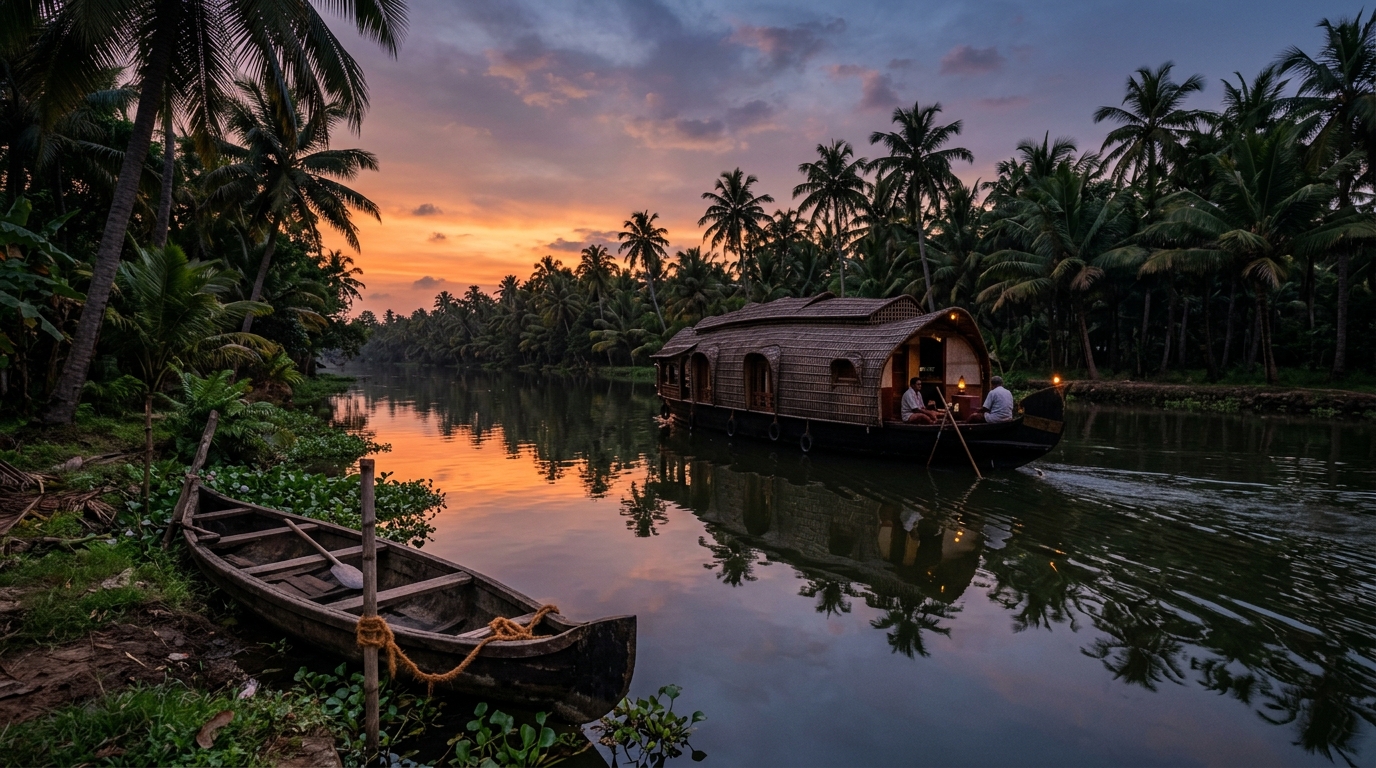
These diverse elements solidify the state’s reputation within the broader context of cultural tourism in india. Kerala is also the home of Ayurveda, an ancient system of holistic medicine that has been practiced continuously for thousands of years. Visitors can experience traditional wellness treatments, watch demonstrations of Kalaripayattu (one of the oldest martial arts in the world), and cruise the backwaters on traditional houseboats made of bamboo and wood (an arrangement that preserves the delicate local ecosystem). This slow-paced, nature-aligned lifestyle offers a peaceful contrast to the high-energy cities of the north, making it an essential stop for a complete cultural overview.
Practical Guide for Cultural Travelers
Traveling through a country of such cultural and geographic diversity requires careful planning and preparation. To ensure a successful and respectful journey, travelers should familiarize themselves with seasonal weather patterns, local laws, and social customs. Taking the time to prepare beforehand can prevent misunderstandings and enrich the overall travel experience.
Best Time to Visit for Cultural Immersion
Planning the timing of a trip is crucial for anyone interested in cultural tourism in india. The country experiences three distinct seasons: winter, summer, and monsoon. The winter months, stretching from October to March, are generally considered the ideal period for cultural travel across most of the country. During this time, the weather is cool and pleasant, making it easy to spend long hours exploring outdoor heritage sites and historic cities without the discomfort of extreme heat.
This seasonal peak provides the most comfortable conditions for experiencing cultural tourism in india. It also coincides with the majority of the country’s major cultural and religious festivals. While winter is ideal for the plains of the north and the southern peninsula, travelers interested in the mountain cultures of Ladakh or Himachal Pradesh should plan their visit during the summer months (June to September), when mountain roads are clear. The table below outlines the ideal months and cultural highlights for different regions of the country:
| Region | Ideal Months | Key Cultural Focus | Notable Event |
|---|---|---|---|
| North India | October to March | Mughal Architecture and Historic Forts | Taj Mahotsav |
| South India | November to February | Dravidian Temples and Classical Dance | Margazhi Music Festival |
| Western Desert | November to February | Folk Music, Crafts, and Desert Safaris | Pushkar Camel Fair |
| Eastern Plains | October to March | Colonial History and Terracotta Temples | Durga Puja |
| Himalayan Region | June to September | Buddhist Monasteries and Tribal Culture | Hemis Festival |
Travel Safety and Respectful Cultural Etiquette
Engaging in respectful travel is a fundamental tenet of cultural tourism in india. Because religion and social customs are deeply intertwined with daily life, visitors should be mindful of local etiquette to avoid causing unintentional offense. Dressing modestly is highly recommended, particularly when visiting active places of worship such as temples, mosques, gurdwaras, and churches. Both men and women should cover their shoulders and knees, and shoes must always be removed before entering a sacred space.
By adhering to these local norms, travelers participating in cultural tourism in india can foster mutual respect and enjoy warmer interactions with local communities. It is also important to seek permission before taking photographs of individuals, religious ceremonies, or private residences. To help guide your travels, keep the following essential etiquette rules in mind:
- Always remove your shoes and any leather items before entering temple premises or domestic homes.
- Use your right hand for eating, giving, or receiving objects, as the left hand is traditionally considered unclean.
- Dress conservatively, covering your shoulders and legs, to respect local sensibilities in rural areas and sacred sites.
- Avoid public displays of affection, which are generally frowned upon in traditional Indian society.
- Always ask for explicit permission before photographing people, particularly women and religious ascetics.
Conclusion
Ultimately, cultural tourism in india is more than an educational exercise; it is an active encounter with a living civilization that has preserved its identity through thousands of years of historical change. By stepping off the beaten path and engaging directly with the country’s diverse traditions, travelers can gain a profound appreciation for the complexity of human culture. Whether exploring the grand historic forts of Rajasthan, participating in a spiritual ceremony in Varanasi, or witnessing a classical dance performance in Kerala, the experience remains unmatched in its depth and variety. For those willing to engage deeply, cultural tourism in india provides a profound window into how humanity has celebrated art, faith, and community across the ages, leaving visitors with insights that last a lifetime.