The Ultimate Chitrakote Waterfalls Travel Guide: How to Visit the Niagara of India

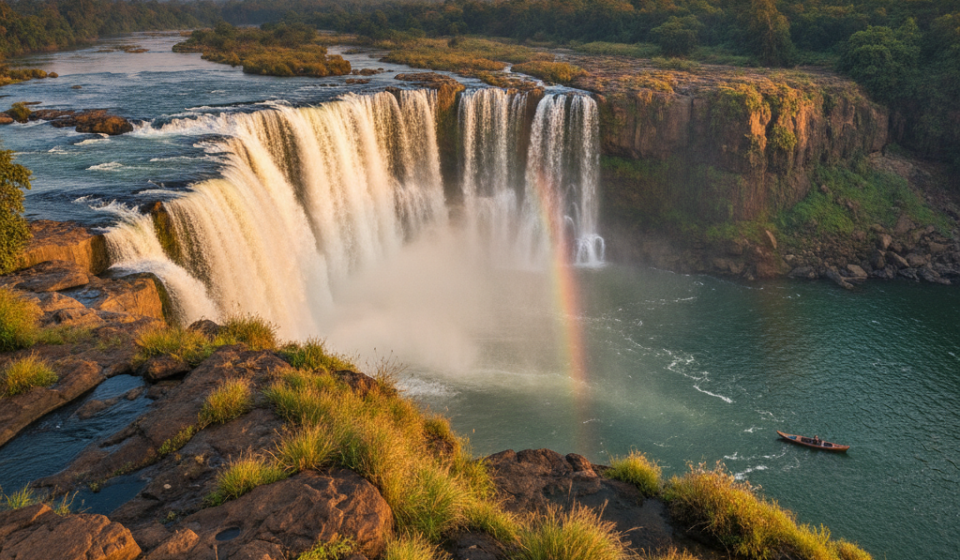
Cascading down a sheer cliff face in the heart of Chhattisgarh, a massive horseshoe-shaped natural wonder challenges the common perception of Indian wilderness. Known widely as the Niagara of India, this breathtaking water drop remains one of the country’s most compelling raw spectacles. For any traveler planning to experience this geological marvel firsthand, having a comprehensive Chitrakote Waterfalls travel guide is essential to securing the best views, choosing the correct travel season, and handling the logistics of the Bastar region. The journey is a deep dive into the natural heritage of central India, representing an experience that is both wild and culturally rich.
- Widest Waterfall in India: Spans nearly 300 meters across during the monsoon peak, earning the title of the “Niagara of India.”
- Dynamic Seasons: Offers two distinct phases—a roaring muddy-orange torrent in monsoon and serene, emerald-blue streams in winter.
- Easy Accessibility: Located just 38 km from Jagdalpur, with smooth connectivity via road (NH 30), rail, and domestic flights.
- Bastar Cultural Heritage: Combines natural wonders with local tribal culture, historic cave temples, and national parks.
An Overview of the Niagara of India
The geological scale of Chitrakote is unmatched in the Indian subcontinent, drawing visitors from across the globe. Situated roughly 38 kilometers west of Jagdalpur, the waterfall is formed by the Indravati River. This section of the Chitrakote Waterfalls travel guide focuses on this natural marvel, explaining why its massive dimensions earn such grand comparisons. The local topography features a dramatic drop that turns a placid river into a roaring, mud-orange torrent during the monsoon, only to clear into a series of serene, emerald-blue streams as the dry season approaches. It is basically a physical exhibition of seasonal dynamics.
Geolocation and Flow Characteristics of the Indravati River
As travellers use this Chitrakote Waterfalls travel guide to plan their journey, understanding the river’s flow is crucial. The Indravati River, a major tributary of the Godavari River, originates in the Eastern Ghats of Odisha before flowing westward into Chhattisgarh. The river bed sits on a sandstone plateau, which terminates at Chitrakote, creating a drop of approximately 29 meters [^Chhattisgarh Tourism^] (roughly 95 feet). During the monsoon, the water discharge increases, expanding the width of the waterfall to nearly 300 meters, making it the widest waterfall in India. The waterfall is shaped by headward erosion (the progressive backward movement of a waterfall over geological time) as the sandstone cliffs slowly yield to the river.
Why It Earned the Title of India’s Niagara
The primary objective of this Chitrakote Waterfalls travel guide is to showcase why the site draws comparisons to the iconic border falls of North America. These key features define this resemblance:
- Horseshoe Shape: The curve of the sandstone cliff mimics the famous geological crescent, creating an unbroken curtain of falling water at peak volume.
- Visual Scale: When the Indravati River overflows, the massive span offers a rare, expansive sight in tropical Asia.
- Mist and Spray Zone: A heavy cloud of spray rises from the plunge pool below, mimicking the atmospheric conditions of the original Niagara and creating vivid morning rainbows.
Best Time to Visit Chitrakote Waterfalls
In this segment of the Chitrakote Waterfalls travel guide, the focus shifts to seasonal variations. The experience of visiting Chitrakote alters completely depending on the month chosen for the expedition. Unlike other tourist destinations where the view remains relatively static, this waterfall offers two entirely different visual characters, both of which are highly compelling in their own right. To help plan the journey, the table below outlines the seasonal shifts:
| Season | Months Covered | Visual Characteristics and Key Highlights |
|---|---|---|
| Monsoon | July to September | Maximum width of 300 meters, brown-orange muddy waters, deafening roar, immense spray cloud, high current boat rides restricted. |
| Winter | October to February | Water turns clear emerald-blue, multiple distinct streams across the horseshoe cliff, ideal weather for photography and temple visits. |
| Summer | March to June | Lowest water volume, fully exposed rock formations, serene pools at the base, peaceful environment with minimal tourist crowds. |
Monsoon Season (July to September): The Peak Flow
Many readers of this Chitrakote Waterfalls travel guide ask about the monsoon experience. During the months of July, August, and September, the southwest monsoon feeds the Indravati River basin with heavy rainfall. The resulting surge converts the waterfall into a single, massive wall of wild water. The roar of the cascade is audible from several kilometers away, creating an atmosphere of raw geological power. The spray cloud rises high above the cliff edge, often soaking visitors standing at the main viewing platforms. This period is best suited for adventure travelers who want to witness nature at its most aggressive, though swimming is strictly prohibited.
Winter Season (October to February): The Best Sightseeing Window
This Chitrakote Waterfalls travel guide recommends the winter months for families and general sightseeing. As the monsoon rains retreat, the water volume decreases to a manageable, stable flow. The mud settles, and the water changes from a turbid brown to a clean, emerald-green hue. The single giant curtain splits into three to five distinct channels, cascading gracefully over the curved cliff face. The weather during this period is pleasant, with daytime temperatures ranging between 15 and 25 degrees Celsius, while evenings can be cool. This comfortable climate is ideal for exploring the surrounding parklands.
Summer Season (March to June): A Quiet, Clearer Experience
According to this Chitrakote Waterfalls travel guide, the summer season offers a different kind of quiet beauty. As temperatures rise, sometimes exceeding 40 degrees Celsius in May, the water level drops to its annual minimum. While the waterfall loses its thunderous character, the exposed geological structures of the riverbed become visible. The pools at the base become calm, reflecting the limestone and sandstone cliffs. For travelers who prefer solitude and wish to study the unique rock formations without the crowds, late spring and early summer provide a peaceful environment. But still, the roaring volume is what most travelers come to see.
How to Reach Chitrakote Waterfalls
This portion of the Chitrakote Waterfalls travel guide details the transport networks connecting the waterfall to the rest of India. Located in the southern part of Chhattisgarh, the Bastar district was once considered remote. However, infrastructure developments have made the journey straightforward for both domestic and international visitors. Whether traveling by air, rail, or road, multiple routes offer scenic views of the central Indian forest belt. To assist in route planning, the following table outlines the distance and typical travel times from key transit hubs:
| Transit Hub | Distance to Chitrakote | Primary Transport Mode | Approximate Travel Time |
|---|---|---|---|
| Jagdalpur Airport (JGB) | 38 Kilometers | Taxi / Rental Car | 1 Hour |
| Jagdalpur Railway Station | 40 Kilometers | Local Bus / Cab | 1.2 Hours |
| Raipur Airport (RPR) | 290 Kilometers | Private Taxi / Express Train | 6 to 7 Hours (by road) |
| Visakhapatnam | 330 Kilometers | Scenic Rail route / NH 30 | 7.5 to 8.5 Hours |
Traveling by Air
Air travel is a key focus in any modern Chitrakote Waterfalls travel guide. There are two primary airports that visitors can use to access the region:
- Jagdalpur Airport (Maa Danteshwari Airport): The nearest domestic facility (38 km away), offering direct connectivity to regional hubs like Raipur and Hyderabad.
- Swami Vivekananda International Airport (Raipur): The main aviation gateway located 290 km from the falls, handling flights from major metro cities across India. Travelers can hire a private taxi or board an express bus to reach Jagdalpur from here.
Traveling by Rail
Rail logistics are fully covered in this Chitrakote Waterfalls travel guide. Jagdalpur is connected to the Indian Railways network, primarily through the scenic Kirandul-Visakhapatnam line. This railway route is celebrated for its engineering, passing through the picturesque valleys of the Araku region. This rail route, managed by East Coast Railway, features multiple mountain passes and tunnels, representing a critical engineering achievement of the regional network [^Indian Railways^]. The train journey is highly recommended for scenic vistas, winding through the Eastern Ghats gracefully before reaching the plateau of Jagdalpur.
Traveling by Road from Raipur and Jagdalpur
Road travel instructions are a cornerstone of this Chitrakote Waterfalls travel guide. The journey is highly straightforward thanks to well-maintained highways:
- Raipur to Jagdalpur: Take National Highway 30 (NH 30), which is in excellent condition and passes through scenic areas like Kanker and Kondagaon.
- Jagdalpur to Chitrakote: A brief 38-kilometer drive on local state highways connects you directly to the waterfall.
Some critics claim the region is difficult to access, but upgraded roads have significantly simplified travel. To make domestic planning seamless, many travelers utilize curated itineraries like TravelDham domestic packages to coordinate their transportation and stay.
Core Attractions and Activities at Chitrakote
This section of the Chitrakote Waterfalls travel guide highlights what to do once travelers arrive at the site. The waterfall area has been developed with several viewpoints, pathways, and recreational activities that allow visitors to experience the water from multiple angles. From adventurous boat rides to peaceful spiritual sites, there is a diverse range of activities to suit every type of traveler. To maximize the experience, visitors should plan to spend at least a full day here, allowing time to witness both the morning light and the sunset.
| Activity / Facility | Timings | Approximate Cost / Fee | Best Time of Day |
|---|---|---|---|
| Waterfall Entry | 8:00 AM – 6:00 PM | Free (Nominal parking charges apply) | Sunrise or Sunset |
| Local Boating (Base of Falls) | 9:00 AM – 5:30 PM | ₹100 – ₹150 per person | Early Morning |
| Dandami Resort Viewing Deck | 24 Hours (Guests only) | Free for staying guests | Sunset / Evening |
| Light & Sound Show | 7:00 PM – 8:00 PM | ₹50 – ₹100 per person | Night |
The Spectacle of the Horseshoe Falls
No Chitrakote Waterfalls travel guide would be complete without detailing the horseshoe viewpoint. A wide paved promenade runs along the top of the cliff, offering a safe and expansive panoramic view of the entire crest. Standing at the railing, visitors can observe the Indravati River as it smooths out before plunging over the edge. The sheer scale of the crescent is best appreciated from this vantage point, especially in the late afternoon when the sun sets directly behind the falls, casting a golden hue over the rushing water. The viewing area is surrounded by beautifully maintained gardens.
Boat Rides to the Spray Zone
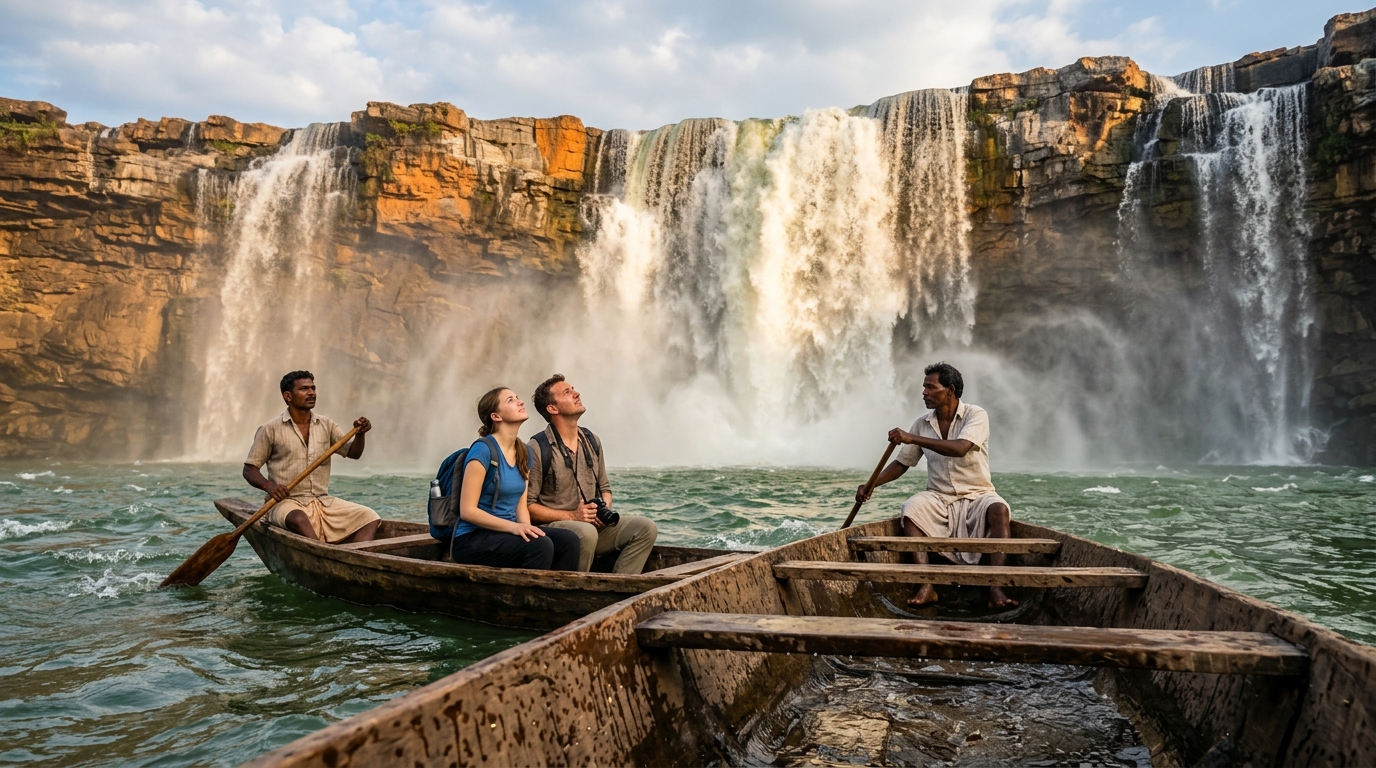
This Chitrakote Waterfalls travel guide strongly advises taking the local boat rides, which operate primarily during the post-monsoon and winter seasons. Local fishermen operate hand-paddled wooden boats and small motorized rafts that take visitors into the pool at the base. These boats navigate as close to the spray zone as safety permits, offering an adrenaline-pumping experience as the cold mist showers down on passengers. Looking up at a 29-meter wall of cascading water provides a completely different perspective of the waterfall’s massive scale, highlighting the geological power of the basin.
Photography and Sunset Viewpoints
Photography enthusiasts reading this Chitrakote Waterfalls travel guide will find endless creative opportunities. The optimal time for photography is during the early morning hours when the light is soft, and rainbows regularly form in the mist. There are designated viewpoints on both the left and right banks of the river, each offering a distinct angle on the falls. The left bank offers a closer view of the drop, while the right bank provides a wider, uninterrupted view of the entire horseshoe bend, making it the ideal spot for wide-angle landscape shots as sunset approaches.
Exploring the Shivling Cave Temples
The historical caves are featured in this Chitrakote Waterfalls travel guide for cultural travelers. At the base of the waterfall, carved naturally into the rock face, lies a small cave temple dedicated to Lord Shiva. Visitors can access this temple by walking down a flight of concrete steps from the main garden area, which leads directly to the river level. The cave houses a naturally formed Shivling, which is regularly bathed by the mist of the waterfall. This site holds deep religious significance for the local tribal communities and historical ties to regional mythology.
Where to Stay: Accommodation Options Near Chitrakote
This accommodation section of the Chitrakote Waterfalls travel guide helps travelers select the ideal place to stay. Over the years, lodging options have expanded from basic government guesthouses to comfortable resorts, ensuring that visitors of all budgets can find suitable accommodation. Booking the right stay can enhance the travel experience, allowing visitors to appreciate the natural beauty of Bastar in comfort. Whether choosing to stay directly at the edge of the falls for an immersive nature experience or in Jagdalpur, multiple options are available to meet preferences.
Government Resorts and Log Huts
Government properties remain a top recommendation in this Chitrakote Waterfalls travel guide. The Chhattisgarh Tourism Board operates the Dandami Luxury Resort, which sits right on the edge of the cliff overlooking the waterfall. The resort features premium wooden log huts and concrete cottages that offer direct views of the cascade. Staying here allows visitors to hear the roar of the falls throughout the night and witness the sunrise without leaving their rooms. Due to high demand, particularly during the winter and monsoon peak periods, booking several weeks in advance is highly recommended.
Premium Hotels in Jagdalpur
For those seeking luxury, this Chitrakote Waterfalls travel guide outlines hotel choices in Jagdalpur. Since Jagdalpur is only an hour’s drive away, many travelers choose to base themselves in the city to access a wider range of amenities. The city features several business-class hotels and heritage resorts that offer modern comforts, multi-cuisine restaurants, and travel desk facilities. Staying in Jagdalpur also provides easier access to evening markets, transport hubs, and local administrative offices. It is an ideal option for travelers who prefer to explore the region’s attractions during the day.
Budget-Friendly Guesthouses
Budget travelers using this Chitrakote Waterfalls travel guide can explore several cost-effective options. Around the village of Chitrakote and the road leading to Jagdalpur, several local families offer homestays and basic guesthouses. These accommodations provide clean, simple rooms, home-cooked regional meals, and invaluable local knowledge. Staying at a local homestay is an excellent way to support the local economy directly and learn about the unique traditions of the Bastar tribal communities. These budget-friendly options typically feature basic amenities such as clean linen and attached bathrooms.
Nearby Attractions in Bastar District
This region-wide Chitrakote Waterfalls travel guide also covers nearby wonders. The Bastar district is exceptionally rich in natural beauty and tribal heritage, making it worthwhile to extend the trip beyond the main waterfall. From towering multi-tiered cascades to deep limestone caves, the surrounding geography offers some of the most unique geological explorations in central India. To help travelers build a comprehensive itinerary, the following subsections detail the top attractions near Jagdalpur, which can be easily combined with a visit to the falls.
Tirathgarh Waterfalls
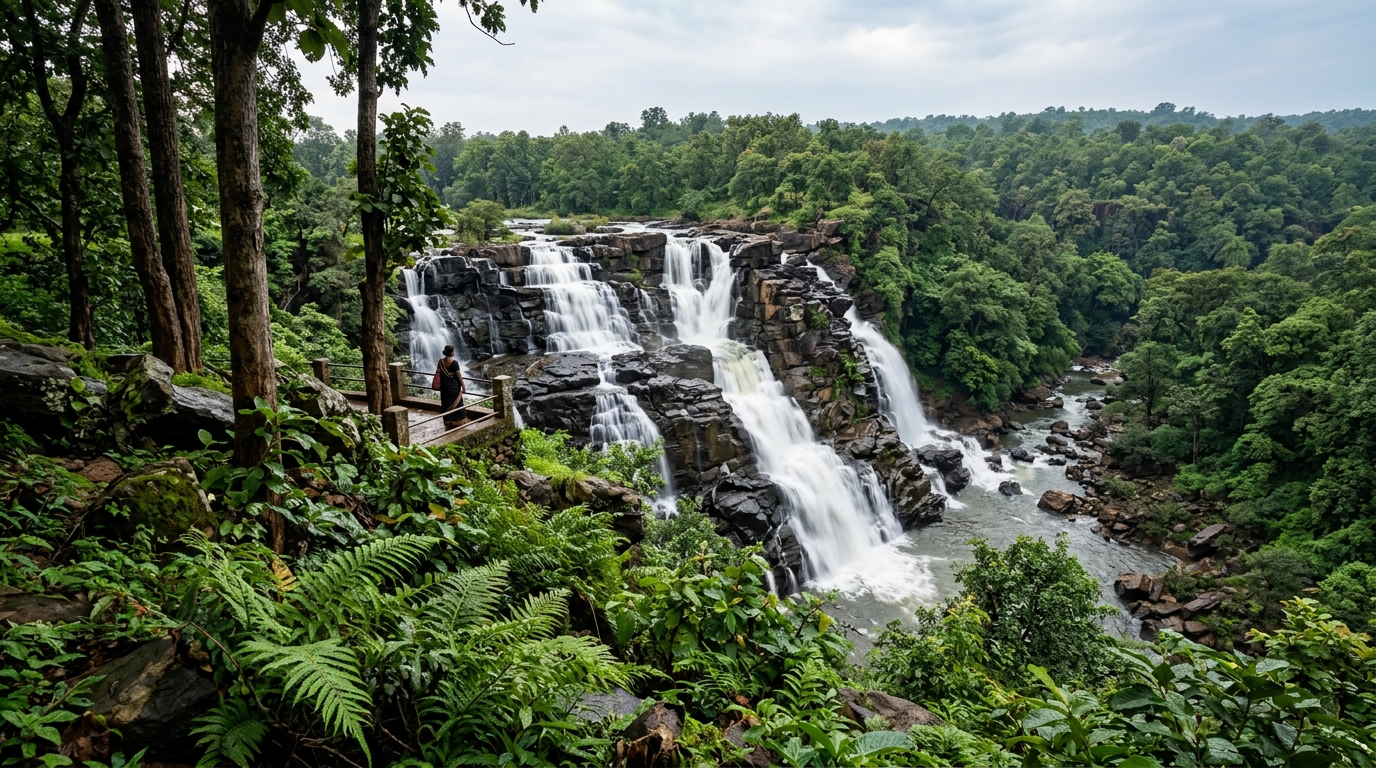
A comprehensive Chitrakote Waterfalls travel guide must include the Tirathgarh cascades. Located inside the Kanger Valley National Park, approximately 35 kilometers south of Jagdalpur, Tirathgarh offers a completely different aesthetic. Instead of a single broad drop, Tirathgarh is a multi-tier block waterfall where the water cascades down a series of steps on the Munga Bahar River, falling a total of roughly 91 meters. The white steps contrast beautifully with the solid black rock face, making it a favorite spot for family picnics and photography.
Kanger Valley National Park and Kutumsar Caves
National park explorations are detailed in this Chitrakote Waterfalls travel guide. Kanger Valley National Park is one of India’s densest national parks, known for its rich biodiversity, tall sal trees, and complex cave systems. The Kutumsar Caves, located deep within the park, are subterranean limestone caves famous for their spectacular stalactite and stalagmite formations. Visitors are accompanied by local tribal guides who lead them through the narrow chambers using torches. The caves are also home to a unique species of blind, albino cave fish.
Danteshwari Temple in Dantewada
Temple visits are another highlight of this Chitrakote Waterfalls travel guide. Located in Dantewada, about 80 kilometers from Jagdalpur, the ancient Danteshwari Temple is one of the 51 Shakti Peethas of India. Built in the 14th century by the Chalukya kings of Bastar, the temple is dedicated to Goddess Danteshwari, the ancestral deity of the region. The temple architecture showcases a mix of traditional South Indian style and local tribal influences, drawing thousands of pilgrims, especially during the vibrant Bastar Dussehra festival.
Essential Travel Tips and Safety Guidelines
This final practical section of the Chitrakote Waterfalls travel guide outlines the safety protocols. Visiting a massive natural waterfall requires caution and preparation to ensure a safe and enjoyable journey. By following a few simple guidelines, travelers can fully enjoy the natural beauty of the region while minimizing risks. The local administration has implemented several safety measures, but personal responsibility remains paramount when dealing with powerful water bodies and remote forest areas.
Respecting the Water Currents and Swimming Rules
The sheer power of the Indravati River should never be underestimated. The pool at the base of Chitrakote Waterfalls contains dangerous undercurrents and deep whirlpools that can catch even experienced swimmers off guard. Swimming is strictly prohibited in the areas immediately below the drop, and warning signs are clearly posted to alert visitors. Visitors must adhere to the warnings posted by the local administration and avoid crossing the safety barricades along the cliff edge. During the monsoon, the currents are extremely strong.
Packing Essentials for the Spray Zone
To stay comfortable during the visit, this Chitrakote Waterfalls travel guide recommends packing the following items:
- Waterproof Bags: Dry bags are essential to protect cameras and smartphones from the intense mist near the base of the falls. Standing on the lower viewpoints can saturate standard clothing within minutes.
- Quick-Dry Clothing: Wearing lightweight, synthetic clothing that dries quickly is highly beneficial if taking a boat ride, as cotton garments tend to retain moisture.
- Slip-Resistant Footwear: The stone steps and pathways leading down to the river can become highly slippery due to continuous moisture. Wear sturdy shoes with excellent grip.
- Sun Protection: A wide-brimmed hat, polarized sunglasses, and sunscreen are crucial, especially during the summer and afternoon visits when the sun reflects off the water.
Local Culinary Recommendations and Cultural Etiquette
The Bastar region is home to vibrant tribal communities with rich cultural traditions. Travelers should respect local customs, ask for permission before photographing residents, and avoid entering sacred grove areas without a local guide. Respecting these boundaries ensures a positive relationship between visitors and the hosting communities. When it comes to local cuisine, trying traditional dishes is highly recommended. The local markets offer unique items like Chaprah (red ant chutney), which has a sharp, tangy flavor, and Mahua-based beverages.
FAQs
What is the height and width of Chitrakote Waterfalls?
The waterfall has a vertical drop height of approximately 29 meters [^Chhattisgarh Tourism^] (about 95 feet). During the monsoon season, its width expands to nearly 300 meters (980 feet), making it the widest waterfall in India and earning it the title of the Niagara of India.
Is it safe to visit Chitrakote Waterfalls with family?
Yes, the site is highly family-friendly and well-equipped with paved pathways, safety railings, manicured gardens, and children’s play areas. However, parents must supervise children closely near the cliff edges and river banks, and avoid swimming in prohibited zones.
How far is Chitrakote Waterfalls from Raipur?
The distance by road is approximately 290 kilometers. The journey takes around 6 hours via National Highway 30 (NH 30), which connects Raipur to Jagdalpur, followed by a short 38-kilometer drive to the falls.
Are there boating options available at the bottom of the falls?
Yes, local boatmen operate wooden boats and rafts at the base during the post-monsoon and winter seasons (usually from October to April). Boating is suspended during the peak monsoon due to high water levels and dangerous currents.