
The ocean has always held secrets. But few of its wonders are as captivating as the moment the shoreline begins to emit a cold, electric-blue glow. For decades, travelers seeking this phenomenon booked expensive flights to the Maldives, unaware that the same ethereal spectacle exists along the coastlines of India. This natural light show, driven by microscopic marine life, transforms dark beaches into luminous fields. As modern travelers seek unique, experiential journeys, the search for bioluminescent beaches in india has grown from a niche pursuit into a major travel trend. It is basically a rare intersection of biology and meteorology that occurs under highly specific conditions. For those willing to study the moon phases, the reward is an unforgettable view of nature’s raw artistry, showcasing the glowing marine environments safely and responsibly.
Key Takeaways
- Best Locations: Swaraj Dweep (Andaman) and Bangaram Island (Lakshadweep) offer the most intense and consistent bioluminescent displays.
- Peak Timing: The dry winter months from November to February present the ideal weather and sea conditions across most Indian sites.
- The Lunar Cycle: Complete darkness is essential for visibility; always plan your visits to align with the new moon phase.
- Responsible Travel: Use reef-safe sunscreen, avoid heavy chemical repellents, and tread lightly to protect delicate marine dinoflagellates.
Understanding Bioluminescence: The Science Behind the Glow
The science that defines bioluminescent beaches in india is both fascinating and complex. To understand this marine marvel, one must look closely at the microscopic organisms that inhabit our oceans, as this visual display is a biological defense mechanism.
What Causes the Ocean to Glow?
At the center of this glowing phenomenon are single-celled organisms called dinoflagellates (often called dinos by marine biologists). These tiny planktonic creatures produce light through a chemical reaction within their cell membranes. The process relies on a compound known as luciferin and a catalytic enzyme called luciferase. When the water is disturbed, by breaking waves or a paddle, the mechanical stress triggers a cellular reaction. This reaction oxidizes luciferin, releasing energy as a brilliant blue-green light.
Bioluminescence is not merely a visual spectacle; it is a complex evolutionary dialogue written in cold light across the canvas of the dark ocean.
It is basically a defensive response to scare away predators, explaining why certain bioluminescent beaches in india display such highly concentrated, cool glows.
Environmental Triggers for Bioluminescent Blooms
For this light show to become visible, the dinoflagellates must gather in massive concentrations called blooms. These require a perfect alignment of the following environmental conditions:
- Nutrient Influx: Warm weather followed by sudden rain washes organic nutrients into the sea, feeding the dinoflagellates.
- Temperature & Salinity: Stable, warm water temperatures paired with correct coastal salinity levels trigger rapid cellular division.
- Tides and Winds: Onshore winds and gentle tides push these highly concentrated planktonic blooms directly toward the coast, creating visible glowing patches.
But still, predicting these blooms remains difficult, depending on the source of your oceanographic data. Minor shifts in current direction can disperse the organisms overnight, contributing to the glowing blooms seen at bioluminescent beaches in india.
Top Bioluminescent Beaches in India to Visit
While the country has a massive coastline, only select locations qualify as true bioluminescent beaches in india. These sites are scattered across offshore archipelagos and selective spots along the mainland, each offering a distinct experience based on geographical accessibility.
Havelock Island (Swaraj Dweep), Andaman and Nicobar Islands
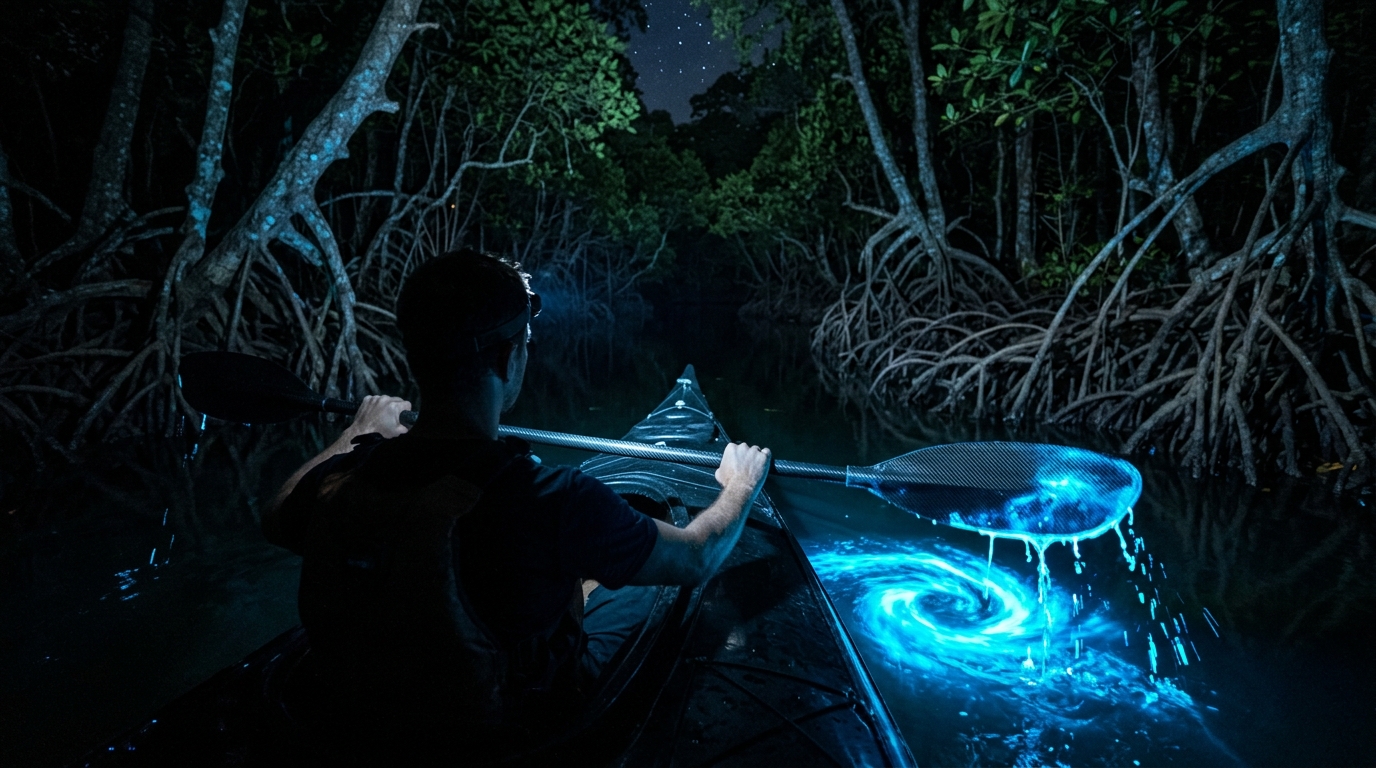
Havelock Island in the Andaman and Nicobar Islands stands as the premier location among bioluminescent beaches in india. The glow is primarily visible during dry winter months at Radhanagar Beach and selective mangrove creeks. The calm, shallow waters of the Andaman Sea provide an ideal habitat for bioluminescent phytoplankton, creating brilliant displays. For travelers seeking a fully immersive experience, local operators offer night kayaking trips. (Though not without exceptions, as monsoon rains can disrupt visibility.) The local tourism department has established structured tours, establishing this island as a central hub for anyone studying bioluminescent beaches in india. Travelers can book custom itineraries to the Andaman islands, ensuring they visit during optimal moon cycles.
Bangaram Island, Lakshadweep
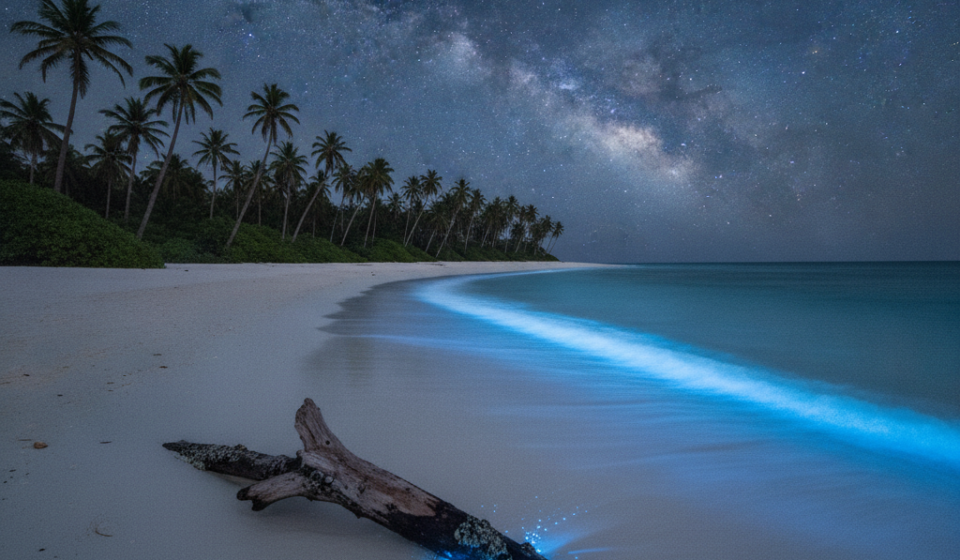
In the pristine archipelago of Lakshadweep, Bangaram Island is a spectacular example of bioluminescent beaches in india. This uninhabited island is surrounded by a shallow lagoon that acts as a natural theater for marine light displays. The bioluminescence here appears as glowing blue stardust on white sand, creating a shoreline that glows with every receding wave. Because the island has restricted entry, it remains remarkably uncrowded. This lack of light pollution enhances the visual impact of the glowing water, making it a highly sought after spot among bioluminescent beaches in india. Secure your permits through dedicated packages to Lakshadweep to witness these neon sands under a canopy of stars.
Betalbatim Beach, South Goa
For those visiting the western coast, Betalbatim Beach in South Goa is one of the more accessible bioluminescent beaches in india. Located between Colva and Majorda, Betalbatim features a quiet stretch of golden sand. During post-monsoon months, the shoreline transforms as waves bring in bioluminescent dinoflagellates. While the intensity of the glow is lower than in remote Andaman, it is highly valued for its accessibility. Visitors can easily reach the beach by road, making it an excellent option for families. Walking along the shoreline after 10 p.m. during a new moon reveals subtle, glowing blue sparkles in wet sand. This accessibility, combined with Goa’s established tourism infrastructure, places it in a unique position among bioluminescent beaches in india. Travelers can explore customizable travel itineraries for Goa.
Nirvana Beach, Gokarna, Karnataka
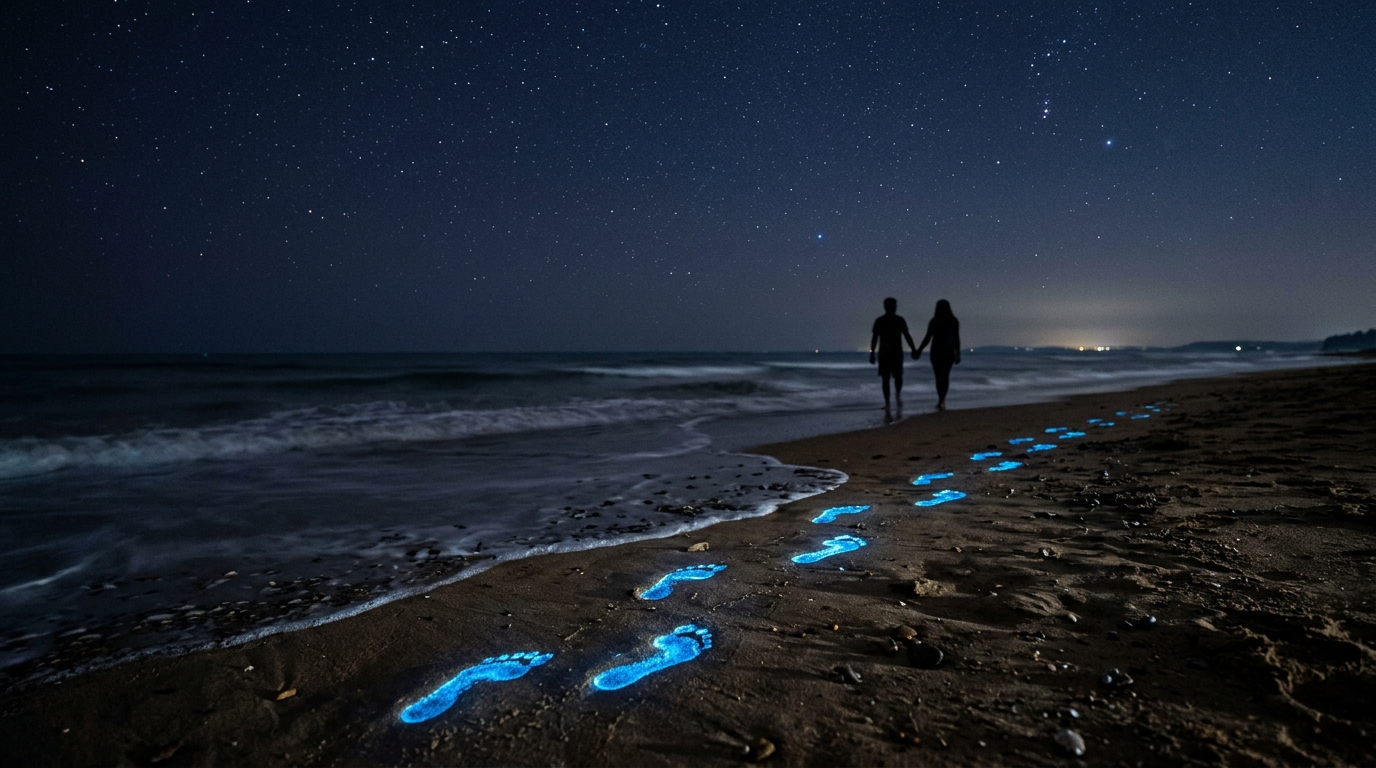
Nirvana Beach in Gokarna represents another hidden gem among bioluminescent beaches in india. Known for its secluded coastline, Gokarna attracts travelers who prefer a quieter alternative to Goa. Nirvana Beach features a dark shoreline with minimal artificial light pollution, which is crucial for observing the delicate glow. The glowing waters here are typically observed during winter, peaking between November and January. The bioluminescent display often looks like tiny, glowing blue beads scattered across the damp sand. Walking along the wet shore triggers the light, leaving glowing footprints. This poetic experience makes it one of the most serene bioluminescent beaches in india. Plan your journey through tailored trips to Gokarna.
Juhu Beach, Mumbai, Maharashtra
Even bustling urban centers have their moments, as Juhu Beach in Mumbai occasionally joins the ranks of bioluminescent beaches in india. In 2016, locals were surprised to find waves of electric blue crashing against the shores of Juhu. This was driven by a massive bloom of Noctiluca scintillans, commonly known as sea sparkle. While Juhu Beach suffers from substantial light pollution, the density of the bloom was strong enough to overcome these barriers. The display was spectacular but short-lived, lasting only a few nights before currents dispersed the plankton. This event illustrates the unpredictable nature of bioluminescent beaches in india, proving that marine biology can surprise us even in urban environments.
Thiruvanmiyur Beach, Chennai, Tamil Nadu
On the eastern coast, Thiruvanmiyur Beach in Chennai has emerged as one of the surprising bioluminescent beaches in india. In late 2019, late-night beachgoers noticed a distinct blue glow along the East Coast Road. The phenomenon was documented by marine biologists, who identified dinoflagellates as the source. These Chennai blooms are seasonal and typically occur after heavy rain followed by hot, sunny days, which creates the perfect nutrient balance. While not as consistent as the offshore islands, these sightings have created a strong community of local night watchers, earning its spot in discussions about bioluminescent beaches in india.
Comparative Analysis of Indian Bioluminescent Beaches
To help travelers choose their next destination, comparing these bioluminescent beaches in india is essential. While some offer intense, reliable glows in remote settings, others provide easy access with more intermittent displays. The choice depends on your travel budget, time constraints, and infrastructure preferences. The following matrix details the core characteristics of the primary bioluminescent beaches in india:
| Destination | Primary Location | Glow Intensity | Best Viewing Months | Accessibility Level |
|---|---|---|---|---|
| Andaman Islands | Havelock Island | High (Consistent) | November to February | Moderate (Requires flight and ferry) |
| Lakshadweep | Bangaram Island | Very High (Pristine) | October to March | Low (Requires permits and flights) |
| Goa | Betalbatim Beach | Moderate (Intermittent) | November to January | High (Accessible by road) |
| Karnataka | Nirvana Beach | Moderate (Seasonal) | November to February | High (Accessible by road) |
| Maharashtra | Juhu Beach | Low-Moderate (Rare) | Post-Monsoon (Occasional) | Very High (Urban location) |
| Tamil Nadu | Thiruvanmiyur Beach | Low-Moderate (Rare) | August to October | Very High (Urban location) |
Practical Travel Guide: Planning Your Bioluminescence Tour
Timing is the single most critical factor when visiting bioluminescent beaches in india. Because the phenomenon is entirely biological, it cannot be programmed. Understanding environmental and astronomical cycles is key to avoiding disappointment.
Best Time of the Year to Witness the Phenomenon
The general window for viewing bioluminescence in India spans from late October to early March. During these months, the northeast monsoon recedes, leading to calm sea conditions, stable water temperatures, and minimal rainfall. Heavy rain is the primary enemy of bioluminescent viewing, as it dilutes salinity and disrupts the delicate dinoflagellates. In places like Havelock Island and Bangaram Island, the winter months offer crystal-clear water and stable currents, ideal for the accumulation of phytoplankton. Conversely, summer brings rough seas, dispersing the organisms into deeper waters where their glow is invisible.
Ideal Moon Phases and Weather Conditions
The presence of moonlight is the most common reason travelers fail to see the glow, as the soft light of dinoflagellates is easily overpowered. To optimize your chances of witnessing the neon blue waves, ensure your trip aligns with these ideal conditions:
- New Moon Phase: Complete darkness is mandatory; a full or bright moon will completely wash out the glow. Always check the lunar calendar before planning a trip to any of the bioluminescent beaches in india.
- Gentle Onshore Winds: These winds push the concentrated surface plankton directly toward the sandy beaches.
- Calm Water Tides: Flat, undisturbed, and non-turbulent waters allow the light to pool and settle beautifully.
Essential Packing List and Photography Gear
The packing requirements for visiting bioluminescent beaches in india differ from standard beach gear. Since your exploration will take place in complete darkness, preparation is essential for both safety and enjoyment.
Here is the essential list of items you should pack:
- Red-Light Headlamp: Red light does not disrupt your night vision, making it superior to white light.
- Water Shoes: Walking on dark beaches at night requires foot protection against sharp shells and rocks.
- Insect Repellent: Coastal mangroves and damp beaches are prime breeding grounds for sandflies and mosquitoes.
- Microfiber Towel: Essential for keeping your camera gear dry and free from splashing saltwater.
- Dry Bag: Safely stores your camera, phone, and spare batteries in wet marine environments.
Photography Tips for Capturing Glowing Waters
Capturing high-quality photographs of the bioluminescent beaches in india requires technical skill. The human eye is incredibly sensitive to low light, but camera sensors require specific configurations to record the dim, fleeting glow of bioluminescent organisms.
Camera Settings for Long Exposure Shots
To photograph the glow effectively, a camera with manual control options is highly recommended. A fast wide-angle lens with an aperture of f/2.8 or wider is ideal.
The standard starting settings specifically tailored for capturing bioluminescent beaches in india at night include:
- Manual Mode (M): Switch your camera to manual to control all variables.
- Aperture: Set your lens to its widest setting (e.g., f/1.8 or f/2.8) to let in maximum light.
- ISO: Increase your ISO to between 1600 and 3200, depending on your camera’s noise handling.
- Shutter Speed: Use a shutter speed of 5 to 15 seconds. If the shutter is open too long, motion will blur the sparkles.
- Focus: Switch your lens to manual focus and set it to infinity.
- Tripod: A sturdy tripod is non-negotiable; any camera shake during long exposure will ruin the image.
Mobile Photography Hacks for Low Light
If you are relying on a smartphone, capturing the bioluminescence is more challenging, but still possible with modern devices. Most premium smartphones feature Night Mode or Pro Mode settings. Manually set the ISO to 800 or 1600 and the exposure time to 5 or 10 seconds, keeping the phone completely still. Resting the phone on a mobile tripod is essential. Avoid using the camera’s flash, as it will illuminate the foreground and erase the natural glow. If your phone supports RAW capture, use it to preserve detail in the shadows, allowing you to boost the blue tones in post-processing.
Responsible Ecotourism and Safety Guidelines
Protecting the fragile environments around these bioluminescent beaches in india is a priority. The microscopic organisms that produce this spectacular light show are highly sensitive to environmental changes and human disruption.
Protecting Fragile Marine Ecosystems
The growing popularity of bioluminescent beaches in india has increased foot traffic, posing threats to these delicate organisms. Dinoflagellates are highly sensitive to chemical pollutants. Sunscreens and insect repellents can leach into the water, killing the plankton. If you plan to swim, use organic, reef-safe sunscreens and avoid heavy bug sprays. At the same time, avoid disturbing the shoreline excessively. Trampling through shallow lagoons stirs up sediment, smothering the organisms. Stick to designated paths and avoid entering protected mangrove areas without a certified local guide.
Safety Precautions for Night Beach Exploration
Safety is another critical factor while exploring the bioluminescent beaches in india at night. Coastal waters have strong undertows that are invisible in the dark. Never swim alone at night, and always stay within standing depth. Be aware of the local tidal schedule; getting stranded on a rocky outcrop by an incoming tide is highly dangerous. Keep your red-light flashlight accessible, and let someone know your plans before heading out. By prioritizing safety and environmental protection, we can ensure these natural wonders remain vibrant.
Frequently Asked Questions (FAQs)
This FAQ section addresses the common queries regarding bioluminescent beaches in india. These brief answers help travelers set realistic expectations and plan their night-time excursions with confidence.
Is it safe to swim in bioluminescent water?
Swimming in bioluminescent water is safe, but it requires caution. The dinoflagellates themselves do not bite or sting. However, some algal blooms can produce toxins that cause skin irritation in sensitive individuals. It is always wise to consult local guides before swimming. If you have open cuts or sensitive skin, avoid entering the water.
Can we predict bioluminescence with absolute certainty?
Predicting bioluminescence with absolute certainty is impossible. While we can monitor seasonal patterns, moon phases, and weather trends, the movement of microscopic plankton is ultimately governed by unpredictable marine currents and temperature shifts. A beach that glows brilliantly one night might be completely dark the next. Travelers should approach these trips with an open mind, viewing the glow as a rare privilege.
Do I need a guided tour to see the glowing beaches in India?
For accessible beaches like Betalbatim in Goa or Nirvana Beach in Gokarna, a guided tour is not strictly necessary. However, for remote locations like Havelock Island’s mangrove creeks or Bangaram Island’s lagoons, hiring a local guide is highly recommended. Guides understand the local tides and safety hazards, increasing your chances of a successful sighting.
Which is the most reliable place to see bioluminescence in India?
Havelock Island in the Andaman and Nicobar Islands is arguably the most reliable and consistent location. The calm, protected waters of the Andaman Sea, combined with the island’s low light pollution and established eco-tourism operators, make it the best destination for travelers whose primary goal is to witness the glowing waters.
Planning Your Next Luminous Adventure
Witnessing the glowing tides of the ocean is a transformative experience that connects travelers to the deep rhythms of our planet. From the remote, pristine lagoons of Lakshadweep to the accessible shores of Goa, India offers a diverse range of opportunities for the modern explorer. But still, the key to a successful journey lies in careful preparation, environmental respect, and a willingness to embrace natural unpredictability. By aligning your travel schedule with the lunar cycle, packing the right gear, and choosing your destinations wisely, you can step into a world of living light. As you plan your next coastal escape, remember that these fragile ecosystems rely on our protection, so tread lightly and let the glowing waters guide your way.