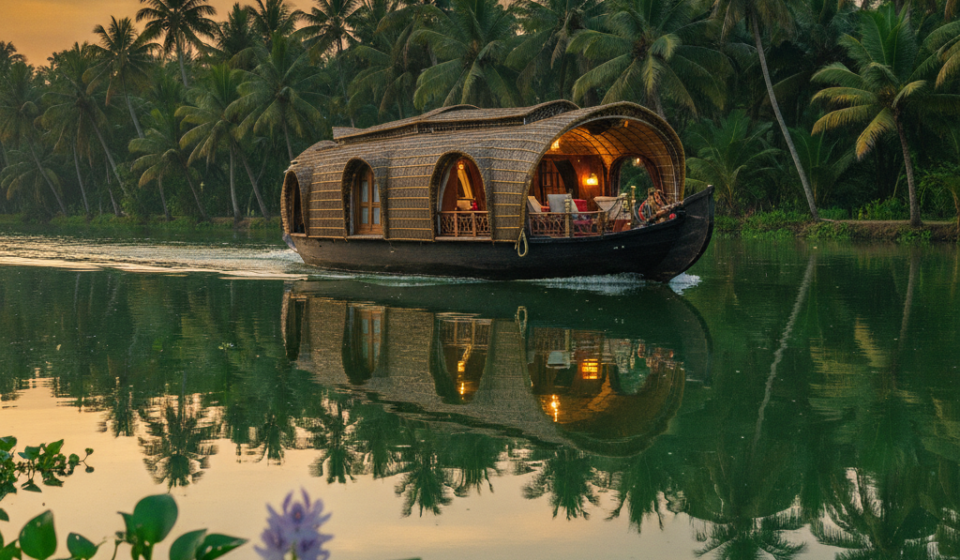

The peaceful waterways of southern India present an environment where time moves at a noticeably slower pace. For travelers searching for genuine relaxation, embarking on a backwater houseboat kerala journey remains one of the most distinctive travel experiences in Asia. These slow-moving vessels glide past dense palm groves, quiet villages, and agricultural fields carved out of the water. To secure a premium backwater houseboat kerala experience, understanding the nuances of these traditional vessels, their routes, and the onboard lifestyle is essential. Whether you seek a quiet solo retreat, a romantic trip, or a memorable family gathering, this specialized cruise offers a unique window into India’s tropical soul.
The network of canals, rivers, and lagoons stretching across the coast covers over 900 kilometers. Historically, these waterways served as the primary commercial highways of the region, connecting farming communities with trading ports. Today, they form a delicate ecosystem where local culture and nature exist in harmony. A well-planned voyage allows you to observe this balance from the comfort of a floating suite, making it a priority for travelers visiting southern India.
Key Takeaways for Your Backwater Houseboat Stay
- Heritage Experience: Modern houseboats (Kettuvallams) are beautifully converted traditional cargo vessels made of natural jackfruit wood and coir.
- Variety of Choices: Accommodation options range from budget-friendly Deluxe boats with overnight AC to luxurious full-time climate-controlled floating villas.
- Stunning Routes: Cruising paths like Alleppey and Kumarakom showcase unique agricultural systems, lake sunsets, and vibrant bird sanctuaries.
- Local Culinary Delights: Onboard chefs serve authentic, freshly prepared Kerala meals including Karimeen Pollichathu and traditional breakfast items.
- Best Travel Window: The dry winter months from November to February offer the most comfortable weather, while the monsoon season offers dramatic lush greenery.
The Allure of a Backwater Houseboat Kerala Experience
To appreciate this journey, one must understand the history of these iconic vessels. Known locally as Kettuvallams, these boats were originally designed as cargo carriers. In the years before road transport became common, these heavy-weight vessels transported rice, spices, and coconuts across the watery expanses. A standard Kettuvallam could carry up to 30 tons of cargo, serving as the lifeline of local trade. The engineering of these boats is a marvel of indigenous technology. Builders constructed them entirely without metal nails, relying instead on coir ropes and wild cashew tree resin to bind the wooden planks together. The preservation of these techniques is highly valued by local craftspeople. A typical master boatbuilder passes down the construction blueprints through generations entirely by word of mouth, without physical drawings.
In the late twentieth century, the construction of modern roads threatened to make these traditional cargo carriers obsolete. But still, local entrepreneurs recognized an opportunity to preserve this heritage by converting the vessels into luxury lodging. This marked the birth of the backwater houseboat kerala industry. The modern adaptation retains the structural beauty of the original craft while incorporating contemporary living facilities. Choosing a backwater houseboat kerala vacation means stepping into a living piece of maritime history that has been adapted for modern comfort.
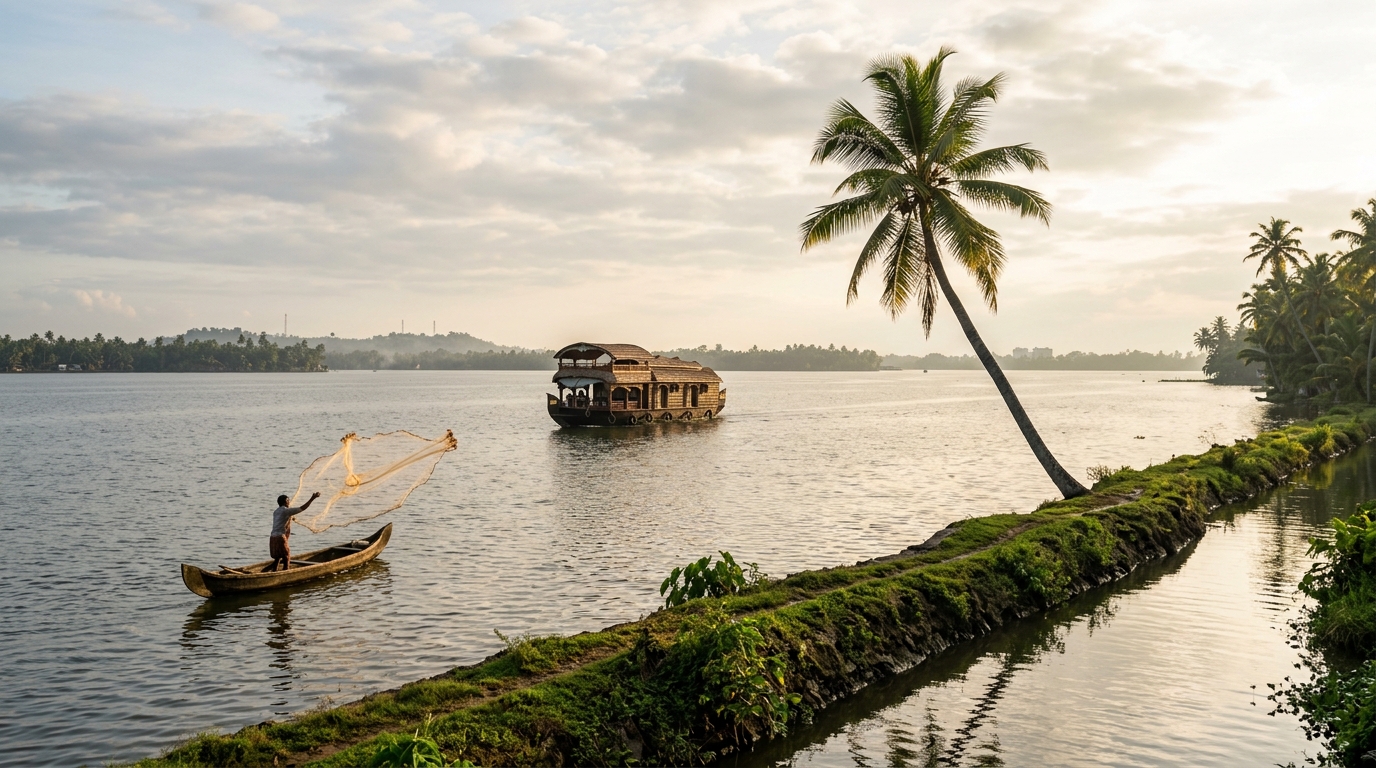
The experience of a backwater houseboat kerala stay rests on its ability to offer an intimate view of rural life. Unlike large cruise liners that isolate passengers from the destination, these houseboats travel at a leisurely speed of roughly nine to eleven kilometers per hour. This slow pace allows guests to observe daily activities along the canal banks. You will see local fishermen casting traditional nets, women washing clothes on stone steps, and children commuting to school in small wooden canoes. The peaceful atmosphere of these waterways, combined with the gentle movement of the vessel, creates a therapeutic environment that is difficult to replicate in conventional luxury resorts.
Categories and Designs of Kerala Houseboats
The modern fleet of houseboats operating in the state features a wide range of designs, capacities, and luxury levels. When reserving a backwater houseboat kerala, travelers can choose from entry-level standard options to high-end floating villas. Understanding these distinctions is critical to ensuring your expectations match reality. Private balconies and upper decks are increasingly standard on premium categories, giving travelers a vantage point that is elevated above the water hyacinths.
The physical architecture of a traditional backwater houseboat kerala relies on natural materials:
- Hull Construction: Crafted from sturdy, water-resistant wild jackfruit wood.
- Overhead Canopy: Woven using bamboo poles, palm leaves, and coir fibers to provide natural insulation.
- Eco-Friendly Binding: Planks bound together using coir ropes and cashew resin, bypassing the need for metal nails.
The fleet is generally divided into three distinct categories based on amenities and service standards:
- Deluxe Houseboats: Comfortable private bedrooms with attached bathrooms. Air conditioning is provided in the bedrooms but typically operates only during overnight hours (usually from 9:00 PM to 6:00 AM). Living spaces remain open to the natural breeze.
- Premium Houseboats: Superior furnishings with on-demand air conditioning, including during daytime cruising. The dining area is often glass-enclosed to allow for climate control without obstructing the scenic views.
- Luxury / Super Luxury Houseboats: High-end vessels featuring spacious suites, premium finishes, and dedicated butler service. The entire vessel is fully air-conditioned, and the culinary offerings are customized by a dedicated private chef.
To help visualize the operational and structural differences between these categories, consider the comparison table below:
| Category | Air Conditioning | Dining Area | Crew Ratio |
|---|---|---|---|
| Deluxe | Overnight only (9 PM – 6 AM) | Open-air / Fan-cooled | Standard (3 crew) |
| Premium | Full-time / On-demand | Glass-enclosed with AC | Standard with dedicated host |
| Luxury | Full-time (All areas) | Fully enclosed premium lounge | High (includes butler) |
Regardless of the category you choose, the structural integrity of these vessels is strictly monitored by the local port authorities. Every registered houseboat must undergo dry-dock inspections to verify safety and environmental compliance.
Primary Routes for Your Backwater Houseboat Kerala Journey
The network of waterways offers several distinct cruising circuits, each with its own character and scenic highlights. Choosing the right route is just as important as selecting the right boat. Any backwater houseboat kerala route must account for the local geography and the amount of time you have available.
The most famous of these paths is the Alleppey Round. This classic backwater houseboat kerala passage runs through the core of the Kuttanad region, often referred to as the rice bowl of Kerala. What makes Kuttanad remarkable is that farming here is conducted below sea level, roughly one to two meters down, using a complex system of dikes. Cruising this loop provides an up-close look at these systems alongside beautiful, wide stretches of water.
For those seeking a more diverse landscape, the Alleppey to Kumarakom route is highly recommended. The Kumarakom backwater houseboat kerala routes offer access to the vast expanse of Vembanad Lake, the largest lake in India. Kumarakom is famous for its bird sanctuary, which serves as a major habitat for migratory species. This route transitions beautifully from narrow canals to wide open waters, offering a sense of scale that is truly impressive. Another important highlight of the Kumarakom run is the opportunity to witness the sunset over the lake, where the water reflects deep shades of amber and indigo.
For travelers who prefer a peaceful and isolated experience, the northern waters of Kasaragod offer an excellent alternative. While most tourists head south, the northern circuits remain quiet. For a quieter backwater houseboat kerala itinerary, the northern waters around Valiyaparamba provide pristine scenery without the tourist crowds.
The popular routes are detailed below:
- Alleppey to Alleppey (1 Night): Focuses on narrow canals, local village life, and farming below sea level. Ideal for first-time visitors with limited schedules.
- Alleppey to Kumarakom (1-2 Nights): Transitions from canals to Vembanad Lake. Excellent for bird watching and open-water scenery.
- Alappuzha to Kollam (2 Nights): Long-distance exploration of historic ports, coir-making villages, and Chinese fishing nets.
To help you choose the best itinerary, the table below compares the key highlights of the primary cruising routes:
| Route Name | Ideal Duration | Key Highlights | Best Suited For |
|---|---|---|---|
| Alleppey Round | 1 Night | Narrow canals, Kuttanad farming below sea level, village life | First-time visitors, short itineraries |
| Alleppey to Kumarakom | 1 – 2 Nights | Vembanad Lake, Kumarakom Bird Sanctuary, spectacular sunsets | Nature lovers, photographers, bird watchers |
| Alappuzha to Kollam | 2 Nights | Historic waterways, coir-making villages, Chinese fishing nets | Slow-travel enthusiasts, long exploration |
| Valiyaparamba (North) | 1 Night | Quiet estuary, pristine untouched backwaters, peaceful atmosphere | Couples, peace-seekers, offbeat travelers |
It is important to discuss your route with the captain before departure. While standard itineraries are generally fixed, minor adjustments can often be made depending on weather conditions and water traffic.
Onboard Facilities and Essential Amenities
Life on the water is designed to be comfortable, but the mechanics of a floating hotel require some adjustments. On a modern backwater houseboat kerala, amenities have evolved to mimic those found in land-based boutique hotels, though they operate within the constraints of marine engineering.
The layout of a typical boat includes an open-front deck, which serves as the primary lounging and viewing area. Behind the lounge are the private bedrooms, which are designed to maximize space and ventilation. Each room is equipped with an ensuite bathroom, running water, and storage space.
Dining aboard a backwater houseboat kerala is a highlights-filled event that centers on traditional regional flavors:
- Traditional Breakfast: Idlis (steamed rice cakes) or Appams (rice pancakes with fermented batter) served with coconut chutney and single-estate tea.
- Signature Seafood Lunch: Karimeen Pollichathu (pearl spot fish marinated in local spices and baked in banana leaves) paired with healthy Matta rice and local vegetable curries.
- Full-Board Dining: Three freshly cooked meals prepared by your personal chef, supplemented by evening tea and local snacks.
The operational staff of a backwater houseboat kerala generally includes three essential roles:
- The Captain: Responsible for navigating the waterways and ensuring passenger safety.
- The Chef: Manages the onboard kitchen and prepares all traditional meals.
- The Navigator: Assists with mooring, handles anchor lines, and assists guests.
This dedicated crew operates behind the scenes to ensure your cruise is smooth. If you have dietary restrictions, it is highly recommended to communicate these at least forty-eight hours before your departure.
Optimal Seasons for a Backwater Houseboat Kerala Stay
The climate of southern India is tropical, meaning weather patterns play a major role in the comfort and visibility of your cruise. Timing your backwater houseboat kerala excursion is vital to securing the experience you desire, as different seasons offer dramatically different environments.
The peak season for a backwater houseboat kerala cruise corresponds with the dry winter months, stretching from November to February. Temperatures are moderate, typically ranging from twenty-two to thirty-two degrees Celsius, and humidity is at its lowest. The skies are generally clear, and the gentle breezes make daytime lounging highly comfortable. This is the most popular time, meaning availability is low and rates are at their highest.
The summer season, running from March to May, sees temperatures rise significantly, sometimes reaching thirty-eight degrees Celsius. Humidity also increases, which can make open-air lounging less comfortable during midday. But still, this is an excellent time for budget-conscious travelers, as rates drop significantly.
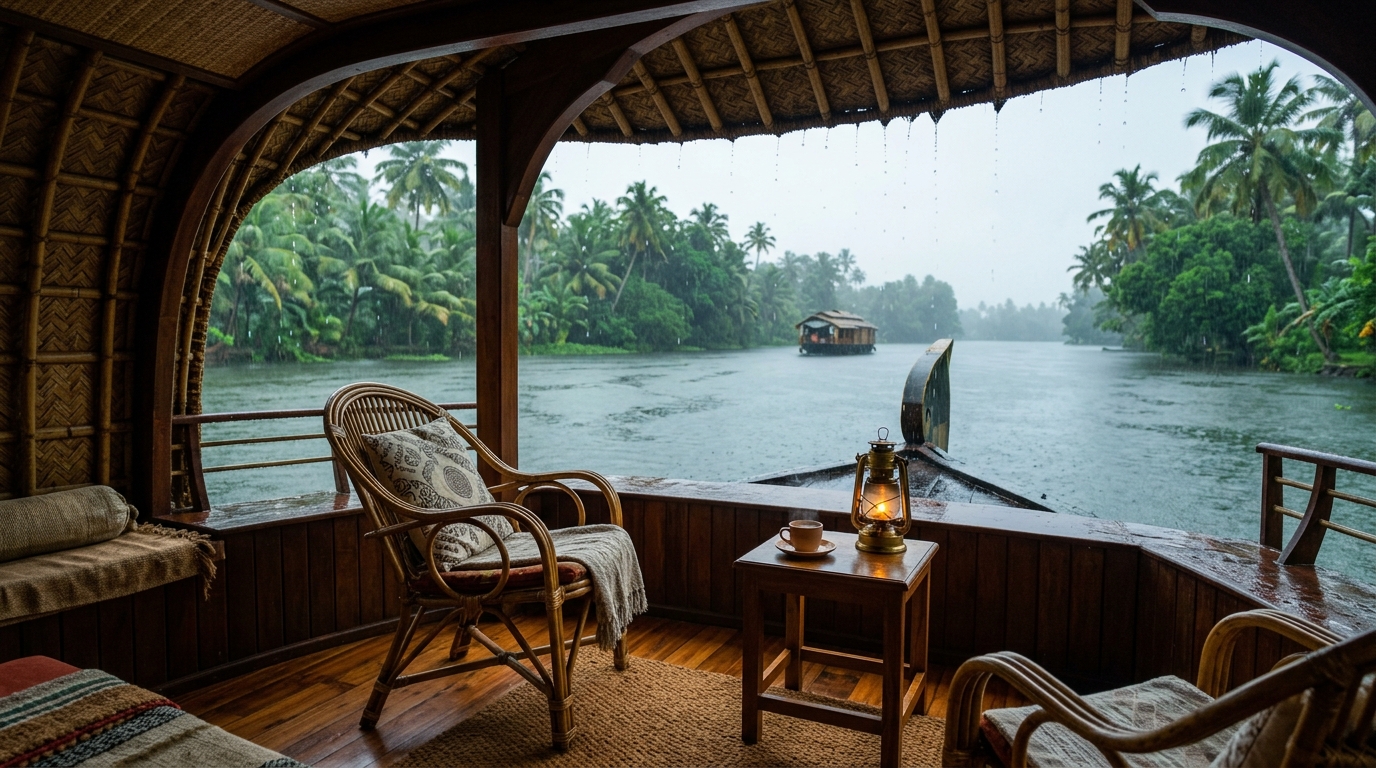
The monsoon season, spanning from June to October, presents a unique atmosphere. The monsoon turns a backwater houseboat kerala vacation into a highly dramatic, sensory experience. The rains wash the countryside, turning the palm trees a vibrant green. While heavy downpours can sometimes disrupt schedules, watching the rain fall over the lakes from a covered deck is peaceful.
The seasons are summarized below:
- November – February (Peak): Best weather, clear skies, fully active village life. Highly popular.
- March – May (Summer): Hot and humid, lower booking rates, fewer boats on the water.
- June – October (Monsoon): Heavy rain showers, lush greenery, therapeutic atmosphere.
Practical Logistics and Booking Strategies
Planning a trip to the backwaters involves managing several logistical details to ensure a smooth transition. Securing a reliable backwater houseboat kerala operator requires diligent research, as the quality of service, safety protocols, and maintenance standards vary widely.
The pricing of a backwater houseboat kerala varies based on the season, size, and amenities. A standard package should typically include:
- Fully-guided daytime and overnight cruise
- Comfortable private cabin accommodation
- All three main meals (breakfast, lunch, and dinner)
- Traditional evening tea, coffee, and local snacks
Before finalizing a backwater houseboat kerala reservation, travelers should always verify that the operator possesses a valid license from the Department of Tourism and the Port Authority. These certifications guarantee compliance with safety standards, including life jackets and fire safety.
A customized backwater houseboat kerala tour will typically include opportunities to disembark and explore local sights. These excursions may include visits to historic churches, temple complexes, coir weaving workshops, or local fish markets.
For those planning an extensive itinerary across the state, coordinating your houseboat stay with other regional destinations is highly recommended. You can easily combine your cruise with visits to the misty tea plantations of Munnar or the beaches of Kovalam. To explore custom itineraries and secure your booking with trusted, certified operators, you can review the curated packages available through the TravelDham Kerala packages, which are designed to offer a smooth and authentic travel experience.
Frequently Asked Questions Regarding Kerala Houseboats
To help address any remaining uncertainty, here are answers to the most common questions regarding houseboat stays:
For a backwater houseboat kerala, what is the check-in time?
The standard check-in time is 12:00 PM, and check-out is at 9:00 AM. This schedule allows the crew to prepare the vessel for the next guests. The boat cruises for roughly five to six hours during the day, anchoring near a quiet village for the night by 5:30 PM due to local fishing regulations.
Can we hire a private backwater houseboat kerala for families?
Yes, private charters are highly popular. When you hire a private backwater houseboat kerala, the entire vessel, along with its crew, is dedicated solely to your group, ensuring complete privacy and a customized itinerary.
Is a backwater houseboat kerala safe for children?
Yes, houseboats are safe for children, provided there is parental supervision. The decks are fitted with safety railings, and operators are legally required to carry life jackets in multiple sizes.
How far in advance should you book a backwater houseboat kerala?
For travel during the peak winter months (November to February), it is highly advisable to book your backwater houseboat kerala at least three to four months in advance. Off-peak bookings can often be made a few weeks prior to departure.
Conclusion
A voyage through the quiet waterways of southern India remains an incomparable travel experience. Choosing a backwater houseboat kerala stay is more than selecting accommodation; it is an immersion into a unique ecological and cultural heritage. From the traditional craftsmanship of the Kettuvallam to the rich flavors of regional cuisine, every element of the journey is designed to foster a deep connection with the surroundings. By carefully selecting your route, boat category, and season, you can ensure a journey that is both relaxing and profoundly memorable. Planning your backwater houseboat kerala escape with trusted operators ensures that your trip is not only comfortable but also supports the preservation of this delicate and beautiful environment.