
If you want to know how to plan a trip to thailand from india, the key is balancing direct flights, smart forex choices, and proper pre-departure paperwork. Thailand remains one of the most accessible international destinations for Indian travellers, offering world-class beaches, vibrant street markets, and historical temples within a 3 to 5-hour flight time.
Planning a seamless trip requires navigating Thailand’s updated entry formalities, managing foreign currency efficiently, and choosing an itinerary that fits your travel style without overspending on local transport or tourist-trap meals.
How to Plan a Trip to Thailand from India: Entry Rules & Visas in 2026
Navigating Thai entry requirements is straightforward once you understand the current visa framework, the mandatory pre-clearance process, and required documentation.
1. Visa Exemptions & Visa on Arrival (VoA)
For short leisure holidays, Indian passport holders can enter Thailand under two primary hassle-free mechanisms:
- 30-Day Exemption / Visa-Free Entry: Indian travellers can enter Thailand without applying for a visa in advance for short stays. This entry stamp is provided at immigration upon arrival.
- Visa on Arrival (VoA): If arriving under VoA parameters, travellers can obtain a 15-day stay allowance at major international airports, including Bangkok Suvarnabhumi (BKK), Bangkok Don Mueang (DMK), Phuket (HKT), and Chiang Mai (CNX). The VoA fee is 2,000 THB (~₹5,800 INR) and must be paid strictly in Thai Baht cash at the airport immigration counter.
- Tourist e-Visa (TR): For visits intended to last up to 60 days, you must apply in advance through the official Thai e-Visa portal (
thaievisa.go.th). Processing takes 3 to 5 working days. - Destination Thailand Visa (DTV): Designed for remote workers, digital nomads, and freelancers, this 5-year multi-entry visa allows stays of up to 180 days per entry.
2. Mandatory Requirement: Thailand Digital Arrival Card (TDAC)
Thailand has phased out the old paper TM6 arrival card in favour of the Thailand Digital Arrival Card (TDAC). Every traveller, regardless of visa status, must complete this digital pre-clearance form online prior to departure.
- Official Submission Portal: Complete the registration at
tdac.immigration.go.th. - Cost: 100% Free. Avoid third-party websites claiming processing fees.
- Timing: Must be submitted within 72 hours prior to flight departure. Airlines operating out of Indian airports will verify your TDAC confirmation QR code before issuing boarding passes.
3. Documents Required at Thai Immigration
When queuing at immigration, ensure you have the following physical and digital documents ready:
- Passport: Valid for at least 6 months from your date of arrival, with a minimum of two blank pages.
- Confirmed Return/Onward Ticket: Showing entry and exit out of Thailand within your permitted stay period. Unconfirmed itinerary holds or dummy tickets are routinely flagged.
- Proof of Accommodation: Hotel vouchers or printed booking confirmations matching your daily itinerary.
- Proof of Sufficient Cash/Funds: Thai immigration regulations mandate that solo travellers carry the equivalent of 10,000 THB (~₹29,000 INR) in cash, while families must carry 20,000 THB (~₹58,000 INR). Because the Reserve Bank of India limits physical INR cash export to ₹25,000 per person, it is best to carry these funds in USD or THB cash, or alongside an active forex card and recent bank statements.
Flight Connectivity & Route Planning
Flying to Thailand from India is convenient, with direct flights operating from almost every major Indian metropolis.
Major Flight Routes
Direct flights operate daily out of New Delhi (DEL), Mumbai (BOM), Kolkata (CCU), Bengaluru (BLR), Chennai (MAA), Hyderabad (HYD), Kochi (COK), and Ahmedabad (AMD). Flight durations range from just 2.5 hours (from Kolkata) to roughly 4.5 hours (from Delhi or Mumbai).
- Bangkok Suvarnabhumi (BKK): The main international gateway used by full-service airlines like Thai Airways and Air India, as well as budget carriers like IndiGo. It offers direct connectivity to the city center via the Airport Rail Link.
- Bangkok Don Mueang (DMK): The primary hub for low-cost regional airlines, including Thai AirAsia, Thai Lion Air, and SpiceJet.
- Phuket International Airport (HKT): Ideal if you wish to skip Bangkok initially and head straight to southern Thailand’s beaches. Direct flights operate regularly from Mumbai, Delhi, and Bengaluru.
Flight Pricing and Booking Tips
- Kolkata to Bangkok: ₹11,000 – ₹16,000 (Round-trip)
- Delhi / Mumbai / Bengaluru / Chennai to Bangkok: ₹13,000 – ₹22,000 (Round-trip)
- Direct Flights to Phuket: ₹15,000 – ₹26,000 (Round-trip)
During peak travel periods—such as New Year holidays, Diwali, and the Songkran Thai New Year in mid-April—round-trip airfares often jump to ₹25,000 – ₹38,000+. To secure standard fares, book your tickets 6 to 8 weeks in advance. Night flights departing Indian cities between 1:00 AM and 3:00 AM allow you to land in Thailand early in the morning, saving daylight hours for sightseeing.
Thailand Trip Cost from India: Realistic Budgets Explained
Understanding exact expenses helps prevent overspending. The operational exchange rate averages approximately 1 Thai Baht (THB) = 2.89 Indian Rupees (INR).
| Expense Category | Budget Traveller (Per Person) | Mid-Range / Couple (Per Person) | Luxury Vacation (Per Person) |
|---|---|---|---|
| Round-Trip Flights | ₹15,000 | ₹18,000 | ₹35,000+ |
| Accommodation (6 Nights) | ₹4,800 (Hostels/Guesthouses) | ₹10,500 (3/4-Star Hotels) | ₹45,000+ (5-Star Resorts) |
| Food & Dining | ₹4,900 (Street food/7-Eleven) | ₹10,500 (Sit-down cafes & seafood) | ₹25,000+ (Fine dining & clubs) |
| Local Transport & Boats | ₹2,800 (BTS/MRT/Bolt bikes) | ₹8,000 (InDrive/Ferries/1 Flight) | ₹15,000+ (Private transfers/Yachts) |
| Activities & Entry Fees | ₹4,500 (Temples/Public tours) | ₹10,000 (Speedboat tours/Cruises) | ₹20,000+ (Private charters/Spas) |
| SIM, Insurance & Buffer | ₹1,500 | ₹4,000 | ₹8,000 |
| Total Cost (7 Days) | ₹33,500 – ₹42,000 | ₹61,000 – ₹75,000 | ₹1,20,000 – ₹1,80,000+ |
For a standard 7-day mid-range vacation, a couple should budget roughly ₹1.22 Lakh to ₹1.50 Lakh combined, inclusive of flights, comfortable transfers, 4-star hotels, daily excursions, and varied dining choices.
Forex, Cash Strategy, and Banking Hacks
Currency conversions can drain your budget if handled incorrectly. Avoid standard exchange mistakes by following a clear currency strategy.
1. Avoid the Airport Exchange Trap
Never convert Indian Rupees (INR) directly into Thai Baht at Indian departure airports or standard airport exchange kiosks in Bangkok. Direct INR-to-THB rates carry markups of up to 10–15%.
The Cost-Effective Cash Strategy:
- Buy **USD ($100 bills)** in India at competitive bank or FX rates before leaving.
- Upon landing at Bangkok Suvarnabhumi Airport, head down to the **B Floor (Basement level, right beside the Airport Rail Link entrance)**.
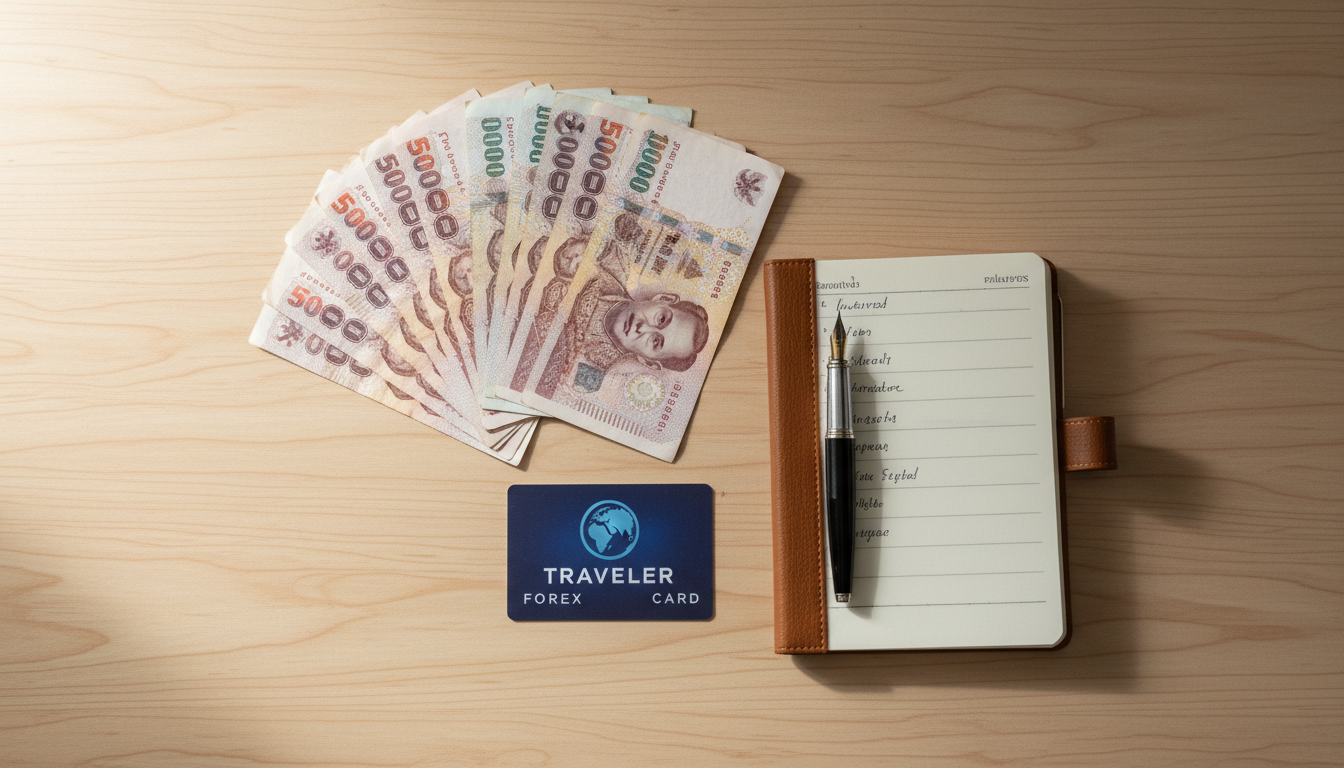
- Locate the official **SuperRich (Green or Orange)** counters. SuperRich operates on near-interbank exchange margins, offering significantly better rates than standard airport bank booths. Convert your USD into THB here.
- Keep around 3,000–5,000 THB in physical cash on hand for street markets, tuk-tuks, and small convenience stores.
2. Using Cards & Managing ATM Fees
Modern international debit and prepaid multi-currency cards work seamlessly across major shopping malls, supermarkets, hotels, and established restaurants in Thailand. If you don’t have one yet, review our guide to picking the best forex card in India to eliminate unnecessary transaction markups before you travel.
Crucial ATM Warning: Every single ATM in Thailand (K-Bank, SCB, Bangkok Bank, Krungsri) levies a mandatory, non-negotiable surcharge of 220 THB (~₹635 INR) on foreign debit or credit card withdrawals, regardless of the amount withdrawn.
To minimize the impact of this fee:
- Avoid making frequent small withdrawals. If cash is needed from an ATM, withdraw the maximum allowable single-transaction limit (typically 20,000 to 30,000 THB).
- Avoid Dynamic Currency Conversion (DCC): When the ATM prompts you to choose whether to bill the transaction in INR or THB, always select “Without Conversion” (THB). Choosing INR lets the local bank set an inflated exchange rate, adding a 4% to 7% hidden fee.
Local SIM Cards and Mobile Connectivity
Staying connected across Thailand is inexpensive and straightforward. The major national telecom providers are AIS, TrueMove H, and dtac. AIS generally provides the strongest signal coverage across island hopping routes and mountainous regions in the north.
You have three practical options for getting data:
- Airport Tourist Physical SIM: Counters are located right outside the arrival halls. Package options generally run around 399 THB (~₹1,150 INR) for an 8-day unlimited/high-speed data pack. While convenient, this option carries a price premium.
- Digital eSIM (Recommended): If your smartphone supports eSIMs, purchase a data plan online through platforms like Airalo or Trip.com before departing India. You can secure 10GB–50GB valid for 10 days for around $4.50 to $10 USD (~₹380 – ₹850 INR). You can read our detailed breakdown on selecting an eSIM for international travel to keep your domestic SIM active for bank OTPs while using cheap local data abroad.
- 7-Eleven Stores: Once inside the city, you can buy basic prepaid SIM cards at any 7-Eleven for 49–199 THB plus top-up credit. You must present your passport at the counter for identity registration.
Thailand 7 Day Itinerary from India: The Classic Bangkok & Phuket Route
For a first-time trip, balancing beach landscapes with vibrant city life provides the ideal overview of the country. Here is a balanced 7-day, 6-night routing focused on Phuket and Bangkok.
Day 1: Arrival in Phuket & Patong Vibe
- Land at Phuket International Airport (HKT). Take a shared airport minivan (200 THB) or book a ride via local apps (600–800 THB) to your hotel around Patong, Kata, or Karon Beach.
- Check in, freshen up, and head to Patong Beach in the late afternoon.
- In the evening, explore the lively night markets near Bangla Road and sample fresh local seafood.
Day 2: Phi Phi Islands Speedboat Tour
- Take an early morning full-day island-hopping excursion by speedboat.
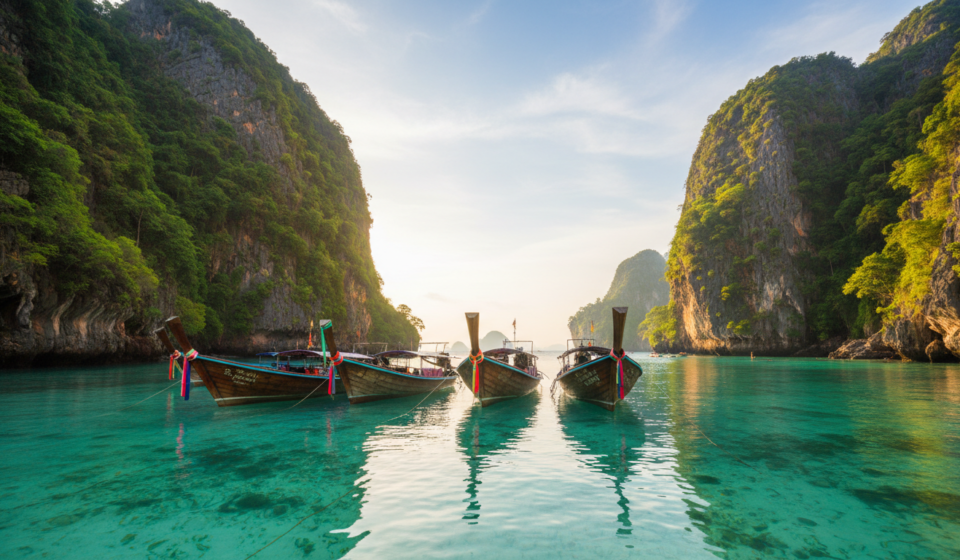
- Explore Maya Bay, swim in the turquoise waters of Pileh Lagoon, check out Viking Cave, and stop at Monkey Beach for snorkeling.
- Estimated Cost: 1,500 – 2,200 THB, including national park park fees, buffet lunch, and snorkeling gear.
Day 3: Phuket Cultural Highlights & Promthep Sunset
- Rent a scooter (200–250 THB/day) or hire a private taxi driver for half a day.
- Visit the impressive 45-meter-tall Big Buddha and the historic Wat Chalong temple complex.
- Spend the afternoon strolling through Old Phuket Town, admiring its colorful Sino-Portuguese architecture and heritage cafes.
- Catch the sunset from Promthep Cape at the southern tip of the island.
Day 4: Flight to Bangkok & Riverside Temples
- Take a morning domestic flight from Phuket (HKT) to Bangkok (DMK or BKK). Flight time is about 1.5 hours, costing ~₹2,500 – ₹3,500 INR.
- Check into your hotel in Sukhumvit, Pratunam, or along the Riverside area.
- Take the Chao Phraya Express Boat (20 THB) to visit Wat Arun (Temple of Dawn) during late afternoon.
- In the evening, enjoy a Chao Phraya River dinner cruise (~1,200 THB per person) to view illuminated monuments along the riverbanks.
Day 5: Floating Markets & Night Market Dining
- Take a half-day tour to the Damnoen Saduak Floating Market and the Maeklong Railway Market, where market stalls line active train tracks.
- Return to central Bangkok by mid-afternoon.
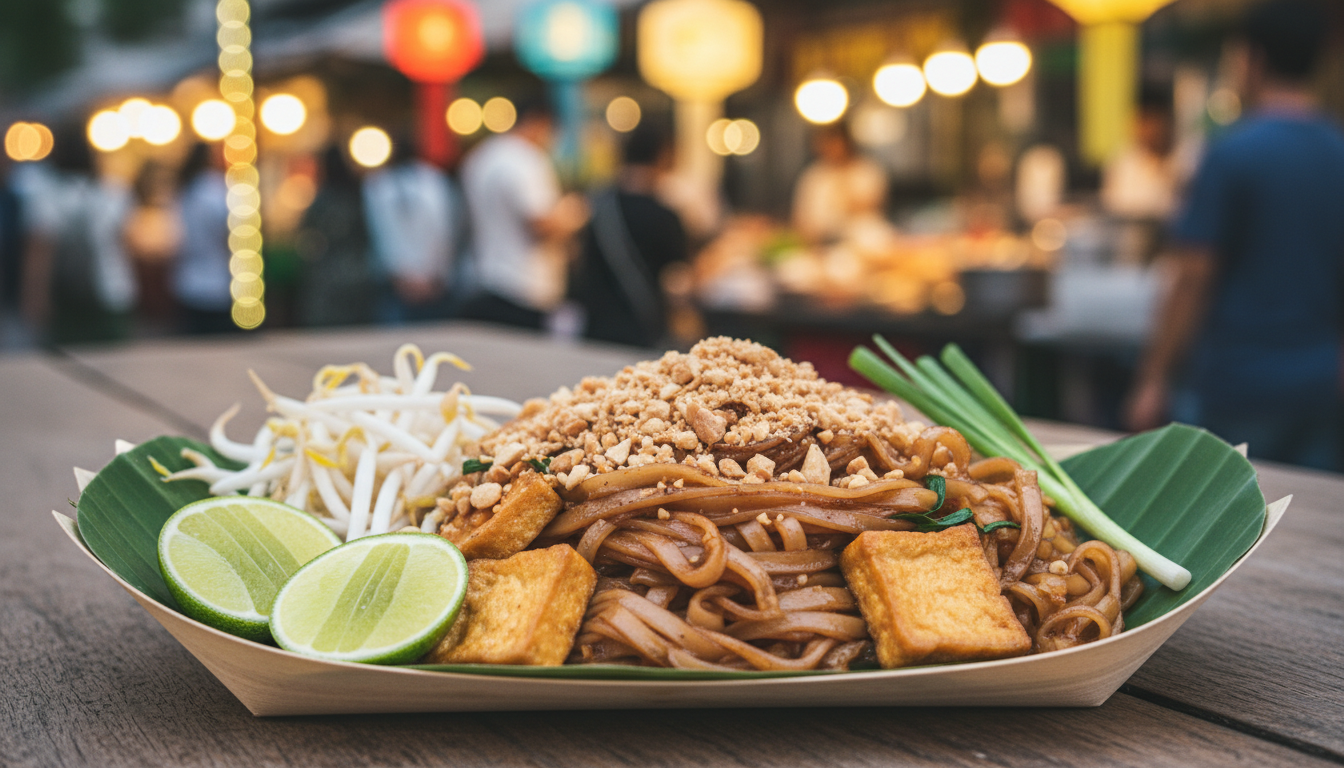
- Spend your evening at **Jodd Fairs Night Market**, sampling local street dishes like volcanic pork ribs alongside fresh fruit smoothies.
Day 6: Shopping in Central Bangkok
- Spend your morning browsing wholesale fashion, clothing, and souvenirs at Platinum Fashion Mall and Pratunam Market.
- Cross the river in the afternoon to visit **ICONSIAM**, a modern lifestyle mall featuring an indoor, air-conditioned replica of a Thai floating market on its ground floor.
Day 7: Last-Minute Shopping & Departure
- Pick up Thai dried fruits, traditional teas, and snacks at Big C Supercenter across from CentralWorld.
- If you take routine prescription medications, ensure you carry them in their original packaging alongside your prescription; read our summary of rules for carrying medicines on international flights to avoid delays at airport security checks.
- Take the Airport Rail Link (45 THB) or a taxi back to Suvarnabhumi Airport for your return flight to India.
Looking for a longer holiday? If you have 10 days, consider spending 3 nights in Chiang Mai in northern Thailand (for ethical elephant sanctuaries and mountain temples), 3 nights in Krabi (for Railay Beach and island hopping), and finishing with 3 nights in Bangkok.
Dietary Guide for Indian Travellers: Pure Veg, Jain & Halal Options
A common worry when planning a trip to Thailand from India is food availability. While traditional Thai cooking relies heavily on *nam pla* (fish sauce) and *kapi* (shrimp paste) as seasoning bases, navigating local food safely as a vegetarian or Jain traveller is manageable if you know what to look for.
The “Jay” (เจ) System for Vegetarians and Jains
Thailand has a long-standing Buddhist vegan tradition called “Jay” (เจ). Food certified as Jay contains no meat, no seafood, no fish sauce, no eggs, no dairy, and NO garlic or onion—making it completely suitable for strict vegetarians and Jain travellers.
- Look for local food stalls, eateries, and convenience products displaying a yellow flag or sticker with red Thai script reading “เจ”.
- You can find pre-packaged Jay meals, steamed buns, and rice dishes in almost every 7-Eleven across the country.
Useful Thai Phrases to Save on Your Phone:
- “Gin Jay” (กินเจ): “I eat strict vegetarian / Jain food.”
- “Mai Sai Nam Pla” (ไม่ใส่น้ำปลา): “Do not add fish sauce.”
- “Mai Sai Goong” (ไม่ใส่กุ้ง): “Do not add shrimp.”
Indian Restaurants in Thailand
If you prefer standard Indian meals, major destinations are filled with options:
- Bangkok: Areas like Sukhumvit Soi 11, Pratunam, and Silom host dozens of Indian restaurants catering to North Indian, South Indian (e.g., Saravanaa Bhavan), and Jain dietary needs.
- Phuket: The main beach road in Patong has numerous Indian dining spots.
- Krabi: Ao Nang features over 15 dedicated Indian restaurants along its main strip.
Local Transport & Ride-Hailing Hacks
Getting around Thai cities safely and economically comes down to choosing the right transit modes.
1. Bangkok Rail Transit (BTS Skytrain & MRT Subway)
The BTS Skytrain and MRT Subway systems are clean, air-conditioned, precise, and completely bypass Bangkok’s heavy street traffic. Fare costs range between 16 THB and 62 THB per ride. You can buy a rechargeable **Rabbit Card** at any BTS ticket window for easy tap-and-go entry.
2. Ride-Hailing Apps: Grab vs. Bolt vs. InDrive
- Grab: Highly reliable and easy to use, but frequently charges higher rates during peak hours.
- Bolt & InDrive: Download these apps before leaving India. In cities like Bangkok and Phuket, rides booked through Bolt or InDrive are frequently 30% to 50% cheaper than standard Grab fares for the exact same route.
3. Metered Taxis & Tuk-Tuks
- When stepping into a metered taxi in Bangkok, always insist on using the meter by stating *”Meter please”* (*Mi-ter krub* for men / *Mi-ter ka* for women). If a driver refuses and insists on a flat fare (e.g., 500 THB), simply step out and flag down another cab.
- Tuk-Tuks: While iconic for short trips, tuk-tuks do not have meters. Always negotiate and fix the price before getting inside. Expect to pay 100–200 THB for quick urban trips.
Common Scams and Safety Tips
Thailand is generally a safe country for tourists, but staying aware of common tourist traps will save you time and money.
- The “Grand Palace is Closed” Scam: Near famous monuments in Bangkok, tuk-tuk drivers or friendly strangers may approach and claim that the Grand Palace or temple is closed for a private royal ceremony. They will offer to take you on a cheap boat or city tour instead—which invariably ends at high-pressure jewelry, gem, or tailor shops. Fact: The Grand Palace is open almost every day. Ignore outside touts and walk directly to the official ticket gate.
- Jet Ski Damage Claim: Along Patong Beach in Phuket or Pattaya Beach, rental operators may claim that pre-existing scratches on a jet ski were caused by you, demanding high repair fees (10,000 to 30,000 THB). Never leave your original passport as a security deposit with any rental operator.
- Overstay Penalties: Always check the entry stamp date in your passport. Overstaying your authorized stay carries a strict penalty fine of 500 THB per day (up to a maximum fine of 20,000 THB) assessed at airport immigration, and severe overstays can lead to re-entry bans. Before packing your bags for the return flight, make sure to review Indian customs baggage rules so you know duty-free limits on electronics, gold, and gifts.
Frequently Asked Questions (FAQ)
1. Is Thailand visa-free for Indian citizens in 2026?
Indian passport holders can enter Thailand for short tourism stays using visa exemption entry stamps provided at airport immigration or via Visa on Arrival (VoA). You do not need to apply for a traditional sticker visa in advance for short holidays under 15 to 30 days.
2. What is the mandatory Thailand Digital Arrival Card (TDAC)?
The TDAC is a mandatory online entry pre-clearance form that replaced the old paper TM6 arrival card. It is 100% free and must be submitted online at tdac.immigration.go.th within 72 hours before flying to Thailand.
3. How much cash should I carry to Thailand from India?
Thai immigration guidelines require solo travellers to carry the equivalent of 10,000 THB (~₹29,000 INR) and families to carry 20,000 THB (~₹58,000 INR) in proof of funds. Because of Indian customs restrictions on taking physical INR abroad, carry this requirement in USD or THB cash, alongside an active international credit or forex card.
4. What is the cheapest way to get local currency in Thailand?
The cheapest method is bringing USD cash ($100 bills) from India and converting them into Thai Baht at **SuperRich** exchange booths located on the Basement Floor (B Floor) of Bangkok Suvarnabhumi Airport. Avoid converting INR directly at Thai airport bank counters due to high margins.
5. Is pure vegetarian and Jain food easily available in Thailand?
Yes. Look for food stalls, restaurants, or 7-Eleven meals displaying the yellow and red “Jay” (เจ) sign. Jay food is strictly vegan and prepared without onion, garlic, or fish sauce, making it fully compliant with vegetarian and Jain requirements.
6. Can I use UPI apps in Thailand?
While select tourist stores and major duty-free outlets accept international QR payments, cash (THB) and multi-currency debit/forex cards remain the primary accepted payment methods across local markets, taxis, street stalls, and regional islands.