
Adventure tourism in India has entered an era defined by architectural innovation and height-induced thrills. Among the most popular developments in this category are the modern glass bridges in india, which offer a unique mix of nature-watching and physical thrill. These transparent walkways hang over deep canyons and valleys. They allow travelers to view natural scenery directly beneath their feet. Today, travelers are no longer content with standard viewing decks. This demand has encouraged states to construct spectacular glass bridges in india as major tourist attractions. From the northern mountains to the southern hills, these engineering feats are changing how people travel. It is basically a shift toward immersive and highly shareable tourist experiences. (This guide provides an in-depth review of the premier locations, ticket prices, and travel tips for these structures.) These structures combine advanced structural engineering with scenic locations to create memory-making platforms.
Key Takeaways
- Pioneering Engineering: Modern glass bridges in India use multi-layered tempered and laminated glass panels bound with PVB interlayers to maximize visitor safety.
- Iconic Venues: Premier bridges are found in key locations across Kerala (Vagamon, Wayanad), Bihar (Rajgir), Sikkim (Pelling), and Uttarakhand (Rishikesh).
- Thrilling Heights: Walkways are suspended at altitudes ranging from 65 feet to 7,200 feet above sea level, offering panoramic views of valleys, forests, and sacred rivers.
- Smart Visitor Tips: Guests should wear flat, soft-soled shoes, follow daily timing regulations, and keep loose belongings secure to ensure a safe, memorable experience.
The Rise of Glass Bridges in India
The emergence of glass bridges in india represents a significant change in domestic travel infrastructure. Historically, mountain tourism revolved around quiet hill stations and viewpoints. But still, the modern traveler seeks interactive experiences. The concept of the transparent walkway, which gained global fame in places like China, has found a major audience in India. State tourism boards are using these projects to revive regional economies. It is basically a strategy to turn quiet towns into bustling weekend spots. (This trend has been highly successful in attracting younger travelers.)
The first major projects started in hilly regions where natural topography provided deep gorges. These gorges are perfect for suspending steel and glass structures. These glass bridges in india do not just serve as scenic viewpoints. They act as symbols of regional engineering progress. For instance, northern and southern states now compete to construct the most daring platforms. This competition has led to a rapid increase in tourist visits in previously ignored areas.
While some critics argued that these projects might disrupt local environments, the actual execution has prioritized ecological balance through targeted initiatives:
- Visitor Capacity Limits: Most sites operate under strict visitor limits to prevent overcrowding and reduce environmental stress.
- Ecosystem Preservation: This balanced approach ensures that the surrounding nature remains unharmed while tourists enjoy the view.
- Economic & Spatial Expansion: As more states plan similar projects, the collection of glass bridges in india continues to expand, offering a fresh, sustainable perspective on the country’s geography.
An Architectural Overview of Glass Bridges in India
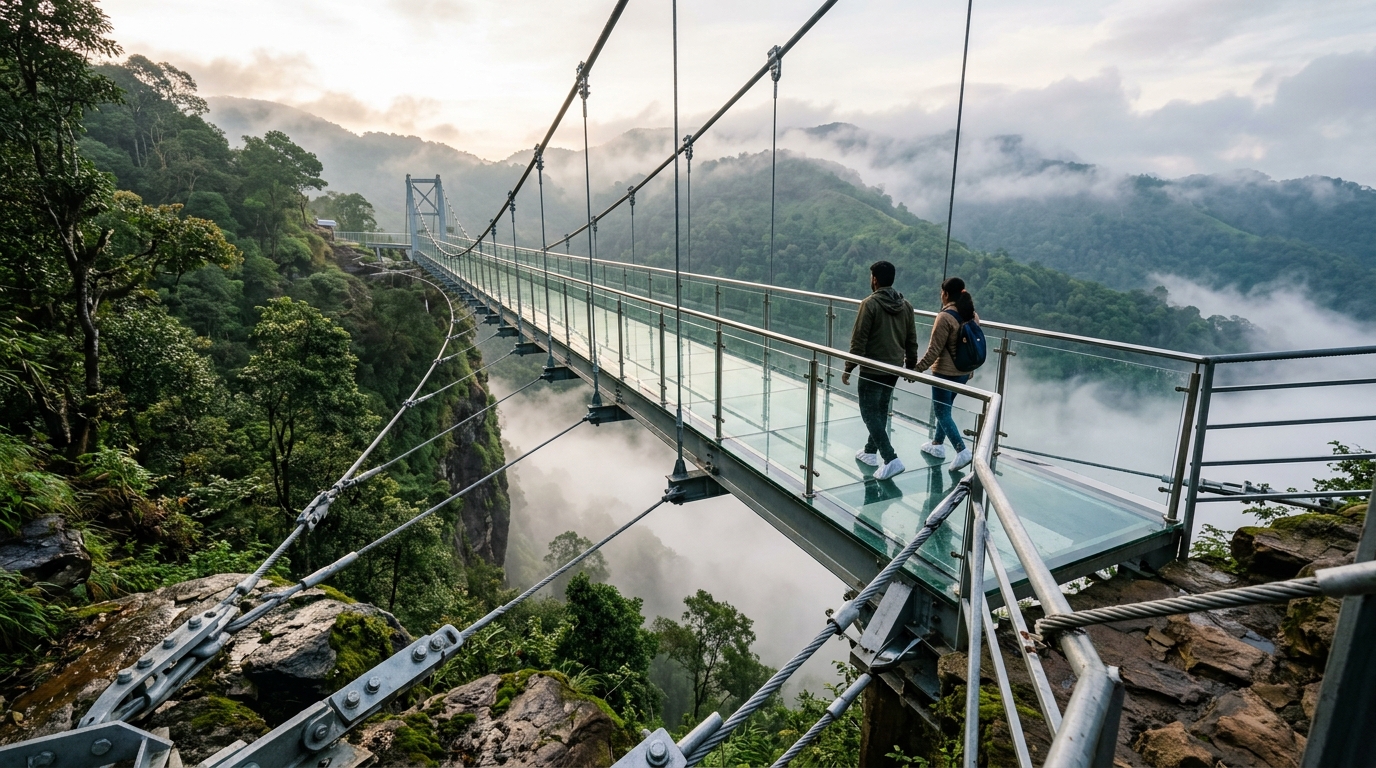
Building safe transparent walkways over mountain cliffs requires highly specialized civil engineering. The development of glass bridges in india relies on multi-layered tempered and laminated glass panels. These panels are specifically engineered to withstand immense structural loads. Typically, each panel consists of three or more layers of high-strength glass bound together with a specialized polymer interlayer. This plastic layer, known as a PVB (Polyvinyl Butyral) interlayer, holds the glass shards together if a break occurs. This prevents any sudden structural failure.
Most of the glass bridges in india use heavy-duty steel trusses and suspension cables anchored deep into mountain rock. Engineers calculate the live load (the weight of moving tourists) and dead load (the weight of the structure itself) before laying the foundation. (Sikkim and Uttarakhand, for example, lie in high-seismic zones, requiring extra structural reinforcement.) These safety features allow the walkways to support dozens of tourists simultaneously.
The visual experience of walking on these platforms is designed to create a floating sensation. This design depends on the absolute clarity of the glass. Specialized cleaning crews maintain the panels daily to prevent scratches and dirt accumulation. This maintenance preserves the clear view of the deep valleys below. The integration of transparent flooring with heavy-duty structural steel makes these glass bridges in india remarkable feats of modern architecture. They show how far the construction industry has progressed in using advanced materials for public entertainment.
Major Glass Bridges in India: Detailed Profiles
To experience these structures fully, one must explore the distinct geographic zones where they are built. Each destination offers a different view, ranging from misty tea gardens to rugged mountain passes. Below is a detailed look at the prominent glass bridges in india.
The Vagamon Glass Bridge, Kerala
Located in the misty hills of Idukki, the Vagamon Glass Bridge is arguably the most famous of all glass bridges in india. It holds the title of the longest glass bridge in India, extending roughly forty meters from the edge of a cliff. (This length makes it an incredible vantage point for viewing the hills of Kolahalamedu.) The platform sits at a height of approximately **150 feet** above the valley floor. It is basically suspended by high-tension cables.
To manage the crowds, authorities have limited access, making it one of the most organized glass bridges in india. The bridge can accommodate up to fifteen people at one time, ensuring that safety limits are maintained. Visitors must wear special shoe covers before stepping onto the glass. This rule prevents scratches and preserves the clarity of the panels. Standing on the edge of this cantilever structure offers a scenic view of the Western Ghats. For those planning a trip, booking through structured Kerala tour packages is highly recommended to secure early entry. The ticket price is roughly **250 rupees** per person. The bridge operates from 9:00 AM to 6:00 PM daily. The surrounding park also features adventure sports, making it a key attraction among glass bridges in india.
The Rajgir Glass Bridge, Bihar
The Rajgir glass bridge is another major engineering feat, located in the historic town of Rajgir in Bihar. Situated inside the Nature Safari park, this bridge has become a major travel destination in eastern India. (The bridge itself is modeled after the famous skywalk in Hangzhou, China.) It stretches roughly 85 feet in length and is about six feet wide. The platform is suspended at a height of approximately **250 feet** over a deep canyon. It is basically surrounded by five scenic hills.
This project is unique among glass bridges in india because of its historical setting. Rajgir is a sacred place for both Buddhists and Jains. The modern glass bridge offers a stark contrast to the ancient ruins of Nalanda nearby. Up to forty visitors can stand on the bridge at one time under normal conditions. The ticket price is roughly **250 rupees** for the glass bridge, but visitors must also purchase a Nature Safari entry ticket for **50 rupees**. The complex is closed on Mondays for regular maintenance. It remains a shining example of how state governments are building glass bridges in india to boost tourism. The local administration has established strict security protocols, making it a very safe destination.
The Pelling Glass Skywalk, Sikkim
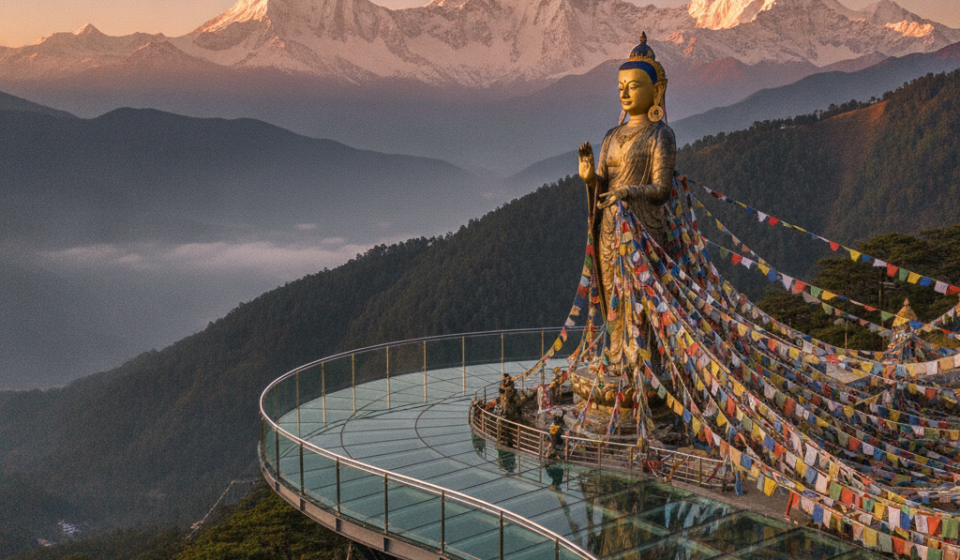
Located in West Sikkim, the Pelling Glass Skywalk is India’s first ever glass skywalk. It offers a majestic view of the Himalayan range, including Mount Kanchenjunga. The skywalk is built opposite the giant **137-foot** statue of Chenrezig, making it a unique mix of pilgrimage and adventure. (The combination of a spiritual site and a modern skywalk has made this a massive success.) The glass floor extends over a deep pine forest, giving visitors a thrilling view of the valley below.
This landmark is highly popular among the glass bridges in india due to its high altitude of roughly **7,200 feet** above sea level. Visitors should plan their trip during the clear morning hours. The entry fee is approximately **150 rupees** per person. Travelers looking to visit this destination can choose specialized Sikkim tour packages to combine the skywalk with other regional highlights.
Walking on this transparent path is a memorable experience. When studying the expansion of glass bridges in india, Pelling remains the pioneer project. It set the standard for subsequent glass bridges in india. It proved that remote mountain regions could host high-tech tourist attractions without losing their natural charm.
The Wayanad Glass Bridge, Kerala
For those traveling to North Kerala, the Wayanad Glass Bridge at 900 Kandi is an essential stop. This private glass bridge is nestled inside a deep jungle, offering views of the surrounding green hills and waterfalls. The bridge is located at the end of a forest trail, which visitors can reach via a short off-road jeep ride. (The bumpy jeep ride adds to the overall sense of adventure before visitors step onto the glass platform.) The bridge itself is roughly **100 feet** above the forest floor.
Compared to state-funded projects, this private bridge is smaller but highly scenic. It is basically designed for small groups of three to four people at a time. This limited capacity makes the experience feel exclusive. The ticket price is roughly **100 rupees** per person. This site has become a key driver for local tourism, showing the value of private glass bridges in india.
The construction uses tempered glass supported by a strong iron frame. Standing on this platform allows tourists to look straight down into the dense forest canopy, reflecting the rising demand for unique glass bridges in india. Many visitors include this destination in their broader Kerala tour packages to experience both the beach and mountain skywalks of the state.
The Rishikesh Glass Floor Bridge, Uttarakhand
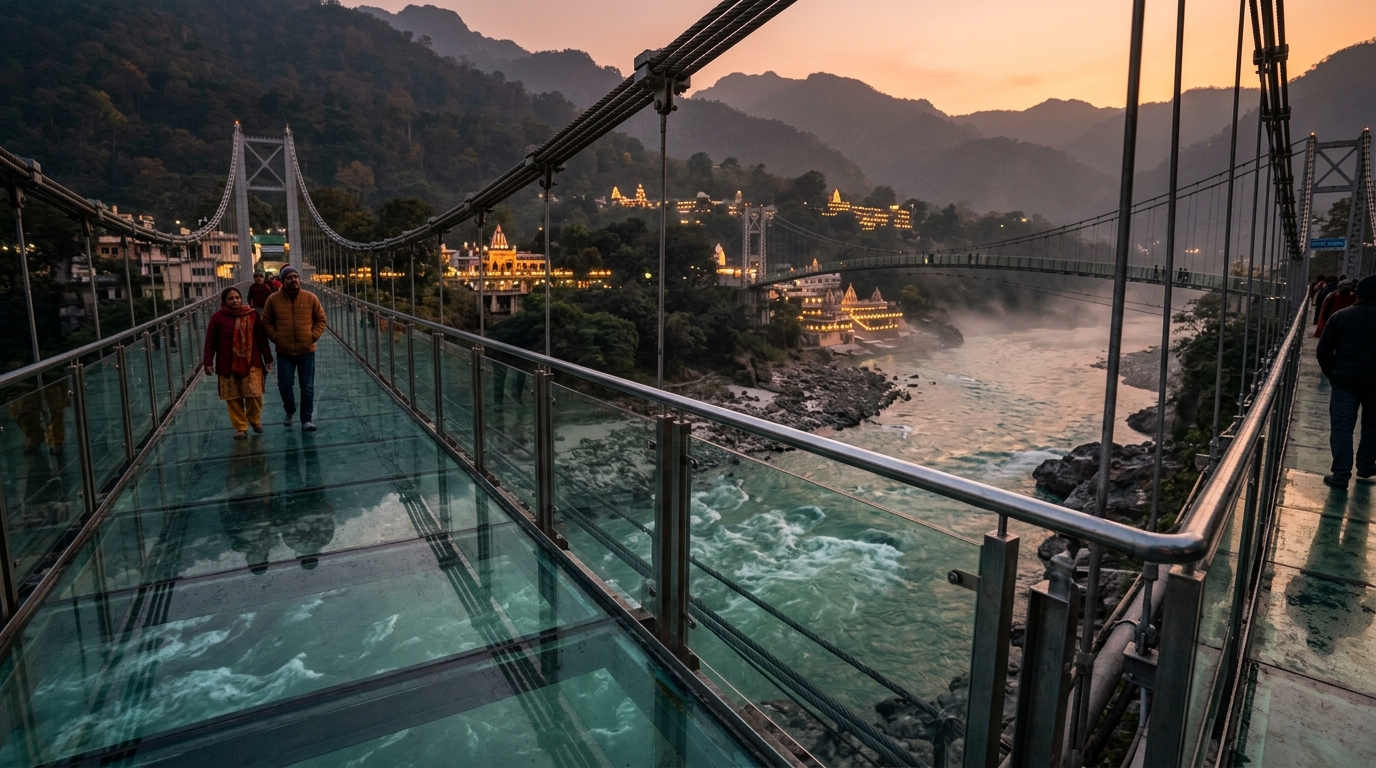
In Rishikesh, a new architectural marvel is taking shape to replace the historic Lakshman Jhula suspension bridge. Known as the Bajrang Setu, this project features a unique glass-floor design. It is destined to become one of the most prominent glass bridges in india. Unlike the tourist skywalks in the hills, this bridge serves as a major pedestrian crossing over the holy Ganges river. (The bridge features separate paths for pedestrians and vehicles, with the middle path made of transparent glass.)
The glass floor panels are roughly **3.5 inches** thick, designed to withstand heavy foot traffic and changing weather conditions. The bridge is approximately **435 feet** long and sits roughly **65 feet** above the river. It offers a spectacular view of the fast-flowing Ganges and the surrounding temples. Visitors planning a spiritual trip can easily integrate this attraction into their Rishikesh tours. This state-of-the-art structure represents a major upgrade in safety and design. It shows how traditional pilgrimage sites are adopting modern engineering. It is basically a blend of spiritual tourism and modern thrill. The project has raised the bar for municipal infrastructure and glass bridges in india, proving that functional bridges can also be major tourist attractions.
Comparative Matrix: Ticket Prices, Timing, and Locations
For travelers planning to visit these architectural wonders, understanding the practical details is crucial. Ticket prices, operating hours, and locations vary across different states. Some bridges are easily accessible by road, while others require jeep rides or short treks. Having this information helps travelers plan their itineraries effectively. (It is always wise to double-check local timings, as high winds or heavy rain can cause temporary closures for safety reasons.)
To simplify the planning process, the table below provides a comprehensive comparison of the main glass bridges in india. This data helps compare key features, costs, and timings at a glance. Evaluating these entry fees is useful when budgeting for adventure tourism. In terms of overall value, the various glass bridges in india offer excellent experiences for nominal fees. Whether looking for high-altitude thrills or forest views, travelers can find options that suit their budget.
| Bridge Name | Location | Approximate Ticket Price | Operating Hours | Key Highlight |
|---|---|---|---|---|
| Vagamon Glass Bridge | Vagamon, Kerala | INR 250 | 9:00 AM – 6:00 PM | Longest cantilever glass bridge in India |
| Rajgir Glass Bridge | Rajgir, Bihar | INR 250 (+ INR 50 entry) | 9:00 AM – 5:00 PM (Closed Monday) | Suspended between five scenic hills |
| Pelling Glass Skywalk | Pelling, Sikkim | INR 150 | 8:30 AM – 5:30 PM | Views of Kanchenjunga and Chenrezig Statue |
| Wayanad Glass Bridge | Wayanad, Kerala | INR 100 | 9:00 AM – 6:00 PM | Nestled inside a private forest at 900 Kandi |
| Bajrang Setu (Rishikesh) | Rishikesh, Uttarakhand | Free / Nominal | Open 24/7 (Pedestrian paths) | First major glass-floor bridge over Ganges |
Safety Standards and Engineering Behind Glass Bridges in India
The thrill of walking over a deep gorge is only enjoyable if the safety of the structure is absolute. The construction of glass bridges in india follows international standards of structural engineering. The primary material used is specialized laminated glass. It consists of multiple layers of tempered glass bound by a strong interlayer. This ensures that even in the unlikely event of a crack, the glass panel remains intact. (This redundant design is basically similar to the safety glass used in high-rise buildings and armored vehicles.)
In addition to the glass panels, the supporting structures are engineered to handle high loads. Engineers use heavy-duty steel cables and structural steel pillars that are deeply anchored into solid mountain rock. Regular load testing is conducted by civil authorities to ensure the structures can handle hundreds of kilograms per square meter.
To address concerns regarding environmental factors and high altitudes, engineers employ specialized techniques:
- Wind Tunnel Testing: A standard design process ensuring that the bridge can withstand strong, unpredictable mountain gusts.
- Seismic Resilience: In high-risk areas like Sikkim and Rishikesh, bridges are built with flexible joints to absorb intense ground movement.
- Age-Friendly Design: This meticulous structural planning makes glass bridges in india safe for visitors of all ages, allowing everyone to enjoy the views with complete peace of mind.
Travel Guidelines and Practical Tips for Visitors
Visiting these transparent walkways is an exciting experience, but it requires some preparation to ensure a smooth trip. Since most of these sites are located in remote or hilly areas, planning ahead is key. Here are some essential guidelines for visitors planning to explore glass bridges in india:
- Wear Appropriate Footwear: High heels are strictly prohibited on glass platforms as they can scratch or damage the surface. Visitors are usually required to wear soft-soled shoes or use the provided shoe covers before stepping onto the glass.
- Travel in Small Groups: To ensure safety, most sites limit the number of people allowed on the glass at one time. Be prepared to wait in line during peak tourist hours, especially on weekends.
- Check the Weather Forecast: Heavy rain, fog, or high winds can lead to temporary closures. Morning hours are generally the best time to visit for clear views and shorter waiting times.
- Keep Belongings Secure: Loose items like phones, cameras, and keys can easily slip out of pockets. It is best to keep them secured in a zipped bag to prevent them from falling through the gaps or dropping onto the glass.
- Follow On-Site Rules: Always listen to the safety marshals on duty. Jumping, running, or stamping on the glass is strictly forbidden and can result in immediate removal from the site.
By following these simple guidelines, travelers can enjoy a hassle-free visit to the spectacular glass bridges in india. These tips ensure that the experience remains safe and memorable for everyone.
Conclusion
The rapid development of glass bridges in india represents a major milestone in domestic adventure tourism. These transparent skywalks offer a unique way to experience the natural beauty of the country. From the misty valleys of Kerala to the high peaks of Sikkim, these engineering marvels provide thrilling viewpoints for travelers. They show how modern civil engineering can enhance the tourism sector while maintaining safety.
As more states plan to build similar platforms, the popularity of these attractions will only grow. Whether taking a family vacation or an adventure trip, visiting a glass bridge is highly rewarding. Planning ahead, booking tickets early, and following safety guidelines will ensure a wonderful experience. These spectacular glass bridges in india are more than just viewpoints. They are a testament to modern human capability, inviting everyone to step out of their comfort zone and walk among the clouds.