Discover Keibul Lamjao: The Ultimate Guide to the Only Floating National Park in India

Tucked away in the northeastern corner of Manipur lies a biological marvel that challenges conventional definitions of geography and conservation. This destination is the only actual floating national park in india, a pristine sanctuary where the boundary between land and water is entirely blurred. Known as Keibul Lamjao National Park, this unique habitat stretches across the southern reaches of Loktak Lake. It functions as a complex wetland ecosystem where vegetation, soil, and organic debris fuse to form solid, buoyant platforms. For conservationists and intrepid travelers alike, this region represents, arguably, one of the most remarkable evolutionary stories on the planet. As a designated conservation zone, this floating national park in india serves as a sanctuary for species found nowhere else on earth, offering an unparalleled look at how nature adapts to extreme hydrological conditions.
- Unique Ecosystem: Keibul Lamjao is the world’s only floating national park, located on Manipur’s scenic Loktak Lake.
- The Phumdis: The park is formed entirely of “phumdis”—floating mats of soil, vegetation, and organic matter.
- Home of the Sangai: It is the last natural refuge of the critically endangered, endemic Sangai (or “dancing”) deer.
- Best Travel Window: The ideal time to visit is from October to April when dry winter weather offers optimal wildlife sightings.
- Ecological Challenges: Artificial water management systems like the Ithai Barrage pose significant threats to the structural integrity of the floating mats.
The Marvel of Phumdis: Understanding the Floating Ecosystem
To appreciate the structural integrity of this floating national park in india, one must first look at the phumdis. These are heterogeneous masses of soil, vegetation, and organic matter in various stages of decay. They form a thick, spongy canopy over the lake water, creating a terrain that is both solid and liquid. Roughly speaking, these phumdis cover a substantial portion of the park’s total area (which is roughly 40 square kilometers in extent). They are not merely floating weeds. Its basically a highly complex biological structures that take decades to form, driven by the natural decomposition of vegetation and the accumulation of windblown silt.
These organic formations compose the majority of the dry ground within the floating national park in india. Over decades, wild grasses, reeds, and other terrestrial plants grow on the accumulation of dead organic matter. Their roots bind the decaying material together into thick, floating mats. The thickness of these phumdis varies greatly depending on the season, ranging from a few centimeters to over two meters. This seasonal adaptation follows a precise hydrological cycle:
- Dry Season: As water levels drop, the heavy organic mats sink to the lake bed and absorb vital nutrients directly from the soil.
- Monsoon Season: When the monsoons arrive and water levels rise, the phumdis detach from the bottom and float back to the surface, carrying nutrients upward.
Visitors to the floating national park in india often marvel at how these natural mats support the weight of heavy mammals. The secret lies in the dense, fibrous root systems of the dominant grass species, such as Phragmites karka and Saccharum latifolium. These roots form a tightly woven mesh that distributes weight evenly across a large surface area. This delicate hydrological balance remains crucial for maintaining the status of the floating national park in india as a thriving biosphere. But still, beneath this serene green facade lies a remarkably fragile ecosystem that depends entirely on the natural rise and fall of Loktak Lake. Local environmentalists point out that if the water levels remain persistently high, these floating islands lose their structural cohesion and dissolve, which disrupts the nesting grounds of native birds and restricts the grazing range of resident mammals.
The Sangai Deer: Manipur’s Dancing Mascot
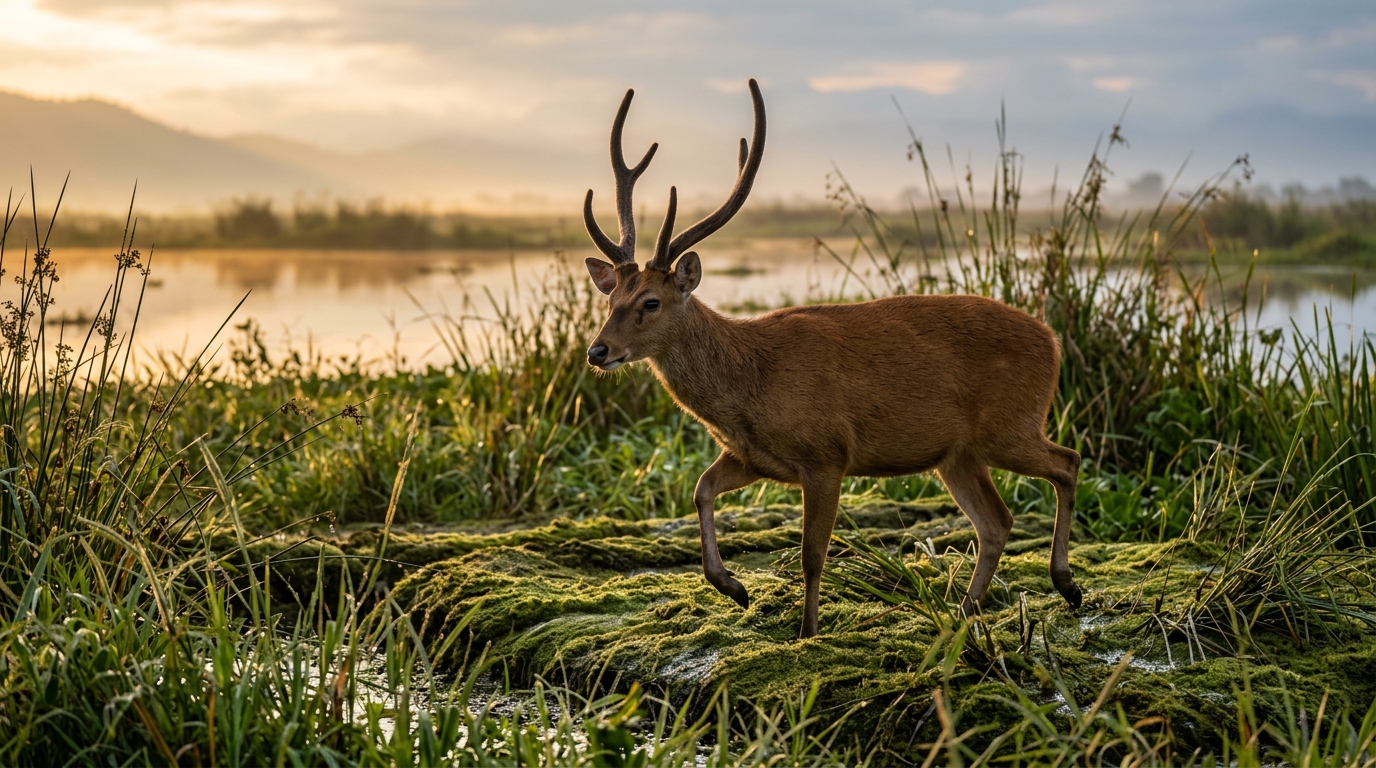
The primary resident driving the conservation efforts of this floating national park in india is the Sangai (Rucervus eldii eldii). This animal is a highly specialized and endangered subspecies of Eld’s deer. It is colloquially known as the dancing deer of Manipur. This moniker stems directly from its unique locomotion. Walking on the spongy phumdis of the floating national park in india requires a peculiar, delicate gait. The deer appears to be constantly balancing or dancing as it steps across the undulating, springy vegetation. Its hooves are specifically adapted to this terrain, featuring widely splayed hooves with hard, calloused undersides that prevent it from sinking into the marsh.
This unique physical adaptation makes the deer highly specialized to the specific terrain of the floating national park in india. However, it also introduces several distinct vulnerabilities:
- Inability to Adapt to Dry Land: Because they cannot easily survive on hard, dry ground, their entire existence is tied to this single wetland habitat.
- Historical Declines: Driven by hunting and severe habitat loss, the Sangai was feared to be completely extinct by the mid-twentieth century.
- Conservation Milestones: A tiny population was fortunately rediscovered in the 1950s, which ultimately led to the formal establishment of the park in 1977 to safeguard their remaining home.
The deer feed primarily on the succulent shoots of local grasses, making them entirely dependent on the seasonal growth cycles of the phumdis. The Sangai are mostly active during the twilight hours, moving in small groups across the larger phumdi patches. Their shy temperament makes them difficult to spot during midday when they retreat into the tall reeds for shade and protection.
A census conducted in the floating national park in india highlighted how precariously close to extinction these animals remain. As documented by the Wildlife Institute of India during their 2016 systematic census, the population of Sangai was recorded at precisely 260 individuals. While this represents a notable recovery from the single-digit numbers recorded in the mid-twentieth century, the species remains classified as Critically Endangered on the IUCN Red List. Their survival is, to an extent, a testament to dedicated local conservation initiatives, though regional environmental pressures continue to threaten their narrow habitat. The deer are also susceptible to diseases transmitted by domestic livestock grazing on the periphery of the park, creating an ongoing need for strict boundary management and veterinary monitoring.
Loktak Lake: The Lifeline of Keibul Lamjao
To understand the ecology of the park, one must understand Loktak Lake. This vast body of water is intrinsically linked to the status of the floating national park in india. Covering an area of approximately 287 square kilometers (depending on seasonal rainfall), Loktak is the largest natural freshwater lake in Northeast India. It is a critical source of drinking water, irrigation, and hydropower for the surrounding valleys. Without the hydrologic support of the lake, the floating national park in india would simply cease to exist. The lake serves as the basin that holds the phumdis, facilitating their seasonal movement.
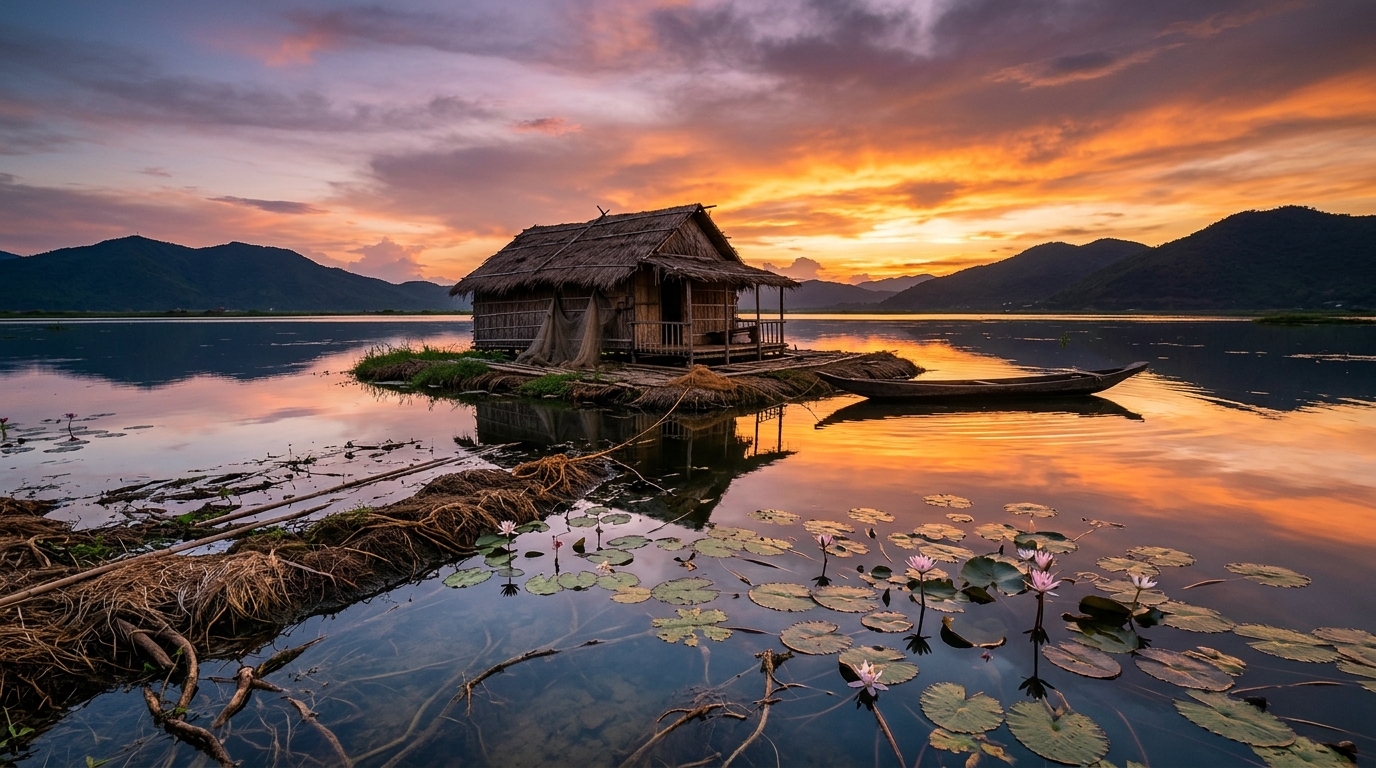
Indeed, the lake functions as the life support system for the entire floating national park in india. It represents an ecotone, a transition area between terrestrial and aquatic systems. This supports an incredibly diverse array of life. Over a hundred species of waterbirds, dozens of indigenous fish species, and numerous wetland plants thrive in these waters. Critics might argue that a marshland cannot support true national park status. However, the reality of its complex biodiversity proves otherwise. The lake is also home to several fishing communities who live on their own floating phumdis, residing in traditional huts called phumsangs. These traditional structures built by the local fishermen are constructed entirely from lightweight natural materials, ensuring they float in tandem with the phumdis. This traditional lifestyle showcases a remarkable level of human adaptation to a wetland environment, though it must be carefully balanced with conservation priorities.
However, the construction of the Ithai Barrage in 1983 for a hydropower project has severely disrupted the natural cycle of the lake. This dam keeps the water level in Loktak Lake constantly high throughout the year. This interference has fundamentally altered the vegetative lifecycle within the floating national park in india. Because the water level no longer drops during the dry season, the phumdis cannot sink to the bottom to absorb soil nutrients. Over time, this has caused the floating mats to thin and break apart, directly threatening the structural integrity of the Sangai’s habitat. The loss of seasonal flushing has also led to an accumulation of pollutants and nutrients in the lake, causing eutrophication and reducing water quality.
Planning Your Visit: Practical Travel Information
When organizing a journey to the floating national park in india, proper timing is essential. The remote location and unique terrain require careful logistical preparation. This ensures a comfortable and ecologically responsible trip.
Best Time to Visit
The ideal window for visiting the park is from October to April. During these dry winter months, the weather remains pleasant and the water levels are optimal for wildlife viewing. Temperatures range from a comfortable 15 degrees Celsius during the day to a brisk 5 degrees Celsius at night. This period also coincides with the arrival of migratory birds, making it a spectacular time for birdwatching. The vegetation is less dense than in the monsoon season, which significantly improves the chances of spotting the elusive Sangai deer.
How to Reach Keibul Lamjao National Park
Reaching this isolated floating national park in india is a straightforward journey if planned carefully:
- Step 1: Fly to Imphal: The capital of Manipur, Imphal, is well connected by air to major domestic hubs like Kolkata, Guwahati, and New Delhi.
- Step 2: Travel to Moirang: From Imphal, the park lies approximately 53 kilometers to the south. Visitors can hire private taxis or board shared public transport to reach Moirang, the primary gateway to the park and Loktak Lake.
- Step 3: Reach the Park Entrance: From Moirang, local auto-rickshaws or small, non-motorized boats can transport you directly to the park gates.
Here is a detailed comparison of the transportation modes available to help plan your transfer from Imphal to the park:
| Transport Mode | Estimated Cost (INR) | Travel Duration | Best For |
|---|---|---|---|
| Private Taxi (Imphal to Moirang) | ₹1,500 – ₹2,500 | 1.5 hours | Comfort, direct transit, and flexible timings |
| Shared Taxi / Winger | ₹100 – ₹150 | 2 hours | Budget-conscious solo travelers |
| Local Auto-Rickshaw (Moirang to Park) | ₹50 – ₹100 | 20 minutes | Short local transfers from Moirang town |
Permits and Entry Guidelines
Before entering the boundaries of the floating national park in india, travelers should secure necessary clearances. Domestic tourists do not require an Inner Line Permit (ILP) to enter Manipur, though registering at entry points is standard procedure. Foreign nationals must comply with registration requirements at checkpoints. A nominal entry fee is charged at the park gate, with additional charges for cameras. Guided boat tours must be booked through official forest department counters to ensure safety.
| Aspect | Details and Recommendations |
|---|---|
| Best Visiting Months | October to April (Dry winter season offers the best visibility and most comfortable weather) |
| Nearest Airport | Imphal International Airport (53 km away, connected to major domestic transit hubs) |
| Key Species to Spot | Sangai Deer, Hog Deer, Migratory Waterfowl, Otter, and various unique wetland birds |
| Permit Requirements | Standard registration at border checkpoints; no ILP is required for domestic Indian tourists |
| Ideal Stay Duration | 2 to 3 days to fully explore both the national park and the surrounding Loktak Lake attractions |
Key Attractions and Wildlife Experiences
Exploring the floating national park in india is vastly different from a typical vehicle-based safari. Because the ground is buoyant and fragile, visitors cannot walk freely across the phumdis. Instead, the park experience is designed around water-based exploration and elevated vantage points. This layout protects both the fragile vegetation and the visitors, as stepping off a designated path could result in sinking through a thin layer of phumdi directly into the lake water below.
This vantage point provides the most comprehensive overview of the floating national park in india. From the watchtowers located on small hillocks like Sendra or Toya Ching, visitors can look out over the vast expanse of floating green islands. Using high-powered binoculars from these elevated positions is the most effective way to spot the Sangai deer grazing on the distant phumdis. The sight of these elegant creatures traversing the trembling ground is a remarkable sight. Early morning visits are highly recommended, as the morning mist rising from the lake creates a surreal landscape and the deer are most active before the heat of the day sets in.
For avid birdwatchers, the floating national park in india offers an exceptional autumn and winter experience. The wetland is a critical stopover on the Central Asian Flyway. Species like the garganey, black-necked grebe, together with migratory pintails and various wild ducks can be seen feeding in the open water channels. Additionally, the park is home to resident birds like the black kite and the spot-billed pelican. The rich diversity of avian life is supported by the abundant fish populations in the lake, making it a paradise for nature photographers. The seasonal arrival of migratory species transforms the lake into a vibrant spectacle of color and sound. Experienced naturalists suggest that keeping a detailed birding journal during the visit can be highly rewarding, given the sheer variety of rare species that seek refuge in this ecosystem.
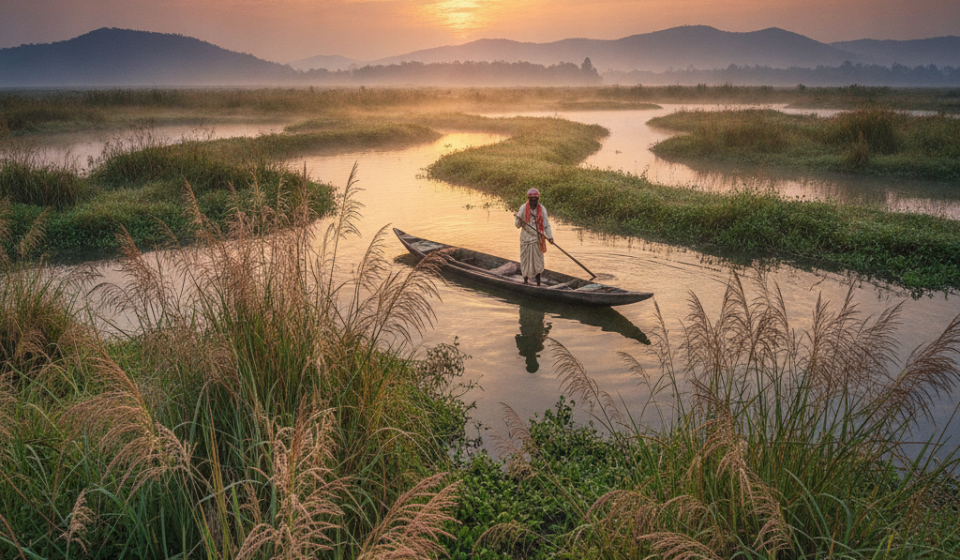
Boating along the narrow cleared channels remains the most intimate way to appreciate the floating national park in india. Local boatmen guide small, non-motorized canoes through the labyrinth of phumdis. This quiet method of transport minimizes disturbance to the wildlife and allows visitors to experience the unique sensation of floating just inches above the lake bed. It is a slow, meditative journey that highlights the true scale of this floating ecosystem.
Here are the key experiences travelers can look forward to during their visit:
- Boating along the cleared phumdi channels in a traditional non-motorized canoe.
- Observing the rare Sangai deer from watchtowers situated on Sendra and Toya Ching hilltops.
- Photographing the diverse migratory bird species along the Central Asian Flyway.
- Exploring the cultural heritage of the local fishing communities who live in floating phumsangs.
Conservation Challenges and the Road Ahead
Despite its global ecological significance, the floating national park in india faces serious existential threats. The delicate balance that allows this wetland to thrive is under pressure from both natural and anthropogenic forces. Encroachment by agriculture and the discharge of domestic waste from nearby settlements have all contributed to a decline in water quality and habitat fragmentation.
The reduction in seasonal water level fluctuations poses a severe hazard to the floating national park in india. The constant high-water levels maintained by the Ithai Barrage prevent the phumdis from making contact with the lake bed. This lack of contact prevents them from consolidating their soil and absorbing essential nutrients. As a result, the floating mats are thinning, reducing the weight they can support. Large chunks of phumdis are breaking away and drifting out of the protected park boundaries, slowly shrinking the available habitat for the Sangai deer.
Sustaining the floating national park in india requires a delicate compromise between human infrastructure and natural processes. In 1990, the Ramsar Convention officially recognized Loktak Lake as a wetland of international importance, highlighting the global urgency of its preservation. Conservationists are currently advocating for a more dynamic water management system. This system would mimic natural seasonal fluctuations by periodically opening the barrage gates. Additionally, local communities are being integrated into conservation programs, helping to monitor poaching and manage waste run-off. Community-led initiatives are increasingly vital, as local youth are trained to act as eco-guides and conservation wardens. This double benefit provides sustainable livelihoods while fostering a deep-rooted community pride in protecting the unique wildlife of the region.
Conclusion
Preserving Keibul Lamjao is not just about saving a single endangered deer species; it is about protecting an entirely unique ecological system. The intricate relationship between the phumdis, the lake, and the wildlife demonstrates the profound complexity of natural adaptation. Exploring this unique floating national park in india reminds us of the delicate beauty of our natural world. For travelers wishing to witness this incredible destination first-hand, booking a specialized tour through custom domestic travel packages ensures an efficient and enriching journey. The Keibul Lamjao National Park in Manipur is recognized globally as the only floating national park in india, and visiting it is a rare privilege that leaves a lasting impression on any traveler. By supporting eco-tourism and conservation efforts, visitors help ensure that this floating wonder remains intact for years to come.
Frequently Asked Questions
Where is the only floating national park in India located?
The park is located in the Bishnupur district of Manipur, roughly 53 kilometers south of the capital city, Imphal. It occupies the southern portion of Loktak Lake, which is the largest freshwater lake in Northeast India. The region is characterized by its unique hilly terrain and expansive marshy wetlands, making it a prominent ecological hotspot in the northeastern part of the country.
Why is Keibul Lamjao called a floating national park?
It is called a floating national park because its entire landmass consists of phumdis. These are floating mats of organic debris and soil that form the entire landmass of this floating national park in india. These mats can range in thickness from several centimeters to over two meters, supporting a diverse ecosystem of plants and animals. They float dynamically on the surface of Loktak Lake, rising and falling with the water levels.
What is the best time to see the Sangai deer?
The best time to see the Sangai deer is during the dry winter months, from October to April. During this period, the vegetation is less dense and the deer are more likely to congregate near open water sources and clearings. Early morning and late afternoon are the optimal times of day for sightings, as the deer are actively foraging.
Are there accommodation options near Loktak Lake?
Yes, there are several accommodation options ranging from homestays in Moirang and Sendra to floating cottages directly on Loktak Lake. Staying nearby allows for early morning visits to the park, which is the best time to spot wildlife. For those seeking more standard amenities, Imphal offers a wider selection of hotels and guest houses just an hour’s drive away.