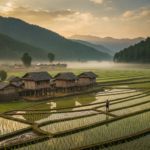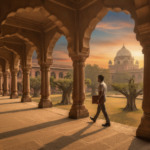

South India remains a region defined by timeless stone temples, mist-covered mountain ridges, and quiet coastal backwaters. For decades, travelers seeking an authentic encounter with the heritage of the subcontinent have gravitated toward the southern states. Yet, organizing a journey across this vast territory requires deep structural organization and careful geographical execution. Designing a comprehensive south india travel plan is not merely a matter of selecting destinations. It is an exercise in balancing cultural immersion, physical transit, and seasonal variations to ensure a seamless exploration of the five southern states. From the grand Dravidian monoliths of Tamil Nadu to the verdant hills of Kerala, a properly calibrated itinerary serves as the foundation for a truly historic voyage.
Key Takeaways
- Optimal Duration: A 14-day itinerary provides the perfect balance to explore Karnataka, Tamil Nadu, and Kerala without travel fatigue.
- Best Travel Window: Plan your visit between October and March for pleasant weather across both the plains and hill stations.
- Transport Choice: Hiring a private car with a driver offers the most flexible and scenic way to navigate the winding roads of the Western Ghats.
- Cultural Immersion: Respect local temple dress codes (shoulders and knees covered) and culinary customs (eating with your right hand).
Understanding the Diverse Geography of South India
The southern peninsula of India is bounded by the Arabian Sea, the Bay of Bengal, and the Indian Ocean. This geographical isolation has historically protected the region from northern invasions, allowing a distinct cultural and architectural legacy to flourish. For anyone preparing a thorough south india travel plan, recognizing the physical division of this landmass is essential for managing transit times. The territory is split into clearly defined physical zones that dictate the local climate and regional architecture. A strategic south india travel plan accounts for these distinct topographies to prevent travel exhaustion. It is basically a physical barrier that divides the peninsula, forcing roads to wind through mountain gaps.
Coastal Plains and Maritime Trade Hubs
The coastal plains of South India have served as major global maritime trade hubs for over two thousand years. The Malabar Coast in the west and the Coromandel Coast in the east boast flat, fertile lowlands that historically welcomed global merchants. When building a south india travel plan, incorporating these coastal strips provides a stark contrast to the interior highlands. For instance, the French architectural colonial legacy of Pondicherry stands in contrast to the spice warehouses of Kochi. These ports are active historical archives showing how commerce shaped local communities. Critics say coastal regions are too touristy. They are not entirely wrong, but they underestimate how these ports preserve a unique cosmopolitan heritage found nowhere else in the interior.
The Deccan Plateau and Western Ghats
Rising sharply from the plains are the Western Ghats, an ancient mountain range older than the Himalayas. Beyond these mountains lies the semi-arid Deccan Plateau, a rugged tableland defined by basalt formations. A successful south india travel plan must carefully deal with these altitude shifts. Moving from the humid coast to the cool heights of Munnar requires a shift in both clothing and transit speeds. Roads in the Western Ghats are notoriously winding, with sharp hairpin bends that slow travel speeds to roughly 30 kilometers per hour. (This is a crucial detail for hired taxi itineraries). The geographical diversity of the region ensures that no two days on a well-designed South India itinerary are identical.
| Geographical Zone | Key Characteristics | Primary Destinations |
|---|---|---|
| Malabar Coast | Humid, tropical lowlands with extensive backwater networks. | Kochi, Alleppey, Kovalam |
| Western Ghats | Cool, elevated mountain ranges with tea plantations. | Munnar, Ooty, Coorg |
| Deccan Plateau | Arid, rugged tableland featuring ancient rock. | Hampi, Mysore, Badami |
| Coromandel Coast | Flat eastern plains with historical temple cities. | Chennai, Pondicherry, Mahabalipuram |
The Ultimate 14-Day South India Itinerary
Covering the vast southern states in a single journey is a massive undertaking. To experience the area without excessive transit fatigue, a 14-day South India itinerary offers the optimal balance between cultural depth and travel comfort. This structured south india travel plan is designed to showcase the highlights of Karnataka, Tamil Nadu, and Kerala, leading travelers through a curated loop. A systematic approach to this journey begins in the tech-forward yet historically rich city of Bengaluru. Each day of this south india travel plan is structured to minimize transit stress while maximizing immersion in local life.
Days 1-3: Cultural Legacy in Karnataka
The journey begins in Bengaluru, a modern metropolis that serves as a highly convenient gateway. A well-organized south india travel plan structures these initial days to balance exploration and historical discovery:
- Day 1 (Bengaluru): Dedicate your first day to acclimation by exploring the magnificent Bangalore Palace and the historic Lalbagh Botanical Garden, both offering a quiet respite from the urban bustle.
- Day 2 (Mysore): Move southwest to Mysore, a city synonymous with royal heritage, where you can marvel at the Mysore Palace—an architectural masterpiece illuminated by nearly 100,000 light bulbs on Sunday evenings.
- Day 3 (Srirangapatna): Transition to the river island fortress of Srirangapatna, introducing travelers to the complex historical narratives of the region.
To explore these routes seamlessly, travelers can browse the curated options available at the Bangalore-Mysore Travel Portal.
Following this heritage exploration, the route prepares to climb into the cooler climes of the Western Ghats. This transition highlights the physical diversity that makes a South India itinerary so compelling to global travelers. The air grows noticeably cooler as the road climbs toward the border of Tamil Nadu, leaving the dry plains of the Deccan Plateau behind.
Days 4-7: Colonial Charm and Hill Stations of Tamil Nadu
Crossing the state border into Tamil Nadu, the terrain shifts as the road ascends into the Nilgiri Hills. Days four and five are dedicated to Ooty, a classic hill station established by the British in the early nineteenth century. This destination is ideal for exploring tea estates and riding the famous Nilgiri Mountain Railway. (This historic steam train is a UNESCO World Heritage site and offers spectacular views of the rugged valleys). On day six, the south india travel plan directs travelers downward toward Madurai, one of the oldest continuously inhabited cities. The primary attraction is the Meenakshi Amman Temple, adorned with twelve towering gopurams. Day seven involves exploring the Chettinad region, famous for its magnificent mansions and fiery cuisine. This culinary stopover adds a sensory dimension to the south india travel plan. To experience these massive stone temples, travelers can book custom packages through the Tamil Nadu Travel Portal.
Days 8-11: Emerald Waters and Heritage of Kerala
Leaving the plains of Tamil Nadu, the journey crosses the Western Ghats into Kerala, entering a world of lush landscapes and serene waters:
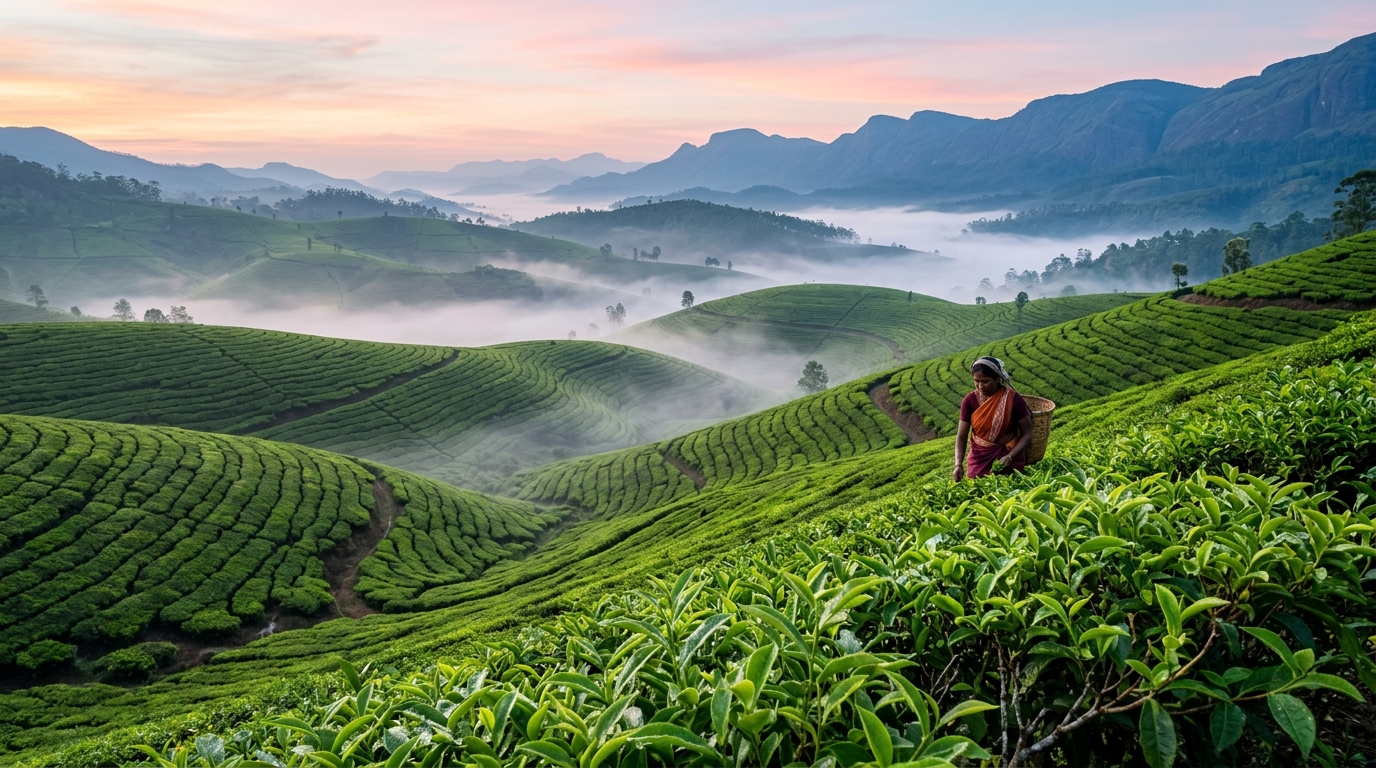
- Days 8-9 (Munnar): Spend these days exploring the mist-veiled tea plantations, spice gardens, and panoramic viewpoints of this famous hill station.
- Day 10 (Alleppey): Descend to the heart of the Kerala backwaters and board a traditional houseboat, providing an unparalleled look at peaceful rural riverine life along quiet canals.
- Day 11 (Kochi): Visit this historic port city with its deep multicultural past, where you can watch the sunset over Chinese fishing nets and enjoy an evening Kathakali dance performance.
Custom travel options for this segment are available on the Kerala Travel Portal.
Days 12-14: French Heritage and Coastal Leisure
The final leg of this 14-day South India itinerary heads toward the southeastern coast. Days twelve and thirteen are dedicated to Pondicherry, a former French colonial enclave. A thoughtful south india travel plan schedules a visit to Auroville, an experimental township dedicated to human unity. Day fourteen concludes the journey with a drive north to Chennai for departure. Along the way, a stop at the rock-cut monuments of Mahabalipuram is essential. This final cultural encounter completes a comprehensive south india travel plan. For those seeking coastal relaxation before leaving, visiting the tranquil beaches at the Pondicherry Travel Portal offers the perfect end to the journey.
Seasonal Planning and Logistics
Executing a successful south india travel plan requires deep attention to seasonal weather patterns and regional logistics. Unlike the northern regions of the subcontinent, the south experiences a tropical maritime climate influenced by two distinct monsoon systems. Failing to account for these weather cycles can result in heavy rains disrupting travel paths, especially in mountain regions. A robust south india travel plan must carefully balance climate comfort with seasonal pricing and crowd density to determine the best time to visit South India. While the winter months offer ideal sightseeing conditions, they represent the peak tourism season, requiring advanced bookings.
Best Time to Visit South India
The best time to visit South India is undoubtedly from October to March, when the summer heat recedes and the monsoon rains subside. Temperatures across the plains hover between a comfortable 22 degrees Celsius and 30 degrees Celsius, making urban exploration and temple visits highly pleasant. In the elevated hill stations like Munnar and Coorg, temperatures can drop to a crisp 10 degrees Celsius, requiring light woolens. But still, traveling during the monsoon season (from June to September) has its own unique appeal. The rains transform the Western Ghats into a lush green terrain. It is crucial to align your south india travel plan with your specific travel interests to ensure an optimal experience. The dramatic beauty of the monsoon is arguably unmatched, though it requires a highly flexible mindset.
Transportation Networks and Connectivity
South India boasts some of the most efficient transportation networks in the country. For long-distance travel between major states, the Indian Railways network provides an affordable experience. High-speed express trains connect major hubs like Bengaluru, Chennai, Kochi, and Madurai. For a highly flexible and comfortable south india travel plan, hiring a private car with a professional driver remains the preferred choice. This option allows for spontaneous stops at roadside spice plantations and small villages. While domestic flights are available, they often miss the scenic terrains.
| Transport Mode | Best For | Pros | Cons |
|---|---|---|---|
| Private Car & Driver | Flexible exploration, mountain routes, short stops | Maximum comfort, door-to-door transit, local insights | Higher cost compared to public transit |
| Indian Railways (Trains) | Long-distance intercity travel (e.g., Chennai to Kochi) | Highly affordable, scenic, authentic experience | Requires booking 120 days in advance; fixed schedules |
| Domestic Flights | Saving time between major hubs (e.g., Bengaluru to Kochi) | Fastest transit time over long distances | Misses the scenic countryside; airport transfer times |
When organizing transit logistics, consider these key guidelines:
- Book Train Tickets Early: Train reservations open 120 days in advance and fill up rapidly during the peak winter season.
- Utilize Ride-Hailing Apps: In major cities like Bengaluru and Chennai, apps like Uber and Ola offer reliable, fixed-price transit options.
- Prepare for Mountain Driving: If hiring a self-drive vehicle, ensure you have prior experience with steep, narrow mountain passes.
- Verify Local Ferry Schedules: In coastal Kerala, water transport is highly efficient but schedules can change based on seasonal weather conditions.
Architectural and Heritage Marvels
The structural integrity and artistic complexity of South Indian heritage sites are globally unparalleled. Unlike the historic monuments of Northern India, which show Persian influences, the south preserved ancient Hindu architectural styles relatively untouched. A thorough south india travel plan must allocate sufficient time to appreciate these structural marvels, which serve as active centers of local culture. From the massive temples of Tamil Nadu to the grand palaces of Karnataka, these structures reflect the wealth of successive dynasties. A strategic south india travel plan focuses on these historical layers to provide a deeper understanding.
Dravidian Temple Architecture
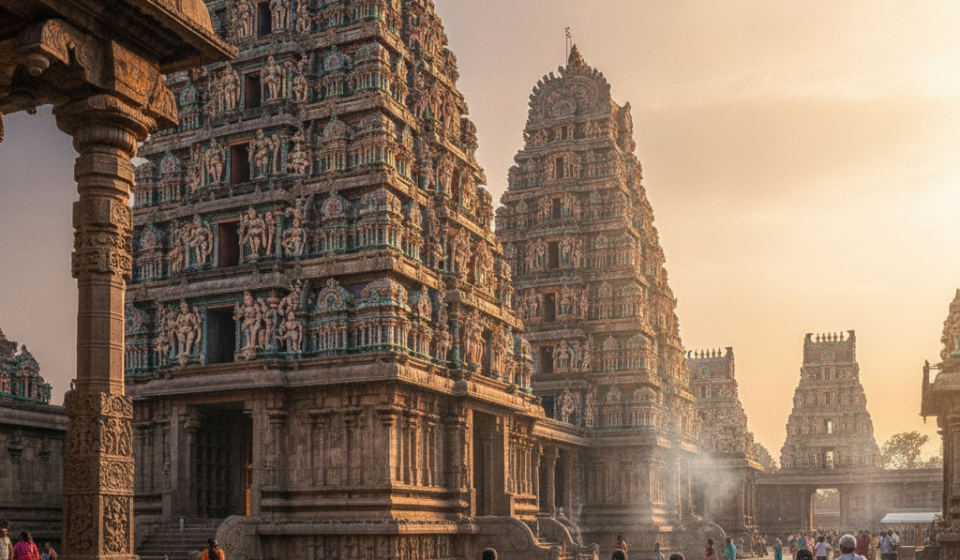
Dravidian temple architecture is characterized by its scale, structural symmetry, and intricate stone carvings. The defining feature of these temples is the gopuram, a monumental gateway tower that rises in a series of highly decorated tiers above the entrance. These towers are covered in thousands of painted stone figures depicting mythological stories. When executing your south india travel plan, visiting the Brihadeeswarar Temple in Thanjavur is highly recommended. Built by the Chola dynasty in the eleventh century, this UNESCO World Heritage site features a massive sandstone vimana (temple tower) carved from a single piece of granite.
Monolithic Fortresses and Palaces
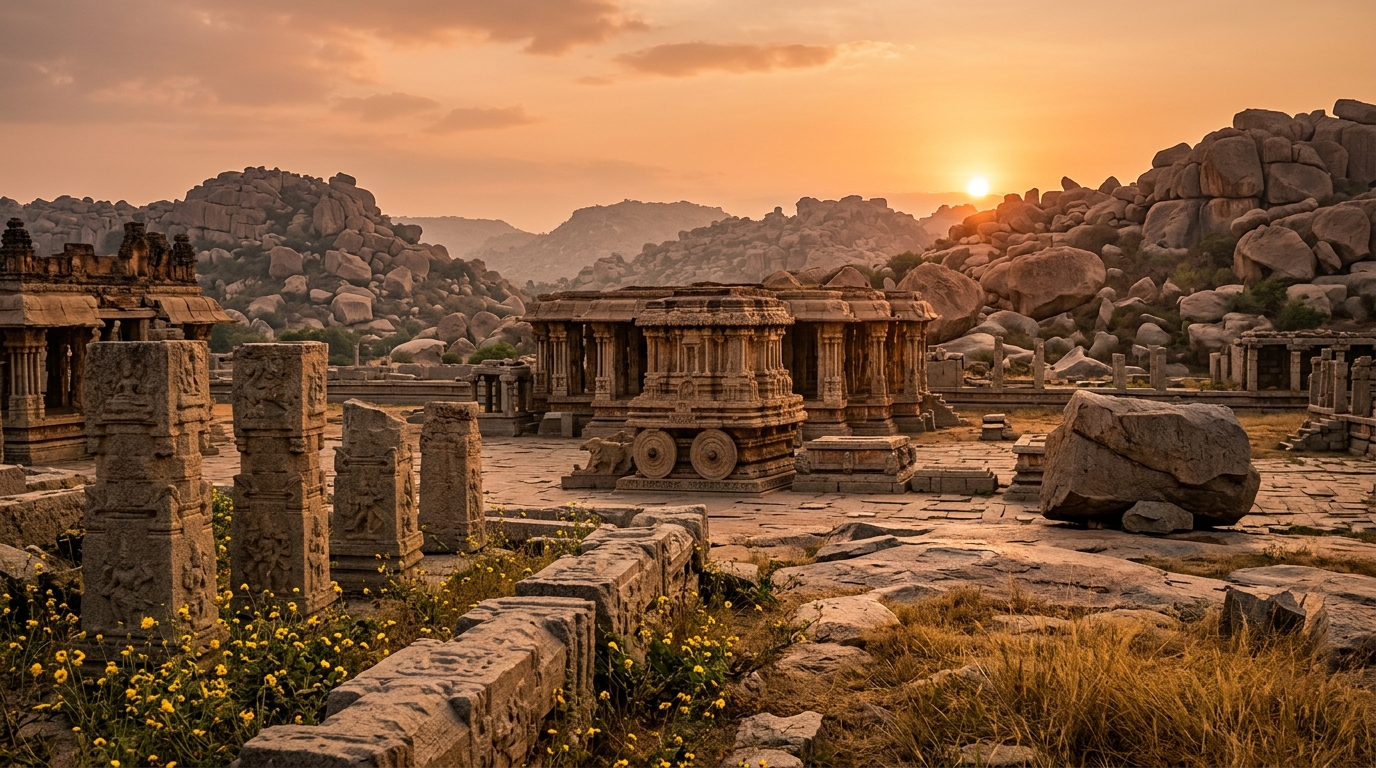
Beyond religious architecture, South India boasts an impressive array of secular fortresses and royal palaces that reflect the military power of its historic rulers. These structures combine local Dravidian building techniques with Islamic and European elements, resulting in a unique hybrid style. A comprehensive south india travel plan includes these sites to balance the spiritual focus of the temple cities. The ruins of Hampi, the former capital of the Vijayanagara Empire, offer an extraordinary look at medieval urban planning. Incorporating these varied structures into your south india travel plan ensures a well-rounded cultural experience that spans centuries of royal history.
Practical Tips for Your South India Tour
A successful journey through South India requires more than just a well-planned route. It demands an understanding of local social customs, culinary traditions, and daily etiquette. While the southern states are highly welcoming, respecting local cultural norms ensures smooth, positive interactions. This section provides the essential practical tips needed to complete your south india travel plan with absolute confidence. Being prepared for regional differences in language, food, and dress will significantly enhance your travel comfort and foster genuine human connections throughout your journey.
Culinary Etiquette and Regional Gastronomy
South Indian cuisine is incredibly diverse, offering a rich variety of dishes that vary significantly from state to state. The staple food is rice, served with a variety of lentil-based stews like sambar and rasam, and accompanied by fresh coconut chutneys. For many, enjoying a traditional meal served on a fresh banana leaf is a highlight of their south india travel plan. The balance of spices and fermentation techniques is unique to this region. When dining in traditional local establishments, it is customary to eat with your right hand. (The left hand is traditionally considered unclean and should not be used to touch food or pass dishes). Always ensure you wash your hands thoroughly before and after meals at the washbasins provided in every dining hall, showing respect for local hygiene practices and dining etiquette.
Packing Essentials and Cultural Sensitivity
Packing for a diverse South Indian journey requires a careful balance between climate comfort and cultural respect. Because of the warm, humid climate across the coastal plains, lightweight, breathable cotton clothing is highly recommended. However, since a comprehensive south india travel plan often includes elevated hill stations like Munnar or Coorg, packing a light jacket is essential for the cool evenings. When visiting active religious sites, modest dress is strictly required for both men and women. Shoulders and knees must be fully covered, and form-fitting clothing should be avoided. Carrying a lightweight cotton shawl in your daypack is a highly practical way to ensure you are always prepared for spontaneous temple visits. Respecting these simple guidelines ensures a welcoming and respectful experience at every historic site on your South India itinerary. It remains the most effective way to build mutual respect with local communities and enjoy your travel experience.